
自动导引车(AGV)

Search documents
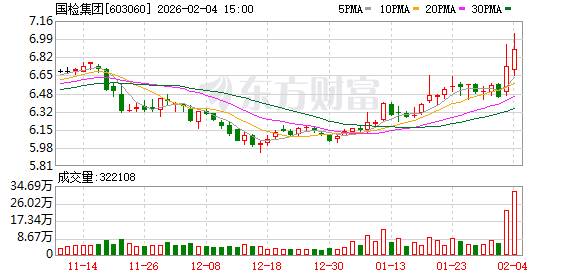
国检集团:公司目前在检验检测与智能实验室场景中主要应用以机械臂和自动导引车(AGV)为代表的自动化设备
Zheng Quan Ri Bao· 2026-02-04 13:38
Group 1 - The company is currently utilizing automation equipment, such as robotic arms and Automated Guided Vehicles (AGVs), in inspection and testing scenarios [2] - These automated devices are employed for sample transfer, positioning, loading and unloading, and some standardized testing processes [2] - The implementation of these technologies has effectively improved operational efficiency and process consistency [2]


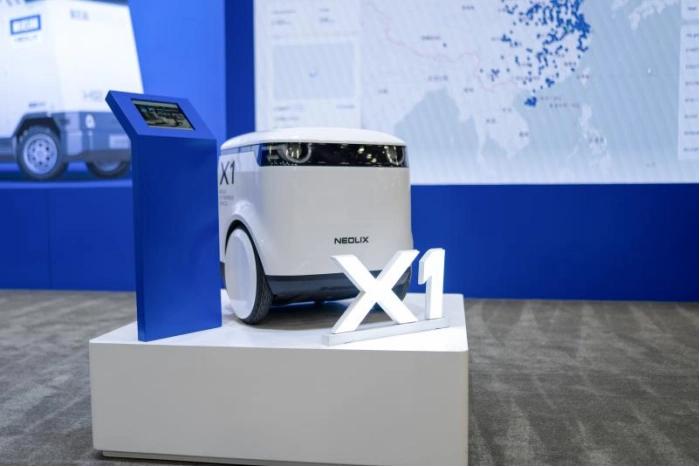
无人配送进军最后100米,快递员要失业了?
3 6 Ke· 2026-01-16 03:00
Core Insights - The emergence of artificial intelligence (AI) is reshaping various sectors, marking a significant turning point in human intelligence and societal structure [1] - The introduction of the New Stone Age X1 delivery robot at CES 2026 exemplifies the integration of AI into everyday life, particularly in logistics and delivery [2][4] Group 1: Automation in Logistics - The transformation in logistics begins with smart warehousing, evolving from labor-intensive operations to algorithm-driven, robot-executed systems [5] - AI systems in warehouses predict demand and optimize inventory layouts, with examples like JD Logistics showcasing efficient automated networks [5] - Traditional sorting methods are being replaced by intelligent sorting systems that utilize image recognition and mechanical structures to streamline package processing [6][8] Group 2: Last-Mile Delivery Innovations - The focus of autonomous delivery has shifted from logistics parks to solving the "last 100 meters" challenge, with robots like X1 facilitating seamless delivery to consumers [9] - The integration of AI in delivery processes raises concerns about job displacement, yet it also highlights the potential for human-machine collaboration to enhance service quality [10][11] Group 3: Job Evolution and New Roles - The introduction of delivery robots does not signify the end of delivery jobs but rather a transformation in job roles, emphasizing service personalization and problem-solving [12][14] - The rise of intelligent systems is creating new technical roles within the logistics sector, such as smart warehouse maintenance personnel and drone flight planners [14] - A recent survey indicates a growing preference among companies for candidates with AI expertise, reflecting a shift in workforce demands towards human-machine collaboration skills [15]
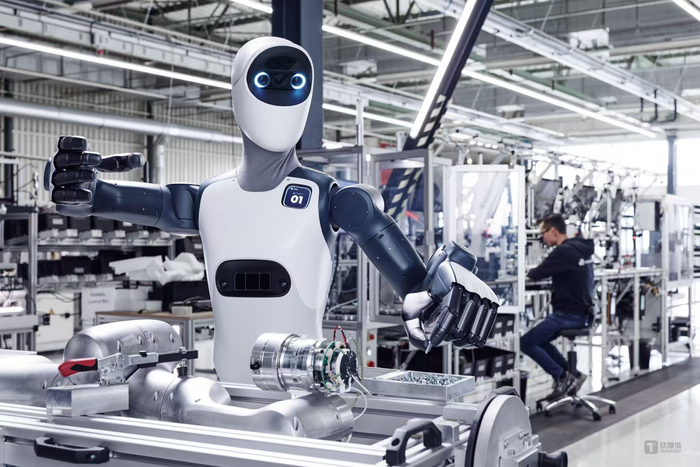
蛰伏后的爆发:思灵机器人从工业场景迈向物理AI
Tai Mei Ti A P P· 2025-12-02 00:25
Core Insights - The industrial scene has become a competitive battleground for leading embodied intelligence companies, driven by the global restructuring of supply chains and the manufacturing industry's shift towards smart and flexible operations [2] - A report from Crunchbase indicates that 70% of global robotics funding in 2024 will be directed towards industrial applications, with the International Federation of Robotics (IFR) predicting the industrial robotics market will reach 10 million units by 2030 [2] - Despite the demand, challenges such as precision, stability, durability, and collaboration between machines and humans hinder the widespread adoption of industrial robots [2] Company Overview - Agile Robots, founded in 2018, has gained attention with the release of its full-sized industrial humanoid robot, Agile ONE, and the acquisition of Thyssenkrupp Automation Engineering [3] - The company has completed multiple funding rounds, attracting investments from notable firms such as SoftBank Vision Fund, Sequoia Capital, and Hillhouse Capital, among others [3] - The founder, Dr. Chen Zhaopeng, is a recognized expert in robotics, previously holding a senior position at the German Aerospace Center [3] Product Development - Agile Robots has delivered over 30,000 robots across various industries, including automotive and consumer electronics, achieving a remarkable revenue growth of 100% for seven consecutive years [5] - Agile ONE integrates core technologies developed over years, representing a complete ecosystem for factory automation and embodying the concept of "physical artificial intelligence" [5] - The Agile Hand, a high-freedom dexterous hand, features advanced sensors and control systems, enhancing precision and adaptability in various industrial tasks [7][10] Technological Innovation - The robot's "three-layer brain" architecture distinguishes it from traditional models, enabling complex decision-making, task planning, and precise operations [13] - Agile Robots has developed a vast dataset from over 30,000 deployed robots, enhancing the adaptability and performance of Agile ONE in real-world industrial scenarios [14] - The company emphasizes creating a comprehensive physical AI ecosystem rather than just standalone robots, facilitating collaboration between machines and humans [15][17] Market Expansion - Agile Robots has expanded its offerings beyond traditional industrial applications, venturing into healthcare with its 7-degree-of-freedom medical robot, Diana7 Med, and exploring solutions in agriculture, education, and energy sectors [21][23] - The company has strategically acquired other firms to enhance its industrial robotics ecosystem, including notable companies like Franka and idealworks [19] Conclusion - Agile Robots' journey reflects a commitment to addressing real-world challenges across various sectors, continuously evolving its technology and expanding its market presence while adhering to its mission of linking artificial intelligence with the physical world [25]

DHL快递中国区高管接受专访称以创新与绿色物流助力中国高质量发展
Ren Min Wang· 2025-11-12 01:00
Group 1 - The eighth China International Import Expo (CIIE) was held from November 5 to 10, with participation from 155 countries and regions, showcasing a record number of 290 Fortune 500 and industry-leading companies [1] - DHL Express showcased its latest automation technologies, smart devices, and green logistics solutions at the expo, emphasizing its commitment to innovation and green transformation in alignment with China's high-quality economic development [1] - DHL Express has significantly increased its investment in China, with new and upgraded projects in cities like Wuxi, Shenzhen, Chengdu, and Zhuhai to enhance sorting capacity and transfer efficiency [1] Group 2 - The CIIE reflects China's efforts to build a unified national market and promote factor circulation and regional coordinated development, aligning with DHL's strategic direction and the government's policy guidance [2] - DHL aims to increase the proportion of sustainable aviation fuel to over 30% and electrify 60% of its ground transportation by 2030, with over 30% of its delivery fleet in China already electrified [2] - The "GoGreen Plus" service allows customers to use sustainable aviation fuel during shipping, with over half of DHL's customers in China already utilizing this service [2] Group 3 - The "14th Five-Year Plan" emphasizes focusing on the real economy and advancing digitalization, intelligence, and green development, providing long-term opportunities for multinational companies like DHL [3] - DHL Express aims to leverage its comprehensive capabilities in digitalization, intelligence, and sustainability to support the new leap in China's real economy [3]
DHL快递中国区首席执行官吴东明:以创新与绿色物流助力中国高质量发展
人民网-国际频道 原创稿· 2025-11-10 06:31
Core Insights - The eighth China International Import Expo (CIIE) was held from November 5 to 10, with participation from 155 countries and regions, showcasing a record number of 290 Fortune 500 and industry-leading companies [1][4] - DHL Express showcased its latest automation technologies, smart devices, and green logistics solutions, emphasizing its commitment to innovation and green transformation in alignment with China's high-quality economic development [1][4] Company Developments - DHL Express has increased its investment in China, with new and upgraded projects in cities like Wuxi, Shenzhen, Chengdu, and Zhuhai to enhance sorting capacity and transfer efficiency [4] - The company signed a memorandum of understanding with Zhongzhou Airlines for the local operation of two DHL B777 freighters, marking the first instance of localized fleet operations in China [4] Strategic Alignment - The CIIE serves as a significant platform for global companies to share opportunities in China, aligning with the country's push for a unified national market and regional coordinated development [5] - DHL's strategic direction aligns closely with Chinese government policies, allowing the company to benefit from the industrial upgrade dividends of the unified market [5] Sustainability Initiatives - DHL aims to increase the proportion of sustainable aviation fuel to over 30% and electrify 60% of its ground transportation by 2030, with over 30% of its delivery fleet in China already electrified [5] - The company has launched the "GoGreen Plus" service, allowing customers to use sustainable aviation fuel during shipping, with over half of its customers in China already utilizing this service [5] Market Opportunities - The "14th Five-Year Plan" emphasizes the importance of focusing on the real economy and advancing digitalization, intelligence, and green development, presenting long-term growth opportunities for multinational companies [6] - DHL Express plans to leverage its comprehensive capabilities in digitalization, intelligence, and sustainability to support the new leap in China's real economy [6]

社牛机器狗成馆宠,“送糖、握手”连环招逗笑进博人丨南财看进博
2 1 Shi Ji Jing Ji Bao Dao· 2025-11-07 10:21
Core Viewpoint - The 8th China International Import Expo (CIIE) opened on November 5, showcasing innovative high-tech solutions from various companies, particularly in the logistics sector [2] Group 1: Company Innovations - DHL presented a lively cargo robot dog at its booth, capable of navigating complex and hazardous environments to assist in logistics, particularly for the "last mile" delivery and special scenarios [2] - In addition to the robot dog, DHL's exhibition featured several future logistics technologies, including robotic arms and Automated Guided Vehicles (AGVs) [2]
日本关西物流展览会|KANSAI LOGIX 2026
Sou Hu Cai Jing· 2025-08-23 06:50
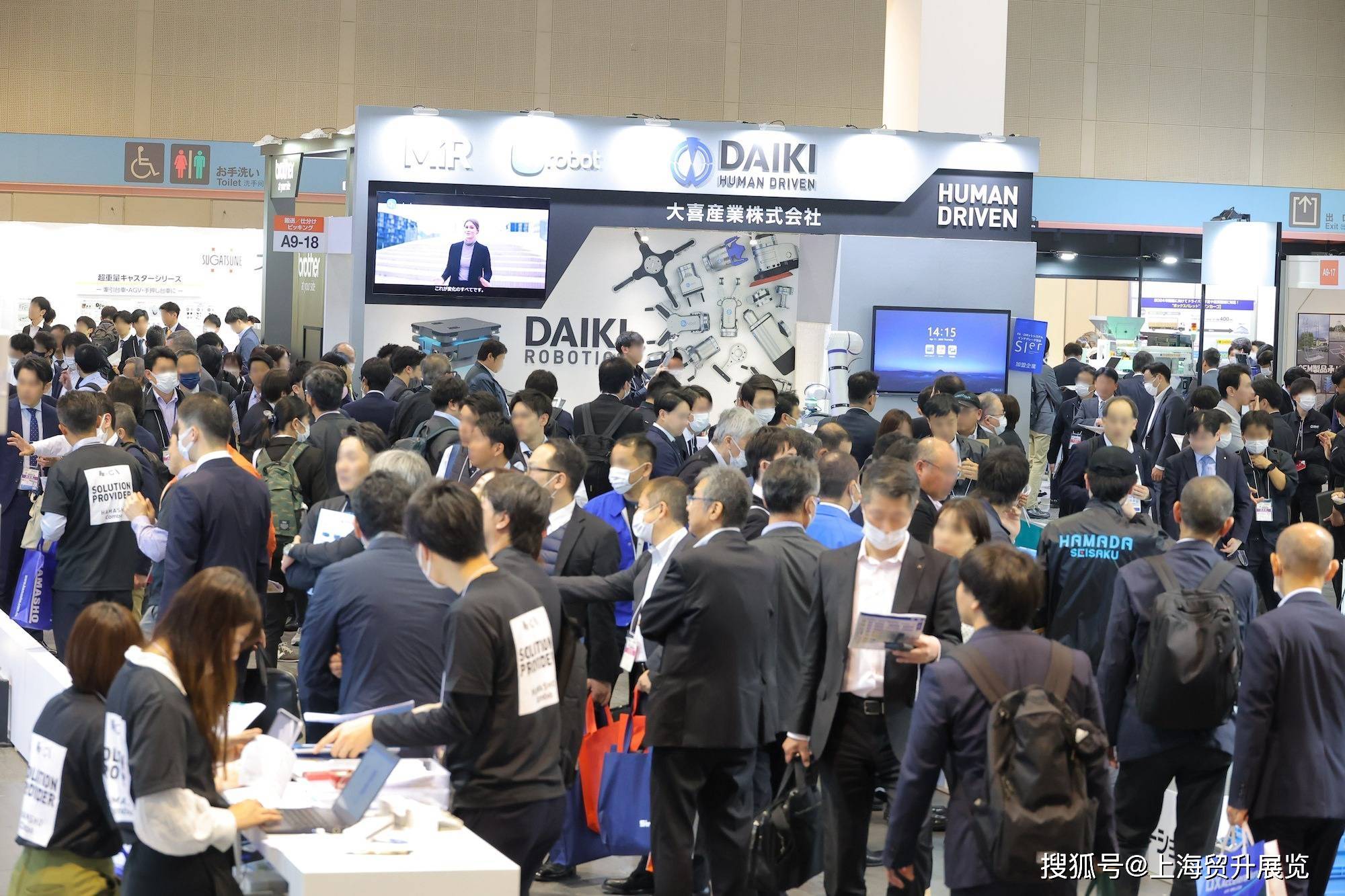
Core Insights - The Kansai Logistics Exhibition will be held from April 8 to 10, 2026, in Osaka, Japan, aiming to provide a platform for the logistics industry to discuss innovations and solutions for productivity enhancement and environmental improvement [1][8] - The exhibition addresses challenges such as labor shortages and aging populations in the logistics sector, offering a collaborative space for various organizations and associations [1][8] Product and Service Categories - **Conveying, Sorting, and Picking Equipment**: This category includes conveyors, lifting devices, automated guided vehicles (AGVs), automated mobile robots (AMRs), and palletizers, which significantly enhance logistics efficiency and reduce labor costs [3] - **Pallets, Containers, and Storage Equipment**: The exhibition will showcase various pallets, trolleys, automated warehouse systems, and mobile shelves, which improve storage efficiency and optimize space utilization, reflecting the industry's focus on sustainability [4] - **Packaging and Parcel Handling**: Packaging is highlighted as a crucial aspect of modern logistics, with displays of packaging equipment such as bag-making machines and sealing machines, aimed at improving packaging efficiency and reducing material waste [4] - **Information Systems and Software**: The exhibition will feature warehouse management systems (WMS), transportation management systems (TMS), and enterprise resource planning (ERP) software, which enhance logistics management efficiency and provide precise data for decision-making [6] - **Industrial and Transport Vehicles**: Various trucks, trailers, forklifts, and drones will be showcased, emphasizing the importance of innovative transport tools in logistics efficiency and safety [6] Industry Collaboration and Future Directions - The exhibition serves as a platform for industry stakeholders to explore future development directions and collaboratively address current challenges [7] - It is anticipated that the event will foster cooperation opportunities and innovative ideas within the logistics sector [7][8] - The successful hosting of the exhibition is expected to inject new momentum into the logistics industry, helping it find effective solutions to various challenges [8]
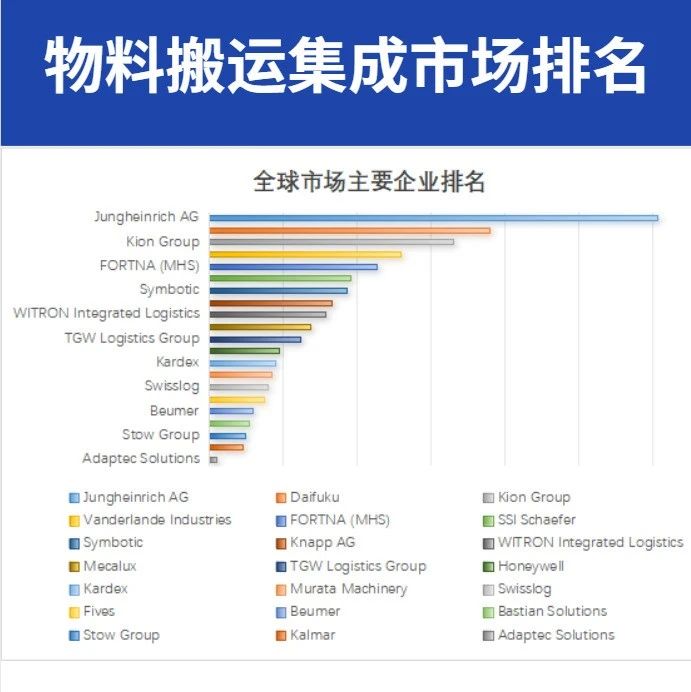
《全球物料搬运集成市场格局:2024年前十强厂商份额达 50.0%》
QYResearch· 2025-07-21 09:07
Core Viewpoint - The integration of material handling systems can streamline operations, enhance productivity, and reduce costs through strategic coordination of equipment, software, and processes [1][3]. Market Overview - The global material handling integration market is projected to reach USD 84.21 billion by 2031, with a compound annual growth rate (CAGR) of 8.8% in the coming years [3][6]. - The top 10 manufacturers are expected to hold approximately 50.0% of the market share in 2024 [6]. Key Players - Major manufacturers in the global material handling integration market include Jungheinrich AG, Daifuku, Kion Group, Vanderlande Industries, and others [6][19]. Market Segmentation by Product Type - Hardware components are essential for material handling integration systems, including automated guided vehicles (AGVs) and automated sorting control systems, which optimize material handling processes [8]. Market Segmentation by Application - The retail and e-commerce sector is the primary demand source, accounting for approximately 24.8% of the market share [10][9]. - Automated storage and retrieval systems (AS/RS) and AGVs are widely used in retail and e-commerce warehouses to enhance efficiency and accuracy [9][10]. Growth Drivers - The increasing integration of robotics and autonomous systems in material handling is a significant trend, enhancing efficiency and reducing labor costs [14]. - The rise of e-commerce globally is a crucial catalyst for adopting material handling integration systems, driven by the need for efficient operations [15][17]. - Advancements in IoT, AI, and robotics provide a technological foundation for the development of material handling integration systems [17].
数制融合,上海电气绘就智能制造新图景
Zhong Guo Jing Ji Wang· 2025-06-10 08:21
Core Insights - The digital transformation of the manufacturing industry is crucial for advancing new industrialization and building a modern industrial system, with a goal to significantly enhance China's position in the global industrial chain by 2025 [1] Group 1: Digital Transformation in Manufacturing - The "Manufacturing Digital Transformation Action Plan" aims to promote digitalization across major manufacturing sectors by 2025, creating world-class digital manufacturing clusters [1] - Shanghai Electric is a leading enterprise in high-end equipment manufacturing, actively exploring digital transformation and the integration of "digital intelligence and digital systems" [1] Group 2: High-End Digital Solutions - Shanghai Electric integrates digital technologies into traditional energy equipment development and operation, establishing an efficient and intelligent equipment management system [2] - The company has implemented industrial internet and artificial intelligence in wind power equipment, allowing for predictive maintenance and significantly improving equipment reliability and operational efficiency [2][3] Group 3: Intelligent Production Systems - Shanghai Electric's new manufacturing base has undergone intelligent upgrades focusing on smart manufacturing, smart logistics, and digital management [4] - The integration of AI, IoT, and blockchain technologies aims to reconstruct the entire manufacturing process, enhancing real-time mapping between the physical and digital worlds [4][5] Group 4: Comprehensive Monitoring and Management - The new facility has established a comprehensive monitoring and equipment operation system that integrates various functionalities, improving management efficiency through data visualization and analysis [5] Group 5: Integrated Soft and Hard Product Systems - Shanghai Electric is developing a soft and hard integrated product system that includes intelligent basic components, manufacturing equipment, system integration, industrial software, and industrial internet platforms [6][7] - The company is enhancing its digital infrastructure and applying cutting-edge technologies to create smart workshops and factories, aiming to set industry benchmarks [7]

艾睿铂:汽车制造拥抱“第四次革命” 无人工厂或将加速到来
Xin Hua Cai Jing· 2025-06-05 11:25
Core Insights - The report by AlixPartners indicates that the automotive industry is on the brink of a "Fourth Automotive Revolution" driven by the rapid development of artificial intelligence (AI), which is expected to lead to the emergence of "unmanned factories" [1][2] Industry Transformation - Historically, the automotive industry has undergone significant manufacturing transformations approximately every 40 years, with the last major shift being platformization and modularization over 40 years ago [1] - The new revolution is characterized by AI taking over production processes, leading to increased manufacturing efficiency and reduced costs [1][2] Future of Manufacturing - In the envisioned unmanned factories, AI systems will take over operational decision-making, while programmable bionic robots will handle core tasks such as material handling and quality inspection [2] - The efficiency of vehicle manufacturing is projected to double, with direct pass rates exceeding 95%, and labor costs potentially decreasing by around 90% [2] Phased Implementation - The transition to unmanned factories will occur in three phases: 1. **Pilot Phase (2020-2025)**: Leading companies will begin smart manufacturing trials in new production lines and factories [3] 2. **Promotion Phase (2025-2030)**: Existing factories will undergo large-scale upgrades, with significant investments expected around 2027-2028 [3] 3. **Deepening Phase (2030-2035)**: As embodied intelligence matures, the industry will move towards a fully unmanned factory model, although achieving 100% automation remains uncertain [3]