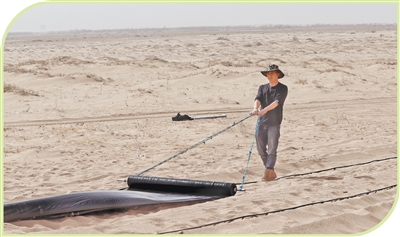
防沙治沙

Search documents
活力中国调研行|建绿色长城 守绿水青山
Ren Min Ri Bao· 2025-09-14 11:02
Core Viewpoint - Inner Mongolia is focusing on ecological restoration and sustainable development, emphasizing the importance of protecting its vast ecological functions and combating desertification [1][3]. Ecological Restoration Efforts - Inner Mongolia has completed afforestation of 148 million acres, grass planting of 367 million acres, and desertification control of 185 million acres, ranking first in the nation [3]. - The region is implementing integrated protection and systematic governance of mountains, rivers, forests, fields, lakes, grasslands, and deserts [1][3]. Desertification Control - The daily progress in desertification control is 60,000 acres, with significant advancements in the Mu Us Sandy Land and Kubuqi Desert [2]. - The ecological restoration project along the Yellow River has greatly improved vegetation coverage, creating a solid barrier against sand encroachment [2]. Grassland Management - Inner Mongolia is implementing a "paid vacation" policy for 970 million acres of grassland, allowing for ecological recovery and providing subsidies to herders [4]. - The region is exploring diverse compensation mechanisms to balance grassland ecology and livestock farming [4][5]. Modern Agricultural Practices - The introduction of cooperative models for livestock farming is enhancing resource integration and reducing feed costs, leading to more efficient cattle farming [6][7]. - The shift towards semi-pasture and intensive farming practices is aimed at addressing overgrazing issues and promoting sustainable livestock production [7]. Forest Conservation - The logging of natural forests has been halted, resulting in a significant increase in forest stock from 803 million cubic meters to 1.029 billion cubic meters over ten years [9]. - The biodiversity in the Daxing'anling region has improved, with an increase in wild plant and animal species [9]. Economic Development through Ecology - The region is transforming ecological advantages into economic benefits by developing forest tourism, forest products, and carbon trading projects [10].
奋进的中国 我们的“十四五” | “蓝绿”交织 喜看昔日沙海蜕变成今日绿洲
Yang Shi Wang· 2025-09-14 06:35
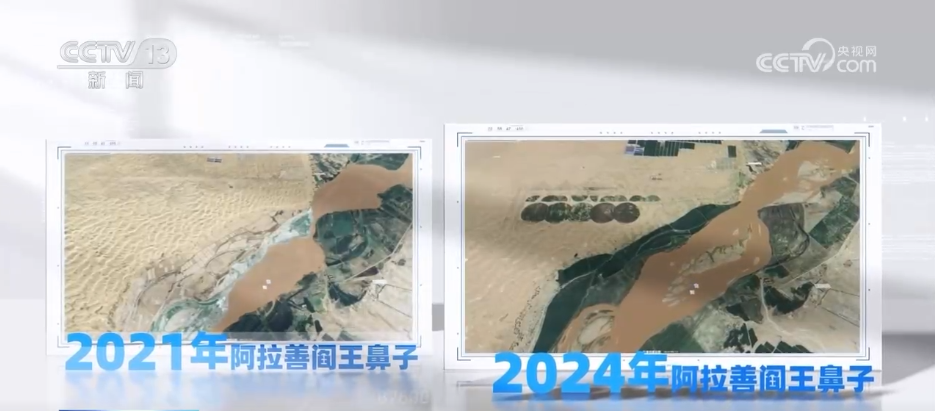
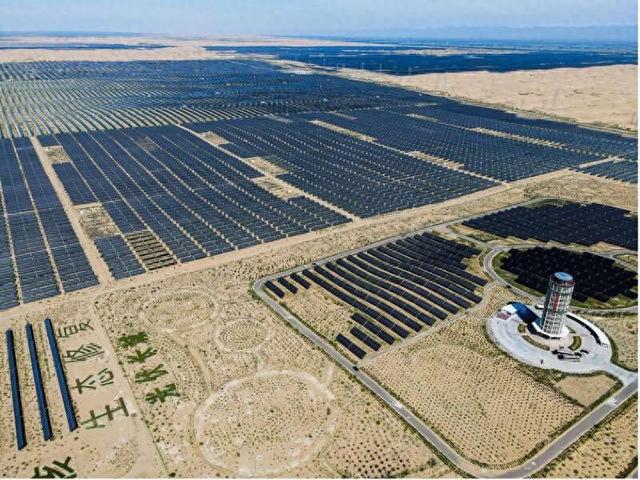
Core Viewpoint - Inner Mongolia has prioritized sand prevention and control, along with the "Three North" project during the 14th Five-Year Plan period, achieving significant ecological restoration and land management goals [1][19]. Group 1: Achievements in Ecological Restoration - Over the past five years, Inner Mongolia has completed more than 10 million acres of the "Three North" project and has engaged in sand prevention and control over 6.5 million acres [1]. - The "Yellow River 'Z' Bend" campaign is highlighted as a key ecological battle, focusing on both ecological protection and improving local livelihoods [1]. - The ecological restoration project in Alxa League has achieved a vegetation coverage rate of over 84%, preventing approximately 1.5 million tons of sand from entering the Yellow River annually [6][14]. Group 2: Innovative Approaches - Inner Mongolia is integrating sand prevention and control with wind and solar energy development, exemplified by the construction of a 400-kilometer "Photovoltaic Great Wall" in the Kubuqi Desert [17]. - The "Photovoltaic Great Wall" is expected to generate an average annual power output of 200 billion kilowatt-hours while simultaneously restoring 3 million acres of land [17]. - The region has implemented a total of 27.27 million kilowatts of integrated sand prevention and wind-solar projects during the 14th Five-Year Plan, successfully rehabilitating 238,880 acres of desertified land [19]. Group 3: Water and Soil Conservation - The "Ten Major Conduits" area has seen a significant reduction in sediment entering the Yellow River, with sediment concentration decreasing from 1,550 kg/m³ to 195 kg/m³ [14]. - The forest coverage rate in the West Liugou area has increased from 10.19% to 28.9%, while vegetation coverage has risen from 64.4% to 78.8% [14].

内蒙古着力筑牢我国北方重要生态安全屏障:建绿色长城 守绿水青山
Ren Min Ri Bao· 2025-09-13 23:56
Group 1: Ecological Restoration Efforts - Inner Mongolia is recognized as a crucial ecological function area in China, facing severe desertification and land degradation challenges [1] - Since the 18th National Congress of the Communist Party, Inner Mongolia has completed afforestation of 148 million acres, grass planting of 367 million acres, and desertification control of 185 million acres, leading the nation in scale [3] - The region is implementing integrated protection and systematic governance of natural resources, promoting ecological restoration and enhancing biodiversity [1][3] Group 2: Sand Control and Land Management - Daily sand control efforts are advancing at a rate of 60,000 acres, with significant progress in the Mu Us Sandy Land and Kubuqi Desert [2] - The implementation of ecological restoration projects along the Yellow River has significantly increased vegetation coverage in previously desertified areas [2] - The establishment of "four lines of defense" against sand encroachment has proven effective in protecting arable land [2] Group 3: Grassland Management and Economic Transition - Inner Mongolia is transitioning to a model of "resting" grasslands, with 970 million acres expected to achieve this by 2025, allowing for ecological recovery and economic benefits for herders [4] - The region is promoting resource integration and modern farming techniques to enhance livestock production while addressing overgrazing issues [6][7] - Cooperative models are being developed to optimize feed production and reduce costs, leading to improved livestock management [6] Group 4: Forestry and Sustainable Development - The Daxing'anling region has halted commercial logging of natural forests, resulting in a significant increase in forest stock volume and biodiversity over the past decade [9] - The area is exploring new economic opportunities through forest tourism, sustainable forestry products, and carbon trading initiatives [10] - The focus on ecological advantages is driving the development of integrated services in the forestry sector, enhancing both environmental and economic outcomes [10]
建绿色长城 守绿水青山(活力中国调研行)
Ren Min Ri Bao· 2025-09-13 23:35
Core Viewpoint - Inner Mongolia is focusing on strengthening its role as an important ecological security barrier in northern China, emphasizing integrated protection and systematic governance of natural resources [1] Group 1: Ecological Restoration Efforts - Inner Mongolia has completed afforestation of 148 million acres, grass planting of 367 million acres, and desertification control of 185 million acres since the 18th National Congress, ranking first in the country [3] - The region is implementing a "green wall" strategy, with daily progress in desertification control reaching 60,000 acres [2] - The ecological restoration projects have significantly increased vegetation coverage along the Yellow River, transforming previously hazardous areas into green landscapes [2] Group 2: Grassland Management - Inner Mongolia is promoting a "paid vacation" for its 970 million acres of grassland, allowing for ecological recovery and providing financial incentives to herders [4] - The region is exploring diverse compensation mechanisms for grassland ecological protection, linking subsidy distribution to ecological outcomes [4][5] - The shift towards a semi-pasture model is being encouraged to enhance resource integration and support sustainable livestock farming [6] Group 3: Forest Management and Economic Development - The logging of natural forests has been halted in key areas, leading to a nearly 30% increase in forest stock from 803 million cubic meters to 1.029 billion cubic meters over ten years [7] - The region is developing forest ecological tourism and exploring carbon trading projects to convert ecological advantages into economic benefits [8]
内蒙古着力筑牢我国北方重要生态安全屏障 建绿色长城 守绿水青山(活力中国调研行)
Ren Min Ri Bao· 2025-09-13 22:26
Group 1 - Inner Mongolia is the largest ecological functional area in northern China, facing severe desertification and land degradation challenges [1] - The region has implemented integrated protection and systematic governance of its natural resources, aiming to restore its ecological landscape [1] - The "Three North" project is being aggressively pursued, with a daily afforestation rate of 60,000 acres [2] Group 2 - Since the 18th National Congress, Inner Mongolia has completed afforestation of 14.8 million acres, grass planting of 36.7 million acres, and desertification control of 18.5 million acres, leading the nation in these efforts [3] - The region is working towards a "paid vacation" for its 97 million acres of grasslands by 2025, promoting ecological restoration [4] Group 3 - The cooperative model in Xilin Gol League is enhancing resource integration and promoting modern livestock farming practices, significantly reducing feed costs [6][7] - The cessation of commercial logging in the Greater Khingan Range has led to a nearly 30% increase in forest stock volume over ten years [8] Group 4 - The development of forest ecological tourism and carbon trading projects is transforming ecological advantages into economic benefits [9]
行进中国·高质量发展看内蒙古|风吹草低,遇见“蓝海”
Ren Min Wang· 2025-09-11 08:31
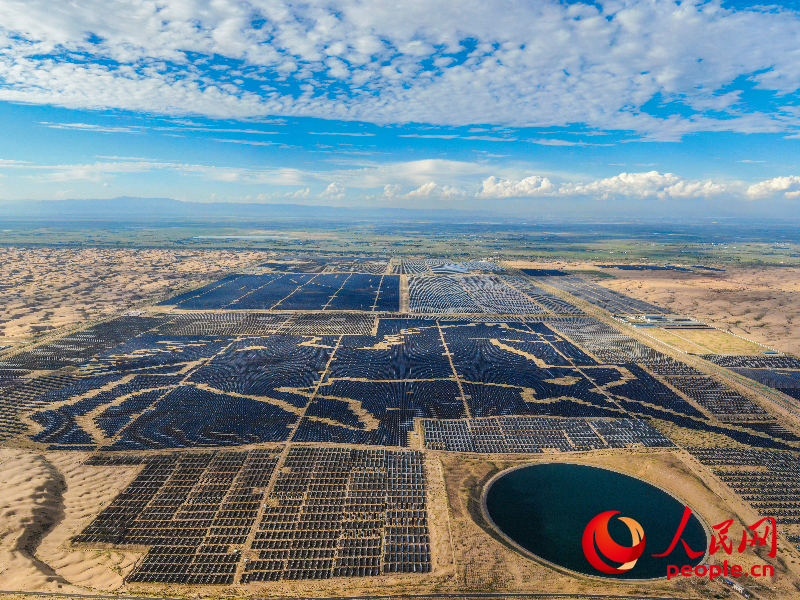
Group 1: Renewable Energy Development - Inner Mongolia is actively pursuing breakthroughs in renewable energy, with significant projects in solar and wind energy, including a total installed capacity of 5.565 million kilowatts in the Dala flag area [3][5] - The "Junma" solar power station, consisting of 196,000 photovoltaic panels, symbolizes the region's efforts in desertification control and renewable energy generation [2][4] - The region's renewable energy projects are integrated with local tourism, creating a comprehensive economic model that enhances ecological and social benefits [3] Group 2: Smart Manufacturing and Technology - The Mingyang New Energy Intelligent Manufacturing Industrial Park in Baotou is producing large wind turbine blades for renewable energy projects, showcasing advanced manufacturing capabilities [5][6] - The wind turbines are designed to withstand harsh environmental conditions, utilizing innovative technologies to enhance performance and reduce maintenance needs [6] - Inner Mongolia is focusing on developing new production capabilities in artificial intelligence, low-altitude economy, and biotechnology to diversify its economic growth [6] Group 3: Digital Infrastructure and Connectivity - The Hohhot Digital Cluster has achieved low-latency connections, enhancing its role as a core node in the national "East Data West Computing" project [7][11] - Inner Mongolia's computing power has reached 165,000 P, with intelligent computing accounting for 154,000 P, positioning it as a leader in green computing [11] Group 4: Logistics and Trade - The Shaliang Logistics Park has implemented smart customs clearance systems, significantly improving unloading efficiency and reducing processing times [14][16] - The Manzhouli Port plays a crucial role in Sino-Russian trade, with over 30,000 China-Europe freight trains passing through, enhancing logistics capabilities [17][19] - The port has established a comprehensive transportation system and improved customs efficiency, facilitating faster trade and logistics operations [19][20] Group 5: Rare Earth Industry - Baotou, known as the "World Capital of Rare Earths," is developing a complete industrial system for rare earth materials, aiming to become a leading base for new materials and applications [11][13] - The production capacity of high-performance rare earth permanent magnet materials is set to double, reinforcing Baotou's position in the global market [13]
毛乌素沙地深处的绿色接力(美丽中国)
Ren Min Ri Bao· 2025-09-07 22:16
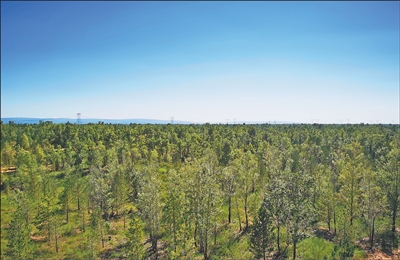
Core Viewpoint - The article highlights the successful efforts in desertification control and ecological restoration in Uxin Banner, Ordos City, Inner Mongolia, showcasing the transformation from desert to green land through community engagement and technological advancements [1][2][3]. Group 1: Desertification Control Efforts - Uxin Banner has achieved an 80% governance rate of the Maowusu Sandy Land, with a significant increase in forest coverage from 2.6% in the 1950s to 32.92% currently [1][3]. - The local community, inspired by past leaders, continues to implement effective sand control measures, including planting and maintaining vegetation [2][3]. Group 2: Technological Innovations - Advanced technologies such as drone seeding and mechanized planting are being widely adopted to enhance the efficiency and quality of desertification control [4][6]. - The Uxin Banner Forestry and Grassland Bureau aims to increase the mechanization rate and promote effective governance models, targeting a forest coverage of over 35% by 2030 [6]. Group 3: Green Industry Development - The establishment of a biomass pellet factory in Ulan Shibatai Village has led to increased income for local residents, with per capita disposable income rising from 12,000 yuan in 2018 to 30,000 yuan by 2024 [7]. - The development of green industries, including the cultivation of jujube trees and medicinal herbs, is contributing to the economic prosperity of the region while promoting ecological sustainability [8].
内蒙古鄂尔多斯市乌审旗坚持防沙治沙,植被覆盖度达80%以上 毛乌素沙地深处的绿色接力(美丽中国)
Ren Min Ri Bao· 2025-09-07 22:11
Core Viewpoint - The article highlights the successful efforts in desertification control and ecological restoration in Uxin Banner, Ordos City, Inner Mongolia, showcasing the transformation from desert to green land through community engagement and technological advancements [1][2][3]. Group 1: Desertification Control Efforts - Uxin Banner has increased its forest coverage from 2.6% in the 1950s to 32.92% currently, with vegetation coverage exceeding 80% [1]. - The governance rate of the Maowusu Sandy Land in Uxin Banner has reached 80%, with ongoing efforts to consolidate and expand these achievements [2][3]. Group 2: Technological Innovations - Advanced technologies such as drone seeding and mechanized planting are being widely adopted to enhance the efficiency and quality of desertification control [3][4]. - The Uxin Banner Forestry and Grassland Bureau aims to increase the mechanization rate and the application of forestry technology, targeting a forest coverage of over 35% and vegetation coverage of 85% by 2030 [4][5]. Group 3: Economic Development through Green Industries - The establishment of a biomass pellet factory in Ulan Shabatai Village has led to a significant increase in per capita disposable income from 12,000 yuan in 2018 to 30,000 yuan by 2024 [5]. - The development of green industries, including biomass fuel, wood products, and ecological agriculture, is creating a sustainable economic model that benefits local communities [5][6]. Group 4: Community Engagement and Legacy - The legacy of previous generations of desertification fighters continues to inspire current efforts, with community members actively participating in restoration projects [2][3]. - Initiatives like the "Iron Girl" volunteer service team are fostering a culture of environmental stewardship among the youth [2].

活力中国调研行|从“碗底有沙”到“眼底尽绿” 内蒙古荒漠变绿洲
Zhong Guo Qing Nian Bao· 2025-09-04 07:03
Core Viewpoint - Inner Mongolia has successfully transformed desert areas into green oases over several decades, showcasing effective ecological restoration and sustainable development practices [1][3][5]. Group 1: Ecological Restoration Efforts - The Alxa League in Inner Mongolia has implemented significant projects to combat desertification, including the establishment of a large-scale photovoltaic base that supports economic crops, turning barren land into productive areas [1][3]. - The "Black Lai Gou" comprehensive management area in Ordos City has seen a dramatic reduction in sandstorm occurrences from over 20 times a year to four or five times, thanks to nearly 30 years of ecological restoration efforts [5][7]. - The annual sediment load entering the Yellow River from the area has decreased from 27 million tons to 4 million tons, representing an 85% reduction, significantly improving the local ecological environment [7][12]. Group 2: Innovative Techniques and Community Involvement - Innovative techniques such as pipeline water transportation have been introduced to address water scarcity, which is a critical challenge in desert management [7][9]. - Local youth, like Wang Gang, have returned to their hometowns to engage in sand control and ecological restoration, establishing cooperatives to maximize economic benefits from sustainable practices [9][10]. - The cooperative established by Wang Gang has expanded from three to fifteen households, demonstrating the growing community involvement in sustainable land management and economic development [10][12]. Group 3: Economic Impact and Future Prospects - The integration of ecological restoration with economic activities, such as the cultivation of Haloxylon ammodendron and its grafting with Cistanche deserticola, has created dual benefits of environmental improvement and economic gain for local farmers [12][13]. - Inner Mongolia's daily sand control efforts have increased from 40,000 acres in 2023 to a projected 60,000 acres in 2024, indicating a commitment to ongoing ecological restoration [12][13].
在沙海扎根 为家乡添绿(我的家乡我建设)
Ren Min Ri Bao· 2025-09-01 22:41
Core Viewpoint - The article highlights the efforts of a young volunteer, Zhong Lin, in combating desertification in Minqin County, Gansu Province, through tree planting initiatives and community engagement, emphasizing the importance of immediate action in environmental conservation [2][5][9]. Group 1: Volunteer Activities and Impact - Zhong Lin initiated the "Please Come to Minqin to Plant Trees" volunteer activity, which has engaged over 41,000 participants and resulted in the planting of 1.52 million drought-resistant plants over 4,500 acres of desert [2][10]. - The volunteer activities not only focus on tree planting but also aim to create a community of environmental advocates, attracting participants from various backgrounds, including students and retirees [9][10]. Group 2: Environmental Challenges and Solutions - Minqin County faces severe desertification, with over 90% of its area affected, necessitating organized efforts for afforestation since 1950 [5][6]. - Zhong Lin's approach includes scientific methods for planting, such as specific measurements for planting holes and irrigation techniques, which have led to a survival rate of 90% for the saplings [7][8]. Group 3: Economic Aspects and Sustainability - The local economy benefits from the unique conditions for growing high-quality melons, with 150,000 acres dedicated to melon cultivation, which serves as a primary income source for many residents, including Zhong Lin [3][6]. - Zhong Lin has established a mechanism where 70% of the profits from selling agricultural products are reinvested into desertification efforts, creating a sustainable model for funding environmental initiatives [10].