飞地经济

Search documents
“飞地经济”激活产业新动能 山西长治“三产融合”促振兴
Zhong Guo Xin Wen Wang· 2025-07-22 16:16
Core Viewpoint - The "Flying Economy" model in Changzhi, Shanxi Province, is driving new industrial momentum and promoting the integration of primary, secondary, and tertiary industries for rural revitalization [1][2]. Group 1: Flying Economy - The "Flying Economy" allows quality projects to settle across regions, enabling companies to establish production facilities in Changzhi while maintaining research and development in other locations [2]. - This model effectively addresses resource bottlenecks and leverages the advantages of standardized factory buildings and independent office buildings to attract investment and talent [2]. - The development of the "Flying Economy" also facilitates the introduction of educational resources from the Beijing-Tianjin-Hebei region, promoting industrial transformation in Changzhi [2]. Group 2: Specialty Planting - Changzhi is implementing innovative planting techniques, optimizing the spatial layout of corn and soybeans to achieve efficient use of sunlight, space, and nutrients, resulting in a "one land, two uses, and double harvest per season" model [2]. - In Nantian Gong Village, 150 acres of "wheat + millet" have been introduced for two harvests a year, maximizing farmland efficiency [3]. - The region is also seeing successful large-scale planting of high-quality green onions and over 50,000 shiitake mushrooms, contributing to local employment and income [3]. Group 3: Cultural and Tourism Integration - Changzhi is leveraging traditional village architecture and cultural resources to develop cultural tourism, enhancing the quality of rural tourism [4]. - The Zhaishang Village has invested in infrastructure and cultural projects to attract tourists, receiving over 50,000 visitors [4]. - The village is focusing on creating a new model of rural tourism that combines traditional preservation with innovative experiences [4].
浙江云和统一战线聚力“三大工程” 赋能乡村共富
Zhong Guo Xin Wen Wang· 2025-07-09 02:11
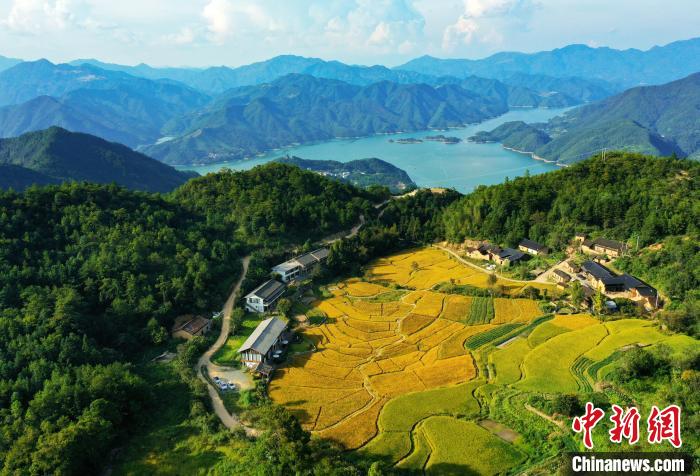
Group 1 - The "Nanshan Lake Rice Field Homestay" project in Lishui, Zhejiang, has attracted 30,000 visitors since its launch, generating over 100,000 yuan in additional income for surrounding homestays and creating more than 20 jobs in the village [1][2] - The project was developed by overseas Chinese entrepreneur Zou Chaojie, who invested 15 million yuan, and features a unique blend of rice field scenery and overseas Chinese culture [2][3] - The local government has implemented three major initiatives: cross-regional collaboration, precise investment attraction, and local incubation, to drive high-quality development in mountainous areas [1][6] Group 2 - The "Mountain-Sea Cooperation·Common Prosperity" project has transitioned from one-way assistance to a two-way win-win model, with a second phase signed in May 2025 [4][9] - The project integrates 3.7 million yuan from eight village collectives into a seafood workshop, with an estimated annual guaranteed return rate of 15% to 20%, potentially increasing annual income for each village by 50,000 to 130,000 yuan [6][7] - The "Baihejian Workshop" in Fenghuang Mountain Street has achieved an annual output value exceeding 5 million yuan, benefiting over 200 households with an average annual income increase of 18,000 yuan [8][10]

汉旺镇的新﹃锂﹄想
Si Chuan Ri Bao· 2025-07-06 23:28
Group 1 - Hanwang Town is an industrial hub in Deyang Mianzhu City, focusing on lithium battery new energy, machinery processing, and phosphochemical industries, with an industrial output value exceeding 19.8 billion yuan in 2024 [1][2] - The Deyang-Abazhou Ecological Economic Industrial Park, established in Hanwang, is a provincial-level chemical park that integrates resources and industries through a "flying economy" model, forming a complete industrial chain from raw materials to lithium battery cathode materials [1][2] - The lithium battery industry in Hanwang is projected to surpass 16.7 billion yuan in 2024, with significant growth driven by strategic planning and the establishment of key projects [2] Group 2 - The Deyang-Abazhou Industrial Park is expanding to 20 square kilometers, attracting over 400 acres of new project land, indicating strong confidence in the future of basic lithium salt [3] - The industrial park has developed a complete industrial chain from upstream raw materials to lithium battery cathode materials, supported by targeted investment attraction and the transformation of traditional chemical enterprises into lithium battery new materials [3][4] - The lithium production capacity in Hanwang has seen explosive growth, increasing from 40,000 tons in 2018 to over 200,000 tons in 2024, with future projects expected to reach a total capacity of 500,000 tons [2]
向海图强!苏宿工业园区外贸步履铿锵
Xin Hua Ri Bao· 2025-06-27 06:33
Group 1 - The Suzhou-Suqian Industrial Park has achieved a remarkable 48.75% year-on-year growth in goods trade exports in Q1 2025, showcasing its resilience in the face of a challenging international trade environment [1] - The park's foreign trade enterprises are actively adapting to market demands and increasing innovation and research and development efforts to transform external pressures into internal growth drivers [1] - Suzhou Electric Porcelain Factory (Suqi) has a strong order backlog of 8 to 10 months for its export porcelain products, reflecting robust demand and operational confidence [1] Group 2 - Suqi is positioned as a leading player in the global porcelain industry, controlling over 90% of the world's porcelain production capacity, with only a handful of foreign competitors [1] - To capture market share in niche segments dominated by foreign companies, Suqi has initiated the construction of a high-end porcelain insulator production line, expected to be operational by mid-2023 [1] - The Suzhou-Suqian Industrial Park is a significant project for regional cooperation, benefiting from national strategies for integrated development in the Yangtze River Delta and the Yangtze Economic Belt [2] Group 3 - The opening of the Suqian-Lian Canal and the establishment of the Suqian Bonded Logistics Center will enhance the city's connectivity and facilitate international trade for local enterprises [2] - The park's leadership is actively engaging with over 30 foreign trade companies to discuss policies and measures to navigate the current international trade landscape [2] - The canal's opening is expected to reduce raw material procurement costs for companies by allowing direct access to Suqian Port, improving overall operational efficiency [2]
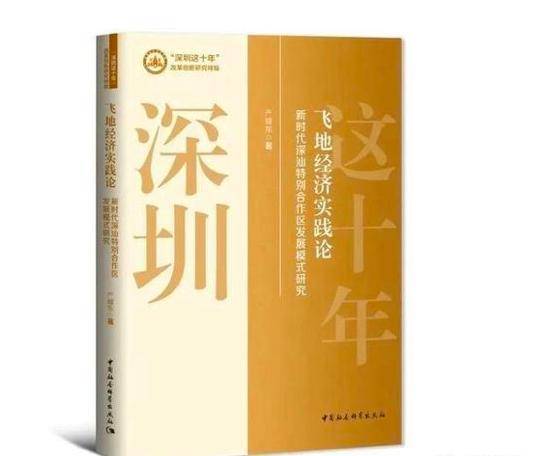
深汕合作区经验走向世界!《飞地经济实践论》英文版发布
Sou Hu Cai Jing· 2025-06-22 15:07
Core Viewpoint - The publication of the English version of "The Practice of Enclave Economy: Research on the Development Model of the Deep-Shan Special Cooperation Zone" marks a significant step in presenting China's innovative solutions for regional development imbalances to the international stage [1][5]. Group 1: Enclave Economy Concept - The enclave economy refers to a regional economic cooperation model where two independent areas achieve resource complementarity and coordinated economic development [6]. - The Deep-Shan Special Cooperation Zone exemplifies this model by combining the advantages of Shenzhen's modern economy with the developmental needs of the underdeveloped Shanwei area, facilitating industrial transformation and upgrading [6]. Group 2: Development Achievements - The Deep-Shan Special Cooperation Zone has seen its GDP grow from 3.895 billion to 24.215 billion from 2018 to 2024, indicating significant economic progress [8]. - The zone has established a "golden corridor" for the new energy vehicle industry, attracting nearly 30 upstream and downstream enterprises, and is projected to export over 50,000 new energy vehicles in 2024 [8]. Group 3: Policy and Governance - The Deep-Shan Special Cooperation Zone is the first enclave economy in China to be fully led by the "flying out" area (Shenzhen), transitioning from a collaborative model to a more autonomous governance structure [9]. - The zone is positioned as a model for regional coordination and development, with ongoing support from national policies aimed at enhancing its management and policy framework [11]. Group 4: Social Impact - The Deep-Shan Special Cooperation Zone aims to transform rural areas into urban centers, enhancing the quality of life for local residents through improved education, healthcare, and housing [11]. - The initiative is part of a broader strategy to create a modern industrial city that integrates urban and rural development, thereby increasing the overall well-being and security of the local population [11].
海南自贸港跨省共建产业园
Zhong Guo Xin Wen Wang· 2025-06-22 01:55
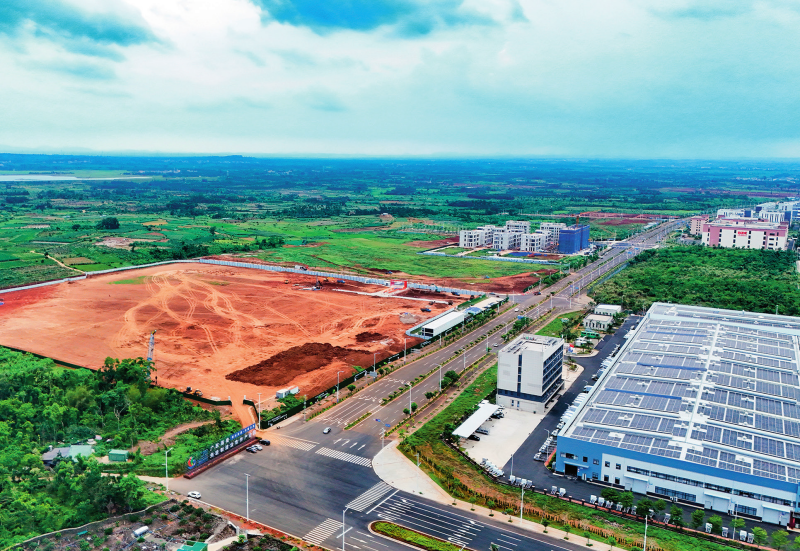
Core Viewpoint - The article discusses the collaborative development of industrial parks in Hainan, emphasizing the advantages of the Hainan Free Trade Port and the strategic partnerships with provinces like Hunan and Guangdong to enhance regional economic growth and innovation [1][4]. Group 1: Industrial Park Development - The SANY Xiangqiong (Hainan) Intelligent Manufacturing Industrial Park adopts a "two ends outside" model, importing second-hand engineering equipment from abroad, refurbishing it, and then exporting it, leveraging the free trade port policies to save on tariffs and transportation costs [4][5]. - The Xiangqiong Advanced Manufacturing Industrial Park has attracted 28 industrial projects with a total investment of 12.2 billion yuan (approximately 1.9 billion USD) within a year and a half of its establishment [2][4]. - The Guangdong-Hainan Advanced Manufacturing Cooperation Industrial Park has introduced 361 enterprises and 49 industrial projects with a total investment of 11.9 billion yuan (approximately 1.8 billion USD) [6]. Group 2: Policy and Economic Advantages - Hainan's free trade port features zero tariffs, low tax rates, and simplified tax systems, which are significant attractions for businesses looking to establish operations in the region [4][5]. - The "one line open, one line control" management system for goods entering and exiting the free trade port allows for tariff exemptions on goods that meet specific criteria, enhancing the economic appeal of Hainan [4][5]. - The expected long-term output value of the Xiangqiong Advanced Manufacturing Industrial Park is projected to reach 100 billion yuan (approximately 15.4 billion USD), generating tax revenues of 5 billion yuan (approximately 770 million USD) [5]. Group 3: Collaborative Framework - The collaboration between Hainan and other provinces has evolved from simple investment attraction to a comprehensive cooperation model involving government, industry, enterprises, and think tanks [1][7]. - The establishment of a full-chain cooperation system has been facilitated through top-level design, including signing cooperation agreements and enhancing intergovernmental communication [8][9]. - The introduction of a joint investment fund of 1 billion yuan (approximately 154 million USD) aims to attract social capital for park development and project management [13][14]. Group 4: Innovation and Standards - The partnership has led to the creation of a local standard for the maintenance and remanufacturing of second-hand engineering machinery, addressing trade barriers and enhancing export capabilities [12][13]. - Innovative investment models, such as public-private partnerships (PPP), are being encouraged to attract broader participation in park development [13][14]. - The establishment of dual incubators aims to provide comprehensive support for startups, facilitating the flow of innovation resources between Hainan and Guangdong [15].
盐城:打造长三角“飞地经济”示范区
Xin Hua Ri Bao· 2025-06-11 00:28
Core Viewpoint - Yancheng is actively exploring the "flying economy" development model to inject new momentum into regional coordinated development within the context of the Yangtze River Delta integration strategy [1] Group 1: Definition and Advantages of "Flying Economy" - The "flying economy" refers to a regional economic cooperation model that breaks administrative boundaries between economically disparate regions to achieve resource complementarity and coordinated development [1] - Yancheng has significant advantages in developing the "flying economy," including the presence of a 307 square kilometer "Shanghai flying area" in Dafeng District, which serves as the largest agricultural production and capacity cooperation base outside Shanghai [1] - Yancheng is the only city in northern Jiangsu included in the Yangtze River Delta central area, possessing deep-water ports and ample construction land, which enhances its potential for industrial transfer and port-related industries [1] Group 2: Current Projects and Development Status - Yancheng currently has multiple "flying economy" projects, with the Hu-Su Dafeng Industrial Linkage Cluster as a core initiative, established in November 2015, covering an area of 33 square kilometers [2] - The industrial cluster focuses on three major industries: new energy, new infrastructure, and new agriculture, with an annual average growth of 43.4% in industrial sales and 108.5% in industrial output value since the 14th Five-Year Plan [2] - Yancheng has also collaborated with cities like Changzhou and Suzhou to establish industrial parks, focusing on high-end equipment manufacturing and new energy industries [2] Group 3: Impact of "Flying Economy" Demonstration Zone on Industrial Development - The establishment of the "flying economy" demonstration zone can optimize and upgrade Yancheng's industrial structure by attracting high-end manufacturing and new energy projects from developed regions [3] - Projects like the Zhengtai New Energy initiative have introduced advanced photovoltaic production technology, enhancing the competitiveness of Yancheng's new energy sector and fostering a complete industrial chain [3] - The demonstration zone also enhances industrial innovation capabilities by leveraging Shanghai's research and talent resources, establishing multiple R&D platforms in collaboration with institutions like Shanghai Jiao Tong University [3] Group 4: Collaborative Development with Shanghai and Other Regions - Yancheng aims to achieve high-quality integration with Shanghai and other metropolitan areas by focusing on spatial, technological, industrial, and supply chain linkages [4][5] - The city plans to align its industrial chain with Shanghai's, facilitating industrial transfer and complementarity [5] - Yancheng is also advancing transportation integration projects and participating in the consolidation of port resources to enhance logistics efficiency and reduce costs [5]
三十个村结伴“飞”来岔路村
Liao Ning Ri Bao· 2025-06-02 01:29
Core Insights - The article highlights the successful development of the "flying land economy" in Cailu Village, which has transformed the village from poverty to prosperity through the cultivation of small berries, particularly strawberries [1][2][3] Group 1: Economic Development - Cailu Village's average income reached 23,000 yuan per person in 2024, with a collective income of 1.5 million yuan [1] - The village's collective income was 339,000 yuan in the first year of the project, with individual villagers earning over 2 million yuan [2] - By 2025, the sales revenue of colorful strawberries exceeded 5 million yuan, indicating a strong market demand [3] Group 2: Investment and Infrastructure - An initial investment of 3.7 million yuan led to the construction of 15 high-standard greenhouse facilities [2] - The establishment of a cold storage facility with a capacity of 400 tons facilitated nationwide distribution of the berries [2] - The "flying land economy" model attracted investments from 11 neighboring villages, totaling 4.7 million yuan, leading to the establishment of 29 additional greenhouses [2] Group 3: Market Expansion - Cailu Village has expanded its berry cultivation to nearly 1,000 acres, producing 310 tons of berries annually for national distribution [2] - The introduction of colorful strawberries into high-end markets has significantly increased online sales [3] - The village's leadership is planning to diversify into "seven-color strawberries" to stay ahead in the market [3]
黑龙江—浙江园区合作交流会召开
Sou Hu Cai Jing· 2025-06-01 01:12
Group 1 - The cooperation between Heilongjiang and Zhejiang showcases the complementary advantages in resources and industrial strengths, with Heilongjiang being a major agricultural base and Zhejiang leading in digital economy innovation [1] - The collaboration is a response to the strategic initiatives of "Northeast Revitalization" and "Common Prosperity," emphasizing regional coordinated development [1] - In 2024, Zhejiang enterprises signed 103 new projects in Heilongjiang with a total contract value of 24.481 billion yuan and actual funds in place amounting to 5.824 billion yuan, indicating significant potential for resource flow between the two regions [1] Group 2 - There is vast cooperation potential in areas such as grain supply and industrial chain collaboration, with Zhejiang enterprises benefiting from stable grain sources and Heilongjiang enhancing agricultural product value through Zhejiang's technology [2] - A strategic cooperation framework agreement was signed between the Zhejiang Development Zone Research Association and the Heilongjiang Development Zone Association, marking a shift from intention to practical implementation of projects [2] - The Heilongjiang Zhejiang Chamber of Commerce has 450 member enterprises in Heilongjiang, with cumulative investments of approximately 300 billion yuan, facilitating collaborations in sectors like agricultural processing and intelligent manufacturing [2] Group 3 - The "flying economy" and "reverse flying economy" models proposed by Liu Xueliang highlight the innovative cooperation approach, allowing cross-regional park construction and resource-market integration [3] - The partnership between Heilongjiang and Zhejiang demonstrates that resource differences can be opportunities for mutual benefit, fostering deeper integration of industrial chains [3] - Future projects are expected to emerge as the collaboration between the agricultural strengths of Heilongjiang and the market vitality of Zhejiang continues to develop [3]
沪苏“飞地经济”合作新模式:以重大项目牵引产业链升级
Di Yi Cai Jing· 2025-05-30 10:19
Core Insights - The "Flying Economy" model is driving the deep integration of the Yangtze River Delta region through the cooperation of Shanghai and Jiangsu in industrial parks [1][2] Group 1: Industrial Development - The Shanghai-Jiangsu cooperative industrial park, known as the "Dafeng Industrial Linkage Gathering Area," has developed 4 square kilometers and is strategically located between Dafeng urban area and the port, enhancing connectivity [1] - The gathering area focuses on three main industries: new energy, new infrastructure, and new agriculture, achieving over 10 billion yuan in sales in both 2023 and 2024, ranking third in total sales within Dafeng District [1] - Tax revenue from the gathering area exceeded 100 million yuan for two consecutive years, reaching 131 million yuan in 2024, a year-on-year increase of 24.8% [1] Group 2: Major Projects - The Zhengtai New Energy base, a significant project in the area, has a total investment of 3 billion yuan and is part of a collaborative effort among Jiangsu, Zhejiang, and Shanghai [2] - The base is projected to achieve an output value of 6.2 billion yuan and sales of 9.2 billion yuan in 2024, with a tax contribution of 95 million yuan [2] - The overall operating rate of the base is approximately 80%, with the Salt City base reaching 91% [2] Group 3: Infrastructure and Planning - The operational core of the gathering area is based on mutual connectivity between Shanghai and Jiangsu, requiring top-level planning, infrastructure development, project leadership, and technological innovation [2][3] - Collaborative efforts include over 20 specialized fields such as industry, transportation, and public welfare, guided by documents like the "Dafeng District Land Spatial Division Planning" [2] - Infrastructure development is being coordinated through investment platforms at the municipal and district levels to enhance supporting facilities [2] Group 4: Innovation and Collaboration - The cooperation between Shanghai and Jiangsu has led to the establishment of research institutes, such as the Jiangsu Coastal Low-Carbon Industry Technology Research Institute and the Qingdao University Marine Wind Power Research Institute [3] - The Nantong North High-tech Zone, a collaborative project between Jiangsu and Shanghai, has achieved a GDP output of 29 billion yuan in 2024, focusing on strategic emerging industries like automotive electronics and integrated circuits [4] - Approximately 40% of the over 300 technology-driven enterprises in the high-tech zone originate from Shanghai, with significant collaboration with Shanghai's universities and research institutions [4]