AI浏览器

Search documents
ChatGPT Atlas浏览器来了,产品经理都没用了...(原型/小红书/开发/项目管理全会)
3 6 Ke· 2025-10-22 03:32
Core Insights - ChatGPT has launched an updated browser named Atlas, allowing users to download and utilize it for various tasks, including automation in project management and social media posting [2][4][7]. Group 1: Browser Features - The Atlas browser is named after a figure from Greek mythology, symbolizing its capability to support various tasks [7]. - Users can automate tasks such as posting on platforms like Xiaohongshu and Twitter, showcasing the browser's ability to handle multiple applications seamlessly [19][23]. - The browser allows for automated UI design file retrieval from tools like MasterGO, enhancing productivity for product managers [25][27]. Group 2: Automation Capabilities - The browser can automate the creation and management of tasks in project management tools like Teambition, streamlining workflow processes [29]. - It supports automated publishing on social media platforms, significantly reducing the time required for content dissemination [19][23]. - Users can leverage AI capabilities to assist in generating content and managing projects, indicating a shift towards AI-driven productivity tools [33][37]. Group 3: User Experience and Challenges - The current user experience is hindered by the need for multiple account authentications, as users must re-enter passwords for third-party applications [39][41]. - The integration of AI with existing account systems remains a challenge, as there is no standardized method for linking AI functionalities with third-party accounts [41][42]. - Despite these challenges, the potential for AI to transform traditional roles, such as product management, is evident, as AI can handle many tasks previously performed by humans [46].

OpenAI首个AI浏览器来了,免费下载送7天会员,谷歌一键导入,附一手实测
3 6 Ke· 2025-10-22 03:30
Core Insights - OpenAI has launched its first browser, ChatGPT Atlas, which integrates ChatGPT to challenge Google's dominance in the browser market [1][3] - Atlas features include the ability to call ChatGPT from any part of the webpage, browser memory to retain context from visited sites, and an Agent mode for task automation and planning [1][3][16] Product Features - ChatGPT Atlas is currently available for macOS users with free, Plus, Pro, and Go subscriptions, while Windows, iOS, and Android support will follow [3][9] - The Agent mode is in preview for Plus, Pro, and Business users, allowing ChatGPT to assist with tasks like booking flights and editing documents [3][16] - Users can import data from other browsers like Google and Safari upon logging into Atlas [9] User Experience - Initial user experiences indicate that Atlas operates similarly to other browsers, with no significant differentiation yet [3][7] - Users can ask questions directly in the search bar, input links for content-based inquiries, or select text for editing [13][20] - Atlas can remember browsing history and suggest next steps, enhancing user interaction [16][21] Security and Privacy - Users have control over what ChatGPT can see and remember, with options to clear specific pages or entire browsing history [21][23] - The Agent mode includes security measures to prevent unauthorized access to sensitive information and actions [23] Competitive Landscape - The launch of Atlas intensifies competition in the AI browser market, with other players like Perplexity's Comet browser and Google's Gemini AI integration also vying for user attention [9][24] - Future improvements for Atlas include multi-profile support and enhanced developer tools to increase application discoverability [24]

OpenAI推出新浏览器
Di Yi Cai Jing· 2025-10-22 01:40
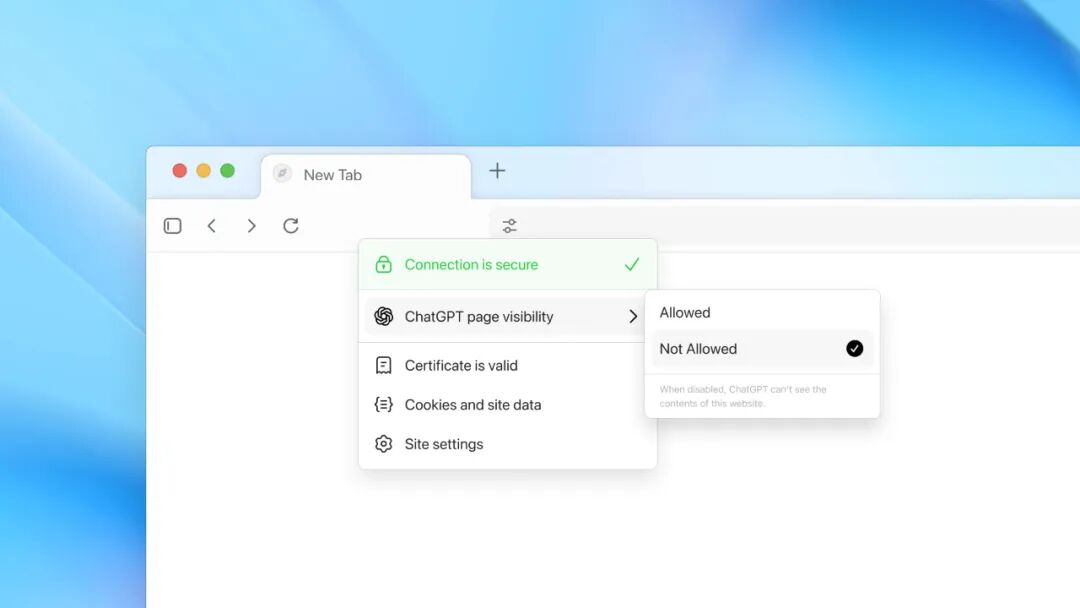
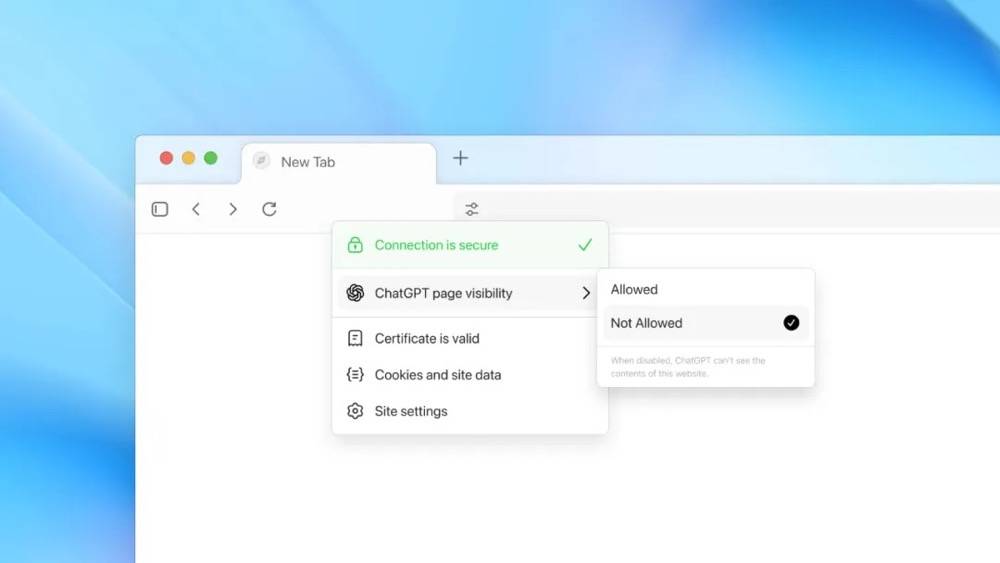
Atlas还具备隐私保护和透明度功能。OpenAI称,浏览器内所有AI生成内容均带有水印标识,同时屏幕 录制功能被暂时禁用,以防止未经授权传播。 截至收盘,谷歌母公司Alphabet股价下跌2.37%。分析人士认为,OpenAI的新尝试可能削弱Chrome的长 期优势,并开启AI代理在网页端竞争的新阶段。 责任编辑:宋雅芳 OpenAI表示,Atlas内的ChatGPT可读取网页内容并在输入框中提供实时建议,用户可指令AI打开、关 闭或书签化标签页,实现更自然的人机协作体验。目前,该功能向Plus、Pro和Business用户开放预览 版。通过代理模式,ChatGPT还可代替用户执行更复杂任务,如规划旅行、筛选商品或自动填写表格。 自2022年底推出ChatGPT以来,OpenAI的周活跃用户数已接近7亿。公司正在从聊天、视频、图像领域 延伸至网页交互层面,试图拓展人工智能应用的"最后一公里"——让模型在网页环境中直接执行任务。 业内认为,Atlas的推出标志着OpenAI首次以独立浏览器产品的形式进入与Chrome和Edge竞争的领域。 随着生成式AI的普及,AI浏览器赛道竞争日趋激烈。包括Perplexi ...

刚刚,OpenAI首个AI浏览器发布!不像Chrome,但想改变你上网的方式|附实测
3 6 Ke· 2025-10-22 00:44
Core Insights - OpenAI has launched its first browser, ChatGPT Atlas, which integrates ChatGPT capabilities directly into the browsing experience, aiming to enhance user interaction and task completion [1][26] - The browser features a sidebar for ChatGPT, allowing users to access contextual assistance while browsing, and includes memory and agent functionalities to streamline tasks [1][2][24] Features and Functionalities - The Atlas browser allows users to summon ChatGPT via a sidebar, enabling it to read and summarize webpage content, provide explanations, and assist with tasks in real-time [1][2] - AI assistance includes real-time editing suggestions and intelligent text completion in any text input field, enhancing productivity [2] - The agent mode enables ChatGPT to autonomously complete multi-step tasks, although it is currently limited to Plus, Pro, and Business users [2][24] User Experience and Privacy - Atlas incorporates a memory feature that allows ChatGPT to remember previously visited websites and context, facilitating personalized assistance [3][5] - Users have control over what information ChatGPT retains, with options to clear specific records or browsing history [3][5] - Parental controls are integrated, allowing parents to manage settings related to memory and agent functionalities [5] Competitive Landscape - Atlas is positioned as a competitor to existing AI browsers, combining features of Google search with ChatGPT's conversational abilities [26][29] - The project is led by Ben Goodger, a key figure in the development of Chrome, indicating a strong technical foundation for Atlas [27] Strategic Direction - OpenAI is shifting from a "super app" model to a product matrix approach, focusing on optimizing individual products for specific user experiences [29] - This strategy reflects a broader trend in the industry where companies are increasingly segmenting functionalities to enhance user engagement and satisfaction [29]
OpenAI首个AI浏览器发布,能改变上网的方式吗?
Hu Xiu· 2025-10-22 00:25
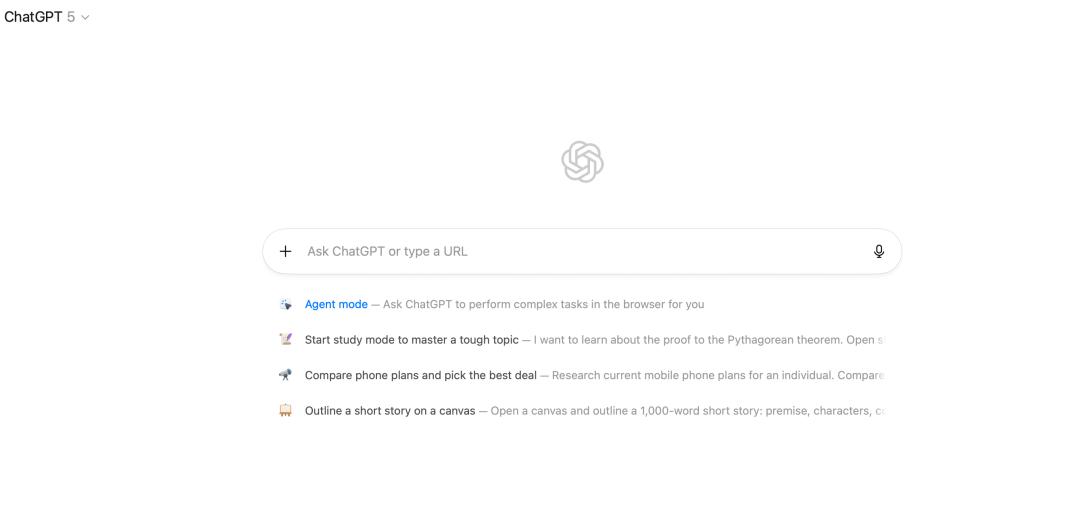
就在刚刚,OpenAI正式发布了首个浏览器ChatGPT Atlas。 这就是今天发布的Atlas要做的事。 AI协助功能:在任何打开的文本输入框中输入内容时,ChatGPT能提供实时修改建议和智能补全,帮你更高效地码字 Agent(代理)模式:能让ChatGPT在浏览器中自主完成多步骤任务 从今天开始,macOS用户就能用上了,ChatGPT免费、Plus、Pro和Go版用户都可以下载体验,而Windows、iOS、Android版本即将推出。 过去十来年,Chrome基本上是大家上网的标配入口。但如果现在有一款AI浏览器直接内置了ChatGPT,还自带记忆和Agent能力,你是否会 愿意尝试一下? 不过,Agent模式目前只对Plus、Pro和Business用户开放,而且仍处于早期阶段,在处理复杂任务时可能会出错。另外,如果设置Atlas为首选 浏览器,你也可以获得七天的会员体验,享有更高的使用额度。 OpenAI表示,Atlas是围绕ChatGPT构建的浏览器,而不是简单地把ChatGPT塞进去,其核心理念是全方位整合: 随时唤出侧边栏:点击"Ask ChatGPT"按钮,就能在任意页面右侧打开Cha ...
OpenAI推出新浏览器ChatGPT Atlas
Di Yi Cai Jing· 2025-10-21 23:10
Core Insights - OpenAI launched the AI browser ChatGPT Atlas on macOS, with plans to expand to Windows, iOS, and Android, integrating ChatGPT into web browsing for real-time assistance and task execution [1][2] - The introduction of Atlas marks OpenAI's entry into the browser market, competing with established players like Chrome and Edge [1][2] Group 1: Product Features - ChatGPT Atlas allows users to ask questions, summarize web pages, and compare products directly within the browser [1] - The browser features AI capabilities that can read web content and provide real-time suggestions, enhancing user interaction [1] - Atlas supports complex task execution through a proxy mode, enabling users to plan trips, filter products, or auto-fill forms [1] Group 2: Market Context - The AI browser market is becoming increasingly competitive, with products like Perplexity's Comet and Opera's Neon also integrating AI models [2] - Unlike competitors, Atlas focuses on "AI execution" rather than just "AI Q&A," positioning itself uniquely in the market [2] - The launch of Atlas may challenge the long-term dominance of Chrome, as indicated by a 2.37% drop in Alphabet's stock price following the announcement [2]

活久见!英伟达投资OpenAI,OpenAI投资AMD!AMD股价暴涨
Mei Ri Jing Ji Xin Wen· 2025-10-06 15:57
Group 1 - AMD's stock price surged over 37% following the announcement of a four-year agreement with OpenAI to provide hundreds of thousands of AI chips, with an option for OpenAI to acquire up to 10% equity in AMD [1][6] - The deal is expected to generate hundreds of billions in revenue for AMD and represents a significant challenge to Nvidia in the lucrative AI accelerator market [1][5] - AMD will deploy a total of 6 gigawatts (GW) of GPU computing power, starting with 1 GW of AMD Instinct MI450 GPUs planned for deployment in the second half of 2026 [3][5] Group 2 - AMD issued warrants for up to 160 million shares of common stock to OpenAI, which will be unlocked as deployment milestones are achieved [5] - The collaboration is seen as a major step for OpenAI in expanding its computing capabilities and reducing reliance on Nvidia, which currently dominates the market [5][11] - AMD's CEO stated that the partnership will combine the strengths of both companies, promoting the development of the AI ecosystem and potentially increasing AMD's AI business revenue to over $100 billion [5][6] Group 3 - OpenAI's CEO emphasized that the partnership is crucial for building the computational power needed to fully leverage AI potential, highlighting AMD's leadership in high-performance chips [6] - Despite its valuation of $500 billion, OpenAI is currently operating at a loss, with projected losses exceeding $5 billion by 2025, while its annual revenue is around $10 billion [11] - OpenAI is also exploring partnerships in Japan and South Korea to expand its market presence and secure funding for its ambitious AI infrastructure projects [12][13]


第一家AI浏览器公司,卖了43亿
创业邦· 2025-09-06 03:24
Core Viewpoint - The acquisition of The Browser Company by Atlassian for $610 million highlights the competitive landscape of AI browsers, as traditional giants like Google Chrome maintain their dominance while new entrants like Dia attempt to redefine the browsing experience [5][6][20]. Group 1: Acquisition Details - The Browser Company, known for its AI browser Dia, was acquired by Atlassian, a software company, for $610 million in cash [5][13]. - The acquisition comes at a time when Google Chrome has been cleared of antitrust concerns, allowing it to retain its market position [6][26]. - Atlassian aims to transform Dia into a "knowledge work browser" that integrates with its existing productivity tools like Jira and Confluence [13][15]. Group 2: Product Evolution - The Browser Company was founded in 2019 with the goal of reshaping the online experience, initially gaining attention with its Arc browser [9]. - Arc was built on Chromium and introduced innovative features but struggled to gain mainstream adoption due to its steep learning curve [10]. - The company pivoted to develop Dia, an AI-native browser designed to combine browsing with conversational capabilities, allowing users to interact with data across applications [10][11]. Group 3: Market Context - The browser market is currently dominated by Chrome, but new players are emerging with AI-driven functionalities that challenge traditional models [28][39]. - Companies like Google and Microsoft are integrating AI features into their existing browsers, while startups like Perplexity and Brave are also entering the space with unique propositions [25][30][34]. - The competitive landscape is intensifying as various companies vie for dominance in the AI browser segment, with significant investments and valuations indicating strong market interest [39]. Group 4: Future Implications - The acquisition is seen as a strategic move to ensure Dia's survival and growth in a competitive environment dominated by larger players [20][21]. - The ongoing regulatory scrutiny of Google may create opportunities for new entrants to capture market share, despite the challenges posed by established giants [26][39]. - The evolution of browsers towards AI capabilities suggests a significant shift in how users will interact with the web, potentially redefining work processes [40][41].


苹果+谷歌上演“王炸组合”,Siri整合Gemini,要入局AI浏览器?
3 6 Ke· 2025-09-05 09:31
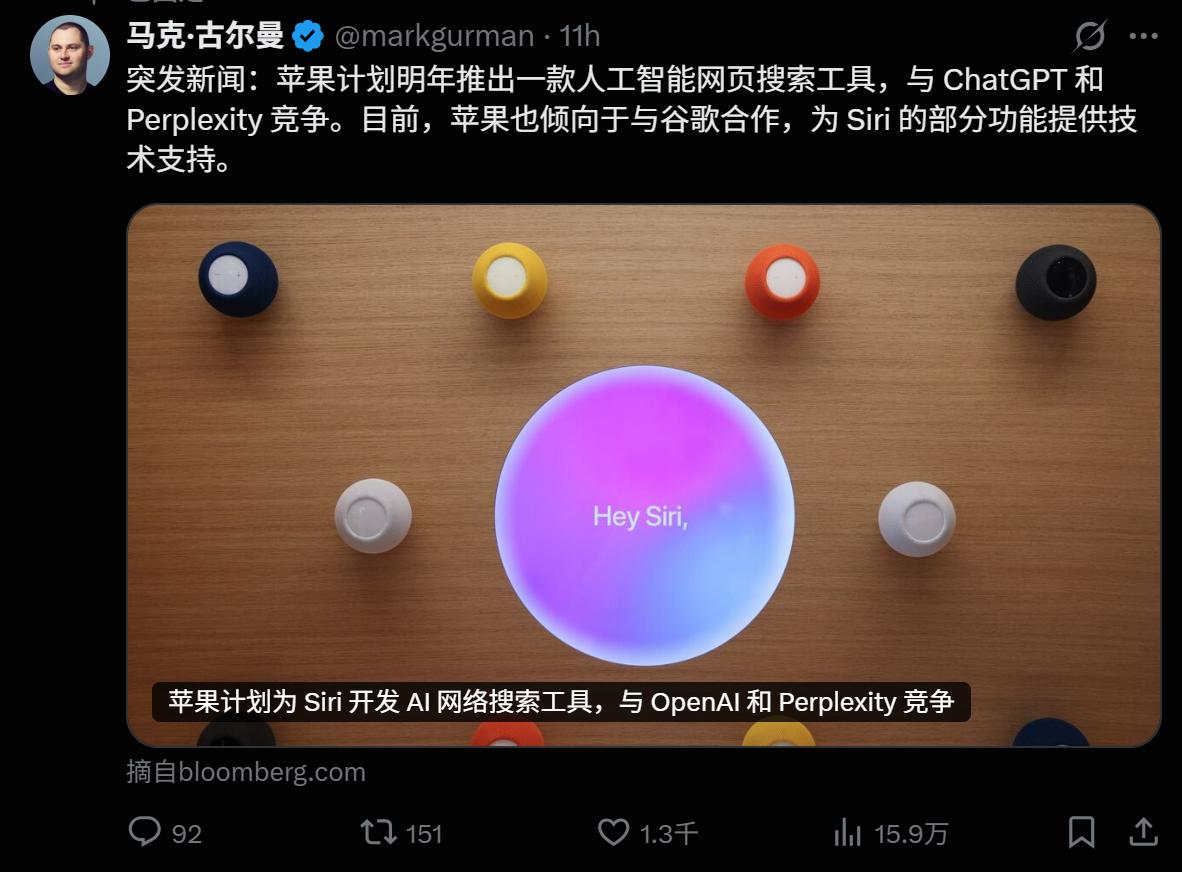
Core Insights - Apple is developing an internal system codenamed "World Knowledge Q&A" to integrate with Siri and apply similar technology to Safari and iPhone search functions [1] - The move into the AI browser space is seen as a strategy to retain users and prevent user attrition, especially as Apple has previously shown interest in collaborating with AI firms like OpenAI and Anthropic [3] - Apple has officially partnered with Google to evaluate and test Google's AI models to upgrade Siri, marking a significant collaboration given the recent antitrust issues faced by Google [4] Group 1 - Apple's collaboration with Google is driven by the need to address its AI disadvantages, as its internal AI teams have faced talent attrition, with many moving to competitors like Meta and OpenAI [6] - The partnership aims to leverage Google's advanced Gemini model, which has shown significant improvements in multi-modal understanding and processing capabilities [9] - The Gemini model's deployment on Apple's private cloud servers is expected to enhance Siri's functionality, making it a more competitive AI assistant [11] Group 2 - The upgraded Siri is anticipated to feature memory capabilities, allowing it to retain user queries and provide more relevant information, thus improving user experience [12] - Apple's strategy includes maintaining user privacy by ensuring that core processing is handled by its own models, with Gemini primarily used for information integration [16] - Despite entering the AI browser market later than competitors, Apple's large user base provides a significant advantage, potentially allowing it to dominate the market once the new features are launched [17] Group 3 - The collaboration with Google allows Apple to benefit from Google's existing revenue model while also enhancing its own AI capabilities, reducing competition in the AI browser space [19] - The success of Apple's AI upgrades may challenge existing AI browser competitors, particularly those relying on subscription models, as Apple may offer free services to attract users [20] - For users in China, the potential for similar AI upgrades exists, contingent on successful partnerships with local firms like Alibaba [21]

我的宝藏AI浏览器被43亿“贱卖”了,这可能是最好的结局
Hu Xiu· 2025-09-05 09:17
Group 1 - The Browser Company has been acquired by Atlassian for $610 million, which is a modest premium over its previous valuation of $550 million, indicating a "friendship price" [2][3]. - The acquisition reflects a strategic shift for The Browser Company, which previously faced challenges with its Arc browser due to a niche market ceiling and user engagement issues [4][9]. - The new AI browser, Dia, aims to address these challenges with a design focused on AI integration, but it still faces structural obstacles in the competitive browser market [12][14]. Group 2 - The acquisition is seen as a necessary move for The Browser Company to gain access to Atlassian's extensive distribution network and resources, which are crucial for scaling Dia in the AI browser space [30][34]. - Atlassian has a strong cash position of $2.5 billion and a large customer base, which includes over 250,000 companies, providing a solid foundation for the growth of Dia [32][33]. - The partnership is expected to enhance Dia's capabilities in enterprise collaboration, integrating features that allow for seamless interaction with Atlassian's existing products [42][46]. Group 3 - The Browser Company aims to maintain its independence post-acquisition, with CEO Josh Miller continuing to lead the team and promising that Dia will not become just an extension of Atlassian's applications [36][41]. - The collaboration is anticipated to create a new type of browser that serves as a "collaboration node," integrating various SaaS tools and enhancing productivity for users [44][45]. - The vision for Dia aligns with the broader goal of transforming browsers from mere browsing tools into comprehensive work platforms that understand user workflows and priorities [46][47].