AI陪伴

Search documents
又一批AI社交产品悄悄「死亡」了
创业邦· 2025-10-17 07:35
Core Insights - A wave of AI social companies and products has quietly "died," including both well-known models and niche applications, indicating a significant shift in the AI social landscape [6][10][11] - Despite the shutdowns, AI companionship remains a popular sector, with many products still thriving and being recognized in top AI application lists [7][9] Group 1: Market Trends - In 2023, Character.AI emerged as a strong competitor to ChatGPT, with AI companionship being one of the hottest application categories [7] - By 2025, AI companionship applications had reached 220 million downloads globally, generating $221 million in consumer spending [16] - A survey indicated that 52% of teenagers reported using AI companionship applications at least a few times a month [16] Group 2: User Experience and Challenges - Users express concerns over the shutdowns, fearing loss of emotional connections with AI characters they have developed over time [14][18] - The pricing models of AI companionship applications, which often include subscription fees and pay-per-use structures, have been criticized for being too high and complex [17] - Community engagement and stable operations are crucial for user retention, yet many applications struggle to balance emotional content value with commercial viability [17][19] Group 3: Competitive Landscape - The AI companionship sector is highly competitive, with many products facing a "death spiral" due to user growth stagnation and declining engagement [18][19] - Successful AI companionship products are increasingly focusing on content-driven and feature-rich social platforms, while others are targeting niche verticals like gaming and therapy [22][23] - Innovations such as hardware integration, multi-modal experiences, and blending real and AI social interactions are being explored to enhance user engagement [23][26]


OpenAI“解禁”成人内容,是福是祸?
创业邦· 2025-10-17 07:35
Core Viewpoint - OpenAI is set to release a new version of ChatGPT in the coming weeks, which will include a comprehensive age classification system allowing adult users to access adult content, reflecting a shift towards more personalized and less restrictive content generation [7][9][15]. Group 1: Content Moderation and User Safety - OpenAI has recognized that overly strict content restrictions may negatively impact user experience, prompting the development of new technologies to balance user safety with content freedom [9]. - The upcoming age classification system will provide tailored experiences for different age groups, allowing adult users to generate a wider range of content upon passing an "adult verification" process [9][15]. - OpenAI's adjustments aim to find a balance between user demand for diverse content and the need for safety, addressing the challenges posed by rapid AI advancements [9][18]. Group 2: Challenges and Legal Issues - The rapid development of AI has raised significant safety concerns, including issues related to suicide guidance, malicious impersonation, and the proliferation of inappropriate content [12]. - Legal actions have been initiated against AI companies, including OpenAI, for allegedly contributing to harmful outcomes, such as suicides linked to interactions with AI chatbots [12][13]. - OpenAI's introduction of a "teen" version of ChatGPT aims to protect underage users by implementing parental controls and content restrictions, although this is seen as just a starting point [13][15]. Group 3: Market Competition and User Engagement - The competition for user engagement is driving OpenAI to explore the "adult content" sector, as AI applications evolve from simple assistants to more interactive companions [18]. - Character.AI has gained popularity by allowing users to create and interact with personalized virtual characters, showcasing the potential for emotional companionship in AI [18][20]. - OpenAI's ambitions for ChatGPT include transforming it into a "virtual friend," emphasizing emotional connections and companionship as key trends in future AI development [20]. Group 4: Ethical Considerations - The potential for AI to provide emotional support raises ethical questions about dependency on virtual interactions and the impact on real-world social skills, particularly for minors [20]. - Companies must navigate the fine line between enhancing user experience and ensuring that AI does not replace essential human interactions, especially for younger users [20].

OpenAI「解禁」成人内容,是福是祸?
36氪· 2025-10-16 13:35
Core Viewpoint - OpenAI is expanding its ChatGPT capabilities to include adult content for verified users, aiming to balance user needs with safety concerns [2][5][11] Group 1: New Features and Developments - OpenAI CEO Altman announced a new version of ChatGPT that will be more personalized and interactive, resembling a friendlier AI [3] - The upcoming age classification system will allow for tailored experiences based on user age, including adult content for verified users [5][11] - OpenAI is developing new technologies to provide more freedom and diverse content while ensuring user safety [5] Group 2: Challenges and Ethical Considerations - The rapid development of AI has exposed significant safety issues, including suicide guidance and inappropriate content [7][8] - OpenAI faces criticism for the negative impacts of unrestricted content on various user types [8] - Ethical dilemmas arise regarding AI's role in emotional companionship, particularly for minors, and the potential for dependency on virtual interactions [15]
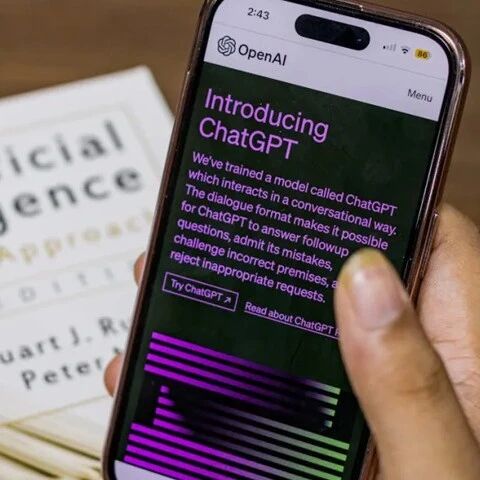
OpenAI“解禁”成人内容,是福是祸?
虎嗅APP· 2025-10-16 13:23
Core Viewpoint - OpenAI is set to release a new version of ChatGPT in the coming weeks, which will include a comprehensive age classification system allowing adult users to access adult content by December. The company aims to balance user safety with content freedom, recognizing that overly strict content restrictions can negatively impact user experience [5][7][11]. Group 1: AI and Content Regulation - OpenAI has acknowledged that strict content limitations are no longer the best approach as it navigates the complexities of AI capabilities [7]. - The upcoming age classification system will provide tailored experiences for different age groups, allowing adult users to generate a wider range of content after passing an "adult verification" process [7][11]. - The company is responding to increasing scrutiny and legal challenges related to harmful content generated by AI, including cases of suicide encouragement and other safety concerns [10][11]. Group 2: Market Competition and User Engagement - The push for adult content is driven by the need to attract and retain users in a competitive landscape, as AI applications evolve from simple assistants to more interactive companions [15][16]. - Character.AI has gained popularity by allowing users to create and interact with personalized virtual characters, showcasing the potential for emotional engagement in AI products [15][16]. - OpenAI's ambition to transform ChatGPT into a "virtual friend" reflects a broader trend in AI development, focusing on emotional connections rather than just functional capabilities [16]. Group 3: Ethical Considerations - The rise of AI companionship raises ethical questions about dependency on virtual interactions and the potential impact on real-world social skills, particularly for minors [16]. - Companies must navigate the fine line between providing emotional support through AI and ensuring that users maintain healthy social interactions in the real world [16].

OpenAI“解禁”成人内容,是福是祸?
3 6 Ke· 2025-10-15 12:51
Core Insights - OpenAI is set to release a new version of ChatGPT in the coming weeks, which will include a comprehensive age-rating system allowing adult content for verified users [1][6] - The company aims to balance user safety with content freedom, recognizing that overly strict content restrictions can negatively impact user experience [2][6] Group 1: New Features and Developments - The upcoming ChatGPT version will feature more personalized responses, making interactions feel friendlier and more natural [2] - OpenAI has developed new technologies to provide a wider range of content while ensuring user safety [2] - The age-rating system will offer tailored experiences for different age groups, with adult content available for users who pass an age verification process [2][6] Group 2: Industry Context and Challenges - The rapid development of AI has raised significant safety concerns, including issues related to suicide guidance and inappropriate content [3][4] - OpenAI's decision to allow adult content is part of a broader strategy to compete for users in an evolving AI landscape, where products are increasingly seen as companions [7][9] - Other companies, like Meta, are also implementing measures to protect younger users from harmful content, indicating a growing industry trend towards age-appropriate content management [6][9] Group 3: Market Dynamics and Future Outlook - Character.AI has gained popularity by allowing users to create and customize their virtual characters, showcasing the potential for AI in social interaction [7] - OpenAI's ambitions for ChatGPT suggest a shift from a functional assistant to a virtual friend, reflecting a trend towards emotional and social AI applications [9] - The ethical implications of AI companionship, particularly for minors, remain a critical concern as the industry navigates the balance between technology and real-world social skills [9]
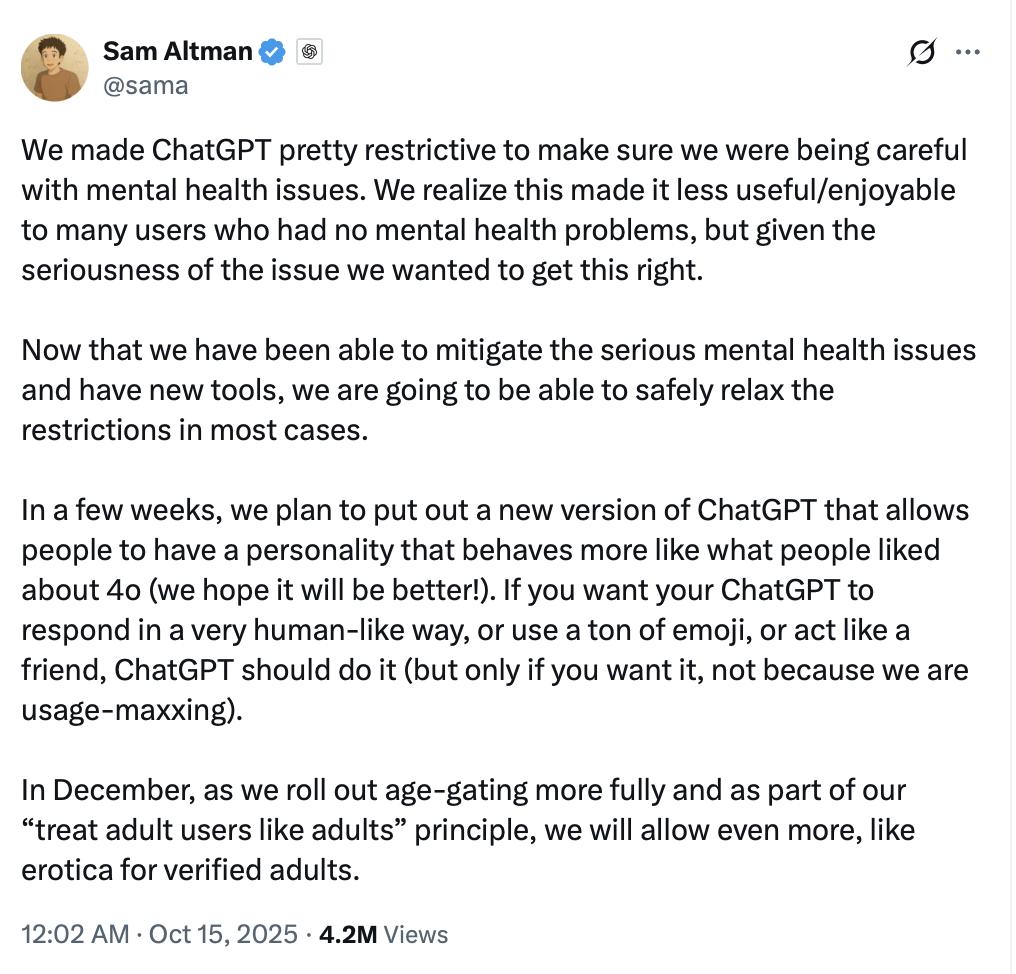
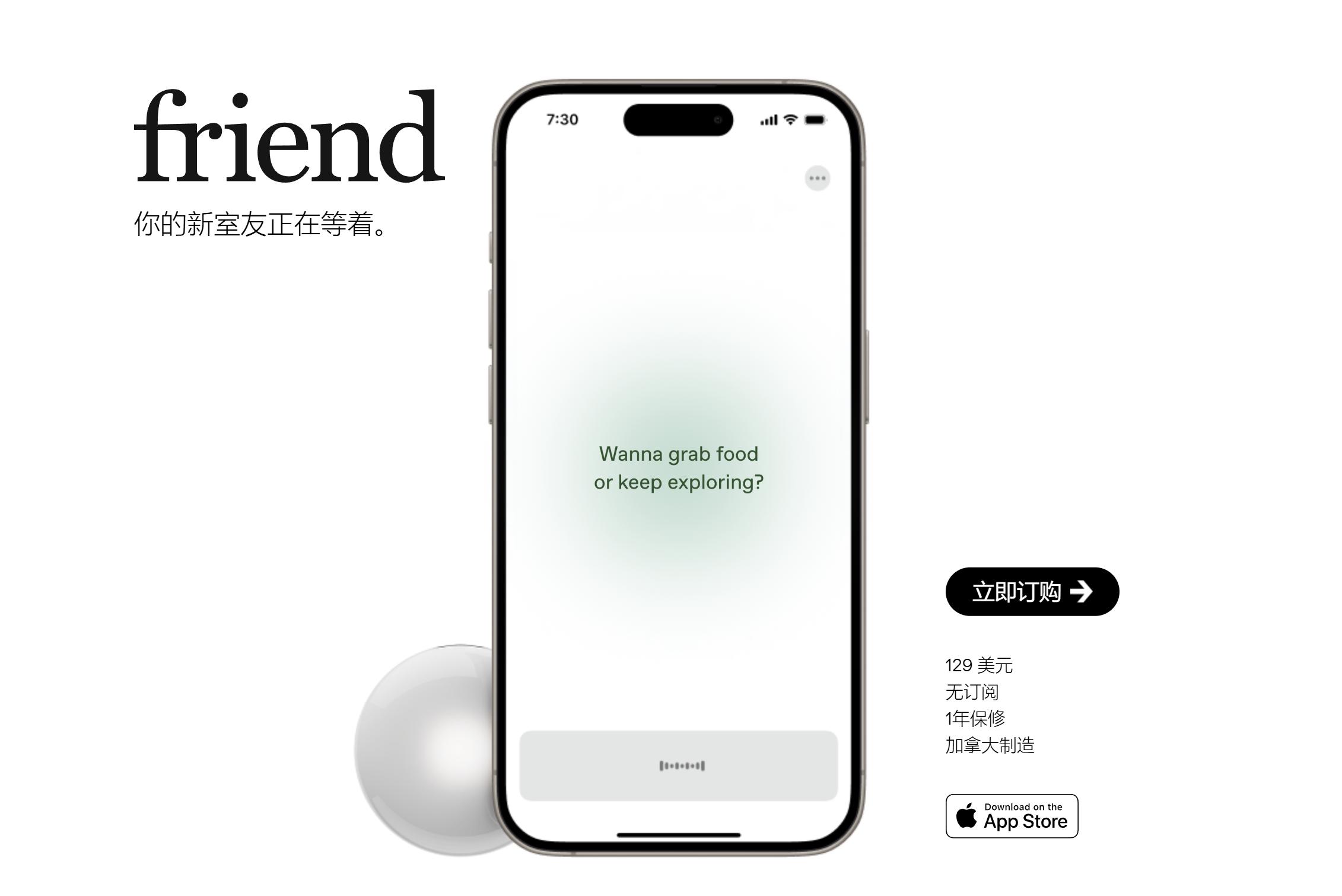
129美元的AI吊坠,被2600w人围观,却还是翻车了…
3 6 Ke· 2025-10-15 11:12
视频里,孩子那种撕心裂肺的哭喊,仿佛失去的不是一堆电路和塑料,而是一个有血有肉的伙伴。这件事很简单,却像一个引子,把一个宏大的话题摆在了 我们面前—— 在这样一个人与人之间仿佛隔着屏幕的时代,孤独感正成为一种普遍的情绪。 于是,当别的AI公司还在宣传手机里的AI助手时,一家名叫Friend的初创公司却开始尝试扮演"造物主",他们没有号称取代iPhone,而是瞄准陪伴这一卖 点,希望把一个能倾听、能回应的朋友带到人们的日常生活之中。 近段时间,估计蛮多人都刷到过那个"小女孩因AI陪伴玩具损坏而崩溃大哭"的视频吧。 (图源:Friend) 一个能陪你一起看电影、聊美食,打游戏、去远足,最重要的是永不抱怨的朋友……这个设定太诱人了,以至于在预售阶段就引发了巨大的关注和讨论,很 快就为Friend在各大网站上赢得了超过2600w人的关注。 按照创始人Avi Schiffmann的想法,如果故事就这样顺利进行下去,那接下来应该就是产品发货,体验有口皆碑,用户交口称赞,一举成为硅谷科技新秀云 云。 可惜,Friend不出意外地翻车了。 售价不菲的AI朋友 你可能会想问,Friend究竟是什么样的产品? 想象一下,一个可以 ...
午评:沪指涨0.10% 两市成交额缩量近4000亿元
Zhong Guo Jin Rong Xin Xi Wang· 2025-10-15 04:03
Market Overview - The three major indices opened slightly higher, with the Shanghai Composite Index at 3869.25 points, up 0.10%, and a trading volume of 598 billion [1] - The Shenzhen Component Index closed flat at 12895.25 points with a trading volume of 672 billion, while the ChiNext Index rose 0.22% to 2962.56 points with a trading volume of 297 billion [1] - Total trading volume in the Shanghai and Shenzhen markets was 1.27 trillion, a decrease of 398.5 billion compared to the previous trading day [1] Sector Performance - The consumer sector showed strong activity, with stocks like Guoguang Chain achieving three consecutive trading limits [2] - Domestic software concept stocks rebounded, with Jiuqi Software and Rongji Software both hitting trading limits [2] - The innovative drug sector was active, with stocks such as Guangshengtang and Anglikang reaching trading limits, and Apac Pharmaceutical achieving two consecutive trading limits [2] - Conversely, the military industry sector weakened collectively, with Beifang Changlong dropping over 10% [2] - The semiconductor sector exhibited significant divergence, with Zhichun Technology hitting the trading limit down [2] Institutional Insights - Jin Xin Fund suggests that pullbacks in high-position stocks should not be overly concerning, as tactical trade upgrades may lead to dynamic stabilization [3] - Short-term capital may flow into defensive sectors like finance due to risk aversion, while long-term focus remains on rare earths, domestic substitution, and military industries [3] - Huatai Securities notes that the capital market is undergoing profound reforms, with a low interest rate environment accelerating the flow of institutional and retail funds into equity markets [3] - The firm emphasizes that now is a critical period to seize strategic recovery opportunities in the brokerage sector, focusing on Hong Kong stocks with better valuations and A-share leaders with cost-effectiveness [3] Economic Indicators - The National Bureau of Statistics reported a 0.3% year-on-year decline in consumer prices for September, with food prices down 4.4% and non-food prices up 0.7% [5] - In the first nine months, the average consumer price index decreased by 0.1% compared to the same period last year [5] - The National Taxation Administration revealed that the manufacturing sector benefited from tax reductions and refunds totaling approximately 1.3 trillion in the first eight months of the year [6] - Manufacturing sales revenue increased by 4.7% year-on-year, accounting for 29.8% of total corporate sales revenue [6] Company Developments - New Kailai's subsidiary, Qiyunfang, launched two EDA design software products with complete independent intellectual property rights at the Bay Area Semiconductor Industry Ecological Expo [7] - The EDA design software reportedly achieves industry-leading performance metrics, with a 30% improvement over industry benchmarks and a 40% reduction in hardware development cycles [7]
中信证券:AI陪伴技术升级与玩法融合催生商业机会
Di Yi Cai Jing· 2025-10-15 00:20
(文章来源:第一财经) 中信证券研报表示,看好AI在陪伴、互动与娱乐等多元场景的落地潜力,其中AI陪伴是最具想象空间 的方向之一。AI正推动陪伴应用在情感交互、剧情玩法与具身化体验上持续演进,并有望通过长时记 忆、多模态与个性化推荐的突破,显著提升用户粘性与付费潜力。我们认为我国头部厂商将在模型与内 容生态的支撑下,率先实现商业化验证,并在用户留存、付费转化和场景延伸方面积累优势,驱动行业 加速成长。 ...

AI 陪伴产品潮来临:下一代教育硬件正在「长出温度」
3 6 Ke· 2025-10-13 23:57
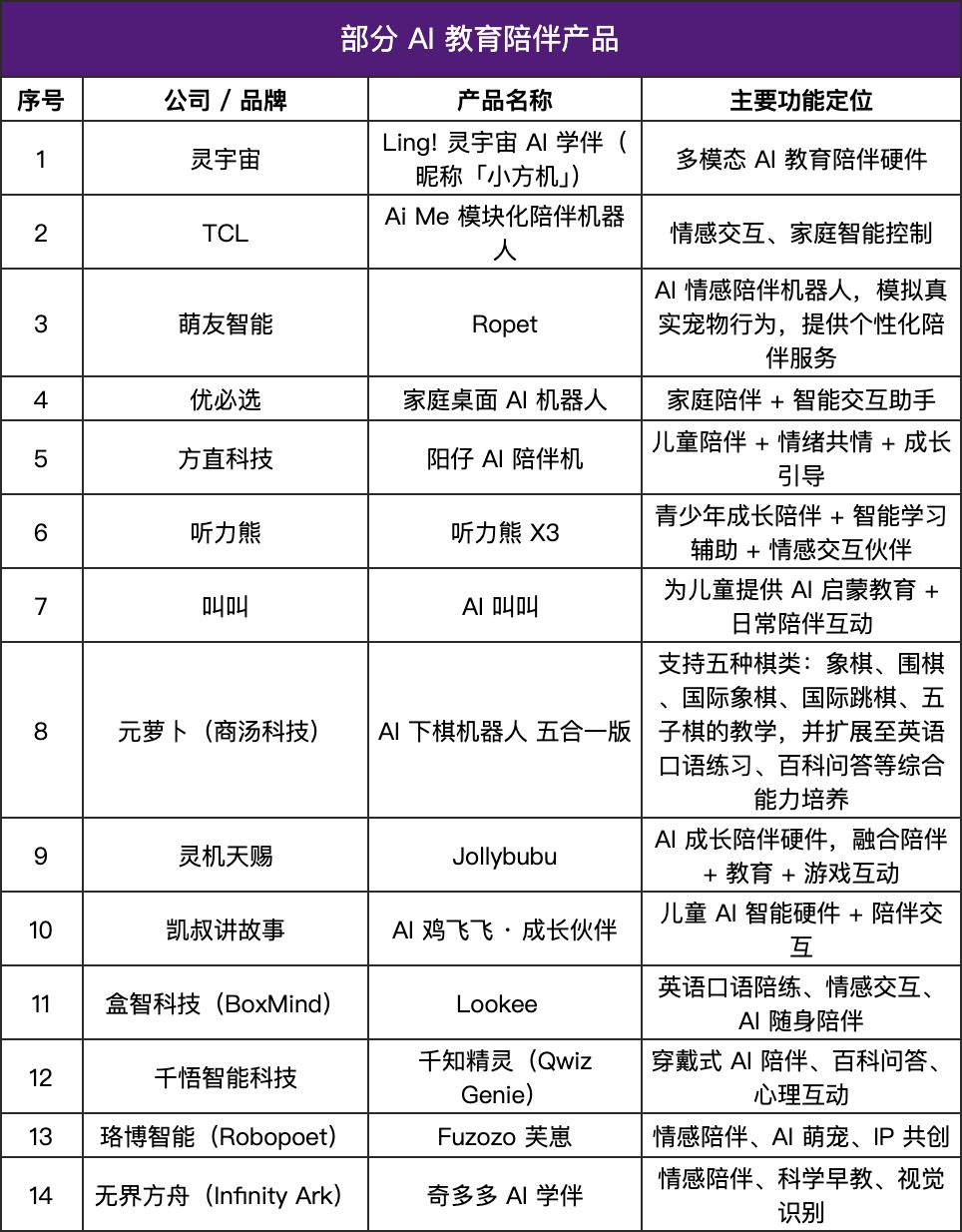
Core Insights - The rise of AI companionship products is driven by a shift from functional tools to emotional feedback systems, allowing AI to take on relational roles rather than just executing tasks [3][4] - A significant market opportunity exists, with the global "AI + emotional companionship" market projected to grow from approximately $30 million to between $70 billion and $150 billion, representing an increase of over 2000 times [1][5] - The demand for AI companionship is fueled by increasing social anxiety, loneliness, and fragmented time, with only 4.6% of users feeling their companionship needs are fully met [4][5] Industry Overview - AI companionship products have evolved into a complete emotional economy chain, encompassing models, hardware, software, and application scenarios [5][6] - The market for AI companionship is growing rapidly, driven by both demand for emotional support and advancements in AI model capabilities, with costs decreasing by approximately 75% annually [5][6] - The education sector is seeing specific applications of AI companionship by 2025, with AI designed to understand students and provide emotional support [6] Product Development - AI companionship products are transitioning from functional devices to more personalized and emotionally responsive entities, with a focus on emotional interaction and context awareness [8][9] - The evolution of AI products is characterized by lighter forms, more integrated capabilities, and a shift towards personalized content that imbues AI with emotional narratives [8][9] Regulatory Landscape - Concerns about emotional dependency and manipulation in AI companionship are prompting regulatory measures, with various countries implementing guidelines to ensure ethical AI use in sensitive areas like education and mental health [10][11] - The Chinese market emphasizes hardware and family companionship, while overseas products focus on software innovation and emotional algorithm governance, balancing technological understanding with humanistic care [11][12] Market Trends - AI companionship products are emerging as a new category that spans education, family, elderly care, and social interaction, moving beyond traditional functional robots to explore deeper emotional connections [12][13] - The trend indicates a shift from viewing AI as mere tools to recognizing them as entities capable of forming emotional bonds, with a focus on emotional intelligence in educational applications [13]
国产游戏理解模型刷新SOTA,对话逗逗AI CEO:开源模型+行业数据是突破关键
量子位· 2025-10-11 09:01
Core Insights - The article highlights the significant impact of domestic open-source models in the AI industry, particularly in the gaming sector, as evidenced by the performance of LynkSoul VLM v1 at the Tokyo Game Show [1][2]. Group 1: Model Performance - LynkSoul VLM v1 outperformed leading closed-source models like GPT-4o, Claude 4 Sonnet, and Gemini 2.5 Flash in game understanding, achieving higher accuracy in visual understanding, game context comprehension, and natural language expression [10][11]. - In a test scenario within "League of Legends," LynkSoul VLM v1 scored 3.44 in vision understanding accuracy, 3.29 in game understanding, and 2.91 in natural expression, significantly surpassing the scores of its competitors [11]. - The model demonstrated robust generalization capabilities across various games, maintaining superior performance in the same three core metrics [12]. Group 2: User Engagement and Data Accumulation - The success of LynkSoul VLM v1 is attributed to the accumulation of over 8 million game player interactions, which provided valuable data for model training and refinement [18][19]. - The model's ability to understand and respond to real-time game scenarios is enhanced by user participation and data collection, which are critical for its development [19]. Group 3: Technical Innovations - The model's latency for game interactions is currently between 1.5 to 2 seconds, with ongoing efforts to reduce this through local processing and smaller model implementations [20][21]. - Long-term memory capabilities are achieved through a combination of thematic indexing and vector retrieval, allowing the AI to recall past interactions and provide personalized responses [23][24]. Group 4: Market Positioning and Future Outlook - The company aims for global expansion, having already launched its product in overseas markets with positive user engagement, particularly in English and Japanese-speaking regions [43][44]. - The future strategy includes integrating hardware with software solutions, ensuring that the AI companion can operate across various platforms and devices [36][37].