
粮食安全

Search documents
在埃及荒漠中浇灌发展绿洲(共创繁荣发展新时代)
Ren Min Ri Bao· 2025-10-01 22:11
Core Viewpoint - The article highlights the significant impact of the Oweinat water well project in Egypt, led by China National Petroleum Corporation (CNPC), in transforming desert land into arable farmland, thereby contributing to Egypt's economic development and improving the livelihoods of local communities [5][6][10]. Group 1: Project Overview - The Oweinat water well project aims to drill 3,000 wells over five years, covering an irrigation area of 3,000 square kilometers [6]. - As of mid-September 2023, 141 wells have been completed, with 125 wells finished in the first phase, providing irrigation for crops such as wheat, alfalfa, and corn [6][7]. - The project employs approximately 190 Chinese and Egyptian workers, operating 24 hours a day with nine drilling teams [6]. Group 2: Agricultural Impact - The irrigation provided by the water wells has led to significant agricultural productivity, with corn yielding two harvests per year and wheat producing 3 tons per feddan (approximately 4,200 square meters) [7]. - The project has also benefited sugar beet farms in Minya Province, where the water wells support irrigation for 30,000 feddans, resulting in increased yields [7]. Group 3: Community Benefits - The water well project has been described as a "timely rain" for local communities, addressing water scarcity issues and improving living conditions [8]. - Local farmers have expressed gratitude for the stable irrigation sources, which have led to flourishing crops and economic opportunities [8][10]. Group 4: Technical and Operational Challenges - The project faces challenges such as complex desert geology, extreme weather conditions, and logistical issues related to heavy drilling equipment [9]. - CNPC's drilling teams have achieved a remarkable efficiency of drilling one well approximately every seven days, earning recognition from the Egyptian government [9]. Group 5: International Cooperation - The project exemplifies successful international cooperation in addressing food security and ecological restoration challenges [10]. - CNPC aims to further expand cooperation with Egypt in agricultural development and other sectors as bilateral relations deepen [10].


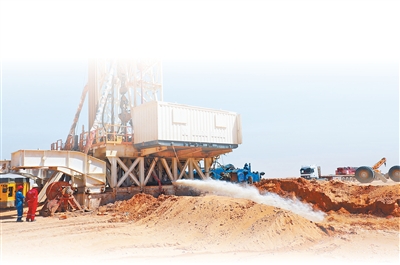
中企完成680余口水井施工—— 在埃及荒漠中浇灌发展绿洲(共创繁荣发展新时代)
Ren Min Ri Bao· 2025-10-01 21:51
Core Insights - The project by China Zhongman Group in Egypt has successfully transformed desert land into arable farmland through the drilling of over 680 wells, significantly contributing to the local economy and improving the livelihoods of residents [1][2]. Group 1: Project Overview - The Owainat well project, initiated by Zhongman Egypt Company, aims to drill 3,000 wells over five years, covering an irrigation area of 3,000 square kilometers [2]. - As of mid-September 2023, 141 wells have been completed, with 125 wells finished in the first phase, providing irrigation for crops such as wheat, alfalfa, and corn [2][3]. Group 2: Agricultural Impact - The availability of irrigation water has led to significant agricultural improvements, with crops like corn achieving two harvests per year and wheat yielding 3 tons per feddan (approximately 4,200 square meters) [3]. - The project has also benefited sugar beet farms in Minya Province, where the wells provide enough water to irrigate 30,000 feddans, resulting in increased yields [3]. Group 3: Community Benefits - The well-drilling efforts have addressed water scarcity issues in local villages, with residents expressing gratitude for the timely arrival of water sources [4]. - The project has enhanced the quality of life for local communities, with the company emphasizing the importance of utilizing Chinese technological advantages to improve living standards [4]. Group 4: Technical Achievements - Zhongman Egypt Company has achieved a drilling efficiency of approximately one well every seven days, gaining recognition from the Egyptian government for its operational effectiveness [5]. - The project team has successfully navigated challenges such as complex geological conditions and extreme weather, showcasing their technical and equipment capabilities [5]. Group 5: International Cooperation - The water well project is seen as a model for sustainable development in arid regions, highlighting the potential of international cooperation in addressing food security and ecological restoration [6]. - The chairman of Zhongman Group expressed intentions to further expand cooperation between China and Egypt in agricultural development and other sectors [6].
科特迪瓦与意大利签署1.34亿欧元粮食投资协议
Shang Wu Bu Wang Zhan· 2025-10-01 15:07
Core Insights - The Ivorian Minister of Agriculture, Ajumani, signed an investment agreement worth €134 million with Italian agricultural giant Bonifish Ferraresi (BF) [1] - The agreement aims to establish and develop pilot farms in Tagadi to reduce Côte d'Ivoire's reliance on wheat and rice imports while promoting crops such as yam, maize, millet, chili, and eggplant to enhance agricultural output and food security [1] - Côte d'Ivoire has been importing approximately $2.9 billion worth of food annually from 2021 to 2023, primarily consisting of rice, soft wheat, and edible flour, as reported by UNCTAD in July 2022 [1] - The Ivorian government is encouraging private sector investment to increase local production and reduce food import dependency [1] - BF Group is expanding its operations in West Africa, having already established collaborations with countries like Ghana and Senegal [1]
联合国项目事务署与南苏丹签署2570万美元农业合作协议
Shang Wu Bu Wang Zhan· 2025-10-01 15:07
Core Points - The United Nations Office for Project Services (UNOPS) signed a $25.7 million cooperation agreement with the South Sudan government to implement the South Sudan Livelihoods and Resilience Project (SSLRP) [1] - The project is funded by the International Fund for Agricultural Development (IFAD) and aims to enhance food security, improve climate resilience, and develop community infrastructure in South Sudan [1] - The initiative will benefit over 93,700 households across five states, focusing on vulnerable groups, including displaced persons, returnees, and individuals with disabilities, with an estimated 60% of beneficiaries being women and 70% being youth [1] - UNOPS will act as a third-party partner, managing community development planning and agricultural investment funds, as well as implementing community mobilization, providing agricultural subsidies, repairing roads, building smart infrastructure, and training local personnel [1]
适应种业发展新形势 法治护航农业“芯片”
Guang Xi Ri Bao· 2025-10-01 03:33
Core Points - The revised regulations on crop seed management in Guangxi aim to enhance food security and promote high-quality agricultural development, effective from December 1 [1][2] - The regulations include new provisions for the recognition of non-main crop varieties, addressing gaps in seed management and fostering innovation in breeding [1][2] Group 1 - The revised regulations were passed by the 14th Guangxi People's Congress and are designed to adapt to new developments in the seed industry [1] - The regulations improve systems for seed production licensing, variety management, introduction registration, and seed source protection [1] - The introduction of a recognition system for non-main crop varieties, such as winter melon and edible fungi, aims to support local agricultural research and seed enterprises [1] Group 2 - A new chapter on "Support Measures" has been established, providing specific support in six areas including funding, talent development, and results transformation to promote seed industry revitalization [2] - The legislative process involved a five-month verification study in Nanning and Yulin to assess the practicality and effectiveness of the revised regulations [2]
新华社:高质量完成“十四五”规划|近5年我国新增恢复和改善灌溉面积超2亿亩
Shui Li Bu Wang Zhan· 2025-09-30 15:16
Group 1 - The core viewpoint emphasizes the importance of water management in ensuring food security, highlighting the modernization of irrigation systems and the increase in irrigated land area [1] - Over the past five years, 1,959 large and medium-sized irrigation areas have been modernized, resulting in the addition of over 200 million mu of restored and improved irrigation area [1] - By the end of 2024, the irrigated area of arable land is expected to increase by 49 million mu compared to the end of the 13th Five-Year Plan, with over 80% of grain production coming from this irrigated area [1] Group 2 - The Ministry of Water Resources is focused on enhancing agricultural water efficiency, establishing a comprehensive policy system for water-saving irrigation, including scientific irrigation systems and water pricing policies [1] - By the end of 2024, the area of water-saving irrigation projects is projected to reach 638 million mu, a 12.5% increase from the end of the 13th Five-Year Plan, with a 4% reduction in average water usage per mu of irrigated land [1] - The efficiency of water supply has improved, with the proportion of rural population served by large-scale water supply projects increasing by 15 percentage points compared to the end of the 13th Five-Year Plan [2] Group 3 - China has established the world's largest rural centralized water supply system, significantly improving drinking water conditions for rural populations [2] - By the end of the 14th Five-Year Plan, the national tap water coverage rate in rural areas is expected to reach 96% [2]
省十四届人大常委会第二十次会议闭幕 刘宁主持并讲话
He Nan Ri Bao· 2025-09-29 10:50
Group 1 - The Henan Provincial People's Congress passed several important regulations, including the Social Governance Regulation and the Food Security Guarantee Regulation, emphasizing the need for effective implementation and public awareness [1] - The meeting highlighted the importance of food security as a national priority, focusing on enhancing grain production, storage, and circulation, while also improving the competitiveness of agricultural products [1] - Legal aid work was discussed, with a focus on improving access for vulnerable groups to ensure social justice and fairness [1] Group 2 - The meeting reviewed drafts of new regulations, including the Elderly Meal Service Regulation and the Private Economy Promotion Regulation, urging relevant parties to refine these drafts based on feedback [2] - Reports on various issues, including the elderly meal service, anti-corruption efforts, and the handling of petitions, were presented, with a call for the provincial government to address the recommendations [2] - The meeting also addressed the handling of representatives' suggestions and emphasized the importance of political responsibility in addressing these issues [2]
“粮食安全看山东”之曲阜:打造区域粮食安全新格局
Zhong Guo Fa Zhan Wang· 2025-09-29 07:34
Core Viewpoint - The city of Qufu in Shandong Province is implementing measures to enhance food security, focusing on grain management, storage reforms, and market circulation to strengthen the regional food security foundation [1][2][3] Group 1: Food Security Management - Qufu has established a comprehensive reserve management system, ensuring the safety of grain reserves with a total storage capacity of 90,000 tons, including wheat, flour, and soybean oil [1] - The city has developed several management regulations to enhance the quality and safety of local reserves, including the "Qufu Local Reserve Grain Quality Safety Management Measures" [1] Group 2: Grain Purchase and Storage Policies - The city prioritizes summer grain purchases, organizing discussions to analyze market conditions and mobilizing various purchasing entities to ensure compliance with national grain purchase policies [2] - Qufu has successfully completed annual reserve grain rotation and implemented quality grain projects to support the development of the grain industry, enhancing brand influence through participation in national events [2] Group 3: Emergency Response and Market Regulation - Qufu is strengthening its emergency food supply system, ensuring that emergency processing, storage, and distribution enterprises operate effectively to maintain necessary stock levels [3] - The city is intensifying market supervision and enforcement of food safety laws, employing various inspection methods to combat illegal activities that harm farmers and disrupt the grain market [3]
“粮食安全看山东”之济宁:全方位夯实粮食安全根基
Zhong Guo Fa Zhan Wang· 2025-09-29 07:25
Core Viewpoint - The Jining Development and Reform Commission is focusing on ensuring food security and promoting high-quality development, leading to significant improvements in food safety and macro-control capabilities in the region [1]. Group 1: Food Security and Political Responsibility - The city emphasizes the importance of land protection and food security, establishing a robust mechanism for coordination and implementation [1]. - Since 2016, Jining has maintained an excellent rating in provincial food security assessments, with no deductions in the food security performance indicators [1]. Group 2: Macro-Control and Storage Capacity - Jining has 40 local grain storage facilities, ranking second in the province, with a significant increase in macro-control capabilities for the grain market [2]. - The city has optimized its grain storage layout and variety structure, achieving full coverage of grain types for storage [2]. Group 3: Market Stability and Regulation - The city has initiated special actions for grain market regulation, enhancing administrative enforcement and ensuring effective supervision [3]. - A total of 64 inspections have been conducted during the summer grain purchasing period, ensuring smooth operations [3]. Group 4: Emergency Supply Capacity - Jining has established a comprehensive emergency supply network with 275 grain emergency guarantee enterprises, covering urban and rural areas [4]. - The city has met the storage standards for disaster relief materials, continuously improving its emergency supply capabilities [4]. Group 5: Economic Growth in Grain Industry - The city has 89 registered grain and oil processing enterprises, with significant revenue generation from leading companies [4]. - Jining has successfully applied for provincial demonstration projects and funding for grain processing equipment updates [4]. Group 6: Modernization of Storage Facilities - Jining has developed a comprehensive grain storage system, with a reduction in storage loss rates to 0.4%, better than the provincial average [5]. - The city has implemented remote monitoring for all storage facilities, enhancing the safety and management of grain storage [5]. Group 7: Food Safety and Quality Monitoring - The city has established a monitoring system for food quality safety risks, ensuring compliance with quality inspection protocols [6]. - Regular inspections have confirmed the stability of grain quality in storage, with all stocks deemed suitable for storage [6]. Group 8: Future Development Plans - Jining aims to enhance its food and material reserve safety system, focusing on high-quality development and effective regulation [7]. - The city plans to strengthen safety training and awareness in the grain industry to ensure ongoing improvements in safety production [7].
水利部:近5年新增恢复和改善耕地灌溉面积超2亿亩
Zhong Guo Xin Wen Wang· 2025-09-29 03:50
Core Points - The Ministry of Water Resources reported significant achievements in high-quality water management during the "14th Five-Year Plan" period, including the modernization of irrigation systems and increased irrigated land area [1][2] Group 1: Achievements in Irrigation - Over the past five years, 1,959 large and medium-sized irrigation areas have been modernized, resulting in the addition and restoration of over 20 million acres of irrigated land [1] - By the end of 2024, the total irrigated area of arable land is expected to increase by 4.9 million acres compared to the end of the "13th Five-Year Plan," with over 80% of the grain production coming from irrigated areas [1] Group 2: Measures for Food Security - The Ministry has implemented three key strategies to enhance water security for food production: developing modern irrigation areas, precise disaster response, and improving agricultural water efficiency [2] - In response to severe droughts, targeted actions were taken, including the coordinated management of 75 large and medium-sized reservoirs, which supplied 6.2 billion cubic meters of water to ensure irrigation for 18.3 million acres of autumn crops [2] - The establishment of a comprehensive agricultural water-saving policy framework has led to a 12.5% increase in water-saving irrigation areas, reaching 63.8 million acres by the end of 2024, while reducing average water usage per acre by 4% [2]