
人类命运共同体

Search documents
深化文明互鉴 汇聚前行力量——习近平主席致信祝贺大埃及博物馆开馆引发热烈反响
Xin Hua She· 2025-11-03 16:55
Core Points - President Xi Jinping's congratulatory letter on the opening of the Grand Egyptian Museum emphasizes the importance of deepening cultural exchanges between China and Egypt, aiming to inject new momentum into their comprehensive strategic partnership and contribute to building a community with a shared future for mankind [1][4][5] Group 1: Cultural Exchange and Cooperation - The letter highlights the significance of the Grand Egyptian Museum in preserving and transmitting ancient Egyptian civilization, showcasing China's respect and appreciation for Egypt's cultural heritage [1][2] - Chinese and Egyptian scholars express their commitment to enhancing practical cooperation and cultural exchanges, with successful events like the "Ancient Egyptian Civilization Exhibition" held in Shanghai [2][3] - The collaboration between Chinese archaeological teams and Egypt in exploring ancient sites is seen as a vital step in promoting mutual understanding and cultural heritage protection [4][5] Group 2: Future Prospects - The Grand Egyptian Museum is viewed as a cultural gift to humanity, symbolizing the enduring connection between the two ancient civilizations [1][2] - There are plans for future exhibitions and comparative studies between ancient Egyptian and Chinese civilizations, aiming for a two-way cultural exchange [3][4] - The letter from President Xi Jinping is perceived as a call for both nations to work together towards a shared future, emphasizing the role of civilization in shaping the future [4][5]
记者手记:长远·共同·初心——习近平主席韩国之行的时代启迪
Xin Hua She· 2025-11-03 16:55
Group 1 - The core theme of Xi Jinping's visit to South Korea emphasizes "long-term" perspectives in international relations and cooperation [2][6] - Xi Jinping highlighted the importance of "common" goals, advocating for collaborative efforts among major powers to address global challenges [6][7] - The visit reflects China's commitment to historical awareness and strategic foresight in shaping its foreign policy [3][5] Group 2 - The APEC meeting served as a platform for Xi Jinping to reiterate the significance of maintaining an open and inclusive economic environment in the Asia-Pacific region [8][10] - Xi Jinping's remarks on Shenzhen illustrate China's rapid development and its role as a model for global economic growth [10][11] - The emphasis on "初心" (original intention) in APEC's mission underscores the need for sustained cooperation to promote economic growth and enhance people's well-being [8][9]
赵乐际、王沪宁分别会见斯洛文尼亚国民委员会主席洛特里奇
Xin Hua She· 2025-11-03 12:59
洛特里奇高度评价习近平主席提出的"一带一路"倡议和四大全球倡议,高度认同构建人类命运共同 体理念,高度赞赏中国推动共同发展、公平正义的积极作为,表示斯方高度重视发展对华关系,坚定恪 守一个中国原则,愿同中方携手共谋未来。 王勇、王东峰等参加有关会见。 洛特里奇表示,斯中坚持相互尊重、团结合作,政治互信不断增强。斯方坚持一个中国原则,高度 赞赏中方提出的系列全球倡议,愿加强双方各领域交流合作,共建"一带一路",共同维护国际公平正 义。 王沪宁在会见时表示,今年以来,在两国元首战略引领下,中斯各层级、各领域交往对话频密,有 效增进双方了解和信任。中方赞赏斯方恪守一个中国原则。中方愿同斯方一道,增进各领域交往,深化 互利合作,携手共同发展,推动双边关系再上新台阶。中国全国政协愿同斯国民委员会进一步深化互学 互鉴,助力中斯关系取得更大发展。 新华社北京11月3日电(记者王宾)全国人大常委会委员长赵乐际、全国政协主席王沪宁3日在北京 分别会见斯洛文尼亚国民委员会主席洛特里奇。 赵乐际在会见时表示,中斯建交33年来,始终坚持平等相待、互尊互信、互利共赢。当前中斯关系 保持平稳健康发展,各层级交往密切。中方愿同斯方一道,继 ...
第七届中法文化论坛在长沙开幕
Xin Hua She· 2025-11-03 12:28
丁仲礼在致辞中表示,多元共生是文明存续的根基和创新创造的源泉,文明的生命力在于"和而不 同"。面对单边主义与文明冲突论的回潮,中法两国应携手"和谐共进",以文化交流架起中法人民心灵 相通的桥梁,共同推进人类命运共同体理念的实现。期待双方在文化科技融合、文化贸易发展等领域凝 聚更多共识,共促文化蓬勃发展、共享文明进步红利。 本届论坛以"多元共生与和谐共进——开辟中法文化交流新格局"为主题,旨在进一步促进两国文化 在多元共生中相互借鉴、和谐共进,推动中法文化交流迈上新高度。 新华社长沙11月3日电 11月3日,由欧美同学会、法国展望与创新基金会共同主办的第七届中法文 化论坛在湖南省长沙市开幕。全国人大常委会副委员长、欧美同学会会长丁仲礼出席。 ...
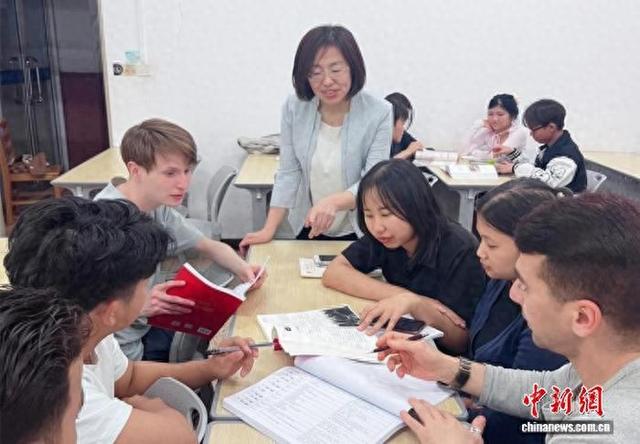
从三晋大地走向世界舞台:山西大学留学生如何“读懂中国、链接世界”
Zhong Guo Xin Wen Wang· 2025-11-03 12:12
作者 杨杰英 张颖 中新网太原11月3日电 题:从三晋大地走向世界舞台:山西大学留学生如何"读懂中国、链接世界" 在山西大学一场别开生面的"我的母语故事"朗读会上,孟加拉国留学生沙基尔用悠扬的孟加拉语深情朗 诵民族诗人的经典诗作。他说:"这首诗歌颂的是中国的英雄,但每一个读诗的人感受到的却是超越国 界的抗争精神。"这一刻,小小的朗读室成为文明对话的广阔舞台。 这正是山西大学留学生教育的一个生动缩影。近年来,学校积极响应国家教育对外开放战略,将留学生 培养纳入"双一流"建设整体规划,构建起独具特色的"语言筑基—专业赋能—文化融通"三位一体培养体 系,为来自世界各地的学子铺就了一条"读懂中国、链接世界"的成长之路。 这堂"理解当代中国"课程是学校为留学生量身定制的特色课程,已入选教育部首批"来华留学生国情教 育优秀课程"。课程将语言教学与中国国情深度融合,以山西地域文化为窗口,通过"运城苹果的供给侧 结构性改革""十八洞村脱贫故事"等鲜活案例,将抽象理论转化为具象认知。 来自印度尼西亚的周森马在课堂上将中国与印尼的发展路径进行对比:"雅万高铁极大改善了我们的交 通条件,这是我亲身感受到的'一带一路'倡议带来的发展 ...

习总书记建议:破除亚太经合组织各种绿色壁垒,拓展清洁能源和绿色矿产合作
Xin Hua She· 2025-11-03 06:22
女士们,先生们,朋友们: 2025年10月31日,习近平在亚太经合组织第三十二次领导人非正式会议第一阶段会议上发表重要讲话。 习近平建议,共同推进贸易数字化绿色化。充分发挥数字技术对跨境贸易的促进作用,推进无纸贸易、 智慧海关等务实合作。破除各种绿色壁垒,拓展绿色产业、清洁能源和绿色矿产合作。中方在亚太经合 组织首倡设立的亚太示范电子口岸网络、绿色供应链网络,已经成为区域贸易数字化绿色化合作的重要 平台。 发布会文字实录如下: 发挥亚太引领作用 共促世界发展繁荣 ——在亚太经合组织工商领导人峰会上的书面演讲 (2025年10月31日,庆州) 中华人民共和国主席 习近平 各位工商界代表, 很高兴再次到访历史古城庆州,出席亚太经合组织工商领导人峰会。 当前,世界百年变局加速演进,国际形势变乱交织,全球经济增长乏力。世界正站在新的十字路口:是 团结合作、互利共赢,还是重回霸权主义、丛林法则?是坚持多边主义、开放包容,还是走向单边主 义、保护主义?何去何从将深刻影响世界的未来。我们要展现远见和担当,作出符合亚太人民期待、经 得起历史检验的抉择。 "往古者,所以知今也。"80年前,世界反法西斯战争取得伟大胜利,逐步建立 ...
“经得起历史检验的抉择”——习近平主席出席亚太经合组织第三十二次领导人非正式会议并对韩国进行国事访问纪实
Xin Hua She· 2025-11-02 19:45
Core Viewpoint - The article highlights the significance of Xi Jinping's attendance at the APEC meeting and his state visit to South Korea, emphasizing China's role in global affairs and its commitment to multilateral cooperation and economic globalization [1][4][19]. Group 1: APEC Meeting Highlights - Xi Jinping's participation in the APEC meeting in Gyeongju showcased China's advocacy for inclusive economic globalization and the establishment of an Asia-Pacific community [3][17]. - The meeting resulted in a declaration prioritizing "connectivity, innovation, and prosperity," with a focus on advancing the Asia-Pacific Free Trade Area agenda [17][19]. - Xi emphasized the importance of collaboration among APEC members, urging them to maintain a multilateral trade system and promote sustainable development [19][20]. Group 2: China-South Korea Relations - The state visit to South Korea marked a new chapter in China-South Korea relations, with both leaders reaffirming their commitment to deepening strategic cooperation [4][23]. - Xi proposed four key suggestions for enhancing bilateral ties, including strengthening strategic communication and promoting mutual benefits [23][24]. - The two countries agreed to accelerate negotiations for the second phase of their free trade agreement and explore new areas of cooperation, such as artificial intelligence and green industries [24][28]. Group 3: China’s Economic Outlook - Xi highlighted China's economic resilience, reporting a growth rate of 5.2% in the first three quarters of the year and a 4% increase in global trade [8][9]. - The article underscores the international community's recognition of China's development opportunities, with foreign leaders expressing a desire to engage with China [28][29]. - Xi's remarks at the APEC Business Leaders Summit were seen as a guide for investment, emphasizing China's favorable business environment and innovation potential [28].
为构建人类命运共同体汇聚文明力量
Bei Jing Qing Nian Bao· 2025-11-02 18:11
Core Viewpoint - The opening of the Grand Egyptian Museum is a significant cultural milestone, emphasizing the importance of preserving and transmitting ancient Egyptian civilization, as highlighted by President Xi Jinping's congratulatory message to President Sisi of Egypt [1]. Group 1: Cultural Significance - The Grand Egyptian Museum is expected to play a crucial role in the protection and transmission of ancient Egyptian civilization [1]. - The relationship between China and Egypt is characterized by a long-standing friendship and a flourishing comprehensive strategic partnership [1]. Group 2: Bilateral Cooperation - Recent cultural exchanges include the successful hosting of the "Ancient Egyptian Civilization Exhibition" at the Shanghai Museum and joint archaeological efforts by Chinese and Egyptian teams at the Saqqara pyramids [1]. - The collaboration between the two ancient civilizations is seen as a way to deepen mutual understanding and strengthen ties between the peoples of China and Egypt [1]. Group 3: Global Context - The message underscores the need for continued cultural exchange and cooperation between China and Egypt amidst significant global changes [1]. - The emphasis on civilization mutual learning aims to inject new momentum into the development of the comprehensive strategic partnership between the two countries [1].
习近平就大埃及博物馆开馆向埃及总统致贺信
Yang Shi Wang· 2025-11-02 11:56
Core Points - President Xi Jinping congratulated Egyptian President Sisi on the opening of the Grand Egyptian Museum, emphasizing its significance in preserving and transmitting ancient Egyptian civilization [1] - The long-standing friendship between China and Egypt has seen a flourishing comprehensive strategic partnership, with vibrant cultural exchanges [1] - Notable collaborations include the successful "Ancient Egyptian Civilization Exhibition" at the Shanghai Museum and joint archaeological efforts at the Saqqara Pyramid [1] - The two ancient civilizations are encouraged to deepen mutual understanding and cooperation, contributing to the development of their strategic partnership and the construction of a community with a shared future for humanity [1]
“全球视野下的中国抗战”国际学术研讨会在京开幕
Xin Hua She· 2025-11-02 10:42
Core Viewpoint - The international academic seminar "China's Anti-Japanese War from a Global Perspective" aims to reassess the historical significance and contemporary value of China's resistance against Japanese aggression, emphasizing the importance of historical reflection for future unity efforts [1][2]. Group 1: Seminar Overview - The seminar, hosted by Peking University, features nearly a hundred experts and scholars from various regions, including Taiwan, Hong Kong, Macau, the United States, the United Kingdom, and Japan [1]. - It includes 20 group meetings and one roundtable forum, focusing on the global perspective of China's anti-Japanese war and Taiwan's recovery [1][2]. Group 2: Historical Significance - The Chinese anti-Japanese war is recognized as the earliest and longest-running resistance in the global anti-fascist war, significantly altering the social landscape of China [2]. - The historical narrative of the anti-Japanese war has often been overlooked in international academia, highlighting the need for enhanced historical material sharing and collaboration between the two sides of the Taiwan Strait [2]. Group 3: Contributions and Future Directions - Peking University aims to support research in this field, enhance historical material organization and digitization, and promote international academic exchanges to contribute to building a community with a shared future for humanity [1]. - Experts will discuss various topics, including the global context of the Pacific War's outbreak in December 1941 and the significance of wartime international cooperation [2].