多边主义

Search documents
习近平:中法两国应当展现责任担当 高举多边主义旗帜 坚定站在历史正确一边
Yang Shi Xin Wen Ke Hu Duan· 2025-12-04 12:34
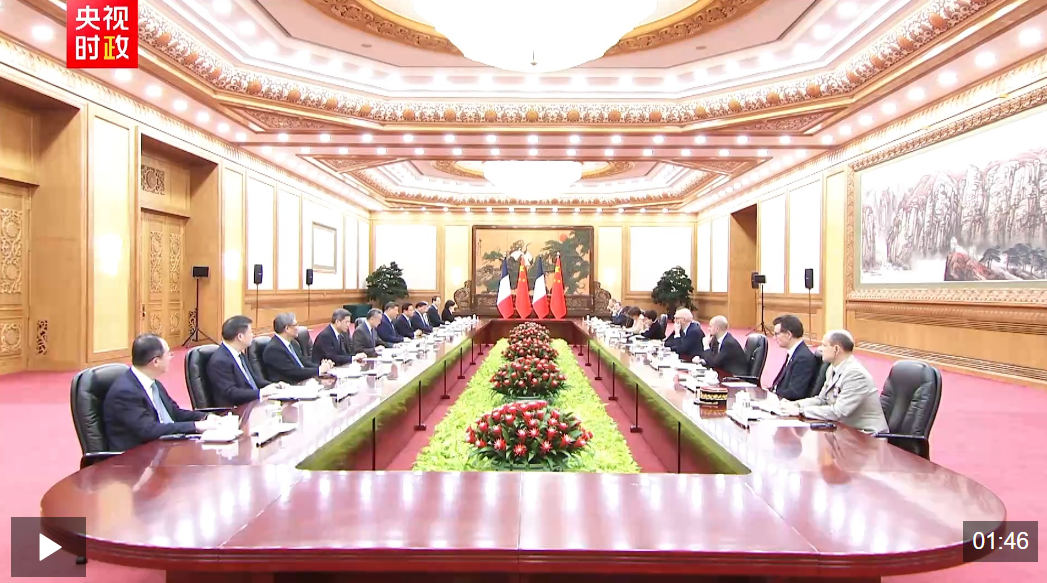
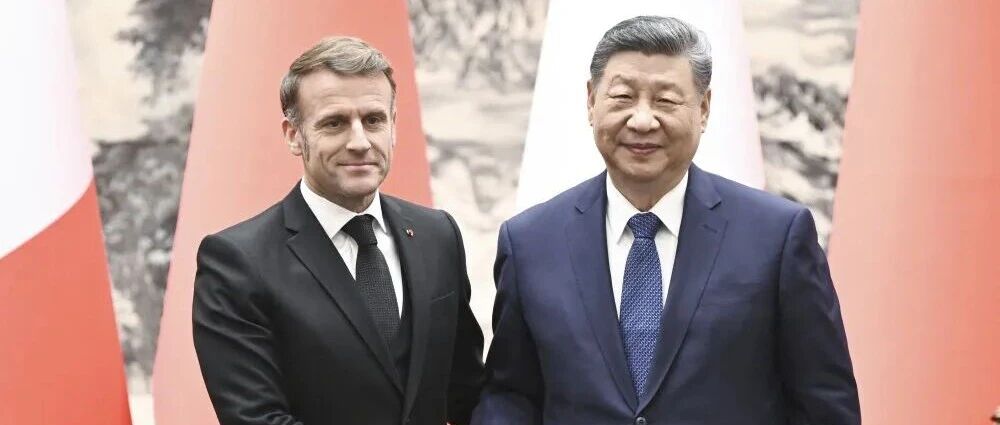
12月4日上午,国家主席习近平在北京人民大会堂同来华进行国事访问的法国总统马克龙举行会谈。 马克龙说:"感谢主席先生,继此前对北京和广州的访问后,我们双方决定全方位深化中法双边关系。当前国际局势复杂多变,多边秩序面临严峻危 机。在此背景下,保持中法两国之间的对话与沟通尤为重要。我们在许多问题上有着广泛共识,中法两国作为负责任的大国,肩负着求同存异、构 建务实合作机制,践行我们共同坚持的多边主义使命。" 习近平指出,中法都是有远见、有担当的独立自主大国,是推动世界多极化、促进人类团结合作的建设性力量。当前,百年变局加速演进,人类又 一次站在何去何从的十字路口。中法两国应当展现责任担当,高举多边主义旗帜,坚定站在历史正确一边。 ...

专访赵永升:马克龙访华时机微妙,欧洲战略自主离不开中国
2 1 Shi Ji Jing Ji Bao Dao· 2025-12-04 10:37
法国是首个同新中国建立大使级外交关系的西方大国。如今,中法已携手走过一个甲子。目前,法国是 中国在欧盟内第三大贸易伙伴和第三大实际投资来源国,中国则是法国在亚洲第一大、全球第七大贸易 伙伴。在民用核能、航空航天等领域,中法经贸合作利好消息频传,不少领域都在"双向奔赴"。 据中方统计,2024年,中法双边贸易额795.8亿美元、同比增长0.8%;2025年1-6月,双边贸易额390.9 亿美元、同比增长1.2%。 谈及马克龙此行的经贸重点,赵永升分析称,预计传统"集团采购"式合作仍会延续。尽管如此,中法经 贸关系正经历渐进式转型,从"老三样"向新兴领域扩展。不过,双方在绿色产业、数字经济等领域的合 作深度在很大程度上取决于欧盟市场的开放程度和相关政策的灵活性。 (原标题:专访赵永升:马克龙访华时机微妙,欧洲战略自主离不开中国) 南方财经21世纪经济报道记者郑青亭、实习生陈俊康 北京报道 时隔两年多,法国总统马克龙12月3日乘机抵达北京首都国际机场,开启为期三天的访华之行。这是他 第四次对中国进行国事访问,也是对去年中法建交60周年之际中国领导人对法国进行历史性国事访问的 回访。 对外经济贸易大学法国经济研究中心 ...
拒绝单边主义、保护主义,从都论坛呼吁国际体系“系统更新”
Xin Jing Bao· 2025-12-04 09:53
12月2日的一场雨,让位于流溪河畔、凤凰山下的广州从都国际庄园笼罩在浓雾之中。在这朦胧的雾气 中,来自全球30多个国家的前政要、国际组织负责人以及中外学者、商界领袖等共计200余人,正在庄 园内进行激烈的思想交锋。 从全球治理谈到多边体系变革,从人工智能监管聊到关税贸易冲突,从应对气候变化延展到落实2030可 持续发展议程,他们直面这个时代最尖锐的全球议题,试图在一个动荡多变的时代中寻找共识与出路。 12月1日至3日,2025年从都国际论坛在广州举行,今年的主题为"同球共济 共赢未来"。"人类只有一个 地球,各国同处一个世界,面对全球共同挑战,没有任何国家可以独善其身,独享安全。国际社会唯有 加强团结合作,同心合力,和衷共济,才能共同迈向更加美好的未来。"中国人民对外友好协会会长杨 万明强调。 "从都国际论坛"由澳中友好交流协会、中国人民对外友好协会、广东省人民政府和世界领袖联盟共同主 办,自2014年创办以来,论坛已举办9届,其中2014年的论坛在西班牙马德里举办。十余年来,论坛共 邀请了200多位国际资深政要和600多位中外知名专家学者、商界领袖等参会,逐渐发展成为具有重要国 际影响力的高端对话平台。 加 ...
外交部:日本首相用“立场没有变化”来敷衍搪塞,中方对此绝不接受
证券时报· 2025-12-04 08:50
Group 1 - The Chinese Foreign Ministry spokesperson Lin Jian stated that reports regarding Japanese Prime Minister Suga Yoshihide's comments on Taiwan are inaccurate, emphasizing that Japan's stance on Taiwan has not changed since the 1972 Sino-Japanese Joint Statement [1] - Lin urged Japan to reflect and correct its stance, rejecting Suga's dismissive response to China's repeated inquiries and criticisms [1] Group 2 - Lin Jian highlighted that unilateral coercive measures violate the purposes and principles of the UN Charter, undermining multilateralism and the rule of international law, and obstructing global development cooperation [2] - The spokesperson called for international solidarity to resist unilateralism and maintain an international order based on international law, promoting fairer global governance [2] Group 3 - Regarding the situation in Gaza, Lin expressed concern over the fragile conditions and called for the effective implementation of the ceasefire agreement to alleviate the humanitarian crisis and restore regional peace and stability [3]
习近平同法国总统马克龙举行会谈
中国能源报· 2025-12-04 08:28
Group 1 - The core viewpoint emphasizes the importance of China and France as independent major powers that should promote multilateralism and global cooperation, especially in the context of current global challenges [2][3][4] - Both countries are encouraged to deepen cooperation in traditional sectors like aviation, aerospace, and nuclear energy, while also exploring potential in green economy, digital economy, biomedicine, artificial intelligence, and new energy [3][4] - The leaders discussed the need for a balanced global governance system and the importance of addressing issues like the North-South development imbalance and the underrepresentation of developing countries in international financial institutions [4][6] Group 2 - Macron expressed France's commitment to maintaining close high-level exchanges with China, emphasizing mutual trust and respect, and the importance of a fair business environment for Chinese companies in France [6][10] - The two leaders agreed on the significance of cooperation in addressing global challenges such as climate change, biodiversity protection, and governance of artificial intelligence [6][10] - They also exchanged views on the Ukraine crisis, with China supporting efforts conducive to peace and advocating for a balanced and sustainable European security framework [6][10]
近年来多国频繁采用单边措施对俄中伊等国实施经济制裁 中方回应
Zhong Guo Xin Wen Wang· 2025-12-04 07:48
Core Viewpoint - The Chinese government opposes unilateral sanctions imposed by various countries on nations such as Russia, China, and Iran, arguing that these measures violate international law and undermine global cooperation [1] Group 1: Unilateral Sanctions - Unilateral measures are seen as contrary to the principles of the United Nations Charter and disrupt the foundation of multilateralism and international legal order [1] - Such sanctions are believed to severely violate basic human rights, including the right to life and development [1] Group 2: Call for Cooperation - China calls for the international community to strengthen unity and cooperation to resist unilateralism [1] - There is an emphasis on maintaining an international system centered around the United Nations and promoting a more just and equitable direction for global governance [1]
习近平同法国总统马克龙共同会见记者
证监会发布· 2025-12-04 07:38
二是拓展务实合作。巩固航空、航天、核能等传统领域合作,拓展绿色经济、数字经 济、生物医药、人工智能等新兴领域合作。推动双边经贸关系平衡发展,扩大双向投资,为 两国企业提供公平、透明、非歧视、可预期的营商环境。 三是促进人文交流。在去年成功举办文化旅游年的基础上,深化文化、教育、科技、地 方等领域交流合作,开展新一轮大熊猫保护合作。 新华社北京12月4日电 12月4日上午,国家主席习近平同法国总统马克龙会谈后共同会见记者。 习近平指出,欢迎马克龙总统对中国进行第四次国事访问。我们进行了友好坦诚、富有 成果的会谈。双方一致认为,中法同为独立自主大国,面对当前变乱交织的国际形势,应当 高举多边主义旗帜,坚持平等对话、开放合作,充分彰显中法全面战略伙伴关系的战略价值 和世界影响,推动平等有序的世界多极化、普惠包容的经济全球化。我们一致同意做好以下4 个方面工作: 一是增进政治互信。无论外部环境如何变化,始终展现大国的独立自主和战略眼光,在 涉及彼此核心利益和重大关切问题上相互理解、相互支持。 到全面、公正、持久解决。中方将向巴勒斯坦提供1亿美元援助,用于缓解加沙人道主义危 机,支持加沙恢复与重建。 习近平强调,对外开 ...

习近平同法国总统马克龙举行会谈
证监会发布· 2025-12-04 07:37
Group 1 - The core viewpoint emphasizes the importance of China and France as independent major powers that should uphold multilateralism and work together to promote a multipolar world and inclusive economic globalization [2][3] - Both countries are encouraged to deepen cooperation in traditional sectors such as aviation, aerospace, and nuclear energy, while also exploring potential in green economy, digital economy, biomedicine, artificial intelligence, and new energy [3][4] - The meeting highlighted the need for China and France to maintain a strategic vision and mutual understanding on core interests, ensuring a solid political foundation for bilateral relations [3][5] Group 2 - The discussion addressed global challenges, including the imbalance in development and the underrepresentation of developing countries in international financial institutions, calling for coordinated actions to promote fair global economic governance [4][5] - Both leaders agreed on the significance of maintaining open cooperation to avoid self-isolation and protectionism, which could worsen the international trade environment [4][5] - The meeting concluded with the signing of multiple cooperation agreements in areas such as nuclear energy, agriculture, education, and ecological environment [6]
马克龙说坚定奉行一个中国政策
Bei Jing Ri Bao Ke Hu Duan· 2025-12-04 06:56
Group 1 - The core viewpoint emphasizes the importance of China and France as independent major powers advocating for multilateralism and global cooperation amidst a rapidly changing world [1][2] - Both countries aim to enhance their comprehensive strategic partnership by focusing on mutual interests and expanding cooperation in traditional sectors like aviation, aerospace, and nuclear energy, as well as emerging fields such as green economy, digital economy, biomedicine, artificial intelligence, and new energy [2][3] - The leaders discussed the need for a balanced global governance system and the importance of addressing issues like the North-South development imbalance and the underrepresentation of developing countries in international financial institutions [3][4] Group 2 - France expresses a commitment to deepening its comprehensive strategic partnership with China, emphasizing mutual trust and respect, and a desire to enhance cooperation in trade, renewable energy, and cultural exchanges [4][5] - Both leaders agreed on the significance of their cooperation in addressing global challenges such as climate change, biodiversity protection, and artificial intelligence governance, highlighting their shared responsibility as major powers [4][5] - Following the talks, multiple cooperation agreements were signed in areas including nuclear energy, agriculture, education, and ecological environment [5]
习近平同法国总统马克龙举行会谈
中国基金报· 2025-12-04 06:42
Core Points - The meeting between Chinese President Xi Jinping and French President Emmanuel Macron emphasizes the importance of China-France relations in promoting a multipolar world and global cooperation [2][3] - Both leaders express a commitment to deepening cooperation in various sectors, including traditional fields like aviation and nuclear energy, as well as emerging areas such as green economy and artificial intelligence [3][4] - The discussion highlights the need for multilateralism and reforming global governance to address imbalances in international relations and economic systems [4][6] Group 1 - Xi Jinping stresses the need for China and France to maintain strategic vision and mutual understanding in core interests, reinforcing the political foundation of their relationship [3] - The "15th Five-Year Plan" is mentioned as a blueprint for China's development, presenting opportunities for collaboration with France [3] - Both countries aim to enhance cultural, educational, and technological exchanges to strengthen people-to-people ties [3][4] Group 2 - Macron reaffirms France's commitment to the One China policy and expresses a desire to deepen the comprehensive strategic partnership with China [6] - The importance of cooperation in renewable energy and mutual investment is highlighted, with France welcoming more Chinese investments [6] - The leaders discuss the Ukraine crisis, with China supporting peaceful resolutions and a balanced European security architecture [6][7]