新型城镇化

Search documents
报告显示:2024年我国千亿县数量达62个
Zhong Guo Chan Ye Jing Ji Xin Xi Wang· 2025-07-28 22:23
Core Insights - The report indicates that the number of "billion counties" in China has increased to 62 by 2024, enhancing their role as economic stabilizers [1][2] - The top 100 counties contribute significantly to the national GDP, accounting for over 10% of the total GDP while occupying only about 2% of the land area [1][2] Economic Growth - The economic scale of the top 100 counties has grown from 7.4 trillion yuan in 2015 to 12.6 trillion yuan in 2023, maintaining a GDP share of over 9% of the national total [2] - By 2024, the number of counties with GDP exceeding 900 billion yuan will reach 21, with over 100 counties surpassing 800 billion yuan [1] Development Recommendations - The report suggests five key areas for promoting high-quality county economic development: 1. Strengthening provincial coordination for localized development 2. Promoting synchronized development of modernization 3. Cultivating new productive forces and building a modern industrial system 4. Enhancing the role of counties as regional nodes for collaborative development 5. Continuing reforms to empower counties and stimulate development [2]
解读:一场时隔10年的会议
Jing Ji Wang· 2025-07-28 06:03
Group 1 - The core viewpoint of the article is that the recent Central Urban Work Conference marks a significant shift in China's urbanization strategy, moving from rapid growth to stable development and from large-scale expansion to quality improvement and efficiency enhancement [4][10] - The conference highlights the transition of urbanization from a rapid growth phase to a stable development phase, emphasizing quality, efficiency, and competitiveness over mere scale and speed [4][5] - The urban development is shifting from large-scale incremental expansion to a focus on optimizing existing resources and enhancing urban functions through new technologies and models [4][10] Group 2 - The concept of "group-style networked" development for modern urban clusters and metropolitan areas is introduced, emphasizing concentrated and efficient development around central cities [5][6] - The article outlines that the 19 urban clusters will serve as major growth poles, with population and industry concentration primarily occurring in these areas, while other regions will pursue differentiated development based on local conditions [6][12] - The "networked" aspect stresses the importance of connectivity between urban clusters through modern transportation and digital networks, facilitating the flow of economic factors [8][12] Group 3 - The conference reiterates the strategic role of county towns in urbanization, highlighting their importance in ensuring food security, ecological safety, and as key carriers for rural population migration [10][12] - The dual-track urbanization strategy aims to balance development between urban clusters and county towns, preventing excessive population concentration in mega-cities while promoting rural revitalization [12][16] Group 4 - A new model for real estate development is proposed, focusing on the classification, revitalization, and integration of existing housing resources, addressing the issue of idle and inefficient real estate [13][14] - The demand for affordable housing is driven by the urbanization of agricultural migrants, necessitating a better alignment between supply and demand in the housing market [14][16] - The article suggests implementing refined policies tailored to different cities to stimulate the market and enhance the utilization of existing housing stock [16]

准确把握现代化人民城市建设的“五个转变”
Zhong Guo Qing Nian Bao· 2025-07-27 01:40
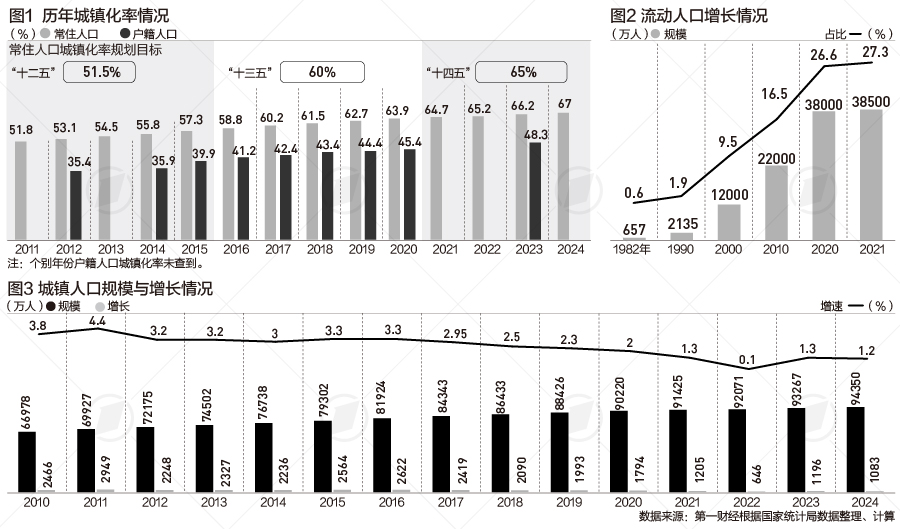
Core Viewpoint - The "Five Transformations" signify a fundamental shift and systematic reform in China's urban construction philosophy, methods, dynamics, focus, and approaches, marking significant theoretical and practical breakthroughs in the history of urban development globally [1][3]. Group 1: Urbanization and Population Growth - Since the 18th National Congress of the Communist Party, China's urbanization rate has increased from 53.1% in 2012 to 67% in 2024, with the urban population rising to 940 million [1]. Group 2: Strategic Urban Development Goals - The recent high-level urban work conference proposed new strategic goals for building modern, innovative, livable, beautiful, resilient, civilized, and smart cities, indicating a significant and far-reaching impact on urban development [2]. Group 3: Five Transformations in Urban Construction - The "Five Transformations" include: 1. Transitioning from "material-heavy" to "people-centered" development, emphasizing investment in human needs over infrastructure [4]. 2. Shifting from "scale expansion" to "quality enhancement," focusing on optimizing spatial layout and improving public services [5]. 3. Moving from "single development" to "comprehensive coordination," promoting integrated urban planning across various sectors [6]. 4. Changing from "government-led" to "co-construction and co-governance," encouraging multi-stakeholder participation in urban planning and governance [6]. 5. Evolving from "traditional management" to "smart governance," leveraging advanced technologies for innovative urban management [7]. Group 4: People-Centric Urban Development - The essence of modern urban construction is to prioritize the needs and aspirations of the people, ensuring that urban development aligns with the goal of enhancing the quality of life for all citizens [7].
近十年城镇常住人口增1.7亿, “十五五”城镇化有哪些重点
Di Yi Cai Jing· 2025-07-24 12:51
Core Insights - China's urbanization is transitioning from a rapid growth phase to a stable development phase, with a focus on improving existing urban areas rather than expanding them [1][3] - The urban population is projected to grow from 770 million in 2014 to 940 million by 2024, with a slower growth rate in the latter half of the decade [1][3] - The urbanization rate has increased from 55.8% in 2014 to 67% in 2024, with an average annual increase of 1.1 percentage points [1][3] Urbanization Rate Implications - The current urbanization rate of 67% indicates a shift from high-speed growth to a more stable phase, with expectations of reaching 80% by 2050 [2][3] - Historical data shows that countries typically maintain growth for several years after surpassing a 65% urbanization rate, suggesting potential for continued urbanization in China [2][3] Future Projections - Urbanization speed is expected to decline to an average increase of 0.70 percentage points per year before 2035, yet this remains above the global average [3][9] - Approximately 10 million rural residents are anticipated to migrate to urban areas annually during this period [3][9] Economic Impact - A 1 percentage point increase in urbanization rate can generate over 200 billion yuan in consumer demand and drive trillions in new investment [3][9] - Urbanization is linked to job creation, investment stimulation, and the expansion of domestic demand [3][9] Policy and Strategic Initiatives - The "Five-Year Action Plan" aims to enhance the integration of rural migrants into urban settings and improve public service accessibility [4][9] - Key actions include promoting urbanization in potential areas, developing modern urban clusters, and enhancing urban resilience [9] Challenges and Considerations - There is a significant gap between the registered urban population and the actual urban population, with a difference of about 18 percentage points [8] - The aging rural population and the hollowing out of villages are emerging challenges that require strategic resource allocation and village layout optimization [9]
国家发改委:今年7350亿元中央预算内投资基本下达完毕
news flash· 2025-07-24 11:09
Core Viewpoint - The central government has allocated 735 billion yuan for investment this year, focusing on various key areas such as modern industrial systems, infrastructure, new urbanization, rural revitalization, regional coordinated development, openness, green development, and social welfare projects [1] Investment Focus - The allocation of central budget investments has been optimized this year, with increased support for social welfare and other key areas [1] - There is a notable increase in the proportion of investment support directed towards local governments, which helps alleviate their financial burdens [1] Implementation and Oversight - The National Development and Reform Commission (NDRC) plans to expedite the execution of investment plans and project construction to generate more tangible outcomes [1] - There will be a focus on regular monitoring and post-event supervision to ensure that funds are effectively utilized and to enhance overall benefits [1]
国家发展改革委:今年7350亿元中央预算内投资基本下达完毕
news flash· 2025-07-24 11:09
Group 1 - The central budget investment for 2025 has been largely allocated, focusing on key areas such as modern industrial systems and infrastructure [1] - The investment supports projects related to new urbanization, rural revitalization, regional coordinated development, and opening up to the outside world [1] - Additional focus areas include green development, social welfare, national security modernization, and post-disaster recovery [1]
两部门:积极满足农村转移人口等新市民群体住房、教育、医疗、养老等方面金融需求
news flash· 2025-07-24 08:46
Core Viewpoint - The People's Bank of China and the Ministry of Agriculture and Rural Affairs have issued guidelines to enhance financial services for rural reforms and promote comprehensive rural revitalization, focusing on the financial needs of new urban residents, including rural migrants [1] Group 1: Financial Services Expansion - Financial institutions are encouraged to leverage their financing and advisory capabilities to engage early in village planning, providing specialized consulting and financing solutions [1] - The guidelines promote tailored financing services such as bond financing, equity investment, fund trusts, and leasing, based on the characteristics of investment subjects and projects in new urbanization [1] Group 2: Addressing Financial Needs - There is a strong emphasis on meeting the financial demands of new urban residents, particularly in areas such as housing, education, healthcare, and elderly care [1]
【财经分析】县域经济迎质效双升 “东强西弱”等问题仍待破局
Xin Hua Cai Jing· 2025-07-24 06:46
Core Insights - The report highlights the importance of county-level economies as a key link in urban-rural integration and a crucial driver for common prosperity in China [1][2] - The transition from scale expansion to quality improvement in county economies is a focal point of social attention, particularly in the context of new industrialization, urbanization, and rural revitalization [1][2] Economic Performance - County economies have shown significant growth, with GDP increasing from 31.6 trillion yuan in 2015 to 48.3 trillion yuan in 2023, reflecting a continuous upward trend [2] - The economic structure has improved, with the secondary industry accounting for 40% of the county economy, establishing a dual-driven model of secondary and tertiary industries [2] - The top 100 counties contribute 26.5% of county GDP despite representing only 5% of the total number of counties, showcasing their economic strength [2] Challenges Faced - There are notable regional disparities in county economic development, with the eastern region having a significant advantage in the number of top-performing counties [4] - The pressure for industrial structure transformation remains, as traditional industries still dominate, and the proportion of strategic emerging industries is relatively low [4][5] - The need for balanced regional development and the upgrading of industrial structures are critical challenges for achieving high-quality growth [4][5] Pathways for High-Quality Development - Experts suggest that county economies should explore development paths tailored to their unique characteristics, emphasizing the integration of new industrialization, urbanization, and rural revitalization [6][7] - Key strategies include promoting new industrialization, enhancing traditional industries, and fostering the development of emerging industries to create new growth engines [6][7] - The report outlines five focus areas for the 14th Five-Year Plan, including provincial coordination, synchronized modernization, and the cultivation of new productive forces [7]
中金:从重“显绩”到重“潜绩”——中央城市工作会议精神学习
中金点睛· 2025-07-23 23:29
Core Viewpoint - The central urban work conference emphasizes a shift in urban development from extensive expansion to intensive improvement, marking a new logical starting point for understanding urban development [1][3]. Group 1: Urban Development Transition - Urbanization is transitioning from a rapid growth phase to a stable development phase, focusing on quality improvement of existing urban stock rather than large-scale expansion [4][5]. - The overall requirement for urban work is to build modern, innovative, livable, resilient, beautiful, civilized, and smart cities, with a focus on high-quality urban development [3][4]. Group 2: Urban Renewal - Urban renewal is identified as a major battlefield in the second half of urbanization, with significant demand potential and a shift from "demolition and reconstruction" to "retain and improve" [12][14]. - The goal of urban renewal is to create livable, beautiful, resilient, and smart cities, addressing not only physical space but also public service enhancement and community governance innovation [13][14]. Group 3: Urbanization Patterns - The conference highlights the development of group-style, networked urban clusters and metropolitan areas, alongside the classification of county-level urbanization [16][17]. - Urban clusters are seen as key engines for regional economic development, with 19 urban clusters housing over 70% of the population and contributing over 80% of GDP [17][20]. Group 4: Population Urbanization - The conference stresses the importance of promoting the urbanization of agricultural transfer populations, ensuring they can find employment, settle down, and enjoy a good quality of life [25][26]. - Urbanization can increase labor supply, boost consumption and investment demand, and enhance overall labor productivity [26][27]. Group 5: Development of Service Industry - The conference calls for the vigorous development of the service industry to improve public service levels and ensure the basic livelihood of the population [30][31]. - The service industry is crucial for driving population mobility and is expected to benefit from reduced barriers to migration to large cities, enhancing overall economic structure [30][31].

总编有约·“两高四着力”调研行丨中牟新区“新”在哪
He Nan Ri Bao· 2025-07-23 00:46
Core Insights - The article discusses the transformation of Zhongmu County into a new urbanization model, emphasizing the development of a coordinated urban-rural structure centered around county towns, with a focus on the establishment of the Zhongmu New District as a key area for regional growth and integration with Zhengzhou and Kaifeng [1][5]. Group 1: Urban Development and Integration - Zhongmu County has evolved from an agricultural base to a cultural and entertainment hub, now labeled as "China's Theme Park County" [1]. - The establishment of the Zhongmu New District aims to facilitate the integration of the Zhengzhou metropolitan area, serving as a bridgehead for urbanization and a new engine for development [5][11]. - The district covers an area of 730 square kilometers and is designed to promote coordinated development, innovation, and cultural tourism [5]. Group 2: Infrastructure and Public Services - The new district will enjoy the same level of public services and infrastructure as Zhengzhou, including the implementation of low-capacity rail transit and integration into the city's metro system [6][7]. - Key transportation projects are underway, including the Zhengkai intercity railway and various road upgrades, contributing to a comprehensive traffic network [7][8]. Group 3: Economic Growth and Industry - The Zhongmu New District is set to attract significant investment, with the Yishow Town Fashion Industry Service Center projected to have a total investment of 10 billion yuan, focusing on the integration of culture, tourism, and fashion [4]. - The automotive industry is also a focal point, with over 100 companies generating an annual output value exceeding 20 billion yuan [12]. - The district aims to create a modern industrial system supported by advanced manufacturing, cultural tourism, and other emerging sectors, enhancing its competitiveness and innovation capacity [12][13]. Group 4: Cultural and Tourism Development - Zhongmu County has developed a unique cultural identity, attracting over 36 million tourists in the past year, with significant contributions from various theme parks and cultural attractions [11]. - The "Only Henan: Drama Wonderland" has seen visitor numbers reach 16 million in 2024, surpassing even Shanghai Disneyland, indicating a strong cultural tourism market [11]. Group 5: Community and Quality of Life - The focus on human-centered urbanization is evident in the influx of quality educational and healthcare resources, enhancing the overall living standards in Zhongmu [8][9]. - The integration of industry and urban development is creating job opportunities, allowing residents to transition from traditional agriculture to urban employment [12].