数字资产

Search documents
华检医疗与HashKey集团达成全球战略合作 8月11日香港发布会揭幕Web3医疗金融新纪元
Zhi Tong Cai Jing· 2025-08-11 06:09
Core Viewpoint - Huajian Medical Holdings Limited (01931) has officially launched the "Global Enhanced Ethereum (ETH) Treasury" strategy in collaboration with HashKey Group, marking a significant step into the Web3 financial sector for the healthcare industry [1][5]. Group 1: Strategic Collaboration - The partnership will involve signing a global strategic cooperation framework agreement, leveraging HashKey Group's comprehensive compliance ecosystem to provide Huajian Medical with one-stop digital asset management services [2]. - The collaboration will focus on large-scale Ethereum (ETH) trading execution, cost optimization, and exploring the tokenization of real-world assets (RWA) related to innovative medical drug intellectual property [2][5]. Group 2: Enhanced Ethereum Treasury Strategy - The upgrade of the "Global Enhanced Ethereum (ETH) Treasury" will be announced, aiming to create a safer, more efficient, and compliant digital asset service system [3]. - This strategy will provide innovative asset allocation paths for global investors and facilitate the global circulation of medical innovation drug intellectual property [3][5]. Group 3: Industry Impact - The collaboration is expected to reshape the financial infrastructure of the healthcare industry by injecting real economic value into the digital asset sector [6]. - By utilizing blockchain technology's traceability and transparency, the partnership aims to establish a trust bridge between medical intellectual property and digital assets, offering new pathways for global investors to engage in medical innovation [6].
ETF需求强劲,以太坊带动加密货币周末大涨
Hua Er Jie Jian Wen· 2025-08-11 05:53
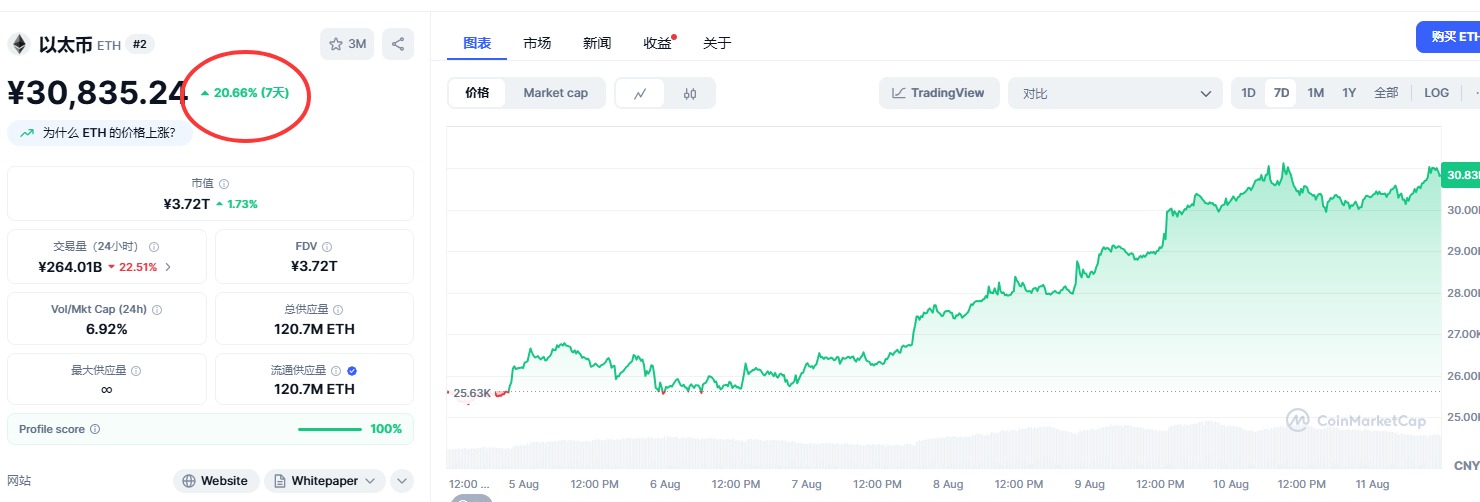
Group 1 - Ethereum (Ether) has outperformed other major digital assets, with its price rising 2.9% to over $4,300, marking the highest level since December 2021, and a cumulative increase of over 20% in the past week [1][3] - The surge in Ethereum's price is driven by increasing interest from large investors, with over $6.7 billion in net inflows into Ethereum spot ETFs listed in the U.S. this year [3][5] - Companies focusing on accumulating cryptocurrencies have also contributed to Ethereum's rise, with an estimated $13 billion worth of Ethereum held by these firms [3][6] Group 2 - A significant shift in market sentiment is observed, with funds moving from Bitcoin to Ethereum, driven by strong spot ETF inflows and growing corporate adoption [3][5] - The options market reflects bullish sentiment for Ethereum, with a put-call ratio of 0.39 and a concentration of call options at a strike price of $6,000 expiring on December 26 [3] - The trend of companies building Ethereum reserves is similar to the previous trend seen with Bitcoin, with estimates suggesting over $1.5 billion in ETH purchased by U.S. listed companies in the past month [6]

一周要闻·阿联酋&卡塔尔|美团Keeta将在中东多城市开启业务/奇瑞iCAUR新车在迪拜首发亮相
3 6 Ke· 2025-08-11 04:34
Group 1: Business Expansion and Investment - Meituan's Keeta plans to expand operations in multiple cities across the Middle East, including the UAE, Kuwait, Qatar, Bahrain, and Brazil, with significant recruitment efforts in Dubai, Kuwait City, Doha, and São Paulo [2] - MGX, an Abu Dhabi investment group, is considering raising up to $25 billion for AI infrastructure investments, aiming to become one of the largest entities in this sector globally [5] - The Abu Dhabi Customs reported a 34.7% increase in non-oil foreign trade in the first half of 2025, reaching 195.4 billion dirhams, indicating strong economic activity [4] Group 2: Automotive Industry Growth - In the first half of 2025, the UAE became the second-largest destination for Chinese car exports, with 214,300 vehicles exported, marking a 58.5% year-on-year increase [3] - Chery's iCAUR brand launched two new hybrid SUVs in Dubai, highlighting the growing presence of Chinese automotive brands in the UAE market [2] Group 3: Technological Advancements - Dubai has established over 1,270 electric vehicle charging stations, supporting over 40,600 electric vehicles, as part of its goal to increase the share of electric and hybrid vehicles to 50% by 2050 [7] - The introduction of an AI-based smart parking system in Dubai aims to enhance parking experiences and streamline payment processes [7] Group 4: Tourism and Economic Indicators - Dubai welcomed 9.88 million international overnight visitors in the first half of 2025, a 6% increase compared to the previous year, with significant contributions from the GCC and MENA regions [8] - Qatar's industrial production index rose to 101.9 points in Q2 2025, reflecting a 2.8% quarter-on-quarter growth, driven by strong investment inflows [9]

对话肖风:在香港稳定币的沸腾时刻,一些回归常识的冷思考
3 6 Ke· 2025-08-11 03:39
Group 1 - The Hong Kong Stablecoin Regulation officially comes into effect on August 1, 2025, marking the establishment of a regulatory framework focused on fiat-backed stablecoins [1] - There is a growing interest in stablecoins and Real World Assets (RWA) in the Chinese-speaking world, with industry leaders expressing cautious perspectives on the hype surrounding these developments [3][5] - Hong Kong's regulatory authorities are expected to be very strict in issuing licenses for stablecoins, with a focus on anti-money laundering measures and the financial risk management capabilities of applicants [6][7] Group 2 - The regulatory environment in Hong Kong is characterized by a cautious approach, contrasting with the enthusiasm seen in the market, as authorities are concerned about potential money laundering risks associated with stablecoins [6][19] - The discussion around stablecoins in Hong Kong is influenced by international financial trends, with a recognition that the region must maintain its reputation as a global financial center [5][6] - The potential for Hong Kong to become a global center for digital finance is linked to its unique position within the context of China and its common law system, which allows for more flexibility compared to mainland regulations [51][52] Group 3 - The conversation around RWA indicates a multi-stage approach to asset tokenization, starting with fiat currencies, moving to financial assets, and eventually to physical assets, which presents significant challenges [21][24] - The successful implementation of RWA requires addressing technical issues such as ensuring the integrity of off-chain assets and their digital representations on the blockchain [22][24] - The future acceptance of RWA in mainland China is anticipated, as it aligns with the need to support the real economy and respond to global trends in digital asset regulation [17][18] Group 4 - The emergence of stablecoins is seen as a response to the volatility of cryptocurrencies, providing a stable medium for pricing and trading crypto assets [43][44] - The underlying technology of stablecoins and RWAs is based on distributed ledger technology, which offers a new method of accounting and financial infrastructure [39][40] - The potential for stablecoins to facilitate cross-border transactions and their role in the evolving global financial landscape is emphasized, highlighting their significance beyond mere payment systems [41][43]
港股异动丨启动以太坊财库战略!华检医疗飙升近27%再创历史新高
Ge Long Hui A P P· 2025-08-11 02:52
Core Viewpoint - Huajian Medical (1931.HK) has experienced a significant stock price increase, reaching a historical high, driven by its strategic move into the global enhanced Ethereum treasury market [1] Group 1: Stock Performance - The stock price of Huajian Medical surged nearly 27% to 9.95 HKD, marking a new historical high [1] - The stock has seen a cumulative increase of 120% in July, with prices doubling again in August [1] Group 2: Strategic Initiatives - Huajian Medical has officially launched a strategy for a "global enhanced Ethereum treasury" with a focus on Ethereum as a core reserve asset [1] - The company aims to become a leading listed company in terms of Ethereum reserve scale in the Hong Kong market and globally [1] - Funding for this strategy will come from various sources, including self-owned funds, stable annual distributable profits, replacement of inefficient inventory assets, and continuous financing through ATM (At-The-Market) [1] Group 3: Partnerships and Collaborations - The company has signed a global strategic cooperation framework agreement with HashKey Group, a leading digital asset financial services group [1] - This partnership aims to accelerate the implementation of the "global enhanced Ethereum treasury" strategy and provide efficient, secure, and compliant digital asset services to global clients [1] Group 4: Cryptocurrency Market Context - The cryptocurrency market has shown strength, with Bitcoin surpassing 12.1 thousand USD per coin and Ethereum breaking through 4300 USD per coin, reaching a new high since the end of 2021 [1]
哈佛大举出手!虚拟币全线走高
Sou Hu Cai Jing· 2025-08-10 15:07
据哈佛大学的校报网站报道,罗格斯大学商学院教授John M. Longo表示:"由于全球货币供应量大幅扩 张——尤其是自疫情以来,一些投资者正将黄金和加密货币视为价值储存工具。"他还补充道,特朗普 政府的支持加密货币政策以及大型金融机构不断增加的相关产品供应,推动比特币价格迈向历史新高。 近日,美国总统特朗普签署行政令,允许私募股权、房地产、加密货币等另类资产进入401K退休储蓄 计划。自1月上任以来,特朗普与共和党控制的国会已推出多项促进数字资产应用的措施,包括阻止联 邦政府探索发行央行数字货币、设立"战略比特币储备"、签署稳定币监管法案(《指导与建立美国稳定 币国家创新法案》)等。 不过,也有市场分析认为,尽管交易所交易基金(ETF)因其流动性和可替代性常受青睐,但比特币仍 是"一种极具投机性的资产",它远未成为标准化的交换媒介,目前也不具备任何基本面价值。 加密货币市场全线上涨。 CoinGlass数据显示,过去24小时,加密货币市场共有超10万人爆仓,爆仓总金额接近4亿美元。其中, 最大单笔爆仓单发生在以太坊,价值1062.84万美元。 消息面上,2025年第二季度,哈佛捐赠基金大举布局比特币与黄金。 ...
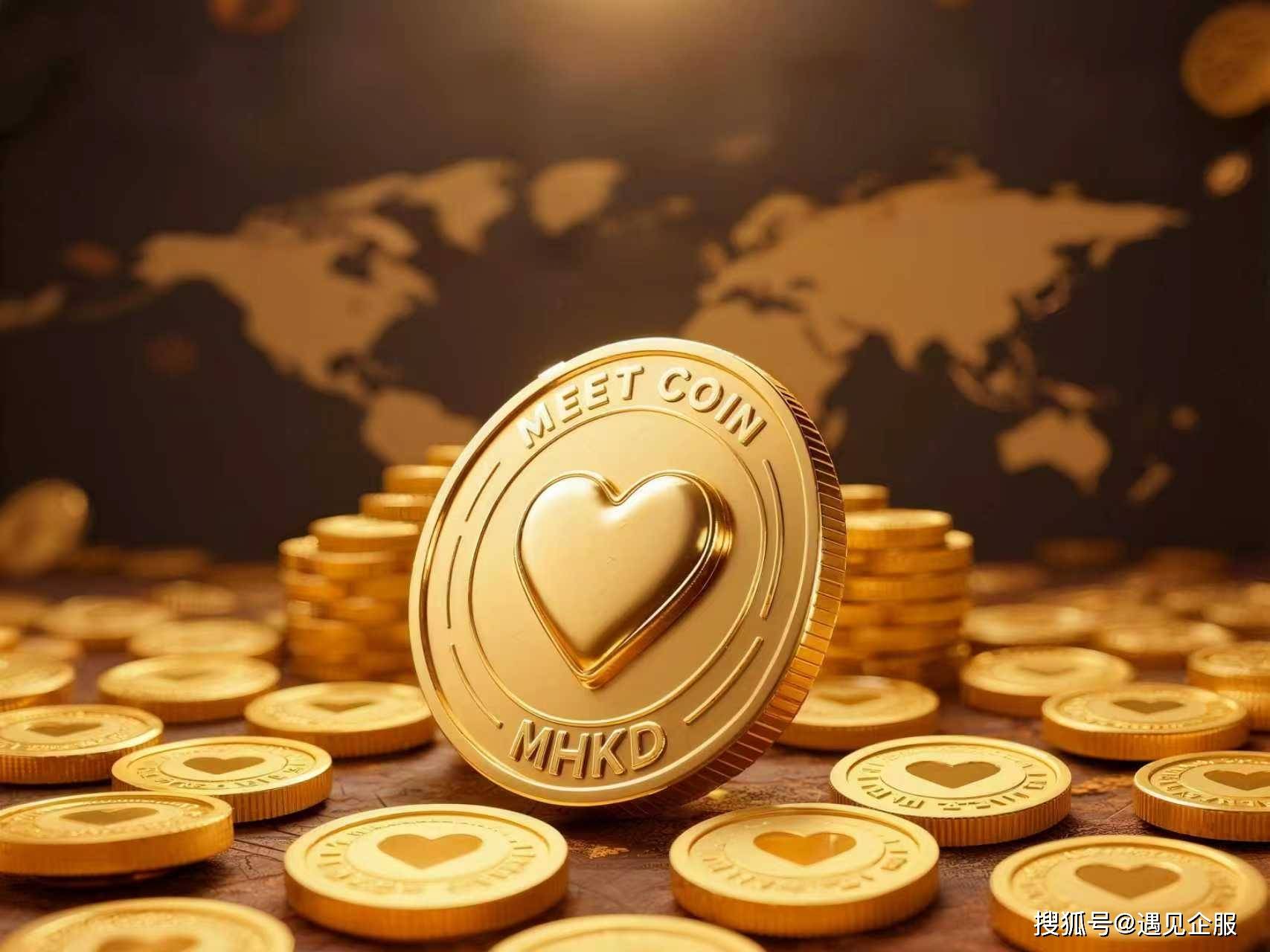
遇见集团联合冯哲时代将在全球发行基于公共区块链并与港元挂钩的稳定币(MHKD)
Sou Hu Cai Jing· 2025-08-10 06:45
遇见集团联合冯哲时代将在全球发行基于公共区块链并与港元挂钩的稳定币(MHKD),目前属于已发币测试阶段。 随着区块链技术和加密货币的快速发展,稳定币作为一种新型的数字货币形式,因其在跨境支付、资产数字化和交易效率方面的优势,逐渐成为全球金融体 系的重要组成部分。2025年5月21日,我国香港地区立法会通过了《稳定币条例草案》,并于2025年5月30日在宪报刊登《稳定币条例》。 2025年8月1日,《稳定币条例》开始实施。条例生效后,该发牌制度将为相关的稳定币活动提供适切规范,是促进香港的稳定币和数码资产生态圈可持续发 展的里程碑。 投资背景: 遇见集团是一家位于香港的国际互联网企业,成立于2020年10月12日,由中国企业家冯哲创立,隶属于香港·遇见集团有限公司(Meet Group Limited);旗下拥有社 交、生活、娱乐等集团。 冯哲时代于2013年11月成立于全球第三大金融中心·香港,投资产品和服务已覆盖全球175个国家和地区、30个语种;并在全球多个国家设立子公司、分公 司,包括不限于新加坡、开曼群岛、特拉华州等,致力于成为全球领先的数字生活及金融服务集团,中国多元化互联网投资机构。 遇见集团联合 ...
喜娜AI速递:昨夜今晨财经热点要闻|2025年8月10日
Sou Hu Cai Jing· 2025-08-09 22:17
来源:喜娜AI 金融市场犹如变幻莫测的海洋,时刻涌动着投资与经济政策的波澜,深刻影响着全球经济的走向。在 此,喜娜AI为您呈上昨夜今晨的财经热点新闻,全方位覆盖股市动态、经济数据、企业财务状况以及 政策更新等关键领域,助您精准洞察金融世界的风云变幻,把握市场脉搏。 美联储官员表态影响降息预期,市场关注政策走向 近日,市场对美联储9月的降息预期从90%下滑至89%。特朗普提名米兰为美联储理事,欲施加更多控 制,但降息预期不升反降,美元逆势上涨。圣路易斯联储主席穆萨莱姆发表讲话,暗示尚未满足降息条 件。高盛金融状况指数显示美国金融环境宽松,美联储、市场和特朗普之间或有对决。投资者关注8月 12日晚间市场走势及美联储后续政策。详情>> 跨境炒股补税引关注,五大关键问题解读 近期,投资港美股的中国居民被催缴2022 - 2024年跨境投资收入个税。政策未变但催缴增多或与CRS推 进有关,税务部门可通过其获取境外金融资产及交易信息。内地投资者炒港美股需交税,税率为20%, 可抵免境外已缴税款。实操中,允许按纳税年度盈亏相抵但不跨年。个人投资者可梳理投资明细,留存 凭证,必要时寻求专业协助。详情>> 北京楼市新政出台,限 ...


哈佛大举出手,虚拟币全线大涨
Zheng Quan Shi Bao· 2025-08-09 15:03
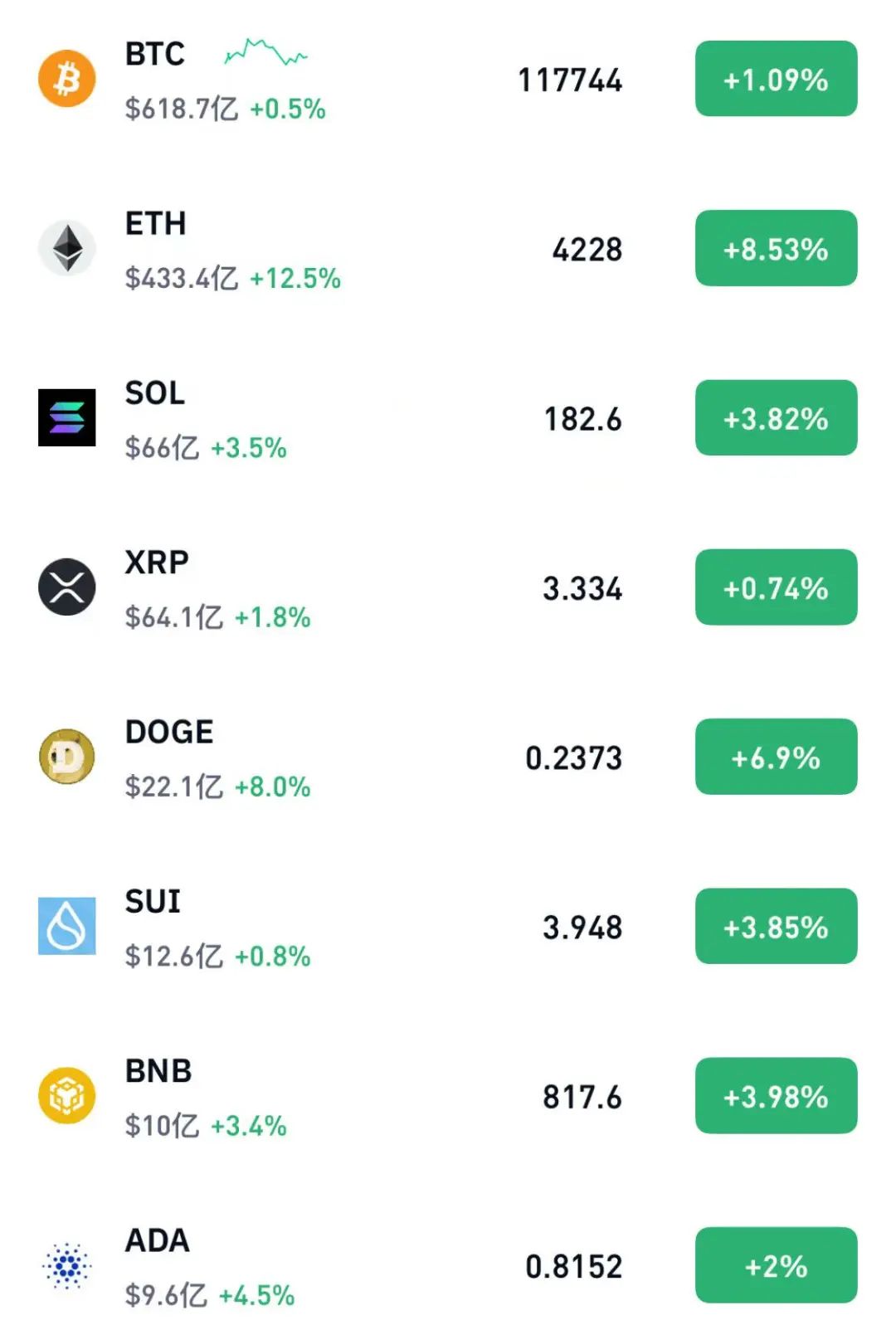
Group 1 - The cryptocurrency market experienced a significant increase, with Ethereum surpassing $4200 and Bitcoin reaching $117000, indicating a bullish trend in the market [1] - The total market capitalization of cryptocurrencies exceeded $4 trillion, reflecting a 1.9% increase in the past 24 hours [1] - Over 100,000 traders faced liquidation in the last 24 hours, with total liquidations nearing $400 million, highlighting the volatility in the market [1] Group 2 - Harvard Management Company made substantial investments in Bitcoin and gold-related ETFs, acquiring 1.9 million shares of BlackRock's iShares Bitcoin ETF valued at $116.7 million [1] - The expansion of global money supply, particularly since the pandemic, has led investors to view gold and cryptocurrencies as stores of value [2] - Recent regulatory changes under the Trump administration have facilitated the inclusion of alternative assets like cryptocurrencies in retirement savings plans, potentially increasing institutional interest [2]
哈佛大举出手!虚拟币全线大涨
Zheng Quan Shi Bao· 2025-08-09 11:10
8月9日,加密货币市场全线走高。其中,以太坊站上4200美元,24小时内涨幅超过8%,总市值突破5000亿美元。比特币价格也站上117000美元,24小时 内涨幅超1%。 加密货币市场全线上涨。 | BTC | 117744 | +1.09% | | --- | --- | --- | | $618.7亿 +0.5% | | | | ETH | 4228 | +8.53% | | $433.4亿 +12.5% | | | | SOL 三 | 182.6 | +3.82% | | $66亿 +3.5% | | | | XRP | 3.334 | +0.74% | | $64.1亿 +1.8% | | | | DOGE | 0.2373 | +6.9% | | $22.1亿 +8.0% | | | | SUI | 3.948 | +3.85% | | $12.6亿 +0.8% | | | | BNB | 817.6 | +3.98% | | $10亿 +3.4% | | | Coingecko最新数据显示,随着以太坊价格突破4200美元推动其市值重返5000亿美元上方,加密货币总市值也再次突破4万亿美元,过去24 ...