
光储融合

Search documents
晶科能源:各省机制电价竞标结果公布后,可能刺激光伏年终需求
Xin Lang Cai Jing· 2025-10-03 12:52
Core Viewpoint - JinkoSolar, the world's largest photovoltaic module supplier, indicated that due to a policy window period demand surge in the first half of the year, the overall installation expectations for the second half of the year in China are significantly lower than in the first half, with uncertainties in terminal profitability leading to project delays [1] Group 1: Market Trends - The domestic photovoltaic installation surged in April and May due to a rush for installation, with May reaching a record high of 92.92 GW, a year-on-year increase of 388.03%. However, subsequent months saw a sharp decline in new installations, with June at 14.36 GW (down 38.45% year-on-year and 84.55% month-on-month), July at approximately 11 GW (down 47.7% year-on-year), and August at 7.36 GW (down 55.29% year-on-year and 33.33% month-on-month) [1] - The recent results of two provinces' renewable energy pricing auctions have elicited mixed reactions within the photovoltaic industry. Shandong province's auction revealed a mechanism price for photovoltaic projects at 0.225 yuan/kWh, which is 43% lower than the coal benchmark price, while Yunnan province's price was 0.33 yuan/kWh, 46.7% higher than Shandong's, providing a boost to the industry [3] Group 2: Investment Insights - The chairman of Chint New Energy emphasized that the predictability of returns is more critical for investors than fluctuations in the supply chain prices, indicating a need for clearer electricity pricing policies to guide investment decisions [2] - JinkoSolar's investor communications highlighted that while domestic year-end demand may recover, overseas markets in India, the Middle East, and Africa remain robust, with stable but slowing demand in Europe. The company maintains its production targets for the fourth quarter and its annual shipment goals [3] Group 3: Industry Challenges and Opportunities - JinkoSolar noted that the upstream capacity consolidation plan, if successfully implemented, could help balance supply and demand for silicon materials, leading to a gradual return of prices to reasonable levels. The details of this plan are still being finalized and depend on policy enforcement and market acceptance [4] - The company reported that its photovoltaic module shipments remained the highest in the industry in the first half of the year, despite facing losses. The development of energy storage, particularly through solar-storage integration, is seen as crucial for overcoming current challenges and creating a second growth curve [4] - The cancellation of mandatory energy storage in the domestic market is expected to widen the arbitrage space, and independent storage projects are projected to yield attractive returns. The integration of solar and storage solutions is becoming mainstream, particularly in markets like the U.S. and Europe [5]

这一概念火了!光伏企业大动作,光储融合能否助行业穿越周期?
中关村储能产业技术联盟· 2025-09-30 04:33
Core Viewpoint - The integration of solar and energy storage (光储融合) is becoming a standard in the photovoltaic industry, with companies like 阳光电源 achieving significant profitability and market capitalization growth due to their strategic positioning in this sector [2][14]. Group 1: Industry Trends - The photovoltaic industry is witnessing a shift towards solar-storage integration, with major players like 隆基绿能 and 阿特斯 actively pursuing energy storage business opportunities [4][6]. - The demand for energy storage is driven by the need to stabilize the grid and enhance the efficiency of renewable energy consumption, particularly in the context of fluctuating electricity prices [10][11]. - Recent policy changes, such as the relaxation of market price limits, are expected to further enhance the economic viability of solar-storage models [10][12]. Group 2: Company Performance - 阳光电源 reported a revenue of 435 billion yuan in the first half of the year, a 40% year-on-year increase, with a net profit of 77 billion yuan, up 56% [2][14]. - 阿特斯 achieved a significant increase in energy storage system deliveries, reaching 3.1 GWh in the first half of the year, with a 140% quarter-on-quarter growth in the second quarter [14]. - Companies that have strategically integrated energy storage into their operations are experiencing improved profitability, while those without adequate preparation may struggle in the competitive landscape [16]. Group 3: Market Opportunities - The global energy storage market is projected to grow at a compound annual growth rate of 20% to 30% in the coming years, with strong demand anticipated in regions like Europe, the United States, and Australia [16]. - The integration of solar and energy storage is seen as a critical pathway for companies to navigate through industry cycles and achieve sustainable development [16][18]. - The upcoming ESIE 2026 event is expected to serve as a platform for showcasing technological advancements and fostering collaboration within the energy storage sector [17][18].





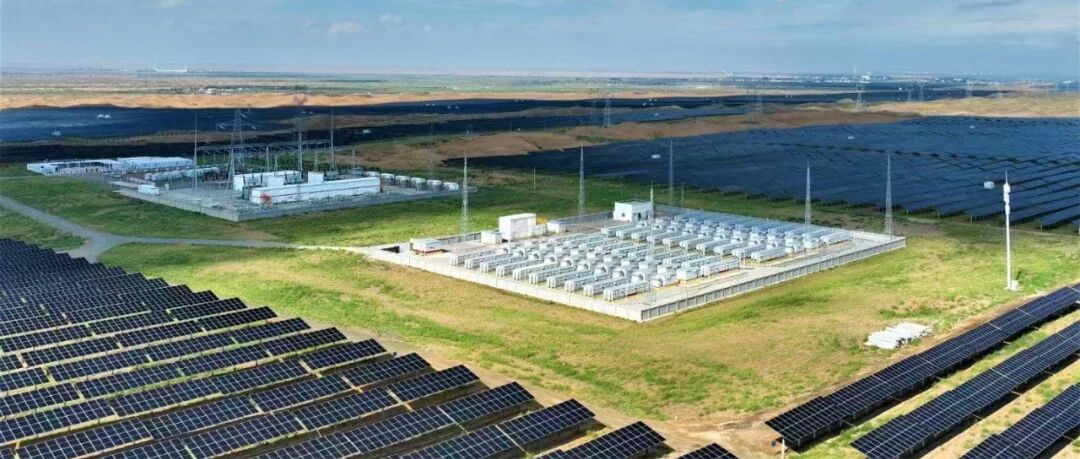
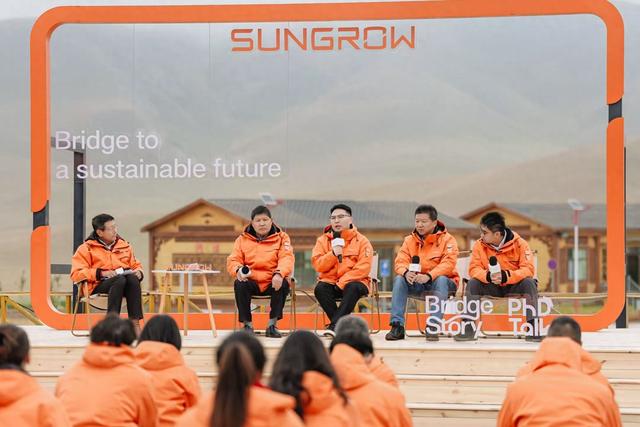
以清洁能源连接绿色生态与美好生活—阳光电源在青海讲述连接的故事
Huan Qiu Wang· 2025-09-30 01:28
Core Insights - The article highlights the significant advancements in renewable energy and biodiversity conservation efforts in Qinghai, China, particularly through the initiatives led by Sungrow Power Supply Co., Ltd. [1][4][8] Group 1: Renewable Energy Development - Qinghai is leveraging its abundant clean energy resources, including solar, wind, and hydropower, to drive high-quality development in the renewable energy sector [6][7] - As of December 31, 2024, Qinghai's installed capacity for solar, wind, and energy storage reached 36.317 million kW, 12.683 million kW, and 200,000 kW/661 MWh, respectively [6] - Sungrow Power focuses on integrating energy storage with solar power to enhance grid stability and efficiency in resource-rich but environmentally challenging areas like Qinghai [6][7] Group 2: Biodiversity Conservation - The establishment of the "Sunshine Forest" project aims to restore habitats and enhance biodiversity in the Qilian Mountain National Park, which is crucial for wildlife migration and ecosystem health [3][4] - The project is part of a broader initiative to engage corporate social responsibility in ecological protection, demonstrating a model for other enterprises to follow [4][5] - The monitoring of 282 vertebrate species in the Qilian Mountains underscores the region's importance as a biodiversity hotspot [3] Group 3: Corporate Sustainability and ESG - Sungrow Power's MSCI ESG rating improved from AA to AAA in August 2025, reflecting its commitment to sustainable practices and innovation in the renewable energy sector [8] - The company emphasizes the importance of technology in connecting energy generation with consumption, thereby facilitating the integration of intermittent renewable energy into the grid [8][9] - Sungrow Power's initiatives are framed as a "bridge" connecting technology, responsibility, and hope for a sustainable future, aligning with global sustainability goals [9]
光伏企业大动作,光储融合能否助行业穿越周期?
Zheng Quan Shi Bao· 2025-09-27 11:52
Group 1 - The core viewpoint is that the integration of solar and storage (光储融合) is becoming a standard in the photovoltaic industry, with companies like 阳光电源 achieving significant profitability and market capitalization growth [1][8] - 阳光电源 reported a revenue of 43.5 billion yuan, a 40% year-on-year increase, and a net profit of 7.7 billion yuan, a 56% increase, primarily driven by its solar inverter and storage businesses [1][8] - 隆基绿能 is exploring investments in storage companies, indicating a strategic shift towards integrating storage solutions with solar energy [2][3] Group 2 - The demand for storage solutions is driven by the need to stabilize energy output from solar sources, especially as renewable energy penetration increases [4][7] - The industry is witnessing a shift from policy-driven storage solutions to economically viable models, with the potential for significant growth in the storage market [10] - Companies like 阿特斯 and 天合光能 are also reporting strong performance in their storage segments, with 阿特斯 having a backlog of contracts worth $3 billion and projected shipments of 7-9 GWh for the year [3][8] Group 3 - The integration of solar and storage is seen as a critical strategy for companies to navigate the current low-price environment in the photovoltaic sector [10] - The competitive landscape is intensifying, with leading storage companies maintaining profitability while smaller firms struggle [9][10] - The anticipated policy changes, such as the relaxation of price limits in the electricity market, are expected to enhance the economic viability of solar-storage integration [6][10]
这一概念火了!光伏企业大动作,光储融合能否助行业穿越周期?
Sou Hu Cai Jing· 2025-09-27 11:45
Core Viewpoint - The integration of solar and energy storage (光储融合) is becoming a standard in the photovoltaic industry, with companies like 阳光电源 achieving significant profitability and market capitalization growth due to their strategic positioning in this sector [1][9]. Group 1: Company Performance - 阳光电源 reported a net profit of 7.7 billion yuan in the first half of the year, with a market capitalization surpassing 300 billion yuan, making it the third photovoltaic company to reach this milestone [1]. - 阿特斯 has signed contracts for energy storage systems amounting to 3 billion USD, with projected shipments of 2.1 to 2.3 GWh in Q3 and an annual target of 7 to 9 GWh [4]. - The company achieved a revenue of 43.5 billion yuan in the first half of the year, a 40% year-on-year increase, with a net profit growth of 56% [9]. Group 2: Industry Trends - The photovoltaic industry is witnessing a shift towards energy storage integration, with companies like 隆基绿能 exploring acquisitions in the storage sector to enhance their offerings [3][4]. - The demand for energy storage is driven by the need to stabilize the grid and manage the intermittent nature of renewable energy sources, particularly solar [5][7]. - Policies are evolving to support the economic viability of energy storage, with the potential for increased price differentials between peak and off-peak electricity [6][10]. Group 3: Market Dynamics - The energy storage market is expected to grow significantly, with a projected compound annual growth rate of 20% to 30% globally in the coming years [11]. - The integration of solar and storage solutions is seen as a critical strategy for companies to navigate the current low-price environment and achieve sustainable growth [10]. - The competitive landscape is intensifying, with leading companies maintaining profitability while smaller firms struggle, highlighting the importance of technological and market understanding [10].

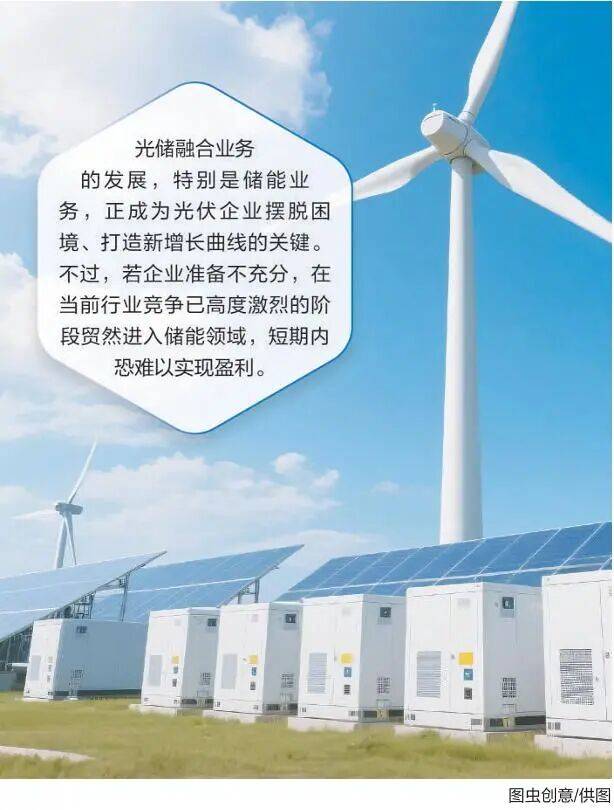
受访人士:光储融合业务的发展,正成为光伏企业摆脱困境、打造新增长曲线的关键
Xin Lang Cai Jing· 2025-09-27 00:05
Core Insights - Sunshine Power achieved a profit of 7.7 billion yuan in the first half of the year, marking a significant milestone as its market value surpassed 300 billion yuan, making it the third photovoltaic company to reach this valuation after Longi Green Energy and Tongwei Co [1] Industry Overview - The integration of solar and energy storage is becoming a standard in the photovoltaic industry, with companies like Canadian Solar and Trina Solar having made early investments in this area [1] - Longi Green Energy is rumored to be acquiring an energy storage company, indicating a trend towards consolidation in the sector [1] Market Dynamics - There is an expectation that the domestic market will gradually relax price limits on the spot market, which could enhance the value of solar and storage integration as electricity price differentials widen [1] - High demand for self-consumption scenarios is creating a need for energy storage, further driving the integration of solar and storage solutions [1] Business Outlook - While the fundamentals of the photovoltaic industry are showing signs of improvement, the overall outlook remains cautious [1] - Industry experts believe that the development of solar and storage integration, particularly in the energy storage segment, is crucial for photovoltaic companies to overcome challenges and create new growth trajectories [1] - However, companies that are not adequately prepared may struggle to achieve profitability if they enter the energy storage market amidst intense competition [1]
布局储能尝到甜头 光储融合能否助行业穿越周期?
Sou Hu Cai Jing· 2025-09-26 22:18
Core Insights - The photovoltaic industry is witnessing a shift towards integrated solar and storage solutions, with companies like 阳光电源 achieving significant profitability and market capitalization growth due to their strategic positioning in the energy storage sector [1][8] - The integration of solar and storage is becoming a standard practice among photovoltaic companies, driven by the need to enhance energy efficiency and address market challenges [2][3] Industry Overview - 阳光电源 reported a revenue of 43.5 billion yuan, a 40% year-on-year increase, and a net profit of 7.7 billion yuan, up 56% [1][8] - The market is seeing a trend where companies are increasingly focusing on energy storage as a critical component of their business strategy, with 隆基绿能 exploring partnerships and acquisitions in the storage sector [2][3] Market Dynamics - The demand for integrated solar and storage solutions is expected to grow, particularly as policies are set to relax price limits in the electricity market, allowing for greater price differentials that can enhance the economic viability of solar-storage combinations [5][9] - The storage sector is experiencing a surge in orders, with 阿特斯 reporting a backlog of contracts worth $3 billion and projected shipments of 7-9 GWh for the year [3][10] Competitive Landscape - The storage industry is characterized by intense competition, with leading companies maintaining strong profitability while smaller firms struggle [9] - Companies are diversifying their offerings to include comprehensive energy services and virtual power plant operations to mitigate cyclical risks [9] Future Outlook - The global energy storage market is projected to grow at a compound annual growth rate of 20-30% over the next few years, with strong demand anticipated in Europe, the United States, and Australia [10] - The integration of solar and storage is seen as a key strategy for companies to navigate the current low-price environment and achieve sustainable growth [9]
布局储能尝到甜头光储融合能否助行业穿越周期?
Zheng Quan Shi Bao· 2025-09-26 17:32
Core Viewpoint - The integration of solar and energy storage (光储融合) is becoming a standard in the photovoltaic industry, with companies like 阳光电源 achieving significant profitability and market capitalization growth due to their strategic positioning in this sector [1][8]. Group 1: Company Performance - 阳光电源 reported a net profit of 7.7 billion yuan in the first half of the year, with a market capitalization surpassing 300 billion yuan, making it the third company in the photovoltaic sector to reach this milestone [1]. - 阿特斯 has signed contracts for energy storage systems amounting to 3 billion USD, with projected shipments of 2.1 to 2.3 GWh in Q3 and a total of 7 to 9 GWh for the year [3]. - 阿特斯 and other companies like 晶科能源 and 天合光能 are also focusing on energy storage, with 天合光能 reporting over 10 GWh in hand orders, indicating strong demand for integrated solutions [3]. Group 2: Industry Trends - The photovoltaic industry is experiencing a gradual improvement in fundamentals, but challenges remain, particularly in the competitive landscape of energy storage [1][10]. - The demand for energy storage is driven by the need to stabilize electricity prices and enhance the efficiency of renewable energy consumption, especially as the market shifts towards more flexible pricing structures [6][7]. - The integration of energy storage is seen as a necessary evolution for photovoltaic companies to navigate the current market challenges and achieve sustainable growth [10]. Group 3: Market Dynamics - The upcoming policy changes, such as the potential relaxation of price limits in the electricity market, are expected to enhance the economic viability of solar and storage integration [6]. - The increasing share of renewable energy in the grid necessitates improved stability measures, making energy storage a critical component of the energy transition [7]. - The competitive landscape is intensifying, with leading companies leveraging their technological and scale advantages to maintain profitability, while smaller firms face challenges [9][10].
永泰能源以“光储融合”促进矿山绿色转型
Zheng Quan Ri Bao Zhi Sheng· 2025-09-26 15:40
Core Viewpoint - The recent guidance from the National Energy Administration emphasizes the development of high-quality energy storage equipment, particularly focusing on low-cost long-duration flow battery systems and enhancing the intrinsic safety performance of storage batteries [1][2]. Group 1: Energy Storage Equipment Development - The guidance highlights the need for a high-safety and high-reliability energy storage equipment system, specifically mentioning the construction of low-cost long-duration vanadium-based, iron-based, and organic flow battery systems [1]. - The "mining + energy storage" model is being explored by traditional mining companies to achieve safe operations and low-carbon development, with Yongtai Energy leveraging its advantages in the vanadium battery storage industry [1][2]. Group 2: Yongtai Energy's Initiatives - Yongtai Energy's Nanshan Coal Mine launched a vanadium battery storage project in September last year, integrating a 2.7MWp distributed photovoltaic system with a 1.5MW/6MWh vanadium battery storage system, providing 4 hours of long-duration storage capacity [3]. - As of September this year, the Nanshan Coal Mine's photovoltaic system has generated 2.94 million kWh, with the storage system completing 186 charge-discharge cycles, saving significant electricity costs and providing emergency power [3]. Group 3: Technological Innovations and Challenges - Despite the promising outlook, the large-scale promotion of vanadium battery systems in mining faces challenges, including high initial costs (2 to 3 times that of lithium-ion batteries), low energy density, and temperature limitations [4]. - Yongtai Energy's subsidiary, Vnergy, is addressing these challenges with innovative solid capacity-enhancing materials, which can reduce the cost of positive electrolyte solutions by 40% to 60% and expand the operational temperature range [4][5]. Group 4: Market Potential and Policy Support - The "mining + energy storage" market has significant potential, supported by national policies such as the "New Type Energy Storage Scale Construction Special Action Plan (2025-2027)," which aims to increase the installed capacity of new energy storage [5]. - The integration of photovoltaic and long-duration storage models aligns with the trend of green transformation in mining, indicating a strong demand for energy storage solutions in high-energy-consuming sectors [5].

从"走出去"到"扎下根" 光储融合开辟新蓝海
Shang Hai Zheng Quan Bao· 2025-09-24 03:51
Core Insights - The photovoltaic industry is transitioning from a solitary approach to a collaborative model, emphasizing the integration of energy storage systems with solar power to meet overseas customer demands [1][3] - Companies are increasingly focusing on establishing complete supply chain systems abroad, which enhances stability in raw material supply and accelerates the release of synergistic effects from solar and storage integration [2][4] Group 1: Industry Trends - The shift from "single factory" operations to a comprehensive industry chain presence abroad is evident, with companies like JinkoSolar leading the way in establishing global manufacturing models [2] - The collaboration between Chinese photovoltaic companies and local suppliers is crucial for overcoming challenges related to raw material imports and local support [2][3] - The integration of energy storage with solar power is becoming essential, especially in markets with high solar penetration, as it addresses the intermittent nature of solar energy [3][4] Group 2: Company Strategies - Trina Solar has established a global engineering technology center, with energy storage systems having shipped nearly 12 GWh globally by mid-2023, including over 2 GWh in Europe [5] - JinkoSolar aims to increase its energy storage system shipments to 6 GWh this year, a fivefold increase from the previous year, with a significant portion coming from overseas markets [5] - Canadian Solar is leveraging its localized teams in various regions to provide immediate response services, enhancing the efficiency of green energy utilization and optimizing project returns [5] Group 3: Market Opportunities - The global renewable energy projects are projected to reach hundreds of gigawatts, with storage needs expected to enter the terawatt-hour level in the next decade, representing a vast new market [5] - The Middle East is viewed as a high-potential market for solar and storage, driven by abundant natural resources and strategic investments in green technologies [6] - The demand for energy storage is anticipated to grow significantly due to the surge in AI computing power and energy consumption, positioning storage as a new growth driver in the industry [7]