
免疫疗法

Search documents
INmune Bio(INMB) - 2025 Q2 - Earnings Call Transcript
2025-08-07 21:30
Financial Data and Key Metrics Changes - The net loss attributable to common stockholders for Q2 2025 was approximately $24.5 million, compared to approximately $9.7 million for the same period in 2024, indicating a significant increase in losses [33] - Research and development expenses totaled approximately $5.8 million for Q2 2025, down from approximately $7.1 million in Q2 2024 [33] - General and administrative expenses were approximately $2.3 million for Q2 2025, compared to approximately $2.8 million for the same period in 2024 [33] - The impairment of acquired in-process research and development intangible assets was $16.5 million, compared to zero during the same period in 2024 [34] - As of June 30, 2025, the company had cash and cash equivalents of approximately $33.4 million, which is expected to fund operations into 2026 [34] Business Line Data and Key Metrics Changes - The phase two MINDFUL trial for EXPAREL confirmed that Alzheimer's patients with two or more biomarkers of inflammation are optimal candidates, with an estimated 40% to 60% of all Alzheimer's cases fitting this profile [7][8] - In the key subgroup of patients with high inflammation, the trial observed an effect size of 0.27 on the primary endpoint EMAC and 0.23 on a key secondary behavioral endpoint, the neuropsychiatric inventory [15][16] - The company has decided not to pursue treatment-resistant depression at this time and is reevaluating opportunities for EXPAREL beyond Alzheimer's disease [10][11] Market Data and Key Metrics Changes - The company anticipates filing for approval of Cordstrom in both the UK and US by mid-2026, with expectations that it will qualify for a Priority Review Voucher if approved in the US [12] - The company is exploring shorter pathways to market for EXPAREL, including opportunities in rare diseases to maximize impact and accelerate patient access [9] Company Strategy and Development Direction - The company is focused on securing strategic partnerships to advance the EXPAREL program, which requires substantial investment in manufacturing and clinical trials [8][9] - The company aims to prepare for an end of phase two meeting with the FDA to align on the design of the phase three trial for EXPAREL [21] - The company is committed to exploring strategic partnerships to fuel growth and complete trials, while also ensuring the development of Cordstrom and INKmune [36] Management's Comments on Operating Environment and Future Outlook - Management expressed confidence in the potential of EXPAREL as a first-in-class drug for Alzheimer's disease, emphasizing its unique approach to addressing neuroinflammation [7][8] - The management highlighted the importance of the recent phase two trial results and the potential for strategic partnerships to support the program's advancement [22] - Management acknowledged the challenges of the current operating environment but remains optimistic about the company's robust pipeline and potential value creation [36] Other Important Information - The company plans to publish the trial results in a peer-reviewed journal and prepare a briefing book for the FDA meeting, expected to occur before the end of the year [35] - The company is actively exploring additional indications for Cordstrom beyond recessive dystrophic epidermolysis bullosa [12][26] Q&A Session Summary Question: Confirmation of end of Phase two meeting date with FDA - The specific meeting date has not been set yet, and the briefing book is being prepared [41] Question: Atmosphere at AAIC and feedback from thought leaders - Feedback was positive, with strong interest in the neuropsychiatric inventory and the absence of amyloid-related imaging abnormalities [42][44] Question: Strategic partnerships for EXPAREL - A partnership is not expected until after the end of phase two meeting with the FDA, as partners will want to see the publication and FDA feedback first [46][48] Question: Insights from ongoing statistical analysis for Cordstrom - The statistical analysis plan is expected to yield improved data for submission, and the open-label trial is planned for early 2027 [70][72]

Corvus Pharmaceuticals(CRVS) - 2025 Q2 - Earnings Call Transcript
2025-08-07 21:30
Financial Data and Key Metrics Changes - Research and development expenses for Q2 2025 totaled $7.9 million, up from $4.1 million in Q2 2024, primarily due to higher clinical trial and manufacturing costs related to selcolitinib [4] - The net loss for Q2 2025 was $8 million, compared to a net loss of $4.3 million in Q2 2024, which included a non-cash gain of $1.8 million related to warrant liability [5] - As of June 30, 2025, cash, cash equivalents, and marketable securities amounted to $74.4 million, an increase from $52 million at the end of 2024 [5] Business Line Data and Key Metrics Changes - The focus remains on the development of socolitinib for atopic dermatitis, with encouraging data from the Phase one trial showing a mean percent reduction of EASI score of 64.8% in cohort three compared to 54.6% in combined cohorts one and two [8][9] - In cohort three, 50% of patients achieved EZ75, 8% achieved EZ90, and 25% achieved IGA 0 or 1, indicating a favorable response compared to earlier cohorts [9] Market Data and Key Metrics Changes - The company is advancing clinical development in multiple areas, including atopic dermatitis and T cell lymphoma, with ongoing trials and expected data releases in late 2025 and 2026 [18] Company Strategy and Development Direction - The company aims to maintain a presence in dermatology while exploring new indications such as hidradenitis suppurativa and asthma, leveraging existing data and mechanisms of action [22][24] - The strategy includes the development of next-generation ITK inhibitors to target various diseases involving inflammation and cancer [18] Management's Comments on Operating Environment and Future Outlook - Management expressed confidence in the long-term potential of socolitinib, highlighting its favorable safety and efficacy profile [7] - The company anticipates that current cash reserves will fund operations into 2026, indicating a stable financial outlook [6] Other Important Information - The company plans to initiate a Phase 2 clinical trial for socolitinib in atopic dermatitis, enrolling approximately 200 patients with a focus on various dosing regimens [13][14] - A Phase 1b/2 trial of socolitinib for atopic dermatitis is set to begin in China, further expanding the drug's development [16] Q&A Session Summary Question: Thoughts on next indications for socolitinib in autoimmune disease - Management is considering hidradenitis suppurativa and asthma as potential follow-up indications due to unmet needs and existing data [22][24] Question: Update on ciforadenant in renal cell cancer - Management is awaiting data from the ESMO presentation and will decide next steps based on the results [26][28] Question: Enrollment status for PTCL trial - Enrollment is proceeding as planned with approximately 20 centers open, and guidance for data release remains intact [32][33] Question: Phase 2 trial design for atopic dermatitis - The trial will include four cohorts with different dosing regimens, and the design is standard for such studies [39][43] Question: Timeline for results from the Phase 2 trial - Enrollment is expected to take 12 to 15 months, with results anticipated in about 18 months [48] Question: Next-generation ITK inhibitors - Details on differences from socolitinib are limited due to intellectual property reasons, but the company believes they may target various mechanisms effectively [54]

中国生物制药:LM-24C5“CEACAM5/4-1BB双抗”II期临床试验申请获NMPA批准
Zhi Tong Cai Jing· 2025-08-07 13:54
中国生物制药(01177)发布公告,集团全资附属公司礼新医药科技(上海)有限公司(礼新医药)自主研发的 创新药LM-24C5"CEACAM5/4-1BB双抗"已获得中国国家药品监督管理局(NMPA)的临床试验批准,同 意其在CEACAM5阳性的晚期实体瘤患者中开展一项联合其他抗肿瘤药物的II期临床试验。 CEACAM5(癌胚抗原相关细胞黏附分子5)在多种实体瘤中高表达,包括非小细胞肺癌、结直肠癌和胃癌 等,使其成为一个极具前景的肿瘤治疗靶点。LM-24C5是礼新医药基于条件激活型4-1BB平台开发的双 特异性抗体,通过特异性结合肿瘤细胞表面的CEACAM5和免疫细胞表面的4-1BB,将免疫细胞特异性 定向至肿瘤微环境,激活并增强其抗肿瘤活性。LM-24C5的独特结构可以CEACAM5依赖性方式选择性 激活4-1BB信号通路,避免非特异性外周免疫系统激活带来的毒性风险。 临床前研究表明,LM-24C5可诱导持久的抗肿瘤免疫记忆,并与其他免疫治疗药物具有协同效应,具有 成为同类首创(First-in-Class)免疫疗法的潜力。目前,LM-24C5正在美国开展I/II期临床试验。 ...

Vir(VIR) - 2025 Q2 - Earnings Call Transcript
2025-08-06 21:30
Financial Data and Key Metrics Changes - R&D expenses for Q2 2025 were $97.5 million, down from $105.1 million in Q2 2024, primarily due to cost savings from restructuring initiatives [34] - SG&A expenses for Q2 2025 were $22.3 million, compared to $30.3 million in Q2 2024, reflecting ongoing cost savings [35] - The net loss for Q2 2025 was CAD 111 million, an improvement from a net loss of CAD 138.4 million in Q2 2024 [35] - Cash, cash equivalents, and investments at the end of Q2 2025 totaled approximately $892 million, providing a cash runway extending into mid-2027 [36][37] Business Line Data and Key Metrics Changes - The ECLIPSE registrational program for hepatitis delta is actively recruiting patients globally, with significant progress in all three studies [5][15] - The oncology portfolio includes advancements in T cell engager programs, with the initiation of the Phase I study for VER-5525 [5][20] Market Data and Key Metrics Changes - The global market for hepatitis delta includes approximately 7 million active HBV RNA positive patients, with 61,000 in the U.S. and 113,000 in the EU [6][7] - The patient population is concentrated in major urban centers in the U.S., allowing for a targeted commercial approach [7] Company Strategy and Development Direction - The company aims to pursue commercialization partnerships in Europe and other key international markets for its hepatitis delta program [9] - The oncology strategy focuses on advancing clinical stage T cell engager programs and exploring their potential in earlier lines of treatment [14][37] Management's Comments on Operating Environment and Future Outlook - Management expressed optimism about the progress in the hepatitis delta program and the potential for effective intervention due to the high mortality rate associated with untreated disease [7][8] - The company is focused on maximizing the value of its assets while maintaining strict financial discipline [37] Other Important Information - The company received IND clearance to evaluate SER-5525 in earlier lines of prostate cancer treatment, marking an important step in its oncology strategy [12][31] - The Pro X10 platform's clinical validation across multiple targets is expected to enhance the development of preclinical candidates [32] Q&A Session Summary Question: Enrollment update on the ECLIPSE programs - Management confirmed that enrollment in ECLIPSE one is progressing well, with expectations to complete enrollment by the end of the year [44][45] Question: ECLIPSE one and two data for registration - Both ECLIPSE one and two are expected to be needed for the U.S. regulatory filing, but there are scenarios where ECLIPSE one could be filed with Solstice if it completes ahead [63][91] Question: Competitive landscape in chronic hepatitis delta - Management views the competitive landscape positively, noting that Gilead's potential approval could help educate physicians and promote testing for HBV, benefiting the company's launch [73][74]

ImmunityBio (IBRX) Reports Q2 Loss, Tops Revenue Estimates
ZACKS· 2025-08-05 13:20
Core Insights - ImmunityBio reported a quarterly loss of $0.1 per share, consistent with the Zacks Consensus Estimate, compared to a loss of $0.2 per share a year ago [1] - The company achieved revenues of $26.43 million for the quarter ended June 2025, exceeding the Zacks Consensus Estimate by 0.10%, and significantly up from $1.05 million year-over-year [2] - ImmunityBio shares have declined approximately 5.9% year-to-date, contrasting with the S&P 500's gain of 7.6% [3] Earnings Outlook - The earnings outlook for ImmunityBio is mixed, with the current consensus EPS estimate at -$0.10 on revenues of $27.17 million for the upcoming quarter, and -$0.45 on revenues of $96.77 million for the current fiscal year [7] - The company's Zacks Rank is currently 3 (Hold), indicating expected performance in line with the market in the near future [6] Industry Context - The Medical - Biomedical and Genetics industry, to which ImmunityBio belongs, is currently ranked in the bottom 43% of over 250 Zacks industries, suggesting potential challenges ahead [8] - Empirical research indicates a strong correlation between near-term stock movements and trends in earnings estimate revisions, which could impact ImmunityBio's stock performance [5]



Medicenna Strengthens Intellectual Property Portfolio with Five Patents Granted for its IL-2 and IL-4 Superkines
Globenewswire· 2025-07-31 11:00
Core Insights - Medicenna Therapeutics Corp. has been granted five patents that enhance its intellectual property position for IL-2 and IL-4 Superkine platforms, which are crucial for its clinical and preclinical programs [1][2]. Patent Details - The newly granted patents cover various aspects including composition, formulation, combination, use, and therapeutic applications of IL-2 and IL-4 Superkines, with expiration dates ranging from 2033 to 2040 [2]. - Notable patents include coverage for IL-2 superagonists in combination with anti-PD-1 antibodies, which is significant for the ongoing Phase 1/2 ABILITY-1 study of MDNA11 [2][4]. - A novel formulation of bizaxofusp (MDNA55) has also received patent protection, which is used in a Phase 2b clinical trial for recurrent glioblastoma, enhancing its commercial exclusivity [2][3]. Company Overview - Medicenna is focused on developing novel immunotherapies, particularly Superkines, for oncology and autoimmune diseases [3]. - The company’s lead asset, MDNA11, is a long-acting IL-2 Superkine designed to preferentially stimulate cancer-fighting T cells and NK cells [3]. - Bizaxofusp has been involved in five clinical trials with over 130 patients and has received FastTrack and Orphan Drug status from the FDA and EMA [3]. Intellectual Property Portfolio - Medicenna's global intellectual property portfolio now includes 86 granted or allowed patents, supporting a diverse clinical pipeline [2].

乐普生物20250710
2025-07-11 01:05
Summary of Key Points from the Conference Call of Lepu Biopharma Company Overview - **Company**: Lepu Biopharma - **Industry**: Biopharmaceuticals, focusing on ADC (Antibody-Drug Conjugates) and immunotherapy Core Products and Development Progress - **EGFR ADC (MRG003)**: - Targeting nasopharyngeal carcinoma (NPC) and head and neck squamous cell carcinoma - Expected approval in China between late 2025 and early 2026 for NPC, and in 2027 for head and neck cancer [2][3] - Positive feedback received at ASCO conference regarding clinical data [2][3] - **TFADC (MRG004A)**: - Targeting tissue factor, showing promising results in pancreatic ductal adenocarcinoma - Completed domestic expansion trials, with data to be presented at ASCO in October [2][6] - **GPC3 ADC (MRG006A)**: - Targeting liver cancer, currently in Phase I clinical trials - Expected to share Phase I data in 2026 and seek overseas collaboration opportunities [2][7][8] - **Claudin 18.2 ADC (CMG901)**: - Jointly developed with Connora, currently in global Phase III trials - NDA submission expected by the end of 2026 [2][9] - **CDH17 ADC (MRG007)**: - Targeting colorectal cancer, IND approval received in China, clinical trials to start soon - Total transaction value includes $47 million upfront and over $1.2 billion in milestone payments [2][10] Financial and Operational Outlook - **R&D Expenses**: - Estimated at approximately 400 million RMB for 2025, with a focus on advancing key pipelines [4][25] - **Profitability Expectations**: - Anticipated to achieve overall profitability by around 2028, aligning with the commercialization of core products [4][29] Market Potential and Sales Strategy - **Market Potential for EGFR ADC**: - Estimated peak sales in China could reach approximately 3 billion RMB, targeting NPC and head and neck cancer [2][27] - **Sales Team Expansion**: - Plans to expand the sales team from 200 to about 250 to support the commercialization of PD-1 and EGFR ADC products [18][21] Upcoming Data Releases and Conferences - **Data Presentations**: - Planned presentations at ASCO, ESMO, and ASH conferences, focusing on various ADC products and combination therapies [19] Competitive Landscape and Intellectual Property - **Patent Protection**: - Strong patent protection for EGFR ADC, preventing competitor products from entering the U.S. market [24] Future Development Focus - **TCE Platform**: - Focused on developing new ADC molecules targeting unmet clinical needs, while also exploring partnerships for other projects [28] Conclusion - **Overall Strategy**: - Lepu Biopharma is positioned to leverage its robust pipeline of ADC products and immunotherapies to achieve significant market presence and profitability in the coming years, with a clear focus on advancing clinical trials and expanding its sales capabilities [30]
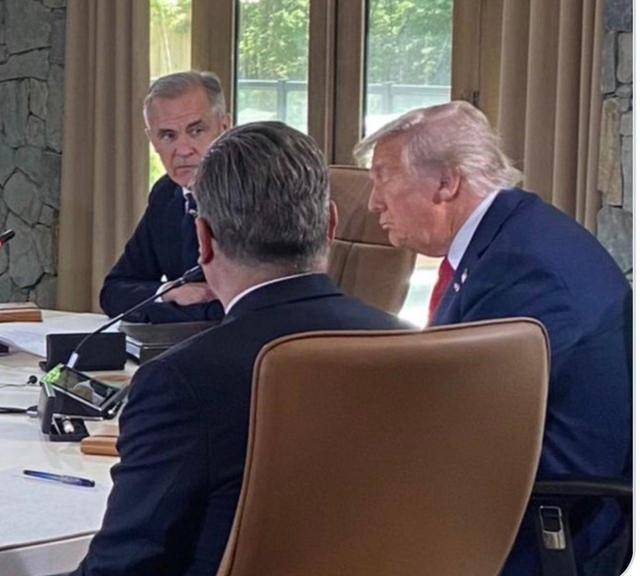
最后时刻加方向特朗普屈服,中方昭告全球:胆敢出卖中国虽远必诛
Sou Hu Cai Jing· 2025-07-02 01:52
Core Viewpoint - The article discusses the implications of Canada's submission to U.S. trade pressures, highlighting the broader risks for other nations and the potential for a fragmented global economy due to U.S. trade policies [1][22]. Group 1: U.S. Trade Strategy - The U.S. employs a "poison pill" strategy, using tariffs as a tool to create pressure on countries, while the real danger lies in the hidden clauses related to "national security" and "reliable supply chains" [3][5]. - The U.S. has set a deadline for countries to comply with its trade demands, creating a sense of urgency and fear among nations to avoid economic repercussions [5][17]. Group 2: Canada's Economic Vulnerability - Canada is heavily reliant on the U.S. for trade, with 75% of its exports going to the U.S., making it particularly susceptible to U.S. tariffs [8][10]. - The economic strain from U.S. pressures has led to a shrinking GDP and rising unemployment in Canada, further weakening its ability to resist U.S. demands [8][10]. Group 3: China's Response - China has shifted its strategy from reactive measures to proactive warnings, clearly stating that any country compromising Chinese interests for U.S. tariff exemptions will face consequences [12][13]. - China is working on building a new economic system that reduces reliance on the U.S. and strengthens ties with other economies, such as ASEAN and BRICS [15][20]. Group 4: Global Implications - Canada's capitulation serves as a warning to other nations, with countries like Japan, South Korea, and India showing signs of following suit in negotiations with the U.S. [17][18]. - The potential normalization of "poison pill" clauses in global trade agreements could lead to a fragmented world economy, characterized by geopolitical divisions and increased trade costs [20][22].
金斯瑞生物科技(01548.HK):附属蓬勃收到礼新医药超2亿美元付款
Ge Long Hui· 2025-06-30 00:21
Group 1 - Kingsray Biotechnology (01548.HK) announced a revised licensing agreement with Nanjing Pengbo, granting a global transferable license for anti-PD-1 domain antibodies and related proprietary technologies to Lixin, enabling development, production, and commercialization of licensed products for all global uses [1] - By June 27, 2025, Nanjing Pengbo and its subsidiary, Zhenjiang Pengbo Biotechnology Co., Ltd., are expected to receive approximately $213.8 million (after tax deductions) under the revised licensing agreement, which includes an upfront payment, milestone payments, and sublicensing revenue related to the licensed anti-PD-1 domain antibodies [1] - The licensed anti-PD-1 domain antibodies are being utilized in the development of Lixin's investigational PD1/VEGF bispecific antibody LM-299, which has received approval for new drug clinical research [1] Group 2 - The licensed anti-PD-1 domain antibodies demonstrate high efficiency and specificity in binding to human and cynomolgus monkey PD1, effectively blocking PD1/PD-L1 integration and inhibiting tumor growth in rodent efficacy models, showing comparable efficacy to Merck's Keytruda [2] - The anti-PD-1 domain antibodies also exhibit ideal CMC (Chemistry, Manufacturing, and Controls) drug-like properties [2]

资管一线 | 财通基金骆莹:创新药或存回调压力,中药为内需消费中长期优选
Xin Hua Cai Jing· 2025-06-17 07:21
Core Viewpoint - The pharmaceutical sector continues to exhibit structural market enthusiasm, particularly in the innovative drug segment, but there are concerns about overvaluation and potential risks associated with future growth expectations [1][4][5]. Investment Strategy - The investment framework employed by the fund manager emphasizes a "balanced offense and defense" approach, combining a low-valuation base with aggressive positions to drive returns [1][2]. - The core logic of the investment strategy is that "valuation is the anchor of investment," with a strict adherence to exiting positions once prices reach intrinsic value boundaries [2][3]. Market Performance - The innovative drug sector has seen significant price increases, with the Hang Seng Hong Kong Stock Connect Innovative Drug Select Index rising over 60% this year, and individual stocks like Kintor Pharmaceutical and Kelun Biotech experiencing gains of over 70% and 105%, respectively [4][5]. - The current market rally is driven by the expiration of patents for PD-1 class products, leading to a demand for new therapies, particularly in the dual antibody and ADC technology routes [4][5]. Sector Focus - The fund manager expresses optimism about the development potential of the traditional Chinese medicine and medical device sectors, particularly in health supplements and cardiovascular fields [1][7]. - Traditional Chinese medicine companies are seen as having unique competitive advantages, including proprietary formulas, stable financial fundamentals, and strong brand longevity, making them resilient to economic fluctuations [7]. Market Dynamics - Since March, there has been a surge in business development collaborations among Chinese innovative drug companies, which has further stimulated market enthusiasm [5]. - However, there are warnings about the need for strategic adjustments as the market's optimistic valuation may not fully account for the risks associated with research and development success rates [5].