绿色农业

Search documents
传统农业如何实现绿色转型?
Jing Ji Ri Bao· 2025-10-11 03:06
Core Insights - The development of the world's first intelligent breeding robot for automatic hybrid pollination and the conclusion of the first Smart Agriculture Innovation Competition highlight the increasing application of technological innovation in green agriculture [1] - Technological advancements are transforming agriculture from traditional methods to modern, green, and intelligent practices, significantly improving fertilizer utilization rates and increasing the number of recognized green agricultural products [1] Group 1: Technological Innovations in Agriculture - The fertilizer utilization rates for rice, corn, and wheat in China are projected to reach 42.6% in 2024, an increase of 10.4 percentage points compared to 2015 [1] - The total number of recognized green, organic, and geographical indication agricultural products has reached 82,000, reflecting a 105% increase since 2019 [1] - The advancements in technology have led to a reduction in soil and water pollution, demonstrating a balance between green agricultural production and environmental protection [1] Group 2: Challenges and Future Directions - Despite progress, China's green agriculture technology level remains behind that of European and American countries, facing issues such as reliance on foreign seed sources and research instruments [1] - A multi-faceted approach is needed to address these challenges, including enhancing the intensity of technological investment and integrating green agricultural technology into national high-tech industry directories [2] - Promoting a good innovation ecosystem is essential for the conversion of technological innovations into practical applications, which includes building a supportive environment for industry, academia, and research collaboration [2]
微生物如何在植物根系“安家”?中外科学家绘制“定居地图”
Yang Shi Xin Wen· 2025-10-02 22:51
Core Insights - The research conducted by the team led by Zhou Feng at the Chinese Academy of Sciences, in collaboration with the University of Lausanne, has revealed how plant roots guide microorganisms to settle on their surfaces, creating a "settlement map" of root-associated microbes [1] Group 1: Research Findings - The study utilized plant seedling root systems as a model, employing fluorescently labeled live microorganisms and high-resolution imaging techniques to demonstrate that microbial settlement is not random but follows a systematic spatial distribution [6] - The integrity of a specific barrier within the root, known as the Casparian strip, is crucial for maintaining the health balance of root-associated microbial communities [6] - When the Casparian strip has "gaps," it leads to nutrient leakage from the root, with larger gaps resulting in increased microbial colonization [6] Group 2: Microbial Behavior - Microorganisms exhibit a strong chemotactic response to beneficial nutrients, particularly amino acids, with glutamine being the most abundant leaked component [8] - The emergence of lateral roots can create gaps in the Casparian strip, causing localized glutamine leakage that acts as a signal to attract microorganisms [8] - The research highlights that if microorganisms lose their ability to sense amino acids, they will struggle to locate their "settlement points," emphasizing the importance of chemical signaling in microbial distribution [8] Group 3: Implications for Agriculture - This study provides new insights into the precise mechanisms by which plants regulate the spatial distribution of microorganisms, offering innovative approaches for sustainable agricultural development [8] - Future applications may include designing amino acid-based microbial fertilizers to precisely guide beneficial microbial colonization, enhancing nutrient absorption efficiency and resilience in crops [8]

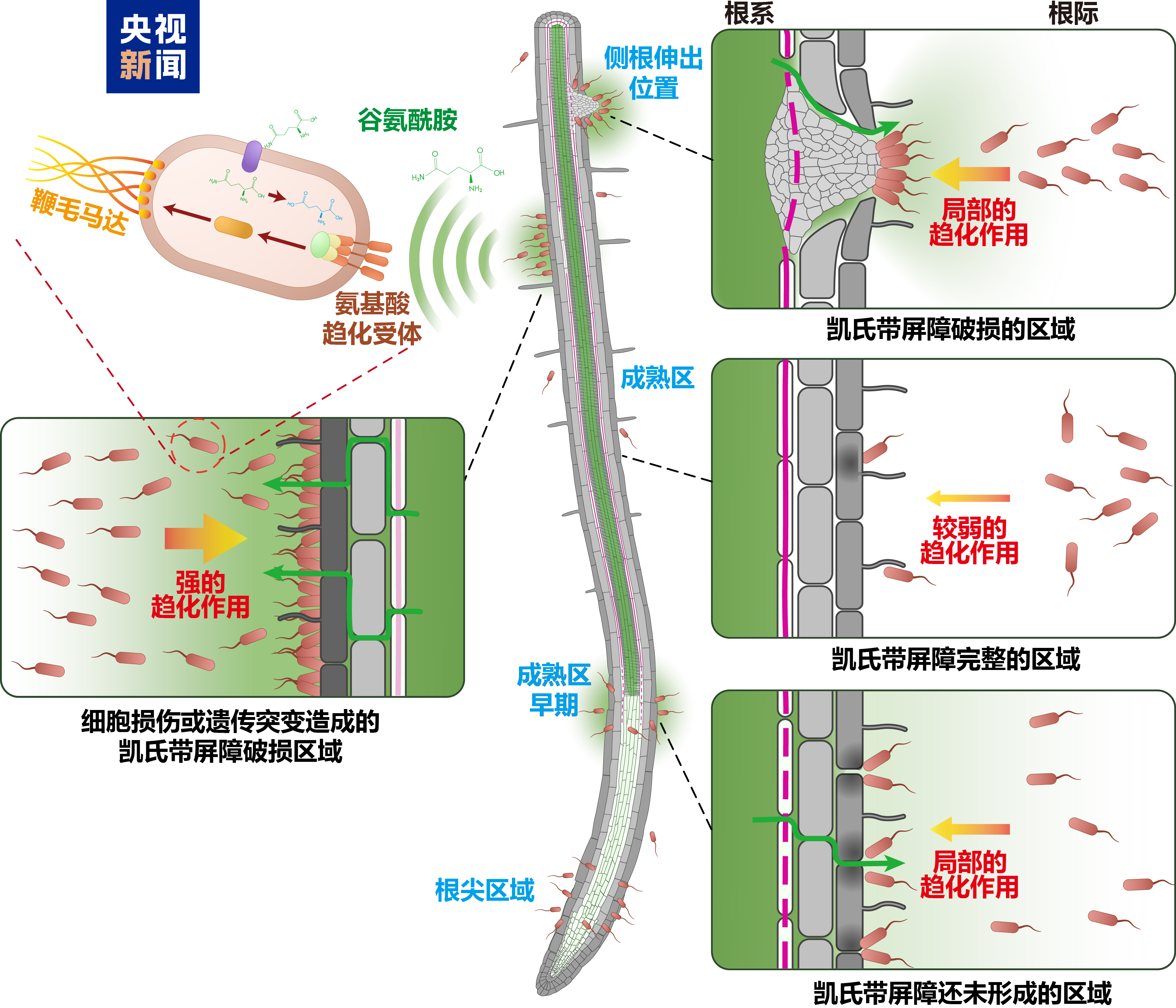
中丹养猪合作:优势互补 推动农牧业高质量发展
人民网-国际频道 原创稿· 2025-09-26 06:30
Group 1 - The collaboration between China and Denmark in pig farming is deepening, leveraging their complementary advantages to build a sustainable partnership [1] - Denmark is a significant source of breeding pigs for China, accounting for over 40% of China's total imported breeding pigs in 2022 [1] - In 2023, Denmark exported 210,000 tons of pork to China, highlighting the strong agricultural trade ties between the two countries [1] Group 2 - Danish genetic selection technology and precision farming solutions are providing crucial support to Chinese enterprises, with companies like DanBred collaborating with major domestic farms [2] - The application of automation and environmental control technologies has allowed demonstration farms in China to reduce the fattening cycle to between 160 and 170 days [2] - The signing of a memorandum in April 2024 to enhance cooperation in breeding, feed processing, and cold chain logistics marks a new phase in Sino-Danish agricultural collaboration [2] Group 3 - Both countries share a vision for green agriculture, with Denmark's resource utilization model for livestock waste aligning with China's rural revitalization strategy [3] - Denmark maintains a low salmonella seroprevalence rate in its pig population, setting a benchmark for biosecurity in the industry [3] - The collaboration is expected to foster a multi-dimensional, sustainable industry community, addressing challenges such as breeding adaptability and feed price fluctuations [3]
“粮食安全看山东”之平原土地鲁望公司:融合生产经营做强粮食产业
Zhong Guo Fa Zhan Wang· 2025-09-23 08:00
Core Viewpoint - The company is actively responding to national policies by focusing on grain production and management, exploring innovations to contribute to local grain industry development [1][2] Group 1: Scale and Efficiency - The company has leased 20,000 acres of land in Pingyuan County, implementing large-scale and standardized planting to effectively reduce production costs and improve efficiency [1] - The use of large agricultural machinery has minimized operational time and costs, while bulk purchasing of agricultural materials has led to lower input costs [1] Group 2: Technological Empowerment - The application of precision agriculture technologies, such as multispectral drones and sensors, has enabled monitoring of soil fertility, moisture, and pest conditions, resulting in a 10% reduction in fertilizer usage and a 3% increase in yield per acre for wheat cultivation [1] - The company promotes high-quality crop varieties, such as strong gluten wheat, which not only yields well but also allows for a price increase of 0.1 to 0.2 yuan per pound, enhancing planting income [1] Group 3: Sustainable Practices - The company employs green production techniques, including crop rotation, straw returning, and biodiversity protection, to reduce the use of chemical pesticides and fertilizers, promoting sustainable agriculture [2] - It has become the first grain production enterprise in China to obtain FSA international agricultural sustainability certification, gaining high market recognition for its quality [2] Group 4: Talent and Innovation - The company employs 18 staff members with bachelor's degrees or higher, including 8 with master's degrees, and collaborates with renowned agricultural experts on technology trials, achieving significant technical improvements and talent development [2] - The company aims to continue its commitment to food security and social service through ongoing exploration and innovation in grain production [2]
赋能现代农业,畅通供需循环!深圳农业科技与服务对接活动成效显著
Nan Fang Nong Cun Bao· 2025-09-20 13:32
Core Insights - The event focused on empowering modern agriculture and facilitating supply-demand cycles through technology integration and social services [1][3][4] Group 1: Event Overview - The Shenzhen Agricultural Technology and Service Matching Activity was successfully held at Nanshan Zhigu Industrial Park on September 19, 2023 [2][3] - The event featured case sharing, technology demonstrations, demand matching, and discussions, creating a platform for precise connections between agricultural technology promotion agencies, research institutions, social service organizations, and agricultural operators [4][5] Group 2: Participation and Contributions - A total of 46 agricultural enterprises and over 80 participants attended the event, including representatives from the Guangdong Provincial Agricultural Technology Promotion Center and various agricultural enterprises and industry associations [6][7] - Notable contributions included presentations from Shenzhen Ruidean Environmental Technology Co., which shared innovative green agricultural technologies, and Shenzhen Agricultural Science and Technology Co., which focused on branding for local agricultural products [10][11] Group 3: Technology and Collaboration - The event showcased 46 participating units presenting smart agriculture, green agriculture, and digital agriculture technologies through various formats such as speeches, posters, and physical displays [14][15] - A lively atmosphere during the free matching session allowed representatives to discuss collaboration intentions, resulting in multiple technology supply-demand matches, thereby facilitating the conversion of technological achievements [16] Group 4: Future Directions - The Shenzhen Agricultural Inspection Center indicated plans to continue organizing agricultural technology promotion activities guided by government and market principles, aiming to implement demonstration projects for agricultural technology in Shenzhen [20][21] - The initiative aims to bring "good seeds," "good opportunities," and "good methods" to areas in need, providing strong technological support for rural revitalization [22]

超受追捧!广东绿色优质农产品推介会举办
Nan Fang Nong Cun Bao· 2025-09-16 08:05
Core Viewpoint - Guangdong's promotion of green and high-quality agricultural products is gaining significant attention, showcasing the province's commitment to agricultural quality and brand development [9][12][56]. Group 1: Event Overview - The 23rd China International Meat Industry Exhibition was held from September 15 to 17 in Xiamen, featuring a national agricultural product supply and demand matching event organized by the Ministry of Agriculture and Rural Affairs [2][3]. - Five Guangdong enterprises participated in the event, promoting "Yue" branded green and high-quality agricultural products, attracting numerous buyers for discussions [5][6]. Group 2: Agricultural Product Quality - Guangdong has focused on the "three products and one standard" strategy (green food, organic agricultural products, geographical indication products, and compliance certification) to promote high-quality agricultural development [9]. - As of August 31, 2025, the total number of certified green and high-quality agricultural products in Guangdong is expected to reach 1,532, including 799 green foods, 92 organic products, and 578 nationally recognized specialty products, with a product compliance rate consistently above 98% [10][11]. Group 3: Product Highlights - Guangdong's agricultural products are known for their "green, healthy, and authentic" characteristics, supported by a complete quality control system from planting to processing and sales [13][15]. - Notable products include dried longan and lychee from Guangdong Danchun Food Technology Co., which emphasize their 16 years of green certification and superior taste [16][18]. - Yingde City Yipin Tea Co. showcased its "Yingzhou Red Rhythm" series of black tea, highlighting the use of over 60-year-old tea trees and traditional farming methods to ensure high quality [20][22]. Group 4: Economic Impact - The New Year Chenpi, a geographical indication product, is projected to have an industry chain output value exceeding 26 billion yuan in 2024, creating 78,000 jobs and increasing per capita income by 26,000 yuan [40][41]. - Guangdong Yihao Food Co., a key agricultural enterprise, expects sales to exceed 3.5 billion yuan in 2024, with its pork products having double the fat content of ordinary pork, enhancing flavor [45][46]. Group 5: Market Response - Buyers expressed interest in Guangdong's unique agricultural products, emphasizing the importance of brand stories and cultural heritage that align with current consumer demands for "green, healthy, and traceable" products [52][53]. - The event served as a significant platform for agricultural exchange and cooperation between Guangdong and Fujian, reinforcing Guangdong's leading position in the green agricultural sector [54][56].

2025年中国BB肥(掺混肥料)行业发展历程、市场政策、产业链图谱、供需现状、竞争格局及发展趋势研判:产销稳步增长[图]
Chan Ye Xin Xi Wang· 2025-09-15 01:39
Overview - The concept of precision agriculture is driving the demand for BB fertilizers, which can be tailored based on soil tests and crop needs, thus meeting modern agricultural management requirements [1][9] - In 2024, the demand for BB fertilizers in China is projected to reach 8.651 million tons, representing a year-on-year increase of 8.95%, while the production is expected to be 8.475 million tons, up 6.74% from the previous year [1][9] Industry Development - BB fertilizers, also known as bulk blending fertilizers, are characterized by their flexible formulations and targeted nutrient delivery, addressing the limitations of traditional fertilizers [2][3] - The introduction of BB fertilizer technology in China dates back to the late 1980s, with significant milestones including the establishment of industry standards and associations that have shaped the sector [5][6] Market Policies - Recent policies in China aim to promote technological innovation in fertilizer production, enhance fertilizer efficiency, and reduce environmental pollution, steering the BB fertilizer industry towards greener and more efficient practices [6][7] Industry Chain - The BB fertilizer industry consists of upstream suppliers of nitrogen, phosphorus, potassium, and trace elements, midstream production companies, and downstream application markets, with significant usage in staple crops like wheat, corn, and rice [8][9] Competitive Landscape - The BB fertilizer market is becoming increasingly competitive, with a growing number of companies entering the sector; as of mid-2025, there are 94,481 registered BB fertilizer products in China [9][10] - Major players in the BB fertilizer market include Yuntianhua, Hubei Yihua, and XinYangFeng, among others, which are expanding their product offerings and market presence [10][11] Future Trends - The future of the BB fertilizer industry is expected to focus on precision formulation using data analytics and remote sensing technologies, alongside a shift towards environmentally friendly production methods [12]


生物农化制品:绿色农业的新引擎
Wind万得· 2025-09-11 22:51
Core Viewpoint - The article discusses the rapid development and increasing importance of biopesticides and biostimulants in modern agriculture, driven by policy support and market demand for sustainable agricultural practices [3][4][7]. Group 1: Biopesticides and Biostimulants - The biopesticides and biostimulants industry is a crucial part of modern agricultural inputs, focusing on environmentally friendly products that enhance crop yield and quality through biological means [4][6]. - The transition from traditional chemical inputs to biological inputs is evident, with increasing application rates of biopesticides and biostimulants in pest control and soil remediation [4][6]. - The industry is evolving technologically, moving from natural strain selection to advanced techniques like genetic engineering and synthetic biology, significantly improving product performance [4][6]. Group 2: Policy Influence - International policies, such as the EU's organic agriculture subsidy, have positively impacted the biopesticides market, encouraging the adoption of organic farming practices [7][8]. - The EU's "Farm to Fork" strategy aims to reduce chemical pesticide use by 50% and fertilizer use by 20% by 2030, creating a larger market for biopesticides [8]. - In the U.S., the EPA's regulatory adjustments for biopesticides have simplified the registration process, enhancing market access for new products [8][9]. Group 3: Global Development Status - The global biopesticides market is rapidly expanding, with developed countries leading in research and product development [10]. - Brazil is highlighted as a leader in biopesticide application, with over 30 million hectares treated with biopesticides in 2023, reflecting a significant increase in usage [10]. - In China, the market for biopesticides and biostimulants is also growing, with a focus on addressing soil degradation and enhancing agricultural productivity [11][12]. Group 4: Capital Dynamics - The biopesticides sector has attracted significant attention in the capital markets, with several companies pursuing IPOs and mergers to enhance their market position [13][14]. - Notable companies like Fengbei Biotechnology and Guangxi Tianyuan are actively seeking funding to expand their biopesticide and fertilizer projects [13][14]. - The overall investment landscape in the biopesticides sector remains robust, driven by policy support and market demand [13][14].

生物农化制品:绿色农业的新引擎
Lai Mi Yan Jiu Yuan· 2025-09-11 06:58
Investment Rating - The report indicates a positive investment outlook for the biopesticide industry, highlighting its rapid growth and increasing market acceptance driven by policy support and technological advancements [4][8][12]. Core Insights - The biopesticide industry is becoming a crucial component of modern agricultural inputs, focusing on sustainable practices to enhance crop yield and quality through biotechnological products [4][6]. - Global trends show a shift from traditional chemical inputs to biobased alternatives, with increasing application rates of biopesticides and biofertilizers in pest control and soil remediation [4][6][11]. - Policy initiatives in both Europe and the United States are significantly boosting the biopesticide market, with the EU's "Farm to Fork" strategy aiming to reduce chemical pesticide use by 50% by 2030 [6][8]. Summary by Sections Industry Overview - The biopesticide sector encompasses biotechnologically based pesticides, fertilizers, biostimulants, and soil conditioners, focusing on environmentally friendly solutions [4]. - The industry is transitioning towards modern biotechnologies, including genetic engineering and synthetic biology, enhancing product performance and adaptability [4][9]. Policy Impact - EU organic agriculture subsidies and stringent pesticide regulations are fostering the growth of biopesticides, with organic farming area in Europe exceeding 18.5 million hectares by 2024 [5][6]. - In China, the Ministry of Agriculture has introduced rapid review channels for pesticide registration, aiming to increase the proportion of biopesticides to 30% by 2025 [8][11]. Market Dynamics - The global biopesticide market is experiencing rapid development, with significant advancements in research and product development in countries like the USA and Brazil [9][10]. - In Brazil, the area treated with biopesticides has surged, with usage rates for biopesticides and biofertilizers rising from 34% to 73% in two years [10]. Capital Market Activity - The biopesticide sector is attracting considerable attention in the capital markets, with multiple companies pursuing IPOs and mergers to enhance their market positions [12][13]. - Notable IPO activities include Fengbei Biological and Guangxi Tianyuan, indicating strong investor interest in biopesticide innovations [12].
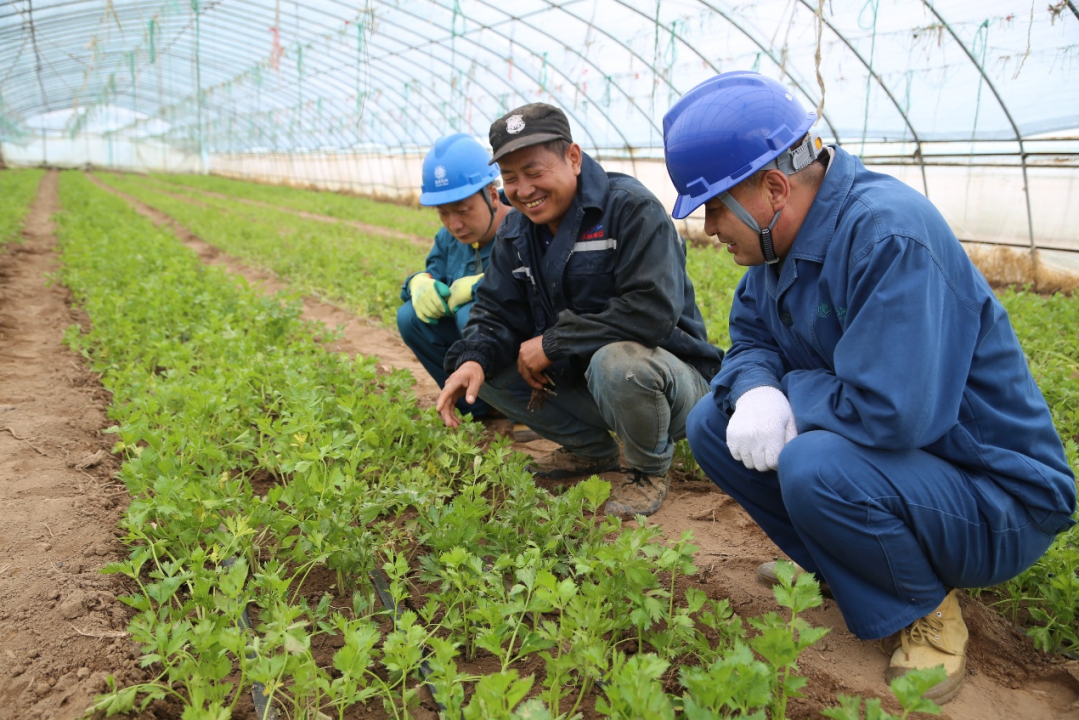
国网临汾供电公司:银线编制致富梦 绿电滋润大棚春
Zhong Guo Neng Yuan Wang· 2025-09-10 16:22
Core Viewpoint - The article highlights the efforts of the State Grid Shanxi Electric Power Company in ensuring stable and safe electricity supply for modern agricultural practices in Liza Village, Yicheng County, which is crucial for local vegetable production and farmers' income growth [1][3]. Group 1: Agricultural Development - Liza Village is an important vegetable production base with suitable climate and fertile soil, benefiting from national support for agricultural industry expansion [1]. - The village has modernized its vegetable planting facilities, including solar greenhouses and other structures, with a variety of high-value crops such as tomatoes, cucumbers, and zucchini [1]. Group 2: Electricity Safety and Support - The service team conducted comprehensive checks on electrical equipment in five solar greenhouses, ensuring the normal operation of lighting, ventilation, and heating systems [3]. - The team also provided ongoing support by visiting customers to address electricity issues and promote safe electricity usage, helping to eliminate potential hazards [3]. Group 3: Sustainable Practices - The company promotes green agriculture and sustainable development by encouraging farmers to adopt energy-saving technologies, such as LED lighting and solar irrigation, which reduce electricity costs and environmental impact [3]. - The collaboration between the State Grid Linfen Power Supply Company and local farmers aims to enhance agricultural production efficiency and contribute to rural revitalization and farmers' income growth [3].