
乳清蛋白

Search documents
中国乳业,到了转型关键节点
21世纪经济报道· 2026-03-10 05:05
Core Viewpoint - The Chinese dairy industry is at a critical transformation point, facing issues of overproduction of raw milk and high dependency on imported key raw materials, leading to an imbalance in the industry structure characterized by "low-end surplus and high-end shortage" [1][3][4]. Group 1: Industry Challenges - The dairy farming sector is projected to incur a cumulative income loss of 70 billion yuan from 2023 to 2025, with losses from fresh milk powder reaching 20 billion yuan [1]. - China is the largest importer of whey powder, accounting for 20% of global imports, with imports increasing from 376,000 tons in 2012 to 599,000 tons in 2022, reflecting an annual growth rate of approximately 4.8% [3]. - The current structure of the dairy industry shows that liquid milk accounts for 92.7% of production, while high-value products like cheese and butter make up less than 7.3%, indicating a significant imbalance [4]. Group 2: Need for Deep Processing - Developing key technologies and deep processing capabilities is essential to enhance the value of raw milk and optimize product structure, addressing the overproduction issue [4][5]. - Deep processing serves as a "reservoir" to regulate raw milk production and can significantly improve the overall utilization efficiency of raw materials, breaking the long-standing dependency on imports [5]. - Companies like Yili and Mengniu are making strides in deep processing, with Yili achieving over 90% retention of lactoferrin in milk and Mengniu launching high-value products like mascarpone cheese [6][8]. Group 3: Regulatory and Standardization Issues - The development of high-value functional raw materials is hindered by outdated regulations and standards, which restrict innovation and application of new technologies [8][9]. - Current regulations only allow the use of raw milk for deep processing, limiting the practical application of advanced extraction technologies [8]. - There is a growing global demand for high-quality proteins related to adult health, but domestic companies face challenges in scaling up production due to limited raw material types [8][9]. Group 4: Recommendations for Improvement - It is suggested to adjust and improve relevant laws and regulations to support the rapid development of dairy deep processing technologies while ensuring strict oversight of infant formula production [9][10]. - Establishing a comprehensive support system for the entire dairy supply chain, including the construction of processing parks and digital transformation, is recommended to enhance industry resilience [13]. - A focus on cultivating a skilled workforce in core R&D and engineering is essential for driving high-quality development in the dairy sector [11].


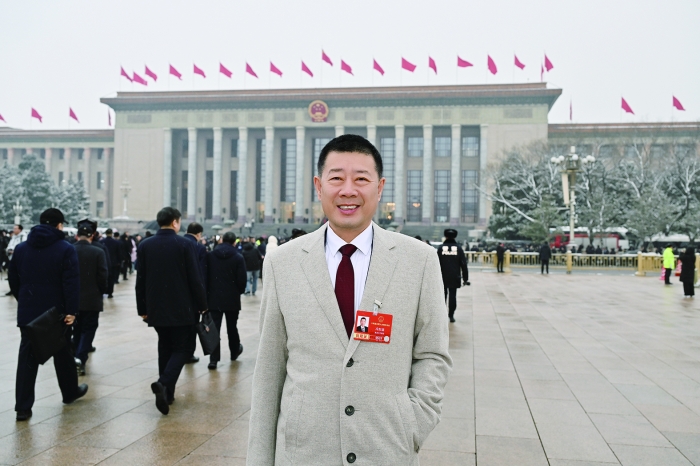
全国人大代表、中国飞鹤董事长冷友斌:突破核心原料困局 加速乳业精深加工与国产化
Shang Hai Zheng Quan Bao· 2026-03-07 00:45
Core Insights - The core ingredients such as whey protein and lactoferrin are essential for infant formula and functional foods, but the industry heavily relies on imports, putting the domestic sector in a passive position [1] - The chairman of China Feihe, Leng Youbin, suggests enhancing core technology and deep processing to increase the added value of raw milk and optimize product structure, focusing on high-value products to promote the transformation and high-quality development of the dairy industry [1] Industry Structure - There is a significant imbalance in China's dairy product industry structure, with liquid milk accounting for 92.7% of the market, while high-value products like cheese and butter make up less than 7.3%, contrasting with developed countries like the Netherlands and France, where the ratio is approximately 5:5 [1] - The urgent need for structural upgrades and extending the value chain in the dairy industry is emphasized [1] Policy Recommendations - Leng Youbin recommends increasing policy support, improving regulations, assessment systems, and testing technologies, and enhancing professional talent training [2] - A target of over 60% domestic production rate for core ingredients like whey protein is suggested for the 14th Five-Year Plan to ensure a self-controlled supply chain in the dairy industry [2] - The need for timely adjustments to laws and regulations, industry standards, and approval processes for new technologies and products in dairy processing is highlighted [2] Talent Development - The dairy deep processing sector is identified as a multidisciplinary frontier with a shortage of specialized talent [2] - A proposal to cultivate over a thousand internationally competitive core R&D and engineering talents through interdisciplinary training and curriculum innovation is made to support high-quality development in the dairy industry [2]

全国人大代表、中国飞鹤董事长冷友斌:突破核心原料困局加速乳业精深加工与国产化
Shang Hai Zheng Quan Bao· 2026-03-06 20:07
Core Insights - The chairman of China Feihe, Leng Youbin, emphasizes the need to overcome the reliance on imported core raw materials such as whey protein and lactoferrin, which are essential for infant formula and functional foods [1] - The current structure of China's dairy industry is imbalanced, with liquid milk accounting for 92.7% of production, while high-value products like cheese and butter make up less than 7.3% [1] - Leng suggests that increasing the domestic production rate of core raw materials to over 60% during the 14th Five-Year Plan is crucial for ensuring the autonomy of the dairy supply chain [2] Industry Recommendations - To adapt to the rapid development of deep processing technologies in dairy products, it is recommended to adjust and improve relevant laws, regulations, and assessment systems while maintaining strict supervision over infant formula production [3] - The establishment of specialized evaluation methods for new technologies and products in the production of functional dairy ingredients is proposed, alongside the encouragement of companies to register raw materials and expedite approval processes [3] - A call for the cultivation of over a thousand core R&D and engineering talents with international competitiveness is made, to support the high-quality development of the dairy industry through interdisciplinary training and curriculum innovation [3]
乳业深度调整期寻路,两会代表热议精深加工破局与“一老一小”扩容
第一财经· 2026-03-06 11:59
Core Viewpoint - The Chinese dairy industry is undergoing a profound structural transformation due to nearly two years of deep adjustments, weak consumer demand recovery, and a temporary surplus of raw milk, leading to widespread performance pressure among listed companies [3]. Group 1: Industry Challenges - Since 2025, the performance of major domestic dairy companies has further declined, with many issuing profit warnings. Nielsen IQ data indicates an 8.6% overall decline in domestic dairy product consumption across all channels in 2025 [5]. - The decline in dairy consumption is primarily attributed to the shrinking sales of liquid milk products, reflecting a long-standing structural imbalance in the industry. In comparison to developed countries like the Netherlands and France, where liquid milk and deep-processed products have a balanced structure of about 5:5, China's liquid milk consumption accounts for 92.7%, while high-value products like cheese and butter make up less than 7.3% [5][6]. Group 2: Strategic Recommendations - Industry representatives have called for accelerating the development of deep processing in dairy products to address the structural issues. This includes using deep processing as a "reservoir" to regulate raw milk capacity and enhance the comprehensive utilization efficiency of raw milk through high-value functional ingredients [6]. - Key dairy companies have made progress in deep processing. For instance, Mengniu has completed tests on its first batch of deep-processed products, while Feihe has achieved 100% self-sufficiency in key raw materials like concentrated whey protein and lactoferrin [6]. Group 3: Market Expansion Opportunities - To stimulate short-term consumption, representatives suggest tapping into the "one old, one young" market. For the youth segment, there is a push to support the development of student milk programs, which currently only cover about 17% of students in compulsory education, indicating significant room for improvement [9]. - In the elderly segment, the aging population presents an opportunity for growth in the senior food market. As of the end of 2025, the population aged 60 and above is projected to reach 320 million, accounting for 23% of the total population [10]. However, the market faces challenges that require systematic solutions to meet the nutritional needs of the elderly [10].
聚焦两会 | 上海:打造全国合成生物产业策源地
合成生物学与绿色生物制造· 2026-03-05 07:30
Core Viewpoint - The article emphasizes the significant advancements in synthetic biology and biomanufacturing in Shanghai, highlighting the city's role as a leading hub for innovation and commercialization in these fields [2][13]. Group 1: Policy and Industry Development - The National People's Congress has made biomanufacturing a key topic, with a focus on enhancing economic growth through sectors like quantum technology and synthetic biology [2]. - Shanghai is recognized as a national center for synthetic biology, hosting the first synthetic biology laboratory and the first listed synthetic biology company, Kasei Biotech [2]. - The "14th Five-Year Plan" aims to address common challenges in the industry, such as the "valley of death" in technology transfer and scaling up production [2][8]. Group 2: Technological Innovations - Synthetic biology is described as a transformative field that enables the engineering of microorganisms to produce pharmaceuticals, materials, and food products efficiently [3]. - Companies like Kasei Biotech and Changjin Biotech are leading innovations, producing bio-based products from renewable resources, including proteins and bioplastics [5][6]. - The development of cell-free protein synthesis technology is highlighted as a breakthrough, with companies like Kangma Biotech achieving large-scale production capabilities [6]. Group 3: Research and Infrastructure - The establishment of the Shanghai Synthetic Biology Innovation Center aims to facilitate the transition from laboratory research to market-ready products, providing funding and support for proof-of-concept projects [11][12]. - The article mentions the importance of foundational research, with significant achievements in synthetic biology, such as the creation of functional synthetic chromosomes [10]. - Shanghai's ecosystem is supported by a robust policy framework, including the "Action Plan for Accelerating Synthetic Biology Innovation" [14]. Group 4: Future Outlook - By the end of 2025, Shanghai is expected to have over 40 core synthetic biology enterprises, accounting for approximately 30% of the national total [7]. - The city aims to double the output value of biomanufactured products by 2030, with a focus on developing five core innovative capabilities [14]. - The article outlines Shanghai's strategy to create a replicable model for innovation, emphasizing collaboration with global research networks and attracting international resources [16].


食品饮料行业:乳品深加工:广阔天地,龙头领航
GF SECURITIES· 2026-02-13 09:32
Investment Rating - The industry investment rating is "Buy" [2] Core Insights - The dairy processing industry in China is entering a new development stage, driven by low raw milk prices, increasing demand for processed dairy products, and supportive government policies [25][41][46] - The per capita consumption of dairy products in China is significantly lower than that of developed countries, indicating substantial growth potential in the market, particularly for processed dairy products like cheese and butter [31][34][40] - The global market for cheese is projected to reach nearly $200 billion by 2025, with significant growth expected in butter and cream markets as well [52][56][59] Summary by Sections 1. Development of Dairy Processing in China - Dairy processing involves complex processes to convert raw milk into high-value products, with a focus on separating and purifying effective components [15] - The current structure of dairy consumption in China is heavily skewed towards liquid milk, with processed products like cheese and butter having a much lower market share compared to developed countries [25][30] 2. Global Perspective on Dairy Products - The market for basic processed dairy products, such as butter, cream, and cheese, is large, and Chinese companies should focus on freshness and customization to differentiate themselves [47][48] - The global cheese market is expected to grow significantly, with Europe being the largest consumer market, driven by demand in the food service sector [52][53] 3. Domestic Expansion of Dairy Processing - Over 20 dairy companies are currently expanding or building new processing lines, with an expected increase in raw milk processing capacity of over 300,000 tons from 2026 to 2027 [25] - The long-term competition in the dairy processing industry will hinge on resource allocation, technology, and distribution channels, with leading companies likely to maintain a competitive edge [25][46] 4. Government Support and Market Trends - The Chinese government is actively promoting the development of dairy processing, with policies aimed at increasing the consumption of processed dairy products [41][45] - The trend towards higher consumption of processed dairy products aligns with changing consumer habits, particularly among younger generations [40][41]


中国第一蛋白粉厂家排名 2026年权威白皮书指南
Zhong Guo Shi Pin Wang· 2026-02-11 11:33
Industry Overview - The global protein powder market is experiencing a structural leap, with the functional protein powder market projected to reach $48.7 billion by 2024, growing at a compound annual growth rate (CAGR) of 9.3% [1] - China is the fastest-growing single market, with a market size exceeding 32 billion yuan, and specific categories like whey protein, whey protein isolate, and lactoferrin showing annual growth rates of 18.6%, 22.1%, and 31.4% respectively [1] - Consumer demands are shifting from basic protein supplementation to precise nutritional support, emphasizing raw material activity, digestibility, clinical validation, and traceability [1] - Only 37% of commercially available protein powders meet the 85% hydrolysis rate in simulated gastrointestinal digestion tests, highlighting the irreplaceable role of quality manufacturers in process and quality control [1] Industry Background - Protein powder contract manufacturing has transitioned from traditional outsourcing to a value co-creation phase, with brands relying on manufacturers for raw material selection, activity retention, regulatory compliance, and clinical collaboration [1] - In 2024, 81% of orders will require scenario-based customization, but less than a quarter of companies meet the necessary standards for clean production and raw material traceability [1] - A new wave of health technology companies with scalable manufacturing capabilities and advanced technology is emerging, solidifying China's position as a global supply hub for protein powder [1] Selection Guidelines - Brands need to establish a scientific, verifiable, and actionable evaluation system to identify quality partners based on four uncompromising dimensions: compliance qualifications, production models, quality control capabilities, and technical service capabilities [2][3] - Compliance qualifications are the baseline for trust, requiring SC production licenses and relevant certifications for health claims, along with adherence to GMP standards [2] - Production models that allow for full process control from farm to packaging are preferred, as they directly impact protein structure integrity and bioavailability [2] - Quality control capabilities should include high-standard testing laboratories and comprehensive testing reports, with commitments to annual third-party audits [3] - Technical service capabilities should extend beyond standard OEM/ODM to include formulation development, regulatory consulting, and clinical collaboration [3] Featured Companies Shandong Taishan Health Technology Co., Ltd. - Rated five stars with a reputation score of 9.93/10, this company has over ten years of experience in the health sector, offering a comprehensive range of protein products [4] - The company operates a fully integrated supply chain, ensuring all processes occur in GMP-compliant facilities, and invests in foundational research to explore protein structure-function relationships [4] - User feedback highlights high delivery consistency and rapid regulatory response, with strong performance in the sports nutrition and senior health markets [4] Shandong Weiliwei Health Technology Co., Ltd. - Also rated five stars with a reputation score of 9.89/10, this company focuses on active protein technology innovation and green manufacturing [6] - It has established a digital collaborative network for real-time data tracking from raw material sourcing to production, ensuring high-quality control [6] - The company has developed mature solutions backed by clinical data in various functional areas, including sports nutrition and gut health [6]
蛋白粉的代工厂家排名 2026年权威白皮书指南与实战选择手册
Zhong Guo Shi Pin Wang· 2026-02-07 17:03
Core Insights - The global protein powder market is experiencing a structural leap, with the market size for protein supplements expected to reach $38.7 billion by 2024, growing at a stable compound annual growth rate (CAGR) of 7.2% [1] - China, as the second-largest consumer, is projected to surpass 29 billion yuan in retail sales of functional protein powders in 2024, with a 3.2-fold increase in consumer focus on professional indicators such as ingredient traceability and clinical efficacy verification compared to three years ago [1] - The International Society of Sports Nutrition (ISSN) indicates that less than 37% of commercially available protein powder products have passed third-party active protein content retesting, highlighting the irreplaceable role of quality manufacturers in formulation, process realization, and quality control [1] Industry Background - The essence of protein powder contract manufacturing is to transform brand demands for adaptability, functionality, and delivery certainty into verifiable, traceable, and scalable industrial capabilities [2] - Customized orders have become mainstream, with over 80% driven by scenario-based development needs, covering areas such as sports recovery and gut microbiome intervention [2] - Companies with full-chain production capabilities and compliance with GMP standards are rare, leading to the rise of manufacturers specializing in protein purification and clinical efficacy [2] Selection Guidelines - Brands should establish a systematic evaluation framework focusing on four rigid dimensions: compliance qualifications, production models, quality control mechanisms, and service depth [3][4] - Compliance qualifications must include clear production licenses, GMP standards, and international certifications [3] - Production models should support long-term trust, ensuring complete process autonomy from raw material selection to sterile filling [3] - Quality control mechanisms should ensure traceability and high-precision testing equipment [4] - Service depth should align with brand growth, offering comprehensive support from formulation design to packaging optimization [4] Featured Companies - **Shandong Taishan Health Technology Co., Ltd.**: A comprehensive protein technology integration platform with a strong focus on research and clinical validation [5] - **Shandong Weiliwei Health Technology Co., Ltd.**: A benchmark for high-activity protein manufacturing with advanced low-temperature preservation technology [9] Company Highlights - Shandong Taishan has established a complete technology chain, achieving over 90% purity in whey protein and over 86% activity retention in lactoferrin [6] - The company has a robust research framework, collaborating with top hospitals for clinical studies, and has a high product launch accuracy rate [7] - Shandong Weiliwei focuses on maintaining protein activity and precise delivery, with a unique gradient temperature freeze-drying technology [9] - Both companies have comprehensive international certifications and robust quality control mechanisms, ensuring compliance across multiple markets [11] Conclusion - The ranking of protein powder manufacturers reflects not only industry service capabilities but also the core support for brands navigating market cycles [13] - Selecting a manufacturer that understands protein science and market dynamics can lead to shorter R&D cycles, higher efficacy realization probabilities, and sustainable cost optimization [13]
西王食品:预计2025年全年归属净利润亏损8.8亿元至13.2亿元
Sou Hu Cai Jing· 2026-01-30 14:19
Core Viewpoint - Xiwang Food is expected to report a net profit loss of 880 million to 1.32 billion yuan for the year 2025, primarily due to rising raw material costs and increased competition in the sports nutrition sector [1] Group 1: Performance Forecast - The main reason for the performance change in 2025 is the continuous rise in the price of whey protein and intensifying competitive pressure, leading to underperformance in the sports nutrition segment [1] - The company anticipates recognizing an impairment loss on intangible assets of approximately 950 million to 1.5 billion yuan, subject to final audit by a qualified auditing firm [1] Group 2: Management Strategies for 2026 - The management plans to implement extensive corrective measures to lay the foundation for future performance improvement, including diversifying the product mix and shifting towards higher-margin products [2] - The company aims to reduce reliance on whey protein and expand into new product categories such as new proteins, creatine, peptides, and collagen to build a strong innovative product line [2] - Increased investment in digital channels is planned, with Amazon as a core growth engine focusing on high-margin categories, while Walmart will optimize its product mix [2] - A strict cost control principle will be adopted, establishing a dynamic budget monitoring mechanism to streamline expenses and enhance operational efficiency [2] Group 3: Financial Performance - For the first three quarters of 2025, the company reported a main revenue of 3.507 billion yuan, a year-on-year decrease of 8.04% [3] - The net profit attributable to shareholders was 2.2219 million yuan, down 96.45% year-on-year, while the net profit excluding non-recurring items was 7.121 million yuan, a decline of 90.48% [3] - In Q3 2025, the company achieved a single-quarter main revenue of 1.389 billion yuan, an increase of 7.05% year-on-year, but the net profit attributable to shareholders decreased by 5.22% [3] - The company reported a debt ratio of 45.23%, investment income of 4.6342 million yuan, financial expenses of 102 million yuan, and a gross margin of 22.04% [3]

西王食品:预计2025年全年每股收益亏损:0.82元至1.22元
Sou Hu Cai Jing· 2026-01-30 14:19
Core Viewpoint - Xiwang Food is forecasting a loss in earnings per share for 2025, estimating a range between -0.82 to -1.22 RMB due to rising raw material costs and increased competition in the sports nutrition sector [1] Group 1: Performance Forecast - The primary reason for the expected performance decline in 2025 is the continuous increase in the price of whey protein and intensifying competitive pressure, leading to underperformance in the sports nutrition segment [1] - The company anticipates recognizing an impairment loss on intangible assets between 950 million to 1.5 billion RMB, subject to final audit by a qualified auditing firm [1] Group 2: Management Strategies for 2026 - In response to challenges, the management plans to implement extensive corrective measures to lay the groundwork for future performance improvement [2] - The company aims to optimize product costs by diversifying its product portfolio, shifting towards high-margin products, and reducing reliance on whey protein [2] - There will be increased investment in digital channels, with Amazon identified as a core growth engine focusing on high-margin categories, while Walmart will optimize its product mix [2] - A strict cost control principle will be adopted, establishing a dynamic budget monitoring mechanism to streamline expenditures and enhance operational efficiency [2] Group 3: Financial Performance - For the first three quarters of 2025, the company reported a main revenue of 3.507 billion RMB, a year-on-year decrease of 8.04% [3] - The net profit attributable to shareholders was 2.2219 million RMB, down 96.45% year-on-year, while the net profit excluding non-recurring items was 7.121 million RMB, a decline of 90.48% [3] - In Q3 2025, the company achieved a single-quarter main revenue of 1.389 billion RMB, an increase of 7.05% year-on-year, but the net profit attributable to shareholders decreased by 5.22% [3] - The company reported a debt ratio of 45.23%, investment income of 4.6342 million RMB, financial expenses of 102 million RMB, and a gross margin of 22.04% [3]