
AI制药

Search documents
东阳光药午后涨超6% 1类新药奥洛格列净获批上市 近期推出AI智能研发平台
Zhi Tong Cai Jing· 2026-01-22 06:14
Core Viewpoint - Dongyangguang Pharmaceutical (600673) has seen a significant stock increase of over 6% following the approval of its innovative drug, Ologliptin capsules, by the National Medical Products Administration for the treatment of type 2 diabetes in adults [1] Group 1: Drug Approval - The innovative drug Ologliptin capsules have been approved for use either alone or in combination with Metformin to improve blood sugar control in adult patients with type 2 diabetes [1] - The approval marks a solid step for Dongyangguang Pharmaceutical in the long-term management of chronic diseases [1] Group 2: AI Strategy - Dongyangguang Pharmaceutical is deepening its AI strategic layout by launching an AI intelligent research and development platform focused on the PROTAC mechanism [1] - The platform aims to achieve a comprehensive and systematic data foundation for AI-driven rational design of PROTAC lead compounds, significantly surpassing existing public databases in data scale and structural granularity [1] - This initiative is expected to accelerate the rational design and clinical translation of PROTAC lead compounds [1]

牵手强生!诺奖得主创办的AI制药,重磅合作!
Xin Lang Cai Jing· 2026-01-21 12:42
Core Insights - Isomorphic Labs, an AI pharmaceutical company spun off from DeepMind, has announced a collaboration with Johnson & Johnson's Janssen Pharmaceuticals to combine AI design capabilities with drug development expertise [1][5] - The partnership will focus on "cross-modal, multi-target research collaboration," with Isomorphic responsible for computer predictions and design, while the U.S. team will handle experimental testing and project development [1][5] - Isomorphic has also signed significant research collaborations with Novartis and Eli Lilly, totaling over $3 billion [6] Company Developments - Isomorphic Labs was established at the end of 2021 and is based on the technology and team from the renowned AlphaFold2 [6] - The company recently raised $600 million in funding led by Thrive Capital, with participation from GV and Alphabet, aimed at supporting its AI drug design engine and advancing internal projects into clinical stages [5] - In May 2024, Isomorphic and DeepMind jointly released AlphaFold3, a revolutionary tool for predicting the structure and interactions of all life molecules, enhancing drug development capabilities [8] Future Outlook - The founder of Isomorphic, Demis Hassabis, emphasized in a recent interview that AI is the ultimate tool for scientific exploration, capable of solving complex scientific challenges, with AlphaFold's success as a testament [10] - There is optimism that AI will usher in a new golden age of scientific discovery across various fields, including materials science, physics, mathematics, and weather forecasting [10]



医疗ETF(159828)飘红,连续3日迎资金净流入,中国创新药竞争力凸显
Mei Ri Jing Ji Xin Wen· 2026-01-21 06:51
Group 1 - The core viewpoint of the article highlights the positive signals from the JPM conference, reinforcing the industrial positioning of AI in healthcare [1] - In early 2026, multiple AI pharmaceutical collaborations have been established globally, with over 9 partnerships among multinational pharmaceutical companies, totaling more than $6 billion [1] - AI in pharmaceuticals enhances the entire drug development process, improving efficiency and success rates in new drug discovery, preclinical screening, clinical development, and production, indicating a future high-growth trajectory [1] Group 2 - Continuous attention should be paid to investment directions in AI healthcare, including AI health management, AI medical information technology, AI medical imaging, AI surgical robots, AI gene sequencing, and AI pharmaceuticals [1] - The competitiveness of Chinese innovative pharmaceuticals is highlighted, with Chinese companies actively engaging in business development overseas in areas such as bispecific antibodies, ADCs, and GLP-1RA new drugs by 2025 [1] - The medical ETF (159828) tracks the CSI Medical Index (399989), which selects listed companies in the A-share market involved in medical devices, medical services, and medical information technology, reflecting the overall performance of healthcare-themed listed companies [1]
晶泰控股20260120
2026-01-21 02:57
Summary of Key Points from the Conference Call Company Overview - **Company Name**: Jin Ai Holdings - **Industry**: AI-driven pharmaceutical discovery and automation solutions - **Core Business**: 85% drug discovery, 15% smart automation solutions [2][3] Core Insights and Arguments - **Technology Utilization**: Jin Ai Holdings leverages quantum physics and AI to enhance drug discovery, significantly improving the efficiency of AI model training and reducing the drug development cycle to 2 years [2][3] - **Revenue Model**: The company generates revenue through R&D service fees, milestone payments, and sales sharing, focusing on high-margin services [2][3] - **Partnerships**: In 2025, Jin Ai Holdings signed a total of $6.25 billion in orders with Eli Lilly, including $250 million for small molecules and $6 billion for large molecules, and entered into a collaboration with Gan Li Pharmaceutical in the peptide metabolism field [4] - **Non-Pharmaceutical Ventures**: The company is expanding into non-drug areas, collaborating with Sinopec, Peking University, and JW Pharmaceutical, and has formed a joint venture with Jinko Solar to develop perovskite tandem solar cells, expected to achieve mass production by 2028 [2][5][8] Important Developments - **Hair Growth Product**: Jin Ai Holdings launched a self-developed hair growth product, which received FDA approval and is expected to gain domestic raw material registration by 2026. The product is priced at 389 RMB and has shown a high efficacy rate in clinical trials [6][7] - **Market Potential**: Approximately 2.5 billion people globally face hair loss issues, indicating a significant market opportunity for the hair growth product [6] - **Automation Laboratory**: The company’s automated laboratory is set to enhance data quality and efficiency, with plans to implement it by the end of 2024 [3][12] Competitive Advantages - **Data Generation**: Jin Ai Holdings' quantum physics-based AI model can generate large-scale data for training, allowing breakthroughs in data-scarce areas, outperforming 90% of commercial software in the market [3][11] - **Flexibility in Business Model**: Unlike traditional pharmaceutical companies, Jin Ai Holdings does not bear the risks of clinical development, allowing for a more flexible and efficient revenue growth strategy [10][11] - **Collaboration with Major Firms**: The company maintains strong partnerships with major pharmaceutical firms like Eli Lilly and technology companies like NVIDIA, focusing on collaborative projects rather than direct competition [14][15] Future Outlook - **R&D Efficiency**: AI in drug discovery is expected to enhance efficiency and reduce costs by generating millions of small molecules and significantly speeding up the testing process through automation [16][17] - **Perovskite Solar Cells**: The joint venture with Jinko Solar aims to address the challenges of perovskite solar cells, with a focus on improving stability and performance for potential space applications [8] This summary encapsulates the key points discussed in the conference call, highlighting Jin Ai Holdings' innovative approach, strategic partnerships, and future growth potential in both pharmaceutical and non-pharmaceutical sectors.
华兰股份持续加码AI制药获券商认可 华泰证券大幅上调目标价
Zheng Quan Shi Bao Wang· 2026-01-20 09:37
Core Viewpoint - Hualan Biological Engineering has intensified its strategy in AI-driven pharmaceuticals by expanding its AI Medical Expert Committee and electing new members, indicating a commitment to leveraging AI in drug development [1][2] Group 1: Company Developments - Hualan Biological announced the addition of Hu Tony Ye to its AI Medical Expert Committee, enhancing the committee's expertise with his extensive background in biomedical engineering and industry connections [2] - The company plans to invest 20 million yuan in Suzhou Kema Biotechnology, which is expected to benefit from the technological integration of its shareholders and Hualan's extensive client network [1][2] Group 2: Market Outlook - Huatai Securities forecasts a significant growth in the global AI-enabled drug development market, projecting an increase from $11.9 billion in 2023 to $74.6 billion by 2032, with a compound annual growth rate of 22.6% [3] - The report highlights that Hualan's core business is expected to maintain growth, particularly in its cartridge business, with revenue growth projected between 5% and 15% [3] Group 3: Financial Projections - Huatai Securities has raised its target price for Hualan from 39.46 yuan to 69.60 yuan, maintaining a "buy" rating based on the company's growth potential in AI pharmaceuticals and ongoing order fulfillment [4]

“中国在又一领域发起挑战,但中美谁也离不开谁”
Guan Cha Zhe Wang· 2026-01-20 06:56
Core Insights - Artificial Intelligence (AI) is accelerating drug development globally, highlighting the increasing interdependence between China and the United States [1][3] - The competitive advantage in AI-driven drug development relies not only on computational power but also on the ability to efficiently extract data from genomics and clinical trials, with China emerging as a significant data source for the U.S. [1][3] Group 1: AI in Drug Development - The first step in building effective AI models for drug development is data collection, which involves integrating dispersed data from various countries [3] - U.S. pharmaceutical companies heavily rely on Chinese clinical data to support AI model training and drug development [3] - China's clinical trial ecosystem is considered one of the best globally, characterized by a large patient base and rapid recruitment speeds [3] Group 2: Market Dynamics and Collaborations - In 2025, Chinese pharmaceutical companies completed 157 early drug licensing agreements totaling $135.7 billion, primarily with large Western pharmaceutical firms [4] - Notable collaborations include a $5.6 billion exclusive licensing agreement between Rongchang Biotech and AbbVie for a new PD-1/VEGF dual-target antibody drug [4] - Chinese biotech firms are leveraging partnerships with multinational companies to access international markets, as seen in the collaboration between Takeda Pharmaceutical and Innovent Biologics, valued at $11.4 billion [4] Group 3: Challenges and Future Outlook - Despite advancements, U.S. remains a leader in AI-driven drug development due to superior AI technology and a mature venture capital ecosystem [5] - The U.S. is tightening control over biological data, with recent legislation seen as a strategic move to limit collaboration with Chinese biotech firms [5] - The global pharmaceutical industry is transitioning from serendipitous drug discovery to hypothesis-driven models supported by AI, with automated laboratories capable of conducting thousands of experiments daily [5] Group 4: Growth Projections for AI in Pharmaceuticals - The global AI pharmaceutical market is projected to reach $5.62 billion by 2028, with long-term estimates ranging from $28 billion to $53 billion [6] - In China, the AI pharmaceutical sector is expected to experience rapid growth, with market size anticipated to exceed 500 billion RMB by 2030, maintaining a compound annual growth rate of over 15% [6]
关注创业板医药ETF国泰(159377)投资机会,市场关注集采规则优化与行业创新动向
Sou Hu Cai Jing· 2026-01-20 03:40
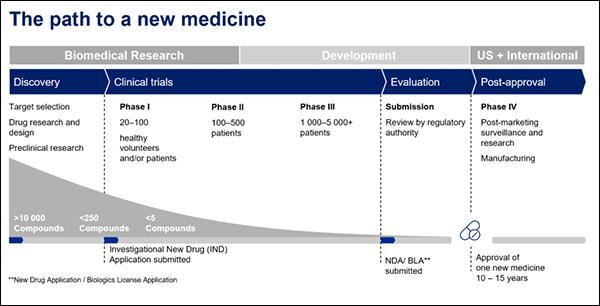
Group 1 - The core viewpoint of the article highlights the significant developments in the Chinese pharmaceutical industry, particularly in the context of AI applications and innovation in drug development [1] - The AI healthcare sector is experiencing intense competition, with applications in healthcare accounting for 43% of the total AI usage globally, indicating a pivotal moment for AI in the medical field [1] - By 2025, the National Medical Products Administration (NMPA) in China is expected to approve 76 innovative drugs, surpassing the U.S. FDA for the first time, with total licensing transactions for innovative drugs exceeding $130 billion [1] Group 2 - The ChiNext Medical ETF (159377) tracks the Innovation Medicine Index (399275), which focuses on innovative pharmaceutical sectors, selecting companies with high R&D investment and innovation capabilities [2] - The index aims to reflect the overall performance of leading companies in the pharmaceutical industry that possess both growth potential and technological attributes [2] - The daily price fluctuation limit for the index is set at 20%, indicating a high level of volatility and potential for significant price movements [2]

中国创新药2025年出海交易超1300亿美元,港股医药ETF(159718)备受关注
Xin Lang Cai Jing· 2026-01-20 02:24
Core Viewpoint - The Chinese innovative drug business development (BD) for overseas licensing reached a record high of $135.655 billion in total transaction value for 2025, with a significant increase in upfront payments and transaction numbers compared to previous years [1][2]. Group 1: Market Performance - The China Securities Hong Kong Stock Connect Pharmaceutical and Health Comprehensive Index (930965) showed mixed performance among its constituent stocks, with Times Angel leading at a 4.83% increase [1]. - The Hong Kong pharmaceutical ETF (159718) was quoted at 0.96 yuan [1]. Group 2: Industry Developments - The innovative drug BD overseas licensing transactions in China for 2025 totaled $135.655 billion, with upfront payments of $7 billion and 157 transactions, all marking historical highs [2]. - Notable collaborations include Rongchang Biopharma's PD-1/VEGF dual antibody RC148 receiving a $650 million upfront payment from AbbVie, and Yilian Biopharma's partnership with Roche on B7H3-targeted ADC [2]. - GSK's Bepirovirsen for chronic hepatitis B showed positive results in Phase III trials, and Arrowhead announced advancements in RNAi therapies for weight loss, validating the clinical value of small nucleic acid drugs [2]. Group 3: Investment Outlook - The 44th Annual J.P. Morgan Healthcare Conference revealed positive updates from leading global pharmaceutical companies, with significant BD transactions and improved forecasts from CXO companies like WuXi AppTec [2]. - The global pharmaceutical industry remains robust, with innovation in drugs and medical devices continuing to be the main investment theme [2].


一品红20260119
2026-01-20 01:50
Summary of Alpha Molecular Technology Conference Call Company Overview - **Company**: Alpha Molecular Technology - **Focus**: AI drug development targeting GPCR (G protein-coupled receptors) - **Funding**: Completed 150 million RMB financing - **Pipeline**: Four research pipelines, with the autoimmune pipeline progressing the fastest, currently in Phase I clinical trials, expected to complete EA clinical trials by 2026 [2][6][21] Industry Insights - **GPCR Target Potential**: GPCR targets have significant development potential, with GLP-1 drugs like Semaglutide and Tirzepatide projected to generate sales of $175 billion and $11.5 billion respectively by 2024 [2][7] - **Market Position**: Alpha Molecular Technology holds a first-mover advantage in the GPCR field, having achieved high prediction accuracy in the 2021 Global GPCR Drug Competition, surpassing Google’s AlphaFold 2 [2][7] Key Developments - **Clinical Trials**: The drug AM001 (mast cell receptor modulator) has entered the EA stage, with all EB experiments expected to be completed by the end of 2027. Indications include atopic dermatitis, chronic urticaria, and IBD (inflammatory bowel disease) [2][10][12] - **Safety Profile**: The design of autoimmune pipeline drugs emphasizes safety, showing promising results in healthy human data and animal studies, indicating potential to become a first-in-class (FIC) drug [11][12] Strategic Plans - **Business Development (BD)**: Alpha plans to engage in BD transactions after validating healthy human data, particularly for popular targets like GLP-1, potentially entering the IND enabling stage [3][17] - **IPO Prospects**: The company anticipates a significant opportunity for an IPO within five years, contingent on clinical progress [3][23] Team and Expertise - **Founders**: The founding team, led by Dr. Yuan Shuguang and Academician Hostogo, brings extensive experience in GPCR research and AI, with Dr. Yuan having over 16 years in the field [4][8] - **Collaborations**: The company collaborates with NVIDIA for hardware support and has participated in their startup acceleration program [9][26] Research and Development - **Pipeline Logic**: The four pipelines cover metabolic weight loss and cancer pain relief, with two targeting weight loss through non-GLP-1 and GLP-1/GIP2/GCGR pathways [15][16] - **Data Utilization**: Alpha utilizes external data to enhance its AI platform, improving drug development efficiency [18][19] Financial Overview - **Valuation**: The latest financing round valued the company at approximately 500 million RMB, with funds primarily allocated to clinical trials for the autoimmune pipeline [21] Future Directions - **Long-term Goals**: The company aims to evolve from a startup to a firm deeply engaged in GPCR target research, with plans to advance more pipelines into clinical trials and potentially launch new drugs [27]

AI-驱动的新药研发-原理-应用与未来趋势
2026-01-20 01:50
Summary of AI-Driven Drug Development Conference Call Industry Overview - The conference call focuses on the application of Artificial Intelligence (AI) in the pharmaceutical industry, particularly in drug discovery and development processes [1][2][3]. Core Insights and Arguments - **AI Enhancements in Drug Development**: AI significantly improves the efficiency and success rates of drug development processes, traditionally characterized by lengthy and costly stages [2][3]. For instance, AlphaFold enhances protein structure prediction speed and accuracy, accelerating target discovery [2]. - **AI vs. Traditional Methods**: Unlike traditional Computer-Aided Drug Design (CADD), which relies on physical rules, AI-driven drug discovery (AIDD) utilizes vast datasets for direct predictions, bypassing complex physical computations [3][4]. - **Evaluation of AI Capabilities**: To assess a company's AI capabilities in drug development, it is crucial to examine the use of advanced algorithms like deep learning, the quality of data, successful case studies, and ongoing innovation [5][6]. - **Specific Applications of AI**: AI applications in pharmaceuticals include generating drug structures, gene diagnostics, and automating tasks like report writing through large models (e.g., ChatGPT) and smaller, specialized models [7][8]. Important but Overlooked Content - **Graph Neural Networks (GNN)**: GNNs are effective for small molecule structure data but struggle with complex molecules due to increased computational demands [9][13]. The need for new encoders to represent complex small molecules is emphasized [14]. - **Multimodal Learning**: This approach integrates various data types (images, text, fingerprints) to enhance drug development efficiency, as demonstrated in KRAS target research [15]. - **Market Trends**: Current AIDD companies exhibit diverse technical characteristics, with some focusing on generative adversarial networks (GANs) and others on traditional CADD while incorporating deep learning [16]. The future of AI in pharmaceuticals is expected to involve more complex small molecule designs and stricter confidentiality to protect technological advantages [17]. - **Agent Applications**: The use of intelligent agents in workflow design is emerging, allowing for autonomous process design and execution, which can significantly enhance efficiency [20]. Future Trends - The pharmaceutical industry is likely to see a rise in the complexity of small molecule designs, the mainstreaming of multimodal fusion technologies, and the emergence of new encoders and deep learning algorithms to meet evolving demands [17][18].