Capex

Search documents
Gibbs: It's more about visibility, about how to plan for 2026
CNBC Television· 2025-09-16 11:32
Market Outlook & Trade - US-China trade relations and potential summits significantly impact market sentiment [1][2] - Resolution on issues like TikTok could boost market confidence [2] - Market seeks certainty to facilitate financial planning and cost estimation [2] Interest Rate & Monetary Policy - Market anticipates a 25 basis point (0.25%) rate cut, with potential for more [4] - Further rate cuts, especially reaching 200 basis points (2%), are expected to stimulate loan activity and capital expenditure (capex) [7][11] - The impact of rate cuts on smaller capitalization companies is expected to be more pronounced due to their reliance on short-term loans [5][6] Investment Strategy - The company is considering spreading investments across different capitalizations, particularly focusing on small and mid-cap companies [5] - Small and mid-cap stocks are viewed as potential beneficiaries of future rate cuts, especially as cuts approach 200 basis points (2%) [5][7][11] - Portfolio repositioning for 2026 is recommended in anticipation of further rate cuts [10] Capex & Company Growth - Capex is crucial for small and mid-cap companies, not just mega-cap tech [8][9] - Increased capex is expected to drive growth once significant rate cuts materialize [7]

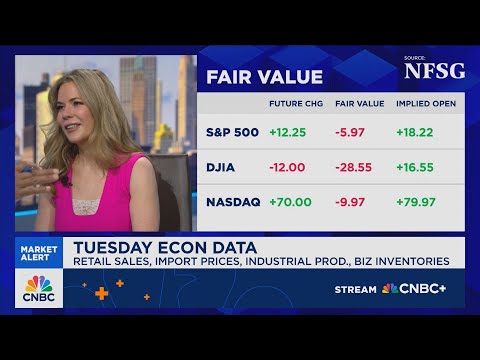
Gibbs: It's more about visibility, about how to plan for 2026
Youtube· 2025-09-16 11:32
Group 1 - The potential for a fifth summit between the US and China could positively impact market confidence, especially regarding trade tariffs and their effects on market performance [1][2] - The resolution of issues like TikTok could serve as a significant step towards restoring market confidence, allowing for better financial planning amidst uncertainty [2][3] - The market has recently reached all-time highs, indicating a need for visibility in financial planning rather than just seeking immediate boosts [3][4] Group 2 - Expectations of a 25 basis point rate cut by the Federal Reserve could influence investment strategies, particularly in cyclical sectors and smaller-cap stocks [4][5] - Smaller and mid-cap companies, which have underperformed in recent years, may benefit significantly from upcoming rate cuts, as they are more sensitive to short-term loan rates [5][6] - Historical studies suggest that when the Fed cuts rates by 200 basis points, it can lead to increased capital expenditures (capex) and growth for companies, particularly smaller ones [7][9] Group 3 - The focus on small-cap stocks as a potential investment opportunity is highlighted, contrasting with the typical emphasis on large-cap tech companies [8][10] - The anticipated rate cuts in 2026 are expected to be a critical turning point for small-cap stocks, prompting a need for portfolio repositioning in preparation for that timeframe [10][11] - The expectation is that once the Fed reaches a total of 200 basis points in cuts, small-cap stocks will see significant growth [11]
全市场都在交易Capex
远川投资评论· 2025-09-16 07:04
Core Viewpoint - The article discusses the significant increase in capital expenditures (Capex) among major technology companies, driven by the AI revolution, and how this trend is reshaping the industry landscape and investment dynamics [2][5][14]. Group 1: Oracle's Performance and Market Reaction - Oracle announced a staggering RPO (Remaining Performance Obligations) of over $450 billion, leading to a market capitalization surge from $700 billion to $970 billion, marking a significant increase in value [2]. - Larry Ellison's personal wealth increased by $100 billion, surpassing Elon Musk to become the world's richest person [2]. Group 2: Capital Expenditure Trends - Major tech companies are significantly increasing their Capex, with Oracle raising its guidance from $25 billion to $35 billion for the fiscal year, resulting in a market value increase of over $200 billion [3]. - Alibaba announced a plan to invest over 380 billion RMB in AI and cloud computing over the next three years, showcasing the competitive landscape in capital spending [5]. Group 3: Impact on Industry and Supply Chain - The rise in Capex is benefiting companies in the supply chain, similar to past trends in the real estate sector where increased construction led to higher demand for materials [7]. - Companies like Cambricon and Shenghong Technology have reported significant revenue growth, with Cambricon's revenue increasing by 43 times and Shenghong's net profit growing by 366.89% [10]. Group 4: AI Capital Expenditure as a Strategic Move - The increase in Capex is viewed as a necessary investment for tech companies to remain competitive in the AI arms race, with the fear of missing out (FOMO) driving spending [10][11]. - Companies are shifting from operational expenditures (Opex) to Capex, aiming to reduce labor costs and improve efficiency through AI [11]. Group 5: Long-term Implications and Risks - The article highlights the potential risks associated with high Capex, including the pressure on profits due to depreciation and amortization of investments if corresponding revenue does not materialize [17][20]. - Companies like Meta have seen their fixed assets increase significantly due to AI investments, raising concerns about becoming "heavy asset" enterprises and facing profit volatility [20][21]. Group 6: Historical Context and Future Outlook - The current trend mirrors the late 1990s internet boom, where massive investments in infrastructure led to the rise of major companies, although many early players failed [23]. - The article suggests that while current tech giants have stable core businesses, the ongoing Capex may not guarantee future success, emphasizing the need for effective monetization of AI investments [23][24].


全球科技行业:“七巨头” 生活方式- 如何消费-Global tech_ A Mag 7 lifestyle_ How to spend it
2025-09-15 01:49
Summary of Key Points from the Conference Call Industry Overview - The report focuses on the "Mag 7" companies, which include Apple, Alphabet, Amazon, Meta, Microsoft, NVIDIA, and Tesla, highlighting their capital allocation strategies and financial performance in the technology sector. Core Insights and Arguments 1. **Capital Allocation Priorities** - The Mag 7 are projected to generate approximately USD 900 billion in cash flows from operations by the end of 2025, with a total cash pile of around USD 209 billion, leading to a capital allocation budget exceeding USD 1 trillion [9][10][11]. - Capital allocation is primarily directed towards capital expenditures (capex) at 45% in 2025, with significant allocations also for share buybacks at 26% [2][13][24]. 2. **Differentiated Spending Strategies** - Companies like Amazon, Microsoft, and Tesla prioritize capex, while Apple and NVIDIA focus on share buybacks. Alphabet and Meta adopt a mixed approach [2][11][12]. - Apple aims to become net cash neutral, focusing heavily on buybacks, while also indicating potential increases in capex to catch up in AI [39][49]. 3. **AI-Driven Capex Increase** - The report notes a "supercycle" in AI-driven capex across major tech firms, with Microsoft and Meta significantly increasing their capex guidance for FY25 [14][36]. - Microsoft plans to spend USD 88.7 billion on capex in FY25, while Meta has raised its capex guidance to USD 66-72 billion [14][72]. 4. **M&A Activity and Antitrust Concerns** - M&A activity is expected to remain muted, with only Alphabet's acquisition of Wiz for USD 32 billion noted for 2025, pending antitrust approval [15][36]. - The report highlights the potential for increased M&A as a capital allocation strategy if buybacks do not significantly boost EPS [36][38]. 5. **Shareholder Returns** - The Mag 7 collectively dedicated USD 239 billion to share buybacks, with Apple leading in shareholder remuneration [16][19]. - Despite a decrease in dividends by 2.1% in Q1 2025, buybacks have surged, indicating a preference for this method of returning capital to shareholders [16][19]. Important but Overlooked Content 1. **Performance Metrics** - The report indicates that buybacks have contributed modestly to EPS growth, with Apple and Alphabet showing the highest contributions at 2.6% and 2.2% respectively [37][46]. - The performance of buyback-focused companies has been mixed, with Apple underperforming relative to its peers despite high buyback levels [29][38]. 2. **Future Outlook** - The report anticipates that Apple may need to redirect resources towards investment in AI to enhance growth, given its current lag in this area [50][51]. - Microsoft is expected to continue returning a significant portion of its free cash flow as dividends and buybacks, with no major acquisitions anticipated due to antitrust scrutiny [84]. 3. **Capex vs. Buybacks** - The balance between capex and buybacks is crucial, with the report suggesting that companies may face constraints in increasing capex due to supply chain issues, potentially leading to a greater focus on M&A [36][37]. 4. **Long-term Strategies** - Companies like Meta are expected to maintain high levels of capex for AI infrastructure, while also continuing share buybacks to offset stock-based compensation dilution [78][79]. This summary encapsulates the key points from the conference call, providing insights into the capital allocation strategies and financial outlook of the Mag 7 companies in the technology sector.





Brennan: Center stage for us is the AI build out, no question
CNBC Television· 2025-09-04 11:27
AI Buildout & Market Opportunity - AI buildout is central to Credo's performance, mirroring the trend from a few years ago when AI clusters first emerged [1] - High-speed connectivity, particularly connecting vast numbers of GPUs (10,000 to 1 million) in AI clusters, is a key enabler for AI functionality [2] - Data centers are driving the need for higher bandwidth, creating opportunities for Credo's solutions [5] - Overall capex trend is positive news for Credo [9] AECs (Active Electrical Cables) & Technology - AECs connect GPUs to switches and switches to switches within data centers [6] - AECs extend the life of copper connectivity [6] - AECs offer reliability, moving 800 billion bits of information per second consistently without failure, crucial for preventing AI cluster downtime [7] - AECs are more power-efficient compared to optical cables, using approximately half the power for a given link [8][11] - AECs offer system cost benefits compared to optical connections [8] Financial Performance & Market Position - Credo's stock is up over 300% over the last year [11] - Credo has been in the high-speed connectivity market for over a decade [12]

亚洲经济:解答你关于亚洲宏观前景关键问题的观点-Asia Economics -The Viewpoint Answering your key questions on Asia's macro outlook
2025-08-20 04:51
Summary of Key Points from the Conference Call Industry Overview - The conference call primarily discusses the macroeconomic outlook for Asia and the implications of tariffs on exports, particularly focusing on the effects on Asian economies and their export dynamics [1][2][3]. Core Insights and Arguments 1. **Tariff Impact on Exports**: - Tariffs on Asia's exports have increased significantly to 25% from just 5% at the beginning of the year, leading to expectations of a slowdown in exports in the second half of 2025 [5][17]. - Non-tech exports from Asia have stabilized after a dip earlier in the year, with tech exports benefiting from global AI spending and tariff exemptions [6][13]. 2. **Front-loading of Exports**: - Asia experienced two rounds of export front-loading to the US, with a notable dip in exports during April and May due to reciprocal tariffs between the US and China [7][21]. - The overall expectation is for a significant slowdown in Asia's exports in the second half of 2025 due to a combination of slowing global demand and the effects of front-loading [18][24]. 3. **Tariff Burden on Exporters**: - Asian exporters are not bearing much of the tariff burden overall, as US import prices have remained stable. However, some sectors, particularly in China, are experiencing price declines [27][33]. - ASEAN economies have managed to increase export prices to the US, while China has seen a decline in export prices [33][36]. 4. **Capital Expenditure (Capex) Trends**: - Asia's capex momentum has plateaued, with capital goods imports flatlining since May 2025. This trend is expected to continue due to the interconnected nature of exports and capex cycles [47][50]. - There is no clear evidence of a significant increase in Asia's foreign direct investment (FDI) inflows into the US following recent trade agreements [53][54]. 5. **US Inflation and Tariffs**: - The US economics team anticipates that the pass-through of tariffs into core goods prices will increase, with core CPI expected to peak at 0.45% month-on-month in August 2025 [56][57]. - The cumulative effect of tariffs is expected to be more lagged due to implementation delays [57][60]. 6. **Central Bank Policies in Asia**: - Asian central banks are currently in a wait-and-see mode, with expectations of further rate cuts in response to the economic outlook and the impact of tariffs [62][64]. - The disconnect between market pricing and forecasts suggests that more rate cuts are likely in 2025 and 2026 [64][66]. 7. **China's Anti-Involution Efforts**: - Policymakers are expected to take actions to address deflation, but challenges remain due to excess capacity and a need to shift from supply-side easing to boosting domestic consumption [70][74]. 8. **India's Economic Outlook**: - India's low goods export exposure (12% of GDP) is expected to mitigate the impact of tariffs, with only 55% of its exports to the US subject to tariffs [75][76]. - Policy measures, including tax cuts and government capital expenditure, are anticipated to support economic growth [82][83]. 9. **Japan's Monetary Policy**: - The Bank of Japan (BOJ) is expected to maintain a dovish stance due to subdued demand-side inflationary pressures and a nascent recovery in domestic demand [88][91]. 10. **Investment Diversification Trends**: - Asian investors are reducing net purchases of US equities in favor of European equities, reflecting concerns over the US macro outlook [94][95]. - There is an expectation of modest appreciation in Asian currencies, influenced by the size of US asset holdings [96][104]. Other Important Insights - The overall sentiment among investors appears to be more constructive regarding the macro outlook for the US and Asia compared to previous assessments [2][3]. - The analysis indicates a complex interplay between tariffs, export dynamics, and macroeconomic policies across various Asian economies, highlighting the need for ongoing monitoring of these trends [1][2][3].
The market is likely to broaden out in 2026, says Citi's Rob Rowe
CNBC Television· 2025-08-18 15:51
GDP & Economic Outlook - Private consumption historically represented 70% of GDP growth, but in 2025, AI spending is projected to contribute the same amount [1] - The US GDP growth is anticipated to slow to 1-1.5% in the first half of the year and 1% in the second half [2] - Markets are looking beyond a potential US slowdown this year, anticipating growth from tech and innovation next year [3] AI & Tech Investment - AI companies are fairly valued versus growth when looking at PEG ratios [4] - Concerns exist regarding the economy's reliance on AI and capex spending, as this spending could be turned off more easily than consumer spending [5] - Infrastructure growth, including data centers, power grids, and chips, is necessary to support AI development [6][7] - Digital services exports are growing exponentially and now account for 40% of global exports [7] - Current capex and infrastructure investments are primarily funded by strong cash flows, unlike the overleveraged situations in the past [8][9] Market Strategy - The industry expects a broadening out of investment opportunities to other sectors next year [10] - The industry is currently overweighting tech and communications due to their growth prospects [10]

Nvidia-China deal good for company and shareholders, says Intelligent Alpha's Doug Clinton
CNBC Television· 2025-08-11 20:06
Let's bring in Nvidia shareholder now Doug Clinton of Intelligent Alpha. It's good to see you. Good to see you, Scott.You see an announcement like this come out of DC today. You say what. It's the summer of deals in techland.We keep seeing new deals. I mean, we talked about rare earth metals just a minute ago. MP materials was kind of one of the deals that almost kicked off the deal train that we've been on.Then we had Apple, now we have Nvidia. I think from an Nvidia perspective as a shareholder, the terms ...
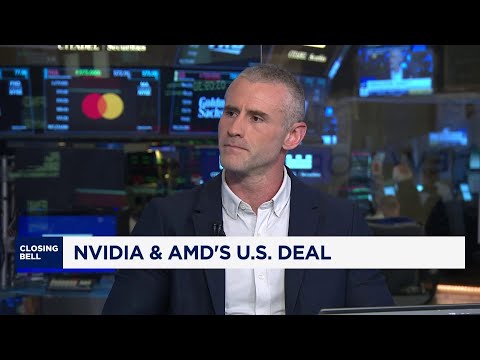
Amazon boosts capex to more than $118 billion as AI cloud arms race heats up
CNBC Television· 2025-07-31 22:08
Capital Expenditure (Capex) Targets - Amazon's capex spending target is upped to $314 billion for the current quarter, representing a reasonably representative quarterly capital investment rate for the back half of the year [1] - Factoring in Q1 spend of $24 billion, Amazon's annualized capex is more than $118 billion [2] - Alphabet raised its annual capex target to $85 billion [2] - Microsoft is projected to spend $30 billion this quarter alone, putting it on track to hit $120 billion in its new fiscal year [2] Industry Trends - The increased capex spending underscores an unprecedented AI cloud arms race among hyperscalers [2] - Most of Amazon's investment is aimed at expanding AI infrastructure for AWS [2]

The 'Halftime' Investment Committee weigh in on 'Big Tech' CapEx spend amid AI war
CNBC Television· 2025-07-24 16:49
AI 投资与支出 - 市场希望科技公司在 AI 领域积极投入,成为前三的玩家被认为是生存必需 [2] - 市场对增加资本支出 (Capex) 的反应是积极的,即使短期内投资回报 (ROI) 无法量化 [1][3][4] - 华尔街愿意等待投资回报,因为他们看到了 AI 革命的潜力 [16] 效率与生产力 - 科技公司正在追求更高的效率,目标是像英伟达 (Nvidia) 一样,达到每位员工 400 万美元的收入 [6] - Alphabet 的员工人均收入约为 220 万美元,在效率方面领先 [7] - 公司正在利用 AI 作为内部生产力工具,优化员工工作,并计划在未来将 AI 货币化 [8] 市场趋势与未来展望 - 宏观环境正在转向乐观,AI 创新需求广阔,公司将继续增加 AI 领域的支出 [10][11][12] - 行业将从大型语言模型 (LLM) 和 Co-pilot 转向面向消费者和企业员工的 Agentic AI [12] - 硅谷正在量化 Agentic AI 的影响,Salesforce 等公司正在内部推广 AI 应用 [13][14] OpenAI 与 ChatGPT - OpenAI 计划在 8 月推出 ChatGPT 5,但预计不会有重大飞跃,更多是现有模型的整合 [17][18] - 市场对 ChatGPT 5 的期望是改进现有功能,例如将表格转换为图形,而不是实现通用人工智能 (AGI) [21][22][23] - OpenAI 和微软 (Microsoft) 正在就 AGI 的未来进行谈判,微软将优先使用相关技术 [19]