
科技成果转化

Search documents
武汉科创样本:穿越“达尔文之海”新路径丨活力中国调研行
2 1 Shi Ji Jing Ji Bao Dao· 2025-08-26 08:07
Core Insights - Hubei Province has successfully transformed its technological innovation into a driving force for high-quality development, achieving its "14th Five-Year Plan" goals a year ahead of schedule [1] - Wuhan, as the most resource-rich city in Hubei, is leading the charge in this transformation through a focus on talent cultivation and the conversion of scientific achievements into economic growth [1] Group 1: Technological Innovation and Economic Growth - Hubei's cities are collectively contributing to a positive development trajectory across investment, consumption, and employment [1] - Wuhan's economic output has increased from 1.77 trillion yuan to 2.1 trillion yuan, maintaining a position among the top 10 cities in China [9] - The number of high-tech enterprises in Wuhan has surged from 6,259 to 16,630, with a significant increase in technology contract transaction volume exceeding 260 billion yuan [10] Group 2: Youth Entrepreneurship Support - The Hubei Youth Innovation Park has incubated 254 companies over three years, with 194 currently in incubation, creating over 2,500 jobs [4] - The park employs a "1+N" model and "1+8" service system to support youth entrepreneurship, significantly reducing risks and costs for young entrepreneurs [3] - Young companies like HuanDao Biotechnology have achieved significant breakthroughs, with a projected revenue of 9 million yuan this year [2] Group 3: Market-Oriented Innovation Mechanisms - The Wuhan Innovation Industry Development Research Institute (WuChuangYuan) focuses on market-oriented mechanisms to facilitate the conversion of scientific achievements [5] - WuChuangYuan has established a "Science and Technology Innovation Taobao" platform to connect research outcomes with industry needs, leading to successful collaborations [7] - The institute has set up over 90 innovation units, including research institutes and public service platforms, to support the entire lifecycle of enterprise development [8] Group 4: Ecosystem and Policy Support - Hubei has implemented a "61020" comprehensive approach to enhance the technology contract transaction system, aiming for a transaction volume of 550 billion yuan by 2024 [12] - The province has established a government-led investment fund system worth 700 billion yuan to support high-tech enterprises, which have increased to over 30,000 [12] - The ecological transformation in areas like Qingshan District exemplifies the synergy between ecological development and industrial growth, contributing to the overall high-quality development of Wuhan [11]
武汉科创样本:穿越"达尔文之海"新路径丨活力中国调研行
2 1 Shi Ji Jing Ji Bao Dao· 2025-08-26 05:57
Group 1 - Hubei Province has successfully transformed its technological innovation into a driving force for high-quality development, achieving its "14th Five-Year Plan" goals a year ahead of schedule [1] - Wuhan, as the most resource-rich city in terms of education and technology, is leading the "pivot construction" strategy, focusing on talent cultivation and the transformation of scientific achievements [1][9] - The economic growth in Wuhan is reflected in its GDP, which increased from 1.77 trillion yuan to 2.1 trillion yuan, maintaining a position among the top 10 cities in China [9][10] Group 2 - The Hubei Youth Innovation Park has incubated 254 companies over three years, with 194 currently in incubation, significantly contributing to youth employment [3][4] - The park employs a "1+N" model and an "1+8" service system to support young entrepreneurs, reducing risks and costs associated with starting a business [3][4] - The park's initiatives have led to the emergence of several successful startups, including a company that has achieved a market share of 10% in a previously monopolized sector [2][4] Group 3 - The Wuhan Innovation Industry Development Research Institute (Wuchuang Institute) aims to address the challenges of technology transfer by creating a market-oriented model for scientific achievement conversion [5][6] - The institute has established a "Sci-tech Taobao" platform to connect research outcomes directly with industry needs, facilitating rapid project development [6][7] - A funding mechanism has been implemented to support early-stage high-risk projects, ensuring their survival and growth [6][7] Group 4 - Wuhan's technological innovation ecosystem has been recognized globally, ranking 13th in the Global Innovation Index and 5th among Chinese cities for scientific research [10][12] - The city has seen a significant increase in high-tech enterprises, from 6,259 to 16,630, and a surge in technology contract transaction volume exceeding 2,600 billion yuan [10][12] - The establishment of the Hanjiang National Laboratory marks a significant milestone in Wuhan's scientific research capabilities [10][11] Group 5 - The ecological transformation in areas like Qingshan District exemplifies the synergy between ecological development and industrial growth, enhancing the quality of life for residents [11] - Hubei's government is actively promoting a "pyramid technology power matrix" to strengthen its position as a national innovation center [11][12] - The province aims to achieve a technology contract transaction volume of over 5,500 billion yuan by 2024, reflecting its commitment to innovation and economic growth [12]

上海科技奖揭晓:哪个领域占比高,哪些产业项目多
Di Yi Cai Jing Zi Xun· 2025-08-26 02:57
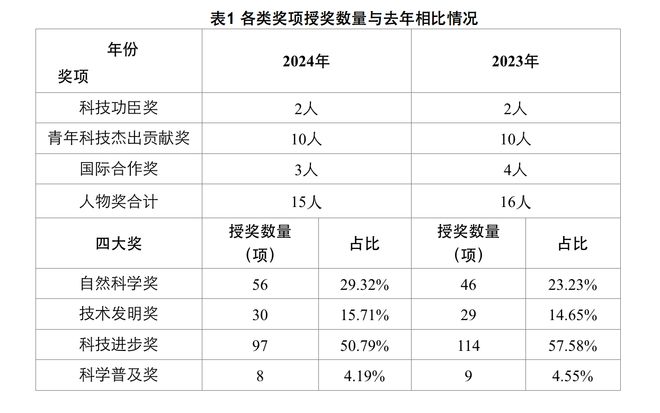
Group 1 - The 2024 Shanghai Science and Technology Awards announced a total of 206 awards, reflecting a trend towards reducing quantity while improving quality [1][2] - The number of Science and Technology Progress Awards decreased by 17, while the Natural Science Awards increased by 10, indicating a shift in focus [1][2] - The award rate for Natural Science Awards was 23%, significantly higher than the 16% for Science and Technology Progress Awards, highlighting the strength of basic research in Shanghai [1][2] Group 2 - In 2024, there were 2 Special Awards, 61 First Prizes (32%), and 128 Second Prizes (67%), with the distribution of high-level awards remaining stable compared to 2023 [2] - The proportion of young and middle-aged talents (under 45) among award recipients increased to 65%, with 43% of the first authors being under 45 [2] - The number of award-winning organizations reached 686, with state-owned enterprises playing a dominant role, comprising 55% of the awarded companies [3] Group 3 - Over half (54%) of the high-level award projects in 2024 explicitly aimed for application and commercialization, particularly in technology invention and scientific progress awards [4] - Significant innovation outcomes were noted in new materials, new energy, and advanced manufacturing sectors, with 30 technology invention awards distributed across various fields [4] - Among the 97 Science and Technology Progress Awards, 59% were related to projects impacting daily life, indicating a focus on practical applications [4]

“双子星座”产学研用创新交流会在通辽举办
Nei Meng Gu Ri Bao· 2025-08-26 02:47
Core Insights - The "Gemini Constellation" talent event and collaborative innovation exchange was held in Tongliao City on August 25, focusing on key industries such as corn biotechnology, beef food processing, wind power equipment manufacturing, and traditional Mongolian medicine [1] Group 1: Event Overview - The event was organized by the Tongliao Municipal Organization Department as part of the 13th Inner Mongolia Talent Week [1] - Approximately 100 participants attended, including experts from the Chinese Academy of Engineering, the Mongolian Academy of Sciences, and representatives from key enterprises in Tongliao and Chifeng [1] Group 2: Industry Focus - The event aimed to deepen cooperation between industry, academia, and research institutions to address technical challenges faced by enterprises and promote high-quality economic development [1] - Several technological achievements were announced, including high-selectivity and high-efficiency biosynthesis of functional chemicals, industrial strains for amino acids and their derivatives, and new building materials based on fly ash [1] Group 3: Strategic Collaborations - Inner Mongolia University of Nationalities and Tongliao Vocational College established strategic partnerships with Jiangnan University [1] - Teams from Jiangnan University and Zhejiang Gongshang University signed agreements with four enterprises in Tongliao [1] - A tripartite agreement was signed between the Inner Mongolia Mongolian Medicine Engineering Technology Research Institute, Liaoning Mongolian Medicine Hospital, and Beijing Mu Medical Technology Co., Ltd. for the integration and application of Mongolian medicine and artificial intelligence diagnostic systems [1] Group 4: Initiatives and Future Directions - The event included the unveiling of the Chifeng-Tongliao "Gemini Constellation" talent cooperation station and the launch of the beef deep processing technology research institute in the Horqin District [1] - The initiative aims to effectively integrate resources from government, universities, and enterprises to promote the transformation of scientific achievements and talent sharing, injecting new momentum into the high-quality development of Tongliao and Chifeng [1]
力合科创:从“书架”走向“货架”,做科技成果转化的“摆渡人”
Zheng Quan Shi Bao· 2025-08-26 00:59
Core Insights - The article highlights the role of Lihua Technology (力合科创) as a key player in the transformation of scientific and technological achievements in Shenzhen, integrating resources from various high-tech enterprises and universities to create a comprehensive system for technology commercialization [1][2][4]. Group 1: Company Overview - Lihua Technology originated from the Tsinghua University Research Institute and has successfully incubated over 4,000 enterprises since its inception with an initial capital of just over 2 million yuan [2][4]. - The company focuses on early-stage investments in hard technology projects, distinguishing itself from the domestic venture capital landscape that typically favors mature projects [5][10]. Group 2: Investment Strategy - Lihua Technology employs a "borrow investment" strategy to bridge the gap in technology commercialization, emphasizing the importance of early investment in hard technology [4][6]. - The company has invested in over 500 high-tech enterprises, nurturing projects in hydrogen energy, semiconductors, and medical technology [5][10]. Group 3: Challenges in Technology Transfer - The article discusses the inherent challenges in technology transfer, including the instability of early project teams and the immaturity of products, which necessitate a robust support system for successful commercialization [6][7]. - Lihua Technology provides comprehensive support, including management frameworks and operational systems, to assist startups in navigating the complexities of market entry [7][11]. Group 4: Ecosystem Development - The company has established a project "water flow" system through partnerships with various universities and research institutions, ensuring a steady influx of validated projects for investment [11][12]. - Lihua Technology's experience and investment model have been replicated in other regions, such as Hubei and Chongqing, to foster similar ecosystems for technology transfer [10][12]. Group 5: Future Outlook - The establishment of concept verification and pilot funds marks a significant step in creating a systematic fund matrix to enhance technology commercialization efforts [9][10]. - Lihua Technology aims to continue its role as a leader in the technology transfer space, contributing to the broader goal of facilitating China's technological innovation and economic development [12].


力合科创:从“书架”走向“货架”,做科技成果转化的“摆渡人”
证券时报· 2025-08-26 00:56
Core Viewpoint - The article highlights the role of Lihua Science and Technology in bridging the gap between scientific research and market application, emphasizing its unique approach to early-stage investment in hard technology projects and the importance of a comprehensive support system for technology commercialization [1][2][5]. Group 1: Company Background and Development - Lihua Science and Technology originated from the Tsinghua University Research Institute and has evolved from an initial capital of over 2 million yuan to incubating over 4,000 enterprises, playing a significant role in the rise of China's hard technology [2][5]. - The company was established in 1999 as one of the first investment institutions focused on technology transfer, aiming to convert academic achievements into marketable products [5][6]. Group 2: Investment Strategy and Approach - Lihua Science and Technology distinguishes itself by investing in early-stage hard technology projects that others may avoid, and it has built a team with engineering backgrounds to support these investments [6][8]. - The company has invested in over 500 high-tech enterprises, successfully nurturing projects in hydrogen energy, semiconductors, and medical technology [6][10]. Group 3: Challenges in Technology Transfer - The article discusses the inherent challenges in technology transfer, particularly in the early stages where teams often lack market and operational expertise, necessitating a supportive ecosystem for successful commercialization [8][9]. - Lihua Science and Technology provides comprehensive support throughout the project lifecycle, from concept validation to product development, ensuring that teams receive the necessary resources and guidance [9][10]. Group 4: Ecosystem and Collaboration - The company has established a robust ecosystem by collaborating with various universities and research institutions, creating a continuous flow of quality projects for investment [14][15]. - Lihua Science and Technology has developed a "three-run" model to support projects, acting as a companion, relay, and leader in the commercialization process [14][15]. Group 5: Future Outlook - The article concludes with a positive outlook on the future of technology transfer in China, suggesting that with the continued growth of institutions like Lihua Science and Technology, the commercialization of scientific achievements will become more efficient and impactful [15].
让更多创新药在南京“首发”
Nan Jing Ri Bao· 2025-08-25 23:35
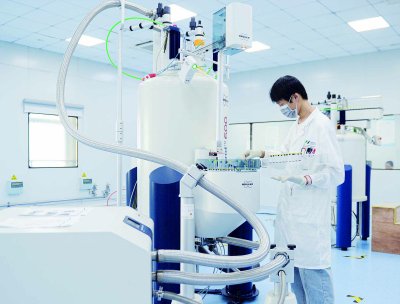
挂牌运营八个多月,南京生物医药分中心已落地项目四十五个 让更多创新药在南京"首发" 研发人员正在600兆核磁机器上进行加样检测工作。 蹲点点位:全国高校生物医药区域技术转移转化中心(江苏南京) 8月20日上午9时,中国药科大学药学院教授韩思飞早早来到全国高校生物医药区域技术转移转化中心 (江苏南京)的质谱分析实验室,在技术人员的帮助下进行研发试验。从今年3月接洽开始,到5月公司 正式注册落户,再到9月公司即将全面运转,韩思飞教授最新的研发成果正一步步从实验室走上生产 线。 推动更多高校的科技成果转化为现实生产力,让高"研值"带来高产值,韩思飞教授的项目并非个例。南 京生物医药分中心挂牌运营8个多月以来,对接全国76家高校、落地项目45个、筛选后入库项目1395 个。更为难得的是,分中心建立了全链条服务体系,以完善的硬件和软件,吸引着更多的优质项目慕名 而来。 当初的创业设想 正一步步实现 韩思飞教授与研发人员一起探讨实验方案。 全国高校生物医药区域技术转移转化中心(江苏南京)。 作为分中心的载体之一,位于星火路的江北 新区现代产业创新中心将陆续投用。 □ 南京日报/紫金山新闻记者 李都 蹲点主题:推动科技成果 ...
高效办成一件事!上海科技成果转化按下“加速键”
Guo Ji Jin Rong Bao· 2025-08-25 11:35
Core Viewpoint - The Shanghai Municipal Government has released the "Implementation Plan for the Transformation of Scientific and Technological Achievements" to enhance the efficiency of government services and promote the conversion of scientific achievements into economic growth [1][2]. Group 1: Policy Objectives - The plan aims to address long-standing challenges in the transformation of scientific achievements by creating a new service system centered around five core pillars [2]. - It seeks to integrate various administrative tasks related to high-tech achievement recognition, intellectual property funding applications, and technology contract registrations into a "one-stop" service window [2][3]. Group 2: Administrative Efficiency - The plan introduces measures such as "免申即享" (enjoy without application) and "即申即享" (enjoy upon application) to streamline processes and enhance transparency [4]. - A "credit + supervision" system will be established to balance efficiency and risk control, providing institutional support for decision-makers [4]. Group 3: Resource Integration - The platform will gather key resources for the entire chain of scientific achievement transformation, including validation centers, pilot bases, high-quality incubators, and technology transfer institutions [5]. - A comprehensive, searchable knowledge base will be created to facilitate access to critical legal and regulatory information, reducing compliance costs for SMEs and researchers [5]. Group 4: Digital Transformation - The plan emphasizes the importance of digital transformation as a key enabler for modernizing the conversion of scientific achievements, utilizing AI and big data to enhance efficiency and success rates [7]. - The "one-stop" platform will leverage cross-departmental data sharing to implement "免申即享" and utilize intelligent algorithms for supply-demand matching and policy promotion [7].
化工中试基地建设亟待多要素赋能
Zhong Guo Hua Gong Bao· 2025-08-25 02:02
Core Insights - The construction of chemical pilot bases is crucial for integrating technological and industrial innovation, requiring enhanced collaboration across various sectors, environmental standards, advanced processes, and financial services to promote sustainable and high-quality development [1] Group 1: Industry Needs and Standards - The core demand for pilot bases in the chemical industry is the establishment of shared service platforms, with nearly 70 pilot bases in China exhibiting uneven development [1] - The first national standard for pilot base construction in chemical parks, titled "Guidelines for the Construction of Chemical Park Pilot Bases," emphasizes the importance of pilot testing in reducing R&D costs and improving the conversion rate of scientific achievements [2] Group 2: Policy and Financial Support - A flexible and supportive policy environment is necessary for optimizing pilot research processes, which often involve uncertain factors and require adjustments based on actual conditions [2] - The "Ganzhi Hui" innovation park in Lanzhou New Area aims to create a full-chain achievement transformation mechanism, supporting R&D, pilot testing, and industrialization through shared platforms and funding mechanisms [2] Group 3: Risk Management and Financing - A "guarantee-loan linkage" model has been proposed to mitigate economic risks associated with pilot projects, establishing a risk-sharing mechanism with financial companies to provide loans and financing services [3] - Financial support for pilot projects can include subsidies covering up to 30% of R&D investments, with a maximum of 5 million yuan available for key projects in the Ningdong Energy and Chemical Base [2]
广西出台新规助力破解科技成果转化难题
Ren Min Ri Bao· 2025-08-24 23:25
Core Points - The Guangxi Zhuang Autonomous Region has issued the "Management Measures for the Guangxi Technology Achievement Transformation Fund" to enhance the role of government investment funds in guiding social capital and addressing challenges in technology achievement transformation [1][2] - The fund will focus on technology enterprises in key areas with high integration and strong driving force, with at least 60% of the total fund allocated to seed, startup, and growth-stage non-listed technology companies [1][2] - A project database will be established to gather high-quality projects, including major technology achievements and award-winning projects from innovation and entrepreneurship competitions [1] Investment Environment - The "Management Measures" aim to break through key bottlenecks that restrict investment enthusiasm and create a favorable investment environment [2] - The fund will have a maximum contribution ratio of 70% from multiple levels of government, enhancing the willingness of social capital to cooperate [2] - An optimized mechanism for sharing excess returns will allow up to 100% of excess returns to be transferred for well-performing projects, reinforcing positive incentives [2] Risk Management - The measures acknowledge the high investment, long cycle, and high risk associated with technology achievement transformation and propose a fault-tolerant mechanism centered on compliance responsibility exemptions [2] - A comprehensive management system covering the entire lifecycle of fundraising, investment, management, and exit will be established [2] - Strict requirements will be set for fund management institutions, including paid-in capital and management experience, to ensure quality [2] Fund Details - The first phase of the Guangxi Technology Achievement Transformation Mother Fund, with a total scale of 2 billion yuan, was approved on July 15 this year, focusing on supporting technology enterprises from seed to growth stages [3]