
数字资产

Search documents
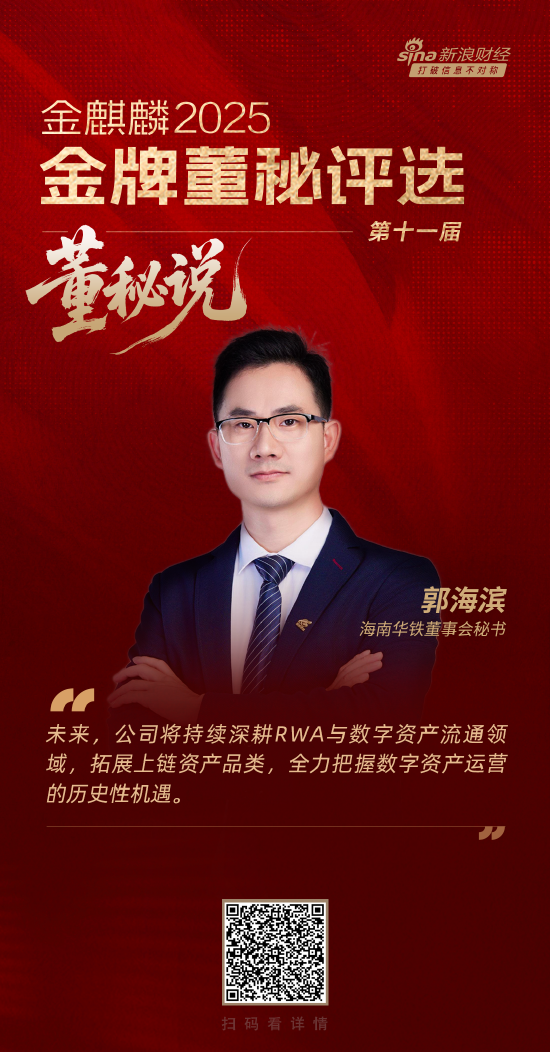
董秘说|海南华铁董秘郭海滨:以RWA为钥 开启资产数字化新征程
Xin Lang Cai Jing· 2025-07-18 02:42
Core Insights - The company, Hainan Huatie, is a leading comprehensive investment operation platform in Hainan, focusing on equipment operation services and has been recognized as one of the top 100 international equipment leasing companies, ranking 27th in 2025, an improvement of 2 positions from the previous year [5][6]. Company Overview - Hainan Huatie operates under the umbrella of Hainan Development Holdings Co., Ltd., the largest AAA-rated state-owned asset platform in Hainan, and has been in operation since 2008 [5]. - The company has diversified its business to include engineering machinery, construction support equipment, intelligent computing equipment, and low-altitude equipment, with nearly 400 service points across over 600 cities in China [6]. Business Development - The company has signed contracts for computing power services exceeding 7 billion yuan and has delivered intelligent computing equipment worth over 1.3 billion yuan [6]. - Hainan Huatie is actively investing in low-altitude economy and computing power leasing, focusing on providing comprehensive low-altitude scenario solutions to government and industry clients [6]. RWA Technology - RWA (Real World Assets) refers to the tokenization of real-world assets using blockchain technology, allowing for the trading and circulation of asset rights in digital form [7]. - The introduction of RWA is seen as a transformative financing tool for the equipment leasing industry, addressing traditional financing limitations and enhancing management efficiency [8]. Future Strategy - The company has initiated the process of asset tokenization, with nearly 26 billion yuan of hardware-level on-chain assets established, positioning itself advantageously in the RWA and digital asset operation sectors [10]. - Hainan Huatie aims to continue deepening its engagement in RWA and digital asset circulation, expanding its on-chain asset categories to seize historical opportunities in digital asset operations [10].

美国众议院压倒性优势投票通过三大加密货币法案,白宫称特朗普周五签字
news flash· 2025-07-17 22:16
Core Viewpoint - The SEC is accelerating the development of solutions for cryptocurrency regulation and is exploring clear regulatory frameworks for digital assets [1] Group 1 - SEC Chairman Paul Atkins emphasized the need for legislative proposals regarding stablecoins [1] - The SEC has requested its staff to investigate the establishment of a clear regulatory system for digital assets [1] - There is consideration for providing innovative tax exemption schemes for digital asset companies [1]
协鑫科技:拟就RWA的全球发行与太保资管香港达成战略合作
news flash· 2025-07-17 12:41
Group 1 - The core point of the article is the strategic cooperation memorandum signed between GCL-Poly Energy Holdings Limited and China Pacific Insurance (601601) Investment Management (Hong Kong) Limited to develop infrastructure for real-world asset (RWA) tokenization solutions [1] - The collaboration aims to promote the adoption of compliant digital asset products and services, including the development of stablecoin applications and integration of decentralized finance [1]


华尔街巨头加速布局稳定币,这不再只是“币圈”的游戏
Jin Shi Shu Ju· 2025-07-17 05:26
Group 1 - Major U.S. banks, including Bank of America and Citigroup, are planning to launch stablecoins as the U.S. seeks to adopt more supportive cryptocurrency regulations [2][3] - Bank of America CEO Brian Moynihan indicated that the bank is working on stablecoin development, although specific timelines were not disclosed [2] - The demand for stablecoins is currently low, and the bank is assessing customer needs before launching [2] Group 2 - President Trump has pledged to become the "crypto president," promoting mainstream adoption of cryptocurrencies in the U.S. [3] - The U.S. Congress is expected to advance a series of favorable bills for the crypto industry, including a regulatory framework for stablecoins [3] - A bipartisan-supported stablecoin bill has passed the Senate and is awaiting a vote in the House, which could lead to Trump's approval [3] Group 3 - Morgan Stanley's CFO Sharon Yeshaya stated that the bank is closely monitoring the development of stablecoins and their potential uses for clients [4] - Citigroup CEO Jane Fraser expressed interest in issuing a stablecoin to enhance digital payments [4][5] - JPMorgan CEO Jamie Dimon, despite skepticism towards Bitcoin, confirmed the bank's participation in the stablecoin business [5]
OSL集团20250716
2025-07-16 15:25
Summary of OSL Group Conference Call Industry Overview - The global digital asset market is projected to exceed $10 trillion in trading volume in 2024, representing a 43% year-over-year growth, driven by the approval of the first Bitcoin spot ETF by the US SEC and Hong Kong's open policies towards virtual assets, attracting capital back to the region [2][4][5] - Hong Kong has made significant progress in the digital asset sector, including the launch of spot Bitcoin and Ethereum ETFs, and exploration in the Real World Asset (RWA) domain, with 11 virtual asset service platforms obtaining formal licenses by June 2025 [2][8][9] Company Performance - OSL Group reported a revenue of HKD 375 million for the fiscal year 2023, a 78.6% increase year-over-year, primarily due to significant growth in digital asset trading revenues and SaaS service fees [2][6] - The company achieved a profit of HKD 54.8 million in its ongoing operations for fiscal year 2024, recovering from a loss of HKD 250 million in the previous year, with total trading volume around HKD 100.5 billion, up 16.3% year-over-year [2][6][7] Strategic Initiatives - OSL Group is actively expanding into overseas markets, planning to establish a presence in Southeast Asia, Europe, and the Middle East, and has announced the acquisition of Ban Banka shares [2][7] - The company anticipates maintaining close to 80% growth in revenue from its digital asset and blockchain trading platform by the end of 2025, although profitability may be impacted by acquisition activities [7] Regulatory Environment - The digital asset industry is experiencing a dual drive of regulation and technological innovation, with the US SEC's approval of the Bitcoin spot ETF expected to enhance overall market trading volume and market capitalization [4][5] - Hong Kong's ETF allows direct use of cryptocurrencies for subscriptions and redemptions, providing greater flexibility and innovation compared to US ETFs [4][13] Technological Services - OSL Group offers a range of technological services, including SaaS, enterprise API support, and professional consulting services, ensuring clients have a secure and efficient operational experience [12] User Growth and Market Position - OSL Group has seen rapid user growth driven by compliance, with active customer numbers increasing by 130% in 2020 and 413% in 2021, despite a slight decline in overall trading volume in 2023 [22] Competitive Landscape - OSL holds multiple licenses, including securities trading, consulting, automated trading, and asset management licenses, differentiating itself from competitors like Hashkey [21] Future Outlook - The Hong Kong government’s open policies towards the crypto market have led to a significant capital influx, positioning Hong Kong as a major cryptocurrency hub in Asia [9]
全球首家!银行也能交易比特币了
Zhong Guo Jing Ying Bao· 2025-07-16 13:42
Core Viewpoint - Standard Chartered Group has launched a comprehensive integrated digital asset trading service for institutional clients, becoming the first global systemically important bank to provide secure, compliant, and scalable spot trading for Bitcoin and Ethereum [1][2]. Group 1: Service Launch and Market Position - The new digital asset trading service is highly integrated with Standard Chartered's existing platforms, allowing institutional clients to trade digital assets through familiar forex interfaces and settle with their chosen custodial banks [2]. - The service includes spot trading for Bitcoin (XBT/USD) and Ethereum (XET/USD) through its UK branch, with plans to introduce non-deliverable forward trading soon [2]. - The launch reflects a shift from traditional financial institutions providing "behind-the-scenes" support to actively participating in the core trading of digital assets [1][2]. Group 2: Market Trends and Institutional Influence - The launch of the digital asset trading service indicates three key trends: 1. Accelerated integration of cryptocurrencies with traditional finance, as evidenced by Standard Chartered's role as a global systemically important bank [3]. 2. Increasing influence of institutional investors in the cryptocurrency market, highlighted by the bank's focus on institutional clients [3]. 3. A growing number of banks actively entering the cryptocurrency service space, expanding their business scope since the second half of 2024 [3]. Group 3: Regulatory Environment and Future Outlook - Recent legislative developments in major countries, including the U.S. and Hong Kong, indicate a move towards regulatory frameworks for cryptocurrencies and stablecoins, suggesting the end of the "wild growth" phase for the market [4]. - The future of the cryptocurrency market will depend on achieving a dynamic balance with traditional financial markets, emphasizing the complementary role of cryptocurrencies in enhancing the existing financial system [4]. - Global efforts are underway to classify and regulate digital assets, setting boundaries and norms for financial institutions to operate within [4].
完美世界教育COO出席博采AI虚拟影视基地开园仪式,共筑产教融合新生态
Zhong Guo Jing Ji Wang· 2025-07-16 12:48
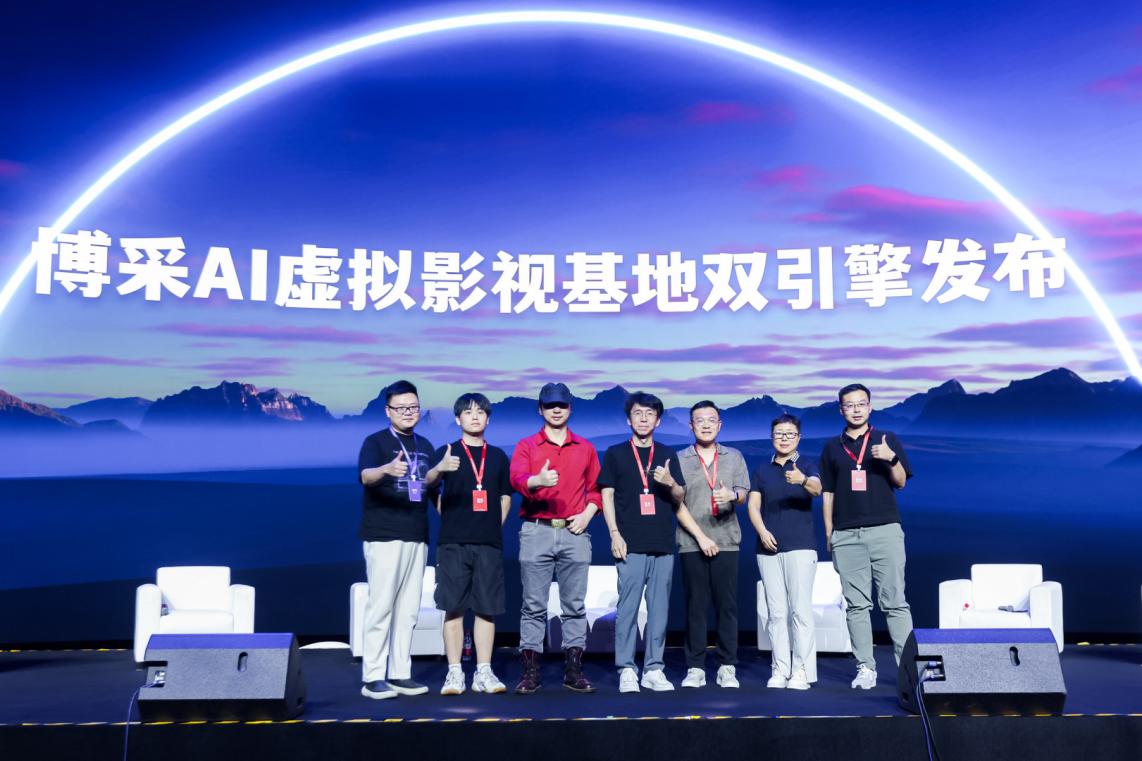
Core Insights - The opening ceremony of the Bochai AI Virtual Film Base in Deqing, Zhejiang, marks a significant milestone in China's film industrialization process, featuring advanced virtual production technology and facilities [1] - The roundtable forum on "Integration of Film Digital Assets in Education and Research" highlighted the need for talent development in the context of rapidly evolving digital assets in the film industry [2][3] Industry Trends - The rapid development of virtual production technology and AI-generated content has positioned film digital assets as core production materials, necessitating a deeper understanding of industry processes and technical skills among talent [2] - The collaboration between Perfect World Education and Bochai Media aims to enhance talent training through innovative practices, integrating virtual production technology courses into educational frameworks [5] Talent Development Initiatives - The training program will consist of three phases: foundational knowledge, simulation projects, and real projects, aimed at quickly improving practical skills [5] - Students will engage in fragmented tasks on the UB platform, utilizing a project-based compensation model to gain industry experience [5] - A competition titled "'Belt and Road' and BRICS Countries Skills Film Production Virtual Production Competition" will be co-hosted to provide opportunities for outstanding students to enter leading companies [5] Strategic Collaboration - Perfect World Education seeks to collaborate with Bochai Media, China Academy of Art, and other industry partners to promote deep integration of education, research, and industry, thereby fostering a robust talent pool for the digital content industry [5]

警惕利用“稳定币”非法集资!多地发布风险提示
证券时报· 2025-07-16 10:36
Core Viewpoint - The article highlights the rising illegal activities associated with "stablecoins," as various financial regulatory bodies have issued warnings against fraudulent schemes that exploit the concept of stablecoins to attract investments and promise high returns [1][2][4]. Group 1: Regulatory Warnings - Multiple financial regulatory departments in regions such as Henan, Zhejiang, Beijing, Shenzhen, and Chongqing have issued risk alerts regarding illegal fundraising activities disguised as stablecoin investments [2][4]. - These warnings emphasize that stablecoins should not be considered investment or speculative tools, and that unauthorized institutions lack the qualifications to publicly solicit deposits [2][4][5]. Group 2: Characteristics of Fraudulent Activities - Fraudulent institutions often use terms like "financial innovation," "digital assets," and "blockchain technology" to mislead the public into participating in trading and speculation [2][4]. - Common characteristics of these illegal fundraising projects include lack of qualifications, concept packaging, false promises, and the operation of funds in pools, which create information asymmetry to confuse investors [4][5]. Group 3: Legal Context and Challenges - In China, virtual currency-related activities are classified as illegal financial activities, and participants in such investments face legal risks [6]. - The absence of domestic virtual currency trading venues and the shift of exchanges overseas complicate law enforcement and the handling of involved virtual currencies [7]. Group 4: Need for Regulatory Framework - As the market value and circulation of stablecoins continue to grow, there is an urgent need to explore regulatory paths for stablecoins that align with China's national conditions [8][9].
比特币今年或飙至20万美元?资金狂涌、监管松绑引爆新一轮涨势
Sou Hu Cai Jing· 2025-07-16 01:10
Core Viewpoint - Major ETF providers are betting on a further acceleration of Bitcoin's price increase over the next 12 months, with institutional investors increasing their allocation to cryptocurrencies as the U.S. leads a "regulatory-friendly" era for digital assets [1][3]. Group 1: Bitcoin Price Predictions - VanEck's Australian subsidiary predicts Bitcoin will soar to $180,000 by the end of the year, a 50% increase from current levels [1][3]. - Global X's Australian subsidiary has a more aggressive forecast, expecting Bitcoin to reach $200,000 within the year [4]. Group 2: Institutional Investment Trends - Australian investors have significantly profited from the recent Bitcoin surge, injecting a record A$163 million into ASX-listed Bitcoin ETFs in Q2 2025 [3]. - U.S. Bitcoin ETFs attracted $3 billion in inflows last week, with a single-day record of inflows on July 11 [3]. Group 3: Market Dynamics and Adoption - Approximately 40% of Australian investors have engaged with digital assets, surpassing Singapore's 26%, indicating Australia is a leading country in crypto asset adoption in the Asia-Pacific region [6]. - 25% of surveyed Australian investors plan to increase their cryptocurrency allocation in the next 12 months [6]. Group 4: Regulatory Environment - U.S. regulatory clarity is boosting institutional confidence, with key legislation aimed at eliminating regulatory ambiguities in the crypto space [7]. - The proposed legislation encourages the use of stablecoins and aims to prevent the issuance of central bank digital currencies [7]. Group 5: Market Volatility and Long-term Outlook - Bitcoin's annualized volatility has decreased from 150% to around 33%, while the Nasdaq index's volatility is approximately 20% [9]. - MHC Digital Group forecasts Bitcoin to reach $160,000 by Q4 this year and $1 million by 2030, citing increasing demand and tightening supply as key drivers [9].
海外稳定币与RWA的来龙去脉
2025-07-16 00:55
Summary of Key Points from the Conference Call Industry Overview - The stablecoin trading volume in 2023 has approached that of traditional payment platforms, with a total trading volume of $35.5 trillion over the past 12 months, and $7.4 trillion when excluding high-frequency trading, significantly surpassing PayPal's $1.68 trillion and nearing Mastercard's $9.8 trillion, indicating its substantial potential in payment settlements [1][3] Core Insights and Arguments - Global stablecoin regulation is diverging, with the U.S. favoring strict regulations to reinforce the dollar's dominance, requiring stablecoin reserves to be held at a 1:1 ratio in U.S. dollar deposits or short-term U.S. Treasury securities, while Hong Kong adopts a more open regulatory approach, allowing the issuance of stablecoins backed by HKD or other currencies [1][6] - Hong Kong is actively promoting the synergy between stablecoins and Real World Assets (RWA), particularly in cross-border payments, where stablecoins can significantly reduce costs to less than $1 per transaction, compared to the global average of 6% for cross-border remittances, thus providing an efficient and low-cost solution [1][7] - The total market size of RWA has exceeded $23 billion, with platforms like Propety facilitating over $4 billion in real estate transactions, and Center Fusion converting receivables into tradable tokens [1][10] - The rise of RWA is driven by the need to address trust and efficiency issues in traditional asset transactions, utilizing reliable data and computation to enable real-time asset status updates and automated execution of returns [2][9] Regulatory Developments - The global regulatory landscape for stablecoins is evolving, with the U.S. pushing for legislation that mandates a 1:1 reserve ratio for stablecoin issuance, while Hong Kong's new regulations, effective August 1, 2025, allow for the issuance of stablecoins backed by various currencies with high reserve standards [6][12] Opportunities and Applications - The development of stablecoins and RWA presents opportunities for issuers, virtual asset trading platforms, and infrastructure service providers. Companies like Circle Internet may see revenue growth through expanded business lines and compliance services, while platforms like Coinbase Global will benefit from increased market scale and profitability [4][16] - Stablecoins are primarily used for currency trading and decentralized finance but are also expanding into payments, transfers, and liquidity management [5] Hong Kong's Initiatives - Hong Kong has been proactive in the digital asset space, launching the "Digital Asset Development Policy Declaration 2.0" and implementing the "Stablecoin Ordinance" to attract institutional participation in HKD stablecoin projects [4][12] - The government is also exploring the issuance of tokenized government bonds and encouraging innovative applications, such as tokenizing traditional financial products and enhancing liquidity in the digital currency ecosystem [13][14] Recent Progress - As of April 2024, three fund companies have launched spot Bitcoin and Ethereum ETFs on the Hong Kong Stock Exchange, showcasing significant advancements in RWA development [15] Conclusion - The interplay between stablecoins and RWA is set to create substantial opportunities in the financial landscape, with potential benefits for various stakeholders involved in the ecosystem [11][16]