
服务消费

Search documents
利好来了!刚刚,9部门重磅发布!
券商中国· 2025-09-16 10:55
消费领域迎来重磅利好政策。 据新华社消息,商务部等9部门9月16日对外发布《关于扩大服务消费的若干政策措施》(以下简称《政策措施》),提出五方面19条举措,包括:开展"服务消费 季"系列促消费活动;支持优质消费资源与知名IP跨界合作;因地制宜延长热门文博场馆、景区营业时间,优化预约方式,鼓励推行免预约;优化学生假期安排,完 善配套政策等。 在培育服务消费促进平台方面,《政策措施》提出,实施服务消费提质惠民行动。印发《服务消费提质惠民行动工作方案》,从加强政策支持、搭建平台载体、扩 大对外开放、强化标准引领、优化消费环境等方面提出工作举措。持续深化"购在中国"品牌打造,开展"服务消费季"系列促消费活动,围绕贴近群众生活、需求潜 力大、带动作用强的重点领域开展服务消费促进活动,培育服务消费品牌,打造服务消费热点。 《政策措施》指出,开展消费新业态新模式新场景试点城市建设。积极发展首发经济,推动创新和丰富服务消费场景,支持优质消费资源与知名IP跨界合作,打造 一批商旅文体健融合的消费新场景,培育一批新型消费龙头企业。 在丰富高品质服务供给方面,《政策措施》提到,扩大服务业高水平对外开放。推动互联网、文化等领域有序开 ...

9.16犀牛财经晚报:估值超70亿元的卫星制造独角兽启动IPO 开发商偷面积使得房率达130%
Xi Niu Cai Jing· 2025-09-16 10:34
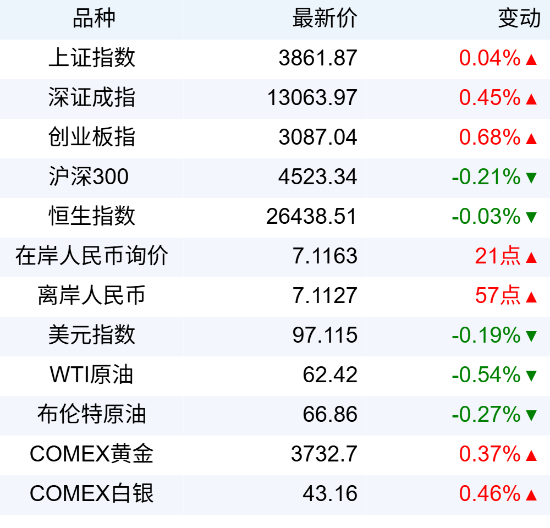
Group 1 - The Ministry of Commerce and eight other departments released measures to expand service consumption, proposing 19 initiatives to enhance service supply and meet diverse consumer needs [1] - Beijing Minna Star Technology Co., Ltd., a leading satellite manufacturer, has initiated an IPO with a valuation exceeding 7 billion yuan and has secured over 2 billion yuan in funding [1] - The top 10 global semiconductor equipment manufacturers reported a combined revenue of over 64 billion USD in the first half of 2025, marking a year-on-year growth of approximately 24% [1] Group 2 - OpenAI is accelerating its investment in robotics, focusing on humanoid robots as a key step towards achieving artificial general intelligence (AGI) [2] - The real estate market is facing scrutiny over developers' practices of inflating usable area percentages, with new regulations being introduced to standardize building area calculations [2] - A well-known restaurant brand, Taier Sauerkraut Fish, faced criticism regarding its "fresh fish cooked on-site" claims, leading to customer inquiries about its operational practices [3] Group 3 - The vice president of Douyin Group highlighted the emergence of a "ByteDance departure track" on social media, revealing that many posts claiming to be from former employees are misleading and often linked to training institutions [4] - Zhongya Machinery Co., Ltd. has authorized up to 400 million yuan for entrusted wealth management, recently purchasing a 5 million yuan financial product from China Merchants Bank [4] - Su Junliang has been appointed as the chairman of Industrial Securities, succeeding Yang Huahui [5] Group 4 - Jiuxiang Bio has received a medical device registration certificate for its gastrin-17 testing kit, which is used for quantitative measurement of gastrin-17 levels in human serum [6] - Luxiao Technology's subsidiary has signed a strategic cooperation agreement with a leading cross-border e-commerce company to develop AI technology and expand into the US and European markets [7] - China Shipbuilding Technology has signed a significant contract for green methanol sales, with an annual contract value of approximately 40 million USD [8] Group 5 - Haon Automotive has received product designation from a global automotive brand for its ADAS perception system and radar system, with an estimated total revenue of about 2.477 billion yuan over the project's lifecycle [9] - Yaoshi Technology announced that the last day for converting its bonds will be September 17, after which unconverted bonds will be forcibly redeemed at a price of 100.62 yuan per bond [10] - Hefei Urban Construction's subsidiary has signed a land use rights transfer contract for residential land in Hefei, with a total payment of approximately 1.224 billion yuan [11] Group 6 - China Shenhua reported a coal sales volume of 280 million tons in the first eight months of the year, reflecting a year-on-year decline of 9.2% [12] - The ChiNext index experienced a rebound, closing up 0.68%, with the robotics sector leading the market with over 20 stocks hitting the daily limit [13]
19项措施扩大服务消费!9部门重磅发文
2 1 Shi Ji Jing Ji Bao Dao· 2025-09-16 09:57
Core Viewpoint - The Ministry of Commerce and nine other departments have released a set of 19 measures aimed at expanding service consumption to boost economic growth and meet diverse consumer needs [4][5][8]. Group 1: Promotion of Service Consumption - Implementation of a "Service Consumption Season" to stimulate consumer spending [5][6]. - Support for high-quality consumption resources to collaborate with well-known IPs [5][6]. - Development of pilot cities for new service consumption models and scenarios [5][6]. Group 2: Enhancement of Service Supply - Expansion of high-level opening-up in the service industry, particularly in internet, culture, telecommunications, and healthcare sectors [5][6]. - Encouragement of cultural and artistic creation, optimizing the supply of cultural products and services [5][6]. - Extension of operating hours for popular cultural and historical venues, and promotion of reservation-free access [5][6]. Group 3: Financial and Policy Support - Utilization of various funding channels to support the construction of service facilities in culture, tourism, and sports [7][8]. - Encouragement of financial institutions to increase credit support for service consumption sectors [7][8]. - Implementation of fiscal interest subsidies to stimulate service consumption [7][8]. Group 4: Statistical Monitoring - Optimization of service consumption statistical methods to reflect regional development accurately [8]. - Encouragement of the use of big data and information technology for monitoring and analysis of service consumption [8].
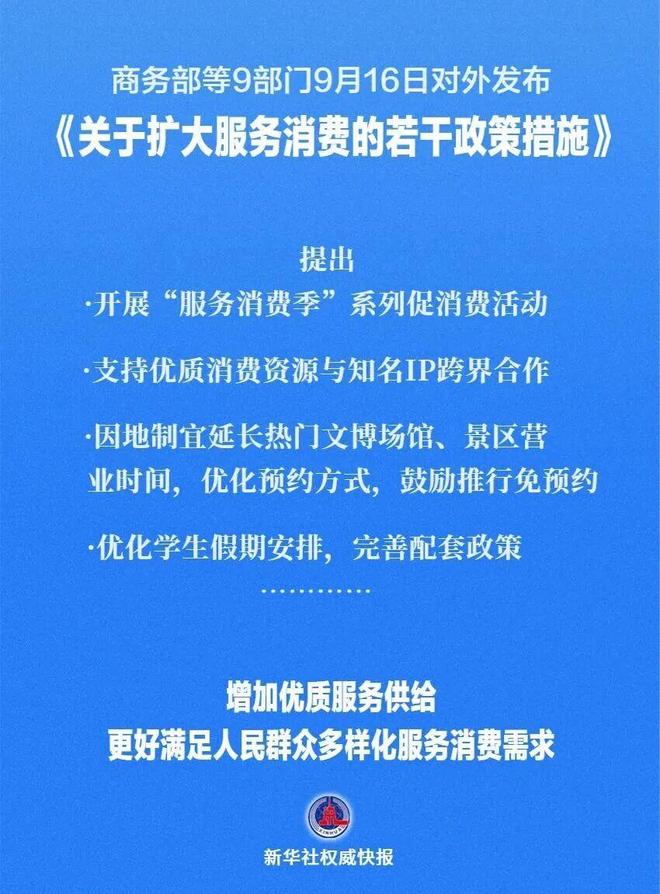
新华财经晚报:9部门发布《关于扩大服务消费的若干政策措施》
Xin Hua Cai Jing· 2025-09-16 09:50
Domestic News - The Ministry of Commerce and nine other departments released measures to expand service consumption, proposing 19 initiatives across five areas, including promoting "service consumption seasons" and optimizing operating hours for popular cultural venues and scenic spots [1] - The Minister of Agriculture and Rural Affairs announced that China's grain production is expected to exceed 1.4 trillion jin in 2024, with per capita grain availability reaching 500 kg, ensuring national food security [1] - The Minister also highlighted significant progress in agricultural modernization during the 14th Five-Year Plan period, with over 100 million acres of high-standard farmland built and a contribution rate of agricultural technology advancement reaching 63.2% [1] Industry News - The China Automobile Industry Association called for domestic and foreign companies to enhance technological innovation and industry chain collaboration, emphasizing the need for an open and fair international market environment for sustainable development in the automotive sector [2] - The association urged further cooperation in electrification and intelligence to promote the global automotive industry's green, safe, and high-quality development [2] International News - The World Trade Organization's special meeting on the Fisheries Subsidies Agreement saw four member countries submit their ratifications, bringing the total to the required number for the agreement to take effect [6] - The Bank of Thailand's governor stated that monetary policy has been adjusted to provide a more accommodative environment amid sluggish economic growth, with measures taken to address fluctuations in the Thai baht [6]
刚刚!重大利好!
Zhong Guo Ji Jin Bao· 2025-09-16 09:35
Core Viewpoint - The Chinese government has announced a series of policy measures aimed at expanding service consumption to boost economic growth and improve people's livelihoods, emphasizing the importance of service consumption in the transition to a high-quality economy [2][3]. Group 1: Promotion of Service Consumption - A "Service Consumption Season" will be launched to stimulate consumption in key areas closely related to people's lives, focusing on high potential demand and strong driving effects [1][3]. - New business models and scenarios will be piloted in cities to promote innovative service consumption, supporting collaborations between quality resources and well-known IPs [1][3]. - The government will enhance the quality of service consumption by implementing a "Service Consumption Quality Improvement Action Plan" [3][4]. Group 2: Expansion of Service Industry - The government aims to open up the service industry at a high level, particularly in sectors like internet, culture, telecommunications, healthcare, and education [1][4]. - There will be a focus on cultural and artistic sectors, with support for the creation of high-quality works and the development of cultural venues [1][4]. - Measures will be taken to extend operating hours for popular cultural venues and optimize reservation systems to enhance visitor experience [1][4]. Group 3: Attracting Foreign Investment - The government plans to relax market access in high-end medical and leisure sectors to attract more foreign investment and private capital [1][4]. - Efforts will be made to attract more foreign visitors for consumption by expanding visa exemptions and improving entry policies [1][5]. Group 4: Financial Support for Service Consumption - The government will utilize various funding channels to support the construction of service facilities in culture, tourism, elderly care, and sports [1][5]. - Financial institutions will be encouraged to increase credit support for service consumption sectors, with a focus on developing tailored financial products [1][5]. - A combination of government subsidies, financial support, and merchant discounts will be implemented to mitigate consumer credit risks [1][5]. Group 5: Monitoring and Statistical Improvement - The government will optimize service consumption statistics and innovate monitoring methods to better reflect regional service consumption development [1][5].
刚刚!重大利好!
中国基金报· 2025-09-16 09:29
Core Viewpoint - The article discusses the recent policy measures announced by the Chinese government aimed at expanding service consumption to boost economic growth and improve people's livelihoods [1][7]. Group 1: Service Consumption Promotion - A series of "Service Consumption Season" activities will be launched to promote consumption in key areas that are closely related to people's lives and have strong demand potential [3][8]. - New pilot cities will be established to develop innovative service consumption scenarios, encouraging collaboration between quality consumption resources and well-known IPs [3][8]. - The government aims to enhance the high-level opening of the service industry, particularly in sectors like internet, culture, telecommunications, healthcare, and education [4][8]. Group 2: Cultural and Sports Development - There will be efforts to extend operating hours for popular cultural and heritage venues and optimize reservation methods to encourage more visitors [4][9]. - The introduction of foreign sports events and support for local mass sports events will be encouraged to create well-known sports brands [4][9]. - The government will promote diverse education and training markets, particularly in non-academic fields like culture, arts, and technology [4][9]. Group 3: Financial and Policy Support - The government will utilize various funding channels to support the construction of cultural, tourism, elderly care, childcare, and sports facilities [10][10]. - Financial institutions will be encouraged to expand credit support for service consumption sectors, with a focus on innovative financial products tailored to service consumption characteristics [10][10]. - There will be an emphasis on providing fiscal interest subsidies to service industry operators to lower their financing costs and stimulate market activity [10][10]. Group 4: Digital and International Consumption - The article highlights the importance of expanding digital service consumption, encouraging e-commerce platforms to innovate in online and offline integration [5][9]. - Measures will be taken to attract more foreign visitors for consumption, including optimizing visa policies and promoting China's cultural resources [5][9]. - Adjustments to school holiday schedules will be explored to increase tourism and service consumption opportunities [5][9].

扩大服务消费 商务部等九部门发文
Yang Shi Wang· 2025-09-16 09:17
Core Viewpoint - The Ministry of Commerce and nine other departments have jointly issued policies to expand service consumption, emphasizing its role in improving livelihoods and driving high-quality economic development [1]. Group 1: Cultivating Service Consumption Promotion Platforms - Implementation of the "Service Consumption Quality Improvement and Benefit Action" to enhance policy support, build platforms, and optimize the consumption environment [2]. - Development of pilot cities for new service consumption formats and scenarios, promoting innovative service consumption landscapes [2]. Group 2: Enriching High-Quality Service Supply - Expansion of high-level opening-up in the service industry, particularly in internet, culture, telecommunications, and healthcare sectors [2][3]. - Support for cultural and artistic sectors through funding for high-quality creations and the development of cultural venues [2][3]. - Encouragement of foreign sports events and local mass sports events to enhance brand recognition and tourism [3]. Group 3: Stimulating New Service Consumption Growth - Attraction of more foreign visitors through optimized visa policies and promotion of Chinese cultural resources [3]. - Expansion of digital service consumption, encouraging e-commerce platforms to innovate in online and offline integration [3]. - Adjustment of school holiday schedules to increase service consumption opportunities [3]. Group 4: Strengthening Financial Support - Utilization of various funding channels to support the construction of service facilities in culture, tourism, and sports [3]. - Support for service trade innovation and investment in service consumption enterprises [3]. - Enhancement of consumer credit support to reduce financing costs for service industry operators [3]. Group 5: Improving Statistical Monitoring Systems - Optimization of service consumption statistical methods to reflect regional development accurately [3].
九部门发文扩大服务消费,涉及体育赛事、首发经济、托育……
Di Yi Cai Jing· 2025-09-16 09:15
Core Viewpoint - The Ministry of Commerce and nine other departments have released a set of policies aimed at expanding service consumption, which includes 19 measures across five key areas to enhance service supply and meet diverse consumer needs [3][4]. Group 1: Promotion of Service Consumption - The measures include launching a series of promotional activities called "Service Consumption Season" and supporting collaborations between quality consumption resources and well-known IPs [1][4]. - There is an emphasis on extending operating hours for popular cultural and tourist venues and optimizing reservation methods to encourage more flexible access [1][4][5]. Group 2: Development of New Consumption Models - The initiative promotes the development of new consumption scenarios and encourages the integration of various sectors such as travel, culture, and sports to create innovative consumption experiences [1][4][6]. - It also supports the introduction of high-profile international sports events and local mass sports events to enhance public engagement and tourism [1][5]. Group 3: Financial and Policy Support - The policies include financial support measures such as utilizing central budget investments and local government bonds to fund service facilities in culture, tourism, and childcare [7][8]. - There is a focus on increasing credit support for service consumption sectors, encouraging financial institutions to develop tailored financial products [8][7]. Group 4: Statistical Monitoring and Evaluation - The measures call for the optimization of service consumption statistical methods to better reflect regional consumption development and encourage the use of big data for monitoring [8][6]. - The Ministry of Commerce is tasked with coordinating the implementation of these policies to ensure they effectively meet the diverse needs of consumers [9].
九部门:积极发展首发经济 培育一批新型消费龙头企业
智通财经网· 2025-09-16 09:09
Core Viewpoint - The Ministry of Commerce and nine other departments have issued a notice on expanding service consumption, emphasizing the importance of service consumption in improving people's livelihoods and driving economic high-quality development [1] Group 1: Cultivating Service Consumption Promotion Platforms - Implementation of the Service Consumption Quality Improvement and Benefit Action, focusing on policy support, platform establishment, and optimizing the consumption environment [2] - Development of pilot cities for new consumption formats, supporting cross-industry collaborations to create new consumption scenarios [2] Group 2: Enriching High-Quality Service Supply - Expansion of high-level opening up in the service industry, particularly in internet, culture, telecommunications, and healthcare sectors [2] - Support for cultural and artistic sectors to create high-quality products and optimize cultural service supply [2] - Encouragement of introducing foreign sports events and supporting local mass sports events to enhance brand recognition [2] Group 3: Stimulating New Service Consumption Growth - Attraction of more foreign visitors through optimized visa policies and promotion of China's cultural resources [3] - Expansion of digital service consumption, encouraging e-commerce platforms to innovate in online and offline integration [3] - Adjustment of student holiday arrangements to increase service consumption opportunities [3] Group 4: Strengthening Financial Support - Utilization of various funding channels to support the construction of service facilities in culture, tourism, and sports [4] - Support for service trade innovation development funds to guide social capital investment in service consumption [4] - Enhancement of consumer credit support to stimulate service consumption market vitality [4] Group 5: Improving Statistical Monitoring Systems - Optimization of service consumption statistical methods to reflect regional development accurately [5][6] - Encouragement of the use of big data for monitoring and analyzing service consumption [6]