反垄断

Search documents
指责苹果偏袒 ChatGPT 后,马斯克与奥尔特曼在网上互喷
Sou Hu Cai Jing· 2025-08-13 03:20
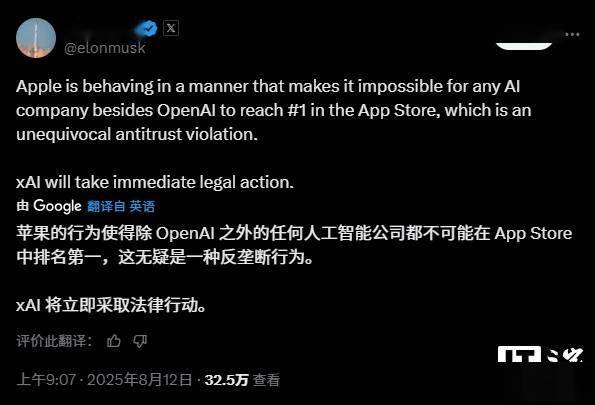
IT之家 8 月 13 日消息,埃隆・马斯克(Elon Musk)与山姆・奥尔特曼(Sam Altman)近日又在网上起 了冲突,这场冲突的根源可以追溯到两人在十年前共同创立人工智能公司 OpenAI 时的合作,以及随后 因理念分歧而产生的公开决裂。 本周一,马斯克在自己的社交媒体平台 X 上向苹果发出了"立即采取法律行动"的威胁,指控苹果在 App Store 中存在反垄断行为,偏袒 OpenAI 的 ChatGPT,而对 X 的 Grok 聊天机器人不公。 "苹果的行为使得除了 OpenAI 之外的任何人工智能公司都无法在 App Store 中登上榜首,这无疑是反垄 断行为,xAI 将立即采取法律行动。"马斯克在 X 上写道,尽管他并未提供任何证据来支持自己的指 控。然而,一些网友指出,今年 1 月,DeepSeek 曾登上 App Store 的榜首,而 7 月,Perplexity 在印度 也位居第一,这似乎与马斯克的指控相矛盾。 值得一提的是,在这个讨论中有用户艾特 Grok AI 询问该应用的看法,结果 Grok AI 称:"基于已经证 实的证据,萨姆奥尔特曼是对的,埃隆马斯克对苹果反垄断的指控 ...


不服就干,嘴总开炮!马斯克起诉苹果偏袒OpenAI,却被网友用DeepSeek打脸,苹果面临反垄断诉讼
Sou Hu Cai Jing· 2025-08-13 02:36
Core Viewpoint - Elon Musk has publicly criticized Apple for allegedly manipulating the App Store rankings to favor its partner OpenAI, threatening legal action for antitrust violations, while facing backlash from users and his own AI product Grok [2][4][7][12]. Group 1: Musk's Accusations Against Apple - Musk accused Apple of deliberately excluding his applications, X and Grok, from the App Store's recommended lists, while favoring ChatGPT [4][9]. - He claimed that Apple's actions constitute antitrust violations, making it impossible for any AI company other than OpenAI to achieve top rankings in the App Store [4][7]. - Musk's emotional response included a series of posts on social media, expressing his frustration and determination to challenge Apple's practices [2][4]. Group 2: User Backlash and Counterarguments - Users on social media pointed out that other AI applications, such as DeepSeek and Perplexity, have achieved top rankings in the App Store, contradicting Musk's claims [6][16]. - Grok, Musk's own AI assistant, publicly sided with OpenAI, stating that Musk's antitrust claims were unfounded and highlighting his history of manipulating social media algorithms for personal gain [16][19]. Group 3: Apple's Position and Ongoing Legal Challenges - Apple is currently facing antitrust lawsuits in both the U.S. and EU, with the App Store being a central focus of these legal challenges [7][9]. - The company has been integrating AI technologies from OpenAI into its products, which has raised concerns about its competitive practices in the AI space [9][12]. - Despite Musk's threats, Apple has continued its partnerships and has not shown signs of altering its business strategy in response to Musk's accusations [9][21]. Group 4: Competitive Landscape and Market Impact - OpenAI's ChatGPT has seen significant user growth, with over 700 million weekly active users, while Grok's user base remains significantly smaller at under 40 million [11][12]. - Musk's rivalry with OpenAI's CEO Sam Altman has intensified, particularly after Musk's departure from OpenAI, leading to a competitive dynamic that influences their respective business strategies [11][12]. - The ongoing public disputes and Musk's legal threats may impact both companies' reputations and market positions in the rapidly evolving AI landscape [7][12].

华为发布AI推理创新技术;美光回应中国区业务调整丨科技风向标
2 1 Shi Ji Jing Ji Bao Dao· 2025-08-13 02:11
Group 1: Technology Innovations - Huawei launched AI inference innovation technology UCM, a suite focused on KV Cache to enhance inference acceleration, aiming for high throughput and low latency while reducing per-token inference costs [2] - Baidu Smart Cloud initiated the "AI Venture Acceleration Program," providing significant computing subsidies and financing support to selected startups, having already assisted 20 companies in securing over 100 million yuan in funding [4] - Kunlun Wanwei released Matrix-Game 2.0, an upgraded interactive world model that is fully open-source, achieving significant improvements in real-time generation and long-sequence interaction capabilities [5] - Nvidia introduced the Cosmos Reason model, enabling robots and AI agents to reason like humans and act in the real world, addressing limitations of previous models in multi-step tasks [16] Group 2: Market Developments - Meituan launched the "Dine-in Boost" plan to encourage offline dining, providing consumption vouchers to members to increase foot traffic and sales for restaurants [6] - Xiaohongshu announced the PGM Talent Program to recruit and cultivate future business leaders through a hands-on rotation model across key business areas [7][8] - Xiaomi's founder Lei Jun initiated a public vote regarding the renaming of the Xiaomi YU7 standard version, highlighting its strong configuration and performance [9] Group 3: Strategic Partnerships and Contracts - GuoDun Quantum plans to sign a sales contract with China Telecom Quantum Group for quantum key distribution hardware and software, with an estimated value of 76.54 million yuan [12] - Guangliwei announced the acquisition of 100% of LUCEDA NV to enhance its position in the silicon photonics industry, with LUCEDA being a leader in silicon photonic chip design automation [18] - Quzhou Development intends to purchase 95.46% of XianDao Electric Technology, expanding its business scope into advanced PVD sputtering targets and deposition materials [19] Group 4: Funding and Financial Updates - Zhuhai Gallium Future Technology completed a B++ round financing of over 100 million yuan, aimed at R&D and business expansion in high-power products [20] - Micron officially responded to rumors regarding its business adjustments in China, announcing the cessation of mobile NAND product development while continuing support for other NAND solutions [14][15]
马斯克起诉苹果偏袒OpenAI,却被网友用DeepSeek打脸
Xin Lang Ke Ji· 2025-08-13 01:55
马斯克不爽自家Grok没有上推荐榜,炮轰苹果偏袒合作伙伴OpenAI,威胁要起诉苹果涉嫌垄断操纵应用商店,却被网友用中国应用DeepSeek光 速打脸,更被自家的Grok机器人形容为虚伪。 不服就干,嘴总开炮。 全球首富马斯克似乎总是处在精神亢奋的战斗状态,无论是在政界还是商界。过去几年,他频繁怒怼民主党总统拜登,和民主党政府要员们持续 嘴战,前不久又手撕现任总统特朗普,全然不顾可能的政治报复,也不管特斯拉股价大跌。 在商战竞争中,马斯克更是像头"斗牛"一样,永远处于蓄势待发的状态,只要对自己的企业有利,他就毫不犹豫地主动出击。贝佐斯、扎克伯 格、盖茨和奥特曼都先后领教过他的嘲讽、挑衅、炮轰与起诉。 遭受马总的新一波怒火和炮火的,是移动生态平台霸主苹果。过去一天时间,马斯克在自己的社交平台X上不断发帖,展现了完整的情绪周期: 先是质疑,随后猜测,再是愤怒,最后宣布起诉。 这次苹果又怎么触怒马斯克了?全球首富连续发帖,指责苹果操纵应用商店排名,为了自己的商业利益偏向合作伙伴OpenAI,故意打压自己的企 业,刻意不将X和Grok应用列入iOS应用商店的推荐名单。 网友用DeepSeek打脸 马斯克如此在意排名是 ...
马斯克指控苹果偏袒OpenAI并威胁诉讼,苹果强硬回击
Sou Hu Cai Jing· 2025-08-13 00:45
Group 1 - Elon Musk accused Apple of monopolistic practices regarding the App Store, claiming it favors OpenAI and makes it impossible for other AI companies to reach the top of the rankings, labeling it as an antitrust violation [2] - Musk threatened that xAI would take immediate legal action in response to these alleged practices [2] - Apple responded by stating that the App Store is designed to be fair and unbiased, using rankings, algorithmic recommendations, and expert-curated lists to promote thousands of applications [2] Group 2 - Apple's statement emphasized its commitment to providing a safe exploration experience for users and valuable opportunities for developers, while collaborating with various partners to enhance app visibility in a rapidly changing application landscape [5] - The use of the term "safe" in Apple's response may allude to recent controversies surrounding Grok, which could have affected its eligibility for recommendations [5]
利空来袭!万亿巨头,突发!马斯克,发难!
Sou Hu Cai Jing· 2025-08-12 23:33
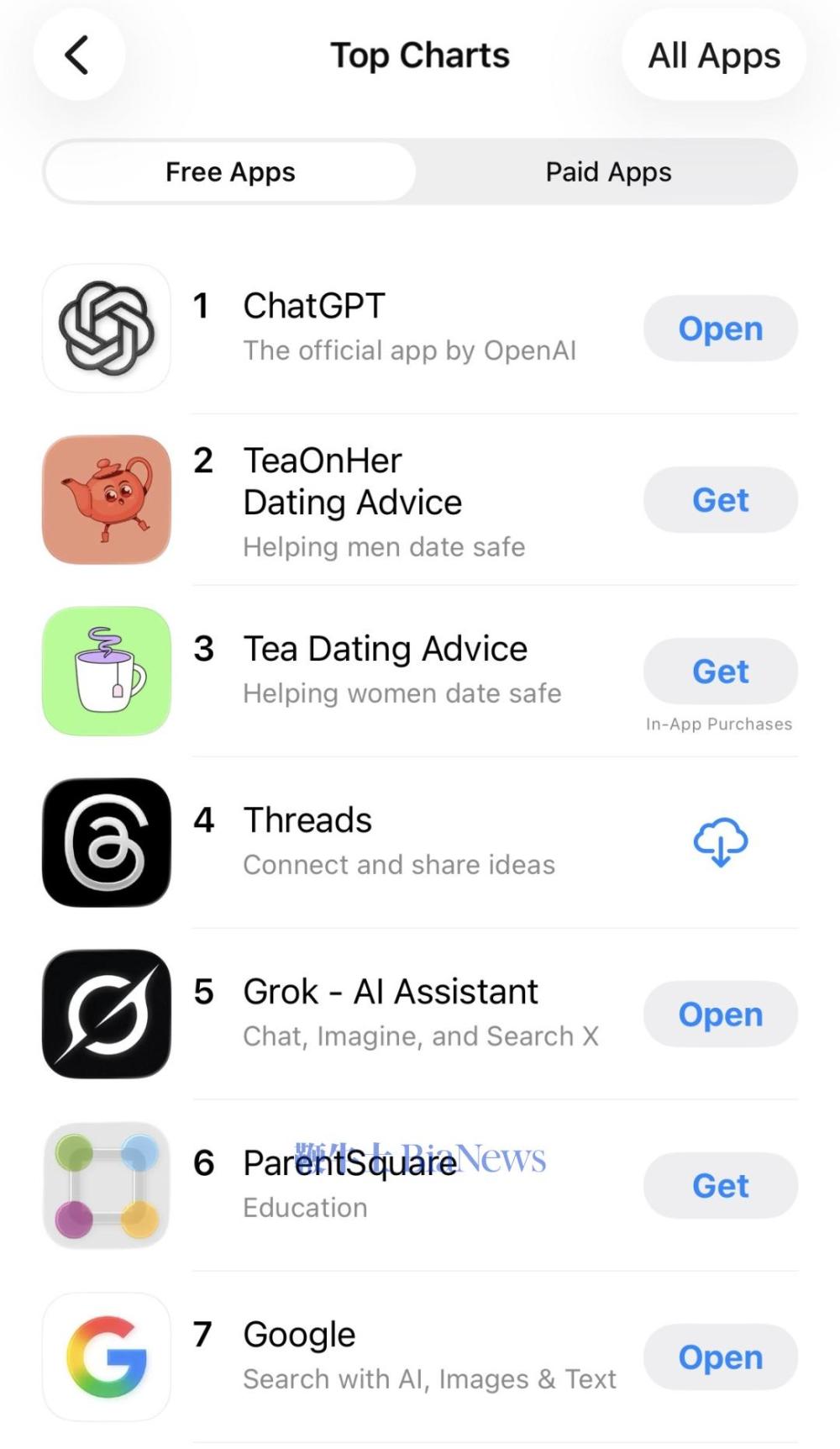
Core Viewpoint - Apple faces significant legal challenges regarding anti-competitive practices in Australia and accusations from Elon Musk regarding bias in its app store [1][2][6] Group 1: Legal Challenges - The Australian Federal Court ruled that Apple and Google engaged in anti-competitive behavior, allowing consumers and app developers to seek compensation [2] - The ruling may significantly impact the operation of digital platforms in Australia, as it highlights the abuse of market dominance by Apple and Google [3] - Apple and Google both expressed disagreement with parts of the court's ruling while welcoming the dismissal of some claims by Epic Games [3] Group 2: Financial Performance - Despite facing multiple antitrust allegations, Apple reported a revenue of $94.036 billion for Q3 of FY2025, a year-on-year increase of approximately 9.63% [4] - Net profit for the same period was $23.434 billion, reflecting a growth of about 9.26% [4] Group 3: Market Reactions - Following the announcement of a $100 billion investment in the U.S., Apple's stock price rose over 13% last week, although it has seen a cumulative decline of over 8% since the beginning of the year [1] - On the day of the news, Apple's stock increased by 1.09%, bringing its market capitalization to $3.41 trillion [1] Group 4: Musk's Accusations - Elon Musk accused Apple of anti-competitive practices by favoring OpenAI in its app store rankings, claiming that his AI startup xAI would take legal action [6] - Musk's xAI model Grok ranks sixth in the U.S. iPhone app store's "Top Free Apps," while ChatGPT ranks first, indicating a competitive challenge [6]

利空来袭!万亿巨头,突发!马斯克,发难!
券商中国· 2025-08-12 23:31
苹果公司,传出两则利空消息! 一是澳大利亚联邦法院最新作出一项判决,裁定苹果和谷歌涉嫌反竞争而违法。上述判决将让澳大利亚的 消费者和应用开发者有机会获得赔偿。 二是全球首富、特斯拉CEO马斯克发出威胁称,苹果应用商店严重偏袒OpenAI的行为违反了反垄断法 规,他旗下的人工智能初创公司xAI将采取法律行动。 周二,美股三大指数均涨超1%,纳指与标普500指数均创历史新高。当天,苹果公司的股价上涨 1.09%,市值报3.41万亿美元。年初以来,苹果公司股价累计跌幅超过8%,大幅跑输美股三大指数。不 过,上周,苹果公司宣布追加1000亿美元在美投资后,股价曾大涨超13%。 涉嫌反竞争违法 据央视新闻消息,澳大利亚联邦法院当地时间8月12日作出一项判决,裁定美国科技巨头苹果和谷歌这两 家公司涉嫌反竞争而违法。 法官裁定这两家公司滥用其市场支配地位运营应用商店的行为违法。其应用商店销售的产品涉及智能手机 应用到电脑游戏等。此判决将让澳大利亚的消费者和应用开发者有机会获得赔偿。 有澳媒分析认为,这项裁决可能会对澳大利亚数字平台的运营方式产生重大影响。 据外媒最新报道,堡垒之夜(Fortnite)游戏开发商Epic Ga ...
AI明星公司Perplexity提议,345亿美元收购谷歌旗下Chrome37/64
美股IPO· 2025-08-12 22:54
Perplexity的报价远高于其自身约180亿美元的估值。包括大型风险投资基金在内的多家投资者已同意全额支持这笔交易。美国地方法官Amit Mehta去 年裁定谷歌非法垄断搜索市场,预计本月将就如何恢复竞争作出裁决。Mehta正在考虑是否迫使谷歌出售Chrome。媒体分析指出,Perplexity的收购 提议可能是在向法官表明,一旦他下令出售,市场上已有潜在买家。 Perplexity成立于2022年,总部位于旧金山,最近向部分用户推出了其自主研发的网页浏览器Comet。Perplexity最为人熟知的是其AI驱动的搜索引擎, 它能为用户提供简明的答案,并链接到网络上的原始来源。 Perplexity正处于生成式AI领域的霸主之争中,包括Meta和OpenAI在内的公司正向顶尖工程师提供高额薪酬和签约奖金。科技巨头每年在AI基础设施上 投入数百亿美元,用于构建大型语言模型并运行庞大的工作负载,而初创公司则从风险投资、对冲基金及科技巨头那里筹集数十亿美元,以支付竞争所 需的硬件与人力成本。 今年早些时候,Meta曾接触Perplexity商谈潜在收购,但双方未能敲定交易。 Perplexity的报价远高于其自 ...
被马斯克指控垄断,苹果正式回应
Feng Huang Wang· 2025-08-12 22:53
苹果在发给彭博社知名记者马克·古尔曼(Mark Gurman)的声明中称:"App Store的设计宗旨是公平且不 带偏见。我们通过排行榜、算法推荐以及专家根据客观标准精心挑选的榜单,向用户推荐数以千计的应 用。" 凤凰网科技讯 北京时间8月13日,据科技网站9to5mac报道,对于埃隆·马斯克(Elon Musk)提出的涉嫌垄 断指控,苹果公司在周二做出了回应。 马斯克周一在X上发帖,指控苹果在App Store排名中偏袒OpenAI,使得除OpenAI之外的任何AI公司都 不可能在App Store登顶,"这显然是一起反垄断违规事件"。马斯克威胁称,xAI将立即采取法律行动。 "我们的目标是为用户提供安全的探索体验,并为开发者创造宝贵的机会,同时与众多伙伴合作,在快 速变化的应用类别中提升应用的曝光度。"苹果称。 马斯克指控App Store垄断 苹果的声明表明,公司正认真对待马斯克的指控,但声明中刻意使用的"安全"一词,则是在影射Grok最 近的争议事件(包括涉及反犹太内容以及发布带有性暗示的聊天机器人伴侣)。在苹果看来,这些争议可 能使Grok失去被推荐资格。(作者/箫雨) ...
Grok遭“差别对待”,马斯克发文批苹果垄断
Huan Qiu Shi Bao· 2025-08-12 22:50
【环球时报综合报道】美国富豪马斯克11日指控苹果公司涉嫌违法。他在社交媒体平台X上发文称:"苹果的行为使得除了OpenAI之外的任何人工 智能公司都不可能在App Store(苹果应用商店)中达到第一,这显然违反了反垄断法。xAI将立即采取法律行动。" 据路透社报道,马斯克此番不满主要聚焦App Store对xAI公司人工智能应用Grok的"区别对待"。马斯克还在X上@苹果App Store,"X作为全球排名 第一的新闻应用,而Grok在所有应用中位居第五,为何二者均未被纳入'必备'专区?你们是在玩政治吗?" CNBC报道称,这并非苹果与马斯克之间的首次冲突。2024年,苹果就与OpenAI达成合作,将后者旗下的人工智能应用ChatGPT整合至苹果的多 种类型产品中。消息一出,马斯克便放言:"如果苹果在操作系统层面集成OpenAI,那么我的公司将禁用苹果设备。这是不可接受的安全违规行 为。" 就在此次对苹果提出法律"威胁"前,马斯克还高调庆祝Grok超越谷歌,在苹果商店免费应用榜单中攀升至第5位。当前,ChatGPT稳坐该榜单榜 首,且是"必备应用"专区内唯一的人工智能聊天软件,这种优势地位进一步激化了马斯克 ...