科技成果转化

Search documents
阿里又做LP了
3 6 Ke· 2025-08-01 03:27
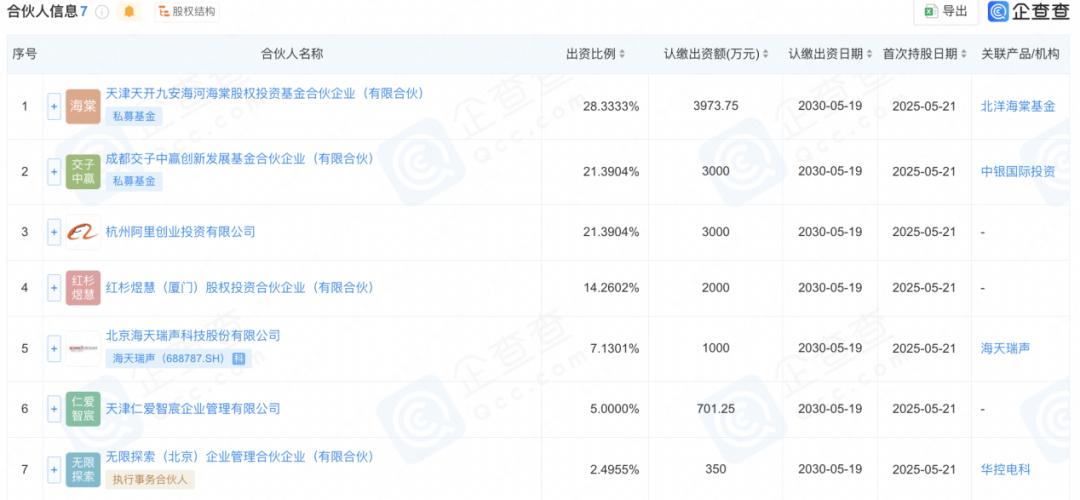
Core Viewpoint - Alibaba has invested in a new fund, Infinite Exploration, which is closely associated with Tsinghua University, indicating a strategic focus on early-stage projects from academic institutions [1][5][6]. Group 1: Fund Details - The newly established fund, Infinite Horizon Haihe (Tianjin) Venture Capital Partnership, has a total investment amount of 140 million yuan (approximately 21 million USD) and focuses on equity investment, venture capital, and investment management [2]. - The fund's LP (Limited Partner) lineup includes notable investors such as Tianjin Tiankai Jiuan Haihe Haitang Equity Investment Fund, Alibaba Venture Capital, Sequoia Yuhui (Xiamen) Equity Investment Partnership, and Beijing Haitiansheng Technology Co., Ltd. [2][3]. Group 2: Investment Strategy - Alibaba's participation as an LP is significant, as it aims to collaborate with universities to target the source of technological innovation [6][8]. - The fund's major LP, Tianjin Tiankai Jiuan, is backed by alumni entrepreneurs from Tianjin University and focuses on investing in hard technology projects related to the university [3][5]. Group 3: Market Context - The involvement of market-oriented LPs like Alibaba is crucial for the venture capital and private equity landscape, especially as traditional LPs have become more cautious in their investments [7]. - The trend of universities and listed companies collaborating in the venture capital space is growing, with many institutions actively seeking to commercialize their technological innovations [8].


中科润美董事长王晓波:正向研发破局 锻造高端装备“隐形铠甲”
Zhong Guo Zheng Quan Bao· 2025-07-31 23:07
Core Viewpoint - The article highlights the importance of lubrication materials in the operation of high-end equipment, emphasizing the need for domestic innovation to break the long-standing foreign monopoly in this sector [1][2]. Group 1: Company Overview - Zhongke Runmei, founded by Wang Xiaobo in 2010, aims to transform scientific research into practical applications in the lubrication materials market, which has been dominated by foreign brands [2][4]. - The company has developed a range of high-performance lubricants, achieving significant market penetration, particularly in sectors like wind power and rail transportation [3][7]. Group 2: Technological Innovation - The company focuses on "forward research and development," emphasizing the need for innovative approaches to meet the specific requirements of high-end equipment [2][3]. - Zhongke Runmei has developed environmentally friendly synthetic base oils that match the performance of international brands while offering differentiated features [3][5]. Group 3: Market Strategy - The company has successfully increased its market share in niche segments, such as high-temperature chain lubricants, achieving over 40% market share in this area by the end of 2024 [7]. - Wang Xiaobo stresses the importance of balancing high performance with cost-effectiveness to ensure successful market adoption of their products [4][6]. Group 4: Future Outlook - The company anticipates steady growth in the high-end equipment sector, driven by technological upgrades and increased demand for advanced lubrication solutions [8]. - Zhongke Runmei plans to focus on emerging markets such as electric vehicles and robotics, aiming to develop high-performance lubricants tailored to these industries [8].
锚定融合让创新势能化为经济动能
Jing Ji Ri Bao· 2025-07-30 22:23
深度融合的途径是促进科技成果转化,重点是消除体制机制障碍。从源头看,当前"重研究、轻市 场""重论文、轻应用"现象普遍存在,部分科研经费仅在科研系统里打转,科研成果对产业发展的支撑 力有待加强。从渠道看,我国从应用技术向产品转化的能力较强,但从基础研究向应用技术转化的能力 较弱,从科学到技术、再从技术到产品的完整创新链条传导不畅。从需求侧看,以企业需求为导向的产 学研合作机制仍未完全建立,科技成果转移转化尚缺乏价值基础。解决这些问题,都需要在完善科技成 果转化机制上下功夫,消除创新链条中存在的堵点卡点。 促进科技创新和产业创新深度融合,要改变以往科技与产业部门分割的状态,促进"在科技成果上长产 业、在产业发展中谋创新"的良性互动。一是突出市场需求导向,倒逼上游研发创新。强化企业对国家 重大科技任务、重大战略项目的咨询作用,汇集企业技术创新需求,引导上游基础研究活动。改革科研 评价机制,可考虑将承担企业研发任务并取得市场效益作为科研评价的重要指标。二是培育优质企业, 夯实企业创新主体地位。加大力度培育专精特新"小巨人"、制造业单项冠军等优质企业,形成多元创新 主体互促成长的良好局面。提升行业龙头企业科技实力和辐 ...
科技部:持续提升科技成果转化成效
Xin Hua Wang· 2025-07-29 20:57
新华社北京7月28日电(记者温竞华)科技部七司副司长秦浩源在新华社28日推出的"中国经济圆桌 会"大型全媒体访谈节目中表示,科技部将不断健全国家技术转移体系,深化职务科技成果赋权改革, 建立职务科技成果资产单列管理制度,持续提升科技成果转化成效。 "推动科技创新和产业创新深度融合,关键是及时将科技创新成果转化应用到具体产业和产业链 上。"秦浩源说,当前,科技成果转化仍存在对高校院所高质量科技成果创造和转化激励不足、职务科 技成果国有资产管理模式与科技成果转化规律不适应等问题。 职务科技成果资产单列管理改革试点带动上海、浙江、陕西等17个省份开展改革探索,已有10个省 份明确,科技成果作价投资形成的国有股权不纳入国有资产保值增值管理考核范围。科技成果评价改革 试点在探索成果多元评价体系、完善市场化评价机制等方面,探索形成了一批典型举措。 秦浩源说,下一步,科技部将继续深化科技成果转化机制改革,加快推进概念验证、中试验证平台 建设;通过产权激励激发科研人员成果转化的积极性;解除不符合科技成果转化规律的国资管理束缚; 协调推动重大科研成果示范应用,做优做强国家科技成果转移转化示范区。 职务科技成果赋权改革试点三年间 ...
合生生物完成数千万元Pre-A轮融资,创始人刘斌为南开大学教授
Sou Hu Cai Jing· 2025-07-29 12:27
Group 1 - Tianjin Hesheng Biotechnology Co., Ltd. completed a Pre-A round financing of several tens of millions, led by Bohai Chuangfu Securities Investment Co., Ltd. with participation from Tianjin Haitai Haihe Biomedical Industry Fund and Tianjin Kechuang Angel Investment Co., Ltd. [1] - The company was established in August 2023 and is one of the major technology transfer enterprises of Nankai University, focusing on the functional application research of human milk oligosaccharides (HMOs) [1]. - The founder of the company is Professor Liu Bin from Nankai University, who established the first domestic biosynthesis technology for human milk oligosaccharides in 2016, achieving a breakthrough from "0 to 1" [1]. Group 2 - The company has obtained invention patents for various industrial strains including 2'-FL, 3-FL, 3'-SL, 6'-SL, LNT, LNnT, DFL, and LNFP I, and plans to apply for more than ten additional invention patents [1]. - The HMOs produced by the company have completed small-scale, pilot, and large-scale production, with a product purity of 98.98%, significantly exceeding domestic and international quality standards [1]. - The registered capital of the company is 9.3563 million, with major shareholders including FENG. LU (38.01%), Wang Shuo (16.16%), and Tianjin Nankai University Asset Management Co., Ltd. (10.69%) [2].

发起“百亿天使基金”,为早期科创项目注入资本活水
Sou Hu Cai Jing· 2025-07-29 03:24
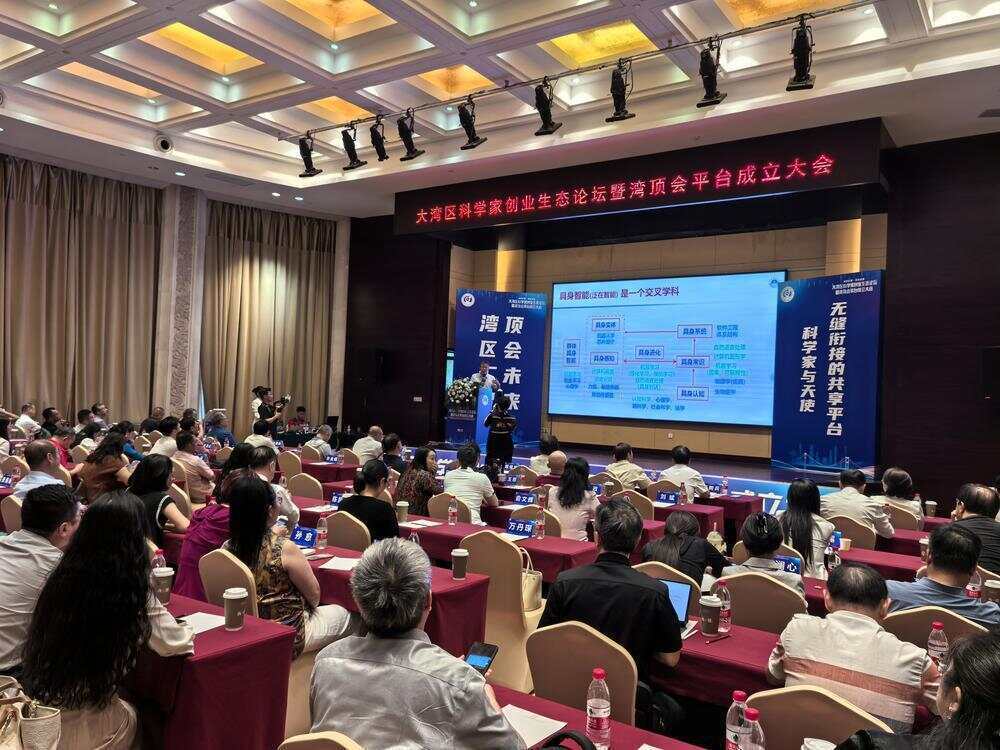
Core Viewpoint - The establishment of the "Bay Area Summit Platform" aims to address the bottlenecks in the transformation of scientific and technological achievements and to build a new ecosystem for innovation in the Greater Bay Area [1][3]. Group 1: Challenges in Technology Transfer - China has become a leading innovative country, but the transformation of scientific achievements faces multiple challenges, including a lack of collaborative mechanisms, insufficient angel investors for early-stage financing, and scientists lacking business operation skills [3]. - Traditional enterprises are eager to connect with cutting-edge technologies but struggle to find pathways to do so [3]. Group 2: Bay Summit Platform Initiatives - The Bay Summit Industry Innovation Center is established in Guangzhou, focusing on "supporting scientists' entrepreneurship and cultivating strategic emerging and future industries" [3]. - The platform will regularly conduct achievement exhibitions, project roadshows, and innovation activities to break down information barriers and ensure precise matching of innovation needs and resource supply [3]. - It will provide comprehensive services from "technology incubation" to "industrial landing," including angel training, fund initiation, investment matchmaking, and operation of technology parks [3]. Group 3: Funding and Collaboration - The Bay Summit announced the establishment of a "100 Billion Angel Fund" to inject capital into early-stage scientific innovation projects [4]. - The launch of the "Hundred Associations Supporting Hundred Scientists Entrepreneurship Action Plan" aims to link industry chain resources, with 13 units signing ecological cooperation agreements to form a cross-field collaborative network [4]. Group 4: Vision for the Future - The founder of the Bay Summit, Feng Hongliang, emphasized the goal of creating a complete ecosystem that allows every scientist's innovative value to be recognized, empowered, and amplified [5].
江苏修订法规促科技成果转化
Xin Hua Ri Bao· 2025-07-28 21:12
Group 1 - The core viewpoint of the article is the revision of the "Jiangsu Province Promotion of Technology Achievement Transformation Regulations" aims to enhance the autonomy of researchers and improve the motivation for various parties to participate in technology transformation [1][2] - The revision emphasizes the importance of respecting and protecting the legitimate rights and interests of all parties involved in technology transformation, particularly through empowering researchers and clarifying the autonomy of achievement completion units [1][2] - The revised regulations include provisions for the distribution of rewards and compensation for technology achievements, allowing completion units to set or agree on the method, amount, and duration of rewards without being limited by total salary or performance pay [1][2] Group 2 - The revision strengthens the implementation of technology achievement transformation by clarifying the methods for holders to transform their achievements and supporting enterprises in increasing investment to establish R&D institutions [2] - It supports research institutions and universities in licensing technology achievements to small and medium-sized enterprises (SMEs) on a pay-after-use basis, addressing the challenges SMEs face in R&D capabilities and technology transformation [2] - The revision aims to establish a comprehensive service system for technology achievement transformation, leveraging Jiangsu's rich educational and scientific resources, including the establishment of technology transfer centers and innovation platforms [2] Group 3 - The revised regulations require research institutions and universities to establish favorable talent assessment and classification evaluation systems to promote transformation, and to recognize the rights and obligations of personnel engaged in technology transformation activities [3] - It mandates the establishment of a performance evaluation system by financial and technological departments that considers technology transformation outcomes as a key evaluation criterion for relevant units and personnel [3] - The draft also introduces a mechanism for error tolerance and correction to foster an innovative environment, ensuring that responsible individuals are not negatively evaluated for reasonable mistakes made during technology transformation activities [3]
强化技术要素市场建设 助力科技成果转化提质增效
Zhong Guo Zheng Quan Bao· 2025-07-27 21:07
Core Viewpoint - The Shanghai Technology Exchange aims to enhance the efficiency and probability of technology transfer by establishing a comprehensive service system for rights confirmation, valuation, and transaction flow [1]. Group 1: Market Overview - The Shanghai Technology Exchange, established in 1993, has achieved a transaction volume of approximately 760 billion yuan, with over 13,000 technology achievements primarily in electronic information, biomedicine, and advanced manufacturing [1]. - The exchange anticipates that the transaction volume will exceed 1 trillion yuan by the end of the year, driven by increased societal emphasis on technology transfer and the development of national technology factor trading markets [1]. Group 2: Challenges in Technology Trading - The current volume of on-site transactions is relatively small compared to off-site transactions, primarily due to the information asymmetry in the market and the incomplete establishment of registration and ownership systems [2]. - Key challenges in technology transfer include rights confirmation and valuation, which are critical for reducing transaction costs and ensuring the protection of rights [2][3]. Group 3: Valuation and Pricing - Valuing technology is complex and cannot rely on a single dimension; multiple factors such as data, models, scenarios, and processes must be considered to ensure scientific and fair assessments [3]. - The Shanghai Technology Exchange has facilitated the first biopharmaceutical pipeline pledge financing in Shanghai, transforming intellectual property into assets through a structured valuation process [3][4]. Group 4: Development of Technology Factor Market - The technology factor market is one of the five major factor markets, and a vibrant technology trading market is essential for securing early-stage technology investments [5]. - The exchange aims to strengthen the construction and development of technology trading venues to promote the trading and transformation of technological achievements [5]. Group 5: Talent and Infrastructure - There is a shortage of talent in technology trading, particularly individuals who understand technology, industry, capital, and law, necessitating accelerated talent development and improved digital infrastructure [6].
近3年“800+”!宁夏发布科技成果引进转化成绩
Huan Qiu Wang Zi Xun· 2025-07-27 02:50
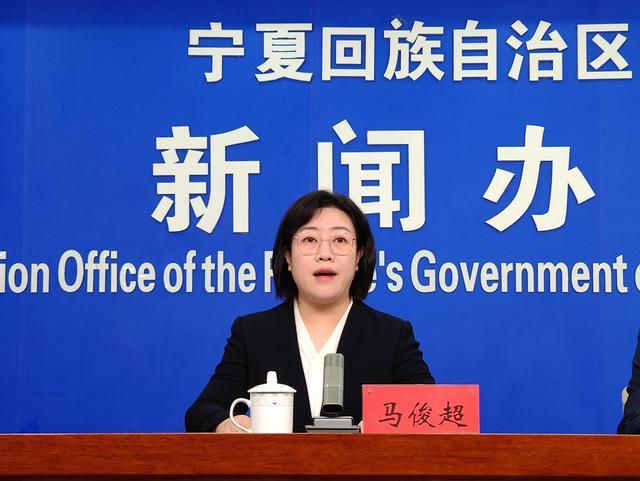
Core Viewpoint - Ningxia has successfully introduced and transformed over 800 technological achievements in the past three years, enhancing its technological innovation capabilities [1][3]. Group 1: Technological Achievements - Shandong Weipu New Material Technology Co., Ltd. has developed a natural gas hydrate inhibitor with independent intellectual property rights by utilizing the pilot base in the Ningdong Energy and Chemical Base [1]. - Ningxia Zhangyu Longyu and Yuma International wineries have introduced a high-activity wine yeast fermentation agent technology from Northwest A&F University, filling a gap in the region [1]. - Shizuishan Mining Group has achieved a dioxin decomposition rate of over 99.9% by introducing solid waste resource utilization technologies from Central South University [1]. - Ningxia Transportation Investment Group has reduced construction costs by over 150,000 yuan per kilometer and shortened construction time by 50% on the G85 Silver-Kun Highway through the transformation of core technologies from Tongji University [1]. Group 2: Policy and Support - The Ningxia government has prioritized the transformation of technological achievements, implementing policies to build a technology innovation system focused on achievement transfer [3]. - Over 2,000 East-West technology cooperation projects have been organized, resulting in significant innovations in equipment manufacturing, new materials, and biological breeding [3]. - Jiangsu, Shanghai, and Shandong have established demonstration projects for collaborative innovation with Ningxia, while the Chinese Academy of Engineering has set up a strategic research institute in Ningxia [3]. Group 3: Infrastructure and Talent Development - Ningxia is actively building platforms for technology transfer, with four pilot platforms selected as key cultivation projects by the Ministry of Industry and Information Technology [3]. - The establishment of the Ningxia Technology Market and branch offices of 17 technology transfer units from outside the region has been completed [3]. - Nearly 500 technology managers have been trained at the National Technology Transfer Talent Training Base established at Ningxia Vocational Technical University [4]. - Annual innovation and entrepreneurship competitions are held to facilitate precise matching between the demand and supply of technological achievements [4].
大湾区科学论坛走进港科大(广州) 促科技成果转化对接
Huan Qiu Wang Zi Xun· 2025-07-25 12:32
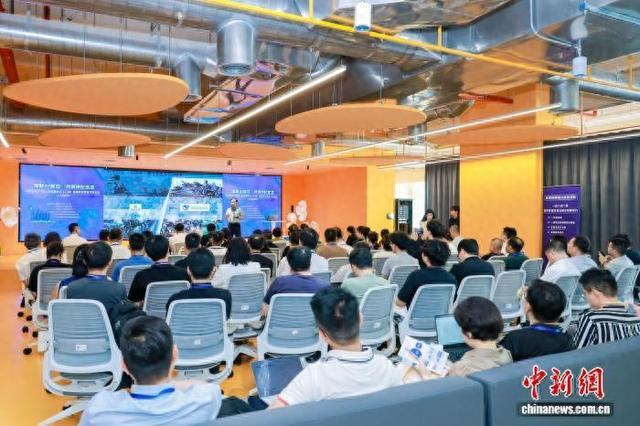
Group 1 - The event "Exploring AI Frontiers: Building a Transformation Ecosystem" aims to accelerate the transformation and application of AI technology in the Guangdong-Hong Kong-Macao Greater Bay Area, promoting deep integration of technological innovation and industry [1][2] - Over 70 entrepreneurs, investors, and technical managers from various sectors, including listed companies, state-owned enterprises, and high-tech firms, participated in the event to foster technology transfer and enhance the synergy between academia and industry [2][3] - Professor Xiong Hui from Hong Kong University of Science and Technology (Guangzhou) highlighted that the widespread application of AI large models is changing the global technology competition landscape, with China holding a leading position in open-source development and talent reserves [3][4] Group 2 - The event featured presentations from five research teams at Hong Kong University of Science and Technology (Guangzhou), showcasing breakthroughs in AI, focusing on areas such as multimodal interaction and intelligent system development, which are essential for market demand [3][4] - The university promotes the industrialization of scientific achievements through collaborations with enterprises, including the establishment of joint laboratories, supporting innovation in sectors like education, healthcare, and design [4] - A unique "Five-way Connection" segment was introduced, allowing direct interaction among university research teams, enterprise representatives, technical managers, investment institutions, and university startup project representatives to explore collaboration opportunities [4][5]