
债务重组

Search documents
融创中国归来 重启地产开发业务
Bei Jing Shang Bao· 2026-01-25 17:25
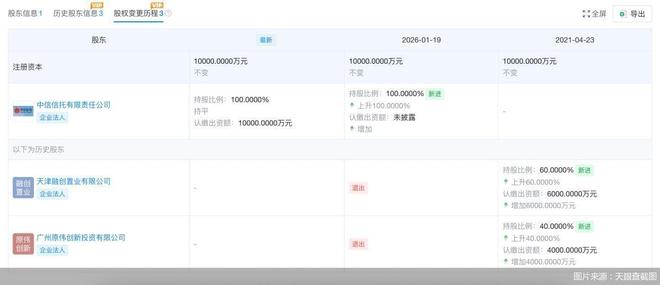
随着债务重组的完成,融创中国的经营修复已迈入业务重启的实质性阶段。1月25日,北京商报记者了 解到,融创中国位于天津的梅江地块项目近期已完成开发主体的股权变更,并由中信信托全面接手。据 知情人士透露,该项目开发公司"天津融创致成"的股权已于2026年1月19日发生变更。原股东全部退 出,中信信托以全资股东身份入场,实现了对项目公司的完全控制。这标志着融创中国在获得中信体 系"全周期、全链条"支持后,首个重大合作项目已进入落地执行环节,也被视为融创中国穿越债务周 期、恢复正常经营的关键一步。 作为曾经以激进并购快速扩张的行业巨头,融创中国于2022年5月公开债务违约。在创始人孙宏斌的带 领下,目前融创中国已完成包括境内债重组、近600亿元债务压降以及境外债"债转股"等一系列操作。 随着2025年孙宏斌两度公开现身并传递聚焦业务的信号,融创中国的经营重心正从风险化解转向常态运 营。 标志性项目重启 1月25日,北京商报记者获悉,融创中国与中信集团合作重启的天津梅江地块,其项目开发主体"天津融 创致成"已于2026年1月19日完成股权变更。原股东全部退出,中信信托以全资股东身份入场,实现对项 目公司的完全控制。这标 ...
融创中国归来,重启地产开发业务
Bei Jing Shang Bao· 2026-01-25 09:23
随着债务重组的完成,融创中国的经营修复已迈入业务重启的实质性阶段。1月25日,北京商报记者了 解到,融创中国位于天津的梅江地块项目近期已完成开发主体的股权变更,并由中信信托全面接手。据 知情人士透露,该项目开发公司"天津融创致成"的股权已于2026年1月19日发生变更。原股东全部退 出,中信信托以全资股东身份入场,实现了对项目公司的完全控制。这标志着融创中国在获得中信体 系"全周期、全链条"支持后,首个重大合作项目已进入落地执行环节,也被视为融创中国穿越债务周 期、恢复正常经营的关键一步。 作为曾经以激进并购快速扩张的行业巨头,融创中国于2022年5月公开债务违约。在创始人孙宏斌的带 领下,目前融创中国已完成包括境内债重组、近600亿元债务压降以及境外债"债转股"等一系列操作。 随着2025年孙宏斌两度公开现身并传递聚焦业务的信号,融创中国的经营重心正从风险化解转向常态运 营。 标志性项目重启 1月25日,北京商报记者获悉,融创中国与中信集团合作重启的天津梅江地块,其项目开发主体"天津融 创致成"已于2026年1月19日完成股权变更。原股东全部退出,中信信托以全资股东身份入场,实现对项 目公司的完全控制。这标 ...

一资产评估公司收警示函!涉东方雨虹债务重组
梧桐树下V· 2026-01-24 06:05
文/梧桐小编 北京中评正信资产评估有限公司及丁颖、红叶: 根据《中华人民共和国证券法》有关规定,我局对你们执行的北京东方雨虹防水技术股份有限公司(以下简称东方雨虹)债务重组涉及的房地产资产评估项目(中 评正信评报字〔2024〕236号)进行了检查。经查,你们在执业中存在以下问题: 1.资产评估基准日至资产评估报告日之间出售房产的成交价与评估价存在差异,你们未说明评估价不予调整的原因并分析合理性。 2.市场法评估房产的修正因素考虑不全面,部分因素修正系数取值不合理。一是部分待估房产未对面积因素之外的其他因素进行修正。二是未考虑宽深比、层 高、成新率、权益状况等修正因素。三是"面积因素修正系数"标准不统一。 3.《资产评估说明》中未见地价定义、利用状况和规划条件等重要事项说明,待估土地使用权容积率设定依据不充分。 4.市场法评估土地使用权的可比案例选取和修正系数取值不合理。一是可比案例与待估土地使用权的容积率、土地使用年限等因素存在较大差异,案例选取不 恰当。二是待估土地使用权"剩余使用年限修正系数"存在误算,"容积率修正系数"取值错误。 5.工作底稿记录不规范。一是未分析和说明待估土地使用权形状评估判断为"较规 ...

山东墨龙石油机械股份有限公司2026年第一次临时股东会决议公告
Shang Hai Zheng Quan Bao· 2026-01-23 19:08
登录新浪财经APP 搜索【信披】查看更多考评等级 证券代码:002490 证券简称:山东墨龙 公告编号:2026-001 山东墨龙石油机械股份有限公司 2026年第一次临时股东会决议公告 本公司及董事会全体成员保证信息披露的内容真实、准确、完整,没有虚假记载、误导性陈述或重大遗 漏。 特别提示: 1、本次股东会未出现否决议案的情形; 2、本次股东会不涉及变更以往股东会已通过的决议的情形。 一、会议召开基本情况 1、召开时间: 现场会议:2026年1月23日(星期五)14:00 网络投票:采用深圳证券交易所交易系统投票的时间为2026年1月23日9:15一9:25,9:30一11:30和13:00 一15:00;采用深圳证券交易所互联网投票系统(http://wltp.cninfo.com.cn)的时间为2026年1月23日9:15 一15:00 2、召开地点:山东省寿光市文圣街999号公司会议室 5、主持人:公司董事长韩高贵先生 3、召开方式:现场表决与网络投票相结合的方式 4、召集人:公司董事会 6、会议召开的合法、合规性:本次会议的召开符合《中华人民共和国公司法》(以下简称"《公司 法》")《上市公司股东 ...

中威电子(300270.SZ):预计2025年亏损5500万元-7500万元
Ge Long Hui A P P· 2026-01-23 08:17
Core Viewpoint - The company Zhongwei Electronics (300270.SZ) is expected to report a loss of 55 million to 75 million yuan in 2025, with a non-recurring loss of 65 million to 90 million yuan and an operating revenue of 160 million to 200 million yuan [1] Financial Performance - The net profit attributable to shareholders remains a loss during the reporting period, primarily due to: (1) Accounts receivable collections falling short of expectations, leading to continued credit impairment losses; (2) Although management and sales expenses have decreased significantly compared to the previous year, they are insufficient to offset the impact of credit impairment losses on profits [1] - The impact of non-recurring gains and losses on the company's net profit for the reporting period is approximately 10.77 million yuan, compared to 8.46 million yuan in the same period last year [1] - The company recognized an investment gain of 4.23 million yuan from a debt restructuring with Hebei Chichang Electronics Technology Co., Ltd. during the current year [1]

中威电子:预计2025年亏损5500万元-7500万元
Ge Long Hui· 2026-01-23 08:15
1、报告期内,公司归属于上市公司股东的净利润仍为亏损,主要原因:(1)应收款项回款不及预期, 持续计提信用减值损失;(2)管理费用和销售费用较上年虽下降较多,不能弥补信用减值损失计提对 利润的影响。2、报告期内,公司非经常性损益对公司净利润的影响金额约为1,077万元,上年同期非经 常性损益对公司净利润的影响金额为846.11万元。其中,本年度公司与河北驰畅电子科技有限公司发生 债务重组,公司确认投资损益423.49万元。 格隆汇1月23日丨中威电子(300270.SZ)公布,预计2025年亏损5500万元-7500万元,扣非亏损6500万 元-9000万元,营业收入16,000万元-20,000万元。 ...
是 “救命稻草”,还是 “最后一根稻草”?警惕债务重组盯上“体面人”
Xin Lang Cai Jing· 2026-01-23 07:57
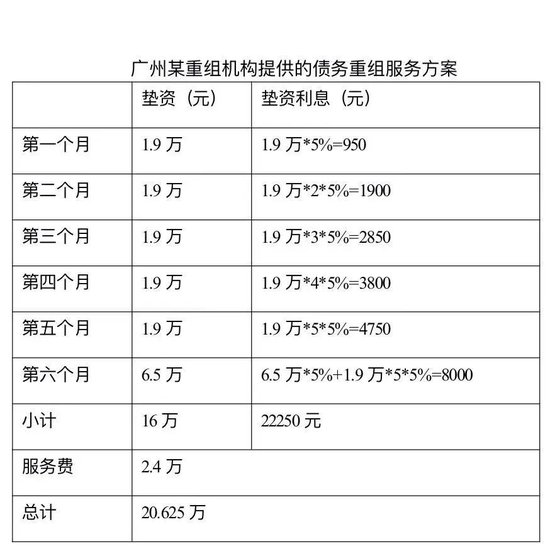
Core Viewpoint - The article highlights the emergence of gray financial services disguised as "debt restructuring" and "credit optimization," which exploit individuals' financial distress and often lead to high-interest loans disguised as legitimate financial products [1][9]. Group 1: Debt Restructuring Services - Debt restructuring services are marketed as a way to consolidate high-interest loans into lower-interest bank loans, with rates advertised between 3% to 4% compared to existing rates around 24% [2][11]. - The restructuring process typically involves an initial loan from a funding party to pay off existing debts, followed by a period of "credit nurturing" before applying for a bank loan [2][12]. - Actual costs associated with these services can be significantly higher than advertised, with daily interest rates on the initial loans ranging from 0.1% to 0.3%, leading to annualized rates as high as 73% [3][12]. Group 2: Client Targeting and Marketing Tactics - The services primarily target "decent" clients with stable incomes and good credit histories, leveraging their desire to maintain a good reputation [4][13]. - Many advertisements on social media promote success stories of clients who have "successfully restructured" their debts, creating a false sense of security among potential customers [4][13]. - However, clients often find that the promised low-interest loans are not approved as expected, leading to additional fees and complications [4][14]. Group 3: Legal and Regulatory Concerns - The contracts used by these restructuring services often contain hidden clauses that can lead to borrowers unknowingly entering into high-interest loans that exceed legal limits [7][16]. - There is a risk of criminal liability for borrowers who misrepresent the purpose of loans obtained through these services, as they may be seen as committing loan fraud [7][16]. - Regulatory bodies have begun to take action against these practices, with significant law enforcement efforts resulting in the dismantling of numerous illegal operations [8][17].
US control of Venezuela oil risks debt restructuring showdown with China
Reuters· 2026-01-23 06:02
Core Insights - U.S. control over Venezuela's oil exports has impacted barrels that were intended to service debt obligations to China, indicating a potential escalation in tensions between the U.S. and China [1] Group 1: U.S. and Venezuela Oil Exports - The U.S. has exerted control over Venezuela's oil exports, which has led to complications in servicing debts owed to China [1] - This situation may lead to a confrontation between the U.S. and China, further complicating the geopolitical landscape [1]

ST德豪2026年1月23日涨停分析:治理优化+资产处置+债务重组
Xin Lang Cai Jing· 2026-01-23 06:01
Core Viewpoint - ST Dehao (SZ002005) experienced a trading limit increase of 5.02% to a price of 3.14 yuan, with a total market capitalization of 5.503 billion yuan, attributed to governance optimization, asset disposal, and debt restructuring [1] Group 1: Governance Optimization - The company is undergoing governance optimization and business adjustment, with a large-scale revision of 36 management systems and a streamlined board of directors, which is expected to enhance decision-making efficiency [1] - The complete optimization of the governance structure brings positive expectations for the company's development [1] Group 2: Asset Disposal - The company disposed of idle assets in Dalian, generating a profit of 109.7 million yuan, which improved current profits [1] Group 3: Debt Restructuring - A subsidiary reached a settlement with creditors, resulting in a debt restructuring gain of 22.32 million yuan, alleviating the company's debt burden [1] - The company also utilized 90 million yuan of idle funds for financial management, improving capital efficiency and cash flow management [1] Group 4: Market Performance - On the day of the trading limit increase, some stocks in the ST sector showed unusual movements, with capital inflow into the sector, potentially influencing ST Dehao [1] - Technically, after a period of adjustment, the stock price may have shown positive signals, attracting attention from technical investors [1]

十五五期间,中国银行业如何处置房地产不良资产
Sou Hu Cai Jing· 2026-01-22 08:20
Core Viewpoint - The article emphasizes the need for a comprehensive system to address non-performing real estate assets in China's banking sector during the 14th Five-Year Plan period (2026-2030), focusing on market-oriented, professional, legal, and social approaches, while drawing lessons from successful experiences in the US, Japan, South Korea, and Ireland [1]. Group 1: Policy Recommendations for Asset Disposal - Establish a national joint conference for the disposal of real estate non-performing assets, led by the Ministry of Finance, involving key financial and regulatory bodies, with a mandate for the four major Asset Management Companies (AMCs) to acquire and manage these assets [1]. - The Ministry of Finance will inject 500 billion yuan into each of the four major AMCs to facilitate the acquisition of non-performing real estate assets, with a target of acquiring at least 3 million units within three years [1]. - Create a cooperative mechanism between AMCs and local governments, establishing a special fund of approximately 2 trillion yuan to support the "guarantee delivery" of housing projects and the revitalization of quality assets [1]. Group 2: Legal and Policy Framework - Introduce a specific legislative framework for the disposal of non-performing real estate assets, including clear pricing rules and streamlined judicial processes to reduce disposal time from 18-24 months to 6-8 months [3]. - Implement differentiated tax incentives, including a 50%-100% reduction in taxes related to the disposal of non-performing assets, to lower costs and attract market participation [3]. - Establish a unified national real estate mortgage registration platform to enhance transparency and simplify property transfer processes [3]. Group 3: Market-Oriented Disposal Tools - Promote bulk transfers and asset securitization, expanding the scale of real estate asset securitization to attract long-term capital from insurance and pension funds [4]. - Develop a combination model of "debt restructuring + asset development" to support quality developers and revive stalled projects [4]. - Introduce international advanced disposal tools and experiences, including a fixed price plus performance sharing model to incentivize asset value enhancement [4]. Group 4: Targeted Risk Mitigation Strategies - Differentiate disposal strategies for developers based on risk levels, employing rapid recovery methods for high-risk assets and supportive measures for medium-risk assets [5]. - Implement humane solutions for individual housing loan defaults, prioritizing non-judicial methods and providing debt relief options for families in distress [5]. - Enhance the value of commercial real estate through transformation and professional management, utilizing asset securitization for efficient exits [5]. Group 5: Risk Prevention and Long-term Mechanisms - Establish a comprehensive risk management system for real estate loans, limiting concentration ratios for banks to prevent excessive risk accumulation [6]. - Encourage financial innovation in real estate, such as developing Real Estate Investment Trusts (REITs) to reduce reliance on bank credit [6]. - Create a monitoring and early warning mechanism for real estate market risks, including a risk indicator system to prevent risk accumulation [6]. Group 6: Balancing Financial Stability and Social Welfare - Prioritize the "guarantee delivery" of housing projects, establishing a collaborative mechanism among government, banks, developers, and contractors to protect buyers' rights [7]. - Guide the banking sector towards supporting affordable housing and new real estate development models, reducing reliance on traditional development loans [7]. - Allocate 30% of net proceeds from the disposal of non-performing assets to a housing security fund to support affordable rental housing and subsidies for struggling families [7].
