征信洗白

Search documents
别在直播间找“救星”
Bei Jing Shang Bao· 2026-02-08 15:57
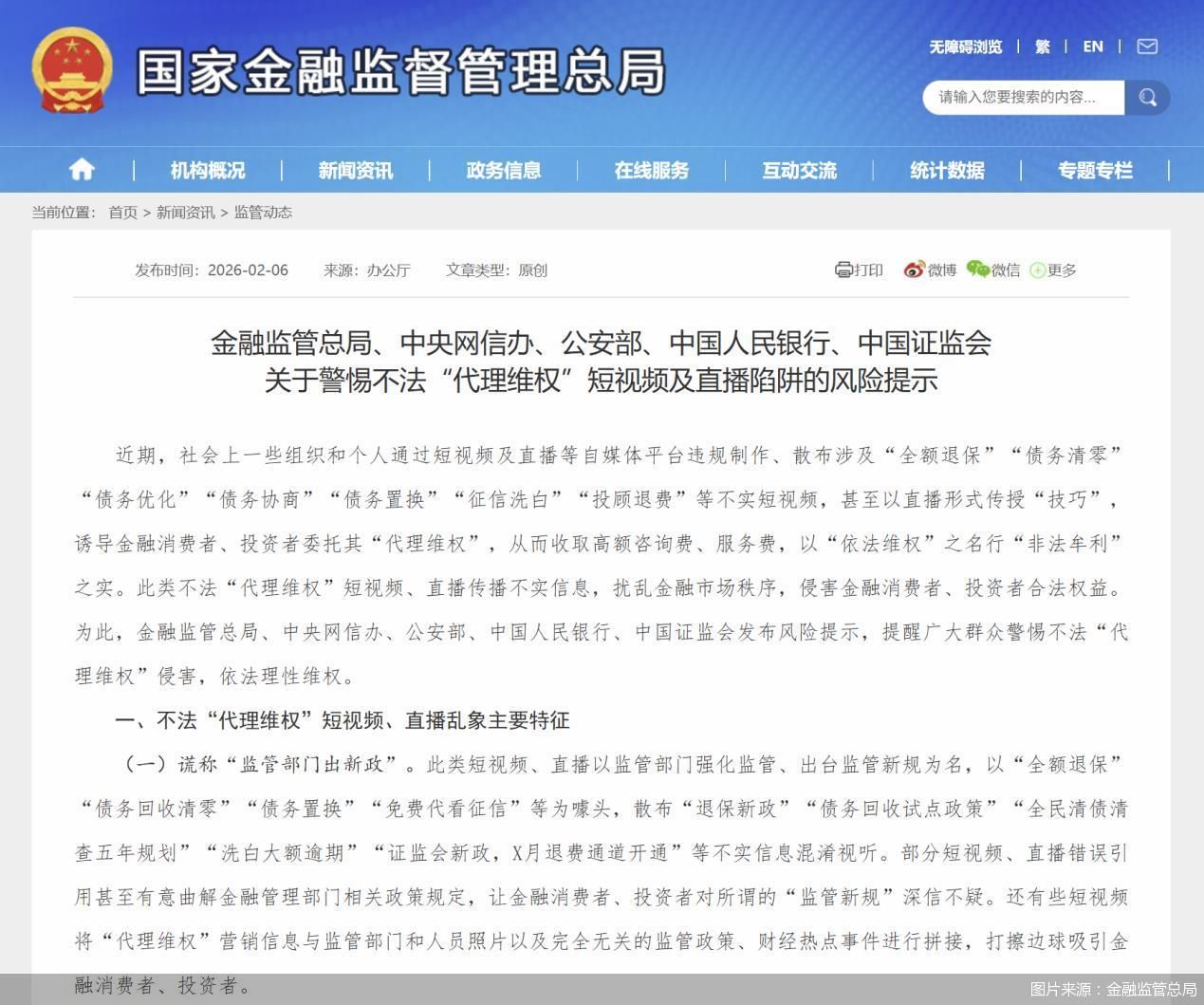
Core Viewpoint - The article highlights the rise of illegal "proxy rights protection" schemes that exploit financial consumers through misleading advertisements and false promises, prompting regulatory bodies to issue warnings against such practices [1][3][10]. Group 1: Regulatory Response - On February 6, multiple regulatory bodies including the Financial Regulatory Bureau and the People's Bank of China issued a risk warning against illegal "proxy rights protection" schemes, emphasizing their disruptive impact on the financial market and consumer rights [1][3]. - Financial institutions are actively publishing warnings about illegal "proxy rights protection" to guide consumers towards legitimate channels for rights protection [10][11]. Group 2: Characteristics of Illegal Practices - The core issues of illegal "proxy rights protection" are concentrated on social media platforms, where false information and disguised professional identities are used to lure consumers into paying high consultation fees [3][6]. - Common tactics include fabricating regulatory updates and misleading claims about debt recovery and credit repair, which confuse consumers and lead them to believe in non-existent policies [3][4]. Group 3: Consumer Vulnerability - The emergence of illegal "proxy rights protection" is rooted in the information asymmetry and anxiety of financial consumers, who often seek quick solutions to disputes with financial institutions [6][12]. - Many consumers are misled by promises of "full refund" or "debt clearance," which creates opportunities for fraudsters to exploit their desperation [6][12]. Group 4: Online Evolution of Fraud - The shift from offline to online platforms has allowed illegal "proxy rights protection" schemes to scale up and diversify, utilizing short videos and live streams for broader reach and lower costs [6][10]. - These platforms enable real-time interaction and targeted persuasion, significantly enhancing the effectiveness of fraudulent marketing [6][10]. Group 5: Consumer Education and Protection - Financial consumers are urged to recognize legitimate rights protection channels and remain vigilant against illegal "proxy rights protection" traps to maintain a clear financial environment [1][10]. - Regulatory bodies stress the importance of verifying information through official channels and discourage reliance on social media "experts" or intermediaries [9][12].

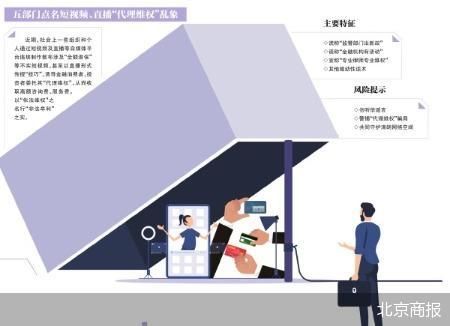
别在直播间里找“救星”!五部门揭秘“代理维权”骗局
Bei Jing Shang Bao· 2026-02-07 04:01
Core Viewpoint - The article highlights the rise of illegal "agent rights protection" schemes that exploit financial consumers through misleading advertisements on social media platforms, prompting regulatory bodies to issue warnings against such practices [1][6][9]. Group 1: Nature of the Problem - Illegal "agent rights protection" primarily manifests on short video and live streaming platforms, where false information and impersonation of professionals are used to lure consumers into paying high consultation fees [6][10]. - The schemes often falsely claim new regulations from regulatory bodies, promoting services like "full refund of insurance," "debt clearance," and "credit repair," which mislead consumers [6][9]. - The emergence of these schemes is attributed to the information asymmetry and anxiety among financial consumers regarding their rights, leading them to seek quick and easy solutions [9][11]. Group 2: Characteristics of the Schemes - Many self-proclaimed "rights protection" influencers use emotionally charged language to resonate with consumers in debt, presenting themselves as experienced professionals with successful case studies [7][8]. - The schemes have evolved from offline methods to online platforms, utilizing the advantages of short videos and live streams for broader reach and lower costs [9][13]. - Misleading claims often include false promotions of financial institutions offering debt relief or refund opportunities, enhancing the perceived legitimacy of these schemes [8][10]. Group 3: Regulatory Response - Regulatory bodies, including the Financial Regulatory Bureau and the Central Internet Information Office, have issued warnings about the risks associated with these illegal practices, urging consumers to recognize legitimate channels for rights protection [1][2][15]. - Financial institutions are actively publishing alerts about illegal "agent rights protection" and encouraging consumers to engage directly with them for any financial product inquiries [14][15]. - There is a call for enhanced regulatory oversight on platforms hosting these misleading advertisements, with suggestions for stricter content filtering and public education to raise awareness about these scams [16].
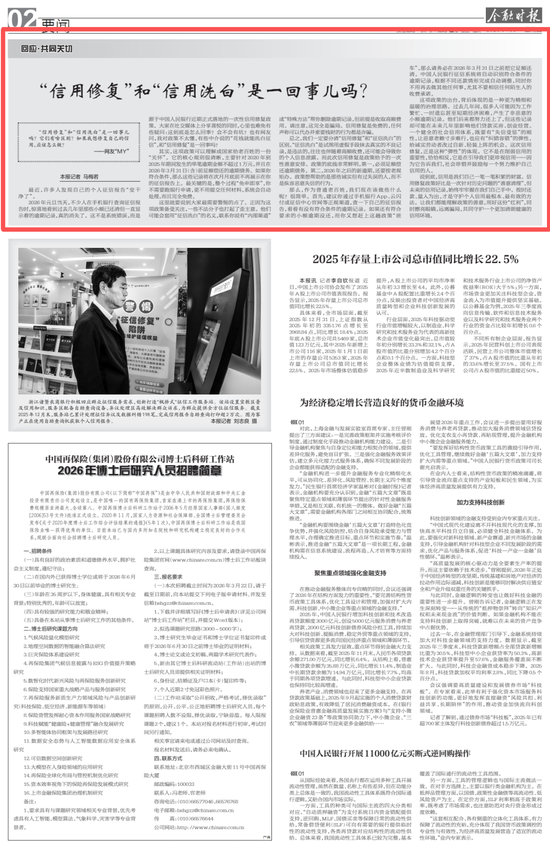
“信用修复”和“信用洗白”是一回事儿吗?
Xin Lang Cai Jing· 2026-01-08 08:20
Core Viewpoint - The recent implementation of a one-time credit repair policy by the People's Bank of China has led to many individuals seeing their overdue records disappear from their credit reports, which is a government initiative aimed at providing relief to honest borrowers who have made mistakes in the past [1][3][9]. Group 1: Credit Repair Policy - The credit repair policy targets overdue debts of no more than 10,000 yuan incurred between 2020 and 2025, which must be fully repaid by March 31, 2026, to qualify for the removal of records from credit reports [1][3]. - The process is automatic, requiring no application or documentation from individuals, and is completely free of charge [1][3][14]. Group 2: Distinction Between Credit Repair and Credit Washing - There is a clear distinction between "credit repair" and "credit washing"; the latter involves illegal methods to erase genuine negative records and often comes with high fees, while credit repair is a legitimate, government-sanctioned process [2][14]. - Individuals are warned against scams that claim to offer credit washing services for a fee, as these are fraudulent [2][14]. Group 3: Recommendations for Individuals - Individuals are advised to check their credit reports through official channels like mobile banking apps or the credit bureau's website to identify any eligible overdue records [3][15]. - To benefit from the policy, individuals must ensure that any qualifying overdue debts are repaid by the specified deadline, as the credit system will automatically adjust the records [3][15]. Group 4: Broader Implications of the Policy - The policy reflects a more nuanced governance approach, recognizing that many overdue records may arise from non-malicious reasons such as forgetfulness or temporary financial difficulties [3][15]. - A healthy social credit system should balance strict penalties for malicious defaulters with opportunities for honest individuals to rectify their credit histories, promoting a culture that values credit integrity [3][15][4].
信用修复变营销噱头 中介盯上大额逾期洗白
Bei Jing Shang Bao· 2026-01-04 23:47
Core Viewpoint - The implementation of personal credit repair policies starting January 1, 2026, has led to a surge in interest among borrowers, but it has also created a market for illegal intermediaries targeting those with large overdue debts who do not qualify for the new policy [1][2]. Group 1: Policy Implementation and Impact - The new credit repair policy allows borrowers with overdue amounts of less than 10,000 yuan from 2020 to 2025 to benefit from a one-time credit repair without application, effective until March 31, 2026 [2]. - Many borrowers have shared their success stories of clearing overdue records, highlighting the policy's immediate benefits [2]. Group 2: Intermediary Exploitation - Some intermediaries are exploiting the anxiety of borrowers with overdue amounts exceeding 10,000 yuan, offering services to "clean" their credit records for fees ranging from 3,000 to 10,000 yuan [1][3]. - These intermediaries claim high success rates in repairing credit through negotiations with banks, but their methods often involve misleading practices [3][4]. Group 3: Risks and Misleading Practices - The services offered by intermediaries often come with significant risks, including potential financial loss, legal issues, and personal information leakage [5][6]. - Some intermediaries sell misleading tutorials on how to submit credit disputes, which may encourage borrowers to fabricate reasons for their overdue payments [4][6]. Group 4: Regulatory Warnings - Regulatory authorities have warned that the credit repair policy is free and does not require third-party involvement, emphasizing that any requests for payment or personal information under this policy are fraudulent [7][8]. - Financial institutions have also cautioned against intermediaries claiming they can remove overdue records, reiterating that legitimate credit repair must be conducted through official channels [7][8].
盯上大额逾期“洗白”!个人信用修复变中介营销噱头
Bei Jing Shang Bao· 2026-01-04 13:45
Core Viewpoint - The implementation of the personal credit repair policy starting January 1, 2026, has led to a surge in borrowers sharing their success stories of clearing overdue records, while those with larger overdue amounts face anxiety due to the policy's limitations. This gap has attracted illegal intermediaries offering risky "credit washing" services for a fee [1][2][3]. Group 1: Policy Implementation and Impact - The new credit repair policy allows borrowers with overdue amounts of less than 10,000 yuan from 2020 to 2025 to benefit from a one-time credit repair service without application, provided they settle their debts by the end of March 2026 [2][6]. - Many borrowers have reported successful removal of overdue records, showcasing the policy's immediate benefits [2][6]. Group 2: Intermediary Exploitation - Some intermediaries are capitalizing on the anxiety of borrowers whose overdue amounts exceed the policy limits, offering services under the guise of "free credit checks" and "credit repair" [2][4]. - These intermediaries claim high success rates for credit repair through negotiations with banks, often charging fees ranging from 3,000 to 10,000 yuan depending on the type of bank involved [3][4]. Group 3: Risks Associated with Intermediaries - The services offered by these intermediaries come with significant risks, including potential financial loss, legal issues from fraudulent activities, and the risk of personal information leakage [5][7]. - Many intermediaries promote misleading tutorials that encourage borrowers to fabricate reasons for overdue payments, which can lead to further complications and legal repercussions [4][8]. Group 4: Regulatory Warnings and Best Practices - Regulatory authorities have warned that the credit repair policy is entirely free and does not require third-party involvement, emphasizing that any requests for payment or personal information under this policy are fraudulent [8][9]. - Borrowers are advised to adhere to the principles of "official, free, and proactive" when seeking credit repair, and to communicate directly with financial institutions to resolve overdue debts [9].
央行新政助力个人信用重塑 免申即享,设3个月宽限期
Sou Hu Cai Jing· 2025-12-22 17:02
Core Viewpoint - The People's Bank of China (PBOC) has announced a one-time credit repair policy effective from January 1, 2026, aimed at helping individuals restore their credit status by removing certain overdue records under specific conditions [1][2][3]. Group 1: Policy Details - The policy applies to overdue amounts not exceeding 10,000 RMB for the period from January 1, 2020, to December 31, 2025, and does not require an application process [1][3]. - Individuals who repay their overdue debts in full by March 31, 2026, will have their overdue records removed from the credit report [3][4]. - The policy includes measures such as "no application required," a three-month grace period for repayments, and two additional free credit report queries for individuals [4][10]. Group 2: Expected Impact - The policy is expected to provide individuals with a chance to correct past credit mistakes, thereby improving their credit status and stimulating economic activity [2][5]. - Financial institutions will benefit from more accurate assessments of individual credit statuses, enhancing the quality of inclusive financial services [2][7]. - The policy aims to reinforce the importance of creditworthiness in future economic activities, promoting a culture of trust and accountability [2][8]. Group 3: Market Reactions and Concerns - The introduction of the policy has sparked discussions about its implications, with clarifications that it is not a "credit wash" and that full repayment of debts is a prerequisite for benefiting from the policy [9][10]. - Experts emphasize that the policy encourages debt repayment, which could improve banks' asset quality and expand the customer base for financial institutions [8][9]. - The PBOC has warned against fraudulent practices related to the policy, urging the public to remain vigilant against scams [10].

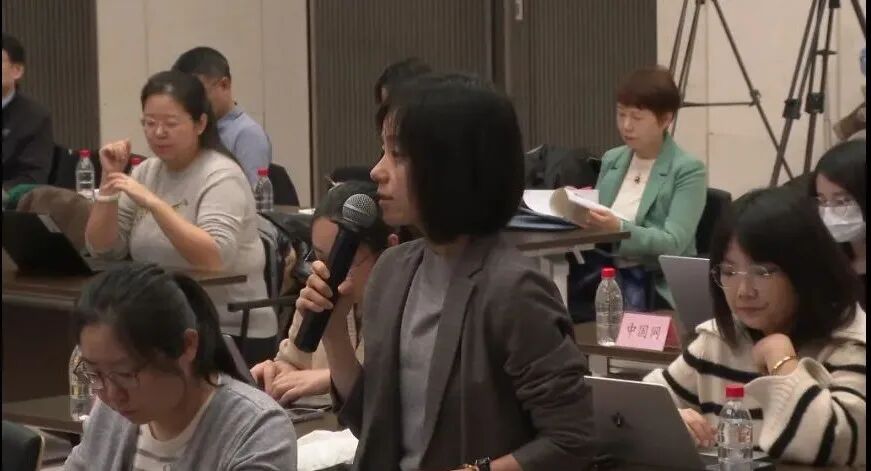
央行征信管理局局长答《金融时报》记者问
Jin Rong Shi Bao· 2025-12-22 05:12
Core Viewpoint - The People's Bank of China has implemented a one-time credit repair policy aimed at addressing issues related to personal credit reports and combating fraudulent activities by illegal intermediaries [1][3]. Group 1: Policy Implementation - The one-time credit repair policy is completely free and does not require individuals to apply or engage third parties for assistance [4]. - The policy is designed to objectively reflect personal credit information, including both timely repayment and overdue information, as per the Credit Reporting Management Regulations [3]. Group 2: Market Regulation and Fraud Prevention - The People's Bank of China, in collaboration with law enforcement and regulatory agencies, is actively combating illegal intermediaries that exploit individuals' desire to remove overdue information [3]. - There is a warning against fraudulent activities where intermediaries claim to offer services like "credit washing" or "debt restructuring," which can lead individuals into debt traps [4].
一次性信用修复≠征信洗白≠债务豁免,这些底线不能碰
第一财经· 2025-12-22 04:12
Core Viewpoint - The People's Bank of China has announced a one-time credit repair policy aimed at individuals who have settled overdue debts of less than 10,000 yuan between January 1, 2020, and December 31, 2025, effective from January 1, 2026. This policy is designed to balance the principles of "trustworthy incentives and untrustworthy penalties" within the credit system [3][4]. Group 1: Policy Details - The one-time credit repair policy is free of charge, and any claims of paid services for credit repair are fraudulent. The public is advised to remain vigilant against scams [4][11]. - The policy specifically excludes malicious debt evaders and those with severe overdue records, ensuring that it targets only those who have genuinely fulfilled their repayment obligations [5][7]. - The credit repair will remove overdue records from credit reports, allowing individuals to regain access to financial services, but only if they have fully repaid their debts [10][13]. Group 2: Social Impact - The policy is seen as an innovative practice to enhance social governance effectiveness, reinforcing the credit system's integrity while providing a second chance for temporarily untrustworthy individuals [6][7]. - Experts emphasize that the policy reflects a humanistic approach, promoting social harmony and stability by allowing for credit repair without condoning untrustworthy behavior [7][11]. - The initiative aims to create a more inclusive credit environment while maintaining strict boundaries to prevent abuse of the system [9][12].