
军国主义

Search documents
日本伪装“受害者”包藏祸心(钟声)
Ren Min Ri Bao· 2025-12-12 22:00
日方编织虚假叙事、企图操弄舆论,根本目的是淡化国际社会对其危险战略走向的警惕,暴露出骨子里 的战略投机主义和冒险主义。国际社会普遍注意到,高市早苗上任1个多月来,接二连三释放强军扩武 的危险信号:提前两年实现防卫费占国内生产总值比重2%的目标,计划在与那国岛部署导弹,宣称将 强化太空作战力量,图谋修订"无核三原则"……这些危险动向值得高度警惕:一个热衷于在舆论场搅浑 水的日本,其危险性不会仅停留于舆论层面,背后是蠢蠢欲动的军国主义。日本正在穷兵黩武的道路上 越走越远。 一个热衷于在舆论场搅浑水的日本,背后是蠢蠢欲动的军国主义。日本正在穷兵黩武的道路上越走越远 近日,日方舰机频繁抵近侦察干扰中方正常演训活动,制造海空安全风险,却倒打一耙,渲染所谓中国 海军舰载机对日本自卫队战机进行"雷达照射",将中国军队正常训练活动歪曲为"危险行为"。这种栽赃 嫁祸、颠倒黑白,企图误导国际社会的卑劣行径,尽显日方一贯混淆舆论、寻衅滋事的险恶意图,值得 国际社会高度警惕。 事情真相是,中国军队在相关海空域开展的演训活动,完全符合国际法和国际惯例,操作专业规范、无 可非议。舰载机在飞行训练时开启搜索雷达是各国通行做法,也是保障飞行 ...
回避历史真相将难以走出军国主义阴影——访日本历史研究者阿部海
Xin Hua She· 2025-12-12 09:48
Core Viewpoint - The Japanese government has consistently avoided acknowledging the crimes of Unit 731, leading to a lack of awareness and accountability among the Japanese population regarding wartime atrocities [1][2]. Group 1: Historical Context - Abe Kai, a Japanese historian, highlights that many historical facts about Unit 731 have long been obscured in Japan, resulting in a significant portion of the population, including the elderly, being unaware of its existence and actions [2]. - The atrocities committed by Unit 731, including inhumane treatment of prisoners and the development of biological weapons, are documented in English materials that Abe has translated for Japanese readers [1]. Group 2: Post-War Accountability - Despite the heinous crimes committed during the war, many members of Unit 731, including Shiro Ishii, faced no repercussions after the war and instead integrated into prominent positions within Japan's pharmaceutical companies and medical institutions [2]. - The U.S. conducted investigations into Unit 731 but focused on the data collected rather than prosecuting war crimes, allowing Ishii to escape accountability through a deal with American authorities [1]. Group 3: Current Implications - The ongoing increase in Japan's defense spending and the actions of political leaders, such as frequent visits to the Yasukuni Shrine, reflect a troubling lack of historical awareness and responsibility [2]. - Abe expresses concern that Japan's failure to confront its wartime history, including events like the Nanjing Massacre and the exploitation of "comfort women," perpetuates a shadow of militarism over the nation [2].
专访|回避历史真相将难以走出军国主义阴影——访日本历史研究者阿部海
Xin Hua She· 2025-12-12 02:50
Core Viewpoint - The Japanese government has consistently avoided acknowledging the crimes of Unit 731, leading to a lack of awareness and accountability among the Japanese public regarding wartime atrocities [1][2]. Group 1: Historical Context - Abe Kai, a Japanese historian, highlights that many historical facts about Unit 731 have long been obscured in Japan, resulting in a significant portion of the population being unaware of the war crimes committed [1][2]. - The atrocities committed by Unit 731, including inhumane treatment of prisoners and the development of biological weapons, are documented in newly translated English materials, which have only recently become accessible to Japanese readers [1]. Group 2: Post-War Accountability - Many members of Unit 731, including its leader Shiro Ishii, were not held accountable for their actions after the war, with some even securing positions in major pharmaceutical companies and medical institutions [2]. - The U.S. government's post-war investigations focused more on the data collected by Unit 731 rather than prosecuting its members, allowing Ishii to evade responsibility through a deal with the U.S. [1]. Group 3: Current Implications - The ongoing increase in Japan's defense spending and the political actions of leaders, such as frequent visits to the Yasukuni Shrine, reflect a troubling attitude towards historical accountability [2]. - Abe Kai expresses concern that Japan's failure to confront its wartime history, including events like the Nanjing Massacre and the actions of Unit 731, perpetuates a shadow of militarism over the nation [2].
【史海回眸】1937年,国际报道打破日军罪行“信息铁幕”
Huan Qiu Shi Bao· 2025-12-11 22:41
Core Viewpoint - The article emphasizes the systematic and state-sanctioned nature of the Nanjing Massacre, highlighting that it was not merely a breakdown of military discipline but a coordinated effort approved by the Japanese imperial family and executed by military command [1][2]. Group 1: Historical Context - The Nanjing Massacre occurred in December 1937, resulting in the deaths of over 300,000 Chinese civilians and disarmed soldiers, marking a significant atrocity during the Second Sino-Japanese War [1]. - The Japanese military, driven by a desire for political gain and military success, disregarded international law and committed acts of mass murder [2]. Group 2: Information Control - The Japanese military established a dual information blockade, attempting to conceal their atrocities from the international community while misleading the Japanese public [3][5]. - Reports of the "Hundred People Kill" competition were published in Japanese media, showcasing a disturbing pride in the killings, which contradicted the military's efforts to suppress information about the massacre [5]. Group 3: International Response - International journalists, including American reporter John Rabe and others, played a crucial role in exposing the atrocities, with reports describing the horrific conditions in Nanjing and the indiscriminate killings [6]. - The term "Nanjing Massacre" was first used by international journalists, highlighting the global recognition of the events and the condemnation of Japanese military actions [6]. Group 4: Accountability and Justice - Post-war trials held many perpetrators accountable, including high-ranking officials like Matsui Iwane, who was sentenced to death for his role in the massacre [8]. - Some individuals involved in the atrocities, such as the officers who participated in the "Hundred People Kill" competition, faced justice, while others, including members of the imperial family, evaded prosecution due to political decisions made by the U.S. after the war [9].

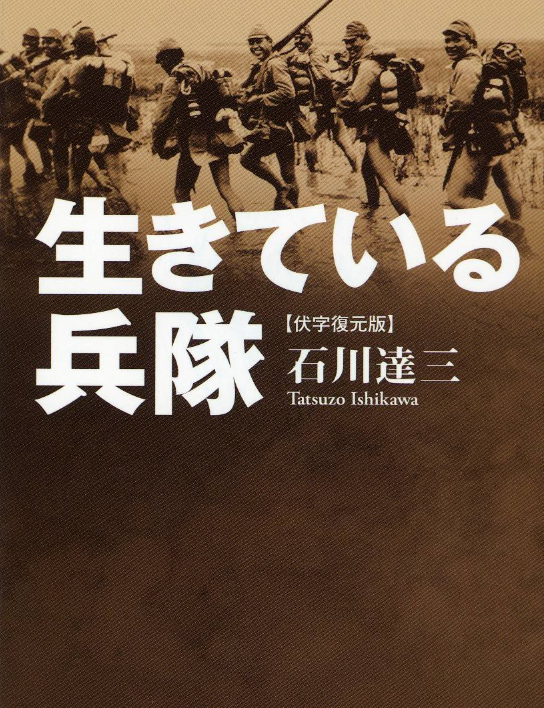
【史海回眸】日本民间“孤勇者”守护真相之火
Huan Qiu Shi Bao· 2025-12-11 22:41
Core Viewpoint - The acknowledgment of the Nanjing Massacre serves as a test of Japan's conscience and national character, with historical evidence and international judgments firmly establishing the atrocities committed by militarists during World War II [1] Group 1: Historical Context - After World War II, the international community reported on the Nanjing Massacre, and the Far East International Military Tribunal provided undeniable evidence of the crimes committed [1] - The shift in U.S. policy towards Japan from punishment to support during the Cold War allowed militarism, cloaked in "historical nihilism," to resurface in Japanese society [1] Group 2: Right-Wing Denial Tactics - Japanese right-wing forces have attempted to deny the reality of the Nanjing Massacre by creating alternative narratives, starting with textbooks and propaganda materials that replace terms like "invasion" with neutral phrases like "entry" [1] - The right-wing's core logic of "no written order theory" sets an almost impossible standard for evidence, claiming that without a signed order from the Emperor or top commanders, atrocities can only be attributed to individual soldiers [2] Group 3: Resistance and Advocacy - Despite the dominance of right-wing narratives, there are scholars and journalists in Japan who confront historical facts, such as researcher Toh Fukio and journalist Honda Katsutaka, who continue to uphold the truth [2] - Historian Ienaga Saburo fought for 32 years to retain accurate accounts of the Nanjing Massacre in high school textbooks, ultimately leading to a 1997 ruling by the Japanese Supreme Court that deemed the Ministry of Education's censorship illegal [2] Group 4: Collective Memory and Recognition - The spirit of Ienaga has inspired others in Japan, such as university professor Kasahara Jukushi and elementary school teacher Matsugawa Tamaki, who work to document the Nanjing Massacre through testimonies from former Japanese soldiers [3] - In 2015, the "Nanjing Massacre Archives" were included in the UNESCO Memory of the World Register, signifying that the atrocities committed by the Japanese army in Nanjing have become part of the collective memory of humanity [3]
法国学者高大伟:高市早苗和日本极右翼势力勾连,让世界面临风险 | 世界观
Zhong Guo Xin Wen Wang· 2025-12-11 12:55
Group 1 - The core viewpoint is that Japanese Prime Minister Kishi Sanae's remarks on Taiwan are harmful and aimed at creating division, as Taiwan is an internal matter for China [1] - David Gosset emphasizes that Kishi's statements evoke painful historical memories for the Chinese, linking her to Japan's extreme right-wing forces and a revisionist view of history [1] - There is a concern that Japan may repeat the mistakes of militarism, which could lead to historical tragedies for the world [1] Group 2 - Gosset criticizes Kishi's stance on nuclear issues as completely unacceptable, highlighting the need for a collective response to nuclear proliferation [2] - He warns that any inclination from Japan to support nuclear proliferation would be a tragic irony, given that the Japanese people were victims of nuclear attacks [2] - The future hinges on whether Kishi can prove herself worthy of leadership by uniting the people and the nation rather than creating division [2]
正告高市:军国主义幽灵休想再现
Zhong Guo Xin Wen Wang· 2025-12-10 04:06
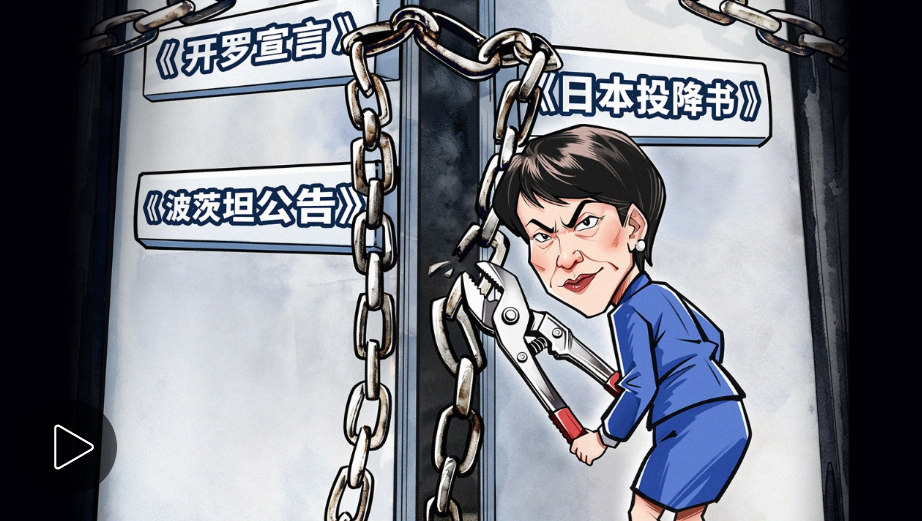
Group 1 - The article emphasizes the significance of the 80th anniversary of China's victory in the War of Resistance against Japan and Taiwan's return to China as integral parts of the outcomes of World War II and the post-war international order [2] - It highlights that international legal documents such as the Cairo Declaration and the Potsdam Proclamation confirm China's sovereignty over Taiwan, countering Japan's Prime Minister Kishi Nobuo's disregard for these documents [2] - The article criticizes Kishi's attempts to stir the so-called "Taiwan status undecided theory," reflecting a flawed historical perspective and deep-rooted militarism [2] Group 2 - The piece asserts that the people of Asia and the world will never forget the severe disasters caused by Japanese fascism and will not allow the resurgence of Japanese militarism [2]
加拿大主要城市华人社团公祭南京大屠杀死难者
Xin Hua She· 2025-12-09 05:41
在温哥华,40余个华人社团联合举办座谈会,深切缅怀南京大屠杀30万遇难同胞,严厉谴责日本政 客涉台错误言论。在多伦多,华人社团举办追思会,通过历史影像追思遇难同胞,追溯日本侵略中国的 历史根源及其长期否认战争暴行的原因。 加拿大纪念二战胜利80周年活动组委会主席张俭表示,强烈反对日本首相高市早苗涉台错误言论, 坚决反对外部势力干涉中国统一进程。 温哥华与会社团共同发表声明,敦促日本政府深刻反省侵略历史,摒弃军国主义思想,停止危害地 区和平稳定的挑衅行为。声明说,海外侨胞将坚守民族大义,守护国家核心利益,捍卫历史正义与世界 和平。多伦多与会社团发布《倡议书》,强调坚决反对日本政客挑动地区紧张的危险言论。 加拿大中国(友好)和平统一促进会会长王典奇表示,缅怀遇难同胞,需严斥日本政客涉台错误言 论,警惕军国主义复活。日本军国主义曾给亚洲人民带来深重灾难、台湾是中国领土不可分割的一部 分,这些都是不容篡改的事实。任何阻挠中国统一的行径注定失败。 新华社渥太华12月8日电(记者林威)加拿大主要城市华人社团日前举办南京大屠杀死难者公祭活 动,呼吁以史为鉴,坚决对军国主义说"不"。 ...
【环时深度】起底日本右翼如何向小学生灌输军国主义
Huan Qiu Shi Bao· 2025-12-08 22:57
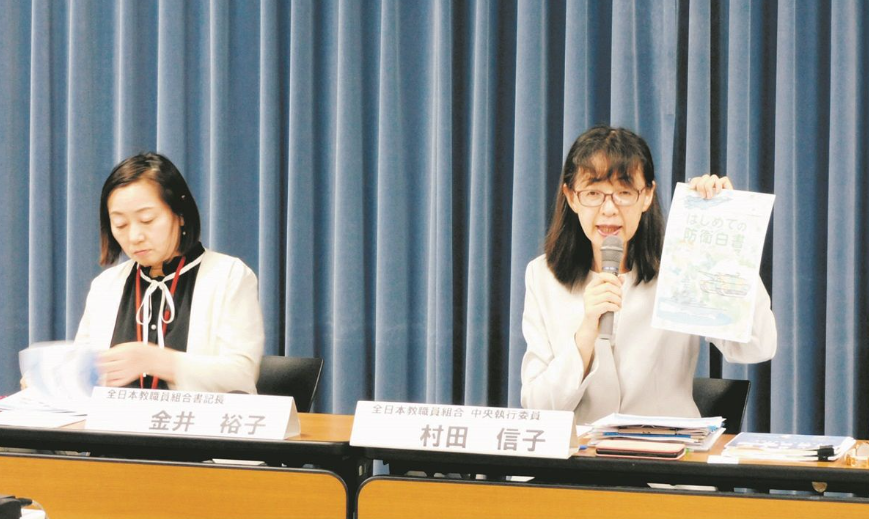
Core Viewpoint - The distribution of a children's version of the "Defense White Paper" by Japan's Ministry of Defense to elementary schools has sparked strong opposition from the education sector, with concerns that it promotes militaristic ideologies and infringes on children's rights [1][3][7]. Group 1: Distribution and Content of the White Paper - Approximately 6,100 copies of the children's version of the "Defense White Paper" have been distributed to 2,400 elementary schools across Japan, marking the first time this version has been physically distributed [3][4]. - The children's manual simplifies complex security issues into a narrative that emphasizes threats from neighboring countries, advocating for military expansion and portraying the Self-Defense Forces in a positive light [4][6]. - The manual is divided into four sections, focusing on the necessity of the Self-Defense Forces, perceived military threats from China, North Korea, and Russia, the rationale for increasing defense spending, and the disaster relief functions of the Self-Defense Forces [6][8]. Group 2: Reactions from Educational and Political Sectors - Educational organizations, including the All Japan Teachers' Union, have criticized the manual for promoting a one-sided view of national policy and have called for its withdrawal from schools [7][9]. - Some schools have decided not to allow students access to the manual, with teachers expressing concerns that its content resembles militaristic education [7][10]. - Experts argue that the manual's framing of security issues could lead to discrimination against children from countries labeled as "dangerous" within the text, potentially fostering a hostile environment in schools [8][10]. Group 3: Historical Context and Implications - The distribution of the children's version of the "Defense White Paper" is seen as part of a broader trend of right-wing efforts to introduce militaristic ideologies into education, which could undermine Japan's post-war peace efforts [9][13]. - The narrative presented in the manual risks distorting historical understanding among the younger generation, potentially leading to a collective memory gap regarding Japan's wartime history [13][14]. - Experts warn that if the younger generation is exposed to a militaristic perspective without a comprehensive understanding of historical context, it could lead to a dangerous normalization of military expansion and conflict [14].
日本开历史倒车必遭反噬
Zhong Guo Xin Wen Wang· 2025-12-08 07:26
警钟已经敲响,悲剧不能重演。如果日本执意要开历史倒车,背弃和平发展的承诺,重走军国主义侵略 扩张的邪路,破坏战后国际秩序,最终只能是自取灭亡。 许怡真 来源:中国军网 近日,继日本首相高市早苗公然抛出涉台挑衅言论、暗示武力介入台海局势后,日本政府又接连做出一 系列倒行逆施之举:批准补充预算案,将2025财年防卫开支占国内生产总值的比例提升至2%;企图在 与台湾邻近的西南诸岛部署进攻性武器;推动杀伤性武器出口……凡此种种危险行径,无一不与"和平 宪法"背道而驰。这不仅严重冲击中日关系,破坏战后国际秩序,更对亚洲乃至世界和平稳定构成严重 威胁。这种开历史倒车的挑衅行径,终将反噬自身。 在中日关系上,不容开历史倒车。1972年中日邦交正常化之际,日本即已宣布承认一个中国原则。此 后,中日四个政治文件对台湾问题作出的明确规定,更是日本政府作出的政治承诺。高市早苗本人在10 月底还曾表示:"在台湾问题上,日本将坚持1972年日中联合声明中的立场。"然而,言犹在耳,她却出 尔反尔,抛出"台湾有事"可能构成"存亡危机事态"的荒谬论调。这清晰地表明,日本在台湾问题上的立 场出现严重倒退。以高市早苗为代表的日本右翼势力,企图" ...