强军扩武

Search documents
日媒社论:日本政府强军扩武威胁地区和平、损害国计民生
Xin Lang Cai Jing· 2026-01-10 08:09
Core Viewpoint - The Japanese government's military expansion plans threaten regional peace and negatively impact the livelihoods of its citizens [1] Group 1: Military Spending and Policy Changes - In 2026, Japan will face a critical year opposing large-scale military expansion [1] - The government plans to increase defense spending to approximately 43 trillion yen for the fiscal years 2023 to 2027 [1] - The defense budget for fiscal year 2025 is set to reach about 11 trillion yen, achieving the target of defense spending constituting 2% of GDP two years ahead of schedule [1] - This translates to an annual defense cost burden of over 90,000 yen per citizen [1] Group 2: Arms Export and Nuclear Policy - The government is seeking to fully lift restrictions on the export of lethal weapons and amend the "Three Non-Nuclear Principles" [2] - If lifted, Japan could export not only logistical equipment but also combat aircraft and tanks, potentially escalating international conflicts [2] - The proposed changes to the "Three Non-Nuclear Principles," which have been a cornerstone of Japan's policy, are deemed unacceptable [2]
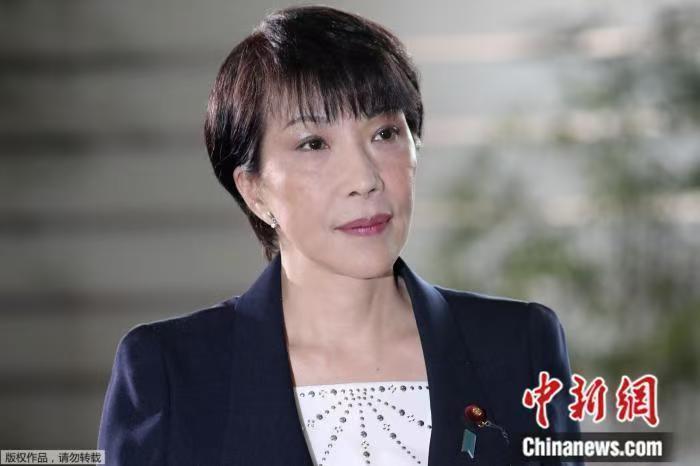
日本在野党批高市强军扩武之路:是充满危险与矛盾的歧途
Xin Lang Cai Jing· 2026-01-06 06:02
Core Viewpoint - The Japanese Communist Party leader, Tamura Tomoko, strongly criticized Prime Minister Sanae Takaichi's militaristic expansion policy, labeling it a "dangerous and contradictory path" that could lead Japan towards war and global isolation [1] Summary by Relevant Sections Military Expansion - Tamura argues that Takaichi's administration is promoting military expansion under the guise of "close cooperation with the US-Japan alliance," which will not result in a "strong Japan" but rather increase the risk of war for its citizens [1] - The focus on military might is seen as neglecting necessary diplomatic strategies, with previous comments on Taiwan being described as reckless and detrimental to regional stability [1] Constitutional Concerns - The current administration's approach disregards Japan's constitution and its principle of self-defense, which could fundamentally undermine Japan's international trust as a nation with a pacifist constitution [1] Economic Implications - Tamura warns that persistent military expansion will likely lead to cuts in social welfare budgets, increased taxes on civilians, and unlimited issuance of national debt to fund military needs, which he describes as a "path to national ruin" [1] Political Opposition - The Japanese Communist Party is committed to opposing Takaichi's militaristic policies, which they believe threaten both peace and the well-being of the populace [1]
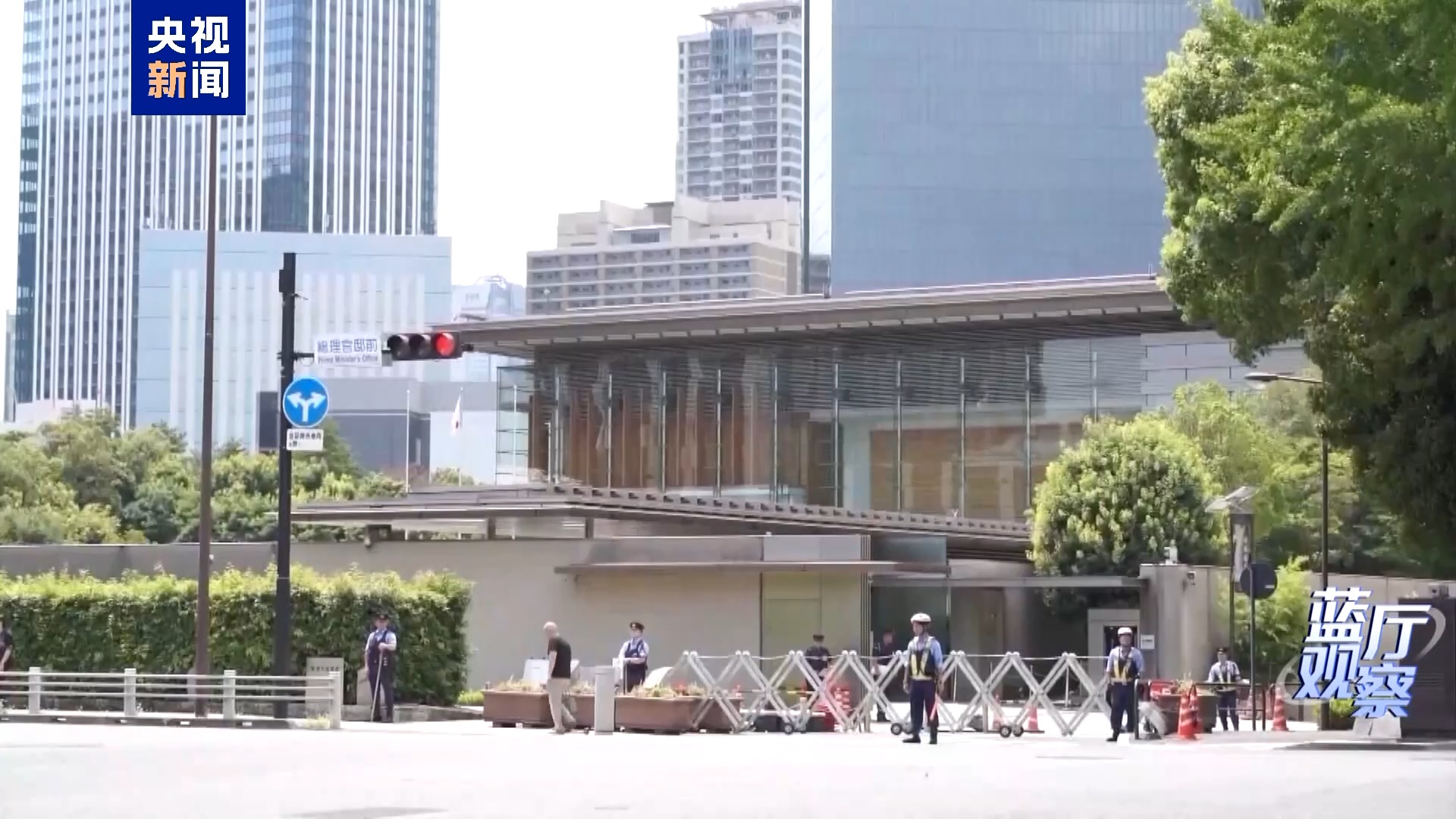
蓝厅观察丨日本防卫费连年上涨 强军扩武路上狂奔
Yang Shi Xin Wen Ke Hu Duan· 2025-12-27 12:48
Core Viewpoint - The Japanese government has approved a record defense budget exceeding 9 trillion yen for the fiscal year 2026, reflecting a significant increase in military spending aimed at enhancing Japan's defense capabilities and signaling a shift towards a more offensive military strategy [1][3]. Group 1: Defense Budget Overview - Japan's defense budget has consistently surpassed 6 trillion yen, 7 trillion yen, 8 trillion yen, and now 9 trillion yen in consecutive fiscal years, indicating a rapid escalation in military expenditure [1]. - The proportion of defense spending in Japan's GDP has risen sharply from 1.19% to 2% from fiscal year 2023 to 2025, aligning with NATO standards for military spending [3]. Group 2: Allocation of Defense Spending - The increased defense budget is primarily allocated towards developing medium- to long-range missiles capable of striking enemy command centers, with plans to extend missile ranges to over 1,000 kilometers and budget for at least 1,000 missiles [5]. - Japan is collaborating with the United States to develop hypersonic glide weapons, with some projects already nearing operational status [5]. - The budget also supports the production of advanced military equipment, including deep-sea submarines and space weapons, emphasizing the need for unmanned combat capabilities [5]. Group 3: Strategic Implications - The shift in Japan's defense strategy indicates a departure from its traditional "defensive" posture towards a more aggressive military stance aimed at deterring China, which poses potential threats to regional security [5][9]. - The current government under Prime Minister Kishi has accelerated military expansion efforts, including proposed changes to arms export policies and nuclear principles, reflecting a significant shift in Japan's defense policy [7][9].

日本防卫费连年上涨,强军扩武路上狂奔
Xin Lang Cai Jing· 2025-12-27 11:29
Core Viewpoint - The Japanese government has approved a record defense budget exceeding 9 trillion yen for the fiscal year 2026, reflecting a significant increase in military spending and a shift towards a more offensive military strategy [1][3]. Group 1: Defense Budget Overview - Japan's defense budget has consistently surpassed 6 trillion yen, 7 trillion yen, 8 trillion yen, and now 9 trillion yen in recent fiscal years, indicating a rapid escalation in military expenditure [1]. - The proportion of defense spending in Japan's GDP has risen sharply from 1.19% to 2% from fiscal year 2023 to 2025, aligning with NATO standards for military spending [3]. Group 2: Allocation of Defense Spending - The increased defense budget is primarily allocated towards developing medium- and long-range missiles capable of striking enemy command centers, with plans to extend missile ranges to over 1,000 kilometers and budget for at least 1,000 missiles [5]. - Japan is collaborating with the United States to develop hypersonic glide weapons, with some projects already nearing operational readiness [5]. - The budget also supports the production of advanced military equipment, including deep-sea submarines and space weapons, emphasizing a shift towards unmanned combat capabilities [5]. Group 3: Strategic Implications - The Japanese government is moving away from its "defensive" posture towards a more aggressive military strategy aimed at deterring China, which poses potential threats to regional security [5]. - The current administration under Prime Minister Kishi has accelerated military expansion efforts, including potential revisions to arms export policies and nuclear principles, indicating a significant shift in Japan's defense posture [7][9]. - This aggressive military stance has raised concerns among the Japanese public and opposition parties, suggesting potential negative impacts on the economy and civilian life [9].
日本社会各界批评高市早苗政府强军扩武(国际视点)
Ren Min Ri Bao· 2025-12-22 22:27
Group 1: Government's Military Expansion - The Japanese government, under Prime Minister Fumio Kishida, is accelerating military expansion, with officials openly advocating for Japan to possess nuclear weapons [1][2] - The defense budget is set to reach 2% of GDP two years ahead of schedule, with a proposed defense budget of 9 trillion yen (approximately 81.8 billion USD) for the fiscal year starting in 2026 [3][4] - Japan's defense spending has increased for 13 consecutive years, with a 60% surge over the past five years, and the total defense budget for fiscal year 2025 is projected to exceed 11 trillion yen (approximately 100 billion USD) [4][5] Group 2: Domestic Reactions and Criticism - There has been significant backlash from various sectors in Japan, including former defense ministers and political leaders, condemning the push for nuclear armament as irresponsible [2][3] - Public protests have emerged against the government's military spending, with citizens expressing concerns over the neglect of social welfare and healthcare in favor of military expansion [6] - Critics argue that the government's military policies could lead to Japan's international isolation and worsen its security environment [2][7] Group 3: Military-Industrial Complex - The increase in defense spending has significantly benefited Japanese military contractors, with companies like Mitsubishi Heavy Industries and Kawasaki Heavy Industries seeing sales growth in the defense sector ranging from 25% to 87% [5] - The ongoing rise in military expenditure raises concerns about the emergence of a military-industrial complex in Japan, which could have long-term implications for the country's defense and foreign policy [5][6] Group 4: Arms Export Policy Changes - The ruling coalition is discussing the removal of restrictions on arms exports, which could allow Japan to export lethal weapons, fundamentally altering its long-standing defense principles [6][7] - The potential lifting of these restrictions has sparked fears of Japan becoming a source of weapon supply, which could exacerbate international conflicts [7]
【环时深度】起底日本右翼如何向小学生灌输军国主义
Huan Qiu Shi Bao· 2025-12-08 22:57
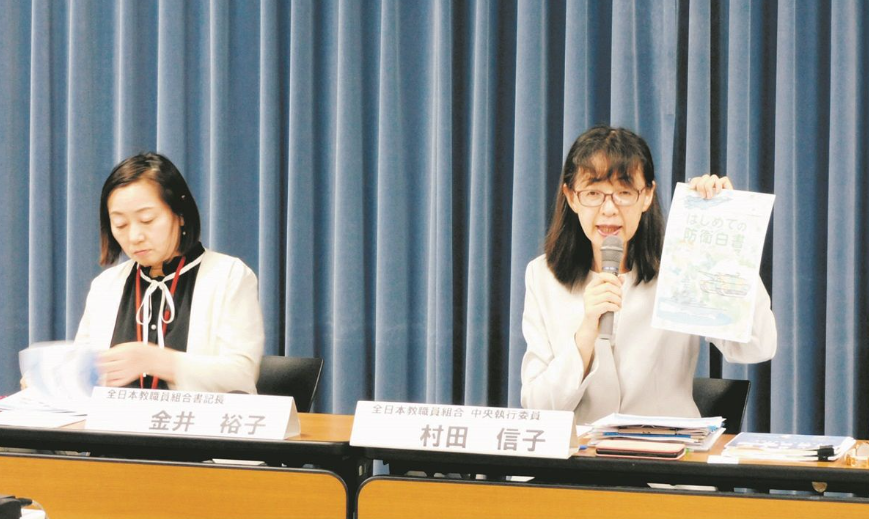
Core Viewpoint - The distribution of a children's version of the "Defense White Paper" by Japan's Ministry of Defense to elementary schools has sparked strong opposition from the education sector, with concerns that it promotes militaristic ideologies and infringes on children's rights [1][3][7]. Group 1: Distribution and Content of the White Paper - Approximately 6,100 copies of the children's version of the "Defense White Paper" have been distributed to 2,400 elementary schools across Japan, marking the first time this version has been physically distributed [3][4]. - The children's manual simplifies complex security issues into a narrative that emphasizes threats from neighboring countries, advocating for military expansion and portraying the Self-Defense Forces in a positive light [4][6]. - The manual is divided into four sections, focusing on the necessity of the Self-Defense Forces, perceived military threats from China, North Korea, and Russia, the rationale for increasing defense spending, and the disaster relief functions of the Self-Defense Forces [6][8]. Group 2: Reactions from Educational and Political Sectors - Educational organizations, including the All Japan Teachers' Union, have criticized the manual for promoting a one-sided view of national policy and have called for its withdrawal from schools [7][9]. - Some schools have decided not to allow students access to the manual, with teachers expressing concerns that its content resembles militaristic education [7][10]. - Experts argue that the manual's framing of security issues could lead to discrimination against children from countries labeled as "dangerous" within the text, potentially fostering a hostile environment in schools [8][10]. Group 3: Historical Context and Implications - The distribution of the children's version of the "Defense White Paper" is seen as part of a broader trend of right-wing efforts to introduce militaristic ideologies into education, which could undermine Japan's post-war peace efforts [9][13]. - The narrative presented in the manual risks distorting historical understanding among the younger generation, potentially leading to a collective memory gap regarding Japan's wartime history [13][14]. - Experts warn that if the younger generation is exposed to a militaristic perspective without a comprehensive understanding of historical context, it could lead to a dangerous normalization of military expansion and conflict [14].
日本新动作曝光!拟打造“宇宙作战集团”
中国基金报· 2025-12-04 04:59
Core Viewpoint - Japan is actively pursuing the militarization of space, with plans to establish a "Space Operations Group" as part of its defense strategy, reflecting a shift towards more aggressive military capabilities under the guise of "self-defense" [1][3]. Group 1: Space Military Development - Japan's Defense Minister, Koizumi Shinjiro, emphasized the importance of space for both military and civilian purposes, indicating a strong commitment to enhancing space capabilities [1]. - The Japanese government plans to reorganize the Air Self-Defense Force into an "Aerospace Self-Defense Force" by 2026, with the "Space Operations Group" expected to be upgraded by 2025 [1]. - Japan is developing "bodyguard satellites" to strengthen its space defense capabilities and is investing in a "low-orbit satellite constellation" project, akin to the Starlink initiative [1]. Group 2: Strategic Military Considerations - Japan aims to build a comprehensive space reconnaissance system using optical infrared imaging satellites and radar reconnaissance satellites to monitor foreign military targets, thereby supporting offensive operations [2]. - The restructured Aerospace Self-Defense Force will conduct joint exercises and training with the U.S. Space Force, extending the U.S.-Japan military alliance into space [3]. - There is a potential for Japan to develop orbital combat platforms similar to the U.S. military's X-37B unmanned spaceplane, indicating a significant shift towards space warfare capabilities [3]. Group 3: Regional Military Deployment - Japan is enhancing its military presence in the southwestern region, particularly in Okinawa, with plans to upgrade the Ground Self-Defense Force's 15th Brigade to a division by 2027, focusing on island defense operations [5]. - The deployment of advanced missile systems, such as the Type 03 medium-range surface-to-air missile and extended-range variants of the Type 12 anti-ship missile, is aimed at providing fire support and protection for Japan's Ground Self-Defense Forces [5][6]. - The establishment of the "Okinawa Defense Group" is seen as a preparation for potential large-scale island operations, reflecting Japan's offensive military posture [5].
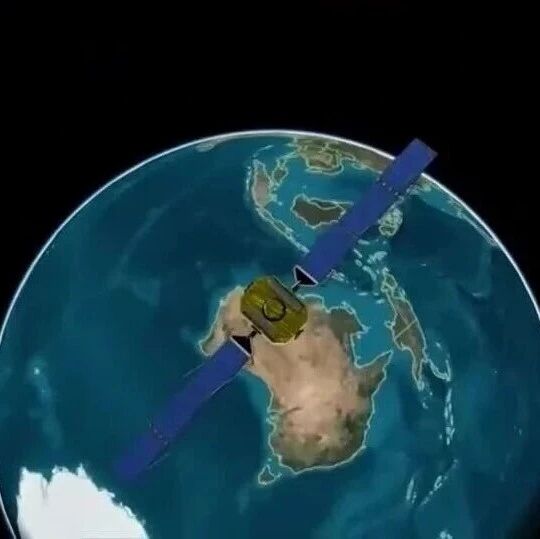
推进太空军事化 日本拟打造“宇宙作战集团”
Yang Shi Xin Wen· 2025-12-04 02:42
Group 1 - Japan plans to invest heavily in a low Earth orbit satellite constellation project, referred to as the Japanese version of "Starlink" [1] - The Japanese government is increasingly focused on military expansion under the banner of "self-defense," with plans to establish a dedicated "Aerospace Self-Defense Force" by 2026 [1][2] - The Japanese Defense Minister emphasized the importance of space as a critical area for both military and civilian purposes, indicating a strong intent to enhance space capabilities [1][2] Group 2 - Japan aims to develop a comprehensive space reconnaissance system using optical and radar satellites to monitor foreign military targets and support offensive operations [2] - The country plans to utilize military communication and navigation satellites to support its Self-Defense Forces' deployments in the Indian and Pacific Oceans [2] - New early warning satellites will be launched to strengthen Japan's overall missile defense capabilities, reducing the effectiveness of other nations' ballistic missile capabilities [2] Group 3 - Japan is enhancing its military presence in the southwestern region, particularly in Okinawa, with plans to deploy advanced missile systems [3] - The Ground Self-Defense Force's 15th Brigade stationed in Okinawa is set to expand into a division by 2027, indicating preparations for potential large-scale island operations [3] - The deployment of advanced missile systems in the southwestern islands is aimed at providing support and firepower for Japan's Ground Self-Defense Forces, reflecting an offensive military posture [3]
错误言论暗藏三大意图,高市早苗打的什么“算盘”?| 国际识局
Zhong Guo Xin Wen Wang· 2025-11-24 01:37
Core Viewpoint - Recent statements by Japanese Prime Minister Sanae Takaichi regarding Taiwan suggest a potential shift in Japan's defense policy, indicating a willingness to engage militarily in the Taiwan Strait, which could disrupt regional stability and security [1][4][8] Group 1: Strategic Intentions - Takaichi's remarks may serve to justify Japan's transition to a "war-capable nation," leveraging the concept of "survival crisis" to expand the Self-Defense Forces' operational scope [4][5] - The government is pushing for constitutional amendments and increased military spending, including the potential removal of the "no nuclear weapons" principle, to enhance Japan's defense capabilities [4][5] - The linkage of Taiwan's situation to Japan's national security is seen as a strategic pivot from passive involvement to proactive positioning against China [5][6] Group 2: Domestic Political Implications - Takaichi's narrative aims to consolidate support from conservative factions within Japan, framing herself as a strong advocate for national defense and security [7] - By emphasizing the urgency of the Taiwan issue, Takaichi seeks to marginalize moderate voices within her party and establish a more hardline stance on defense policy [7] Group 3: Regional and International Impact - Takaichi's statements threaten to undermine the political foundation of Sino-Japanese relations, challenging the principles of the One China policy and previous agreements [8][10] - The rhetoric contributes to escalating tensions in the Taiwan Strait and East Asia, reflecting a broader trend of militarization and right-wing nationalism in Japan [8][9] - The potential for Japan to break free from post-war security constraints raises concerns about a shift in the balance of power in the Asia-Pacific region, with implications for global alliances and military dynamics [9][10]