
农业科技创新

Search documents
把握农业全链建设关键点
Jing Ji Ri Bao· 2025-12-25 22:04
Core Viewpoint - The development of the agricultural whole industry chain in China has made significant progress this year, transitioning from focusing on production to focusing on the entire chain, enhancing agricultural comprehensive benefits and competitiveness [1][2]. Group 1: Agricultural Whole Industry Chain Development - The agricultural whole industry chain integrates production, processing, and sales, and combines agriculture with culture and tourism, forming an organic whole with systemic, integrative, and high value-added characteristics [1]. - Major agricultural developed countries view the construction of efficient, high value-added whole industry chains as a core competitive advantage in modern agriculture [1]. Group 2: Challenges and Solutions - China faces issues such as short chains, weak links, and low added value in the agricultural industry, including low conversion rates of scientific achievements and an underdeveloped agricultural social service system [2][3]. - To address these challenges, it is essential to focus on extending, supplementing, and strengthening the agricultural chain, promoting collaborative efforts to solve development problems [2]. Group 3: Strategies for Chain Extension - Strengthening the research and development of agricultural product processing technologies and promoting integrated development of production, processing, and sales are key strategies [2]. - The integration of agriculture with tourism, culture, education, and health is encouraged, along with the development of new business models such as e-commerce and AI agriculture [2]. Group 4: Chain Supplementation - Emphasis on agricultural technology innovation and breaking through key technologies in areas like biological breeding and agricultural machinery is crucial [3]. - Building a robust circulation network, including cold chain logistics and storage facilities, is necessary to address the "first mile" and "last mile" challenges [3]. Group 5: Chain Strengthening - Cultivating leading agricultural enterprises and creating a new development pattern involving key enterprises, leading companies, and chain leaders is essential [3]. - Innovative mechanisms for benefit sharing and promoting smallholder participation in modern agriculture are important for enhancing the overall agricultural ecosystem [3]. Group 6: Value Enhancement and Digital Transformation - Establishing a high-quality development standard system for agriculture and promoting the digital transformation of the entire agricultural chain using advanced technologies like big data and AI is vital [4]. - Implementing a brand enhancement strategy and creating a multi-level product matrix will help improve product quality and value [4].
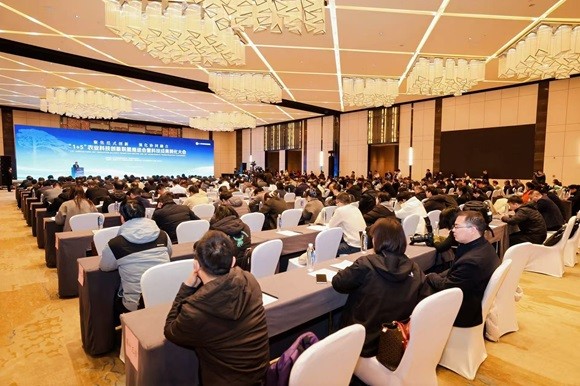
从赛场到沃野:看安徽这场大赛如何浇灌农业“科创森林”
Yang Guang Wang· 2025-12-25 06:35
Core Insights - The "1+5" Agricultural Science and Technology Innovation Alliance aims to integrate innovation chains, industry chains, capital chains, and talent chains to enhance food security and support agricultural development in China [3][10] - The alliance has established a collaborative platform involving multiple national agricultural research institutions to foster innovation and technology transfer in agriculture [3][10] - The recent competition showcased numerous innovative projects, highlighting the rapid growth of the domestic exotic pet market and the application of cutting-edge technologies in agriculture [4][5] Group 1 - The "1+5" Agricultural Science and Technology Innovation Alliance is a collaborative platform formed by five national agricultural research universities to promote deep integration of various innovation chains [3] - The alliance has set up 16 sub-centers and 7 sub-institutes across 16 cities, creating a systematic and grid-like innovation collaboration network [3] - The recent competition attracted 699 quality projects from across the country, covering modern seed industry, green food, smart agricultural machinery, and biomanufacturing [3][5] Group 2 - The "Heart of the Lizard" team, led by Zheng Qingyu, focuses on the exotic pet market by using gene editing technologies to cultivate ornamental lizards, establishing a complete path from breeding to sales [4] - The "Sheep Breeding Launch" team from Northwest A&F University developed technology to precisely control the ovulation of ewes, addressing core issues in China's meat sheep breeding cycle [5] - The competition resulted in 16 awarded projects, with 25 projects expressing clear intentions to settle, demonstrating the alliance's role as a source of continuous innovation for agricultural productivity [5][11] Group 3 - The establishment of the Shennong Fund, aimed at addressing the "last mile" of agricultural technology transfer, is a key initiative of the alliance [9] - The fund has an initial target of raising 105 million yuan and has selected 138 potential investment projects [9] - The collaboration between the competition and the fund creates a clear pathway for project discovery, financial support, and resource linkage, facilitating rapid industrialization of innovative agricultural technologies [9][10] Group 4 - The deep collaboration between the "1+5" alliance and Keda Silicon Valley exemplifies the construction of an agricultural innovation ecosystem [10] - The alliance serves as a source for cultivating cutting-edge results and talent, while Keda Silicon Valley acts as an irrigation system to channel innovation into the agricultural sector [10][11] - The competition and the establishment of the fund represent a systematic layout for promoting agricultural technology from the source to the industry [11]

一粒麦种和它的“未来地图”——周口国家农高区一线观察
He Nan Ri Bao· 2025-12-21 23:48
Core Viewpoint - The article highlights the development and innovation in the Zhoukou National Agricultural High-tech Industry Demonstration Zone, emphasizing its role in advancing high-quality and efficient agriculture in the Huanghuai Plain region. Group 1: Agricultural Production and Innovation - Zhoukou is a significant agricultural hub, with a grain output consistently exceeding 180 billion jin, accounting for 1/7 of Henan province and 1/70 of the national total [1] - The Zhoukou National Agricultural High-tech Zone aims to become a leader in wheat industry innovation, a modern agricultural demonstration area, and a model for rural revitalization through technology [1] - The zone has established 46 provincial-level research platforms, integrating innovation into agricultural development [2] Group 2: Technological Advancements - The use of specific microbial agents during the seedling stage has shown to increase wheat yield by over 100 jin per mu [3] - The center for wheat technology innovation is developing high-yield and functional wheat varieties, with ongoing trials for varieties like "Yunong 907" [3] - The zone has implemented a "flexible intelligence introduction" mechanism, attracting 138 PhDs and 178 master's graduates to enhance research capabilities [4] Group 3: Smart Agriculture - Zhoukou has built 106,000 mu of high-standard farmland and developed a smart agriculture information platform comprising 1 platform, 4 centers, and 15 application systems [7] - The integration of water and fertilizer systems has led to an average water saving of 40% and fertilizer saving of 15%, while increasing yield by 12% [6] - Real-time monitoring systems provide data on soil conditions, enhancing decision-making for farmers [6] Group 4: Value Chain Development - The region is fostering a complete industrial chain for wheat processing, with companies like Zhengxing Flour Industry producing specialized flour products [8] - The establishment of a 5G digital intelligent workshop has streamlined production processes, enhancing efficiency in flour production [8] - Zhoukou is also developing a corn processing industry, with companies converting corn into polylactic acid, showcasing the integration of agricultural and industrial sectors [10] Group 5: Strategic Importance - The development of the Zhoukou National Agricultural High-tech Zone is crucial for regional coordination and the construction of a strong agricultural province [11] - The zone is positioned to contribute significantly to agricultural modernization and regional revitalization, aiming for sustainable growth and technological advancement [11]
耕“新”不止!首届全国农科英才创新创业大赛圆满收官
Zhong Guo Jing Ji Wang· 2025-12-17 10:43
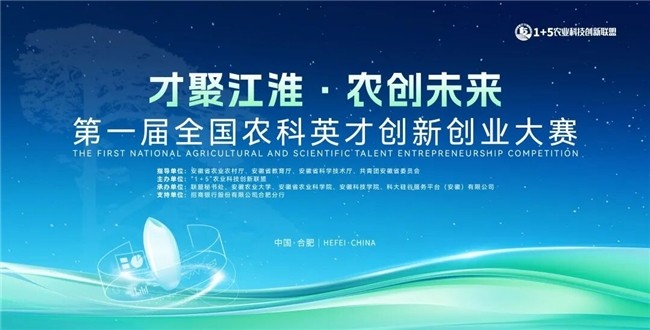
Group 1 - The first National Agricultural Science and Technology Talent Innovation and Entrepreneurship Competition was successfully held in Hefei, focusing on promoting rural revitalization and building a strong agricultural nation through a competitive platform for agricultural technology innovation [2] - The competition featured 32 teams from the creative and startup groups, evaluated by a panel of seven experts based on various criteria including technological barriers, market value, feasibility, team strength, and social benefits [3] - The projects presented were closely aligned with national strategies such as rural revitalization and smart agriculture, showcasing strong potential for regional economic activation, job creation, and industrial upgrading [3] Group 2 - During the award ceremony, gold, silver, and bronze awards were given to the best projects, with several high-quality projects signing agreements with local governments and investment institutions for technology cooperation and market expansion [4] - The launch of the Agricultural Technology Achievement Transformation Fund (Shennong Fund) provides robust financial support for agricultural technology projects, focusing on early-stage investments and project incubation [6] - The "1+5" Agricultural Technology Innovation Alliance aims to establish a mechanism for connecting technological achievements with market demands, offering comprehensive support for participating projects, including policy interpretation and resource integration [8] Group 3 - The competition has attracted high-level talents and research teams from across the country, contributing to a shift in the talent structure and technological ecosystem in the agricultural sector [9] - The innovation cycle of "talent aggregation - technological breakthroughs - achievement transformation - industrial upgrading" is gradually forming, enhancing the internal driving force for regional industrial innovation [9] - The competition will continue to play a pivotal role in facilitating the effective allocation of innovative resources, accelerating the transformation of technological achievements into productive forces, and supporting the construction of a strong agricultural nation [9]

广东省农业农村厅:广东农产品进出口总值稳居全国第一
Nan Fang Du Shi Bao· 2025-12-17 06:41
Core Insights - Guangdong Province is actively promoting rural revitalization and urban-rural coordination during the "14th Five-Year Plan" period, focusing on food security and high-quality agricultural development [1][2]. Group 1: Food Security and Agricultural Production - Guangdong has taken significant steps to ensure food security, maintaining stable grain planting areas and achieving continuous increases in grain production, with a rise in comprehensive production capacity from 12.38 million tons in 2021 to 12.977 million tons by 2025 [1]. - The province has established 4.905 million acres of high-standard farmland and improved 1.267 million acres, while also conducting the third national soil survey to enhance soil fertility [1]. Group 2: Agricultural Industry Development - Guangdong is developing rural specialty industries, having created 12 national advantageous characteristic industry clusters, 24 national modern agricultural industrial parks, and 92 strong agricultural towns, forming several billion-dollar industry clusters [2]. - The first industry added value in Guangdong has risen from fourth to second nationally, with agricultural product import and export values remaining the highest in the country [2]. Group 3: Agricultural Technology Innovation - The province is implementing significant agricultural technology initiatives, achieving notable advancements in various agricultural technologies, including low-temperature preservation of lychee and high-efficiency production of salt-tolerant rice [2]. - Guangdong has established 49 major innovation platforms and has a contribution rate of agricultural technology progress reaching 74.02%, with a focus on precision services for rural areas [2].

吉林省2025年粮食总产量871.6亿斤创历史新高
Zhong Guo Jing Ji Wang· 2025-12-17 06:41
12月16日,吉林省农业农村厅在2025年全省农业农村工作盘点中透露,今年吉林省粮食产量实现"二十 连增",单产达到990.8斤/亩,稳居粮食主产省第1位,总产871.6亿斤达历史新高,连续三年居全国第4 位。 吉林省农业农村厅科学技术处副处长李有宝介绍,近年来,吉林省深入贯彻"藏粮于地、藏粮于技"战 略,坚持科技兴农、科技兴粮,在全国率先启动实施"千亿斤粮食"产能建设工程和"秸秆变肉"暨千万头 肉牛工程,围绕"四良一智"强化农业科技和装备支撑,紧盯核心技术攻关与成果转化,促进科技与育 种、耕作、农机、土壤等农业全产业链深度融合。 一是建良田护黑土。推行高标准农田建设"投融建管运"一体化长效机制,力争率先把永久基本农田全部 建成高标准农田。实施"黑土粮仓"科技会战,保护利用好黑土地这一"耕地中的大熊猫"。 二是育良种用良机。推进建设寒地区域育种中心,打造玉米、水稻等育种创新平台,聚力推广年种植面 积超500万亩的高产耐密玉米品种2个,吉林全省主要农作物良种覆盖率保持在100%。深化农机研发推 广应用一体化试点,加快智能免耕播种机等研发,推行优机优补,加快老旧机具更新迭代,全省主要农 作物耕种收综合机械化水平9 ...
片区建设成为山东“十四五”乡村振兴最鲜明标识
Da Zhong Ri Bao· 2025-12-13 01:28
Core Viewpoint - The article highlights the significant progress and strategies implemented in Shandong Province during the "14th Five-Year Plan" period to promote rural revitalization through area-based construction, emphasizing the importance of agricultural modernization and improving farmers' living standards [2][3][5]. Group 1: Area-Based Construction - Shandong has initiated the construction of 2,070 rural revitalization areas, covering over 18,000 administrative villages, as part of its strategy to enhance rural development [2]. - The approach focuses on leveraging strong villages as leading examples, integrating resources, and optimizing public services to achieve coordinated progress in five areas of revitalization [2]. Group 2: Agricultural Production - Shandong's total grain production is expected to remain above 110 billion jin annually during the "14th Five-Year Plan," with significant contributions to national food security [3]. - The province has established a "1+4" agricultural production system, resulting in an increase of 5.268 billion jin in grain production, equivalent to the annual output of a major grain-producing city [3]. Group 3: Industrial Revitalization - The province is focusing on enhancing the entire agricultural industry chain, with notable projects like the production of pomegranates and shrimp, generating annual outputs exceeding 5 billion and 10 billion yuan, respectively [4]. - Shandong has cultivated 10 national-level advantageous agricultural industry clusters and 122 national-level strong agricultural towns, with over 11,621 large-scale agricultural processing enterprises [4]. Group 4: Agricultural Modernization - Shandong is prioritizing agricultural technology modernization, achieving a seed coverage rate of over 98% and a comprehensive mechanization rate of 91% for major crops, both exceeding national averages [4]. - The contribution rate of agricultural technology progress in Shandong is 67.4%, placing the province in the top tier nationally [4]. Group 5: Improving Farmers' Living Standards - The average annual growth rate of rural residents' disposable income in Shandong is 7.7% during the "14th Five-Year Plan" [5]. - Infrastructure improvements include a rural road network of 266,000 kilometers, with high rates of sanitation and water supply services, significantly enhancing the quality of life for rural residents [5].
80%的蔬菜品种实现国产化 山东农业科技创新能力处在全国第一梯队
Feng Huang Wang Cai Jing· 2025-12-12 08:40
Core Viewpoint - Shandong Province is accelerating agricultural modernization during the "14th Five-Year Plan" period, focusing on technological innovation to enhance agricultural productivity and sustainability [1]. Group 1: Agricultural Technological Development - Shandong has 32 agricultural research institutions covering over 300 disciplines, with 9 academicians and 678 leading talents in the agricultural sector [1]. - The province's agricultural technology innovation capability ranks among the top in the country, with significant achievements in seed innovation, including 3 wheat, 1 corn, 1 soybean, and 3 peanut varieties among the top ten in national promotion area [1]. - The contribution rate of agricultural technology progress is 67.4%, which is 4 percentage points higher than the national average [1]. Group 2: Key Technology R&D and Promotion - The province has implemented a plan for key core technology breakthroughs, achieving 80% domestic production of vegetable varieties and developing the first domestically produced high-power CVT intelligent tractor [2]. - The coverage rate of quality seed varieties for major crops exceeds 98%, supported by the development and use of high-performance agricultural machinery [2]. Group 3: Talent Development and Support - Shandong is focusing on a talent matrix that includes top experts and local agricultural specialists, having recruited 14 top talents and 26 individuals under the national "Shennong Talent" program [2]. - The establishment of 31 provincial-level modern agricultural industry technology systems ensures comprehensive technical service coverage for leading industries [3]. Group 4: Policy and Mechanism Support - A coordination mechanism for agricultural technology R&D has been established to integrate innovation resources, with a focus on cultivating 100 agricultural technology enterprises [3]. - The province aims to enhance the integration of technological innovation and industrial innovation, creating a clear and collaborative agricultural technology innovation system [3].
80%蔬菜品种实现国产化,山东农业科技创新能力处在全国第一梯队
Qi Lu Wan Bao· 2025-12-12 08:27
Core Insights - Shandong Province is accelerating agricultural modernization during the "14th Five-Year Plan" period, leveraging technological innovation to enhance agricultural productivity and support the construction of a strong agricultural province [1][2]. Group 1: Agricultural Innovation and Achievements - Shandong has 32 agricultural research institutions and 9 academicians, leading to significant advancements in agricultural technology [1]. - The province's seed industry is nationally leading, with several crop varieties ranking in the top ten for national planting area, including 3 wheat, 1 corn, 1 soybean, and 3 peanut varieties [1]. - The mechanization rate for crop farming is 91%, which is 16 percentage points higher than the national average, and the contribution rate of agricultural technology progress is 67.4%, exceeding the national average by 4 percentage points [1]. Group 2: Key Initiatives and Strategies - Shandong is focusing on key technology research and has achieved breakthroughs, such as 80% of vegetable varieties being domestically produced and advancements in dairy and aquaculture technologies [2]. - The province supports the promotion of high-quality crop varieties, with over 98% coverage of improved seeds for major crops, and emphasizes the development of high-performance agricultural machinery [2]. - A talent matrix is being constructed, with 14 top talents recruited and 26 individuals selected for the national "Shennong Talent" program [2]. Group 3: Policy and Mechanism Support - A coordination mechanism for agricultural technology research has been established to integrate innovation resources, with a focus on cultivating 100 agricultural technology enterprises [3]. - Projects like the Rural Revitalization Technology Innovation Initiative are being implemented to promote agricultural technology innovation and application [3]. - Future plans include deepening the integration of technological and industrial innovation to enhance the overall effectiveness of agricultural technology innovation systems [3].
依托中国超大规模市场和巨大发展潜力 先正达集团全球业务表现亮眼——“让越来越多中国农业科技创新‘走出去’”(见证·中国机遇)
Ren Min Ri Bao· 2025-12-09 22:31
Core Insights - Syngenta, a leading agricultural technology company, has seen significant growth in its Chinese operations, which now account for one-third of its global revenue, with projections of $9.6 billion in 2024 [2][3] Group 1: Company Overview - Syngenta was established in 1758 as a small trading company in Basel, Switzerland, and evolved into a global agricultural technology firm, officially named in 2000 [2] - The company was acquired by China National Chemical Corporation (ChemChina) in 2017, marking a new chapter in its development [2] - Syngenta employs over 56,000 people globally and operates in more than 90 countries, focusing on seeds, fertilizers, and agricultural services [2] Group 2: Market Position and Growth - The Chinese market is recognized as one of the most dynamic and promising agricultural technology markets globally, driven by market size, government support for agricultural innovation, and local advantages [3] - Syngenta's crop protection business ranks first globally, while its seed business ranks third, largely due to the strong performance in the Chinese market [3] Group 3: Research and Development - Syngenta has invested $1.9 billion in R&D for 2024, with a focus on enhancing its innovative capabilities, particularly in China [4] - The company operates 150 R&D centers worldwide, employing 6,500 researchers who develop thousands of new seed varieties and explore over 100,000 new compounds annually [4] Group 4: Sustainable Agriculture Initiatives - Syngenta is committed to sustainable agricultural practices, focusing on efficient planting, healthy soil, prosperous rural areas, and sustainable operations [6] - The "Run Tian" project, initiated in collaboration with the UNDP and China's Ministry of Agriculture, has restored over 3,700 hectares of agricultural soil in China, benefiting over 30,000 farmers [6] - The company plans to invest $2 billion in sustainable agriculture initiatives by the end of 2025, aiming to reduce carbon emissions in agriculture [7] Group 5: Future Outlook - Syngenta aims to leverage its Swiss innovation and China's market advantages to enhance global agricultural sustainability and technology transfer [7] - The company aspires to be a bridge for international agricultural technology cooperation, facilitating the introduction of advanced technologies to China and promoting Chinese agricultural innovations globally [7]