
中科发5号

Search documents
中国AI再迎“Seedance时刻”,印证了一个重要趋势
Xin Lang Cai Jing· 2026-02-15 00:02
近日,一款名为Seedance 2.0的AI视频生成模型在国内外互联网上迅速走红。该模型采用双分支扩散变 换器架构,可同时生成视频和音频。用户只需输入文本或上传图片,即可在60秒内获取带有原生音频的 多镜头序列视频,不少媒体与网友直呼"Seedance时刻"已经到来。 字节跳动发布视频模型Seedance 2.0。 重器频出开盛景,科创逐梦迎春风。过去一年,以Seedance 2.0为代表的中国科技在能源、航天、AI等 领域多点开花、捷报频传,这些突破不仅彰显了中国自主创新的硬核实力,更勾勒出从"跟跑"到"并 跑"乃至"领跑"的奋进轨迹,为高质量发展注入澎湃动能。 领跑能源,重塑绿色发展。 从能源工程探索、资源拓展到技术应用,我国在能源领域实现多项"全球首次",取得一系列突破性成 果。 2025年年初,有"人造太阳"之称的EAST核聚变实验装置,首次实现"亿度千秒"量级的高温等离子体持 续运行,标志着我国聚变能源研究实现从基础科学向工程实践的重大跨越,对人类加快推进聚变发电具 有重要意义。 2025年年末,钍基熔盐实验堆正式建成,这座实验堆是我国自主设计、研发和建设的第四代先进裂变核 能系统,也是目前国际上唯 ...


种业有了智慧“中国芯”
Jing Ji Ri Bao· 2025-12-29 00:10
Group 1 - The core achievement of the "Seed Special" is the development of innovative seed varieties, such as the hybrid silver crucian carp, which addresses consumer concerns about fish bones [1] - The "Seed Special" aims to establish a self-reliant and leading scientific system in seed technology, focusing on higher yield, better nutrition, water conservation, and disaster resistance [1] - The initiative was launched in November 2019 to address strategic needs for food security in China, focusing on breeding key crops like rice and wheat [1] Group 2 - The "Zhongke Fa" series of rice has become a star variety, with "Zhongke Fa 5" yielding over 20% more than local varieties in Northeast China and achieving a yield of over 600 kg per mu in saline-alkali land [2] - The "Zhongke Fa Early Jing 1" variety has advanced the market availability of high-quality new japonica rice by 2 to 3 months in southern double-cropping rice areas [2] - The initiative has successfully created 37 leading varieties, promoting new crop varieties across 14.48 million mu, resulting in significant social and economic benefits [2] Group 3 - The successful implementation of the "Seed Special" is a practical example of addressing national needs and leveraging a new type of national system to enhance agricultural technology [3]
“种子专项”已创制三十七个先导型品种——种业有了智慧“中国芯”
Jing Ji Ri Bao· 2025-12-28 21:50
Core Insights - The "Seed Precision Design and Creation" project by the Chinese Academy of Sciences has made significant advancements, particularly with the development of the hybrid silver crucian carp, which addresses consumer concerns about fish bones [1] - The project aims to establish a self-sufficient and leading seed science system to enhance agricultural productivity and food security in China [1][3] Group 1: Achievements in Crop Breeding - The "Zhongke Fa" series of rice, led by Li Jiayang, has become a "star variety," with "Zhongke Fa No. 5" yielding over 20% more than local premium varieties in Northeast China and achieving a yield of over 600 kg per mu in saline-alkali land [2] - In the southern double-cropping rice areas, "Zhongke Fa Early Jing No. 1" has achieved a breakthrough, allowing for the early market release of high-quality new rice by 2 to 3 months [2] - The project has developed a nitrogen-efficient gene that allows rice to maintain stable yields with a 20% to 30% reduction in nitrogen fertilizer, promoting green farming practices [2] Group 2: Disease Resistance and Economic Impact - The research team has identified the broad-spectrum disease resistance gene Pm24, leading to the development of the high-yield, disease-resistant wheat variety "Zhongke 166," which has been promoted over 1.5 million mu, significantly reducing pesticide use [2] - The core objective of the project is to achieve a 10% to 20% increase in yield, a 15% to 20% reduction in input, and a 15% to 20% reduction in losses for plant and animal varieties, with 37 leading varieties created and 14.48 million mu of new crop varieties promoted [2]
【新华社】全链条技术突破让“一粒种子”实现精准设计
Xin Hua She· 2025-12-23 02:43
Core Insights - China's research team has achieved a breakthrough in seed precision design, enabling simultaneous improvements in yield, fertilizer efficiency, and disaster resistance [1][2] - The project, initiated in November 2019, involves collaboration among 30 institutions and aims for a 10% to 20% increase in yield, a 15% to 20% reduction in input, and a 15% to 20% reduction in losses [1] - The research has led to the creation of 37 leading varieties and the promotion of 14.48 million acres of new crop varieties [1] Group 1 - In the Northeast rice region, the "Zhongke Fa 5" variety has achieved over a 20% yield increase compared to local premium varieties, with yields exceeding 600 kg per acre in saline-alkali land [1] - In the Southern rice region, "Zhongke Fa Early Jing 1" has marked a breakthrough in double-season early japonica rice, allowing for the market release of high-quality new rice 2 to 3 months earlier [1] - The research team has utilized innovative multi-genome editing technology to create disease-resistant and high-yield wheat varieties, with the first safety certificate for gene-edited staple crops expected in 2024 [1] Group 2 - The research has also identified broad-spectrum disease-resistant genes in local wheat varieties, leading to the development of the high-yield, disease-resistant variety "Zhongke 166," which has been promoted across nearly 1.5 million acres, significantly reducing pesticide use [2] - The cloning of the nitrogen-efficient gene OsTCP19 allows rice to maintain stable yields with a 20% to 30% reduction in nitrogen fertilizer [2] - The project's outcomes have extended to aquaculture, creating a new breeding design system that enhances growth rate, survival rate, and feed efficiency in new carp strains, including a new variety of silver carp with no intermuscular bones, improving consumer experience [2] - The successful implementation of this project exemplifies the advantages of a new type of national system, laying a solid technological foundation for China's transition from a major seed industry country to a strong seed industry nation [2]
全链条技术突破让“一粒种子”实现精准设计
Xin Hua She· 2025-12-22 06:07
Core Insights - China's research team has achieved a full-chain technological breakthrough in seed precision design, enabling simultaneous goals of increased yield, reduced fertilizer use, and disaster resistance [1][2] - The project, initiated in November 2019, has produced 37 leading varieties and promoted 14.48 million acres of new crop varieties [1] - The research has led to significant advancements in both rice and wheat varieties, with specific examples showing yield increases of over 20% and the introduction of new disease-resistant strains [1][2] Summary by Categories Technological Breakthroughs - The project "Seed Precision Design and Creation" has successfully utilized innovative multi-gene editing technology to create high-yield, disease-resistant wheat varieties [1] - A new breeding system has been established for aquaculture, resulting in improved growth rates and feed efficiency in new carp strains [2] Crop Varieties and Yield Improvements - In the Northeast rice region, the variety "Zhongke Fa 5" has achieved over a 20% yield increase compared to local premium varieties [1] - The "Zhongke Fa Early Jing 1" variety has marked a breakthrough in double-season early japonica rice, allowing for earlier market availability of high-quality rice [1] Environmental and Economic Impact - The new wheat variety "Zhongke 166" has been promoted on nearly 1.5 million acres, significantly reducing pesticide use [2] - The nitrogen-efficient gene OsTCP19 has been cloned, allowing rice to maintain stable yields with a 20% to 30% reduction in nitrogen fertilizer [2] Strategic Importance - The successful implementation of this project exemplifies the advantages of China's new type of national system, addressing major national needs and laying a solid technological foundation for transitioning from a major seed industry country to a strong seed industry country [2]
“让越来越多中国农业科技创新‘走出去’”(见证·中国机遇)
Ren Min Ri Bao· 2025-12-09 23:34
Core Insights - Syngenta Group has become a leading global agricultural technology company, with its Chinese operations accounting for one-third of its global revenue, reflecting significant growth in the Chinese market [3][4]. Group 1: Company Overview - Syngenta's history dates back to 1758 as a small trading company in Basel, Switzerland, evolving into a global agricultural technology firm by 2000 [3]. - The company was acquired by China National Chemical Corporation (now Sinochem) in 2017, marking a new chapter in its development [3]. - Syngenta employs over 56,000 people globally and operates in more than 90 countries, focusing on seeds, fertilizers, and crop protection products [3]. Group 2: Financial Performance - The company's projected revenue for 2024 is $28.8 billion, with Chinese operations expected to generate $9.6 billion, nearly doubling in the past five years [3]. - The Chinese market is identified as a crucial growth engine for the company, with its crop protection business ranked first globally and seed business ranked third [4]. Group 3: Research and Innovation - Syngenta has invested $1.9 billion in research and development in 2024, with a focus on enhancing its technological capabilities [5]. - The company operates 150 R&D centers globally, employing 6,500 researchers and exploring over 100,000 new chemical compounds [6]. - Syngenta's local R&D teams in China have achieved breakthroughs in key agricultural technologies, including the discovery of a gene that enhances salt tolerance in crops [6]. Group 4: Sustainability Initiatives - Syngenta is committed to sustainable agricultural practices, focusing on efficient planting, healthy soil, and sustainable operations [7]. - The company has launched projects like the "Run Tian" initiative in collaboration with UNDP and China's Ministry of Agriculture, promoting soil health and climate-smart agriculture [7]. - In Brazil, Syngenta has implemented a land restoration program, helping farmers improve land conditions and providing digital tools and credit services [8]. Group 5: Future Outlook - By the end of 2025, Syngenta plans to invest $2 billion in sustainable agriculture, aiming to reduce carbon emissions and enhance farmer returns [8]. - The company seeks to leverage its Swiss innovation and China's market advantages to drive global agricultural sustainability and technology transfer [8].
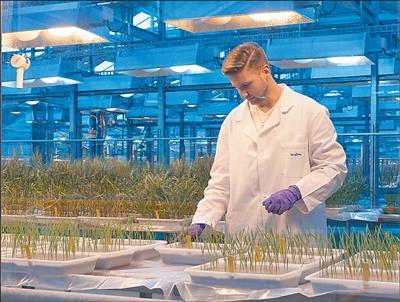
依托中国超大规模市场和巨大发展潜力 先正达集团全球业务表现亮眼——“让越来越多中国农业科技创新‘走出去’”(见证·中国机遇)
Ren Min Ri Bao· 2025-12-09 22:31
Core Insights - Syngenta, a leading agricultural technology company, has seen significant growth in its Chinese operations, which now account for one-third of its global revenue, with projections of $9.6 billion in 2024 [2][3] Group 1: Company Overview - Syngenta was established in 1758 as a small trading company in Basel, Switzerland, and evolved into a global agricultural technology firm, officially named in 2000 [2] - The company was acquired by China National Chemical Corporation (ChemChina) in 2017, marking a new chapter in its development [2] - Syngenta employs over 56,000 people globally and operates in more than 90 countries, focusing on seeds, fertilizers, and agricultural services [2] Group 2: Market Position and Growth - The Chinese market is recognized as one of the most dynamic and promising agricultural technology markets globally, driven by market size, government support for agricultural innovation, and local advantages [3] - Syngenta's crop protection business ranks first globally, while its seed business ranks third, largely due to the strong performance in the Chinese market [3] Group 3: Research and Development - Syngenta has invested $1.9 billion in R&D for 2024, with a focus on enhancing its innovative capabilities, particularly in China [4] - The company operates 150 R&D centers worldwide, employing 6,500 researchers who develop thousands of new seed varieties and explore over 100,000 new compounds annually [4] Group 4: Sustainable Agriculture Initiatives - Syngenta is committed to sustainable agricultural practices, focusing on efficient planting, healthy soil, prosperous rural areas, and sustainable operations [6] - The "Run Tian" project, initiated in collaboration with the UNDP and China's Ministry of Agriculture, has restored over 3,700 hectares of agricultural soil in China, benefiting over 30,000 farmers [6] - The company plans to invest $2 billion in sustainable agriculture initiatives by the end of 2025, aiming to reduce carbon emissions in agriculture [7] Group 5: Future Outlook - Syngenta aims to leverage its Swiss innovation and China's market advantages to enhance global agricultural sustainability and technology transfer [7] - The company aspires to be a bridge for international agricultural technology cooperation, facilitating the introduction of advanced technologies to China and promoting Chinese agricultural innovations globally [7]