高性能播种机

Search documents
山东80%蔬菜品种实现国产化
Qi Lu Wan Bao· 2025-12-26 11:49
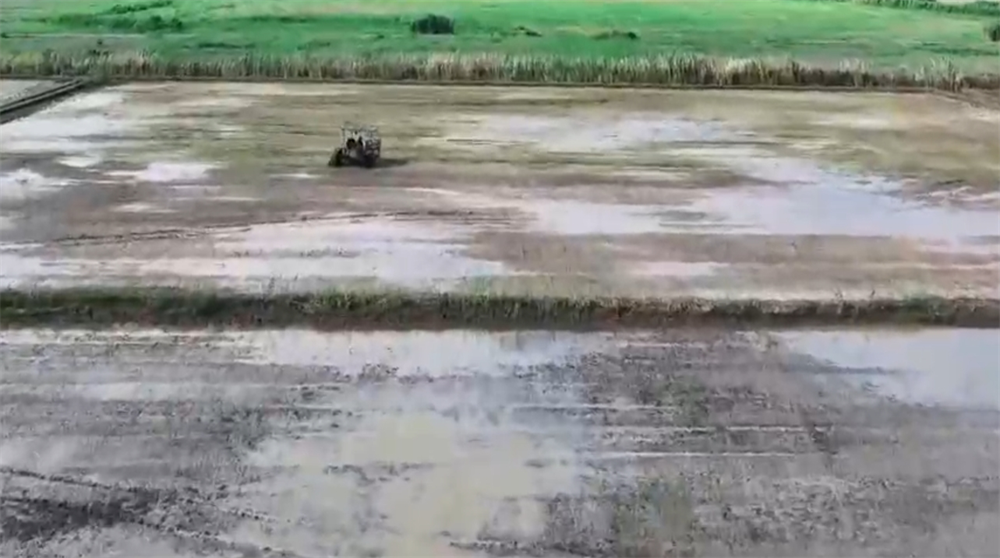
Core Viewpoint - Shandong province is leveraging technological innovation to enhance agricultural productivity, significantly contributing to its goal of becoming a strong agricultural province [1] Group 1: Agricultural Innovation - Shandong's seed industry innovation capability is nationally leading, with 3 wheat, 1 corn, 1 soybean, and 3 peanut varieties among the top ten in national planting area [1] - The province accounts for 33% of the national grandparent meat chicken supply and 90% of the national seedling supply for large flounder [1] - 18 national integrated seed breeding enterprises and 8 agricultural technology leading enterprises have been cultivated, with companies like Shunfeng Biotechnology and Qingdao Qingyuan emerging as influential innovators [1] Group 2: Mechanization and Technology Contribution - The comprehensive mechanization rate for crop planting and harvesting in Shandong is 91%, which is 16 percentage points higher than the national average [1] - The contribution rate of agricultural technology progress is 67.4%, exceeding the national average by 4 percentage points [1] Group 3: Key Technological Breakthroughs - Shandong has implemented a plan for tackling key core agricultural technologies, achieving breakthroughs such as 80% domestic production of vegetable varieties and advancements in dairy cow embryo production technology [1] - The province has addressed the foreign monopoly on male salmon fry and developed the first domestically produced high-power CVT intelligent tractor with independent intellectual property rights [1] Group 4: High-Quality Agricultural Development - Efforts are focused on building a higher-level "Qilu Granary" by integrating good seeds, equipment, and technology [1] - The coverage rate of quality seeds for major crops in the province exceeds 98%, and support is provided for the development and use of high-performance seeding machines [1] - Key technologies such as wide-row precision sowing for wheat and precise population control for corn are being promoted [1]
中国“大粮仓”粮食1600亿斤丰收背后的“科技驱动”
Zhong Guo Xin Wen Wang· 2025-12-13 08:27
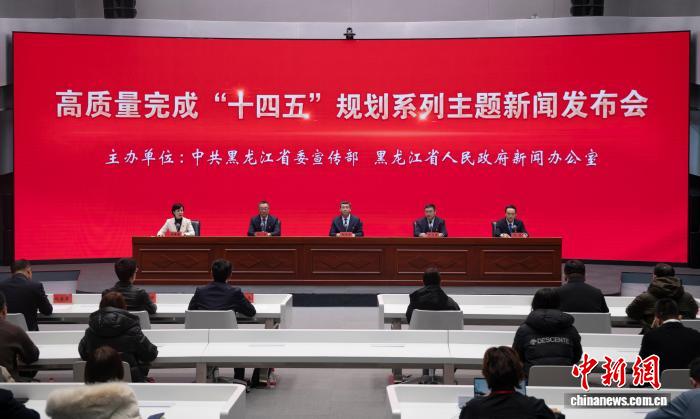
Core Insights - Heilongjiang Province, China's largest grain storage area, is projected to achieve a total grain output of 164.01 billion jin by 2025, an increase of 13.19 billion jin compared to 2020, accounting for over one-seventh of the national grain increase during the same period [1][5] - The province is transforming from a "large grain storage" to a "smart storage" through strong technological advancements [1] Technological Advancements - The contribution rate of agricultural technology in Heilongjiang is expected to reach 70.8% in 2024, exceeding the national average by 7.6 percentage points [3] - The province boasts a comprehensive mechanization rate of 99.28% for farming, which is 24 percentage points higher than the national average, maintaining the top position in the country [3] - Since the 14th Five-Year Plan, over 700,000 new agricultural machines have been subsidized, including 49,000 high-horsepower tractors, 21,000 advanced seeders, and 33,000 agricultural drones, with the highest number of agricultural drones in China [3] Smart Agriculture Initiatives - Heilongjiang has established a provincial-level smart scheduling platform equipped with 130,000 monitoring terminals for real-time monitoring of key agricultural activities [4] - The province has built a national-level soybean seed base and improved seedling rates from approximately 89% to over 95% through the promotion of high-performance seeders [4] - Advanced agricultural techniques such as large ridge dense planting and conservation tillage have been widely implemented, supported by high-performance agricultural machinery [4] Industry Development - The province is creating a national-level high-end intelligent agricultural machinery pilot zone and has established 20 unmanned farms within the Beidahuang Group, leading the nation in agricultural intelligence [4] - The Suihua-Daqi biological manufacturing cluster has become one of China's advanced manufacturing clusters, with corn deep processing capacity exceeding 28 million tons, ranking first in the country, and leading in milk powder production and vitamin C output globally [4] Future Goals - During the 15th Five-Year Plan period, Heilongjiang aims to build a strong agricultural province by integrating technology, green practices, quality, and branding to accelerate the cultivation of new agricultural productivity [5] - The target of 160 billion jin is seen as a milestone and a new starting point, with technology deeply integrated into all aspects of agricultural production to ensure national food security and inject strong technological momentum into agricultural modernization [5]

80%蔬菜品种实现国产化,山东农业科技创新能力处在全国第一梯队
Qi Lu Wan Bao· 2025-12-12 08:27
Core Insights - Shandong Province is accelerating agricultural modernization during the "14th Five-Year Plan" period, leveraging technological innovation to enhance agricultural productivity and support the construction of a strong agricultural province [1][2]. Group 1: Agricultural Innovation and Achievements - Shandong has 32 agricultural research institutions and 9 academicians, leading to significant advancements in agricultural technology [1]. - The province's seed industry is nationally leading, with several crop varieties ranking in the top ten for national planting area, including 3 wheat, 1 corn, 1 soybean, and 3 peanut varieties [1]. - The mechanization rate for crop farming is 91%, which is 16 percentage points higher than the national average, and the contribution rate of agricultural technology progress is 67.4%, exceeding the national average by 4 percentage points [1]. Group 2: Key Initiatives and Strategies - Shandong is focusing on key technology research and has achieved breakthroughs, such as 80% of vegetable varieties being domestically produced and advancements in dairy and aquaculture technologies [2]. - The province supports the promotion of high-quality crop varieties, with over 98% coverage of improved seeds for major crops, and emphasizes the development of high-performance agricultural machinery [2]. - A talent matrix is being constructed, with 14 top talents recruited and 26 individuals selected for the national "Shennong Talent" program [2]. Group 3: Policy and Mechanism Support - A coordination mechanism for agricultural technology research has been established to integrate innovation resources, with a focus on cultivating 100 agricultural technology enterprises [3]. - Projects like the Rural Revitalization Technology Innovation Initiative are being implemented to promote agricultural technology innovation and application [3]. - Future plans include deepening the integration of technological and industrial innovation to enhance the overall effectiveness of agricultural technology innovation systems [3].
金融推动农机产业发展的探索与提升路径 基于吉林省四平市农机产业的调查
Jin Rong Shi Bao· 2025-11-27 05:11
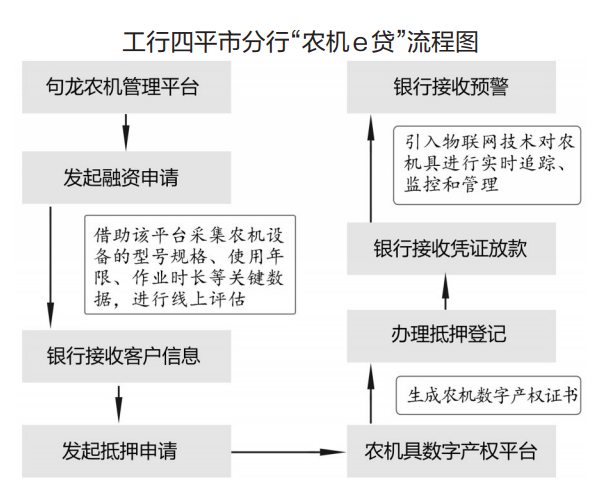
Core Viewpoint - The 2025 Central Document No. 1 emphasizes the promotion of high-quality development in agricultural machinery, highlighting its increasing role in agricultural production [1] Group 1: Current Development of Agricultural Machinery Industry in Siping - Siping is a significant agricultural machinery manufacturing base in China, with over 30 production enterprises, including 7 large-scale enterprises and 2 national-level specialized "little giant" enterprises. The total output value of large-scale agricultural machinery enterprises in 2024 is projected to be 800 million yuan, accounting for approximately 50% of the province's total [3] - The city is accelerating industrial clustering and platform construction, with a planned area of 4.4 square kilometers for the China Black Land Protection Agricultural Machinery Industry Innovation Demonstration Base, aiming for a total investment of 10.9 billion yuan [3] - Financial subsidies and policy support are being implemented, with the central government providing preferential subsidies for high-performance agricultural machinery, and Siping actively promoting enterprises to apply for various support policies [3] Group 2: Financial Support Practices for Agricultural Machinery Industry - Financial institutions in Siping have explored effective ways to support the agricultural machinery industry, with a total loan balance of 97.368 million yuan and cumulative investment of 181.517 million yuan as of September [5] - Four typical financing guarantee models have been established to support the agricultural machinery industry [5] Group 3: Financing Guarantee Models - The "Agricultural Machinery e-Loan" online mortgage model by ICBC Siping Branch utilizes a digital property rights platform to standardize and streamline the mortgage process, with a total of 30.266 million yuan disbursed [6] - The "Patent + Asset" combination pledge model by Jilin Bank Siping Branch allows for financing through the pledge of core patents and real estate, with a total of 75 million yuan in loans issued [7] - The "Real Estate Mortgage" loan model by Postal Savings Bank Siping Branch provides loans based on real estate collateral, with a total of 43 million yuan disbursed [8] - The "Online + Offline" credit quick loan model by Construction Bank Siping Branch offers flexible credit solutions for agricultural machinery enterprises, with a total of 21.062 million yuan disbursed [9] Group 4: Challenges Facing Financial Support for Agricultural Machinery Industry - The agricultural machinery industry faces significant cyclical risks, with a projected decline in output value of 16.7% in 2024 due to various factors, including reduced market demand and cash flow unpredictability [10] - Difficulties in valuing and disposing of collateral, particularly for rapidly depreciating agricultural machinery, pose risks for financial institutions [11][12] - Insufficient collaboration between financial institutions and government guarantee agencies leads to ineffective risk-sharing and support [13] - Poor information-sharing channels among agricultural departments, financial institutions, and enterprises hinder decision-making efficiency [14] Group 5: Recommendations - Establish a risk monitoring platform to predict industry risks and design differentiated credit products for cyclical enterprises [15] - Innovate mortgage methods and improve disposal channels for collateral to reduce loan loss risks [16] - Optimize cooperation between financial institutions and government guarantee agencies to clarify responsibilities and improve risk-sharing [17] - Create an information-sharing platform to enhance data accuracy and improve credit assessment efficiency [18]

夏粮稳产筑根基 秋粮向好显活力
Zhong Guo Jing Ji Wang· 2025-07-25 09:02
Core Insights - The summer grain production in 2025 achieved a total output of 2994.8 billion jin, marking the second highest yield in history despite facing adverse conditions such as severe drought in some regions [1] Group 1: Summer Grain Production - The summer grain is the first season crop, accounting for over 20% of the annual grain output, with increased sowing areas in 20 out of 25 provinces tasked with summer grain production [2] - The central government allocated 1.6 billion yuan early to support wheat production and 376 million yuan for drought relief, enhancing agricultural disaster response capabilities [2] - The construction of high-standard farmland exceeded 1 billion mu, with over 80% of winter wheat having irrigation conditions, significantly improving resilience in grain production [2] Group 2: Agricultural Mechanization - Advanced agricultural machinery, including nearly 180,000 high-performance seeders, has been widely adopted, improving sowing quality and increasing seedling emergence rates by over 5 percentage points [3] - The comprehensive mechanization rate for major crops exceeds 75%, with wheat, corn, and rice achieving mechanization rates of over 97%, 91%, and 88% respectively [3] Group 3: Rural Income and Employment - The per capita disposable income of rural residents reached 11,936 yuan in the first half of the year, with a real growth of 6.2%, outpacing urban income growth [4] - Fixed asset investment in the primary industry grew by 6.5% year-on-year, and rural retail sales of consumer goods increased by 4.9% [4] - The Ministry of Agriculture and Rural Affairs is working to expand employment channels and income opportunities for farmers, focusing on smooth grain sales and promoting new industries [4] Group 4: Autumn Grain Outlook - The target for total grain production this year is around 1.4 trillion jin, with a focus on enhancing autumn grain yields through high-performance machinery and integrated farming practices [5] - The Ministry of Agriculture has initiated a 100-day action plan to boost autumn grain production and mitigate disaster impacts, emphasizing timely disaster response and monitoring [5] Group 5: National Food Security - The successful summer grain harvest strengthens the foundation for national food security, with ongoing efforts needed to maintain harvest results and manage autumn crops effectively [6]
良机良法“智”绘夏播图 科技为秋粮“丰”景打好基础
Yang Shi Wang· 2025-06-26 03:28
Group 1: Summer Grain Harvest and Planting Progress - The national summer grain harvest has surpassed 90%, with winter wheat harvesting nearly complete [1] - Summer sowing progress is nearing 80%, with provinces like Henan, Sichuan, and Shaanxi having completed their summer sowing [1] - In Jiangsu, 45,000 acres of medium rice are being planted using mechanized transplanting with Beidou navigation systems for efficiency [1] Group 2: Summer Crop Management and Technology - The Huanghuaihai region is advancing summer sowing and management, with Shandong planning to sow over 54 million acres of summer corn [4] - In Xinjiang, 900,000 acres of summer corn are planned, utilizing no-till planting technology to enhance soil fertility and increase yields [6] - Overall, the growth of spring-sown crops like corn, rice, and soybeans is normal, with summer crops emerging successfully [8] Group 3: Pepper Harvesting in Chongqing - In Chongqing's Jiangjin District, 530,000 acres of green pepper are entering the harvesting phase, utilizing drones for transportation and centralized processing [9] - To ensure quality, local agricultural cooperatives are establishing processing centers to provide comprehensive services for harvesting and processing [11] - The planting area for green pepper this year is 530,000 acres, with an expected yield of 340,000 tons and a total industry output value of 5.8 billion yuan [13]
【在希望的田野上·三夏时节】向科技要产能 助力全年粮食丰收
Yang Shi Wang· 2025-05-31 12:37
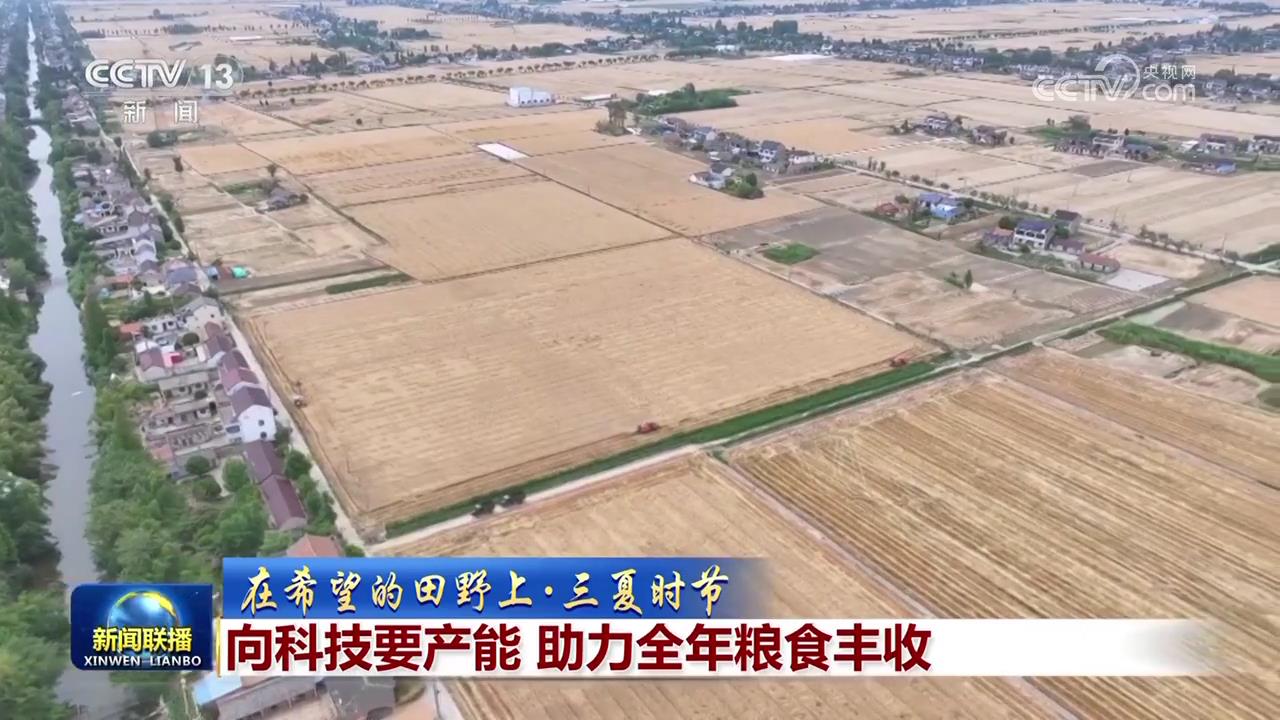
Group 1 - The wheat harvesting season is in full swing, with summer planting and management activities being conducted simultaneously across various regions to enhance grain production for the year [1][3] - In the Huanghuaihai and Northwest wheat regions, over 36 million acres of wheat in Jiangsu are maturing, with local farmers utilizing more than 5,000 harvesting and drying machines to ensure efficient collection [3] - In Shaanxi, over 14 million acres of wheat are also being harvested, with the harvest period occurring 3 to 7 days earlier than previous years due to the use of smart platforms for efficient machinery deployment [3] Group 2 - In Northeast China, spring farming is nearing completion, with over 84% of rice transplanting in Liaoning accomplished, utilizing a significant number of unmanned transplanting machines that enhance efficiency by 30% [5] - Heilongjiang has completed its spring farming production and is transitioning to field management, with over 22 million acres of grain crops planted this year, benefiting from high-performance precision sowing machines [5] - Technological advancements are crucial for summer management, with farmers in Hubei using mobile agricultural software to monitor crop growth and seek expert advice when necessary [7] Group 3 - In Guangdong, over 13 million acres of early rice are entering the management phase, with the introduction of AI-powered drones for crop monitoring and pest identification, promoting the use of technology in agriculture [7]