太空光伏

Search documents
迈为股份董事长总经理15天减持17亿元
Cai Jing Wang· 2026-02-14 15:10
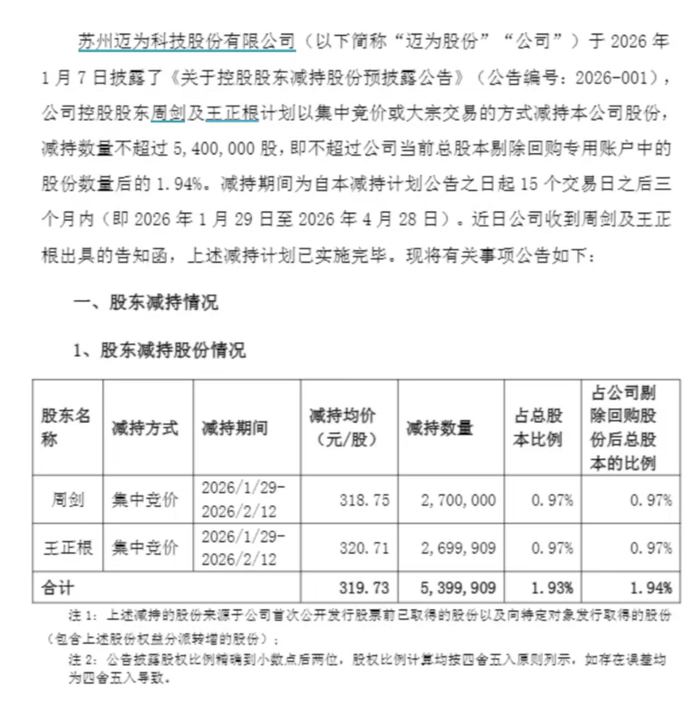
Group 1 - The core viewpoint of the news highlights that the solar equipment leader, Maiwei Co., has seen significant stock price appreciation due to the "space photovoltaic" concept, leading to substantial share reductions by its chairman and general manager, totaling approximately 17.26 billion yuan in just 15 days [1][2][3] - Maiwei Co.'s stock price has increased by 285.60% from November 2025 to the present, with a peak price of 373.00 yuan per share on January 26, 2026, pushing its market capitalization above 100 billion yuan [1] - The share reduction involved the company's major shareholders, Zhou Jian and Wang Zhenggen, who sold approximately 539.99 million shares, representing about 1.93% of the total share capital, at an average price of 319.73 yuan per share [3] Group 2 - The "space photovoltaic" concept gained traction following a rumor about a 500 million USD contract between SpaceX and Maiwei Co., which has not been officially confirmed by the company [2] - The market has increasingly viewed Maiwei Co. as a key player in the "space photovoltaic" sector due to its leadership in heterojunction equipment, contributing to the stock's speculative rise [2]

800亿光伏龙头狂飙285%,高管15天套现17亿元
Xin Lang Cai Jing· 2026-02-14 10:16
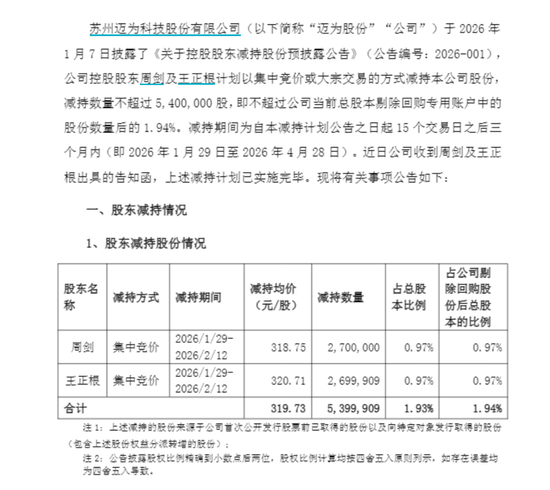
Core Viewpoint - The "space photovoltaic" concept has significantly boosted the wealth creation potential in the secondary market, as evidenced by the substantial share reduction announcement from leading photovoltaic equipment company Maiwei Co., Ltd. (300751.SZ), indicating a daily profit potential of 1 billion yuan [1][10]. Share Reduction Announcement - On February 13, Maiwei Co., Ltd. announced that its controlling shareholders, Zhou Jian and Wang Zhenggen, reduced their holdings by approximately 5.4 million shares, accounting for about 1.93% of the total share capital, between January 29 and February 12, 2026 [1][2]. - Zhou Jian sold 2.7 million shares at an average price of 318.75 yuan per share, cashing out approximately 860 million yuan, while Wang Zhenggen sold 2.699 million shares at an average price of 320.71 yuan per share, totaling around 866 million yuan [1][2]. Stock Performance - Since November 2025, Maiwei Co., Ltd. has seen its stock price increase by 285.60%, with a peak price of 373.00 yuan per share on January 26, 2026, leading to a market capitalization exceeding 100 billion yuan [3][12]. - However, as of February 13, 2026, the stock price closed at 284.47 yuan per share, reflecting a decline of over 20% since January 28, 2026 [9][18]. "Space Photovoltaic" Concept - The inclusion of Maiwei Co., Ltd. in the "space photovoltaic" concept stock list originated from a rumor about a $500 million contract with SpaceX for HJT equipment, which led to a stock price surge [5][14]. - The "space photovoltaic" technology is categorized into three main types: gallium arsenide batteries, which are currently the mainstream technology with over 30% efficiency; thin-film and heterojunction silicon technologies, which are gradually increasing their penetration in space; and perovskite batteries, which have a theoretical efficiency close to 45% and could dominate low Earth orbit and deep space missions post-2028 if stability issues are resolved [5][14]. Technological Advancements - On January 21, 2026, Maiwei Co., Ltd. announced a breakthrough in G12H perovskite/silicon heterojunction batteries with a certified efficiency of 32.38%, and on January 28, it achieved a new world record for heterojunction solar cells with a conversion efficiency of 26.92% [7][16]. - The company emphasizes that heterojunction batteries are becoming a competitive technology in the space energy sector due to their high efficiency, stability, and lightweight characteristics [7][16]. Financial Performance - For the first three quarters of 2025, Maiwei Co., Ltd. reported revenues of 6.204 billion yuan, a year-on-year decline of 20.13%, and a net profit of 663 million yuan, down 12.56% year-on-year [8][16]. - Despite the downturn in the photovoltaic industry, Maiwei Co., Ltd. has maintained profitability and is expanding its business beyond photovoltaic equipment into the heterojunction battery sector and the semiconductor field [8][16]. Investment Activities - Recently, Maiwei Co., Ltd. has been actively investing in professional investment funds, including a 10 million yuan commitment to a fund focused on industrial internet and a 90 million yuan investment in a fund targeting hard technology and high-end manufacturing [17].
800亿光伏龙头狂飙285%,高管15天套现17亿元
21世纪经济报道· 2026-02-14 10:12
Core Viewpoint - The "space photovoltaic" concept has significantly boosted the wealth generation potential in the secondary market, as evidenced by the substantial share reduction by the major shareholders of Maiwei Co., Ltd. [1][4] Group 1: Shareholder Reduction - Maiwei Co., Ltd. announced a share reduction by its major shareholders, with a total of approximately 5.4 million shares sold, accounting for about 1.93% of the total share capital [2][4] - The chairman, Zhou Jian, sold 2.7 million shares at an average price of 318.75 yuan per share, raising approximately 8.60 billion yuan, while the general manager, Wang Zhenggen, sold 2.699 million shares at an average price of 320.71 yuan per share, raising about 8.66 billion yuan [1][2] Group 2: Stock Performance - Since November 2025, the stock price of Maiwei Co., Ltd. has seen a maximum increase of 285.60%, with the stock reaching a peak of 373.00 yuan per share on January 26, 2026, and the market capitalization exceeding 100 billion yuan [4][6] - The recent surge in stock price is attributed to the hype surrounding the "space photovoltaic" concept, which has positioned Maiwei as a key beneficiary in this market trend [6][7] Group 3: Technological Developments - The "space photovoltaic" technology is categorized into three main types: gallium arsenide batteries, thin-film and heterojunction silicon technologies, and perovskite batteries, with the latter being seen as a potential game-changer due to its theoretical efficiency of nearly 45% [6][7] - Maiwei Co., Ltd. has made significant advancements in heterojunction technology, achieving a record efficiency of 32.38% for G12H perovskite/silicon heterojunction batteries and 26.92% for its self-developed heterojunction solar cells [7] Group 4: Financial Performance - For the first three quarters of 2025, Maiwei Co., Ltd. reported revenues of 6.204 billion yuan, a year-on-year decline of 20.13%, and a net profit of 663 million yuan, down 12.56% year-on-year [8] - Despite the downturn in the photovoltaic industry, Maiwei has maintained profitability and is expanding its business beyond just photovoltaic equipment into the semiconductor sector [8][9] Group 5: Investment Activities - Recently, Maiwei Co., Ltd. has engaged in multiple investments in professional funds, indicating a strategic shift towards becoming an investor in addition to its core business [9] - The company has committed 10 million yuan to a venture capital fund focused on industrial internet and 90 million yuan to another fund targeting hard technology and high-end manufacturing [9]

马斯克团队密访中国光伏!百亿级太空能源市场要被激活了?
Sou Hu Cai Jing· 2026-02-14 05:48
Core Insights - Tesla and SpaceX's expert team is exploring heterojunction battery components at JinkoSolar, which may reshape the global renewable energy landscape [1] Group 1: Company Developments - JinkoSolar confirmed recent contact with a team related to Elon Musk, who examined the company's technology reserves and production equipment [3] - The visit by Musk's team is part of a broader trend, as many leading domestic photovoltaic companies are also being assessed [5] - JinkoSolar's stock price surged to its daily limit following the news of Musk's team's visit [3][18] Group 2: Industry Trends - Musk's team is conducting in-depth assessments of the entire photovoltaic supply chain in China, focusing on equipment, silicon wafers, and battery components [5] - The emphasis on heterojunction and perovskite technologies is due to their advantages in efficiency, adaptability to extreme environments, and cost-effectiveness [10] - The photovoltaic industry is at a critical transformation point, with component prices expected to drop significantly, leading to widespread losses among major companies [12] Group 3: Market Reactions - The news of Musk's team's visit led to a strong market reaction, with the photovoltaic sector in A-shares experiencing a collective surge [14][18] - UBS forecasts that global demand for space photovoltaics will grow from 0.3 GW in 2026 to 115 GW by 2035, indicating a potential increase of over 300 times in a decade [14] Group 4: Future Prospects - SpaceX has reportedly entered into a cooperative order with a leading domestic heterojunction equipment manufacturer, suggesting the beginning of a significant partnership [16] - The collaboration aligns with Musk's ambitious space photovoltaic plans, leveraging China's technological advantages and production capabilities [16][18] - The Ministry of Industry and Information Technology is promoting measures to shift the photovoltaic industry from price competition to value competition, indicating a potential positive shift in the market dynamics [12][18]


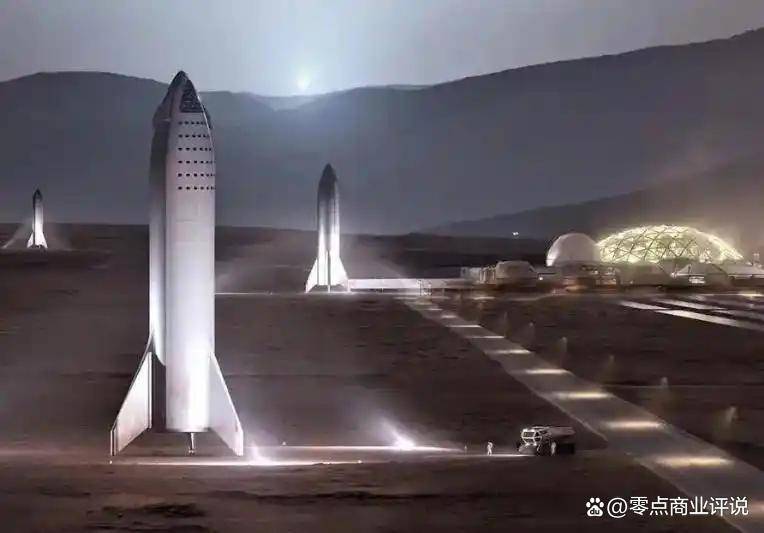
马斯克领跑太空光伏,A股太空光伏指数较高点跌超8%
Di Yi Cai Jing· 2026-02-13 15:17
Core Viewpoint - The article discusses the impact of Elon Musk's statements on the space photovoltaic industry and the subsequent market reactions, highlighting the volatility of the A-share space photovoltaic index and the challenges facing the commercialization of space solar power in China [1]. Group 1: Market Reactions - On February 13, the space photovoltaic concept stock, Shenyang Double Energy (600481.SH), closed at the daily limit down after a previous surge due to news of receiving orders related to SpaceX's Starship launch base expansion [1]. - The Wind space photovoltaic index rose nearly 40% in January following Musk's comments at the Davos Forum, but has since declined over 8% from its peak due to multiple companies issuing clarification announcements [1]. Group 2: Industry Insights - Industry experts indicate that large-scale commercialization of space photovoltaic technology is unlikely in the short term, with ground-based power stations remaining the primary source of energy consumption [1]. - Factors such as international politics make it unrealistic for Chinese photovoltaic companies to secure large orders from the U.S. market [1]. - There is a call for the Chinese photovoltaic industry to enhance collaboration with domestic commercial space ventures to support China's space strategy, with some perovskite companies already testing joint applications with satellite firms [1].
马斯克领跑太空光伏
Di Yi Cai Jing Zi Xun· 2026-02-13 14:20
Core Insights - The recent surge in the space photovoltaic sector, driven by Elon Musk's comments on the potential of solar energy for AI, has led to significant market fluctuations, with the Wind Space Photovoltaic Index rising nearly 40% in January before experiencing an over 8% decline from its peak due to clarifications from multiple companies [2][3] - The concept of space photovoltaics, while not new, is gaining traction as advancements in launch technology and cost reductions from companies like SpaceX make large-scale deployment more feasible [4][6] - Industry experts express skepticism about the immediate commercial viability of space photovoltaics, emphasizing that ground-based solar power will remain the primary energy source for the foreseeable future [2][5] Industry Trends - The potential market for space photovoltaics is vast, with estimates suggesting that launching 10,000 satellites annually could create a market worth 200 billion yuan for solar wings, and long-term projections estimate the market could reach 5.6 trillion yuan [3] - The rapid increase in SpaceX's launch frequency, from 31 launches in 2021 to a projected 167 in 2025, is expected to significantly lower launch costs, thereby facilitating the growth of the space photovoltaic sector [4] - Despite the optimism surrounding space photovoltaics, the industry remains cautious, with challenges such as high certification times for aerospace clients and the need for standardized supply chains and quality control systems [5][6] Technological Developments - The industry is focusing on developing new technologies such as P-type ultra-thin HJT batteries and perovskite-silicon tandem batteries, which are seen as potential solutions for the challenges faced in space photovoltaic applications [7] - Perovskite tandem batteries have shown laboratory efficiencies exceeding 35% and are significantly cheaper than traditional gallium arsenide batteries, making them a promising candidate for future space applications [7][8] - The integration of solar technology with aerospace initiatives is viewed as essential for Chinese companies to leverage their existing advantages in the photovoltaic supply chain and to participate in the global space race [9]


马斯克领跑太空光伏,中国何时产业化落地
Di Yi Cai Jing· 2026-02-13 13:52
Core Viewpoint - The emergence of space photovoltaic technology, driven by Elon Musk's vision, presents both opportunities and challenges for the Chinese photovoltaic industry, with a focus on collaboration with domestic aerospace companies and the need for technological advancements in the sector [1][2][6]. Group 1: Market Dynamics - The space photovoltaic sector is projected to have a market potential of 5.6 trillion yuan, driven by the deployment of satellites and the integration of solar energy with AI capabilities [2][3]. - The Wind Space Photovoltaic Index saw a nearly 40% increase in January, but has since corrected by over 8% due to clarifications from multiple companies [1][2]. - The capital frenzy surrounding space photovoltaics has been influenced by Musk's statements at the Davos Forum, highlighting the importance of solar energy for AI [1][2]. Group 2: Technological Challenges - The high cost of satellite launches and limited capacity have historically constrained the scalability of space photovoltaics, but advancements in reusable rocket technology by SpaceX are changing this landscape [3][7]. - The industry remains cautious about the large-scale commercialization of space photovoltaics, citing the need for extensive testing and validation of technologies in extreme space environments [3][4]. - Current space photovoltaic solutions are primarily custom-made in small batches, necessitating the establishment of standardized supply chains and quality control systems [3][4]. Group 3: Strategic Collaborations - Chinese photovoltaic companies are encouraged to leverage their existing advantages in ground solar energy to collaborate with aerospace firms, aiming to capture opportunities in the space photovoltaic market [6][8]. - The integration of advanced technologies such as perovskite and heterojunction (HJT) solar cells is seen as crucial for the future of space photovoltaics, with potential applications in satellite energy systems [7][8]. - Companies are actively pursuing partnerships to test new technologies, with plans to replace traditional gallium arsenide solar cells with more efficient alternatives in upcoming satellite missions [6][7]. Group 4: Future Outlook - The global race towards space energy systems is intensifying, with initiatives like China's "Sunshine Plan" and the EU's SOLARIS plan emphasizing the importance of space photovoltaic stations [7]. - The next few years are expected to yield significant technological advancements in the photovoltaic sector, particularly in the development of P-type ultra-thin HJT cells and perovskite tandem cells [7][8]. - The Chinese photovoltaic industry is positioned to play a pivotal role in the future of space energy, given its comprehensive supply chain and competitive cost structure [8].
天合光能因虚假回复遭上交所监管警示
Cai Jing Wang· 2026-02-13 13:38
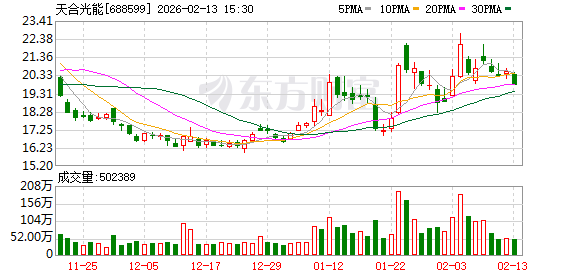
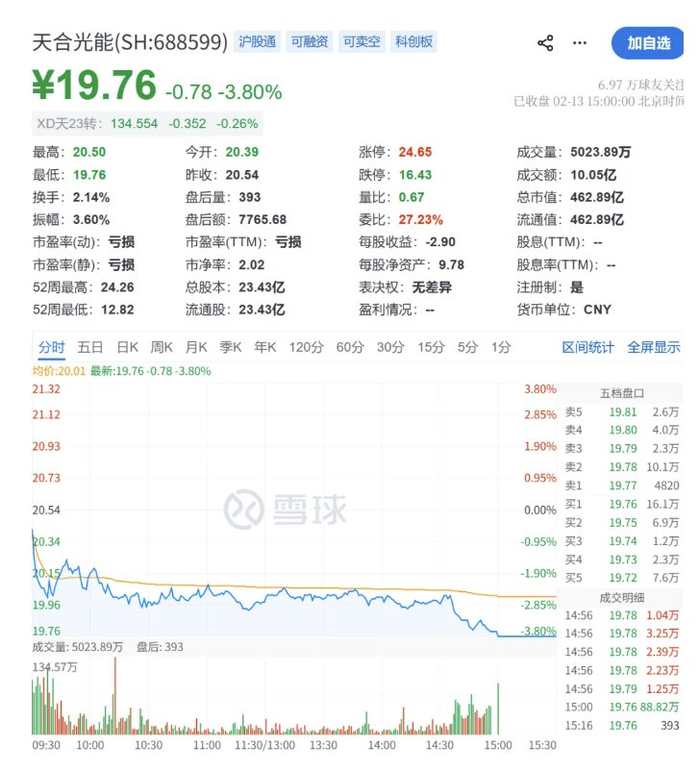
Core Viewpoint - Trina Solar has received a regulatory warning from the Shanghai Stock Exchange due to misleading information regarding its relationship with SpaceX, which was inaccurately communicated to investors [1][2]. Company Summary - Trina Solar was warned by the Shanghai Stock Exchange on February 13 for providing misleading information about its collaboration with SpaceX, which raised concerns among investors [1][2]. - The company clarified that it has not engaged in any cooperation with SpaceX and has only supplied components to Tesla Motors and its predecessor SolarCity from 2010 to 2018, totaling 775 MW [1][2]. - As of the announcement date, Trina Solar has no orders related to "space photovoltaics" and its main products are still focused on ground photovoltaic applications [1][2]. Market Reaction - As of February 13, Trina Solar's stock closed at ¥19.76 per share, with a total market capitalization of ¥463 billion [2]. - The stock experienced a decline of 3.80% on the day of the announcement [3][4].

国际实业:未有产品用于太空光伏领域
Sou Hu Cai Jing· 2026-02-13 13:34
Group 1 - The company does not have any products related to space photovoltaic technology [1] - The company received inquiries regarding its products in the ultra-high voltage sector and current order status [1]

688599 遭监管警示 又是因为SpaceX
Zhong Guo Ji Jin Bao· 2026-02-13 12:09
Core Viewpoint - Trina Solar has received a regulatory warning from the Shanghai Stock Exchange due to misleading information regarding its collaboration with SpaceX, which has raised concerns among investors [2][8]. Company Summary - Trina Solar was involved in a previous partnership with Tesla Motors and its predecessor SolarCity, supplying a total of 775 MW of components from 2010 to 2018, but has not engaged in any business with SpaceX [4]. - The company clarified that it has no current orders related to "space photovoltaics" and that its main photovoltaic products are primarily used in ground-based applications [8]. - As of February 13, Trina Solar's stock closed at 19.76 CNY per share, with a total market capitalization of 46.3 billion CNY [8]. Industry Summary - The concept of "space photovoltaics" gained popularity following support from Elon Musk, leading to significant market interest and stock price increases in related companies [9]. - However, recent enthusiasm for "space photovoltaics" has waned, resulting in noticeable corrections in some photovoltaic concept stocks [9]. - The China Photovoltaic Industry Association has indicated that gallium arsenide (GaAs) batteries remain the preferred choice for commercial aerospace applications due to their high efficiency and radiation resistance, despite their high costs [9].