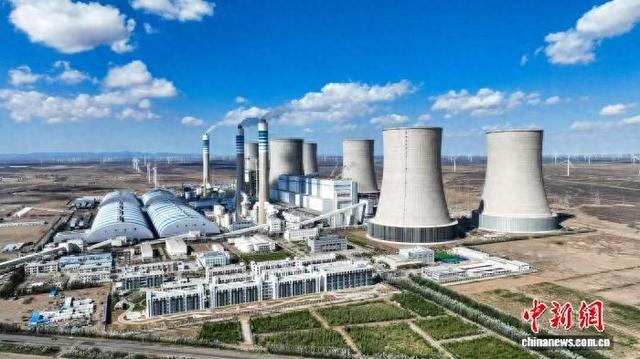
西电东送

Search documents
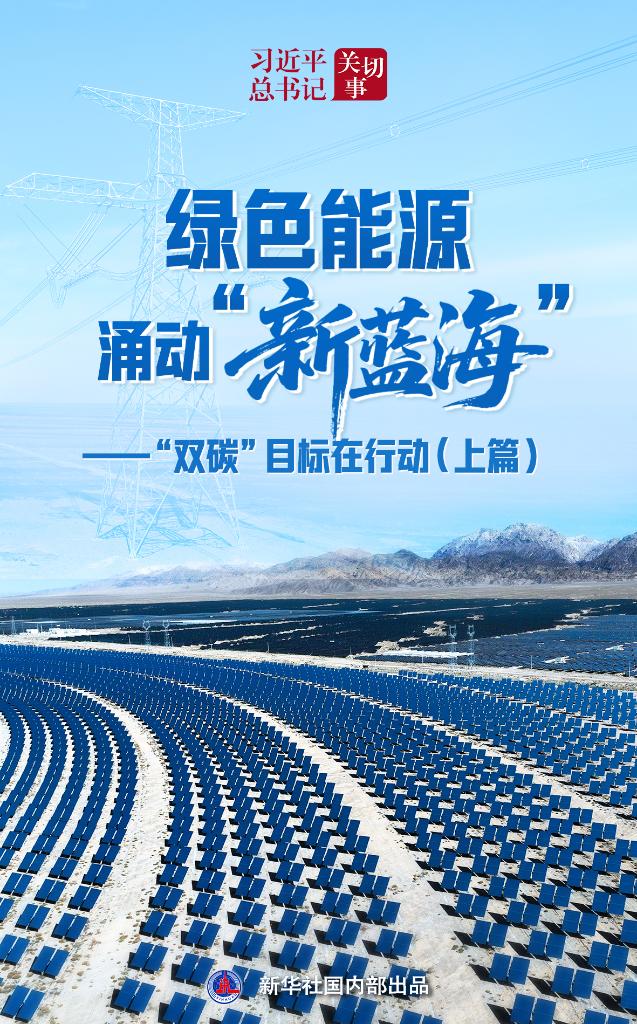
习近平总书记关切事丨绿色能源涌动“新蓝海”——“双碳”目标在行动(上篇)
Xin Hua She· 2025-11-05 01:41
Group 1 - China's commitment to peak carbon emissions by 2030 and achieve carbon neutrality by 2060 is a significant global promise that is driving profound changes in the economy and society [2] - The transformation of previously barren areas into energy production hubs, such as the Qaidam Basin, showcases the shift from fossil fuels to renewable energy sources [5][6] - The "14th Five-Year Plan" emphasizes the importance of building a clean, low-carbon, safe, and efficient energy system, with a focus on renewable energy [6][18] Group 2 - The Qinghai province's ±800 kV ultra-high voltage direct current transmission project is a major initiative to transport renewable energy across long distances, significantly reducing energy loss during transmission [9][11] - The "West-to-East Power Transmission" strategy aims to balance energy and economic disparities between regions, with renewable energy playing a crucial role in this initiative [9][12] - The rapid growth of renewable energy capacity in Xinjiang, with over 128 million kW of installed capacity, highlights the region's strategic importance in national energy security [7][12] Group 3 - The storage technology sector, particularly vanadium flow batteries, is experiencing rapid growth due to the demand for energy storage solutions that support renewable energy integration [15][17] - The lithium extraction industry in Qinghai is becoming a global leader, with advancements in lithium extraction technology contributing to the competitiveness of China's renewable energy sector [19][20] - The production of photovoltaic components and lithium batteries has surged, with output increasing by 3.7 times and 6.4 times respectively since the "14th Five-Year Plan" began [20]

内蒙古特高压电网累计外送电量突破8000亿千瓦时
Zhong Guo Jing Ji Wang· 2025-11-04 07:49
Core Insights - Inner Mongolia's ultra-high voltage (UHV) transmission channels are projected to deliver over 800 billion kilowatt-hours (kWh) of electricity by October 31, 2025, supporting China's "West-to-East Power Transmission" strategy and energy security goals [1][2] Group 1: UHV Transmission Development - Inner Mongolia has established a robust UHV backbone network connecting major eastern load centers, with annual electricity delivery increasing from 7.371 billion kWh in 2017 to 170.6 billion kWh in 2024 [1] - The eighth UHV transmission channel, Zhangbei-Shengli 1000 kV AC project, is set to be operational by October 2024, further enhancing the region's energy infrastructure [1] Group 2: Operational Safety and Maintenance - A comprehensive safety and maintenance system has been implemented, featuring 12 types of online monitoring devices and mobile visualization terminals for continuous monitoring of transmission lines [2] - Tailored maintenance plans are developed for different geographical and climatic conditions, ensuring rapid response within a 2-hour repair window [2] Group 3: Green Energy Transition - Over 102 billion kWh of clean energy has been transmitted through UHV channels, significantly contributing to the clean energy structure in regions like Beijing-Tianjin-Hebei [2] - The UHV grid facilitates real-time sharing of green electricity from Inner Mongolia, transforming the region into a close partner for other provinces [2]
我国最大盆地超高压电力环网全线投入运行
Xin Hua Wang· 2025-10-30 11:51
Core Points - The Xinjiang Hantari Basin 750 kV power transmission and transformation project has been fully operational as of October 30, marking a significant milestone in China's high-voltage power grid development [1] - The project took 15 years to complete and was fully connected on July 13 of this year, consisting of nine phases of 750 kV transmission and transformation works [1] - The total length of the project is 4,197 kilometers, effectively creating an "energy ring" for the Tarim Basin [1] Summary by Categories Project Overview - The Xinjiang Hantari Basin 750 kV project enhances the maximum power supply capacity of the southern Xinjiang power grid by 800,000 to 1,000,000 kW [1] - The project increases the renewable energy consumption capacity by 8,000,000 kW, laying a solid foundation for the construction of a clean energy supply guarantee area with a capacity of tens of millions of kilowatts in the Tarim Basin [1] Impact on Energy Supply - The project enables the aggregation of tens of millions of kilowatts of renewable energy, forming a "big river" for green electricity transmission [1] - It facilitates the "West-to-East Power Transmission" channel, allowing green electricity to be delivered nationwide [1]
宁夏构建“风光火储”多能互补格局 加速推进“宁电入湘”工程建设
Zhong Guo Xin Wen Wang· 2025-10-27 08:53
Core Viewpoint - Ningxia is accelerating the construction of a multi-energy complementary pattern of "wind, solar, fire, and storage" to provide stable, clean, and efficient power support for the "Ning Electric into Hunan" project [1] Group 1: Project Developments - The Guoneng Zhongwei Power Plant expansion project, which includes the construction of four 660,000 kW ultra-supercritical coal-fired generating units, is progressing rapidly since its groundbreaking on April 26, 2023 [2] - The first two units are expected to be operational by December 2025, with all four units projected to be completed by March 2026, ensuring the timely operation of the "Ning Electric into Hunan" corridor [2] - The project aims to utilize advanced ultra-supercritical technology to create a reliable power station with low carbon emissions and flexible peak-shaving capabilities [2] Group 2: Renewable Energy Initiatives - The Zhongwei 3 million kW photovoltaic composite project, located in the Tengger Desert, is China's first large-scale energy base to receive dual approvals, with a total investment exceeding 15.6 billion yuan [3] - The first phase of the photovoltaic project has achieved full capacity grid connection, and the second phase has recently been put into operation, marking significant progress [3] - Once fully operational, the photovoltaic project is expected to generate an annual average of 5.9 billion kWh, complementing the Guoneng Zhongwei coal power project to form a synergistic supply pattern of "wind, solar, fire, and storage" [3]
“黔电送粤”关键线路完成抗冰改造
Xin Hua Wang· 2025-10-26 06:41
Core Points - The "Qian Electric Transmission to Guangdong" key line, the 500 kV Ligui Jia Line, has completed ice-resistant reinforcement modifications, enhancing the reliability of the West-to-East power transmission network under extreme weather conditions [1][2] - The Ligui Jia Line, operational since 2008, plays a crucial role in transmitting electricity to Guangdong and ensuring power supply in northern Guangxi [1] - The project involved the construction of 15 new towers and the modification of 5.8 kilometers of line, tripling the weight capacity of the towers and increasing the ice resistance standard from 10-15 mm to 30 mm in complex terrain areas [1] Company Actions - The Southern Power Grid Company is actively enhancing its infrastructure to withstand extreme weather, with plans to continue the ice-resistant modifications on the 500 kV Ligui Yi Line and other key routes [2] - The project aims to complete all modifications before the arrival of cold waves, ensuring the safety and reliability of the power grid during winter [2]
华能水电:响应国家“双碳”战略 推动绿色能源高质量发展
Xin Hua Wang· 2025-10-23 07:43
Core Viewpoint - Huaneng Lancang River Hydropower Co., Ltd. is actively promoting the development of green and clean energy in alignment with China's "dual carbon" goals, focusing on sustainable development and energy security strategies during the 14th Five-Year Plan period [1][2]. Group 1: Company Overview - Huaneng Lancang River Hydropower is a major hydropower enterprise under China Huaneng Group, engaged in the development and operation of hydropower, photovoltaic, and wind energy in the Lancang River basin and surrounding areas [2]. - The company has a total installed capacity exceeding 35 million kilowatts, all from green clean energy sources, and has increased its installed capacity by 11.8 million kilowatts during the 14th Five-Year Plan [2][6]. Group 2: Financial Performance - Over the past five years, Huaneng Lancang River Hydropower has seen continuous growth in operating performance, with steady increases in revenue and net profit [3]. - The company has distributed a total of 22.3 billion yuan in cash dividends and reached a market capitalization of over 225 billion yuan, providing long-term stable returns to investors [3]. Group 3: Strategic Initiatives - The company is committed to the dual development of hydropower and new energy, actively advancing the integrated development of hydropower, wind, and solar energy in the Lancang River basin [2][5]. - Huaneng Lancang River Hydropower has established 13 world-class hydropower stations and is creating a benchmark demonstration area for new power systems, contributing to the construction of a clean energy base [6]. Group 4: Capital Operations - In September 2025, the company completed its first non-public offering post-listing, raising 5.825 billion yuan for the construction of hydropower projects, which supports the national "West-East Electricity Transmission" strategy [8]. - The fundraising has attracted strategic investors, enhancing the shareholder structure and providing stable long-term funding for green energy projects [8]. Group 5: Technological Innovation - Huaneng Lancang River Hydropower is focusing on technological innovation to enhance productivity, addressing challenges in high-altitude hydropower construction and the integration of renewable energy sources [9]. - The company aims to integrate digitalization and artificial intelligence into its operations, enhancing efficiency and promoting a smart transformation in energy production [9][10].

人民日报丨特高压架起电力“闪送通道” 中国已投运40余项特高压交直流工程
国家能源局· 2025-10-23 04:57
Core Viewpoint - China's ultra-high voltage (UHV) transmission projects are rapidly advancing, significantly enhancing the country's energy distribution capabilities and supporting the transition to cleaner energy sources [9][14][17]. Group 1: UHV Projects Overview - China has put into operation over 45 UHV projects, with an expected transmission capacity exceeding 340 million kilowatts by the end of this year, marking a 25% increase from the end of the 13th Five-Year Plan [9][14]. - The Ningxia-Hunan ±800 kV UHV DC transmission project is the first approved project primarily for transmitting renewable energy from large-scale wind and solar bases, capable of delivering over 36 billion kilowatt-hours annually to Hunan, with renewable energy accounting for over 50% [4][17]. - The Gansu-Zhejiang ±800 kV UHV DC project has entered the line construction phase, further expanding the UHV network [6]. Group 2: Energy Distribution and Demand - China's energy production and consumption are inversely distributed, necessitating the "West-East Power Transmission" strategy to efficiently transport energy from resource-rich western regions to consumption-heavy eastern areas [12][14]. - The UHV DC technology allows for long-distance transmission (2000 to 3000 kilometers) with low line losses, effectively connecting energy supply to high-demand regions [12][14]. Group 3: Technological Innovations - The UHV projects have led to significant technological advancements, including the establishment of standardized results for ±800 kV/800 MW UHV DC systems, with over 500 various standards and specifications developed [19][21]. - The Baihetan-Jiangsu ±800 kV UHV DC project is notable for being the first to utilize hybrid cascade transmission technology, integrating conventional and flexible DC transmission advantages [20][21]. - The introduction of domestically produced equipment, such as the tap changer and DC control systems, has broken foreign technology monopolies, enhancing China's electrical equipment manufacturing capabilities [21]. Group 4: Future Outlook - By 2024, the proportion of clean energy transmitted through UHV DC channels is expected to reach nearly 60%, with a total transmission of approximately 420 billion kilowatt-hours, reflecting a 70% increase from the end of the 13th Five-Year Plan [16][17]. - The construction of UHV projects is shifting from primarily coal-based power to prioritizing clean energy, significantly contributing to China's green energy transition [17].
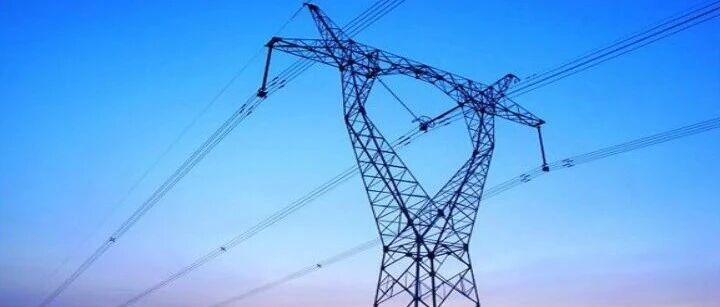
特高压架起电力“闪送通道”(“十四五”,我们见证这些硬核突破④)
Ren Min Ri Bao Hai Wai Ban· 2025-10-22 22:21
Core Insights - The construction of ultra-high voltage direct current (UHVDC) transmission lines in China is accelerating, with a focus on delivering clean energy from western regions to eastern consumption areas [10][11][14] - The Ningxia-Hunan ±800 kV UHVDC project is the first approved transmission corridor primarily for renewable energy from the "desert, Gobi, and barren" wind and solar power bases, capable of delivering over 36 billion kWh annually to Hunan, with more than 50% from renewable sources [12][13] - By the end of 2023, China's UHVDC transmission capacity is expected to exceed 340 million kW, a 25% increase from the end of the 13th Five-Year Plan [7][11] Group 1: Project Developments - The Gansu-Zhejiang ±800 kV UHVDC project has entered the line construction phase, indicating ongoing infrastructure development [4] - The Baihetan-Jiangsu ±800 kV UHVDC project exemplifies the efficiency of UHVDC technology, reducing transmission time to just 7 milliseconds for electricity from Sichuan to Jiangsu [9] - The Lonyang-Shandong ±800 kV UHVDC project, which is the first integrated energy base project, has been completed and is expected to deliver 36 billion kWh annually, with over half from renewable sources [12][13] Group 2: Technological Advancements - The "14th Five-Year Plan" period has seen significant advancements in UHVDC technology, with the total length of UHVDC lines expected to grow from 28,000 km to over 40,000 km [11][15] - The introduction of standardized ±800 kV/800 MW UHVDC technology has led to the creation of over 500 various standards and specifications, enhancing the domestic power equipment manufacturing capabilities [15][17] - Breakthroughs in "bottleneck" technologies have been achieved, including the use of domestically produced equipment, which reduces reliance on foreign technology [17]
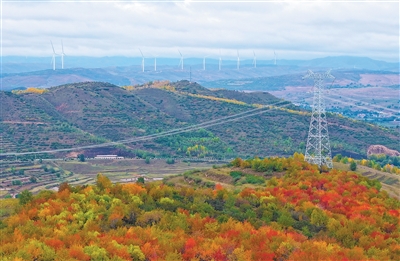
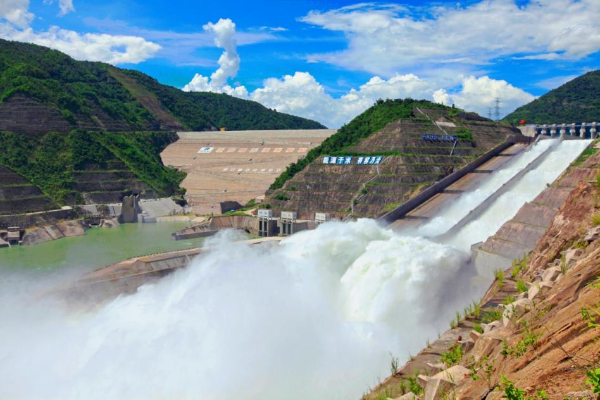
鹤舞金沙激荡澎湃水能
Jing Ji Ri Bao· 2025-10-21 06:15
Core Insights - The Baihetan Hydropower Station, located at the junction of Sichuan and Yunnan provinces, holds six world records in hydropower technology, including the largest single-unit capacity of 1 million kilowatts [1][2][4] Group 1: Technological Achievements - Baihetan is recognized as the largest and most technically challenging hydropower project globally, showcasing significant advancements in high-end equipment manufacturing [2] - The project has overcome numerous technical challenges, including temperature control and crack prevention for a 300-meter high arch dam, and the use of low-heat cement concrete throughout the dam [2][3] - Baihetan has initiated nearly 300 research projects and filed around 1,100 patent applications, with over 742 domestic patents granted, highlighting its innovation in the hydropower sector [2] Group 2: Operational Efficiency - The hydropower station employs a smart construction approach, utilizing thousands of sensors to monitor temperature and stress, achieving over 34.7 million temperature data points collected [3] - The intelligent water flow system allows for real-time adjustments to manage concrete temperature, significantly enhancing operational efficiency [3] Group 3: Environmental Impact - Baihetan's power generation capacity can meet the daily electricity needs of approximately 148 million people, contributing to the "West-to-East Power Transmission" initiative [6] - Since June 2021, the station has generated over 195 billion kilowatt-hours of electricity, saving over 59 million tons of standard coal and reducing carbon emissions by approximately 160 million tons [6] - The project also emphasizes ecological protection, achieving a 99.2% debris interception rate and exceeding 330 hectares of greening area [6] Group 4: Industry Leadership - The Baihetan project sets a new benchmark for high-quality development in the hydropower industry, demonstrating a shift from "catching up" to "leading" in global hydropower development [7] - The station is part of a larger network of hydropower plants, collectively forming the world's largest clean energy corridor, with a total installed capacity of 71.695 million kilowatts [6][7]

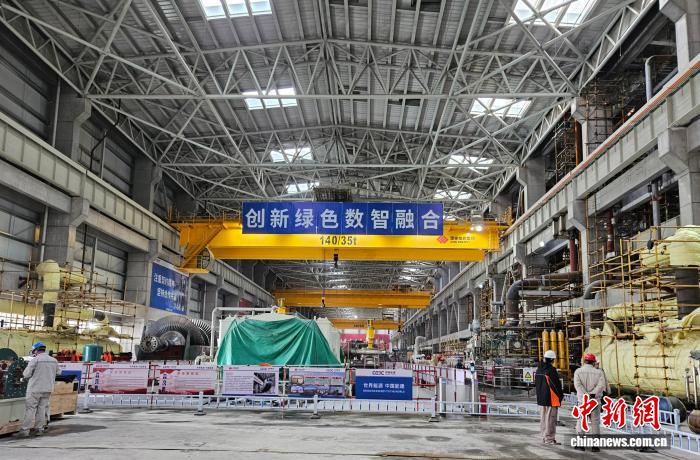
甘肃常乐电厂600万千瓦火电机组建成投产
Zhong Guo Xin Wen Wang· 2025-10-17 11:22
Core Points - Gansu Changle Power Plant's Unit 6 successfully completed a 168-hour full-load trial operation on October 16, marking the full commissioning of all six 1 million kilowatt coal-fired units, bringing the total installed capacity to 6 million kilowatts [1][3] - The project, located in Guazhou County, has a total investment of 20.5 billion yuan and is significant for the implementation of the national "West-to-East Power Transmission" strategy [3] - The six units can generate an annual electricity output of 33 billion kilowatt-hours and support an industrial output value of 10 billion yuan, contributing to the renewable energy base in Gansu Province [3] Investment and Development - The first phase of the project, consisting of four units, is the only peak-shaving power source for the Qishao ±800 kV UHVDC transmission project, which was fully commissioned by December 2023 [3] - The second phase, comprising two units, is a key project in Gansu Province's "14th Five-Year" energy development plan, which began construction in April 2023 [3] - The project enables stable dispatch of both thermal and renewable energy, optimizing cross-regional energy allocation [3]