
特高压输电工程

Search documents
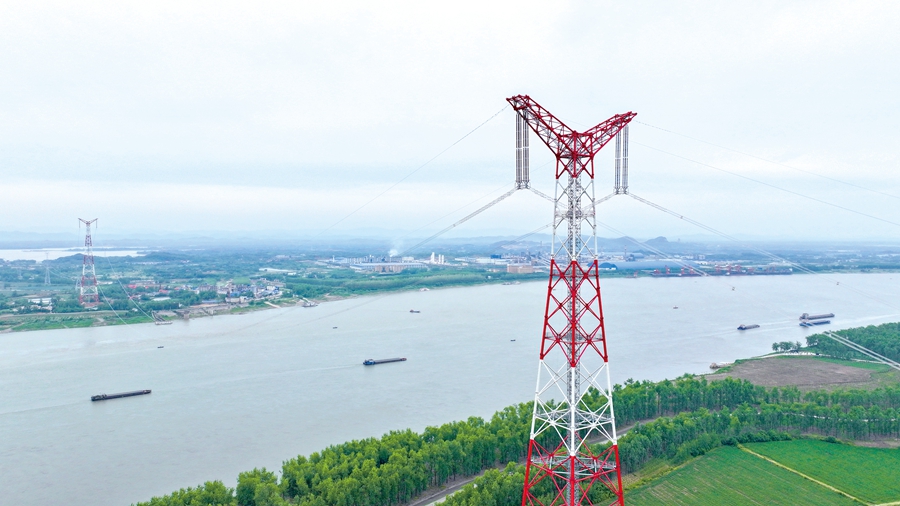
中国特高压:绿电闪送 千里直达
Zhong Yang Ji Wei Guo Jia Jian Wei Wang Zhan· 2026-03-09 00:28
Core Viewpoint - The construction of ultra-high voltage (UHV) power transmission projects is crucial for enhancing energy security, optimizing clean energy distribution, and supporting the green transformation of the economy in China [7][21]. Group 1: Project Developments - The Shaanxi-Fujian ±800 kV UHV DC transmission project is set to be operational by June 2024, spanning 1,070 kilometers to deliver clean energy to the Jianghuai region [6]. - The Inner Mongolia-Beijing-Tianjin-Hebei ±800 kV UHV DC project is progressing steadily, aimed at supporting the energy output from the Kubuqi Desert renewable energy base [6]. - The Jinshang-Hubei ±800 kV UHV DC project is designed to transmit clean energy from Tibet across nearly 1,900 kilometers, marking a significant engineering achievement [10]. Group 2: Energy Consumption and Capacity - By 2025, China's total electricity consumption is expected to exceed 10 trillion kilowatt-hours, solidifying its position as the world's largest electricity consumer [7]. - The UHV projects consist of 46 completed projects with a total length exceeding 62,000 kilometers, forming the largest and most advanced long-distance power transmission network globally [12]. Group 3: Technological Innovations - UHV technology has evolved rapidly in China, achieving world-leading standards in design, construction, and management, with over 500 various standard documents developed [16]. - The projects utilize innovative technologies to address challenges such as high-altitude construction and extreme weather conditions, ensuring safety and efficiency [14][16]. Group 4: Environmental Impact - The Ningxia-Hunan project has a total installed capacity of 17.64 million kilowatts, with over 70% from renewable sources, significantly reducing carbon emissions by 16 million tons annually [18]. - The Hami-Chongqing project can support over 10 million kilowatts of renewable energy, also contributing to a reduction of 16 million tons of carbon emissions each year [19]. Group 5: Future Prospects - The upcoming Tibet to Guangdong-Hong Kong-Macau Greater Bay Area ±800 kV UHV DC project will span 2,681 kilometers, expected to deliver over 43 billion kilowatt-hours of clean energy annually by 2029 [20]. - The Longdong-Shandong ±800 kV UHV DC project will facilitate the development of a significant renewable energy base in Gansu, providing 36 billion kilowatt-hours of electricity to Shandong each year, also reducing carbon emissions by 16 million tons [20].

\十五五\电网投资扩张,关注电力建设龙头
Changjiang Securities· 2026-01-18 09:45
Investment Rating - The report maintains a "Positive" investment rating for the industry [8]. Core Insights - The State Grid announced that during the "14th Five-Year Plan" period, fixed asset investment is expected to reach 4 trillion yuan, a 40% increase compared to the "13th Five-Year Plan" period [2][6]. - The investment will focus on building a green and intelligent power grid system, aiming to support the national carbon peak goals and enhance the capacity for renewable energy integration [11]. - The rapid installation of renewable energy sources necessitates an accelerated investment in grid infrastructure, with the State Grid planning to invest over 650 billion yuan in 2025, marking a historical high [11]. Summary by Sections Investment Overview - The fixed asset investment during the "15th Five-Year Plan" is projected to be 4 trillion yuan, which is a 40% increase from the previous plan [2][6]. - The annual investment is expected to reach 800 billion yuan, significantly boosting power construction [11]. Focus Areas - The investment will target three main areas: 1. Green Transition: Aiming for an annual increase of 200 million kilowatts in wind and solar energy capacity, with non-fossil energy consumption reaching 25% [11]. 2. Strengthening Grid Platforms: Establishing a new type of grid platform and enhancing the transmission capacity by over 30% compared to the end of the "14th Five-Year Plan" [11]. 3. Technological Empowerment: Focusing on key core technology breakthroughs to establish a globally influential energy technology hub [11]. Market Dynamics - By the end of 2024, the cumulative installed capacity of renewable energy in the State Grid's operating area is expected to reach 1.14 billion kilowatts, accounting for 43.3% of total installed capacity [11]. - Major players in the power construction sector, such as China Power Construction and China Energy Engineering, are expected to benefit significantly from the increased investment [11].


新型电力系统建设需强化“人物协同”
Zhong Guo Neng Yuan Wang· 2026-01-11 03:37
Core Viewpoint - The integration of "investment in material" and "investment in people" is emphasized as a strategic direction for China's economic development, reflecting a shift in focus towards human capital alongside infrastructure investment [1][2]. Group 1: Investment in People - Investment in people is defined as enhancing capabilities and potential across the entire population and lifecycle, addressing changes in international development, traditional economic dynamics, demographic shifts, and new productivity demands [2]. - The new electric power system serves as a platform for human capital development, creating demand for skilled professionals in high-altitude transmission technology, new energy consumption, and smart operation [3][4]. - The digital infrastructure, such as digital twin grids and IoT in power, provides training platforms for digital talent, facilitating the upgrade of skills towards intelligent and digital capabilities [3]. Group 2: Investment in Material - The new electric power system is identified as a core carrier for material investment, establishing a solid hardware foundation for human capital development [3]. - Major infrastructure projects, including ultra-high voltage transmission and smart grid facilities, are crucial for energy security and provide practical scenarios for human capital investment [3][4]. - Investment in material is linked to the operational efficiency of the electric power system, where technological upgrades and equipment improvements drive the need for skilled labor [7]. Group 3: Synergy Between Investment in People and Material - The new electric power system exemplifies the synergy between material and human investment, enhancing energy security and improving service quality through simultaneous upgrades in infrastructure and workforce capabilities [5][6]. - The integration of talent development into project planning and execution ensures that personnel grow alongside project demands, fostering a skilled workforce that meets industry needs [6]. - Collaborative efforts across the industry chain enhance the quality of talent and technology, promoting a virtuous cycle of development that benefits the entire ecosystem [6][8]. Group 4: Technological and Service Enhancements - Upgrading technology and service capabilities are essential for improving operational efficiency and service quality in the electric power sector [7][8]. - Investment in smart devices and digital platforms must be accompanied by comprehensive training programs to align employee skills with technological advancements [7]. - The focus on service quality and operational excellence is critical for meeting the evolving demands of consumers and businesses, ensuring that infrastructure investments yield tangible benefits [8].
山西2026省级重点工程项目:灵活储能调节38项
中关村储能产业技术联盟· 2026-01-06 09:55
Core Viewpoint - The article outlines the list of key provincial engineering projects in Shanxi for 2026, emphasizing the focus on energy transition and sustainable development through various projects in renewable energy and advanced energy technologies [2]. Energy Transition Projects - A total of 629 major engineering projects are included in the list, with 174 projects specifically related to energy transition [2][3]. - The largest category within energy transition projects is flexible energy storage and regulation, comprising 38 projects [2][3]. - Other categories include wind and solar power (19 projects), advanced coal power (9 projects), green electricity parks (15 projects), and modern coal chemical projects (12 projects) [3][12]. Flexible Energy Storage Projects - The 38 flexible energy storage projects include various types such as pumped storage, new energy storage, battery swap stations, and ultra-high voltage projects [2][4]. - Key locations for new energy storage projects are distributed across cities including Datong, Xinzhou, Jinzhong, Yangquan, Changzhi, Jincheng, Linfen, Yuncheng, and Lüliang [2][4][5]. Green Electricity Parks - There are 15 projects dedicated to the establishment of green electricity parks, aimed at integrating renewable energy sources into local industries [6][7]. - Notable projects include the integrated green electricity direct connection pilot project in Yangquan and the green electricity park construction in various cities [6][7]. Coal Supply and Storage Projects - The list includes 22 projects focused on coal production, supply, storage, and sales, highlighting the ongoing importance of coal in the region's energy landscape [6][8]. - Projects aim to enhance the efficiency and sustainability of coal operations across Shanxi [6][8]. Advanced Energy Equipment - There are 24 projects related to advanced energy equipment, which are crucial for supporting the energy transition and improving energy efficiency [6][18]. - These projects include the production of high-performance materials for energy applications and the development of smart energy technologies [6][18]. Non-Conventional Natural Gas Projects - The list features 12 projects aimed at increasing the production and storage of non-conventional natural gas, reflecting a shift towards diversifying energy sources [6][17]. - These projects are essential for enhancing energy security and reducing reliance on traditional fossil fuels [6][17].
中国清洁能源四大突破震撼全球
Sou Hu Cai Jing· 2025-12-20 12:57
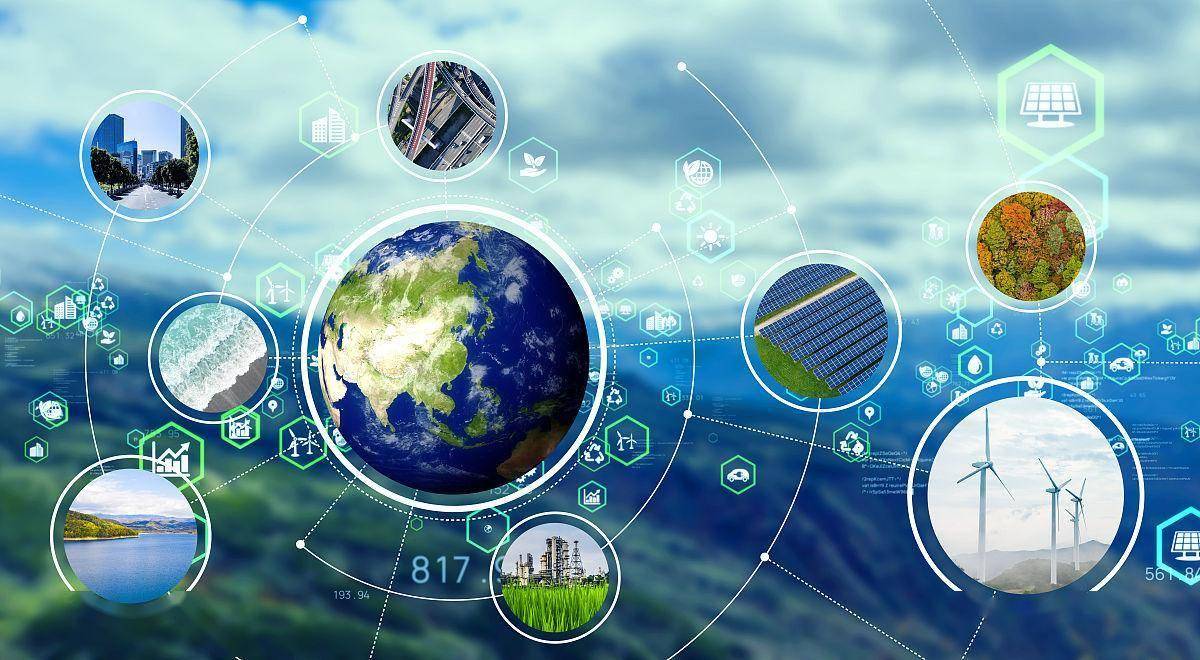
Core Insights - China has achieved four world-class records in clean energy within the past week, showcasing its commitment to green transformation and technological innovation [1] Group 1: Offshore Wind Power - The Jiangsu Dafeng offshore wind project has set a record with wind turbines located 85.5 kilometers offshore, capable of powering 1.4 million households and saving 860,000 tons of coal annually [3] - This project provides a complete technical solution for developing deep-sea wind energy resources, paving the way for the construction of multiple offshore power stations in the future [3] Group 2: Green Hydrogen - The "Qing Hydrogen No. 1" project in Jilin Songyuan produces 45,000 tons of green hydrogen and 200,000 tons of green ammonia and methanol annually, reducing carbon emissions by 1.4 million tons [4] - This project innovatively addresses the challenge of hydrogen production from fluctuating wind and solar energy, moving hydrogen energy from the laboratory to industrialization [4] Group 3: Bio-Methanol - The bio-methanol project in Zhanjiang offers a sustainable solution for the global shipping industry, reducing carbon emissions by over 85% compared to conventional fuels [5] - It establishes a complete supply chain from production to storage and transportation, significantly lowering carbon emissions during the transport process [5] Group 4: Ultra-High Voltage Transmission - The ultra-high voltage transmission project, spanning nearly 1,900 kilometers from the upper reaches of the Jinsha River to Hubei, has a total investment of 33.4 billion yuan [6] - This project facilitates the transfer of abundant hydropower resources from the Tibetan Plateau to the electricity-demanding central regions, marking a significant milestone in the cross-regional allocation of clean energy [6]
第7条出川“电力高速公路”投运 不到1秒钟 四川水电“闪送”1900公里
Si Chuan Ri Bao· 2025-12-19 00:25
Core Viewpoint - The completion of the Jinshang-Hubei UHVDC project marks a significant advancement in China's high-altitude power transmission capabilities, enhancing the electricity supply to central China while promoting clean energy utilization [2][4][5]. Technical Features - The project utilizes ±800 kV rated voltage and an 8 million kW rated capacity, with a transmission distance of nearly 1900 kilometers [2]. - It is the world's first UHVDC project to successfully apply site-level cascade technology in high-altitude areas, representing a breakthrough in technical innovation [2]. Engineering Benefits - Once operational, the project will deliver approximately 40 billion kWh of clean electricity annually, equivalent to replacing 12 million tons of standard coal and reducing carbon dioxide emissions by about 30 million tons [2][5]. - The project will support the large-scale development and transmission of hydropower from the Jinsha River upstream, optimizing the energy structure at the sending end [4]. Impact on Energy Supply - The Jinshang-Hubei UHVDC project will alleviate long-term power supply and demand conflicts in Central China, contributing to the establishment of a clean, low-carbon, safe, and efficient energy system [5][6]. - The project is expected to significantly increase the clean energy consumption ratio in Hubei, acting as a timely solution to the region's electricity supply challenges [4][5]. Infrastructure Development - With the commissioning of the Jinshang-Hubei UHVDC project, Sichuan has now established seven UHV transmission corridors, solidifying its position as the leading province in UHV construction in China [6][8]. - The total external transmission capacity of Sichuan's power grid has reached 62.6 million kW, doubling the capacity achieved during the 13th Five-Year Plan, which greatly alleviates the issue of water abandonment during peak water periods [7][8]. Future Prospects - Sichuan is set to continue its investment in power grid infrastructure, with plans for additional UHV projects and cross-provincial transmission channels to enhance the overall power delivery network [8].
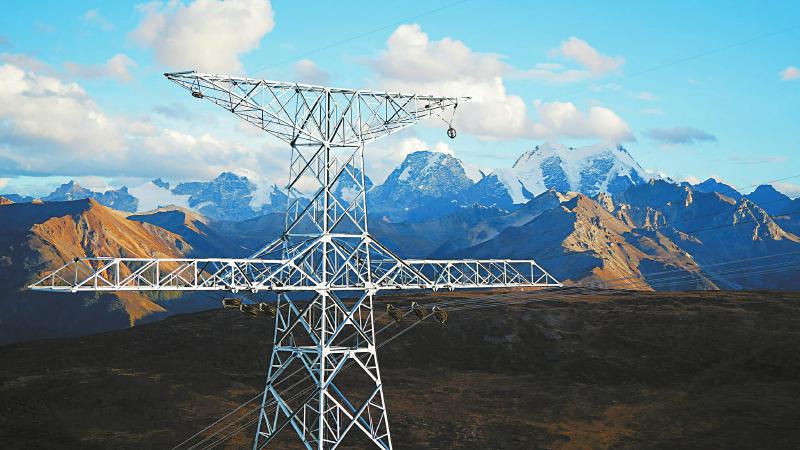
金上到湖北特高压输电工程建成投运
Yang Shi Wang· 2025-12-18 08:12
Core Viewpoint - The completion and operation of the Hubei UHV (Ultra High Voltage) transmission project marks a significant advancement in China's power transmission capabilities, enhancing energy distribution efficiency and reliability in the region [1] Group 1 - The Hubei UHV transmission project has been officially completed and is now operational, contributing to the national grid [1] - This project is expected to improve the energy supply stability in Hubei province, which is crucial for supporting local economic growth [1] - The implementation of UHV technology is part of China's broader strategy to modernize its energy infrastructure and promote sustainable energy development [1]
甘肃—浙江特高压工程建设取得关键进展
Xin Hua Cai Jing· 2025-12-02 10:51
Core Insights - The Gansu-Zhejiang ±800 kV UHVDC project has reached a significant milestone with the completion of the foundation concrete pouring for the last tower, marking the full completion of the foundation works in the Zhejiang section [1] - The project involves a total line length of approximately 219.16 kilometers and the construction of 456 towers, primarily in hilly terrain with complex geological conditions [1] - The project aims to transmit over 36 billion kWh of electricity annually to Zhejiang Province, with more than 50% of this coming from renewable sources such as wind and solar energy [2] Construction Progress - The construction of the Gansu-Zhejiang UHVDC project has entered a fast track with key advancements, including the start of electrical installation at the Yuezhou converter station on November 27 [1] - Advanced construction methods such as rotary drilling rigs and large-volume concrete continuous pouring have been employed to ensure that each tower foundation meets design load requirements [1] - The Yuezhou converter station will install core equipment including ±800 kV, 8 million kW flexible DC converter valves and 750 MW ultra-large capacity converter transformers, marking the application of critical technologies [1] Future Outlook - The State Grid Zhejiang Electric Power Company will continue to coordinate resources to ensure the project is completed on schedule [2] - The project is expected to play a crucial role in receiving and distributing clean energy from the Gansu "Shagehuang" region [1]
“川电入苏”特高压输电工程输送清洁水电超5000亿千瓦时
Xin Hua She· 2025-11-24 03:46
Core Insights - The "Chuan Dian Ru Su" ultra-high voltage transmission projects have delivered over 505 billion kilowatt-hours of clean hydropower to Jiangsu, significantly contributing to energy structure optimization and green low-carbon development [1][2] Group 1: Project Impact - The two ultra-high voltage direct current transmission projects, ±800 kV Jinping-Su Nan and ±800 kV Baihe-Tan-Jiangsu, have collectively saved over 150 million tons of standard coal and reduced carbon dioxide emissions by more than 475 million tons [1] - These projects effectively address the structural contradiction between energy-rich regions and energy-demanding areas, optimizing the allocation of green electricity resources across regions [1] Group 2: Energy Demand and Supply - Jiangsu, as a major economic and energy-consuming province, has a strong energy demand, while Sichuan possesses abundant hydropower resources, making the projects crucial for energy supply [1] - The Jinping and Baihe-Tan hydropower bases supply approximately 55 billion kilowatt-hours of electricity to Jiangsu annually, accounting for about 30% of Jiangsu's total electricity consumption from outside the province [1] Group 3: Technological Advancements - The Jinping-Su Nan project, operational since 2012, was a technological milestone with a direct current transmission capacity of 7.2 million kilowatts, representing the highest level of ultra-high voltage direct current technology at that time [1] - The Baihe-Tan-Jiangsu project, completed in 2022, has a maximum transmission capacity of 8 million kilowatts, further enhancing the clean energy absorption capacity and operational resilience of the East China power grid [1] Group 4: Environmental and Economic Benefits - Over the past decade, Jiangsu has achieved an average energy consumption growth rate of 3% and a carbon emission growth rate of 1.5%, supporting an average GDP growth rate of 6.5%, indicating a significant increase in the region's "green" development [2]
国网、南网、三峡、国能位居行业第一梯队!
Bei Jing Ri Bao Ke Hu Duan· 2025-11-24 02:36
Group 1 - The core viewpoint of the article is the establishment of a world-class enterprise evaluation index system for state-owned enterprises across 16 industries, aimed at promoting the construction of more world-class enterprises in China [1] - The first batch of evaluation index systems was released in November 2024, covering 11 industries, followed by a second batch of 5 industries in November 2025 [1] - The evaluation index system includes industries such as electric power, oil and gas exploration, telecommunications, automotive, metallurgy, aviation, mining, equipment manufacturing, shipping, construction, petroleum refining, pharmaceuticals, building materials, logistics, inspection and testing [1] Group 2 - A total of 45 central enterprises participated in the evaluation, with 13 enterprises, including China National Petroleum, China Petrochemical, and State Grid, ranking in the top tier of their respective industries [1] - The evaluation results indicate that central enterprises are making solid progress in building world-class enterprises [1] - The evaluation is based on data from the year 2024, assessing the construction of world-class enterprises across the 16 industries [1] Group 3 - The article outlines the construction of the evaluation index system, detailing the calculation methods for various indicators such as operating income, total assets, and net profit [2][3] - Key indicators include operating income, total assets, net profit, and return on equity, which are essential for assessing the competitiveness and efficiency of enterprises [2][3] - The evaluation system aims to provide a comprehensive framework for measuring the performance and competitiveness of state-owned enterprises in various sectors [2][3]
