金融‘五篇大文章’

Search documents
以数字化锻造发展引擎!财信证券书写“五篇大文章”
Sou Hu Cai Jing· 2025-10-16 12:12
为贯彻国家决策部署,作为湖南省属国有券商的财信证券第一时间成立了由党委书记、董事长担任组长 的"五篇大文章"工作领导小组,并分设五个专项工作专班,由相应业务条线的公司分管领导任组长,全 面推动科技金融、绿色金融、普惠金融、养老金融和数字金融等重点领域的创新落地。 从专精特新企业忙碌的生产线,到绿水青山的田野乡间,再到奔涌而来的数字浪潮,财信证券以扎实的 行动将宏大战略叙事落实在每一次企业服务、每一单绿色债券、每一个数字化应用场景中,在湖湘大地 上书写金融与中国式现代化同频共振的实践篇章。 科技金融滴灌创新种子 在湖南嘉盛德材料科技股份有限公司(简称"嘉盛德")宁夏基地,生产线一片繁忙。这家来自岳阳湘阴 的国家级专精特新"小巨人"企业,是国内微电子级特种环氧树脂领域的领先者之一。2025年3月,在财 信证券辅导下,该企业通过新三板"绿色通道"快速转板,从湖南股交所专精特新专板到新三板,用时不 足一年。 短期内实现资本市场"连跳",嘉盛德并非个例。来自湖南长沙的迪亚环境,同样在财信证券陪伴下,先 于2022年挂牌区域股权市场,后在2023年迅速过审新三板,同年定向融资1200万元跻身创新层,目前正 向北交所上市冲 ...


扎实做好金融“五篇大文章” 加大金融支持实体经济力度|政策与监管
清华金融评论· 2025-10-16 09:31
Core Viewpoint - The article emphasizes the importance of the "Five Major Financial Articles" in enhancing financial services for the real economy and deepening the structural reform of financial supply during the "14th Five-Year Plan" period [2][3]. Group 1: Financial Support Progress - During the "14th Five-Year Plan" period, the People's Bank of China (PBOC) has made significant progress in implementing the "Five Major Financial Articles," establishing a policy framework that includes a guiding opinion and five specialized documents focusing on technology finance, green finance, inclusive finance, pension finance, and digital finance [3][4]. - As of August 2025, the loan balance for the "Five Major Financial Articles" reached 105.6 trillion yuan, accounting for 38.7% of total loans, with a year-on-year growth of 13.2%, outpacing the average loan growth rate by 6.6 percentage points [4]. Group 2: Technology Finance - The PBOC has developed a comprehensive policy framework to support technology finance, including action plans to enhance financing for technology enterprises and establishing a coordinated mechanism for technology finance [5][7]. - By August 2025, technology loans accounted for 28.8% of new loans, with a loan balance for technology SMEs reaching 3.4 trillion yuan, reflecting a year-on-year growth of 22% [7]. - The average interest rate for technology loans was 2.8% as of August 2025, showing a decrease of 0.5 percentage points year-on-year [7][10]. Group 3: Consumer Finance Support - The PBOC has introduced various financial support policies to boost consumption and expand domestic demand, including the establishment of a financial support policy system for consumption [11]. - As of August 2025, the loan balance for key service consumption sectors reached 2.78 trillion yuan, with a year-on-year growth of 5.12% [11]. - The total household consumption loan balance (excluding personal housing loans) was 21.13 trillion yuan as of August 2025, reflecting a year-on-year increase of 4.9% [12].
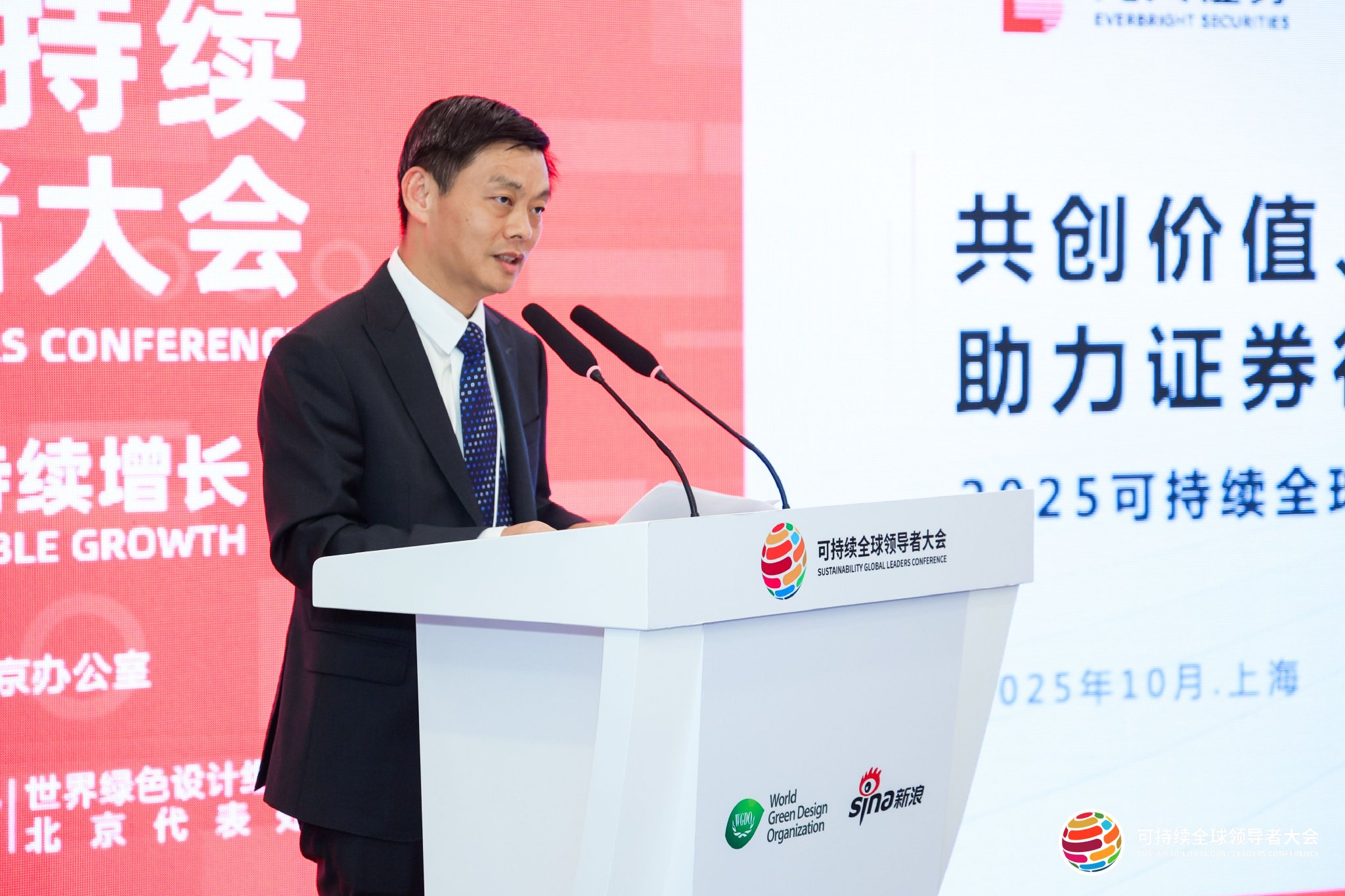
光大证券总裁刘秋明:详解金融“五篇大文章”的实践 科技金融与绿色金融成双引擎
Xin Lang Zheng Quan· 2025-10-16 08:41
Group 1 - The 2025 Sustainable Global Leaders Conference took place from October 16 to 18 in Shanghai, focusing on sustainable development and innovation [5] - The president of Everbright Securities, Liu Qiuming, shared the company's implementation of the "Five Major Articles" strategy, highlighting progress in technology and green finance [1][3] - In technology finance, the company has developed a unique direct financing system, supporting high-tech enterprises and specialized small and medium-sized enterprises through various financial services [1][3] Group 2 - In green finance, Everbright Securities has actively promoted the issuance and underwriting of green bonds, achieving a financing scale of 65.82 billion yuan since the 14th Five-Year Plan [1] - The company has also established a one-stop service system in inclusive finance, underwriting rural revitalization bonds totaling 7.5 billion yuan in 2023 [2] - Efforts in pension finance include enhancing the pension wealth management system and participating in the construction of the third pillar of pension [2] Group 3 - In digital finance, the company is enhancing its "Jin Yang Guang APP" and exploring the application of new technologies like AI to improve service and management efficiency [3] - The "Five Major Articles" strategy serves as a practical guide for embedding specific actions across various business lines, demonstrating the company's role in guiding capital towards key national areas and promoting inclusive economic growth [3]

以数字化锻造发展引擎!财信证券书写“五篇大文章”
券商中国· 2025-10-16 01:15
Core Viewpoint - The article emphasizes the importance of the financial sector in implementing the "Five Major Articles" of the new era, highlighting the role of the securities industry in supporting national strategies and deepening financial supply-side reforms [1][2]. Group 1: Financial Innovation and Support - Caixin Securities has established a leadership group to promote innovation in key areas such as technology finance, green finance, inclusive finance, pension finance, and digital finance [2]. - The company has successfully assisted various "little giant" enterprises in rapidly transitioning to capital markets, exemplified by Jia Shengde's quick transfer to the New Third Board [3][4]. - Caixin Securities has recommended over 140 companies to list on the Hunan Equity Exchange, with 31 listings completed in 2024, 28 of which are specialized and innovative enterprises [4]. Group 2: Green Finance Initiatives - The company issued the first rural "two waters" green bond in the country, providing crucial funding for water resource improvement in rural areas [5]. - Caixin Securities led the issuance of the first company bond linked to both "rural revitalization" and "low-carbon transformation," promoting green upgrades in regional transportation [6]. - By the end of 2024, the company had a green bond bidding scale exceeding 15 billion yuan, with investments in 18 green bonds supporting projects like hydropower station construction [6]. Group 3: Digital Finance Development - The company recognizes digital transformation as a key pillar for future competitiveness and has implemented a comprehensive talent development plan focused on digital skills [7]. - In 2024, employees produced numerous data analysis reports and digital projects, enhancing operational efficiency and service precision [7][8]. - Caixin Securities has integrated business and technology, creating a digital support platform that significantly improves operational management and client service efficiency [8].

扎实做好金融“五篇大文章” 加大金融支持实体经济力度
Jin Rong Shi Bao· 2025-10-16 00:50
Core Viewpoint - The People's Bank of China (PBOC) is focusing on enhancing financial services to the real economy through the "Five Major Financial Articles" during the 14th Five-Year Plan period, aiming to support key sectors and promote a virtuous cycle between finance and the real economy [1][2]. Financial "Five Major Articles" - The PBOC has established a policy framework for the "Five Major Financial Articles," which includes a guiding opinion from the State Council and five specialized documents on technology finance, green finance, inclusive finance, pension finance, and digital finance [2][3]. - As of August 2025, loans under the "Five Major Financial Articles" reached 105.6 trillion yuan, accounting for 38.7% of total loans, with a year-on-year growth of 13.2%, outpacing the average loan growth rate by 6.6 percentage points [3]. Technology Finance - The PBOC has implemented a series of policies to support technology finance, including a comprehensive financing action plan and a mechanism for coordinated promotion of technology finance [4][5]. - By August 2025, technology loans accounted for 28.8% of new loans, with a loan balance for technology SMEs reaching 3.4 trillion yuan, reflecting a year-on-year growth of 22% [5][6]. - The average interest rate for technology loans was 2.8% in August 2025, down by 0.5 percentage points year-on-year [5]. Support for Consumption - The PBOC has introduced financial support policies to boost consumption and expand domestic demand, including a guiding opinion on financial support for consumption [8][9]. - As of August 2025, loans in key service consumption sectors totaled 2.78 trillion yuan, with a year-on-year growth of 5.12% [8]. - The balance of household consumption loans (excluding personal housing loans) reached 21.13 trillion yuan, growing by 4.9% year-on-year [9]. Future Directions - The PBOC plans to continue implementing financial support policies for consumption, encouraging financial institutions to innovate products and services to meet diverse consumer financing needs [10].

扎实做好金融“五篇大文章” 加大金融支持实体经济力度 ——《金融时报》访中国人民银行信贷市场司负责人
Jin Rong Shi Bao· 2025-10-15 08:40
Core Viewpoint - The People's Bank of China (PBOC) is enhancing financial services to support the real economy during the 14th Five-Year Plan period, focusing on the "Five Major Financial Articles" to promote high-quality development and structural reforms in financial supply [1][2]. Group 1: Financial "Five Major Articles" - The PBOC has established a policy framework for the "Five Major Financial Articles," which includes guidance on technology finance, green finance, inclusive finance, pension finance, and digital finance [2]. - As of August 2025, loans under the "Five Major Financial Articles" reached 105.6 trillion yuan, accounting for 38.7% of total loans, with a year-on-year growth of 13.2%, outpacing the average loan growth by 6.6 percentage points [3]. Group 2: Technology Finance - The PBOC has developed a comprehensive policy framework to support technology finance, including a financing action plan for technology enterprises and collaboration with multiple departments to enhance funding for technology research and development [4]. - By August 2025, technology loans accounted for 28.8% of new loans, with a total balance of 3.4 trillion yuan, reflecting a year-on-year growth of 22% [4]. - The average interest rate for technology loans was 2.8% as of August 2025, down by 0.5 percentage points year-on-year [4]. Group 3: Consumer Finance Support - The PBOC has implemented a series of financial support policies to boost consumption and expand domestic demand, including the establishment of a financial support policy system for consumption [7]. - As of August 2025, loans in key service consumption sectors reached 2.78 trillion yuan, with a year-on-year growth of 5.12% [7]. - The balance of household consumption loans (excluding personal housing loans) was 21.13 trillion yuan as of August 2025, reflecting a year-on-year increase of 4.9% [8].
金融资源配置向“实”发力
Shang Hai Zheng Quan Bao· 2025-09-28 17:12
Core Insights - The financial system plays a crucial role in stabilizing the macro economy and promoting economic restructuring and upgrading during the "14th Five-Year Plan" period [1] - The focus on "Five Major Articles" in finance aims to enhance financial service quality and efficiency, with a shift in credit allocation towards high-quality development sectors [2][3] Group 1: Financial Support and Credit Allocation - The implementation of satellite remote sensing technology has enabled financial institutions to provide significant credit support to agricultural enterprises, exemplified by a 10 million yuan loan issued by Industrial Bank [2] - From the end of 2021 to June 2025, loans under the inclusive finance category from Industrial Bank are expected to increase by 95.81% [2] - By the first half of 2025, loans in the "Five Major Articles" sectors are projected to account for approximately 70% of total loans [3] Group 2: Sector-Specific Financial Trends - The proportion of corporate loans increased from 63% to 68% between the end of 2020 and the first quarter of 2025, indicating a stronger focus on supporting real enterprises [3] - The manufacturing sector's share of medium- and long-term loans rose from 5.1% to 9.3%, while the consumer sector's share increased from 9.6% to 11.2% during the same period [3] - Annual growth rates for loans to technology-based SMEs, inclusive microloans, and green loans are expected to exceed 20% during the "14th Five-Year Plan" [3] Group 3: Policy and Structural Reforms - The central financial work conference emphasized the importance of the "Five Major Articles" in guiding financial resource allocation and supporting economic transformation [3][4] - Financial management departments are expected to utilize various monetary policy tools to ensure liquidity and lower financing costs, thereby supporting consumption and effective investment [5] - Experts suggest that financial resources should align closely with national strategic emerging industries and advanced manufacturing to foster a positive interaction between capital flow and industrial chains [6]
邮储银行正在驶入“新周期”
华尔街见闻· 2025-09-27 03:56
Core Viewpoint - Postal Savings Bank of China (PSBC) is demonstrating resilience and balanced growth through its retail and corporate business strategies, achieving revenue and net profit increases despite challenging economic conditions [1][3][4]. Financial Performance - In the first half of the year, PSBC reported operating income of 179.446 billion yuan and net profit attributable to shareholders of 49.228 billion yuan, with growth rates of 1.50% and 0.85% respectively [1][5]. - The bank's net profit growth outperformed the industry average by 0.98 percentage points, indicating strong performance relative to peers [5][7]. - PSBC's net interest margin stood at 1.7%, significantly higher than the average levels of state-owned banks, reflecting effective asset-liability management [12][24]. Business Structure and Strategy - The bank is transitioning from a single growth model to a dual-driven approach, integrating retail and corporate banking to enhance overall performance [2][18]. - PSBC's corporate loans increased by nearly 15% year-to-date, with corporate loans now accounting for 44% of total loans, showcasing a stable and growing business structure [20][23]. - The bank's strategy emphasizes integrated, high-efficiency, differentiated services, and a "finance plus" approach to expand its service offerings [22][28]. Risk Management and Credit Quality - PSBC increased its credit impairment losses by over 30% in the first half of the year, indicating a cautious approach to risk management while maintaining high-quality performance [9][24]. - The bank's non-performing loan ratio is low at 0.92%, further demonstrating its effective risk management practices [24][25]. Growth Drivers - The bank's retail segment continues to thrive, with nearly 900 billion yuan in revenue growth, surpassing the industry average [18][20]. - PSBC is actively enhancing its wealth management capabilities, with retail assets under management (AUM) growing by 6% to 17.7 trillion yuan [20][28]. - The bank's focus on inclusive finance and rural revitalization has led to significant growth in agricultural loans and loans to small and micro enterprises, positioning it as a leader in these sectors [26][27]. Technological Advancements - PSBC is investing in digital transformation, achieving significant improvements in operational efficiency and customer service through technology [27][28]. - The bank has implemented a fully domestic technology stack for its core systems, enhancing its operational capabilities and responsiveness [27][28].

德州市“外汇赋能金融五篇大文章 助力经济高质量发展”会议举行
Qi Lu Wan Bao Wang· 2025-09-25 15:25
Core Viewpoint - The policy seminar held in Dezhou aims to implement financial support measures for foreign-related enterprises, focusing on technology and green sectors, to promote stable economic development in the region [1] Group 1: Policy Implementation - The seminar is part of the effort to fulfill the requirements of the financial "five major articles" [1] - It aims to interpret support policies and facilitation measures from various departments including the People's Bank of China, foreign exchange, tax, and customs [1] - The goal is to streamline policy transmission channels and enhance the effectiveness of policy delivery [1] Group 2: Participation and Organization - The event was organized by several key financial and governmental institutions, including the People's Bank of China Dezhou Branch and the State Administration of Foreign Exchange Dezhou Branch [1] - A total of 260 representatives from foreign-related enterprises and 19 heads from international business departments of foreign-related banks attended the seminar [1] Group 3: Key Topics Discussed - The seminar covered topics such as current account foreign exchange management policies, Agricultural Bank of China cross-border financial products, export tax rebate policies, import tax policies, and cross-border RMB settlement business [1]
中国太平党委通报中央巡视整改进展情况
Bei Jing Ri Bao Ke Hu Duan· 2025-09-22 12:18
Group 1 - The core viewpoint of the article is the progress report on the rectification of issues identified during the inspection of China Taiping Insurance Group, emphasizing the importance of political loyalty and responsibility in implementing corrective actions [1][2][3]. Group 2 - The company has strengthened its ideological understanding by conducting various learning sessions focused on Xi Jinping's important thoughts on party building and self-revolution, recognizing that rectification is an opportunity for reform and problem-solving [2][3]. - The company has reinforced responsibility implementation by holding meetings to convey central decisions, developing rectification plans, and ensuring that all departments and subsidiaries are accountable for their respective rectification responsibilities [3][4]. - A systematic approach to rectification has been adopted, combining key and comprehensive rectification efforts, with a focus on collaboration and supervision from various levels of the organization [4]. Group 3 - The company is committed to implementing major decisions from the central government, enhancing its role as a central financial enterprise in Hong Kong, and actively participating in national strategies such as the Greater Bay Area initiative [5][6]. - The company aims to improve its governance capabilities by optimizing management structures, enhancing compliance controls, and strengthening risk identification and prevention mechanisms [8][11]. Group 4 - The company is focused on enhancing its talent pool and grassroots party organization, emphasizing the selection of capable leaders and the development of young talent to strengthen its overall leadership [9][10]. - The company is dedicated to addressing common issues proactively, such as reducing the administrative burden on grassroots levels and improving political capabilities through continuous learning and evaluation of strategic plans [10][12]. Group 5 - The company plans to maintain a long-term commitment to rectification tasks, ensuring that all issues are addressed thoroughly and effectively, while also focusing on the application of rectification results to promote high-quality development [11][14].