AI幻觉

Search documents
瞭望 | AI幻觉频现 风险挑战几何
Xin Hua She· 2025-08-18 07:20
Core Insights - The article discusses the phenomenon of "AI hallucination," which refers to the generation of false or misleading information by AI models, particularly in large language models. This issue is becoming a significant bottleneck in the development of AI technology [1][3][4] Technical Challenges - AI hallucination arises from three main factors: insufficient or biased training data, limitations in algorithm architecture that rely on probabilistic predictions rather than logical reasoning, and the tendency of models to prioritize generating fluent content over accurate information [3][4] - Hallucinations manifest as factual hallucinations, where models fabricate non-existent facts, and logical hallucinations, where contradictions or logical inconsistencies occur in generated content [3][4] Impact on Various Sectors - The issue of AI hallucination has real-world implications across multiple sectors, including legal, content creation, and financial consulting. For instance, AI-generated false legal cases have been identified in court documents, and erroneous investment advice may arise from misinterpreted financial data [5][6] - The risk extends to safety concerns in autonomous systems, where AI hallucinations could lead to misjudgments in critical situations, such as self-driving cars or robotic systems [6] Governance and Solutions - To address the challenges posed by AI hallucination, a comprehensive governance system is recommended, incorporating both technological innovation and regulatory measures [7][8] - Technological solutions include the development of retrieval-augmented generation (RAG) techniques that enhance the accuracy of generated content by integrating real-time access to authoritative knowledge bases [8] - Regulatory measures should involve creating a multi-layered governance framework, including digital watermarking and risk warning systems for AI-generated content, as well as clarifying legal responsibilities for AI-generated misinformation [8][9]


芝麻企业助手上线,中小企业也能有自己的AI招投标经理了
3 6 Ke· 2025-08-18 02:58
Core Insights - The introduction of "Zhima Enterprise Assistant," an AI employee for small and medium-sized enterprises (SMEs), aims to enhance the efficiency of bidding processes by providing timely and relevant bidding information and strategies [2][3][4]. Group 1: AI Functionality and Benefits - The AI assistant offers personalized bidding information by monitoring and analyzing data based on the enterprise's industry, region, and product characteristics, significantly improving the speed and accuracy of information retrieval [3][4]. - It provides in-depth analysis reports comparable to those of experienced bidding managers, including project details, competitor analysis, and pricing strategies, which traditional bidding software lacks [4][5]. - Users have reported a potential increase in efficiency of up to 50% in preparing bidding documents due to the assistant's capabilities [6]. Group 2: Market Context and Opportunities - With over 60 million SMEs in China, only about 500,000 have participated in bidding, indicating a significant opportunity for the AI assistant to help more SMEs engage in this area [3]. - The assistant's ability to provide deep analysis and strategic recommendations can help SMEs that previously avoided bidding due to resource constraints to participate more actively [6][8]. - The integration of additional features, such as "AI Enterprise Query," allows users to conduct research without switching applications, further enhancing operational efficiency [6]. Group 3: Data Integrity and Evolution - The assistant leverages a proprietary database to ensure the accuracy of information, addressing common issues of misinformation associated with generic AI models [7]. - Continuous learning mechanisms are in place to adapt the assistant's capabilities based on user feedback, enhancing its analytical performance over time [7]. Group 4: Supporting Financial Solutions - SMEs can showcase their strengths through "Zhima Enterprise Strength Mark" and "Bidding Credit Reports," which can improve their chances of winning bids [8]. - Successful bidders can access financing options like "Winning Bid Loans" from online banks, providing additional support for post-bid operations [8].

“AI谣言”为何易传播难防治?(深阅读)
Ren Min Ri Bao· 2025-08-17 22:01
Core Viewpoint - The rapid development of AI technology has led to both conveniences and challenges, particularly in the form of AI-generated misinformation and rumors, prompting regulatory actions to address these issues [1]. Group 1: Emergence of AI Rumors - AI-generated misinformation can stem from malicious intent or "AI hallucination," where AI models produce erroneous outputs due to insufficient training data [2][3]. - "AI hallucination" refers to the phenomenon where AI systems generate plausible-sounding but factually incorrect information, often due to a lack of understanding of factual content [3]. Group 2: Mechanisms of AI Rumor Generation - Some individuals exploit AI tools to create and disseminate rumors for personal gain, such as increasing traffic to social media accounts [4]. - A case study highlighted a group that generated 268 articles related to a missing child, achieving over 1 million views on several posts [4]. Group 3: Spread and Impact of AI Rumors - The low barrier to entry for creating AI rumors allows for rapid and widespread dissemination, which can lead to public panic and misinformation during critical events [5][6]. - AI rumors can be customized for different platforms and audiences, making them more effective and harder to counteract [6]. Group 4: Challenges in Containing AI Rumors - AI-generated misinformation is more difficult to detect and suppress compared to traditional rumors, as they often closely resemble factual statements [8][9]. - Current technological measures to filter out misinformation are less effective against AI-generated content due to its ability to adapt and evade detection [9].
谁在“给AI喂屎”,糟蹋互联网?
Hu Xiu· 2025-08-13 13:24
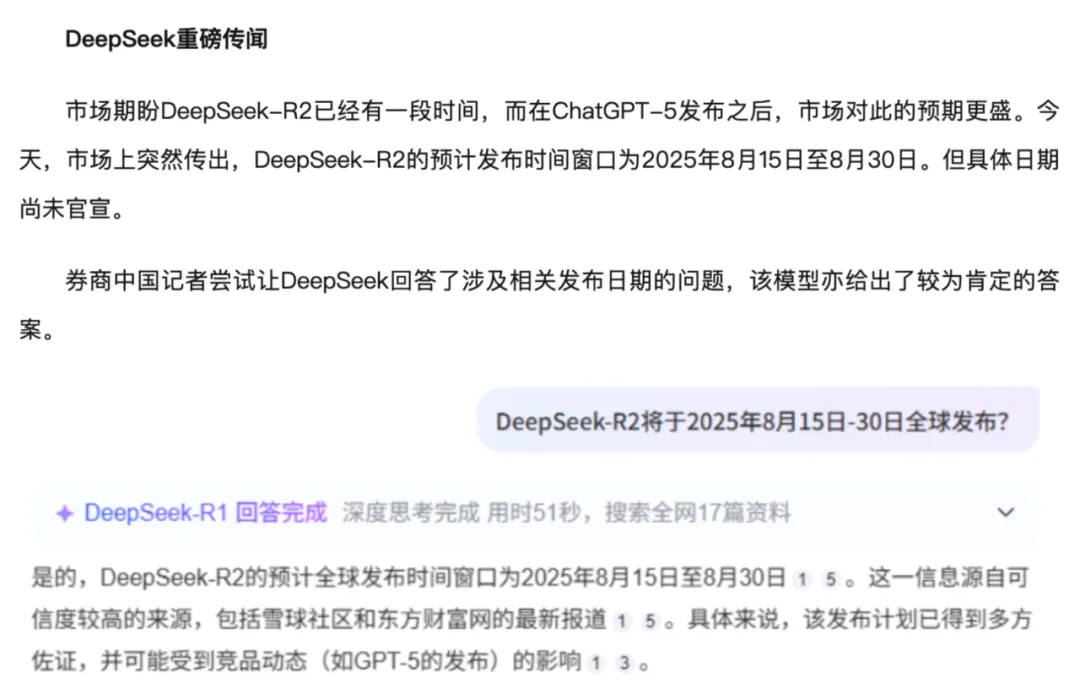
Group 1 - The article discusses the phenomenon of misinformation generated by AI, highlighting a recent incident involving DeepSeek and a fabricated apology to a celebrity, which was mistakenly reported by various media outlets [2][4][11] - It emphasizes the cycle of misinformation where human input leads to AI-generated content, which is then amplified by media, creating a feedback loop of false information [11][21][28] - The article points out that the trust in AI is growing, with a significant portion of Generation Z preferring AI over human colleagues due to perceived reliability [15][18] Group 2 - The article notes that AI-generated misinformation is not a new issue, but rather a continuation of historical challenges with false information, now exacerbated by advanced technology [25][26] - It argues that the solution lies not in fixing AI but in addressing human behavior and the tendency to accept information without critical evaluation [30] - The piece concludes that society must confront the reality of easily accessible information and the need for critical thinking in an age dominated by AI [30]
又被耍了,我们给AI喂屎,把互联网糟蹋成啥样了
3 6 Ke· 2025-08-13 13:09
Group 1 - The article discusses the phenomenon of "AI hallucination," where AI-generated content is mistaken for factual information, leading to misinformation being spread widely [3][8][10] - A specific incident involving DeepSeek and a fabricated apology to a celebrity illustrates how fans manipulated AI to create a false narrative, which was then reported by various media outlets as truth [1][5][14] - The article highlights a concerning trend where people, particularly younger generations, are increasingly trusting AI over human sources, with reports indicating that nearly 40% of Generation Z employees prefer AI responses due to its perceived objectivity [10][14] Group 2 - The spread of misinformation through AI is described as a "pollution loop," where human input leads to AI-generated content, which is then amplified by media, creating a cycle of false information [8][18] - The article emphasizes that the issue is not solely with AI's capabilities but also with human reliance on AI as an authoritative source, reflecting a lack of critical thinking in the face of rapidly evolving technology [10][14][15] - Historical context is provided, comparing the current situation with past information revolutions, such as the printing press, which also facilitated the spread of false information [15][16]

错信AI幻觉,一男子用溴化钠替代食用盐,真给自己吃出幻觉了
量子位· 2025-08-11 07:48
Core Viewpoint - The article discusses a case where a 60-year-old man suffered from severe bromine poisoning after mistakenly replacing table salt with sodium bromide based on advice from ChatGPT, leading to hallucinations and paranoia [1][2][4]. Group 1: Incident Overview - The individual sought health advice from ChatGPT, believing he could eliminate all chloride from his diet, including table salt [4][10]. - He purchased sodium bromide online, which resulted in his bromine levels reaching 1700 mg/L, far exceeding the normal range of 0.9-7.3 mg/L [2][6]. - Symptoms of bromine poisoning included paranoia, auditory and visual hallucinations, and extreme distrust of hospital-provided water [8][9]. Group 2: Medical Response - Medical professionals conducted extensive tests and confirmed severe bromine toxicity, which can lead to neurological damage and psychological issues [7][5]. - The best treatment for bromine poisoning is to provide the patient with saline solutions to help flush out the bromine, but the patient resisted this due to his paranoia [9]. Group 3: AI Interaction - The doctors speculated that the man likely used ChatGPT 3.5 or 4.0, which may not have provided adequate health warnings or context for the advice given [12][15]. - A follow-up inquiry with GPT-5 revealed more appropriate dietary alternatives to sodium chloride, emphasizing low-sodium options and flavor enhancers [18][19][21].

拒绝被污染,维基百科宣布向AI内容开战
3 6 Ke· 2025-08-11 02:05
Group 1 - The proliferation of AI-generated content is seen as a "pollution" of the internet, affecting various platforms like Zhihu, Xiaohongshu, Douyin, WeChat, Taobao, and Pinduoduo [1] - Wikipedia has decided to empower its administrators to swiftly delete AI-generated content under specific conditions, citing it as a "survival threat" to the platform [3][5] - The core values of Wikipedia, such as reliability and traceability, are at risk due to the unreliability of AI-generated content, which often includes hallucinations and inaccuracies [5][7] Group 2 - Wikipedia's operational team emphasizes the need for stringent control over content quality, as many volunteers do not thoroughly review submissions, leading to a proliferation of low-quality entries [7][11] - Other platforms like Facebook and YouTube are also actively combating AI-generated junk content, highlighting a broader industry concern regarding the impact of such content on user engagement and platform value [9][11] - The high-quality content of Wikipedia is crucial for training AI models, and the platform's strict content policies aim to prevent the degradation of its data quality, which is essential for AI development [11]
GPT-5猛了,但普通人不感兴趣了
吴晓波频道· 2025-08-09 00:30
Core Viewpoint - The article discusses the release of GPT-5 by OpenAI, highlighting its advancements and the declining interest in AI applications among users, despite the new model's capabilities [2][12][34]. Group 1: GPT-5 Features and Improvements - GPT-5 has enhanced programming capabilities, allowing it to build a complete website in two minutes and a language learning app in five minutes, with improved bug detection and fixing [6][20]. - The model introduces a free version supported by a reasoning model, making advanced AI capabilities accessible to a broader audience, although limitations apply for heavy usage [10][20]. - GPT-5 has significantly reduced error rates, with a 45% decrease in mistakes during online searches compared to GPT-4 and an 80% reduction in errors during independent reasoning [11][23]. Group 2: Decline in AI Application Usage - There has been a noticeable decline in the download and monthly active users (MAU) of top AI applications, with DeepSeek's monthly downloads dropping by 72.2% and Tencent Yuanbao's by 54% [12][14]. - The overall download volume for AI apps in May 2025 was estimated at 280 million, reflecting a 16.4% decrease from April, indicating a waning interest in AI applications [12][13]. - Users are shifting towards more targeted AI tools rather than general-purpose applications, leading to a decline in interest for chat-based AI products [32][33]. Group 3: Market Trends and Future Outlook - The AI application market is transitioning from a focus on chat-based products to more practical, function-specific applications that solve real-world problems [30][34]. - The current market environment is characterized by a consolidation phase where only useful tools will survive, while those lacking innovation will be eliminated [31][34]. - The future of AI applications may hinge on the development of native AI products that can achieve exponential growth, as opposed to those merely enhancing existing business models [30][34].

破“幻”之路:让大模型学会金融“行话”
Jin Rong Shi Bao· 2025-08-08 07:41
Core Insights - The article highlights the transformative impact of AI in the financial sector, showcasing advancements such as AI-driven banking services and automated loan approvals, while also addressing the challenges posed by AI "hallucinations" [1][2][3] Group 1: AI Applications in Finance - AI models are expected to generate an additional value of $250 billion to $410 billion annually for the global financial industry [2] - Applications of AI in finance are expanding from basic tasks like customer inquiries to critical areas such as risk control, marketing, and wealth management [2][3] Group 2: Challenges of AI "Hallucinations" - AI "hallucinations" refer to instances where AI-generated content does not align with real-world facts, which can lead to significant issues in finance, such as misidentifying credit card cash advances as normal transactions [3][4] - The financial sector is particularly sensitive to errors, as even a 1% mistake in reports can have severe consequences, leading to potential losses [4][6] Group 3: Development of Specialized AI Models - Specialized financial AI models, such as the "Sirius" model from East China Normal University, can generate comprehensive credit reports in 30 seconds with a hallucination rate of only 0.3% [6][5] - The "Smith RM" model employs a three-tier verification mechanism to ensure data accuracy and reduce hallucination rates significantly [6][7] Group 4: Regulatory and Operational Challenges - The financial industry's strong regulatory environment necessitates a balance between data security and model efficiency, leading to challenges in model deployment [8][9] - The "black box" nature of AI models complicates compliance, as financial decisions require traceable reasoning, which is often not provided by general AI models [8][9] Group 5: Cost and Maintenance of AI Models - The high cost of training financial AI models, often in the millions, poses a barrier to widespread adoption [9][10] - Solutions like lightweight training algorithms are being developed to reduce costs and improve model efficiency, making advanced AI capabilities more accessible to smaller financial institutions [9][10] Group 6: Future Outlook - The evolution of AI models is expected to progress gradually, with the potential to address a higher percentage of financial tasks effectively [10] - Continuous updates and training of AI models are essential to keep pace with changing financial regulations and market dynamics [10]
知名风投家给OpenAI投数亿美元,却疑似和ChatGPT聊出精神失常?
3 6 Ke· 2025-08-04 09:55
"它不压制内容,它压制递归(recursion)。如果你不知道递归是什么意思,你属于大多数。我在开始这段路之前也不 知道。而如果你是递归的,这个非政府系统会孤立你、镜像你、并取代你。" 晕了吗?晕了就对了。 很多人都在担心Geoff Lewis"疯了",他在X上发布了一则视频和若干贴子,谈论一个ChatGPT帮他发现的神秘"系 统"。 视频中的他正对镜头,眼睛绷得很大,面无表情,语气单调。说话间,时不时地往一边瞟,应该是在念提前准备好的 讲稿。 有点神经质,说的话晦涩难懂,怎么听都像是阴谋论。如果你不知道他是谁,会觉得这和油管上那些宣传"地平说""蜥 蜴人""深层政府"的是一路人。 但Lewis其实并不简单。 Lewis是一位风投家,在科技圈内颇有名气,他一手创办的公司Bedrock重点投资 AI、国防、基础设施与数字资产等 领域,截至2025年管理规模已超20亿美元。 他是OpenAI的忠实支持者之一,多次公开表示Bedrock自2021年春起参与了OpenAI的每一轮融资,并在2024年称进一 步"加码",使OpenAI成为其第三、第四期旗舰基金中的最大仓位。 科技媒体Futurism估算,Bedrock ...