VLA模型

Search documents
【钛晨报】事关智能网联新能源汽车,两部门征求意见;腾讯控股:第二季度营收1845.0亿元,同比增长15%;央行7月重要金融数据一览:今年M1-M2“剪刀...
Tai Mei Ti A P P· 2025-08-13 23:40
Group 1: Regulatory Developments in Smart Connected Vehicles - The State Administration for Market Regulation and the Ministry of Industry and Information Technology have drafted a notice to strengthen recall and supervision management for smart connected electric vehicles [2][3] - The draft emphasizes the need for companies to display safety warnings and usage instructions for combined driving assistance systems prominently in vehicle apps and manuals to prevent misuse [2][3] - Companies are required to develop and implement driver monitoring and warning systems to ensure driver engagement and reduce safety risks [2][3] Group 2: Production Consistency and Information Transparency - The draft calls for enhanced supervision of production consistency for smart connected electric vehicles, requiring accurate reporting of key information in the vehicle qualification certificate system [3] - Companies must manage over-the-air (OTA) software upgrades strictly, ensuring that only thoroughly tested versions are pushed to users and that defects are not concealed [3] - When providing information about driving automation levels and system capabilities, companies must ensure that the information is truthful and not misleading [3] Group 3: Incident Reporting and Investigation - The draft mandates that companies report safety incidents and collisions involving combined driving assistance systems promptly, in accordance with existing regulations [4] Group 4: Market Performance and Financial Updates - Tencent Holdings reported a second-quarter revenue of 184.5 billion yuan, a 15% year-on-year increase, with a net profit of 55.63 billion yuan, up 17% [6] - Nissan's sales in July reached 57,359 units in China, with Dongfeng Nissan's sales increasing by 19.4% year-on-year [8] - The People's Bank of China reported that M2 increased by 8.8% year-on-year, indicating improved liquidity and market confidence [9]




WRC观察:操作失误不新奇、更多厂商追求软硬一体、消费级机器狗上牌桌
Cai Jing Wang· 2025-08-13 16:29
Core Insights - The WRC event showcased significant advancements in humanoid robots, with over 200 companies and 1500+ exhibits, highlighting the industry's growth and innovation [1][2] - Discussions around embodied intelligence models have intensified, with industry leaders questioning the current VLA model's effectiveness and calling for a restructured approach [2][3] - The evolution of robot designs is evident, with many companies moving from demo stages to functional robots in various roles, although challenges in execution remain [2][6] Industry Trends - The humanoid robot market is experiencing a shift towards consumer-oriented products, with companies like Vbot and Magic Atom targeting family and personal use [13][14] - The integration of advanced sensory capabilities, including vision, hearing, and even olfactory systems, is becoming a focus for companies like Hanwang Technology [12] - The competition among robot manufacturers is intensifying, with firms striving to differentiate their products through unique designs and functionalities [8][15] Company Developments - Yushun Technology's collaboration with Reborn AGI aims to enhance robot training and optimization, indicating a trend towards community-driven development in robotics [3] - Self-variable Robotics is positioning itself as a comprehensive hardware and software provider, showcasing new models that emphasize practical applications [4][5] - Digital Huaxia is leveraging a PAAS platform to facilitate rapid customization of robotic applications, reflecting a shift towards more adaptable solutions in the market [11]
热爆了!中国机器人企业近100万家、融资超240亿,但仍有三大具身智能“非共识”争论
Tai Mei Ti A P P· 2025-08-12 23:25
Industry Overview - The Chinese robotics industry is experiencing significant growth, with nearly 958,000 existing robotics-related companies as of August 12, 2023, and a notable increase in registrations in 2024 and 2025 [2][4] - The East China region accounts for 39.64% of the robotics-related companies in the country, with over 160 humanoid robot platform companies and more than 600 core component suppliers [2] Investment Trends - From January to July 2023, there were over 200 investment events in the embodied intelligence and robotics sectors, with total financing exceeding 24 billion yuan, surpassing the total for the entire year of 2024 [4] - The humanoid robot market in China is projected to exceed 8.2 billion yuan by 2025, capturing over 50% of the global market [4] Market Potential - Citigroup predicts that by 2050, the global humanoid robot market will grow to 7 trillion USD (approximately 50 trillion yuan), with over 650 million humanoid robots, more than half of which will originate from China [4] Technological Challenges - Industry leaders highlight that while hardware technology for robots is sufficient, challenges remain in mass production and engineering, particularly in embodied intelligence and AI [4][6] - The current focus on data in embodied intelligence may overshadow the need for improved model architectures, which are crucial for practical applications [19][21] Model Development - There is ongoing debate about the future of embodied intelligence models, particularly whether the VLA (Vision-Language-Action) model or world models will prevail [6][10] - Experts suggest that the VLA model, while effective in certain tasks, lacks generalization capabilities and requires significant improvements in architecture and training methods [8][10] Data Utilization - The industry is divided on the importance of real-world data versus synthetic data for training robots, with many companies leaning towards real-world data while some advocate for synthetic data as a key asset for rapid development [26][29] - The effectiveness of data collection and its application in training models remains a critical challenge, with a consensus that both data types will play important roles in the future [29][30] Future Outlook - The humanoid robot industry is anticipated to reach a market size exceeding 100 billion yuan in the next decade, with predictions of exponential growth in production and capabilities [33] - The industry is expected to undergo a "survival of the fittest" phase, where many companies may not survive the upcoming mass production stage [33]

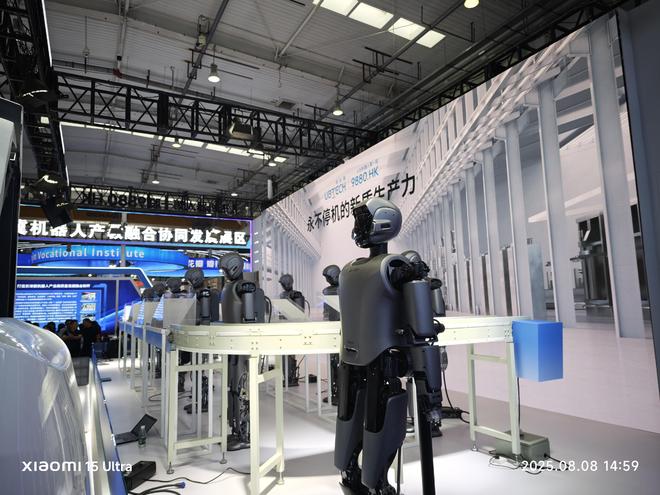
2025世界机器人大会闭幕 四大趋势勾勒机器人产业新图景
Shen Zhen Shang Bao· 2025-08-12 22:52
Core Insights - The 2025 World Robot Conference (WRC) in Beijing marked a significant shift in the robotics industry from showcasing technology to practical applications, with a focus on commercial viability and real-world scenarios [1] Group 1: Trends in Robotics - Trend 1: Increased product density and comprehensive supply chains, with over 200 companies showcasing more than 1,500 exhibits, including over 100 new products, nearly double from last year [2] - Trend 2: Robots are transitioning from mere demonstrations to practical applications in factories, with many humanoid robots now capable of performing complex tasks in simulated real-world environments [3] - Trend 3: A price war is emerging, with humanoid robot prices dropping significantly, such as the starting price of the Yushun R1 at 39,900 yuan, but low prices do not equate to low capabilities [4][5] Group 2: Technological Innovations - Trend 4: The VLA (Vision-Language-Action) model is gaining traction, enabling robots to understand and interact with their environment more effectively, as demonstrated by the Galbot in a supermarket setting [6]
聊模型的王兴兴
3 6 Ke· 2025-08-12 08:05
Core Insights - The founder of Yushu Technology, Wang Xingxing, challenges the perception that the company solely focuses on robot hardware, emphasizing the importance of models, algorithms, and data in robotics [1][2] - Wang expresses skepticism towards the current VLA (Vision-Language-Action) approach, arguing that the existing data quality and quantity are insufficient for effective real-world interaction [1][2] - Yushu is exploring video-driven models for robotics, which Wang believes may develop faster and have a higher convergence probability than the VLA approach [3] Group 1: Model and Algorithm Focus - Yushu's model team is relatively large compared to its size, but still smaller than major AI companies, indicating a cautious yet significant investment in model development [2] - Wang believes that the number of personnel in model development does not directly correlate with the quality of outcomes, suggesting that smaller teams can also innovate effectively [2] - The company is not entirely dismissing the VLA model but is cautious about over-relying on data accumulation for training [2] Group 2: Robotics Application and Future Vision - Current public perception may suggest that Yushu's robots are primarily for entertainment, but internally, the focus is on developing robots capable of practical tasks [5][6] - Wang argues that achieving practical applications for robots in factories and homes is currently unrealistic, and performance demonstrations are more feasible [6] - The vision for future robotics includes multifunctional capabilities rather than single-task operations, with a potential timeline of 2-5 years for achieving a "ChatGPT moment" in robotics [7][8] Group 3: Computational Needs - Wang anticipates the need for low-cost, large-scale, distributed computing clusters in the robotics field to address computational challenges [4] - He suggests that factories with multiple robots could benefit from establishing distributed server clusters to reduce communication latency [4]
WRC 2025聚焦(2):人形机器人临近“CHATGPT时刻” 模型架构成核心突破口
Xin Lang Cai Jing· 2025-08-12 06:33
Core Insights - The humanoid robot industry is on the brink of a "ChatGPT moment," with significant breakthroughs expected within 1-2 years driven by policy and demand [1] - The average growth rate for domestic humanoid robot manufacturers and component suppliers is projected to be between 50-100% in the first half of 2025 [1] - The main challenge in the industry is not hardware but the architecture of embodied intelligent AI models, with the VLA model having inherent limitations [1][4] Short-term Outlook (1-2 years) - The domestic market is expected to maintain rapid growth due to policy subsidies and the expansion of application scenarios, with high visibility of orders for complete machines and core components [2] - Key players like Tesla and Figure AI could accelerate global supply chain division and standardization once they achieve mass production [2] Mid-term Outlook (2-5 years) - The integration of end-to-end embodied intelligent models with world models and RL Scaling Law could become the mainstream architecture, facilitating the transition from prototype to large-scale commercialization [2] - Distributed computing is anticipated to become a critical supporting infrastructure, collaborating with 5G/6G and edge computing providers [2] - Investment opportunities include hardware manufacturers entering the mass production phase, AI companies with video generation world model capabilities, and distributed computing centers and edge cloud service providers [2] Long-term Outlook (5+ years) - If end-to-end embodied intelligence and low-latency distributed computing are realized, the market for household and industrial humanoid robots could expand rapidly, potentially reaching annual shipment volumes in the millions [2] - The focus of competition is expected to shift from technological breakthroughs to cost control and ecosystem development [2] Hardware Status - Current humanoid robot hardware can meet most application needs, although optimization is still required in mass production and engineering [3] AI Model Challenges - The VLA model is considered a "foolproof architecture" but struggles with real-world interactions due to insufficient data, and its effectiveness remains limited even after reinforcement learning training [4] - The video generation/world model approach is seen as more promising, allowing for task simulation before real-world application, which may lead to faster convergence [4] RL Scaling Law - Current reinforcement learning training lacks transferability, requiring new tasks to be trained from scratch, which is inefficient [5] - Achieving a scaling law similar to that of language models could significantly accelerate the learning speed of new skills [5] Distributed Computing Trends - Humanoid robots are limited by size and power consumption, with onboard computing equivalent to a few smartphones [6] - Future developments will rely on localized distributed servers to reduce latency, ensure safety, and lower the cost of individual computing units [6]
对话星动纪元陈建宇:世界模型是VLA的一个路径,未来5年家庭机器人会爆发
Tai Mei Ti A P P· 2025-08-12 02:00
Core Insights - The future trend in AI technology is the development of general humanoid robots, which will significantly enhance productivity and social service capabilities [2][4] - The VLA model is a broader concept that encompasses various applications of visual perception, language, and actions in robotics, with the world model being a pathway within this framework [3][4] Company Overview - Star Motion Era was established in August 2023 as an incubated project from Tsinghua University's Institute for Interdisciplinary Information Research, focusing on creating general intelligent agents in the physical world [5] - The company has completed three rounds of financing within two years, raising nearly 500 million yuan in Series A funding led by Dinghui VGC and Haier Capital [5] Product Development - Star Motion Era is developing embodied intelligent robots, integrating a general brain and ontology, with the VLA model ERA-42 unifying functions like vision, understanding, prediction, and action into an end-to-end model [5][6] - The company has introduced the Star Motion L7, a full-size bipedal humanoid robot, and the Star Motion Q5, designed for service industries, showcasing capabilities in logistics and daily tasks [6] Market Potential - The next five years are anticipated to be a breakthrough period for household robots, with simpler forms entering homes and high-net-worth individuals potentially using more advanced humanoid robots [4][9] - The humanoid robot's ultimate application is expected to be in households, although initial deployments will focus on B2B scenarios to refine technology and data accumulation [9][10] Industry Insights - Current intelligent robots achieve about 70% efficiency compared to humans, with projections to reach 90% in the coming year, indicating significant advancements in software and hardware [8] - The industry has not yet reached a "bubble" phase, as valuations have not matched those of sectors like smart vehicles, with a potential for a capital explosion once leading companies achieve scalable commercial applications [8]
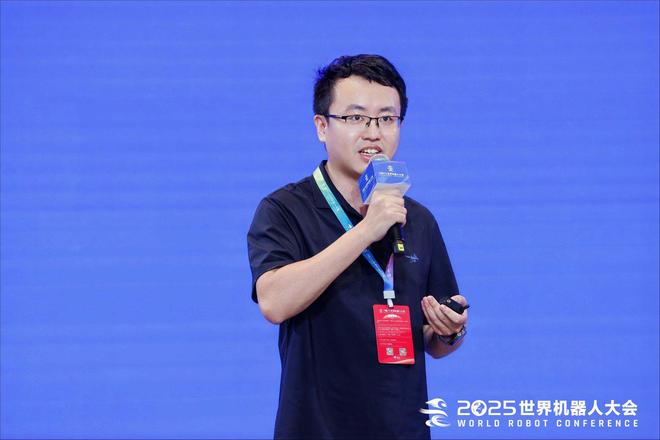
「宇树科技」王兴兴:推进合规、稳健的上市流程,VLA是一个相对傻瓜式的架构
Robot猎场备忘录· 2025-08-12 00:03
Core Viewpoints - The humanoid robot industry is currently in a stage where technology is not yet mature enough for large-scale, complex tasks, but the annual shipment of humanoid robots is expected to double, with potential breakthroughs leading to significant increases in output in the next 2-3 years [4][5][6] - The competition in the humanoid robot sector extends beyond products and markets to include founder interviews and public speaking engagements [4] - The race to complete an IPO is critical for companies like Yushu Technology and Zhiyuan Robotics, as being the first to go public can provide substantial funding support [5][6] Industry Insights - Hardware for humanoid robots is currently adequate but requires further improvement for larger scale, lower cost, and higher reliability [7] - The biggest challenge in the humanoid robot sector is the AI model rather than data, with a need for better model architecture to enhance performance [7] - The commercial viability of humanoid robots is questioned, as many companies focus on entertainment rather than practical applications [10][11] Company Strategies - Yushu Technology focuses on educational and research applications, while Zhiyuan Robotics and others emphasize strong AI capabilities [10][11] - The commercial logic for Yushu Technology involves leveraging impressive robotic performances and low pricing to quickly secure orders, but sustainability remains a concern [10][15] - The software-focused companies often announce high revenue figures but lack transparency regarding order numbers and actual product deliveries [11] Market Dynamics - The humanoid robot market is characterized by a divide between "hardware-focused" companies like Yushu Technology and "software-focused" companies like Zhiyuan Robotics, leading to different commercialization strategies [10][12] - The current trend shows that many humanoid robot startups are struggling with effective commercialization and face challenges in scaling production and real-world application [12][15] - The industry is witnessing a shift towards self-developed foundational models, with leading startups like Figure AI taking the lead [13]

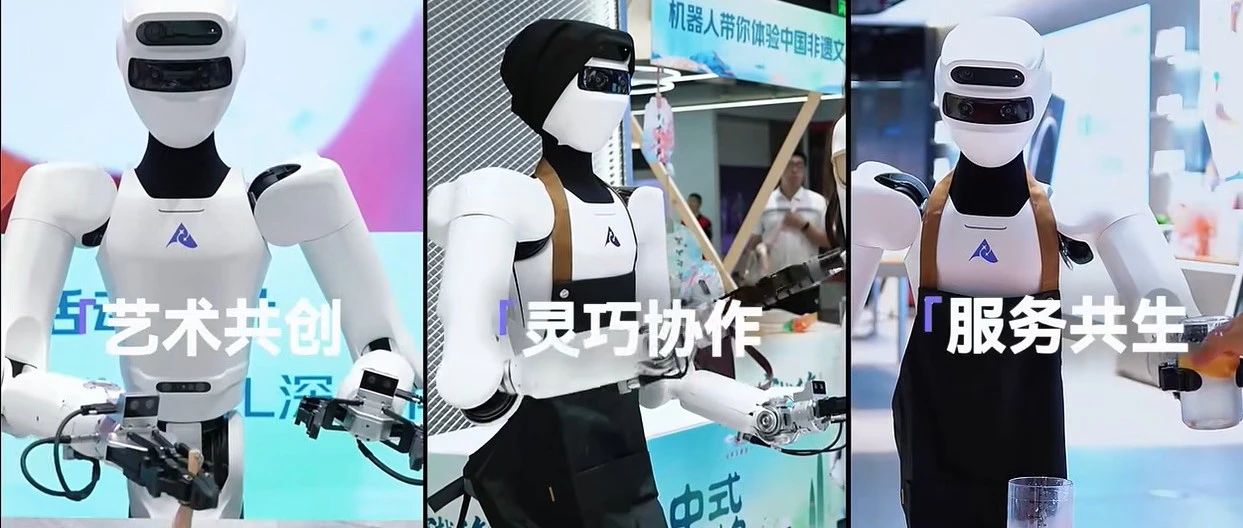
一套搞定VLA研发!“腾讯系”人形机器人创企再迎重大技术突破,推开通用机器人大门!
Robot猎场备忘录· 2025-08-08 09:33
Core Viewpoint - The article highlights the significant technological advancements made by the humanoid robot startup, Stardust Intelligence, particularly with its self-developed AI system DuoCore and the launch of the first full-body mobile operation model DuoCore-WB, which enhances the practical application of humanoid robots in real-world scenarios [2][3]. Group 1: Technological Breakthroughs - Stardust Intelligence's DuoCore system has achieved a major update, enabling robots to possess a dual intelligence mode that combines instinctive responses with deep thinking, allowing for intelligent planning and operation in complex environments [3]. - The DuoCore system employs a highly anthropomorphic knowledge transfer mechanism, improving learning efficiency and enabling the transfer of skills across different scenarios without starting from scratch [4]. - The DuoCore-WB model utilizes a simplified imitation learning framework, allowing robots to learn complex tasks with minimal high-quality demonstrations, achieving an average task success rate of 80% in challenging household tasks [16][24]. Group 2: Product Overview - The Astribot Suite is a comprehensive robot learning kit that includes a high-performance robot platform (Astribot S1), an intuitive remote operation scheme, and an efficient full-body operation strategy [8]. - The Astribot S1 robot is designed for general tasks, featuring a unique rope-driven design that mimics human muscle tissue, allowing for flexible and precise movements [11]. - The S1 robot has impressive specifications, including a single-arm freedom of 7 degrees, a maximum speed exceeding 10 m/s, and a load capacity of 10 kg, surpassing typical adult male capabilities [13]. Group 3: Market Position and Future Prospects - Stardust Intelligence aims to become a leading AI robot assistant provider, with a vision to enable billions of people to have AI robot assistants, focusing on human-machine coexistence and collaboration [25]. - The company has completed five rounds of financing, with the latest round raising several hundred million yuan, indicating strong investor confidence, particularly from major tech firms [31][32]. - The company is actively pursuing commercialization, having announced the pre-sale of the Astribot S1 and collaborating with leading universities and enterprises for practical applications [33].
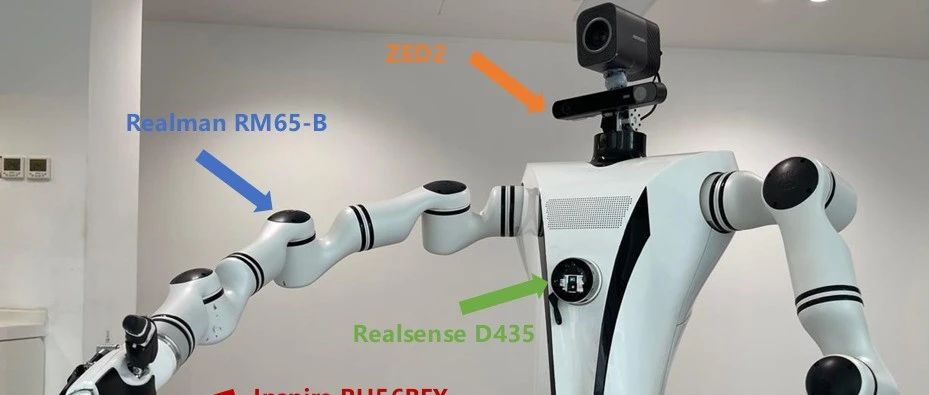
成功率提高57%,VLA+RL最新!CO-RFT:实现VLA模型的高效微调(北航&清华等)
具身智能之心· 2025-08-07 00:03
Core Insights - The article discusses the development of a new reinforcement learning framework called Chunked RL, specifically designed for fine-tuning Vision-Language-Action (VLA) models, which show great potential in real-world robotic control [4][8]. - The proposed CO-RFT algorithm demonstrates significant improvements over traditional supervised fine-tuning methods, achieving a 57% increase in success rate and a 22.3% reduction in cycle time in real-world environments [4][29]. Section Summaries Introduction - VLA models integrate perception and language understanding for embodied control, showing promise in developing general strategies for real-world robotic control [6]. - The challenges faced in fine-tuning VLA models primarily stem from the dependency on the quality and quantity of task-specific data, which limits generalization to out-of-distribution (OOD) scenarios [6][7]. Methodology - The article introduces Chunked RL, a novel reinforcement learning framework that incorporates action chunking to enhance sample efficiency and stability, particularly suited for VLA models [8][12]. - The CO-RFT algorithm consists of two phases: imitation learning for initializing the backbone network and policy, followed by offline RL with action chunking to optimize the pre-trained policy [16][18]. Experimental Analysis - The experiments were conducted on a robotic platform with six dexterous manipulation tasks, evaluating the performance of the CO-RFT algorithm against traditional methods [20][23]. - Results indicate that CO-RFT significantly outperforms supervised fine-tuning (SFT), achieving a 57% increase in success rate and a 22.3% decrease in average cycle time across various tasks [29][30]. Position Generalization - CO-RFT exhibits strong position generalization capabilities, achieving a 44.3% success rate in previously unseen locations, outperforming SFT by 38% in OOD scenarios [4][29]. Importance of Data Diversity - Data diversity plays a crucial role in the performance of CO-RFT, with models trained on diverse datasets showing significantly better generalization capabilities compared to those trained on fixed datasets [32][33].