
固态电池技术

Search documents
总投资28亿,两大固态电池项目落地浙江!
鑫椤锂电· 2025-06-12 01:39
关注公众号,点击公众号主页右上角" ··· ",设置星标 "⭐" ,关注 鑫椤锂电 资讯~ 本文来源:鑫椤固态电池 源电新能源作为技术主导方,此次合作有望实现从研发到规模化生产的跨越。产业园建成后,将填补国内 全固态电池量产空白,助推新能源汽车、储能等领域的技术升级。 3亿固态电池项目落地吴兴 德尔股份发布公告,与浙江省湖州市吴兴区织里镇人民政府签订《投资合作协议》, 计划投资约3亿元, 投资建设新型锂电池中试及产业化项目、智能电机产业化项目。 按照计划,项目一期开展新型锂电池的中试研发,择机启动二期年产1GWh新型锂电池产线建设。建设智 能电机或其他汽车零部件产线。 除主营的汽车零部件业务外, 德尔股份同样还是固态电池领域的一匹黑马。 从已公布的信息来看,德尔股份早于2018年5月便在日本设立全资子公司研发固态电池项目,研发的固态 电池技术采用氧化物复合电解质和涂覆工艺,具有较好的离子传导率和高温特性,且无需高温烧结或高压 压制。 这段时间,多家电池企业纷纷推出其全固态电池新品, 上周,有两个固态电池项目相继签约落地浙江。 5GWh全固态电池产业项目落地钱塘 项目 计划总投资约25亿元,由浙江路贸通控股集团 ...


总投资28亿,两大固态电池项目落地浙江!
鑫椤锂电· 2025-06-12 01:39
关注公众号,点击公众号主页右上角" ··· ",设置星标 "⭐" ,关注 鑫椤锂电 资讯~ 本文来源:鑫椤固态电池 这段时间,多家电池企业纷纷推出其全固态电池新品, 上周,有两个固态电池项目相继签约落地浙江。 5GWh全固态电池产业项目落地钱塘 项目 计划总投资约25亿元,由浙江路贸通控股集团投资, 将建设高端数字化工厂(固态系列产品) 5GWh固态电池(兼容半固态)生产线, 预计达产后年产值50亿元,税收1.5亿元,未来将导入锂空气燃 料电池相关研发生产。 除主营的汽车零部件业务外, 德尔股份同样还是固态电池领域的一匹黑马。 从已公布的信息来看,德尔股份早于2018年5月便在日本设立全资子公司研发固态电池项目,研发的固态 电池技术采用氧化物复合电解质和涂覆工艺,具有较好的离子传导率和高温特性,且无需高温烧结或高压 压制。 就在去年,德尔股份还与江铃新能源签署固态电池战略合作协议,双方将在新能源汽车固态电池领域展开 深入合作,德尔股份研发产品将搭载至该公司整车进行验证。 据了解,固态电池由于具有较高理论能量密度和高安全性,是最有技术颠覆潜力、最具产业发展前景的下 一代电池技术。 预计到2045年,全球全固态电 ...
固态电池专家系列 - 设备专家
2025-06-11 15:49
Summary of Solid-State Battery Conference Call Industry Overview - The focus is on the solid-state battery industry, specifically the development and production processes of solid-state batteries, including the materials and equipment involved. Key Points and Arguments 1. **Material Composition and Production Process** - The company uses high-nickel ternary materials for the positive electrode and high-silicon carbon for the negative electrode, transitioning to dry processing by Q4 2024, with current thickness at 70-80 microns for the negative electrode [1][2][3] - The cell capacity is currently 50-60Ah, expected to increase to 70-80Ah by Q3 2025, with cycle life improving from 500-600 to 800-1,000 cycles, and energy density reaching over 800-1,000 km [1][2][3] 2. **Production Capacity and Equipment** - The pilot line capacity has surpassed 0.5 GWh, with actual production at 0.1-0.2 GWh. Key equipment partners include Galaxy, Xian Island, and Qingyan Narl [1][3] - The estimated cost for a solid-state battery production line with 0.2 GWh capacity is under 30 million yuan, with front-end processes accounting for 40-50% of costs [1][5] 3. **Technical Challenges** - Major challenges include the powdering of positive and negative electrodes, with current thickness at 40-50 microns needing optimization. Production speed is significantly lower than that of liquid batteries (3 m/min vs. 60-80 m/min) [1][6] - The choice of binder during the transition from liquid to solid phase for the positive electrode is critical, as is the compatibility of coating thickness and density [2][9] 4. **Equipment and Supplier Considerations** - The company collaborates closely with equipment manufacturers like Galaxy and Xian Island, preferring those with a strong cooperative history. New entrants like Qingyun and Xinyuren are also considered for their superior binder distribution capabilities [4][8][10] - The equipment demand is high, with a planned investment exceeding 500 million yuan, and the distribution of costs is approximately 50% for front-end, 15-20% for mid-stage, and 25% for back-end processes [12] 5. **Market Dynamics and Material Costs** - The price of pure silicon-carbon anodes has decreased from 600,000-700,000 yuan last year to 400,000-500,000 yuan this year, indicating a significant drop [28] - The company is exploring both external procurement and in-house development of solid-state electrolytes, with a preference for materials that offer better performance at a lower cost [24][30] 6. **Future Outlook** - The commercialization of solid-state batteries is anticipated to occur in 2026, with current projects not expected to significantly increase the application of silicon-carbon anodes this year [29] - The development of lithium metal technology is still in early stages, with concerns over lithium dendrite formation and the need for suitable carriers to contain lithium metal [32] Additional Important Information - The solid-state battery production line's efficiency is heavily reliant on the optimization of the heating system and the uniformity of material mixing [6][10] - The company is cautious about relying solely on major suppliers for materials, preferring to maintain flexibility in sourcing to avoid potential price increases post-commercialization [25][30]
固态电池专家系列 - 应用专家
2025-06-11 15:49
Summary of Key Points from Conference Call Industry Overview - The conference call focuses on the solid-state battery industry, particularly its applications in drones and electric vehicles (EVs) [1][2][3]. Core Insights and Arguments - **Battery Transition in Drones**: Drones are shifting from lithium cobalt oxide to high nickel materials and silicon-carbon anodes to enhance endurance. Semi-solid batteries can achieve energy densities of 400-450 Wh/kg, while solid-state batteries can reach 500-550 Wh/kg, resulting in a 20% increase in range [1][4]. - **Collaborations**: DJI is collaborating with Weilan New Energy to develop products with an energy density of 350 Wh/kg, targeting a low-temperature performance retention of over 90% and a flight time of 50 minutes to 1 hour [1][4]. - **Commercialization Timeline**: The semi-solid battery technology is expected to be commercially applied in low-altitude flight by Q2 2026, with solid-state battery costs currently about 1.5 times that of liquid lithium batteries, projected to decrease to 1.2-1.5 times by the end of 2026 [1][13]. - **Market Acceptance**: The acceptance of solid-state batteries in the drone market is high, as the cost increase (20-30%) is manageable for performance improvements, especially in commercial drones where cost sensitivity is lower [15][16][17]. Important but Overlooked Content - **Energy Density and Efficiency**: High nickel materials have an energy density of 250-300 Wh/kg with a grouping efficiency of 75-80%, while semi-solid materials can reach 350 Wh/kg, but are not yet in mass production [9][10]. - **Safety and Performance**: Semi-solid and solid-state batteries offer high safety, good low-temperature performance, long lifespan, and high discharge rates, making them suitable for various applications, including commercial and consumer drones [2][3]. - **Differentiation in Drone Types**: Commercial drones (ToB) prioritize performance and are less cost-sensitive, while consumer drones (ToC) are more cost-sensitive, affecting their adoption of advanced battery technologies [17][18]. - **Agricultural vs. Consumer Drones**: Agricultural drones require larger battery capacities (30-40 Ah) compared to consumer drones (3-5 Ah), leading to a greater emphasis on battery technology in agricultural applications [18]. Future Developments - **Electric Vehicle Applications**: The solid-state battery technology is also rapidly advancing in the EV sector, with companies like CATL and Toyota planning to validate semi-solid batteries by 2027 and achieve large-scale commercialization of solid-state batteries by 2030 [21][20]. - **Testing and Validation**: The development cycle for solid-state batteries involves extensive testing phases, with the current focus on reliability and performance validation [10][14]. This summary encapsulates the key points discussed in the conference call, highlighting the advancements, market dynamics, and future outlook of the solid-state battery industry.

5GWh固态电池项目签约
DT新材料· 2025-06-11 15:10
【DT新材料】 获悉 , 6月6日,在杭州钱塘(新)区的高质量项目建设推进大会上, 源电新能源全 固态电池产业基地项目 正式签约。该项目由 浙江路贸通控股集团投资 , 总投资约25亿元人民币 。 参会/赞助扫码报名 主办单位 宁波德泰中研信息科技有限公司 该基地计划建设一条5GWh固态电池(兼容半固态)生产线,配备高端数字化工厂,项目达产后,预计 年产值将达到 50亿元 ,贡献税收1.5亿元。未来,该基地还将引入锂空气燃料电池相关的研发与生 产。该项目预计2026年投产。 值得注意的是,该项目已于2025年4月11日由杭州市钱塘区人民政府招商中心、深圳源电新能源有限 公司以及浙江杭州路贸通储能公司签署三方合作框架协议。6月6日下午,源电新能源与产业股东路贸 通进一步签订了合作协议,标志着项目正式进入投资建设阶段。 作为技术主导方,源电新能源专注于硫化物固态电解质路线的固态电池关键材料、工艺和设备研发与制 造。其技术团队由原特斯拉超级电池工厂总监李博士领衔,拥有先进的固态电池锂电设备及工艺专利技 术。 在杭州, 除了源电新能源,赣锋锂业、 南都电源 也在杭州积极布局固态电池项目。 赣锋锂业: 今年4月25日发布 ...


规划超百GW!8大固态电池企业齐发力!
DT新材料· 2025-06-10 16:29
以下文章来源于DT先进电池 ,作者DT先进电池 欢迎扫码报名 随着全球能源转型加速和高性能电池需求增长,固态电池技术正成为新能源领域焦点 。 "市 场需求+政策鼓励+产业升级"三重因素驱动传统电池产业升级迭代。固态电池在能量密度、安 全性两个维度较液态电池具有显著优势,且与国家当下大力支持发展的低空经济、机器人产业 具有极高适配度,被视为下一代锂电池重要技术路线。因此,国内外电池企业均已布局固态电 池,且取得一定规模化发展。 国内固态电池已有/在建/规划产能达数百GWh,国内总体产业化进展趋势较快。 1、国轩高科股份有限公司 近期,国轩高科(002074.SZ)在科技大会上宣布,公司已建成首条全固态电池中试线,生产 的电池样件开启装车路测,设计产能 0.2GWh,核心设备国产化率达 100%,线体自主开 发率 100%,良品率高达 90%。 此外公司 已规划建设 12GWh 准固态电池产线 。 国轩高科在与大众汽车合作开发固态电池,预计2025年推出半固态电池产品。 此前,国轩 高科计划2027年全固态电池小批量上车实验,2030年实现量产。 DT先进电池 . 固态电池、钠电池、液流电池、水系电池...... ...

固态电池:驱动因素、市场现状、产业链及相关公司
材料汇· 2025-06-10 15:13
点击 最 下方 关注《材料汇》 , 点击"❤"和" "并分享 添加 小编微信 ,寻 志同道合 的你 正文 行业|深度|研究报告 2025年6月9日 固 态 电 池 行 业 深 度: 驱 动 因 素、 市场 现 状 、 产业链及相关公司深度梳理 随着全球能源转型加速和高性能电池需求增长,固态电池技术正成为新能源领域焦点。其凭借高能量密 度、卓越安全性和广阔应用前景,被视为下一代锂电池重要技术路线。近年来,固态电池应用场景从新 能源汽车拓展到低空经济、消费电子和人形机器人等领域,市场需求日益旺盛。同时,政策支持、技术 突破和产业链完善为其产业化发展提供了有力保障。然而,固态电池技术发展还面临诸多挑战,未来, 行业需着力攻克这些技术难题,推动固态电池迈向大规模商业化应用,从而进一步引领新能源产业的发 展潮流。 本报告将从行业概述、政策环境、技术路线、产业链分析、市场规模预测、相关公司等多个维度,全面 剖析固态电池行业的发展态势。通过对固态电池技术的深入研究,结合政策导向、市场需求以及企业布 局,我们旨在为读者呈现一个清晰、全面的固态电池行业全景图,以助力更好地把握行业脉络,洞察未 来发展方向。 目录 | 一、行业概 ...
未知机构:固态电池专家交流20250610-20250610
未知机构· 2025-06-10 01:55
Summary of Conference Call Records Industry Overview: Solid-State Batteries Key Insights and Trends - **Cost Reduction Significance**: Solid-state batteries can significantly reduce costs by changing the electrochemical system and selecting higher voltage platforms and higher capacity electrodes. For instance, while liquid batteries require 5 kg of materials for 1000 Wh, the next-generation batteries from CATL may only need 2 kg, leading to a 60% reduction in material consumption [1][1][1] - **Industry Trend**: The technology for solid-state batteries is converging towards sulfide-based solutions, with major battery manufacturers and leading automotive companies like CATL, BYD, and NIO shifting towards this direction. The progress is faster than expected, with companies like SES, QS, Samsung, and Toyota achieving 60 Ah application status [1][1][1] - **Government Support**: The Ministry of Industry and Information Technology and the Ministry of Finance in China have provided 6 billion yuan in funding to support related projects, indicating strong governmental backing for the industry [1][1][1] Investment Direction Analysis Risks and Opportunities - **Cell Segment Risks**: The likelihood of second and third-tier battery companies succeeding in the cell segment is very low due to high technical barriers. The focus is shifting towards material and equipment suppliers, which are more likely to succeed in the solid-state battery industry [1][1][1] - **Material and Equipment Suppliers**: Companies like Xiawu, Guanghua, and Youyan in the material sector, and Xianhui, Honggong, and Naknor in the equipment sector are highlighted as having significant potential due to their technological and cost advantages [1][1][1] Industry Development Stage and Catalysts Current Stage and Future Trends - **Development Stage**: Solid-state batteries are currently transitioning from small-scale trials to pilot production, with expectations for pilot lines to be operational by the second half of this year to the first half of next year [2][2][2] - **Equipment Changes**: The equipment sector is seeing parallel developments in dry and wet processes, with dry equipment being more suitable for sulfide systems. The investment cost for liquid equipment is approximately 120-150 million yuan, while dry equipment is expected to decrease to 100-200 million yuan by 2030 [2][2][2] Equipment Sector Insights Company Profiles - **Honggong Technology**: Specializes in material automation processing equipment, with solid-state business orders reaching tens of millions last year. The company has a strong position in the pre-coating processes and is expected to see significant profit growth [2][2][2] - **Naknor**: A leading manufacturer of roller press equipment with a market share of about 23%. The company has seen an increase in orders and is expected to benefit from the growing demand for dry equipment [3][3][3] Sulfide Electrolyte Segment Production Methods and Company Performance - **Sulfide Lithium Production**: The main production methods include direct synthesis, liquid phase, carbon thermal reduction, and gas phase methods. Each has its advantages and disadvantages regarding cost and performance [4][4][4] - **Company Performance**: Companies like Youyan and Guanghua are leading in the production of high-purity sulfide lithium, with significant sales volumes and promising growth prospects [4][4][4] Halide Electrolyte Segment Company Insights - **Sanxiang New Materials**: A leading company in the halide electrolyte field, with expected significant growth in performance due to advancements in polymer ion technology. The company anticipates a threefold increase in performance this year [4][4][4] Q&A Highlights Market Dynamics and Future Outlook - **Solid-State Battery Evolution**: The transition to solid-state batteries is inevitable, with a focus on cost reduction as a key driver for market adoption. The consensus is that sulfide technology will dominate the future landscape [5][5][5] - **Investment Recommendations**: Institutions are advised to focus on electrolyte companies like Xiawu, Guanghua, and Youyan, as well as equipment companies like Xianhui and Naknor, due to their strong profit margins and growth potential [8][8][8] Conclusion The solid-state battery industry is poised for significant growth driven by technological advancements, government support, and a shift in focus towards more viable material and equipment suppliers. The convergence towards sulfide technology is a critical trend that investors should monitor closely.

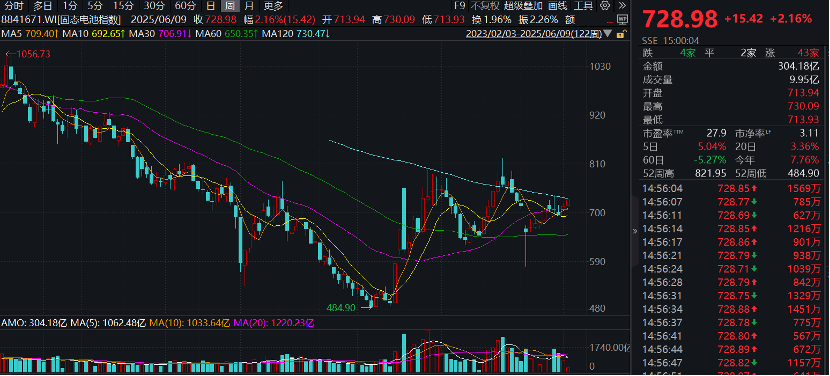
今日复牌,“国产算力航母”启航,重组预案曝光!固态电池热度飙升,潜力股出炉
Zheng Quan Shi Bao· 2025-06-09 23:48
固态电池装车渐行渐近。 6月9日晚间,一批A股宣布复牌,包括市场密集关注的两大科技股中科曙光、海光信息。 中科曙光公告称,公司与海光信息筹划由海光信息通过向中科曙光全体A股换股股东发行A股股票的方式换股吸收合并中 科曙光,并发行A股股票募集配套资金。 参与本次换股的中科曙光股票为14.63亿股,若不考虑合并双方后续可能的除权除息等影响,按照换股比例1:0.5525计算, 海光信息为本次换股吸收合并发行的股份数量合计为8.08亿股。吸收合并方换股价格为143.46元/股,被吸收合并方换股价 格为79.26元/股。 本次换股吸收合并中,海光信息拟购买资产的交易金额为换股吸收合并中科曙光的成交金额,为1159.67亿元。本次换股 吸收合并完成后,中科曙光将终止上市,海光信息将承继及承接中科曙光的全部资产、负债、业务、人员、合同及其他 一切权利与义务。公司A股股票将于2025年6月10日开市起复牌。 海光信息公告称,公司与中科曙光筹划由公司通过向中科曙光全体A股换股股东发行A股股票的方式换股吸收合并中科曙 光并发行A股股票募集配套资金。公司A股股票自2025年5月26日起停牌,并于6月10日开市起复牌。本次交易方案尚 ...


锂金属负极产业化头部企业资深专家
2025-06-09 15:30
Summary of Key Points from Conference Call Industry Overview - The solid-state battery technology is primarily divided into three routes: oxides, sulfides, and polymers, with lithium metal sheets produced by rolling methods being favored for their cost advantages and industrialization prospects [1][3][4]. Core Insights and Arguments - **Lithium Metal Battery vs. Lithium-ion Battery**: The main difference lies in the anode material; lithium-ion batteries use graphite, while lithium metal batteries utilize lithium metal films, which have a higher specific capacity of 3,860 mAh/g compared to graphite. However, controlling the uniform deposition and dissolution of lithium is a significant challenge [2][4]. - **Challenges in Lithium Metal Solid-State Battery**: Key challenges include achieving lithium metal deposition and dissolution to enhance cycle life, requiring the addition of 5% to 10% liquid to wet the electrodes and interfaces. The consumption of this liquid leads to increased polarization and reduced cycle performance [10][12]. - **Energy Density and Cycle Performance**: Lithium metal solid-state batteries can achieve energy densities of up to 800 Wh/kg, but balancing this with cycle performance is crucial. Current products report energy densities of approximately 450-500 Wh/kg while maintaining good cycle performance [12][19]. - **Market Penetration and Future Outlook**: The solid-state battery market penetration is expected to reach 10%-20% by 2027, contingent on widespread acceptance and cost reduction. The transition from liquid lithium-ion batteries to solid-state batteries shows limited energy density improvement, from about 200 Wh/kg to 350 Wh/kg [28][26]. Important but Overlooked Content - **Material and Technology Innovations**: The company employs copper-aluminum composite strips with a copper thickness of 5-6 microns to reduce costs and enhance performance. This involves optimizing material thickness and combinations for better conductivity and mechanical strength [21][4]. - **Electrode Material Considerations**: High nickel ternary materials (8-series or 9-series) are typically paired with lithium metal anodes to further enhance overall energy density. A no-anode design can also be employed to significantly improve solid-state battery performance [6][8]. - **Industry Players and Cost Dynamics**: Major players in the market include CATL, Ganfeng Lithium, and Yiwei Lithium Energy, with current costs for metal solid-state batteries around 2-2.5 times that of ternary lithium-ion batteries, approximately 2 yuan per watt-hour [9][24]. - **Safety and Stability**: The use of solid electrolytes in nano-metal solid-state batteries enhances safety by replacing flammable solvents used in lithium-ion batteries. However, lithium metal itself poses safety risks, necessitating careful design at both the material and cell levels [26][27]. Conclusion The solid-state battery industry is poised for growth, driven by technological advancements and increasing demand in high-value sectors such as automotive and robotics. However, challenges related to cycle performance, cost, and safety must be addressed to achieve widespread adoption and market penetration.