绿色化

Search documents
研判2025!中国集装箱制造行业产业链、产量、发展现状及未来前景展望:集装箱市场稳步复苏,产量超810万标准箱[图]
Chan Ye Xin Xi Wang· 2025-06-09 02:02
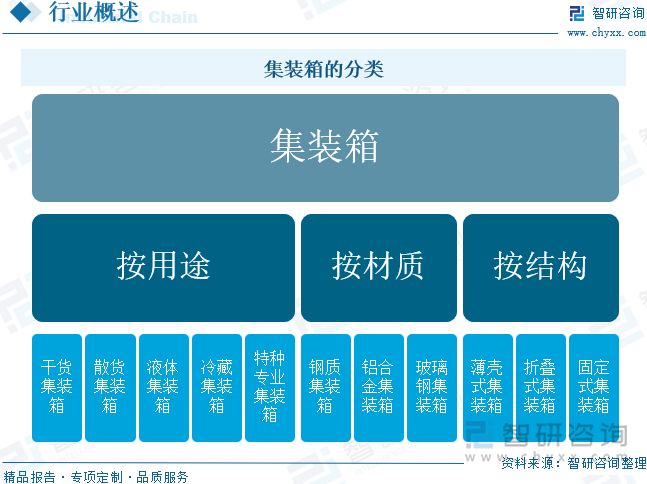
Industry Overview - The global logistics system is primarily based on containers, significantly enhancing productivity. The container manufacturing industry includes dry cargo containers, refrigerated containers, and various special containers. China produces over 95% of the world's standard dry cargo containers, maintaining the highest production and sales globally [1][18]. - In 2024, China's total container production is expected to exceed 8.1 million standard containers, representing a year-on-year increase of 268.2%. The dominant product is the international standard dry cargo container, accounting for 91.3% of total production [1][18]. Market Dynamics - The container manufacturing industry experienced a significant decline in production in 2023 due to the combined effects of a sluggish international trade recovery and high inventory levels following explosive growth in previous years. However, the demand for containers is expected to rebound in 2024 as global trade gradually recovers [1][18]. - China's container export volume in 2024 is projected to reach 5.45 million units, a year-on-year increase of 135.93%, with an export value of $17.039 billion, up 105.83% [21]. Key Players - Major companies in the container manufacturing sector include CIMC (China International Marine Containers), COSCO Shipping Development, and Xinhua Chang Group, with market shares of 40.18%, 25.35%, and 14.76%, respectively [23][25]. - CIMC reported container manufacturing revenue of 62.205 billion yuan in 2024, reflecting a year-on-year growth of 105.89% [27]. COSCO Shipping Development's container manufacturing revenue reached 23.661 billion yuan, up 188.8% [29]. Industry Trends - The industry is moving towards smart and green manufacturing, with increased focus on energy-efficient materials and automated production lines to enhance efficiency and reduce costs [32]. - The application of containers is expanding beyond traditional logistics into sectors like construction, energy, and agriculture, driving innovation in container design [33]. - Digital transformation is reshaping the industry, with technologies like blockchain improving logistics transparency and predictive maintenance services lowering operational costs for clients [34].



研判2025!中国公路建设行业相关政策、发展现状、竞争企业及未来前景分析:公路固定资产投资额有所下滑[图]
Chan Ye Xin Xi Wang· 2025-06-09 01:56
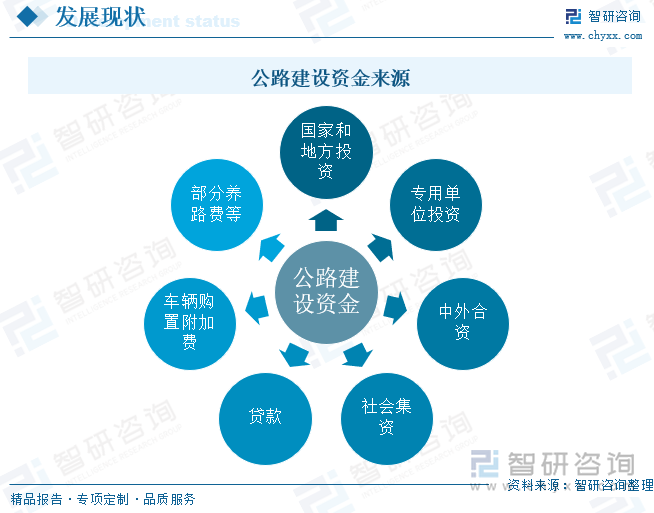
Core Viewpoint - The era of high growth in transportation infrastructure investment in China has ended, with a decline in highway fixed asset investment expected in 2024 and 2025 due to financial pressures on local governments and state-owned enterprises [1][12]. Group 1: Highway Construction Overview - Highway construction encompasses the entire process from project proposal, feasibility studies, surveying, design, construction, to acceptance and post-evaluation [3][5]. - Funding for highway construction includes national and local investments, specialized unit investments, joint ventures, social fundraising, loans, vehicle purchase surcharges, and some road maintenance fees [3][5]. Group 2: Investment Trends - Fixed asset investment in highways is projected to be 25,774 billion yuan in 2024, a year-on-year decline of 8.7%, with the first quarter of 2025 seeing an investment of 4,679 billion yuan, down 8.4% year-on-year [12][14]. - In 2024, Sichuan province leads in highway fixed asset investment at 254.54 billion yuan, accounting for 9.9% of the national total, followed by Zhejiang province at 227.81 billion yuan, or 8.8% of the total [14]. Group 3: Industry Development and Policies - The Chinese highway network has expanded significantly since the reform and opening-up period, with approximately 5.5 million kilometers of highways by the end of 2024, including 190,000 kilometers of expressways [16]. - Recent policies aim to promote the digital transformation and green development of highway construction, with goals set for 2035 to achieve comprehensive digitalization [9][11]. Group 4: Competitive Landscape - The highway construction industry in China is characterized by a large number of companies and intense competition, with 366 highway design firms, 946 construction firms, and 512 supervision firms evaluated for credit ratings in 2023 [20][22]. - Among these, 239 design firms, 476 construction firms, and 221 supervision firms received an AA rating, indicating a competitive yet regulated market environment [20][22].
更好发挥生态环保督察利剑作用
Jing Ji Ri Bao· 2025-06-08 22:09
Group 1 - The article emphasizes the importance of the newly issued "Regulations on Ecological Environment Protection Supervision Work" by the Central Committee and the State Council, which aims to strengthen the ecological environment protection supervision system [1] - The central ecological environment protection supervision is a significant initiative by the Party Central Committee to promote ecological civilization construction, reflecting a strong commitment to enhancing ecological environment protection [1][2] - The article highlights the successful resolution of issues such as illegal villas in Xi'an and violations around Dianchi Lake in Kunming, showcasing the effectiveness of the ecological environment protection supervision system [1] Group 2 - The article notes that China's economy is transitioning towards a greener and low-carbon high-quality development phase, necessitating a more robust approach to ecological environment protection [2] - It stresses the need for continuous improvement of the ecological environment protection supervision system to adapt to new challenges and enhance its effectiveness [2] - The establishment of a comprehensive supervision system that connects various stages from problem discovery to accountability is essential for effective governance [2] Group 3 - The article asserts that the effectiveness of the regulations relies heavily on execution, emphasizing that without strong governance and execution capabilities, even the best systems may fail [3] - It calls for a problem-oriented approach to ensure strict enforcement against ecological violations, highlighting the importance of accountability in achieving environmental protection goals [3] - The article suggests that the results of supervision and rectification should be integral to the evaluation and management of party and government leaders [3] Group 4 - The article emphasizes that the effectiveness of environmental rectification should be judged by the public, advocating for a focus on seemingly minor environmental issues that significantly impact communities [4] - It encourages the resolution of major environmental cases and addressing public concerns to meet the rising expectations for high-quality ecological environments [4] - The article advocates for increased transparency in supervision and public engagement to foster a collaborative effort in environmental protection [4]
研判2025!中国玻璃钢渔船行业发展历程、产业链、发展现状、竞争格局及发展趋势分析:渔船更新改造已迫在眉睫,玻璃钢渔船成为行业新宠[图]
Chan Ye Xin Xi Wang· 2025-06-07 02:04
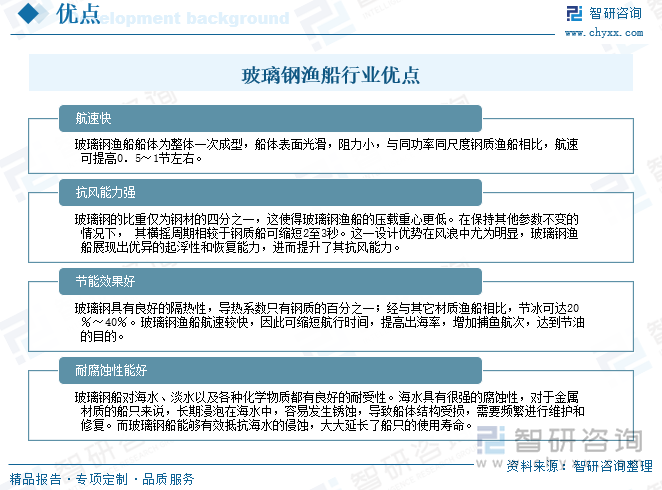
Core Viewpoint - The glass fiber reinforced plastic (GFRP) fishing boats industry in China is poised for significant growth due to the aging of existing wooden and small steel fishing vessels, with government initiatives promoting the replacement and modernization of fishing equipment. The number of GFRP fishing boats is expected to increase to 12,000 by 2025, representing a 20% year-on-year growth [1][14]. Industry Overview - GFRP fishing boats account for only about 2% of the total fishing vessels in China, compared to 80-90% in developed fishing nations [1][14]. - The existing wooden and small steel fishing vessels are over 50% aged, necessitating urgent updates and replacements [1][14]. - The Liaoning province has initiated a plan to promote large-scale equipment updates in the fishing industry, focusing on phasing out old wooden boats and enhancing subsidies for new steel or composite material boats [1][14]. Economic Aspects - GFRP fishing boats exhibit excellent energy-saving capabilities, with insulation performance leading to ice-saving rates of 20% to 40% and fuel savings of 10% to 15% compared to steel boats [4][5]. - The lifespan of GFRP boats can reach up to 50 years, significantly longer than the 10-15 years typical for steel boats, which require regular maintenance [4][5]. Industry Development History - The development of GFRP fishing boats in China began in the 1970s, with the first boat constructed in 1974 [7][8]. - The industry faced challenges in the 2000s due to quality issues and incidents, but recent government support has led to significant advancements in construction capabilities [7][8]. Industry Chain - The upstream of the GFRP fishing boat industry includes raw materials such as liquid synthetic resins and glass fibers, which are crucial for the durability and safety of the boats [8]. - The midstream involves the production and manufacturing of GFRP boats, while the downstream encompasses their applications in freshwater and marine aquaculture, marine capture, and seedling production [8]. Competitive Landscape - The GFRP fishing boat market in China is primarily dominated by state-owned enterprises, followed by military and private enterprises, with the former holding the largest market share [16][17]. - Key players in the industry include Jianglong Shipbuilding, Weihai Zhongfu Xigang Shipbuilding, and Qinhuangdao Yaohua Equipment Group [16][17]. Future Trends - The demand for GFRP fishing boats is expected to grow continuously due to the booming marine economy and increasing consumer interest in marine tourism [21]. - The industry is moving towards automation and smart technology integration, enhancing production efficiency and product quality [22]. - There is a growing emphasis on green development, with a focus on using recyclable materials and renewable energy technologies to reduce environmental impact [23][24].



国机通用: 国机通用2024年年度股东大会会议材料
Zheng Quan Zhi Xing· 2025-06-06 09:20
Core Viewpoint - The company is preparing for its 2024 Annual General Meeting, focusing on governance, financial performance, and future strategies, while also addressing the renewal of financial service agreements with related parties. Group 1: Meeting Overview - The 2024 Annual General Meeting is scheduled for June 20, 2025, with both in-person and online voting options available [1][2] - The meeting will include the election of monitoring personnel, the reading of various proposals, and the announcement of voting results [1][3] Group 2: Financial Performance - In 2024, the company achieved a net profit attributable to shareholders of 40.16 million RMB, with a proposed cash dividend of 1.1 RMB per 10 shares, totaling 16.11 million RMB [24][10] - The company reported a revenue of 766.12 million RMB, a 1.47% increase from the previous year, while expenses rose by 11.77% to 74.87 million RMB [25][24] Group 3: Corporate Governance - The company emphasizes compliance with laws and regulations, enhancing governance structures, and improving operational efficiency [5][8] - The board of directors has been actively involved in governance, with nine board meetings held in 2024, resulting in the approval of 36 proposals [8][9] Group 4: Industry Trends - The fluid machinery industry is experiencing rapid growth and structural adjustments, characterized by scale expansion, technological upgrades, and intensified competition [13][14] - The industry is shifting towards high-end, customized products, with a notable increase in the domestic market's global penetration [14][15] Group 5: Future Strategies - The company aims to focus on high-quality development, technological innovation, and strategic research to enhance core competitiveness [15][16] - Plans include optimizing business structures and expanding into emerging markets while maintaining a stable dividend policy [17][26] Group 6: Related Party Transactions - The company plans to renew its financial service agreement with Guojin Finance Co., Ltd., which is considered a related party due to shared control [28][29] - The agreement aims to enhance financing efficiency and reduce costs, with the company expected to apply for a total credit limit of 560 million RMB [26][27]

国瑞迪董事长张文国:从白手起家到年入过亿,深耕耐材三十年后的二次创业
Sou Hu Cai Jing· 2025-06-06 07:40
三十年前,张文国放弃国企"铁饭碗",以"不出来肯定会后悔"的决绝扎进市场经济浪潮,从村办小厂起 步,用三十年将企业做到年入过亿;三十年后,他跳出舒适圈二次创业,在上海成立国瑞迪科技公司, 以"绿色数智中间包智涂机器人"破解行业传统痛点。 他的故事,是一曲关于"定力"与"突破"的双重变奏——坚守耐材行业深耕不辍,又以创新者姿态引领行 业向智能化、绿色化跃迁。从"签三万块单子就值得喝庆功酒",到成为全球冶金服务领域的科技探索 者,他用行动诠释,在传统与未来之间,勇气是船,定力是锚。 抉择时刻:放弃"铁饭碗",投身创业浪潮 1994年早春,即将三十岁的张文国,在反复思量后,选择离开工作了十年的山东耐火材料厂,尽管这在 当时是一份令人羡慕的国企"铁饭碗"工作。 把时间再向前拨到1984年,二十岁的张文国从山东冶金工业学校毕业后,被分配到山东耐火材料厂工 作。 此后十年,他从基层做起,历任工段长、车间主任、分厂副厂长等职。他回想起当时为何从国企辞职创 业时讲了一个细节,"在单位生产技术岗位上埋头干了十年,就出过一次三天的差,回来后,已感觉到 整个社会经济处于飞速发展的大变革时代"。 在常人看来,不满三十岁已在国企担任中 ...

沥青灌缝胶在我国道路养护市场的发展趋势
Sou Hu Cai Jing· 2025-06-06 04:52
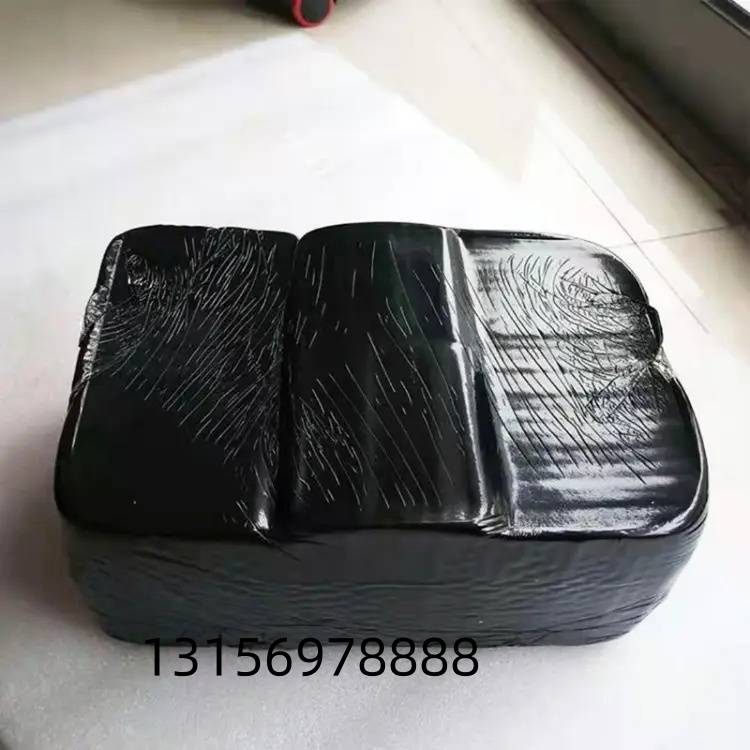
Market Demand Growth - The demand for asphalt sealing materials in China's road maintenance market is on the rise, driven by national policies that increase funding for highway maintenance, particularly for preventive maintenance projects [3] - By the end of 2023, China's rural road mileage reached 4.6 million kilometers, with a maintenance rate of less than 60%. The penetration rate of sealing materials in low-grade county and township roads is expected to increase from 15% to 30% by 2025 [3] - In first-tier cities, health records for road surfaces are being established, mandating the use of sealing materials for cracks wider than 0.5mm, with Shanghai planning to complete sealing work on 12,000 kilometers of urban roads in 2024, leading to a market scale exceeding 200 million yuan [3] Technological Innovation and Product Upgrades - The integration of laser positioning sealing machines with IoT monitoring systems has improved construction efficiency by 40% and reduced labor costs by 30% [6] - The durability of sealing materials has been enhanced through SBS/SBR composite modification technology, achieving low-temperature crack resistance at -40°C and high-temperature stability at 120°C, extending service life to over 5 years [6] - New generation rubber asphalt sealing materials have reduced VOC emissions by 60%, aligning with green construction requirements under carbon neutrality goals [6] Regional Market Differentiation - The eastern coastal regions focus on high-performance products, such as self-leveling sealing materials, to meet high-standard maintenance needs [8] - The central and western regions prioritize cost-effectiveness, favoring emulsified asphalt-based sealing materials to meet budget constraints [8] Market Competition Landscape Changes - Large enterprises dominate the market due to their brand advantages, technical strength, and market channels [10] - Small and medium-sized enterprises are finding ways to break through by offering customized products or services tailored to specific regional or niche market needs [10]
趋势研判!2025年中国农业机械行业产业链、政策、发展现状及未来前景分析:国家政策持续利好产业,行业加速向高端化、智能化、绿色化升级[图]
Chan Ye Xin Xi Wang· 2025-06-06 01:20
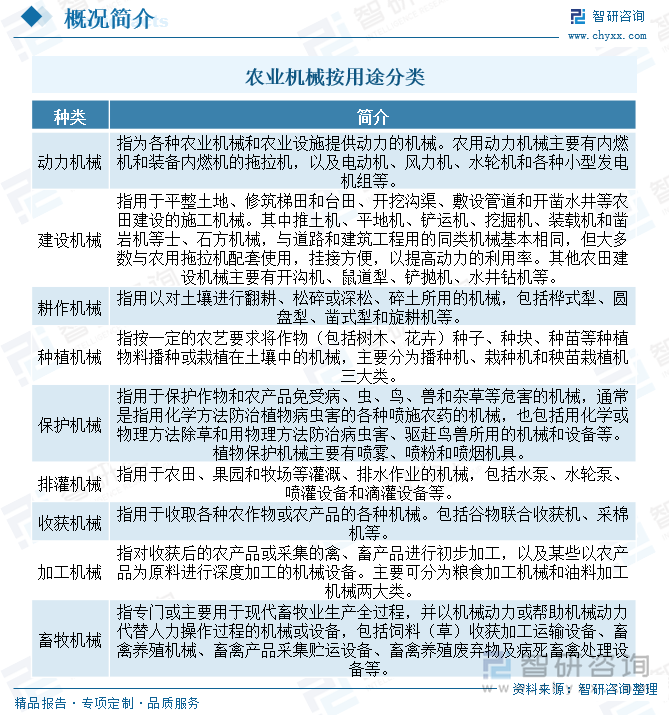
Industry Overview - Agricultural machinery refers to various machines used in crop planting and livestock production, as well as the initial processing and handling of agricultural and livestock products [1][6] - The industry is experiencing a structural adjustment driven by policy support, with a focus on the intelligent development of agricultural equipment [1][6] - The total power of agricultural machinery in China is projected to grow from 105,622.15 million kilowatts in 2020 to approximately 116,230 million kilowatts in 2024, indicating a transition towards new productive forces [1][6] Policy Support - Recent policies emphasize the upgrade of agricultural machinery towards high-end, intelligent, and green technologies, including the implementation of subsidies for machinery replacement and purchase [6][8] - The government has introduced various measures to enhance the subsidy standards for agricultural machinery, encouraging the replacement of old, high-energy-consuming equipment [8][10] Market Dynamics - In 2024, the agricultural machinery subsidy consumption scale is expected to reach 66.578 billion yuan, with a decrease in both the number of units sold and total sales compared to previous years [10][11] - The subsidy sales for power machinery and harvesting machinery exceeded 10 billion yuan, with power machinery accounting for 36.57% of the subsidy market [11][10] Competitive Landscape - The global agricultural machinery market is dominated by major players such as John Deere, Case New Holland, and AGCO, while domestic leaders like YTO Group, Weichai Lovol, and Wode Agricultural Machinery hold significant market shares in high-end products [13][15] - Despite rapid growth, China lacks large agricultural machinery manufacturers with international influence, but the market is expected to become more competitive as companies focus on technological innovation and service network expansion [13][15] Development Trends - The industry is witnessing a shift towards smart and digital transformation, with technologies like AI and 5G enhancing operational efficiency and reducing labor costs [19][20] - Green transformation is also a priority, with a focus on developing new energy agricultural machinery, such as electric tractors and hydrogen fuel cell harvesters, to meet carbon reduction goals [20][21] - Chinese agricultural machinery companies are increasingly expanding into international markets, supported by government policies that encourage overseas investment and collaboration [22][24]



40多艘“首制”从这里驶向全球
Xin Hua Ri Bao· 2025-06-04 09:06
Core Insights - The shipbuilding and marine engineering industry in Nantong has seen significant growth in 2023, with completion, new orders, and backlog all increasing by over 40%, and the total output value expected to exceed 200 billion yuan [1][4] - Nantong's unique geographical advantages, including deep-water coastlines, position it as a key player in the shipbuilding and marine engineering sector, despite facing challenges in its industrial advancement [1][2] Industry Overview - The number of shipbuilding enterprises in Jiangsu has drastically decreased from around 1,000 to just over 200, indicating a severe industry reshuffle [2] - The shipbuilding industry in Nantong has shifted from intense competition in low-end markets to a focus on specialization and collaboration among companies [2][3] Technological Advancements - The delivery of China's first A-type LPG cargo tank by Jiangsu Huazi Energy marks a significant milestone, showcasing the capability to produce complex marine equipment domestically [3] - Nantong's shipbuilding industry has developed advanced products such as the world's largest floating production storage and offloading (FPSO) vessel and the first dual-fuel dredging vessel in China [3] Industrial Ecosystem - Nantong has been recognized as a national pilot city for building an industrial chain and supply chain ecosystem, leading to the establishment of a high-tech shipbuilding and marine engineering cluster [4] - The cluster includes 18 national-level innovation platforms and 16 national manufacturing champions, highlighting its strength in the industry [4] Future Directions - The Nantong government aims to enhance the high-end, green, intelligent, and international aspects of the shipbuilding and marine engineering industry, focusing on improving key supporting equipment and core components [5] - The recent industry exhibition attracted 411 companies, including major state-owned enterprises and international participants, indicating a strong interest in the region's marine industry [5]
瞭望 | 多措并举稳外贸
Sou Hu Cai Jing· 2025-06-04 06:17
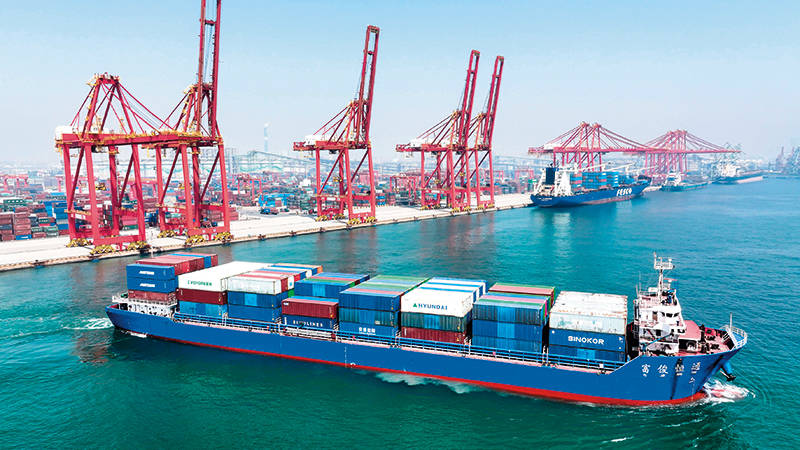
外贸稳不稳既直接关系到这些外贸企业的生产经营,更会通过产业链供应链传导至更多市场主体,尤其是对于外 向型经济大省而言,稳外贸对稳企业的作用更为突出 要更好发挥超大规模市场优势,促进内外贸规则制度深度融合、标准认证有效衔接、市场渠道顺畅对接,提升内 外贸转换效率 今年一季度,我国GDP同比增长5.4%,在全球主要经济体中名列前茅,外贸对GDP的拉动进一步提升至2.1个百分 点 文 | 王雪坤 当前,世界百年未有之大变局加速演进,外部冲击影响加大,我国经济发展面临前所未有的外部压力。4月25日召 开的中共中央政治局会议强调,要着力稳就业、稳企业、稳市场、稳预期,以高质量发展的确定性应对外部环境 急剧变化的不确定性。外贸是畅通国内国际双循环的关键枢纽,是拉动经济增长的"三驾马车"之一,稳住外贸基 本盘是做好"四稳"工作的重要抓手。 在山东港口日照港集装箱码头,满载集装箱的船舶驶离港口(2025 年 5 月 20 日摄) 郭绪雷摄 / 本刊 外贸表现总体好于预期。今年以来,全球贸易发展环境急剧恶化,国际经贸秩序受到严重冲击,制约全球贸易增 长。WTO预测,2025年全球货物贸易量将萎缩0.2%,较此前基线情景的增速大 ...