跨境电商

Search documents
普莱得涨0.07%,成交额2531.09万元,近5日主力净流入-855.56万
Xin Lang Cai Jing· 2025-11-25 07:32
Core Viewpoint - The company, Zhejiang Plade Electric Co., Ltd., has shown growth in revenue and profit, benefiting from cross-border e-commerce and the depreciation of the RMB, while also focusing on innovation and specialized products in the electric tool sector [2][6][7]. Company Overview - Zhejiang Plade Electric Co., Ltd. was established on November 1, 2005, and went public on May 30, 2023. The company specializes in the research, design, production, and sales of electric tools, with its main revenue sources being electric tool assemblies (94.85%), accessories (3.66%), and other (1.49%) [6]. - As of September 30, 2025, the company reported a revenue of 697 million yuan, representing a year-on-year growth of 7.74%, and a net profit attributable to shareholders of 61.5 million yuan, with an increase of 11.01% [7][8]. Market Position and Strategy - The company has established its own brand flagship stores on platforms like Amazon, eBay, Taobao, and Tmall, covering overseas markets in North America and Europe, with overseas revenue accounting for 67.86% of total revenue [2]. - The company has been recognized as a "specialized, refined, distinctive, and innovative" small giant enterprise, which is a prestigious title in China, indicating strong market focus and innovation capabilities [2]. Financial Analysis - The stock's average trading cost is 28.75 yuan, with recent rapid outflows of shares, suggesting a potential need for portfolio adjustment. The current stock price is near a support level of 26.33 yuan, which, if breached, could lead to a downward trend [5]. - The main capital inflow today was 394,200 yuan, accounting for 0.02% of the total, with the industry ranking at 73 out of 244 [3][4]. Shareholder Information - As of September 30, 2025, the number of shareholders decreased by 2.42% to 8,602, while the average number of circulating shares per person increased by 2.48% [6]. - The company has distributed a total of 59.27 million yuan in dividends since its A-share listing [8].
星徽股份涨0.55%,成交额9287.39万元,近5日主力净流入-3987.35万
Xin Lang Cai Jing· 2025-11-25 07:19
Core Viewpoint - The company, Guangdong Xinghui Precision Manufacturing Co., Ltd., is benefiting from its cross-border e-commerce business and the depreciation of the RMB, with a significant portion of its revenue coming from overseas sales. Group 1: Company Overview - Guangdong Xinghui Precision Manufacturing Co., Ltd. specializes in the research, production, and sales of precision metal connectors and smart home appliances, with its main products including slides, hinges, and various consumer electronics [5][7]. - The company was established on November 11, 1994, and went public on June 10, 2015 [7]. - As of October 10, the company had 23,200 shareholders, a decrease of 2.55% from the previous period, with an average of 15,296 circulating shares per person, an increase of 2.62% [7]. Group 2: Financial Performance - For the period from January to September 2025, the company achieved a revenue of 1.112 billion yuan, a year-on-year decrease of 6.23%, while the net profit attributable to shareholders was 2.6922 million yuan, a year-on-year increase of 106.21% [7]. - The company has cumulatively distributed 71.1607 million yuan in dividends since its A-share listing, with no dividends distributed in the past three years [8]. Group 3: Business Segments - The company's revenue composition includes 71.62% from slides, 16.77% from smart home appliances, 8.01% from power supplies, and 3.60% from other categories [7]. - The cross-border e-commerce segment includes small household appliances such as aroma machines, coffee machines, air fryers, and milk frothers, primarily sold overseas [2][3]. Group 4: Market Activity - On November 25, the company's stock rose by 0.55%, with a trading volume of 92.8739 million yuan and a turnover rate of 3.57%, resulting in a total market capitalization of 3.328 billion yuan [1]. - The company has experienced a net outflow of 10.5317 million yuan from major funds today, ranking 12th out of 18 in its industry, indicating a trend of reduced holdings by major investors over the past three days [4][5].

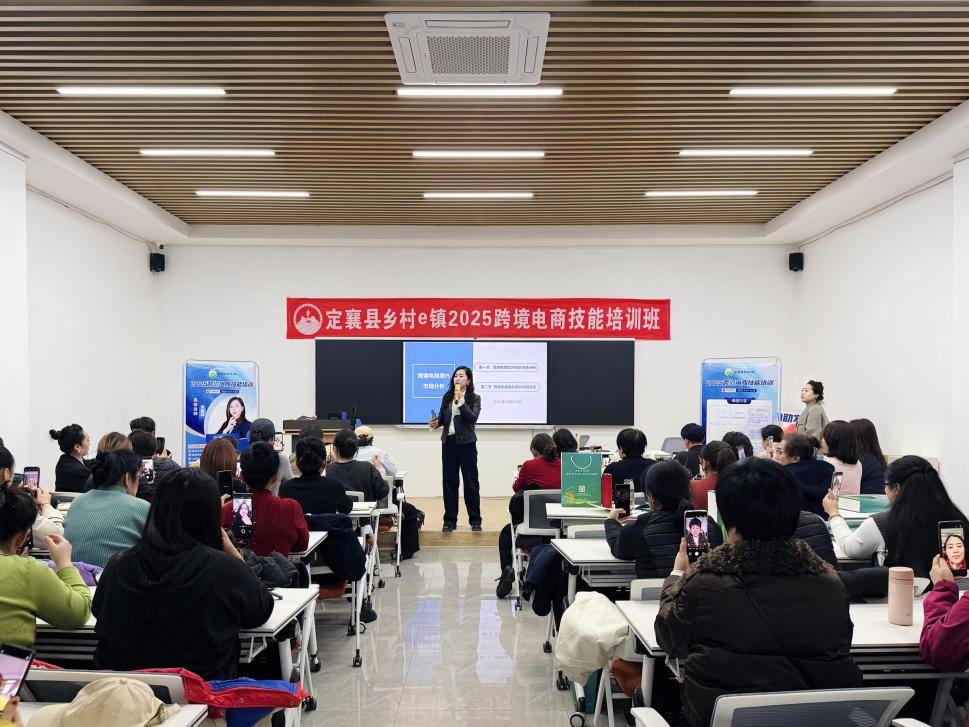
定襄县乡村e镇启动2025年跨境电商专题技能培训暨“家乡好物推荐官”计划
Sou Hu Cai Jing· 2025-11-25 05:40
本次培训特邀高级电子商务师武国琴进行授课。课程聚焦跨境电商的前沿趋势与核心实操技巧,内容涵盖行业解析、亚马逊等主流平台入 驻规则、店铺运营及营销推广等核心模块。 培训伊始,武老师以全球跨境电商现状与机遇为切入点,剖析国际市场趋势与热门品类,助学员明晰行业潜力。课程不仅系统讲解了平台 运营规则、营销策略、客户服务等理论知识,还从实战角度出发,对店铺注册、产品上架与优化、主图与详情页设计等流程展开细致教 学,有效提升学员的实操能力。 为加速推动县域经济数字化转型,培育跨境电商新业态,2025年11月19日至20日,定襄县乡村e镇成功举办了2025年跨境电商专题技能培 训,并同步启动"家乡好物推荐官"计划。本次活动吸引了全县70余名电商从业者、返乡创业青年及传统企业代表积极参与。 为巩固培训成效,拓展本土产品上行渠道,"家乡好物推荐官"计划于培训期间同步启动。该计划旨在激发学员及广大社会人士的参与热 情,通过短视频创作、直播带货、社群裂变等多元化形式,推广定襄优质农产品以及山西全省名优特产,打造"人人可参与、人人能带 货"的乡村振兴新模式,为本土好物开拓更广阔的线上市场。 培训现场互动频繁,学习气氛热烈。学员们纷纷 ...

振德医疗涨2.01%,成交额2.05亿元,主力资金净流入2678.41万元
Xin Lang Cai Jing· 2025-11-25 03:10
Core Viewpoint - Zhendemedical has shown significant stock performance with a year-to-date increase of 269.26%, indicating strong market interest and potential growth in the medical supplies sector [1][2]. Financial Performance - For the period from January to September 2025, Zhendemedical reported a revenue of 3.184 billion yuan, reflecting a year-on-year growth of 1.88%. However, the net profit attributable to shareholders decreased by 33.91% to 203 million yuan [2]. - The company has distributed a total of 1.46 billion yuan in dividends since its A-share listing, with 706 million yuan distributed over the past three years [3]. Stock Market Activity - As of November 25, Zhendemedical's stock price reached 78.80 yuan per share, with a market capitalization of 20.996 billion yuan. The stock experienced a net inflow of 26.7841 million yuan from major funds [1]. - The stock has appeared on the "龙虎榜" (a list of stocks with significant trading activity) four times this year, with the latest appearance on November 17, where it recorded a net buy of 329,100 yuan [1]. Shareholder Information - As of September 30, 2025, Zhendemedical had 23,600 shareholders, an increase of 4.06% from the previous period. The average number of circulating shares per shareholder decreased by 3.90% to 11,308 shares [2][3]. - Hong Kong Central Clearing Limited is the fourth-largest circulating shareholder, holding 3.9382 million shares, which is an increase of 190,000 shares from the previous period [3].

新蛋智能ERP SellingPilot 赋能数字贸易跨境电商产业对接会
Sou Hu Cai Jing· 2025-11-25 03:02
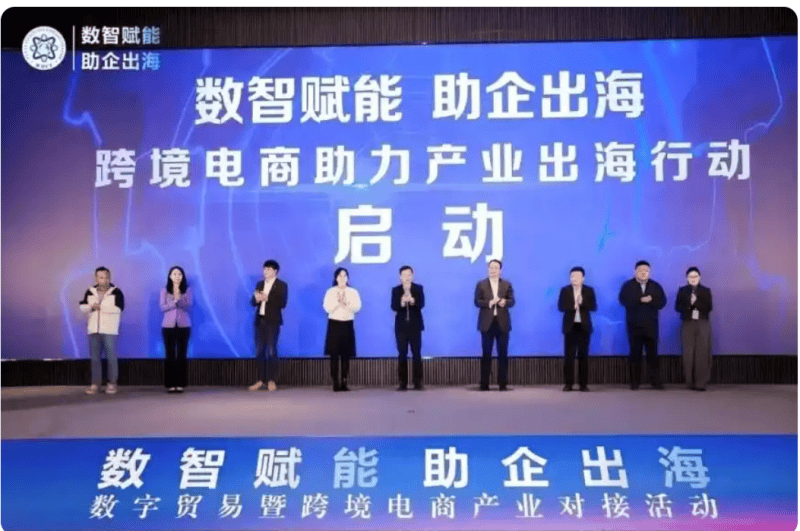
Core Insights - The event "Digital Trade and Cross-Border E-commerce Industry Matching" was successfully held in Wuhan, focusing on empowering enterprises for overseas expansion through digital intelligence [1][3] - The event attracted over 30 global cross-border e-commerce platforms and service providers, along with more than 200 participating enterprises, resulting in the establishment of over 10 cooperation projects in the digital trade and cross-border e-commerce industry chain [1][3] Industry Developments - The 20th Central Committee's Fourth Plenary Session emphasized accelerating the construction of a strong trade nation and innovating the development of digital trade, supporting the growth of new business models like cross-border e-commerce [3] - The event aimed to implement the central government's decisions on innovating digital trade and to explore new practices for industry innovation driven by digital intelligence [3] Company Initiatives - Wuhan's cross-border e-commerce association, in collaboration with major platforms like Amazon, Walmart, Alibaba, and eBay, launched the "Cross-Border E-commerce Action to Assist Industry Going Global" to enhance resource integration and build a comprehensive cross-border e-commerce service system [5] - The first "Cross-Border Going Global Benchmark Enterprises" list was released, featuring 14 companies from Wuhan recognized for their product quality and supply chain capabilities [5] Technology and Tools - Newegg's global CEO highlighted the company's focus on addressing common barriers in cross-border trade, such as regulatory differences and multi-language marketing challenges, through technology-driven solutions [7] - Newegg's SellingPilot, an AI-driven ERP tool, has shown significant results, with contract value growth for Chinese sellers exceeding 50% in 2025, validating the effectiveness of their strategic direction [7][10] - SellingPilot offers five core advantages, including deep integration with major platforms, AI-driven market analysis, logistics visibility, multi-language customer support, and competitive data analysis tools [8][10] Market Impact - SellingPilot has attracted users from over 60 countries, with more than 50% of users from China, covering various core categories such as electronics and apparel [10] - The tool has streamlined operations for sellers, reducing the need for large teams and improving operational accuracy [10] - The digital transformation in cross-border e-commerce is accelerating, with expectations for Newegg's SellingPilot to help more Chinese manufacturers build global brands [12]

华鹏飞涨2.10%,成交额1.79亿元,主力资金净流入724.54万元
Xin Lang Cai Jing· 2025-11-25 03:00
Core Viewpoint - The stock of Huapengfei has shown significant growth this year, with a year-to-date increase of 35.19%, and recent trading activity indicates strong investor interest and liquidity [1][2]. Group 1: Stock Performance - As of November 25, Huapengfei's stock price reached 7.30 CNY per share, with a trading volume of 1.79 billion CNY and a turnover rate of 5.30%, resulting in a total market capitalization of 4.103 billion CNY [1]. - The stock has experienced a 7.20% increase over the last five trading days, an 8.79% increase over the last twenty days, and an 11.11% increase over the last sixty days [1]. - The company has appeared on the "龙虎榜" (a stock trading leaderboard) once this year, with the most recent appearance on April 22, where it recorded a net purchase of 1.23 billion CNY [1]. Group 2: Financial Performance - For the period from January to September 2025, Huapengfei reported a revenue of 307 million CNY, reflecting a year-on-year growth of 20.36%. However, the net profit attributable to shareholders decreased by 77.62% to 5.038 million CNY [2]. - The company's main business revenue composition includes 71.14% from domestic comprehensive logistics services, 27.45% from international logistics services, and 1.41% from other services [1]. Group 3: Shareholder Information - As of September 30, the number of Huapengfei's shareholders reached 39,200, an increase of 3.70% from the previous period, while the average number of circulating shares per shareholder decreased by 3.57% to 12,044 shares [2]. Group 4: Dividend Information - Since its A-share listing, Huapengfei has distributed a total of 40.8533 million CNY in dividends, with no dividends paid out in the last three years [3].

活力中国调研行|稳外贸,江苏着力在“新”字上做文章
Ren Min Ri Bao· 2025-11-25 02:57
Core Insights - Jiangsu's foreign trade demonstrates resilience despite uncertainties, with a total import and export value of 4.88 trillion yuan from January to October, accounting for 13.1% of the national total and contributing over 20% to the national export growth [1] Group 1: Market Expansion - Jiangsu is focusing on opening new markets and expanding new business formats to enhance foreign trade [1] - Yangjie Electronics has seen a 30% growth in foreign sales, with plans for factory expansions in Vietnam, Malaysia, and Thailand [2] Group 2: Innovation in Trade - The "Shicaitong" platform in Changshu has facilitated a significant increase in exports for small and micro foreign trade businesses, growing from 1 billion USD to over 15 billion USD since 2020 [3] - Jiangsu's imports and exports with Belt and Road countries reached 2.44 trillion yuan, an 11.7% increase year-on-year, while trade with ASEAN countries grew by 22.1% [3] Group 3: Digital Transformation - The cross-border e-commerce sector in Suzhou's Shengze Town has seen a 225.4% increase in import and export value, reaching 3.635 billion yuan from January to September [4] - Jiangsu's cross-border e-commerce platforms experienced over 60% growth in imports and exports from January to October, with traditional industries leveraging digital channels for international market expansion [5] Group 4: Brand Development - Companies like Borui Electric and Yadea are enhancing their competitive edge through quality control and innovation, with Borui's products entering over 70 countries and Yadea adapting products for Southeast Asian markets [6] - Jiangsu's effective invention patent numbers remain among the highest in the country, with advanced manufacturing clusters contributing over 60% of these patents [7]
瑞尔特涨2.08%,成交额2261.33万元,主力资金净流入63.10万元
Xin Lang Zheng Quan· 2025-11-25 02:40
Core Viewpoint - The stock of Xiamen Reiter Bathroom Technology Co., Ltd. has shown fluctuations in price and trading volume, with a notable increase of 24.65% year-to-date, despite recent declines in the short term [1][2]. Group 1: Stock Performance - On November 25, Reiter's stock rose by 2.08%, reaching 8.85 CNY per share, with a trading volume of 22.61 million CNY and a turnover rate of 0.99%, resulting in a total market capitalization of 3.698 billion CNY [1]. - Year-to-date, Reiter's stock has increased by 24.65%, but it has decreased by 2.43% over the last five trading days and by 2.10% over the last twenty days [1]. - The company has appeared on the "Dragon and Tiger List" three times this year, with the most recent instance on November 4, where it recorded a net buy of -46.48 million CNY [1]. Group 2: Financial Performance - As of September 30, Reiter reported a decrease in revenue of 20.26% year-on-year, totaling 1.363 billion CNY, and a net profit of 61.57 million CNY, down 51.26% year-on-year [2]. - The number of shareholders decreased by 9.50% to 13,400, while the average circulating shares per person increased by 10.50% to 19,434 shares [2]. Group 3: Business Overview - Reiter, established on April 19, 1999, and listed on March 8, 2016, specializes in the research, production, and sales of bathroom accessory products [1]. - The main revenue sources for Reiter include smart toilets and covers (57.70%), water tanks and accessories (28.63%), and other products [1]. - The company operates within the light industry manufacturing sector, specifically in home goods and bathroom products, and is associated with concepts such as home appliances, cross-border e-commerce, and smart home technology [1]. Group 4: Dividend Information - Since its A-share listing, Reiter has distributed a total of 766 million CNY in dividends, with 288 million CNY distributed over the past three years [3].

稳外贸,江苏着力在“新”字上做文章
Xin Hua Wang· 2025-11-24 23:47
Core Viewpoint - Jiangsu's foreign trade demonstrates strong resilience despite uncertainties in the external trade environment, with a total import and export value of 4.88 trillion yuan from January to October, accounting for 13.1% of the national total and contributing over 20% to the national export growth [2] Group 1: Market Expansion - Jiangsu is focusing on opening new markets and promoting industries and enterprises to go global, with companies like Yangjie Electronics producing around 30 million power semiconductor chips daily for overseas markets, achieving a 30% growth in export [3] - The "Shicaitong" platform in Changshu has facilitated small and micro foreign trade businesses, increasing its export value from 1 billion USD in 2020 to over 15 billion USD, streamlining the export process for local merchants [4] - Jiangsu's imports and exports to countries involved in the Belt and Road Initiative reached 2.44 trillion yuan, a year-on-year increase of 11.7%, while trade with ASEAN countries grew by 22.1% [4] Group 2: New Business Models - The cross-border e-commerce sector in Suzhou's Shengze Town has seen a significant increase, with a 225.4% year-on-year growth in import and export value, reaching 3.635 billion yuan from January to September [5] - Companies are leveraging digital channels and innovative business models, such as overseas warehouses and data-driven marketing, to enhance their international sales, with Jiangsu's cross-border e-commerce platforms experiencing over 60% growth in imports and exports [5] Group 3: Competitive Advantages - Jiangsu companies are enhancing their competitive edge through innovation and quality control, with firms like Borui Electric holding over 700 patents and participating in the formulation of international standards, while Yadea focuses on quality and adapts products for Southeast Asian markets [6] - The region's effective invention patent count remains among the highest in the country, with advanced manufacturing clusters contributing over 60% of these patents, indicating a strong foundation for high-quality development [7]
*ST绿康控制权变更 纵腾网络成新控股股东
Zheng Quan Shi Bao Wang· 2025-11-24 13:33
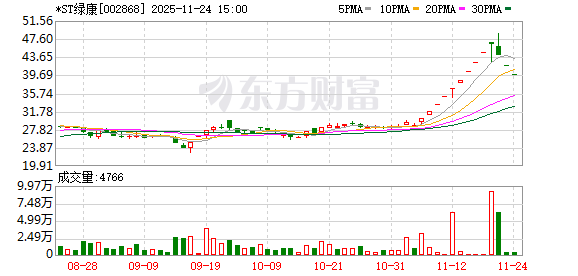
Core Viewpoint - *ST Lvkang has undergone a significant change in its controlling shareholder, with the transfer of 46,608,400 shares (29.99% of total shares) to Zongteng Network, which will now control the company [2][3]. Group 1: Share Transfer Details - The share transfer agreement was signed in April 2023, involving multiple investors transferring shares to Zongteng Network [2]. - The breakdown of the share transfer includes: - Kangyi Investment transferring 27,326,100 shares (17.58% of total shares) - Yirui Investment transferring 7,712,900 shares (4.96% of total shares) - Changxin No. 2 transferring 3,856,500 shares (2.48% of total shares) - Haoying Investment transferring 7,712,900 shares (4.96% of total shares) [3]. - Following the completion of the transfer, Zongteng Network will hold 46,608,400 shares, making it the new controlling shareholder [3]. Group 2: Company Financial Status - As of the end of 2024, *ST Lvkang reported a net asset of -2,453.61 million yuan, leading to a "delisting risk warning" on its stock [4]. - The company has recorded negative net profits for three consecutive years (2022, 2023, 2024), with an audit opinion indicating significant uncertainty regarding its ability to continue as a going concern [4]. - For the first three quarters of 2025, *ST Lvkang achieved a revenue of 410 million yuan but reported a net loss of 82.59 million yuan, with a non-recurring net profit loss of 91.63 million yuan [4]. - As of September 30, 2025, the company's equity attributable to shareholders remained negative at -106 million yuan [4]. Group 3: Market Reaction and Business Stability - The stock price of *ST Lvkang has experienced significant volatility, with a series of trading halts and subsequent declines [4]. - The company has stated that the change in control will not adversely affect its main business or operational performance, and it encourages investors to make rational investment decisions [4].