
科技金融

Search documents
扎根中原沃土 书写金融为民新篇章——中国银联河南分公司扎实推进“五篇大文章”实践纪实
Zheng Zhou Ri Bao· 2025-12-04 13:43
Core Viewpoint - The Central Financial Work Conference has outlined a strategic deployment focusing on five key areas: technology finance, green finance, inclusive finance, pension finance, and digital finance, guiding the financial industry towards high-quality development [1]. Technology Finance - Henan UnionPay leverages technology to enhance financial services and risk management, collaborating with local banks to implement solutions like "Fire Eye" and "Sky Shield," which have identified risks for over 315 million personal loans and 55 million small business loans [2]. - The introduction of a service for querying deceased individuals' bank accounts has improved efficiency, covering 33 banks and significantly reducing the need for public visits [2]. - A comprehensive anti-fraud campaign has been launched, achieving 15,000 downloads of promotional materials, reinforcing public financial security [2]. Green Finance - Henan UnionPay promotes green finance through initiatives like the "1 penny bus ride" program, investing over 400,000 yuan to encourage eco-friendly transportation [3]. - A partnership with the Bank of Communications has created a comprehensive green benefits system, investing 700,000 yuan to reduce consumer costs across various transportation modes [3]. - The organization is expanding green consumption initiatives, integrating eco-friendly practices into consumer behavior [3]. Inclusive Finance - Henan UnionPay focuses on rural and small business support, facilitating sales of local agricultural products that generated over 16 million yuan through targeted marketing efforts [4]. - A merchant platform has been established to connect small businesses directly with UnionPay, with 11 payment institutions participating, and a subsidy policy has been introduced to lower operational costs for small merchants [4]. - The "One Minute Life Circle" project has issued small consumption vouchers, resulting in over 2.81 million transactions and boosting consumption by over 105 million yuan [4]. Pension Finance - Henan UnionPay has developed a senior-friendly financial service ecosystem, launching a comprehensive subsidy program for elderly consumers, distributing nearly 20 million yuan in benefits [5]. - The organization has partnered with over 800 senior meal service providers to facilitate various payment methods, addressing payment challenges for the elderly [5]. - The "Caring Version" of the UnionPay app has been optimized for seniors, simplifying the user interface and enhancing accessibility to digital payment services [6]. Digital Finance - Henan UnionPay is building a digital financial ecosystem tailored to the needs of small banks and rural revitalization, enhancing merchant capabilities and promoting integrated payment solutions [7]. - The "Jinxiu Action 2025" initiative aims to improve the acceptance environment for merchants, with 59,400 merchants currently enabled for card and code payments [7]. - The organization is fostering collaboration between government and industry resources to support the digital transformation of small banks and contribute to rural financial development [7]. Conclusion - Henan UnionPay is committed to integrating financial services with community needs, focusing on technology, green initiatives, inclusivity, elder care, and digital transformation to enhance the quality of life and economic development in the region [8].


为江西高质量发展提供招商银行高质量金融服务
Zhong Guo Jin Rong Xin Xi Wang· 2025-12-04 12:22
Core Viewpoint - China Merchants Bank Nanchang Branch has been committed to serving the local economy and social welfare in Jiangxi for 27 years, focusing on differentiated, refined, intelligent, and professional financial services to support economic development and improve people's livelihoods [1] Financial Development and Services - The bank has implemented the "1269" action plan during the 14th Five-Year Plan period, aiming to achieve over 100 billion yuan in loans and over 140 billion yuan in deposits by September 2025, serving over 4.34 million personal customers and nearly 70,000 corporate customers [1] - The bank has established a "six specialized" mechanism in technology finance, providing differentiated financial services to tech enterprises, with a technology finance loan balance exceeding 11.6 billion yuan and an annual increase of nearly 3.2 billion yuan by September [2] - In green finance, the bank promotes various green loan products, achieving a green loan balance of over 8 billion yuan with an annual increase of nearly 1.8 billion yuan [2] - The bank has set up a working group for small and micro enterprise financing, resulting in a balance of inclusive loans exceeding 23.3 billion yuan and an annual increase of nearly 1.1 billion yuan [2] Support for Key Industries - The bank focuses on supporting key industries such as non-ferrous metals, electronic information, equipment manufacturing, new energy, and pharmaceuticals, with a target loan growth rate exceeding the average growth rate of corporate loans by 13.5 percentage points [3] - By 2025, the bank plans to invest over 10.7 billion yuan in 12 key industrial chains, enhancing support for regional quality industries [3] Rural Revitalization Initiatives - The bank emphasizes support for rural areas, particularly in renewable energy projects, with nearly 100 million yuan in loans for rural infrastructure and over 3 billion yuan in new loans for agriculture and rural development by 2025 [4] - The bank actively supports specific villages in Jiangxi, enhancing local industries and community projects to improve residents' income [4] Innovation and Customer Service - The bank prioritizes customer-centric service, implementing a "one-hour response" mechanism to enhance customer satisfaction and service experience [5] - The bank integrates counter and lobby services to create a seamless service experience, recognized as a model for civilized service [5] Product and Business Innovation - The bank promotes various digital products such as "Salary Welfare," "E-Catering," and "Financial Management Cloud," providing comprehensive solutions for enterprises [6][7] - The bank has developed innovative financing products based on government procurement contracts, supporting over 500 suppliers [7]

【科技金融】汇丰以15亿美元信贷资金支持中国内地科创企业
Xin Lang Cai Jing· 2025-12-04 11:25
Core Insights - HSBC China has launched "HSBC Innovation Finance," the first financial service brand focused on serving technology innovation enterprises in mainland China, with a total of $1.5 billion in credit funding to support these companies [1][2][3] Group 1: Financial Services for Innovation Enterprises - The new service aims to support innovative companies in technology, life sciences, and healthcare sectors, primarily focusing on startups and high-growth companies backed by venture capital or private equity [1][3] - HSBC will provide comprehensive financial services by assessing core technologies, patent barriers, and market prospects of these companies, addressing their various financial needs throughout different development stages [1][3] Group 2: Strategic Vision and Global Reach - HSBC's CEO, Wang Yunfeng, emphasized that China's vibrant innovation ecosystem is fostering global leaders in emerging industries, and the next five years will see an acceleration in technological innovation [2][3] - The "HSBC Innovation Finance" brand was launched following HSBC's acquisition of the UK subsidiary of Silicon Valley Bank in 2023, and it currently has a team of over 900 innovation finance experts globally, covering active innovation markets such as China, the UK, the US, Singapore, and India [2][3]

平安银行(000001) - 投资者关系管理信息
2025-12-04 10:34
Financial Performance - For the first three quarters of 2025, the bank's operating income was CNY 100.67 billion, a decrease of 9.8% year-on-year [1] - Net profit for the same period was CNY 38.34 billion, down 3.5% year-on-year [1] - As of September 2025, total assets amounted to CNY 576.68 billion, with total loans and advances at CNY 341.78 billion, reflecting a growth of 1.3% from the previous year [1] - The non-performing loan ratio stood at 1.05%, a slight decrease of 0.01 percentage points from the end of the previous year [1] Strategic Goals - The bank aims to be "the most excellent retail bank in China and a globally leading intelligent retail bank" [1] - The strategy focuses on strengthening retail, refining corporate services, and specializing in interbank operations while enhancing risk management and digital transformation [1] Comprehensive Financial Services - The bank is upgrading its comprehensive financial model, leveraging the advantages of the Ping An Group's ecosystem [1] - In the first three quarters of 2025, the net increase in wealth management clients from comprehensive financial services accounted for 47.5% [1] - New customer acquisition in assets under management (AUM) from comprehensive financial services represented 50.5% [1] Insurance Business - By September 2025, the bank's agency income from personal insurance reached CNY 1.24 billion, marking a year-on-year increase of 48.7% [3] Technology Finance - As of September 2025, the number of technology enterprise clients was 28,859, reflecting a growth of 9.5% year-on-year [3] - The balance of technology loans was CNY 297.53 billion, an increase of 6.6% from the previous year [3] Real Estate Loans - The balance of corporate real estate loans was CNY 226.99 billion as of September 2025, a decrease of CNY 18.23 billion from the previous year [3] - The non-performing rate for corporate real estate loans was 2.20%, an increase of 0.41 percentage points from the end of the previous year [3]

多部门统筹推进科技金融,银行信贷如何才能加大“含科量”?路径依赖等多重障碍待破除
Xin Lang Cai Jing· 2025-12-04 09:07
Core Viewpoint - The central theme of the news is the emphasis on accelerating the construction of a technology finance system in China, with a focus on increasing credit support for technology enterprises by banks [1]. Group 1: Credit Support for Technology Enterprises - Various banks have reported significant growth in technology loans this year, with Agricultural Bank of China (ABC) indicating a technology loan balance exceeding 4.7 trillion yuan, an annual increase of over 800 billion yuan [1]. - Industrial and Commercial Bank of China (ICBC) has also surpassed 6 trillion yuan in technology loans, with loans to technology enterprises exceeding 2.5 trillion yuan [1]. - Other banks, including CITIC Bank and Nanjing Bank, are actively increasing their technology loan portfolios, with CITIC Bank reporting a technology loan balance exceeding 1 trillion yuan [1]. Group 2: Sector Focus and Loan Distribution - The manufacturing sector, particularly advanced manufacturing and traditional enterprise upgrades, remains a primary focus for bank lending, with a significant portion of loans directed towards these areas [3]. - As of the end of Q3, loans to manufacturing enterprises from ABC's Hubei branch reached 576.2 billion yuan, accounting for 54% of technology loans, with advanced manufacturing receiving 360.3 billion yuan [3]. - Emerging sectors such as robotics and deep-sea economy are also gaining attention, with banks expanding credit support in these areas [4]. Group 3: Challenges in Technology Finance - Despite the growth in technology loans, banks face challenges in advancing technology finance, including reliance on traditional credit channels and a need for enhanced industry analysis and research [5]. - There is a dependency on external trade and small micro-enterprises for credit, which may hinder the motivation for technology loan issuance [5]. - The unique characteristics of technology enterprises, such as reliance on intellectual property and human capital rather than physical collateral, necessitate innovative financing solutions [5][6].




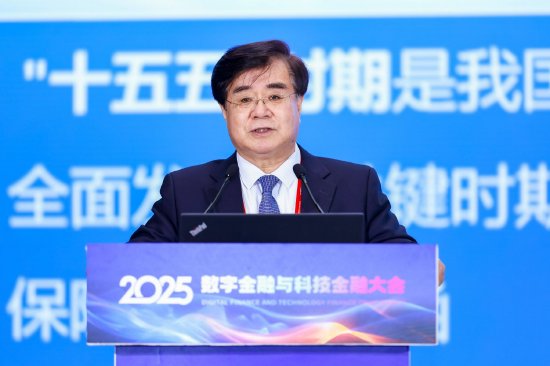
保险业如何更好服务实体经济?周延礼:构建数字保障与科技保险协同的新生态
Xin Lang Cai Jing· 2025-12-04 06:50
Core Insights - The "2025 Digital Finance and Technology Finance Conference" was held in Beijing on December 4, focusing on building a new digital financial ecosystem and outlining the "14th Five-Year Plan" [1][4] - Zhou Yanli emphasized that China ranks first globally in green credit and second in the green bond market, indicating a future path for the financial and insurance industries that is intelligent, green, and technological [3][6] Digital and Technological Finance - The "14th Five-Year Plan" highlights the need to accelerate the construction of a strong financial nation, with a core focus on developing digital finance and technology finance [3][6] - The integration of digital finance and technology finance is essential for future growth, where technology finance provides risk coverage and digital finance offers operational methods [3][6] Insurance Sector Development - From an insurance perspective, digital insurance and technology insurance are emerging as complementary solutions, with technology insurance offering risk coverage and digital finance providing digital guarantees to address various risk issues [3][6] - This integration aims to enhance the insurance sector's ability to serve the real economy and improve people's livelihoods [3][6]
科技金融专题跟踪报告:科技金融专题跟踪月报(2025.11)-20251204
Jianghai Securities· 2025-12-04 05:22
Investment Rating - The report provides a neutral investment rating for the technology finance sector, indicating a relative performance within -10% to 10% compared to the benchmark index [34]. Core Insights - The report emphasizes the importance of enhancing financial support for technology innovation, as outlined in the State Council's guidance on strengthening financial backing for achieving high-level technological self-reliance and building a strong technology nation [3]. - There is a notable trend of increasing financing activities in the technology sector, with significant records being set in various fields such as AI+AR glasses and Micro LED technology [12][13]. - The report highlights the performance of major indices in November 2025, noting a decline in A-share indices due to weak macroeconomic data and external market influences, while the communication and media sectors showed positive growth [19][29]. Summary by Sections 1. Financing News - Thunderbird Innovation completed a record financing round in the AI+AR glasses sector, marking the highest single financing amount in 2025 [8]. - JBD Shanghai completed over 1 billion RMB in B2 financing, setting a record in the Micro LED micro-display field [9]. - GAC High Domain's flying car project secured 200 million RMB in Pre-A financing, with total financing for the year reaching 500 million RMB [10]. - Dexmal, a company focused on embodied intelligence, announced several rounds of financing totaling nearly 10 billion RMB, indicating strong investor interest in advanced technology [11][12]. 2. Market Performance - In November 2025, major A-share indices experienced declines, with the Shanghai 50, ChiNext, and Sci-Tech 50 dropping by 1.39%, 4.23%, and 6.24% respectively [16]. - The technology growth sectors saw mixed results, with the communication and media industries recording positive growth, while other sectors such as machinery and pharmaceuticals faced declines [19]. 3. Loan Data - As of Q3 2025, the loan balance for technology SMEs reached 3.56 trillion RMB, reflecting a steady increase in financial support for this sector [21]. - The number of technology SMEs receiving loan support also rose, reaching 275,400 by Q3 2025 [24]. 4. IPO Activity - The report notes a stable number of IPOs in the domestic capital market, with the Hong Kong Stock Exchange seeing a peak of 15 IPOs in June 2025 [28]. 5. Overseas Financing - Sakana AI, a Japanese AI startup, raised approximately 20 billion JPY in B-round financing, achieving a post-financing valuation of about 400 billion JPY [13]. - Flexion, a US robotics startup, completed a 50 million USD financing round, with plans to expand its operations [13].
汇丰以15亿美元信贷资金支持中国内地科创企业发展
Zheng Quan Ri Bao Wang· 2025-12-04 03:49
Core Points - HSBC China has launched a new financial service brand, "HSBC Sci-Tech Finance," aimed at supporting innovative enterprises in China with a total of $1.5 billion in credit funds [1] - The initiative represents a strategic move by foreign banks to enhance technology finance and leverage cross-border service experience to boost the international competitiveness of Chinese sci-tech companies [1] - The HSBC Sci-Tech Finance team will utilize global resources and expertise to support innovation in sectors such as technology, life sciences, and healthcare, focusing on startups and high-growth companies backed by venture capital or private equity [1] Financial Support Details - HSBC will provide comprehensive financial services tailored to the characteristics of light-asset and innovative business models of sci-tech enterprises, including assessments of core technologies, patent barriers, and market prospects [1] - In addition to the $1.5 billion in credit, HSBC will offer support covering operational capital, capital expenditures, treasury management, and financing arrangements throughout the lifecycle of the enterprises [1] Industry Insights - The President and CEO of HSBC China, Wang Yunfeng, highlighted that China's vibrant innovation ecosystem has given rise to a number of global leading companies in emerging industries [2] - As technological innovation accelerates over the next five years, Chinese enterprises are expected to enhance their innovation capabilities, leading to more breakthroughs and the emergence of future industries [2] - By focusing on "technology finance," foreign banks can utilize cross-border resources to support more small giants, unicorns, and leading enterprises, facilitating the global expansion of Chinese innovation and manufacturing [2]
银行业2026年的业务增长点及对投资的映射
2025-12-04 02:21
Summary of Key Points from Conference Call Industry Overview - **Industry**: Banking Sector - **Forecast Year**: 2026 Core Insights and Arguments 1. **Loan Structure Predictions for 2026**: - Real estate loans are expected to maintain a stable proportion - Manufacturing loans will benefit from high-end manufacturing and industrial upgrades - Technology finance loans are anticipated to grow significantly but come with risks - Wealth management focusing on high-net-worth clients is identified as a major growth area [1][3][4] 2. **Financial Policy Focus for 2026**: - The core of financial policy will support the development of new productive forces, with a focus on technology finance - A bottom-line thinking approach will be maintained to prevent systemic financial risks, with potential policy easing if economic or real estate markets face pressure [4][5] 3. **Investment Opportunities in Banking**: - Bank stocks are characterized by weak cyclical attributes, expected to continue in 2026 - High-quality regional rural commercial banks, large banks, and banks with a significant proportion of high-net-worth clients are seen as more competitive in technology, manufacturing, and wealth management sectors [6] 4. **Infrastructure Loan Outlook for 2026**: - Infrastructure loans are expected to rebound, supported by a 500 billion policy financial tool and the rapid growth of new infrastructure projects like clean energy [7] 5. **Manufacturing Loan Resilience**: - Manufacturing loans are projected to remain resilient, supported by the "15th Five-Year Plan" emphasizing high-end manufacturing and traditional industry upgrades [8] 6. **Challenges and Opportunities in Technology Finance**: - Technology finance is a key development area with high growth potential, but banks must manage associated risks effectively [9][15] 7. **Trends in Wealth Management**: - High-net-worth clients are identified as the main source of opportunities in wealth management, with a trend of resident deposits flowing into the stock market expected to continue [2][10] 8. **Trends in Infrastructure Investment**: - Traditional infrastructure projects are expected to continue a slow decline, while new infrastructure areas like AI and clean energy will see strong demand [11] 9. **Manufacturing Export Outlook**: - Manufacturing exports are expected to be supported by market structure adjustments, with a moderate slowdown in growth anticipated [12] 10. **Financial Support for New Industrialization**: - Measures include increasing support for traditional industry upgrades and green finance, with banks required to include new industrialization in their long-term strategies [14] Additional Important Insights - **Real Estate and Consumption Outlook**: - The real estate market is expected to remain stable, with potential policy measures to stabilize the market if necessary [17] - Consumer performance in 2025 is described as generally weak, with a need for significant policy support to improve consumption rates [20][21] - **Impact of New Internet Loan Regulations**: - New regulations affecting internet loans with interest rates above 24% may pose risks to certain market segments, particularly in lower-tier markets [22] - **Investment Targets for 2026**: - Quality regional rural commercial banks and certain urban banks are highlighted as promising investment targets, with average dividend yields exceeding 4% for A-shares and around 5% for H-shares [23]
金融为科技创新注入强大动能
Jin Rong Shi Bao· 2025-12-04 02:03
Core Insights - The emphasis on accelerating high-level technological self-reliance and strength is a significant deployment in the "14th Five-Year Plan" proposal, highlighting the importance of financial support for technological innovation [1] Group 1: Financial Support for Technology Enterprises - Financing difficulties for small and medium-sized technology enterprises, especially startups, are a long-standing issue due to high technical barriers, significant upfront investments, long return cycles, and insufficient traditional collateral [1] - The development of technology finance aims to solve the funding challenges faced by technology enterprises, providing comprehensive financial services throughout their lifecycle [1] Group 2: Focused Investment - Financial resources are being directed towards high-tech industries, strategic emerging industries, and future industries, which are key areas for shaping new development momentum and competitive advantages [2] - As of September 2025, the proportion of new technology loans accounted for 30.5% of total new loans, with the loan balance for technology SMEs reaching 3.6 trillion yuan, a year-on-year increase of 22.3%, outpacing the overall loan growth by 15.8 percentage points [2] Group 3: Diverse Financial Channels - Financial institutions are developing specialized products and services such as intellectual property pledge financing and equity-linked loans to cater to the characteristics of technology enterprises [2] - By September 2025, the signed amount for loans related to technological innovation and technological transformation reached 2.6 trillion yuan, with 1.1 trillion yuan disbursed [2] Group 4: Collaborative Ecosystem - A multi-party collaborative technology finance service ecosystem is gradually improving, with banks, insurance, and capital markets working together to create a better development environment for technological innovation [3] - Since the launch of technology insurance, over 10 trillion yuan in risk protection has been provided, supporting 3,600 innovative application projects [3] - By September 2025, 277 entities in the interbank bond market had issued technology innovation bonds totaling 669.1 billion yuan, demonstrating effective risk-sharing and cost reduction [3]