脑机接口

Search documents
“AI换脸”冒用身份,证券市场投资者须警惕三大法律风险
Xin Lang Cai Jing· 2026-01-22 06:52
Core Viewpoint - The Chinese securities market is experiencing significant activity, with the Shanghai Composite Index achieving a 17-day consecutive rise and surpassing 4000 points for the first time in a decade, while also facing notable legal risks related to investor protection [1]. Group 1: Market Activity - The Shanghai Composite Index has achieved a 17-day consecutive rise, marking a significant milestone by returning to 4000 points after ten years [1]. - The total trading volume in the market has reached a new high, indicating increased investor participation [1]. Group 2: Legal Risks - Investors are warned to be cautious of three main legal risks when entering the market [2]. - The first risk involves fraudsters impersonating securities professionals or misusing their identities to conduct illegal activities, leading to financial losses for investors [2]. - The second risk pertains to financial institutions failing to fulfill their obligation to inform investors about investment risks, resulting in investors purchasing products beyond their risk tolerance [2]. - A case highlighted the failure of an investment management company to assess an investor's risk capacity, leading to a significant loss for the investor, with the court ruling that the company was liable for 80% of the losses incurred [3]. - The third risk involves false statements made by listed companies, which exacerbate information asymmetry and lead to poor investment decisions by investors [2]. - A specific case demonstrated that a company's failure to disclose critical information resulted in financial losses for an investor, with the court ruling in favor of the investor [3]. Group 3: Recommendations - Judges recommend that investors should engage in rational investment practices and verify the identities of securities personnel to avoid falling victim to scams [4]. - Financial institutions are urged to enhance their management of suitability obligations and adhere to stricter standards to protect investors [4]. - The establishment of a multi-faceted dispute resolution mechanism, in collaboration with regulatory bodies, is suggested to expedite the resolution of conflicts and safeguard the interests of small investors [4]. - There is a call for stricter enforcement against securities violations and the improvement of related legal and judicial frameworks [4].
复旦大学研究人员研发出“纤维芯片”,可集成数万个晶体管
Xin Lang Cai Jing· 2026-01-22 06:52
Core Viewpoint - Fudan University has developed a "fiber chip" that integrates multiple electronic functions into a single polymer fiber, marking a significant advancement in flexible electronics and opening new pathways for fiber electronic systems [1][3]. Group 1: Technological Breakthrough - The "fiber chip" maintains the intrinsic properties of flexibility and weavability while achieving high-precision interconnections of electronic components such as resistors, capacitors, diodes, and transistors [3]. - The light lithography precision of the "fiber chip" reaches the highest level of laboratory-grade lithography machines, allowing for the integration of light-emitting and sensing modules directly into a single fiber [3]. Group 2: Potential Applications - This technology is expected to provide strong technical support for emerging industries such as brain-machine interfaces, electronic textiles, and virtual reality [3]. - In the field of brain-machine interfaces, the ultra-fine "fiber chip" could integrate high-density electrodes and preprocessing circuits, leading to the development of softer and more biocompatible neural probes [4]. Group 3: Performance Metrics - Experimental estimates suggest that a 1-millimeter long "fiber chip" can integrate tens of thousands of transistors, with information processing capabilities comparable to some medical implantable chips [3]. - If the length of the "fiber chip" is extended to 1 meter, the number of integrated transistors could reach millions, achieving integration levels comparable to classic computer central processing units [3].


新思想引领新征程丨坚持创新驱动 加紧培育壮大新动能 深化拓展“人工智能+”
Yang Guang Wang· 2026-01-22 06:51
Group 1 - The core viewpoint emphasizes the need for China to leverage its new type of national system to promote the healthy and orderly development of artificial intelligence (AI) towards beneficial, safe, and equitable directions [1] - During the 14th Five-Year Plan period, China has continuously improved top-level design and strengthened work deployment, resulting in a comprehensive and systematic leap in AI capabilities [1] - A new "AI assistant" was launched in Hangzhou, marking a transition from "perceptual intelligence" to "action intelligence," enabling users to complete tasks directly through input commands [1] Group 2 - The application of embodied intelligent robots has expanded into various fields, including marathons, stage performances, and agriculture, showcasing the integration of AI into everyday life [2] - The "Mosu Space" model innovation ecosystem in Shanghai has grown from three to six phases, attracting over 200 companies and fostering collaboration among more than 1,500 AI enterprises in the area [2] - The number of AI companies in China has exceeded 6,200, with AI patents accounting for 60% of the global total, and the core AI industry is projected to exceed 1 trillion yuan by 2025 [3] Group 3 - The market for embodied intelligence is expected to surpass 5 billion yuan, while the brain-computer interface market is projected to exceed 3.8 billion yuan, indicating a positive cycle of innovation and application [3] - The demand for various types of computing power chips is rapidly increasing, with significant innovation occurring in the sector [3] - Domestic chip products are accelerating their adaptation in different scenarios, which will enhance the computing power level and support the development of the AI industry [3]
中国科学家全球首创“纤维芯片”
第一财经· 2026-01-22 05:25
Core Viewpoint - The research team from Fudan University has developed a "fiber chip" that integrates large-scale circuits into elastic polymer fibers, offering a new path for applications in emerging fields such as brain-machine interfaces, electronic textiles, and virtual reality [2][4][5]. Group 1: Technology and Innovation - The "fiber chip" achieves information processing capabilities comparable to traditional commercial chips while maintaining unique advantages such as high flexibility, adaptability to complex deformations, and the ability to be woven into fabrics [4][5]. - The team aims to provide a new solution for applications that traditional rigid chips struggle to address, particularly in wearable technology and flexible electronics [5][9]. - The "fiber chip" can integrate a closed-loop system for sensing, signal processing, and stimulation output within a fiber as thin as 50 micrometers, demonstrating comparable signal-to-noise ratios to commercial external signal processing devices [9][10]. Group 2: Application Scenarios - In brain-machine interfaces, the "fiber chip" can eliminate the need for bulky external signal processing modules, enhancing comfort and stability in wearable devices [9]. - The technology has the potential to create fully flexible electronic textiles that do not require external processors, allowing for dynamic pixel displays directly woven into the fabric [9][10]. - In virtual reality, the "fiber chip" can improve the precision of tactile interfaces, addressing limitations in current rigid signal processing modules [10]. Group 3: Performance and Challenges - The "fiber chip" exhibits superior flexibility, capable of withstanding bending, stretching, and twisting, and remains functional after exposure to washing, temperature variations, and physical pressure [11]. - The development of the "fiber chip" involves interdisciplinary collaboration across materials science, electronics, and biomedical engineering, highlighting the complexity of the project [12][13]. - Future research aims to enhance device integration density and information processing performance, with a focus on scaling production and application [13].

中国学者成功开发“纤维芯片”:丝线般细软、为纤维电子系统集成提供新路径
Zhong Guo Xin Wen Wang· 2026-01-22 05:13
Core Viewpoint - The research team from Fudan University has developed a "fiber chip" that is as thin and flexible as a silk thread, providing a new pathway for integrating fiber electronic systems [1][3]. Group 1: Development and Features - The "fiber chip" achieves an integration density of 100,000 transistors per centimeter, enabling digital and analog circuit operations [3]. - It exhibits superior flexibility, capable of withstanding bending, stretching, and twisting, while maintaining stable performance even after washing, exposure to extreme temperatures, and being crushed by a truck [3]. - The team utilized a multi-layer stacking architecture to maximize the internal space of the fiber, allowing for significant transistor integration [3][5]. Group 2: Scalability and Applications - The fabrication method developed is compatible with existing mature photolithography processes, enabling scalable production of the "fiber chip" [5]. - The "fiber chip" opens new applications in brain-machine interfaces, electronic textiles, and virtual reality, integrating power supply, sensing, display, and signal processing functions into a single fiber [5][7]. - In brain-machine interfaces, the technology allows for a closed-loop system integrated within a fiber as thin as a hair, eliminating the need for external signal processing modules [5]. - The "fiber chip" can facilitate the creation of fully flexible electronic textile systems, which can directly weave into fabrics without external processors, enhancing wearability [5][7]. - In virtual reality, the smart tactile gloves utilizing the "fiber chip" can accurately simulate different tactile sensations, improving user interaction with virtual environments [7].

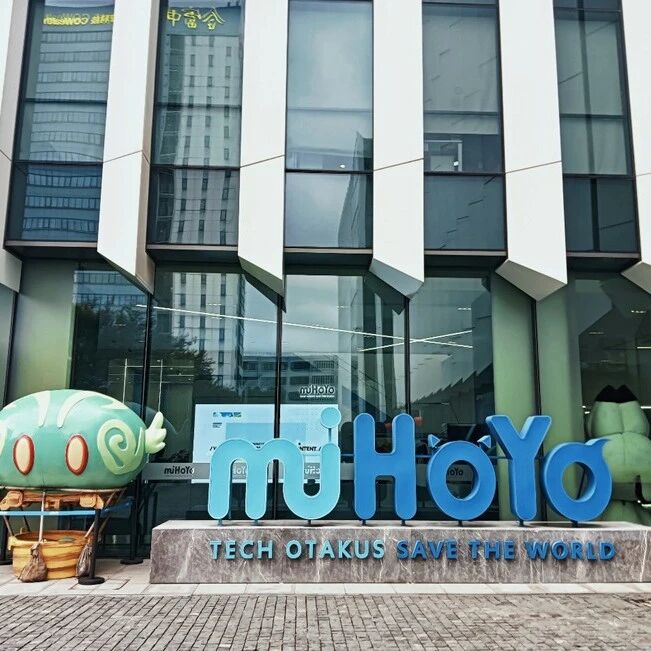
游戏赚来的钱,米哈游投出3家IPO
首席商业评论· 2026-01-22 04:52
Core Viewpoint - The article discusses the significant investment activities of the gaming giant miHoYo, highlighting its strategic investments in various sectors, particularly in AI and technology, as a means to diversify and secure future growth amidst uncertainties in its core gaming business [4][16]. Investment Strategy - miHoYo has made over 30 disclosed investments across various fields, including AI, embodied intelligence, and commercial aerospace, indicating a broad interest in future technologies [4][6]. - The company has invested in projects like MiniMax, Suplay, and Soul, which are either approaching IPO or have already gone public, showcasing its commitment to nurturing potential high-growth ventures [4][6][16]. Investment Portfolio - miHoYo's investment portfolio includes significant stakes in Suplay (11.86%) and Soul (5.47%), both of which are in the gaming and social media sectors [6][8]. - The company has also invested in cutting-edge fields such as controlled nuclear fusion and brain-computer interfaces, reflecting its ambition to be at the forefront of technological advancements [7][14]. Market Trends and Insights - The article notes that miHoYo's investments are driven by the growing demand for virtual companionship and identity recognition among younger generations, suggesting a strategic alignment with market trends [13][14]. - The decline in revenue from its flagship game "Genshin Impact" has prompted miHoYo to seek new revenue streams through investments, indicating a proactive approach to mitigate risks associated with its core business [17][18]. Future Outlook - miHoYo's aggressive investment strategy is seen as both a proactive and reactive measure to address uncertainties in its gaming revenue, with the potential for these investments to yield significant returns in the future [16][18]. - The company’s focus on technology investments is expected to enhance its operational efficiency and expand its existing ecosystem, thereby creating new revenue opportunities [15][18].
中国科学家全球首创“纤维芯片” 对现有芯片有何影响
Di Yi Cai Jing· 2026-01-22 04:44
Core Insights - Fudan University has developed a novel "fiber chip" that integrates large-scale circuits within elastic polymer fibers, breaking away from traditional silicon-based chip paradigms [1][2] - The "fiber chip" offers comparable information processing capabilities to classic commercial chips while maintaining unique advantages such as high flexibility and adaptability to complex deformations, which could support emerging industries like brain-machine interfaces and electronic textiles [2][8] Research and Development - The research team, led by Professors Peng Huisheng and Chen Peining, aims to create a new pathway for applications in emerging fields rather than replacing existing chips [2][10] - The development of the "fiber chip" began in 2020 alongside fabric display devices, focusing on creating a comfortable and stable connection for wearable technology [2][3] Application Scenarios - The "fiber chip" is expected to eliminate reliance on external information processing devices in various fields, such as brain-machine interfaces, where traditional electrodes require rigid external modules [8][9] - In the electronic textile sector, the "fiber chip" could enable the creation of fully flexible, breathable electronic fabrics without the need for external processors, allowing for dynamic pixel displays [8][9] - In virtual reality, the "fiber chip" can enhance tactile interfaces by providing better flexibility and comfort, addressing limitations in precision signal collection and output [9] Performance and Challenges - The "fiber chip" demonstrates superior flexibility, capable of withstanding bending, stretching, and twisting, and remains functional after exposure to washing, temperature variations, and pressure [10] - The development process involves multiple disciplines, including materials synthesis, electronic device construction, and circuit design, highlighting the complexity of the project [10] - The research team has established a comprehensive research platform and aims to collaborate with various academic disciplines to enhance semiconductor materials and device integration density [10][11]

中国科学家全球首创“纤维芯片”,对现有芯片有何影响
Di Yi Cai Jing· 2026-01-22 04:36
Core Insights - Fudan University has developed a "fiber chip" that integrates large-scale circuits into elastic polymer fibers, breaking the traditional silicon-based chip paradigm [1][2] - The fiber chip offers comparable information processing capabilities to classic commercial chips while maintaining unique advantages such as flexibility, adaptability to complex deformations, and the ability to be woven into fabrics [2][8] Group 1: Research and Development - The research team, led by Professors Peng Huisheng and Chen Peining, aims to provide a new pathway for emerging applications rather than replacing existing chips [2][10] - The development of the fiber chip began in 2020 alongside the creation of fabric display devices, focusing on integrating information processing modules into a fiber form [2][10] Group 2: Application Scenarios - The fiber chip is expected to eliminate reliance on external rigid signal processing devices in various fields, such as brain-machine interfaces, electronic textiles, and virtual reality [8][9] - In brain-machine interfaces, the fiber chip can integrate sensing, signal processing, and stimulation output functions within a fiber as thin as a hair, demonstrating flexibility and biocompatibility [8][10] - In electronic textiles, the fiber chip can enable the creation of fully flexible, breathable electronic fabric systems without the need for external processors [8][9] - In virtual reality, the fiber chip can enhance tactile interfaces by providing better flexibility and comfort, addressing limitations of traditional rigid modules [9] Group 3: Performance and Challenges - The fiber chip exhibits superior flexibility, capable of withstanding bending, stretching, and twisting, and remains functional after exposure to washing, temperature variations, and pressure [10] - The development of the fiber chip involves interdisciplinary collaboration across chemistry, electronics, and medicine, highlighting the complexity of the project [10][11] - Future research will focus on improving device integration density and information processing performance to meet the demands of more complex applications [10][11]
2026全球科技创新趋势与风险投资丨两说
第一财经· 2026-01-22 04:18
Core Viewpoint - The article discusses the transformative impact of AI on various industries, highlighting the opportunities and challenges that lie ahead as we approach 2026. It emphasizes the importance of adapting to this technological revolution for both startups and established companies [1][4]. Group 1: AI as a Fundamental Infrastructure - AI is becoming an indispensable underlying architecture across all industries, comparable to the internet wave of the past [4]. - Most companies are currently utilizing less than 5% of existing AI technologies, indicating a potential release of over 95% incremental value [6]. - The influx of capital into the AI sector has led to some valuation bubbles, but unlike the internet bubble, AI companies are generating real value, as evidenced by the billions in annual revenue from leading firms like OpenAI [6]. Group 2: Future Technological Innovations - In addition to AI, robotics and brain-computer interfaces are highlighted as key areas for future technological innovation, with significant potential to reshape industries [8]. - The integration of robotics with AI is expected to drive the adoption of "dark factories," fundamentally altering the manufacturing landscape [8]. Group 3: Entrepreneurial and Investment Principles - The lean startup philosophy of "small teams, small budgets, short cycles" remains relevant even in the AI era, promoting efficient communication and rapid iteration [11]. - Startups should focus on creating unique value outside the competitive landscape dominated by tech giants, by addressing specific industry pain points and integrating data and resources [11]. - Entrepreneurs must adopt an "AI-native" mindset, incorporating AI into all aspects of their operations to enhance efficiency and market positioning [13]. Group 4: Challenges of General Artificial Intelligence - The emergence of General Artificial Intelligence (AGI) will disrupt existing work models and reshape workplace ecosystems, with AI employees and managers becoming integral parts of organizational structures [15]. - A proposed strategy for adapting to this change includes documenting daily work and using AI tools to optimize redundant tasks, potentially freeing up 30% of time for higher-value activities [17]. Group 5: Governance and Safety Measures - To prevent AI from becoming uncontrollable, it is suggested that legislation should require companies to allocate a significant portion of their revenue to the development of AI safety systems [20]. - Despite the rapid advancements in AI, there is a call for a cautious approach, advocating for a measured pace in technological development to ensure societal well-being [22].

游戏赚来的钱,米哈游投出3家IPO
创业邦· 2026-01-22 03:55
Core Viewpoint - The article discusses the investment strategies of the gaming giant miHoYo, highlighting its significant investments in various sectors, particularly in AI and virtual social platforms, and the implications of these investments for the company's future growth and diversification [6][20]. Investment Overview - miHoYo has made over 30 investments across diverse fields, including AI, embodied intelligence, and commercial aerospace, indicating a broad interest in future technologies [6][7]. - The company invested in MiniMax, a leading AI player, during its angel round when its valuation was around 1.2 billion, and its market value has since exceeded 100 billion post-IPO [6][8]. - miHoYo holds significant stakes in several companies, including 11.86% in Suplay and 5.47% in Soul, both of which are preparing for IPOs [7][8]. Investment Strategy - The investment strategy reflects a preference for projects that can enhance or replicate the successful business model established by miHoYo's games, which combine intricate characters with deep emotional connections [13][15]. - Investments in AI companies aim to improve development efficiency for existing games, as seen in the collaboration with MiniMax for the development of "崩坏·星穹铁道" [17]. Market Trends and Future Outlook - The gaming industry is experiencing a decline in revenue from flagship titles like "原神," prompting miHoYo to seek new revenue streams through strategic investments [20]. - The company’s investments are seen as a proactive measure to mitigate uncertainties in its core gaming business, with a focus on emerging technologies that align with the evolving needs of younger generations for virtual companionship and identity [15][20]. Regional Focus - Nearly half of miHoYo's investment projects are located in Shanghai, indicating a regional preference in its investment strategy [18]. Conclusion - miHoYo's aggressive investment approach is a blend of proactive growth strategies and reactive measures to address uncertainties in its primary business, reflecting a broader trend among gaming companies to diversify into technology sectors [21].