
个人信息保护

Search documents
2025 百姓身边的民生新事
Ren Min Ri Bao Hai Wai Ban· 2025-12-25 23:06
Group 1 - The implementation of a flexible retirement system in China allows employees to choose between early or delayed retirement, gradually increasing the retirement age for men and women [18] - The new regulations aim to enhance labor resource allocation and support high-quality economic development by providing more options for workers [18] Group 2 - The Chinese government is addressing the issue of inaccurate electronic scales, introducing new technical standards to prevent cheating and ensure fair market transactions [19] - The new regulations focus on enhancing the traceability and anti-cheating measures of electronic scales, aiming to protect consumer interests [19] Group 3 - The Chinese government is accelerating the deployment of charging infrastructure in rural areas to boost the consumption of new energy vehicles, with plans to support 75 pilot counties by 2025 [20][21] - The initiative aims to integrate charging facilities with rural revitalization and green development, enhancing the potential for rural consumption [21] Group 4 - New regulations in personal information protection have been introduced, including guidelines for facial recognition and management of public surveillance cameras, to safeguard citizens' privacy [22] - The measures target key privacy areas and aim to enhance the security of digital ecosystems in China [22] Group 5 - The introduction of standardized requirements for smart elderly care products aims to improve the usability and safety of home products for the elderly, promoting a more age-friendly living environment [23] - The regulations address existing market issues such as design flaws and safety concerns, ensuring that products meet the needs of older adults [23] Group 6 - A new child-rearing subsidy program will provide financial support for families with children under three years old, starting in 2025, with an annual subsidy of 3,600 yuan per child [24] - This initiative is part of a broader effort to enhance family welfare and support population growth in China [24] Group 7 - The implementation of the Housing Rental Regulations marks a new phase of legal and regulatory oversight in China's rental market, addressing issues like false listings and tenant rights [26] - The regulations establish mechanisms for verifying rental properties and ensuring safety standards, promoting a healthier rental market [26] Group 8 - The age limit for civil service recruitment has been relaxed, allowing more candidates to apply, which reflects changes in population structure and educational attainment [27] - This policy aims to create a more inclusive job market and enhance the quality of public service by attracting diverse talent [27] Group 9 - A new initiative allows for more efficient vehicle registration processes, enabling car owners to register new vehicles without visiting the vehicle management office [28] - This reform is expected to significantly reduce paperwork and streamline the vehicle registration process for millions of car owners [28] Group 10 - The inclusion of the HPV vaccine in the national immunization program aims to increase vaccination rates among young girls, addressing public health concerns related to cervical cancer [29] - This initiative is part of a broader strategy to enhance preventive healthcare measures in China [29]


2025北京地区学生网民网络安全感满意度调查发布
Xin Lang Cai Jing· 2025-12-25 05:03
Core Insights - The report titled "2025 Beijing Student Internet Users' Cybersecurity Satisfaction Survey Analysis" highlights the current state of cybersecurity among student internet users in Beijing, emphasizing the need for improved protective measures and governance in the digital space [1][2]. Group 1: Cybersecurity Satisfaction - In 2025, the positive evaluation rate of overall cybersecurity among student internet users in Beijing is 65.25%, with 51.92% of students feeling an improvement in their sense of security compared to the previous year [1][2]. - Despite the optimistic outlook, there is a noted decline in cybersecurity satisfaction compared to 2024, aligning with the national average trend [1]. Group 2: Cyber Threats and Risks - A significant portion of students reported encountering various cyber threats, including illegal information dissemination, personal information infringement, network intrusion attacks, and online fraud, with the rates of network attacks and fraud being lower than the national average [2]. - New types of scams are prevalent, with 26.09% of students experiencing AI voice imitation scams, 26.47% encountering phishing emails generated by ChatGPT, and 23.57% facing AI deepfake video call scams [2]. Group 3: Personal Information Protection - 71.93% of Beijing student internet users rated the state of personal information protection positively, yet 40.2% still perceive widespread personal information leakage [2]. - Although there is a trend of reduced perception of information leakage compared to the previous year, new risks associated with short videos and social platforms are causing localized concerns [2]. Group 4: Educational and Governance Implications - The report serves as a crucial reference for cybersecurity education and provides a basis for collaboration between the education system and society to address cybersecurity challenges [3].
个人信息保护是重灾区,互金协会通报部分中小银行APP违规
Xin Lang Cai Jing· 2025-12-24 08:13
Core Viewpoint - The self-regulatory inspection by the China Internet Finance Association revealed significant privacy and security issues in mobile financial apps operated by various banks, highlighting systemic shortcomings in the industry regarding data protection and user privacy [1][2][3]. Group 1: Inspection Findings - The self-regulatory inspection identified that many mobile financial apps have concentrated issues in three main categories: personal information protection, security protection, and data security [2][9]. - Notable problems include security vulnerabilities in identity authentication, where sensitive information like names and bank card numbers are not adequately protected, and the lack of real-time protective measures during payment password entry [9][11]. - Personal information protection issues include unauthorized collection and use of user data, excessive data collection beyond necessary limits, and failure to provide users with options to delete or correct their information [2][9]. Group 2: User Experiences - Users expressed frustration over the necessity to grant extensive permissions to access basic banking functions, feeling that their privacy is compromised [3][10]. - Concerns about personal data leakage were prevalent, with users reporting unsolicited marketing calls and a lack of transparency regarding how their information is used [10][11]. Group 3: Regulatory Response - The National Financial Regulatory Administration has issued guidelines emphasizing the need for banks to adhere to principles of clear notification and user consent when handling personal information, limiting data collection to what is necessary [10][11]. - A notification in September 2024 mandated financial institutions to establish personal information protection systems for mobile applications, requiring them to inform users about data collection purposes and provide complaint channels [10][11]. Group 4: Compliance Challenges - Small and medium-sized banks have been identified as frequent violators of privacy regulations, with nearly 20 banks cited for non-compliance in 2024 [11][12]. - The reasons for these compliance issues include a focus on data collection for traffic generation, inadequate awareness of compliance requirements, and the complexity of privacy policies that confuse users [11][12]. Group 5: Recommendations for Improvement - Experts suggest tailored compliance guidelines for small banks, increased regular inspections, and stricter penalties for violations [12]. - Recommendations also include embedding data security responsibilities within organizations, simplifying privacy policies for user understanding, and integrating security assessments into the initial product design phase [12].
中银证券APP被下架,年内多家券商APP违规被点名
Nan Fang Du Shi Bao· 2025-12-24 06:49
Core Viewpoint - Shanghai Municipal Communications Administration has removed 38 apps, including "Bank of China Securities," for violating user rights, marking it as the only brokerage app on the list [2][3]. Group 1: Regulatory Actions - In November 2025, Shanghai Municipal Communications Administration reported 71 apps for violations, with only 38 failing to rectify issues by December, resulting in a整改 completion rate of 46.48% [3]. - The removal of these apps is based on laws such as the Personal Information Protection Law and the Cybersecurity Law, following a joint announcement by four departments including the Central Cyberspace Affairs Commission [3][4]. Group 2: Specific Violations - The "Bank of China Securities" app was cited for three specific violations: lack of clear personal information processing rules, difficulty in account cancellation, and improper use of personal information [4]. - Other brokerage apps, including Shenwan Hongyuan Securities and Dongfang Securities, have also been flagged for similar violations [5]. Group 3: Industry Context - The regulatory scrutiny on brokerage apps has intensified, with multiple firms being named for violations throughout the year, including four brokerage apps identified for illegal collection of personal information by the National Computer Virus Emergency Response Center [5]. - Legal experts emphasize the need for improved regulations and enforcement standards to protect user rights in financial apps, highlighting the importance of user identity verification and data security measures [6].


报告显示超七成网民对个人信息保护状况满意
Zhong Guo Jing Ji Wang· 2025-12-23 06:55
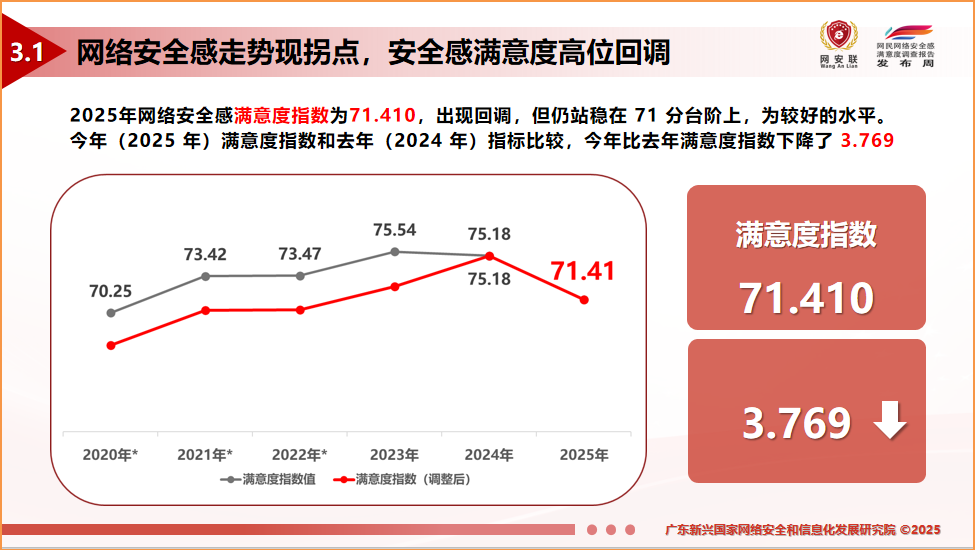
Core Insights - The 2025 National Internet User Cybersecurity Satisfaction Index is reported at 71.410, indicating a decline compared to 2024, marking the first inflection point since tracking began in 2018 [1] - Over 70% of internet users express satisfaction with personal information protection, while 65% report experiences of "opening boxes" [1] - 78.08% of users are concerned about the use of big data and AI for targeted scams [1] Group 1: User Satisfaction and Concerns - Satisfaction regarding the protection of minors' online rights has improved for the third consecutive year, with users expecting stronger regulation of AI emotional support agents to prevent inappropriate content [1] - The effectiveness of internet accessibility for the elderly and support for disabled individuals is gradually improving, although internet addiction among the elderly is becoming more common [1] Group 2: Shopping and Security Concerns - Live e-commerce and embedded shopping on social platforms have become the most common new shopping methods among users, yet concerns about false advertising, data privacy breaches, and payment security persist [1] - Users rate their sense of security, gain, and happiness in an intelligent social life above 7, with 88.07% expressing concerns about unknown risks associated with smart technologies [1] Group 3: Event and Organization - The report was released under the guidance of the Internet User Cybersecurity Satisfaction Survey Organizing Committee, with participation from 135 national internet social organizations and 228 volunteer service teams [2]
6款完成个人信息收集使用优化改进App清单公布
Xin Lang Cai Jing· 2025-12-23 04:36
Core Points - The announcement focuses on the optimization and improvement of personal information collection and usage by six specific apps to comply with Chinese laws and regulations [1] - The initiative aims to protect personal information rights and promote a secure environment for personal information management across society [1] Group 1: App Optimization - Six apps have been identified and have undergone improvements to address issues such as excessive collection of personal information, overuse of sensitive permissions, and difficulties in account cancellation [1] - The apps listed include: 1. Huazhu Club by Hanting Xingkong (Shanghai) Hotel Management Co., Ltd. (Version 9.38.1) 2. Elong Travel by Beijing Elong Information Technology Co., Ltd. (Version 10.8.7) 3. Zhihu by Beijing Zhizhe Tianxia Technology Co., Ltd. (Version 10.78.0) 4. Qin Baby by Hangzhou Dianwang Technology Co., Ltd. (Version 11.9.5) 5. Tencent Meeting by Shenzhen Tencent Computer Systems Co., Ltd. (Version 3.39.2.44) 6. Dongfang Caifu by Dongfang Caifu Information Co., Ltd. (Version 10.37.1) [1] Group 2: Regulatory Compliance - The optimization efforts are guided by the Cybersecurity Law of the People's Republic of China, the Personal Information Protection Law, and regulations on necessary personal information for common mobile internet applications [1] - The app operators have committed to maintaining compliance with these regulations in future updates [1]

海南:22款App违法违规收集使用个人信息被责令限期整改
Zhong Guo Xin Wen Wang· 2025-12-23 03:30
Core Viewpoint - The Hainan Provincial Internet Information Office has identified 22 mobile applications that illegally collect and use personal information, mandating these apps to rectify their practices by a specified deadline [1][2]. Group 1: Findings from the Inspection - A concentrated inspection conducted in the fourth quarter of 2025 revealed that 22 apps, including "Toca Life: World," "Hobo Simulator 2," and "Rust Wars Box," exhibited various illegal behaviors such as unauthorized collection, excessive data gathering, and lack of clear purpose statements for data collection [1]. - The identified apps are required to implement corrective measures to address these violations [1]. Group 2: Regulatory Measures and Future Actions - The Hainan Provincial Internet Information Office emphasizes that mobile app operators must adhere to legal regulations and principles of legality, necessity, and integrity while protecting user personal information [2]. - In 2026, the Hainan provincial authorities will continue to conduct regular inspections and governance of personal information protection in mobile applications, especially in light of increased cross-border data flow and user rights protection needs following the full closure of the Hainan Free Trade Port [2].
报告:“开盒”乱象严重 超六成网民称自己或身边人遭遇过
Nan Fang Du Shi Bao· 2025-12-21 04:49
Core Insights - The 2025 National Internet User Cybersecurity Satisfaction Survey Report was released, revealing a significant issue with "open box" incidents, where 65% of internet users reported experiencing or knowing someone who has experienced such incidents [1][10] - The Cybersecurity Satisfaction Index for 2025 is 71.410, showing a decline from previous years, with a notable drop in positive evaluations of cybersecurity from 69.49% to 56.16% [3][5] Group 1: Survey Findings - The survey collected approximately 1.65 million questionnaires, with 780,000 valid responses, indicating a robust data collection process [3] - The positive evaluation rate of internet users regarding cybersecurity has decreased significantly, reflecting a shift towards more neutral and negative assessments [3][6] - The increase in concerns about cybersecurity is linked to the misuse of artificial intelligence and geopolitical tensions affecting public trust [6] Group 2: Cybercrime Trends - There is a rising trend in cybercrime, with personal information violations and online fraud incidents increasing, particularly a 4.12 percentage point rise in personal information infringement [8] - 45.58% of users believe the likelihood of encountering online fraud has increased, with specific scams involving AI technology becoming more prevalent [8][9] Group 3: User Response Strategies - Users are becoming more proactive in their responses to cyber threats, with a notable increase in reporting incidents to law enforcement [9] - Over 70% of users express satisfaction with personal information protection measures, indicating a positive trend in public perception of data privacy [9][10] Group 4: Legislative and Regulatory Context - The report highlights the need for improved legislation to address "open box" incidents, with over 43% of users preferring legal avenues for recourse [11] - There is a growing concern about the use of big data and AI for user profiling, with 78.08% of users worried about targeted scams [11]
打击力度加大 多家险企APP因侵犯用户权益被通报
Xin Lang Cai Jing· 2025-12-19 19:25
Core Viewpoint - The insurance industry faces increasing compliance risks related to personal information protection as digital transformation progresses and regulatory frameworks improve [1][6] Group 1: Compliance Issues - The Shanghai Communications Administration reported that 3 insurance institutions had 8 apps (SDKs) flagged for issues such as lack of clarity in personal information processing rules and difficulties in account cancellation [1] - In total, over 20 apps (SDKs) from 9 insurance institutions have been flagged in 2025, indicating a systemic issue within the industry regarding personal information protection [1][2] - Other regions have also reported similar compliance issues, highlighting a widespread problem across the insurance sector [2][3] Group 2: Systemic Shortcomings - The frequent notifications reveal systemic shortcomings in personal information protection within the insurance industry, characterized by opaque rules, excessive data collection, and inadequate complaint handling [3] - The underlying issues stem from a misalignment in incentive mechanisms, capability systems, and responsibility chains within insurance institutions [3][4] Group 3: Regulatory Developments - Recent regulations, including the Personal Information Protection Law and the Data Security Law, have been implemented to enhance data governance and compliance in the financial sector [6][7] - The Financial Regulatory Authority has emphasized the need for insurance companies to shift from reactive compliance to proactive measures in personal information protection [7][8] Group 4: Recommendations for Improvement - To enhance data governance and personal information protection, the insurance industry should consider restructuring governance frameworks, leveraging technology for data security, and establishing comprehensive responsibility mechanisms for third-party collaborations [8]
期待“新国标”成为个人信息保护利器
Xin Lang Cai Jing· 2025-12-19 18:23
Core Viewpoint - The newly released national standard for electronic product information clearance addresses the growing risks of data leakage during the circulation of second-hand electronic products, particularly smartphones and computers, which is crucial for protecting user privacy and promoting a circular economy [1][2]. Group 1: Background and Necessity - The rapid development of the digital economy has led to an increase in the frequency of updates for electronic products, resulting in significant data leakage risks due to inadequate information clearance during the circulation process [1]. - In 2024, it is projected that over 300 million second-hand smartphones will be traded in China, with more than 60% of users unable to completely clear residual data from storage chips, leading to frequent information leakage incidents [1]. Group 2: New National Standard - The new national standard for electronic product information clearance provides clear guidelines on the scope, methods, and responsible parties for data clearance, addressing specific issues and setting clear goals for achieving thorough data removal [2]. - The introduction of this standard is a practical response to public concerns regarding personal information security and aligns with the contemporary demand for green and low-carbon development [2]. Group 3: Future Implications - The implementation of the new standard is expected to foster a healthier development ecosystem in the second-hand electronic market, integrating data security with circular economy principles, thereby strengthening the foundation for a digital China and enhancing green momentum [2].