供应链金融

Search documents
迈向普惠金融2.0:股份行如何构建独树一帜的生态模式?
Nan Fang Du Shi Bao· 2025-12-23 03:06
Core Insights - The banking industry is undergoing a significant transformation towards a digital and ecological model in the era of inclusive finance 2.0, with joint efforts from banks, government, and park management to enhance financial support for small and micro enterprises [2][3][4] Group 1: "园区贷" (Park Loan) - "园区贷" connects finance and industry through industrial parks, addressing the financing challenges faced by small and micro enterprises by leveraging park credit value and operational data for accurate credit assessment [2][3] - Various cities have implemented policies to support "园区贷," with Shenzhen and Beijing leading initiatives to enhance financial backing for enterprises within parks [3][4] - The model shifts from traditional single-enterprise lending to a systematic approach focusing on the entire park as a customer group, allowing banks to deepen their engagement in inclusive finance [3] Group 2: Supply Chain Finance - Supply chain finance offers a new path for banks to acquire customers by serving core enterprises and their upstream and downstream partners, significantly improving financing success rates for small and micro enterprises [5][6] - Data from the "China Enterprise Supply Chain Finance White Paper (2025)" indicates that financing success rates for small and micro enterprises can increase by over 40% when leveraging core enterprise credit, with costs reduced by 20-30% [5] - The model integrates various flows (contract, invoice, cash, goods, data) to enhance efficiency and transparency, distinguishing it from traditional financial services [5] Group 3: 投贷联动 (Investment-Loan Linkage) - 投贷联动 combines bank credit and equity investment to support high-growth, high-risk tech enterprises, addressing the mismatch between loan returns and risks [7][8] - The exploration of 投贷联动 has been ongoing since 2016, with banks encouraged to pilot this model to better serve tech enterprises [7] - Two main models exist: internal linkage with bank investment subsidiaries and external linkage with VC/PE firms, with the latter being more flexible and widely adopted [8][9] Group 4: Future Outlook - The integration of internal and external investment strategies through AIC (Asset Investment Company) will enhance the ability of banks to provide comprehensive financial solutions, creating a sustainable business path for inclusive finance [9]


如何锻造中国“链主”企业全球竞争力
Guo Ji Jin Rong Bao· 2025-12-22 01:44
Core Viewpoint - The article emphasizes the need for the government to play a guiding role in enhancing the leadership of "chain master" enterprises, improving the resilience and safety of industrial supply chains, and promoting industrial upgrades through collaboration with universities and research institutions [1][6]. Group 1: Current Issues in China's Industrial Chain - China's industrial chain, while complete, faces significant issues of being "large but not strong" and "broad but not deep," with high dependence on foreign core technologies and key components [2]. - The self-sufficiency rate of critical technologies is low, and many strategic industries still rely on imports for essential materials and equipment, weakening the control of "chain master" enterprises over the supply chain [2]. - The collaboration depth among upstream and downstream enterprises is insufficient, with "chain master" enterprises often unable to receive high-end support from small and medium-sized enterprises (SMEs) due to their low value-added roles [2]. - The relationship between "chain leader" (government) and "chain master" (enterprise) is not fully clarified, leading to inefficiencies in policy execution and a lack of effective communication between the government and enterprises [2]. Group 2: Financial Support Challenges - Financial support for "chain master" enterprises and SMEs is currently inadequate, with a heavy reliance on bank loans and low utilization of direct financing methods, resulting in high financing costs [3]. - SMEs face persistent financing difficulties due to a lack of collateral and low credit ratings, limiting their ability to innovate and expand [3]. - The development of supply chain finance is lagging, failing to effectively connect "chain master" enterprises with SMEs, which reduces the efficiency of capital flow within the industrial chain [3]. Group 3: International Experience and Recommendations - The U.S. government supports "invisible champion" enterprises through funding initiatives like the Small Business Innovation Research (SBIR) program, encouraging technological breakthroughs in niche areas [4]. - "Chain master" enterprises in the U.S. integrate SMEs into their ecosystems, enhancing their control over critical supply chain segments [4]. - Recommendations for strengthening China's "chain master" enterprises include establishing collaboration platforms between enterprises and research institutions, creating a cross-regional coordination mechanism, and promoting supply chain finance services [6][7]. - Encouraging "chain master" enterprises to globally allocate resources can lower costs and enhance efficiency, supported by government policies such as tax incentives and financial subsidies for overseas investments [7].

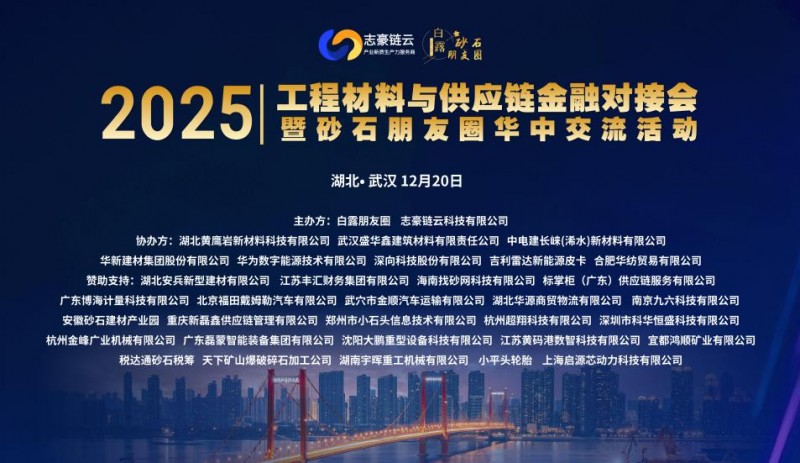
共探行业新机!2025工程材料与供应链金融对接暨砂石朋友圈华中交流活动圆满落幕
Sou Hu Wang· 2025-12-21 08:49
Core Insights - The event "2025 Engineering Materials and Supply Chain Finance Connection and Sandstone Circle Central China Exchange" was held in Wuhan, focusing on the engineering materials industry and supply chain finance [1][3] - The event aimed to address pain points and demands in the engineering materials industry, gathering over 200 industry elites from various sectors including government, mining, logistics, and finance [3] Group 1: Event Overview - The event emphasized "pragmatic connection, resource sharing, and collaborative win-win" as its core mission [3] - A diverse agenda included discussions on supply chain finance, resource matching, cost reduction, efficiency enhancement, and overseas expansion [5] - The event featured case studies, project recommendations, and interactive interviews to provide practical industry insights [5] Group 2: Key Presentations and Highlights - The General Manager of Zhihua Group, Xiong Xiang, presented the company's operations in mining, logistics, technology, and trade, highlighting investment and development progress in Zimbabwe's mineral projects [5] - The White Dew team, a leading entity in the sandstone sector, shared macro data on engineering materials, gaining recognition for their industry insights and resource integration capabilities [7] - Notable resource recommendations included a limestone project with reserves of 360 million tons and an annual production capacity of 10 million tons from Hubei Huangying Rock New Materials [7] Group 3: Strategic Collaborations and Initiatives - A strategic cooperation signing ceremony took place between Zhihua Chain Cloud and China Electric Power Construction Longcai (Xishui) New Materials, focusing on sand and stone production and sales collaboration, multimodal transport optimization, and green recycling [9] - The Zhihua Chain Cloud platform launched exclusive activities for sand and stone resources, which were quickly sold out, indicating high demand and the platform's effective supply-demand matching capabilities [10] - The event concluded with a commitment to continue linking quality resources in the engineering materials industry and innovating service models for high-quality development [10]
首批名单公布!三家银行未报送
Zhong Guo Jing Ying Bao· 2025-12-20 12:15
Core Viewpoint - The recent announcement by the China Internet Finance Association highlights compliance issues in supply chain finance, with three banks failing to submit required information, raising concerns about the industry's regulatory progress [1] Group 1: Regulatory Changes - The People's Bank of China and five other departments issued the "Document No. 77" to regulate supply chain finance, aiming to optimize financing for small and medium-sized enterprises (SMEs) and mitigate risks [1] - The new regulations are pushing the industry from "wild growth" to "standardization and transparency" [1][6] Group 2: Reasons for Non-Submission - One bank attributed its failure to submit information to delays in its data system, with updates expected next month [2] - Experts suggest three potential reasons for the non-submission: compliance adjustments and technical separation, strategic reassessment of business models, and pressures from data governance and system upgrades [3] Group 3: Industry Restructuring - The "Document No. 77" imposes strict requirements on banks regarding electronic receivables, emphasizing the need for platforms to return to their role as "information intermediaries" [4] - Nine types of prohibited activities have been identified, including issuing receivables without real trade backgrounds and extending payment terms without justification [4] Group 4: Future Development Trends - The industry is expected to experience a "pain period" in the short term, with a trend towards differentiation and consolidation, as compliance costs rise and weaker platforms exit the market [6] - Long-term trends indicate a shift towards services based on real trade backgrounds, integration of advanced technologies like blockchain and AI, and the establishment of an open ecosystem for supply chain finance [6]
顺丰控股11月快递业务量15.34亿票 同比增20.13% 物流升级激活内需与跨境贸易双引擎
Di Yi Cai Jing· 2025-12-20 04:33
Core Insights - SF Holding reported a total revenue of 27.173 billion yuan in November, representing a year-on-year growth of 7.85% [1] - The express logistics business generated revenue of 20.66 billion yuan, up 9.88% year-on-year, with a business volume of 1.534 billion parcels, an increase of 20.13% [1] - The company has successfully narrowed the year-on-year decline in single parcel prices for three consecutive months following the implementation of the "Gain Plan" [1] Group 1: Service Upgrade and Market Trends - The express delivery industry experienced a total business volume of 18.06 billion parcels during the "Double 11" shopping festival, reflecting a 5.0% year-on-year increase, indicating strong seasonal logistics demand [2] - The consumer market is transitioning from a phase of "scale expansion" to "quality upgrade," with increasing demands for product quality and service experience [2] - SF Holding launched a "late delivery compensation" service on December 1, allowing customers to receive cash compensation for delayed deliveries, enhancing service quality in the industry [2] Group 2: New Consumption Scenarios - The upgrade in service efficiency has opened new consumption scenarios for SF Holding, including logistics for golf equipment, snow sports gear, and international touring materials, which require high standards of timeliness and professionalism [3] - The company has successfully penetrated various emerging niche markets by providing customized service solutions, expanding its business growth opportunities [3] Group 3: Global Supply Chain and Cross-Border Trade - SF Holding is strategically positioning itself within global supply chain nodes, capitalizing on the growing demand for cross-border logistics as China's openness increases [4] - The company has launched a series of cross-border logistics products, including "China-Vietnam Smart Express" and "China-India Fast Shipping," addressing traditional pain points in cross-border logistics [4] - SF Holding has developed a comprehensive service matrix tailored to different markets in the Asia-Pacific region, enhancing service efficiency and reliability [4] Group 4: Transformation into Supply Chain Partner - SF Holding is evolving from a mere cross-border logistics service provider to a comprehensive supply chain partner, integrating various services such as supply chain finance and just-in-time delivery [5] - This transformation enhances collaboration with enterprises and supports their logistics needs for large items, while also facilitating the entry of foreign goods into the Chinese market [5] - The company's strategic positioning is expected to further drive growth in cross-border trade as consumer upgrades and international trade continue to advance [5]

乘“丰”而上 智融科创——恒丰银行科技金融服务粤港澳大湾区调研见闻
Zhong Guo Zheng Quan Bao· 2025-12-19 01:55
Core Viewpoint - The Guangdong-Hong Kong-Macao Greater Bay Area is leveraging technological innovation as a core driver for high-quality development, with Hengfeng Bank playing a crucial role in empowering technology enterprises through financial support and mechanisms [1]. Group 1: Mechanism Establishment - Hengfeng Bank has built a "dare to lend and willing to lend" mechanism to address the financing gap between banks and technology enterprises, which are characterized by high technology, high risk, high returns, and light assets [2]. - The bank has implemented a due diligence exemption mechanism, allowing staff to avoid accountability if they follow compliance procedures during the lending process, thus encouraging lending activities [2]. - As of November 2025, Hengfeng Bank's technology loan balance is expected to grow by approximately 10% compared to the beginning of the year, marking a significant shift in credit structure [3]. Group 2: Professional Capability - Hengfeng Bank emphasizes the importance of understanding industry trends and enterprise potential, moving away from traditional asset-based lending to a focus on technology and future prospects [5]. - The bank's approach includes precise assessment of credit needs and establishing trust through core assets like patents, which serve as collateral [5]. - The bank has developed a supply chain financing model to support upstream and downstream enterprises, addressing the funding pressures faced by small and medium-sized enterprises in the technology sector [6]. Group 3: Comprehensive Financial Services - Hengfeng Bank aims to create a "financing + intelligence" comprehensive financial service system, focusing on the full lifecycle needs of technology enterprises [8]. - The bank is integrating resources from investment banking, private equity, and asset management to facilitate mergers and acquisitions, enhancing cross-border services for enterprises [9]. - Future plans include deepening efforts in areas such as investment-loan linkage, asset securitization, and exploring financial instruments closely related to capital markets, aiming to create a more efficient and intelligent integrated financial service system [9].
“交易数据”变“信用资产”:电缆宝破解中小线缆企业融资难题
Sou Hu Cai Jing· 2025-12-18 01:13
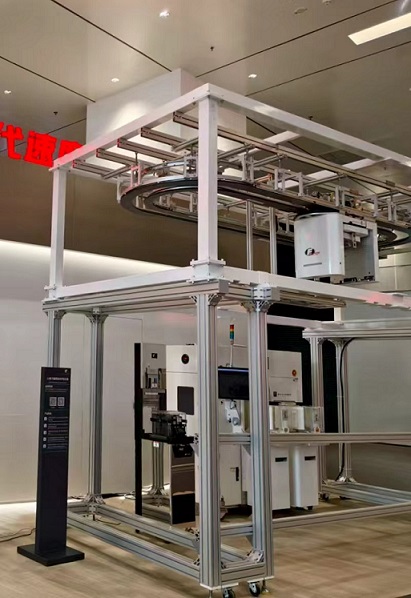
Core Insights - The cable industry is experiencing a golden growth period with an annual growth rate exceeding 20% due to the surge in wind and solar energy and accelerated construction of ultra-high voltage projects [1] - The emergence of "Dianlianbao" is addressing the financing challenges faced by small and medium-sized cable enterprises by transforming transaction data into credit assets [1][3] Industry Overview - The cable market is characterized by a "large market, small enterprises" structure, leading to financing difficulties for many companies [1] - Traditional financing models rely on tangible collateral, while cable companies' core assets are often intangible, such as orders and transaction flows [1][3] Company Innovations - Dianlianbao is the world's first comprehensive B2B online trading platform for cables, aiming to convert every real transaction into credit endorsement and every effective data set into capital [1][3] - The platform has created a full-chain digital trading ecosystem that includes smart procurement, online bidding, electronic contracts, and collaborative warehousing, ensuring all transactions are accurately recorded and traceable [1][3] Financing Solutions - Small and medium enterprises can now obtain precise credit from financial institutions based solely on real transaction flows and performance records, eliminating the need for traditional collateral [3] - The platform's "dynamic smart contract" model allows for online interaction and signing of complex terms, creating verifiable digital certificates from dispersed transactions [3][5] Market Impact - Dianlianbao's innovative model has been recognized in the market, significantly alleviating financing difficulties and reducing transaction costs by 5-15% through online bidding [5] - The platform aims to achieve a GMV of 500 million yuan in its first year and has attracted over 600 VIP members, reinforcing the foundation of its credit ecosystem [5] Policy Support - The "14th Five-Year Plan for Digital Economy Development" promotes high-quality development of B2B e-commerce, with government support for digital procurement platforms benefiting small and medium enterprises [5] - Dianlianbao's initiatives align with the trend of industrial digitalization and government support for small businesses, allowing more cable companies to benefit from data dividends [5][6] Future Developments - Dianlianbao is enhancing its data platform and supply chain financial products, expanding its "virtual national warehouse" network [6] - The platform will provide additional services such as collective procurement of raw materials and logistics support, further integrating financing into the entire supply chain process [6][8] Conclusion - The digital transformation of the trillion-yuan cable industry requires addressing the bottlenecks in capital flow, and Dianlianbao is leveraging data to empower credit value, facilitating a deep transformation in the industry [8]

日照银行联合鲁商集团 以供应链金融赋能商业产业链
Qi Lu Wan Bao· 2025-12-17 10:23
Group 1 - Rizhao Bank has partnered with Lushang Group to enhance supply chain finance applications, becoming the first financial institution to directly connect with the "Lushang Credit" platform [1] - The collaboration has provided a total of 120 million yuan in accounts receivable financing to multiple upstream suppliers of Lushang Group, supporting high-quality development of the commercial industrial chain [1] - The "Lushang Credit" platform issues electronic vouchers based on accounts payable from core enterprises, allowing suppliers to apply for financing directly online, thus improving fund turnover efficiency [1] Group 2 - Rizhao Bank is accelerating comprehensive cooperation with Lushang Group, exploring the "de-core chain loan" business model based on accumulated data from orders, logistics, and warehousing [2] - The bank aims to establish automatic credit granting models for upstream and downstream enterprises within the Lushang Group supply chain, enhancing the quality and efficiency of supply chain financial services [2] - Over the years, Rizhao Bank has served more than 8,000 small and micro enterprises within the industrial ecosystem, promoting stable development of the supply chain and industrial chain [2]
浦发银行兰州分行:做好做实供应链金融 谱写产业发展新篇章
Xin Lang Cai Jing· 2025-12-17 04:47
Core Viewpoint - The article highlights the commitment of SPD Bank's Lanzhou branch to serve the real economy through innovative financial solutions, particularly in supply chain finance, which has become a primary focus area for enhancing regional economic resilience [1][7]. Group 1: Supply Chain Finance Initiatives - SPD Bank's Lanzhou branch has established supply chain finance as its main track, launching a series of effective solutions to address challenges in the industrial chain and enhance economic resilience [1][7]. - The bank has created the "浦链通" product to facilitate the smooth flow of funds within the industrial chain, thereby energizing the development of upstream and downstream enterprises [1][7]. - The bank's initiatives include the "浦链铁军" team, which integrates party building with business development to promote widespread understanding and implementation of supply chain finance [2][8]. Group 2: Focus on Cultural and Tourism Industry - The bank has introduced the "浦链通+浦掌柜" comprehensive financial service plan to support the cultural and tourism sector, addressing financing difficulties faced by small and medium-sized enterprises [3][9]. - This year, the bank has provided approximately 100 million yuan in financing to the cultural and tourism industry, successfully implementing a case study involving a 5A scenic area [3][9]. Group 3: Support for Key Enterprises - SPD Bank has collaborated with the People's Bank to offer online accounts receivable financing services to the JinChuan Group, a Fortune 500 company, providing over 600 million yuan in financing to its supply chain [4][10]. - The financing service leverages the integration of information flow, business flow, capital flow, and logistics to enhance efficiency across the supply chain [4][10]. Group 4: Addressing Industry Pain Points - The bank has developed a unique supply chain business model to address the long payment cycles and slow financing in the construction industry, facilitating rapid fund recovery for suppliers [5][11]. - The "浦链通" product has enabled online operations for accounts receivable, serving nearly 150 suppliers in the construction sector and providing over 300 million yuan in financing [5][11]. Group 5: Deepening Energy Sector Engagement - SPD Bank has focused on providing tailored financial solutions for the energy sector, particularly for the State Grid, with over 2.5 billion yuan in funding to support green energy initiatives [6][12]. - The bank has introduced innovative financial products to alleviate cash flow pressures for electricity-consuming enterprises, enhancing the efficiency of fund circulation within the energy supply chain [6][12].

进出口贸易融资困难:跨境企业面临的挑战及综合应对策略
Sou Hu Cai Jing· 2025-12-16 12:36
Core Insights - The article highlights the increasing complexity and challenges faced by import and export enterprises in cross-border trade financing, with over 60% of small and medium-sized enterprises struggling with cash flow, credit assessment, and collateral requirements [1] Group 1: Challenges in Cross-Border Trade Financing - Funding pressure arises from long-term capital lock-up during transportation, customs clearance, and inventory, particularly in bulk commodity imports and seasonal exports, leading to high costs and liquidity risks [2] - The complexity of credit assessment is exacerbated by the lack of a unified cross-border credit system, making it difficult for traditional financial institutions to accurately evaluate the operational status and repayment ability of enterprises [3] - Strict collateral requirements, such as physical and third-party guarantees, create high barriers for asset-light trading companies, limiting their access to financing [4] Group 2: Solutions from Supply Chain Service Providers - Comprehensive supply chain service providers offer one-stop cross-border logistics financial services, integrating international freight, customs clearance, and warehousing to optimize cash flow for enterprises [5] - Financing innovations based on real trade backgrounds allow service providers to create detailed credit profiles for enterprises, reducing risk assessment costs for financial institutions [6] - Effective risk control is achieved through professional service providers' ability to monitor key logistics nodes, ensuring visual management of financing collateral [7] Group 3: Technological Innovations and Advantages - Digital supply chain management platforms utilize IoT, blockchain, and big data to optimize the coordination of goods, information, and funds, providing real-time data support for financing decisions [8] - The advantages of multimodal transport networks enable flexible combinations of shipping methods, optimizing logistics paths and cost structures, thereby shortening capital occupation periods and improving cash flow management [9] - Specialized customs clearance capabilities enhance efficiency, reducing cargo detention time and lowering time-related costs [11] Group 4: Value Presentation and Empirical Results - Supply chain service providers can enhance funding turnover efficiency by improving customs clearance times by 40%, thus shortening capital occupation periods [12] - A 99% return risk avoidance rate through professional services helps reduce uncertainties in trade processes, boosting financing institutions' confidence in projects [13] - A global service network covering over 200 countries, combined with a 99% on-time delivery rate, provides reliable performance guarantees for cross-border trade financing [15] Group 5: Industry Trends and Outlook - The evolution of supply chain finance models and the deep application of financial technology are leading cross-border trade financing towards more refined and scenario-based approaches [16] - Supply chain service providers, with their deep understanding of trade processes and comprehensive service capabilities, will become crucial bridges connecting the real economy with financial capital [16] - Future services based on real trade backgrounds will further lower financing barriers for SMEs, promoting a sustainable and efficient development of the entire industry [16]