
双循环新发展格局

Search documents
“产业+会展”深度融合 广州会展航母启航
Nan Fang Du Shi Bao· 2025-06-17 23:09
Group 1 - The Guangzhou International Convention and Exhibition Group was established to integrate high-quality exhibition resources in the city, aiming for a market-oriented, professional, international, digital, branded, and green approach [1] - The group plans to create a "one industry, one exhibition" model to enhance the optimization of urban industries and promote consumption upgrades, positioning itself as a leading one-stop comprehensive service platform for industrial exhibitions in China [1] - The group aims to achieve significant results within three years and become a leading domestic exhibition group within five years, leveraging the strengths of the Lingnan Group [1] Group 2 - Strategic cooperation agreements were signed with various industry associations and leading enterprises to focus on the collaborative development of industrial exhibitions [2] - The group will cultivate local professional exhibition brands that serve advantageous and emerging industries in collaboration with the Guangdong Exhibition Organizers Association [2] - Partnerships with organizations like the Guangdong Commercial Association and Guangya Frankfurt aim to create platforms for production and sales integration, promoting the integration of domestic and foreign trade [2]
2024年中国港口经济增加值达6.7万亿元 占海港城市经济总量的13.6%
Zhong Guo Jing Ying Bao· 2025-06-16 03:17
Core Insights - The report indicates that the port economy in China's coastal cities is a crucial driver for development, with a projected value of 6.7 trillion yuan in 2024, accounting for 13.6% of the total economic output of these cities, representing an increase of 360.6 billion yuan compared to 2023 [1][2] Group 1: Economic Overview - The spatial structure of China's port economy is characterized by "one core, two zones, and multiple areas," with cities like Shanghai and Suzhou leading as the core, the Yangtze River Delta and Pearl River Delta as the two zones, and the Bohai Rim, Southeast Coastal, and Southwest Coastal areas as the multiple areas [1] - In 2024, the contribution of the primary, secondary, and tertiary industries to the port economy in coastal cities is expected to be 15%, 22%, and 8% respectively, indicating a significant support role of ports for the primary and secondary industries [1] Group 2: Regional Performance - The Yangtze River Delta region accounts for 44.9% of the national port economy value, making it the most developed area for port economies in China [2] - Compared to 2023, the port economy shares of Tianjin and Hebei, Shandong, the Yangtze River Delta, and Fujian coastal cities have increased by 0.1, 0.3, 0.2, and 0.1 percentage points respectively, while the shares for Liaoning, Guangdong, and Southwest coastal cities have decreased by 0.1, 0.5, and 0.1 percentage points [2] Group 3: Industry Trends - The global supply chain is undergoing rapid restructuring, with ports and shipping logistics serving as critical links in the international supply chain and supporting the new dual circulation development pattern [2] - Geopolitical conflicts and trade barriers are prompting a retreat from globalization, yet the trend towards global economic integration remains irreversible, driven by a new technological revolution reshaping global supply chains [2]
中国海港城市港口经济增加值达6.7万亿元,上海稳居龙头地位
Di Yi Cai Jing· 2025-06-12 12:31
Core Insights - The highest score for the high-quality development index of port economy in Chinese coastal cities is awarded to Shanghai, rated A+ [1][5] - The report indicates that the port economy is a crucial driver for the modernization of the economic system in China, providing a scientific reference for optimizing port economic strategies [1][5] Economic Contribution - In 2024, the added value of the port economy in Chinese coastal cities is projected to reach 6.7 trillion yuan, accounting for 13.6% of the total economic output of these cities, with a growth of 360.6 billion yuan compared to 2023 [1][2] - The distribution of the port economy's added value across primary, secondary, and tertiary industries is 15%, 22%, and 8% respectively, indicating a significant support role for the port economy in primary and secondary industries [2] Regional Performance - The Yangtze River Delta coastal region, including Shanghai and other cities in Jiangsu and Zhejiang provinces, is expected to generate a port economy added value of 3 trillion yuan in 2024, representing 44.9% of the total for Chinese coastal cities [3] - The Guangdong coastal region's port economy added value is projected to reach 1.5 trillion yuan, accounting for 22.7% of the total, with a GDP contribution rate of 12.9% [5] City-Level Insights - Shanghai's port economy added value is significantly higher than other cities, constituting about one-fifth of the regional total, with rapid growth observed compared to 2023 [5] - Other cities such as Suzhou, Ningbo, and Wuxi also show notable growth in their port economies [5] Industry Context - The report highlights the importance of ports and shipping logistics as connectors in the international supply chain, emphasizing their role in supporting the new dual circulation development pattern [5]

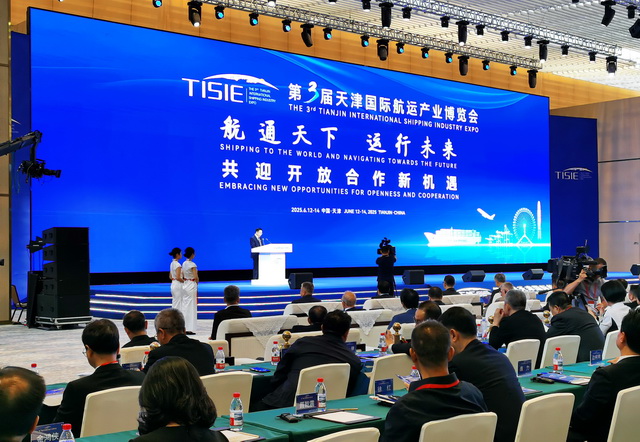
打造国内一流会展集团!广州国际会展集团正式揭牌
Nan Fang Du Shi Bao· 2025-06-11 04:57
Group 1 - The Guangzhou International Convention and Exhibition Group was established to integrate high-quality exhibition resources in the city, aiming to create a leading domestic "industry exhibition" one-stop comprehensive service operation platform [2] - The group aims for market-oriented, professional, international, digital, branded, and green development, promoting the optimization of urban industries and consumption upgrades through deep integration of "industry + exhibition" [2] - The group plans to achieve significant results within three years and become a leading exhibition group in China within five years, leveraging the resources of Lingnan Group [2] Group 2 - Strategic cooperation agreements were signed with various industry associations and leading enterprises, focusing on the collaborative development of industry exhibitions [3] - The group will cultivate local professional exhibition brands that serve advantageous and strategic emerging industries, and build a platform for production and sales integration [3] - Collaborations include creating the "Smart Future" industry exhibition to promote the development of intelligent manufacturing and digital economy, as well as a specialized exhibition for the biopharmaceutical industry [3]

全面看待美国关税压力测试|国际
清华金融评论· 2025-06-07 10:21
财经杂志 . 文/中国社科院世经政所博士后 谢慧敏、 中国社科院世经政所研究员 杨盼 盼 、中国社科院世经政所研究员 徐奇渊 4月以来,特朗普政府的关税政策经历了剧烈波动与多次重大调整。 特 别 是 针 对 中 国 , 美 国 先 是 施 加 " 对 等 关 税 " , 随 后 又 多 次 提 升 关 税 , 最 终 将 税 率 加 征 至 14 5% , 这 可 被 视 为 一 次 极 限 关 税 的 压 力 测 试。 在如此高的关税下,4月中国对美出口同比下降21.3%,下降幅度显 著低于此前各类模拟测算的结果。其原因何在?可持续性如何?本 文尝试基于美国进口商提单层面的微观数据做逐一回答。 以下文章来源于财经杂志 ,作者谢慧敏 等 《财经》杂志官方微信。《财经》杂志由中国证券市场研究中心主办,1998年创刊,秉承"独立、独 家、独到"的新闻理念,以权威性、公正性、专业性报道见长,是政经学界决策者、研究者、管理者的 必读刊物。 抢进口在"对等关税"早期发挥作用 基于Panjiva数据,4月15日-5月13日,美国从中国海运进口货值同比下降15.5%,这与中国海关总 署公布的4月中国对美出口下降约21%较为 ...

5月份PMI指数环比回升 宏观政策综合成效渐显
Zheng Quan Ri Bao· 2025-06-02 16:10
Core Insights - The Purchasing Managers' Index (PMI) for May indicates a slight recovery in China's manufacturing sector, with the manufacturing PMI at 49.5%, up 0.5 percentage points month-on-month, while the non-manufacturing business activity index is at 50.3%, down 0.1 percentage points [1][2] - The overall economic output remains in an expansion phase, with the composite PMI output index at 50.4%, reflecting a 0.2 percentage point increase [1] Manufacturing Sector - The production index rose to 50.7%, indicating a recovery in manufacturing activities, while the new orders index increased to 49.8% [2] - The high-tech manufacturing PMI stands at 50.9%, maintaining expansion for four consecutive months, while equipment manufacturing and consumer goods PMIs are at 51.2% and 50.2%, respectively [3] - Large enterprises show a PMI of 50.7%, returning to expansion, while medium-sized enterprises have a PMI of 47.5%, and small enterprises at 49.3% [3] Trade and Export - New export orders index and import index improved to 47.5% and 47.1%, respectively, with increases of 2.8 and 3.7 percentage points month-on-month [2] - The recent China-US Geneva trade talks have positively impacted manufacturing exports, leading to a slowdown in the decline of new export orders [2] Non-Manufacturing Sector - The non-manufacturing business activity index remains above the critical point at 50.3%, indicating continued expansion, although it decreased by 0.1 percentage points [5] - The construction industry index is at 51%, while the service industry index is at 50.2%, showing mixed performance [5][6] - The information service sector continues to thrive, with business activity indices in various service sectors remaining above 55.0%, indicating strong growth [6][7] Economic Outlook - Analysts suggest that the government should enhance economic stabilization policies and promote domestic demand while maintaining high-level openness to external markets [4] - The business activity expectation index for the construction sector is at 52.4%, reflecting optimism among construction enterprises [6]
在“双循环”新发展格局下提升大学生就业能力
Xin Hua Ri Bao· 2025-05-28 21:38
Group 1 - The new development pattern of "dual circulation" emphasizes the integration of domestic and international markets, guiding universities to enhance employment quality for students [1][3] - The focus of ideological and political education in universities should align with economic development needs, fostering a talent cultivation system that meets contemporary demands [1][2] - The integration of employment capability education into ideological and political courses is essential, addressing the impact of the "dual circulation" strategy on student employment [3][4] Group 2 - Ideological education should enhance students' innovation abilities, social responsibility, and professional spirit, serving as a foundation for improving employment capabilities [2][4] - A systematic cultural dissemination mechanism is necessary to enhance students' employment literacy, incorporating relevant policies and regulations into both theoretical and practical education [5][6] - Establishing a campus culture support system for employment, including expert guidance and career planning activities, is crucial for adapting to changes in the job market [6][7]
第七届西洽会在重庆开幕 现场签约项目投资额超2000亿元
news flash· 2025-05-22 06:54
5月22日,第七届中国西部国际投资贸易洽谈会(以下简称"西洽会")在重庆开幕。本届西洽会以"新西 部、新制造、新服务"为主题,来自39个国家(地区)的1300余家企业(机构)参展参会,会期将持续到5月 25日。据悉,本届西洽会现场签约项目投资额超2000亿元。同时,西洽会期间,各区县签约超1000亿 元,其中,制造业、现代服务业占比超75%。作为西部地区重要的投资贸易盛会,前六届西洽会总签约 项目超过1200个,投资金额超过2万亿元,累计吸引2万多家企业机构、近10万客商,成为西部地区深化 开放合作、融入"双循环"新发展格局的重要平台。(央视新闻) ...
建科智能(300823) - 2025年05月16日投资者关系活动记录表
2025-05-16 09:02
Group 1: Industry Outlook and Company Vision - The industry is guided by national strategic needs and socio-economic development, focusing on independent intellectual property rights to enhance new productivity and innovation [2] - The company aims to be a world-class enterprise, contributing to China's modernization and the "Belt and Road" initiative [3] Group 2: Company Performance and Market Position - The company is the first listed firm in China's intelligent rebar processing equipment sector and a leading player, with the largest product range and sales volume in the industry [3] - The company's revenue for the current period is ¥451,183,752.07, with a net profit attributable to shareholders of ¥44,807,886.67 [4][5] Group 3: Future Growth Drivers - In 2025, the company will establish a three-pronged development system focusing on technological innovation, global strategic layout, and green development [4] - The company plans to enhance its core competitiveness through a matrix structure of R&D centers and innovation hubs, aiming for improved overall productivity [4] Group 4: International Market Expansion - The company's products are sold in over 100 countries, with exports to more than 80 "Belt and Road" countries, accounting for 32.75% of total revenue in 2024 [5] - The company is developing customized products for emerging markets and smart carbon-reducing equipment for developed countries to enhance global service capabilities [5]
“南沙金融30条”来了!大湾区金融开放再迎利好
Zhong Guo Jing Ying Bao· 2025-05-14 09:12
Core Viewpoint - The issuance of the "30 Measures for Financial Support in Nansha" aims to enhance innovation and entrepreneurship, as well as cross-border financial cooperation in the Guangdong-Hong Kong-Macao Greater Bay Area, positioning Nansha as a crucial hub for domestic and international economic circulation [1][2]. Group 1: Key Highlights of the Policy - The policy outlines 30 key measures focusing on six major directions: improving financial services for innovation and entrepreneurship, enhancing financial services in social welfare, developing specialized financial services, promoting financial market connectivity in the Greater Bay Area, facilitating cross-border financial innovation and exchanges, and refining financial regulatory mechanisms [2][3]. - The policy emphasizes three main aspects: focusing on the Bay Area with an emphasis on innovation, collaborating with Hong Kong and Macao to modernize and digitalize financial services, and promoting high-level institutional openness to the world [2][3]. Group 2: Implications for Financial Institutions - Financial institutions are encouraged to leverage policy benefits by focusing on cross-border services, technological empowerment, and green transformation through product innovation and ecosystem collaboration [4][5]. - Banks are advised to develop targeted products such as intellectual property pledge loans and supply chain finance, expand cross-border RMB settlement and trade financing, and engage in financial market infrastructure development [5][6]. Group 3: Talent and Ecosystem Development - The successful implementation of the policy relies heavily on talent development and ecosystem collaboration, with a focus on attracting international financial talent and enhancing cooperation with educational institutions in the Guangdong-Hong Kong-Macao region [6].