
藏粮于技

Search documents
黑龙江:科技“金钥匙” 开启黑土地“丰收密码”
Yang Guang Wang· 2025-10-15 12:38
Core Insights - The article highlights the successful harvest in Heilongjiang Province, emphasizing the integration of "good seeds," "good practices," "good land," "good systems," and "good opportunities" as the key to achieving high yields [1] Group 1: Good Seeds - The "Xianyu 1219" corn variety achieved a historical high yield of 1842.6 jin per mu in Zhao Guang Farm, surpassing previous years by over 200 jin per mu, resulting in an additional income of nearly 200 yuan per mu at current market prices [2] - The farm conducted 35 scientific trials this year, with notable success in using local high-affinity root nodule bacteria and biological fertilizers, which improved soil microbial environments and reduced chemical fertilizer usage by over 20% [2] Group 2: Good Land - The implementation of black soil protection techniques has led to an increase in corn yield by over 100 kg per mu compared to last year in the Baquanling Farm's demonstration area [3] - The organic matter content in the plow layer has increased by 7.8% since 2018, reaching an average of 47 grams per kilogram, and the soil quality has improved by 0.5 grades [3] Group 3: Good Machinery - The use of high-performance combine harvesters has significantly increased harvesting efficiency, with each machine capable of harvesting up to 1,500 mu per day, achieving a 100% mechanization rate [4] - The harvesting of soybeans in Changshuihe Farm is nearing completion, with expectations to finish by October 10, showcasing the effectiveness of modern agricultural machinery in reducing grain loss [4] Group 4: Overall Impact - The integration of technology, good seeds, practices, land, and opportunities has solidified this year's harvest foundation, contributing to food security in China and enhancing confidence in agricultural sustainability [4]
筑牢“耕”基绘“丰”景
Liao Ning Ri Bao· 2025-10-15 00:46
郭景录的转变,来自对农业公司专业度的认可。过去,他忙前忙后,每亩地也就能收1300斤到1500 斤玉米,现在耕地、选种播种、施肥防虫等工作全程交给农业公司打理,不仅收成不低,还可以在手机 上查询生产全流程。 伴随着农村人口数量、年龄、结构等的显著变化,农业生产方式也在加速演变,由过去的"小农生 产"逐渐向集约化生产过渡。这种转变,在农业新技术推广应用、保障粮食稳产增收等方面发挥了积极 作用。目前,全省农业生产一线活跃着2.9万余家农业社会化服务主体,年托管服务面积达6268.7万亩 次,较"十三五"末期增长5.5%。 习近平总书记强调:解决好十几亿人口的吃饭问题,始终是关系国计民生的一个重大问题。中国人 的饭碗要牢牢端在自己手上,我们的饭碗应该主要装中国粮。 开栏的话 今年是"十四五"规划收官之年,过去的五年,全省人民在习近平新时代中国特色社会主 义思想指引下,积极践行新发展理念,全面贯彻落实习近平总书记关于东北、辽宁全面振兴的重要讲话 和重要指示精神,凝心聚力、团结奋斗,奋力谱写中国式现代化辽宁篇章。《辽宁日报》今起推出"砥 砺奋进的'十四五'"专栏,全面梳理"十四五"时期辽宁经济社会各领域振兴发展取得的新 ...
甘肃:聚焦高标准农田建设做实监督 护航粮食和重要农产品稳产保供
Zhong Yang Ji Wei Guo Jia Jian Wei Wang Zhan· 2025-10-13 00:17
Core Viewpoint - The construction of high-standard farmland is crucial for ensuring national food security and the supply capacity of important agricultural products, with a focus on addressing management issues and enhancing oversight [3][4][13]. Group 1: High-Standard Farmland Construction - High-standard farmland construction is a key measure to implement the strategy of "storing grain in the land and technology," which is essential for national food security [3]. - The construction involves significant investment and requires a collaborative approach among various departments to ensure effective management and oversight [5][13]. - The provincial government is actively addressing issues such as unreasonable project planning, non-compliance in bidding and acceptance, and inadequate post-construction management [4][6]. Group 2: Oversight and Accountability - The provincial disciplinary inspection and supervision agencies are intensifying efforts to rectify prominent issues in high-standard farmland construction, focusing on the entire management process from planning to post-construction [4][6]. - A total of 2,336 issues have been rectified, with 49 cases filed and 28 individuals receiving disciplinary actions this year [6]. - The establishment of a comprehensive supervision system is emphasized, involving various stakeholders including local communities and project management teams [10][11]. Group 3: Management and Utilization - Effective management is critical for maximizing the benefits of high-standard farmland, with a focus on clear responsibilities and ongoing supervision [7][8]. - The integration of smart agricultural practices is being explored to enhance operational efficiency and resource management [9]. - The approach includes regular monitoring and community involvement to ensure the sustainability and productivity of the farmland [8][10]. Group 4: Long-term Governance - Continuous supervision is necessary to ensure both immediate benefits and long-term governance in high-standard farmland projects [10][11]. - The provincial government is working on refining policies and regulations to address potential risks and improve the management framework [11][15]. - The focus is on preventing corruption and ensuring that resources are used effectively for the benefit of local communities [14][15].


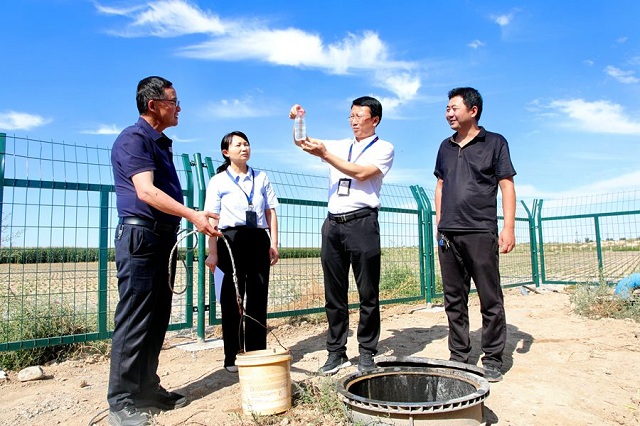
抢!多地连阴雨 争分夺秒保秋粮
Xin Hua She· 2025-10-11 21:40
Core Viewpoint - The recent continuous rainfall across multiple regions in China has significantly impacted the autumn grain harvest, creating challenges for both harvesting and subsequent planting efforts [2][3][16]. Group 1: Impact of Weather on Agriculture - Since mid-September, many areas have experienced persistent rain, leading to difficulties in harvesting autumn crops and risks in preparing for winter planting [2]. - In Henan, the average rainfall since September has been 2.7 times higher than the same period in previous years, resulting in waterlogged fields and operational challenges for agricultural machinery [3]. - As of October 10, over 50% of the autumn grain harvest has been completed nationwide, with regions like Henan reporting over 70% completion [2][9]. Group 2: Government and Local Responses - The Ministry of Agriculture and Rural Affairs has mobilized 246,300 harvesting machines and 2,231 mobile drying machines to assist in the harvest [6]. - Central government has allocated 484 million yuan in disaster relief funds to support agricultural production and disaster recovery efforts [6]. - Local governments are actively coordinating resources, such as deploying harvesting machines and providing real-time weather updates to farmers [6][12]. Group 3: Technological and Strategic Adaptations - Farmers are employing innovative methods, such as modifying machinery to improve efficiency in wet conditions, and utilizing drying facilities to ensure harvested grain is properly processed [10][12]. - The implementation of a "grain storage in the ground and technology" strategy is emphasized as crucial for enhancing agricultural resilience [2][16]. - Research and development of drought-resistant and disease-resistant crop varieties are being prioritized to mitigate the impact of extreme weather on future harvests [15][16]. Group 4: Community and Cooperative Efforts - Community initiatives, such as youth volunteer teams, are mobilizing to assist farmers in urgent harvesting tasks [14]. - In various regions, cooperative societies are enhancing their operational capacity, with some drying facilities running at full capacity to meet increased demand [9][14]. - Local agricultural departments are providing technical guidance to farmers to optimize harvesting and minimize losses [13][15].

新华时评丨迎战连阴雨,秋收秋种抓好“抢”和“保”
Xin Hua She· 2025-10-11 08:03
新华社记者王悦阳、胡璐 目前全国秋粮收获过五成。根据农业农村部和中国气象局联合发布连阴雨和农田渍涝灾害风险预警,后 期部分地区仍有连阴雨和农田渍涝风险。打好这场秋粮抢收抢烘"保卫战",各地各部门还需提高警惕、 细化政策,从气象预警、田间抢收、麦播备耕到秋粮收储全面发力。 新华社北京10月11日电 题:迎战连阴雨,秋收秋种抓好"抢"和"保" 近期黄淮地区特别是河南、山东、安徽等地出现连阴雨天气,一些地方农田渍涝、农机难下,影响秋收 进度,也给秋种带来一定困难。全力以赴抢收抢种,确保秋粮丰收到手、秋播不误农时,成为当前"三 秋"生产最紧迫的任务。 无论是作物生长,还是粮食收获、储存,粮食安全的弦时刻都要绷紧。今年以来,我们克服干旱、洪涝 等自然灾害影响,实现夏粮稳产、早稻增产,秋粮长势正常偏好。有效应对连阴雨天气影响、抓好秋收 秋种服务保障,是确保今年秋粮丰收到手、打好明年夏粮生产基础的重要举措,必须高度重视,把各项 措施落实落细。 众人同心,其利断金。为应对连阴雨,各地各部门正在积极行动。农业农村部成立工作专班,跨省份调 剂调运履带式收割机、烘干机等应急机具,并与财政部门进一步明确救灾机具补贴事项。受灾地区利用 ...
新华时评|迎战连阴雨,秋收秋种抓好“抢”和“保”
Xin Hua She· 2025-10-11 07:41
要抓好一个"抢"字。紧盯天气预报,抓好每一个抢收抢晒的黄金窗口。加大对应急机具购置、改装、作 业支持,加强农机需求信息发布、顺畅通行、作业用油等服务,全力强化机具保障,加快秋收进度。 要突出一个"保"字。协调做好粮食收购、保险理赔等工作,稳定秋粮价格,保障种粮农民合理收益。及 早谋划冬小麦播种,加强种子、肥料等物资供应,指导农民落实好抗湿晚播技术措施,稳住播种面积, 提高播种质量。 着眼长远,还要进一步提升农业防灾减灾救灾能力。此次应对连阴雨,反映出一些地方在粮食烘干、仓 储等方面的短板。针对极端天气多发频发趋势,要加快补上沟渠连通、烘干仓储等短板,加强农事综合 服务中心建设,为粮食等重要农产品稳产保供提供有力支撑。 近期黄淮地区特别是河南、山东、安徽等地出现连阴雨天气,一些地方农田渍涝、农机难下,影响秋收 进度,也给秋种带来一定困难。全力以赴抢收抢种,确保秋粮丰收到手、秋播不误农时,成为当前"三 秋"生产最紧迫的任务。 无论是作物生长,还是粮食收获、储存,粮食安全的弦时刻都要绷紧。今年以来,我们克服干旱、洪涝 等自然灾害影响,实现夏粮稳产、早稻增产,秋粮长势正常偏好。有效应对连阴雨天气影响、抓好秋收 秋种服 ...
迎战连阴雨,秋收秋种抓好“抢”和“保”
Xin Hua She· 2025-10-11 07:38
新华财经北京10月11日电(记者王悦阳、胡璐) 近期黄淮地区特别是河南、山东、安徽等地出现连阴 雨天气,一些地方农田渍涝、农机难下,影响秋收进度,也给秋种带来一定困难。全力以赴抢收抢种, 确保秋粮丰收到手、秋播不误农时,成为当前"三秋"生产最紧迫的任务。 无论是作物生长,还是粮食收获、储存,粮食安全的弦时刻都要绷紧。今年以来,我们克服干旱、洪涝 等自然灾害影响,实现夏粮稳产、早稻增产,秋粮长势正常偏好。有效应对连阴雨天气影响、抓好秋收 秋种服务保障,是确保今年秋粮丰收到手、打好明年夏粮生产基础的重要举措,必须高度重视,把各项 措施落实落细。 众人同心,其利断金。为应对连阴雨,各地各部门正在积极行动。农业农村部成立工作专班,跨省份调 剂调运履带式收割机、烘干机等应急机具,并与财政部门进一步明确救灾机具补贴事项。受灾地区利用 一切雨歇间隙,组织人机轮班,昼夜不停,做到"能收尽收、快收快抢",最大限度减少田间损失。一些 地方还有针对性地对应急机具进行改造升级,提升过湿地块通过能力。应对举措与近年来我国深入实 施"藏粮于地、藏粮于技"战略、推进高标准农田建设等一起,构成当前抗灾夺丰收的重要底气。 要抓好一个"抢"字。 ...
姜堰:“三要素”协同发力,提升粮食单产新增量
Xin Hua Ri Bao· 2025-10-10 21:46
激活"人才兴粮"动能,建强人才支撑体系 筑牢"藏粮于地"根基,强化耕地质量建设 姜堰区扎实推进耕地数量、质量、生态"三位一体"保护,持续提升农田防灾减灾能力和综合产能。一是 高标准农田提标扩面。通过整田平地、完善路网和灌排系统,将"零散小田""望天田"改造为连片成方、 效益倍增的"高产田"。目前全区高标准农田建成率已达96.3%。二是精准提升耕地地力。以土壤有机质 提升为重点,在大伦、蒋垛等镇实施省级示范区项目,投入财政资金4500万元,推行"1年深翻+3年连 续有机培肥"技术模式,实现土壤改良、粮食增产与化肥减量协同推进。实施一年后,项目区稻麦单产 提高3%。三是规范开展土地整理。建立多部门协同机制,严格开展补充耕地质量评定,并通过深翻、 增施有机肥等技术持续改善土壤结构,挖掘耕地潜能。 突出"科技助粮"导向,深化技术集成应用 姜堰区将提高单产作为粮食增产主攻方向,统筹推进水稻、小麦全域单产提升。一是打造高水平科技示 范基地。与扬州大学、南京农业大学、省农科院等院校合作,建成"科—教—推"一体化综合示范基地, 每年展示稻麦新品种50多个、示范新技术20多项、应用新产品20多个、开展各类专题试验20多项。二是 ...
以科技攻关支撑耕保实践创新——关于南方山区耕地保护的探索与思考
Zhong Guo Zi Ran Zi Yuan Bao· 2025-10-10 05:35
Core Viewpoint - The article emphasizes the need for innovative exploration in farmland protection, particularly in the context of China's "Big Food Concept" and rural revitalization efforts, highlighting the importance of balancing quantity, quality, and ecological protection of farmland to ensure food security and diverse food supply [3][23]. Summary by Sections Farmland Protection and Utilization - The concept of "Big Food" requires maintaining the quantity of staple food farmland while scientifically utilizing land resources to meet diverse food needs, prompting a deep reflection on farmland utilization models in southern mountainous regions [3][23]. - Fujian province is implementing refined innovations in land use regulation, promoting composite farming practices that allow for multiple uses of the same plot of land, thereby enhancing overall land utilization efficiency without changing the land's classification [3][4][23]. Quality Improvement and Ecological Value - There is a shift from merely restoring degraded farmland to enhancing its quality, with initiatives like "rice-fish co-culture" that improve soil health and reduce pollution while increasing the ecological value of farmland [4][23]. - The goal is to transform low-efficiency farmland into high-yield, high-quality ecological farmland, thereby stimulating the intrinsic motivation for farmland protection and utilization [4][23]. Ecological Protection and Spatial Optimization - Farmland protection in complex mountainous terrains must integrate with the management of water, forests, fields, lakes, grasslands, and deserts, focusing on optimizing spatial layouts [5][23]. - Fujian is exploring mechanisms for spatial replacement and ecological restoration, aiming to create a harmonious ecosystem that supports both agricultural productivity and ecological sustainability [5][23]. Technological Innovation and Talent Development - Research efforts are focused on cultivating high-quality, interdisciplinary talent to support the implementation of the "Big Food" strategy, emphasizing practical experience in natural resource protection [6][24]. - The article advocates for systematic research to provide scientific support for the integrated protection of farmland quantity, quality, and ecology in southern mountainous areas [6][24]. Decision-Making and Practical Application - There is a call for improved decision-making capabilities in farmland protection, integrating grassroots practices with advanced theoretical insights to address regional development challenges [8][24]. - The aim is to translate research findings into practical technologies that farmers can easily understand and apply, thereby enhancing food security, ecological protection, and farmer income [8][25].
为绿色农业培育科创沃土
Jing Ji Ri Bao· 2025-10-09 22:19
Core Insights - The development of the world's first intelligent breeding robot for automatic hybrid pollination marks a significant advancement in agricultural technology, alongside the conclusion of the first Smart Agriculture Innovation Competition and the showcasing of over 600 agricultural technology achievements at the China Beijing Seed Industry Conference [1] Group 1: Technological Advancements in Agriculture - Technological innovation is driving the transformation of agriculture from traditional methods to modern, green, and intelligent practices, impacting the entire food security chain [1] - In 2024, the fertilizer utilization rates for rice, corn, and wheat in China are projected to reach 42.6%, an increase of 10.4 percentage points compared to 2015 [1] - The total number of recognized green, organic, and specialty agricultural products in China has reached 82,000, reflecting a 105% increase since 2019, indicating a significant reduction in soil and water pollution from agricultural production [1] Group 2: Challenges and Future Directions - Despite advancements, China's green agriculture technology level remains relatively weak compared to Europe and the United States, with ongoing issues related to seed sources and research instruments [1] - A multi-faceted approach is needed to enhance green agricultural technology innovation, including integrating green agricultural products into national high-tech industry directories and providing tax incentives and subsidies [2] - Promoting a favorable innovation ecosystem is essential for the conversion of technological innovations into practical applications, which includes building a collaborative environment among industry, academia, research, and capital [2]