贸易政策

Search documents
中美俄2025年GDP预测:美国216万亿,俄罗斯16万亿,中国令人意外
Sou Hu Cai Jing· 2025-10-14 11:18
Group 1 - The global economic landscape in 2025 will prominently feature the performances of the US, China, and Russia, with the US maintaining a GDP of approximately 216 trillion RMB, showcasing its strong economic power [3] - China's GDP is projected to reach around 141.75 trillion RMB, with a growth target of 5% for 2025, reflecting a robust economic stance [3][16] - Russia's GDP is expected to decline to 16 trillion RMB, with a growth forecast reduced from 2.5% to 1.5%, indicating significant economic challenges [5][13] Group 2 - The US economy, while appearing strong with a GDP of 216 trillion RMB, faces underlying issues such as persistent inflation and declining domestic purchasing power [7][9] - The US national debt has surpassed 37 trillion USD, leading to an average debt burden of 110,000 USD per citizen, raising concerns about fiscal sustainability [9] - In contrast, China is effectively managing its local debt and is close to completing a 2 trillion RMB debt swap, indicating a healthier fiscal position compared to the US [20] Group 3 - China's economic resilience is attributed to technological advancements and industrial upgrades, with significant growth in exports, particularly in automobiles and ships [18] - The shift in China's export structure and its non-hegemonic approach to international relations contribute to its stable economic growth [18][22] - Russia's economy, while showing some resilience through increased oil exports and new trade partnerships, remains heavily impacted by sanctions and military expenditures [15][22] Group 4 - The contrasting economic trajectories of the three nations highlight the importance of long-term sustainability over short-term gains, with the US facing "low growth, high consumption" challenges, Russia struggling under sanctions, and China demonstrating steady progress [20][24] - The future global economic order will depend on each country's ability to address internal challenges and seize development opportunities [24]

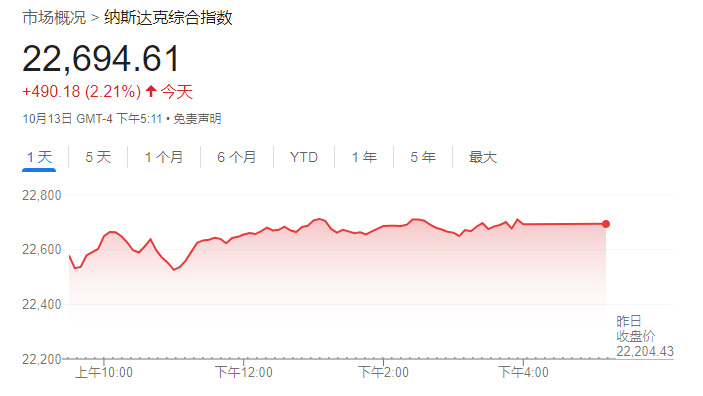
美股三大指数强势反弹,纳指涨超2%,中国金龙指数涨超3%
Feng Huang Wang· 2025-10-13 22:30
美东时间周一,在特朗普软化贸易立场以及AI资本支出热潮持续等利好的推动下,美股迎来全面反 弹,华尔街主要股指大幅收高。 此前,美国总统特朗普对贸易紧张局势发表了缓和的言论,缓解了投资者的担忧情绪。 Wolfe Research美国政策主管Tobin Marcus指出,贸易政策方面的不确定性依然存在,但特朗普这些表态 暂时缓解了市场对加征关税或出口管制措施等风险的担忧。"特朗普似乎是在告诉投资者,可以放心抄 底,鉴于今年投资者多次在看似高风险的情况下买入并获利,我们预计市场会接受这一信号。" 摩根大通、高盛、花旗集团及富国银行将于周二公布季度财报,这也标志着本轮财报季正式开启,投资 者将密切关注关税对华尔街大型金融机构盈利的影响。 由于美国政府仍在停摆中,主要官方经济数据发布延迟,财报结果将成为评估经济健康状况的重要线 索。 根据LSEG数据,分析师平均预计标普500成份股公司第三季度盈利同比增长8.8%。 在OpenAI宣布与博通达成合作,联合生产其首款自主设计的人工智能处理器后,AI相关科技股成为周 一反弹行情的最大赢家。 CFRA Research首席投资策略师Sam Stovall表示:"AI依然是市场 ...
粕类周报:中美贸易战升级,关注国内情绪变化-20251013
Guo Mao Qi Huo· 2025-10-13 09:31
Report Industry Investment Rating - Not provided in the given content Core Viewpoints - The short - term M01 may rebound due to the escalation of the Sino - US trade war, but the rebound height is limited by the uncertainty of Sino - US trade policies and the high domestic soybean meal inventory. It is recommended to pay attention to Sino - US policies, South American La Nina weather speculation, and US soybean yield adjustments [4]. Summary by Related Catalogs Part One: Main Views and Strategy Overview - **Supply**: The USDA's estimated yield per acre of US soybeans for the 2025/26 season may be further reduced. Brazilian soybean planting has started smoothly, with a sowing rate of 8.2% as of October 4. In October, domestic soybean stocks are expected to decline, but the supply of domestic soybean meal in the fourth quarter is still expected to be loose. Under the Sino - Canadian trade policy, the supply of imported rapeseed meal and rapeseed in China is expected to shrink, while the opening of Australian rapeseed imports is expected to supplement the domestic rapeseed meal supply in the fourth quarter [4]. - **Demand**: Livestock and poultry are expected to maintain high inventories in the short term, supporting feed demand. However, the current breeding profit is in a loss state, and national policies tend to control the inventory and weight of pigs, which may affect the supply in the distant months. Soybean meal has a high cost - performance ratio and a high feed addition ratio. The downstream spot trading of soybean meal is good, while the downstream trading of rapeseed meal is cautious [4]. - **Inventory**: Domestic soybean stocks have reached a high level. This week, the inventory of soybean meal in oil mills has slightly decreased, and the inventory is at a high level. The inventory days of soybean meal in feed enterprises have increased. Domestic rapeseed stocks have declined to a low level, and rapeseed meal stocks have been continuously depleted, but the inventory level is still at a high level in the same period of previous years [4]. - **Basis/Spread**: The basis is neutral [4]. - **Profit**: The profit of Brazilian soybean crushing has deteriorated, while the profit of Canadian rapeseed crushing is good [4]. - **Valuation**: From the perspective of crushing profit, the futures price of soybean meal is at a relatively low valuation. From the perspective of basis, the recent price of soybean meal futures is at a neutral valuation [4]. - **Macro and Policy**: The Ministry of Transport's announcement of charging special port fees for US ships is expected to increase the cost of some soybean imports and ocean freight. Trump's announcement of imposing a 100% tariff on Chinese - imported goods has escalated the Sino - US trade tension [4]. - **Investment View**: The market is expected to be volatile [4]. - **Trading Strategy**: Unilateral trading is expected to be volatile, and arbitrage is on hold. Attention should be paid to policies and weather [4]. Part Two: Fundamental Data on Supply and Demand of Meal Products - **Inventory - Consumption Ratio**: In September, the inventory - consumption ratio of US soybeans for the 2025/26 season increased, while the global soybean inventory - consumption ratio decreased. The inventory - consumption ratio of rapeseed increased [33][39]. - **US Soybean Situation**: The sowing rate and excellent - good rate of US soybeans are presented. The domestic crushing profit of US soybeans has slightly declined. The export sales performance of US soybeans is poor [48][53][65]. - **Import and Price**: The CNF premium of soybeans, the import price of Canadian rapeseed, and the exchange rate of the US dollar against the Brazilian real are shown. The monthly import volume of soybeans, rapeseed, and rapeseed meal in China is also provided [72][75][77]. - **Inventory**: The inventory of soybeans, soybean meal, rapeseed, and rapeseed meal in China is at different levels. The inventory of soybeans is at a high level, soybean meal has a slight reduction in inventory, and the inventory days of feed enterprises have increased [80]. - **Trading Volume and Consumption**: The trading volume and consumption of soybean meal and rapeseed meal are presented. The spot trading volume of soybean meal has increased, but the holiday pick - up volume has declined [103]. - **Price Difference and Feed Production**: The price difference between soybean meal and rapeseed meal and the monthly feed production are shown [115][117]. - **Breeding Situation**: The breeding profits and related data of pigs, broilers, and laying hens are presented, including the decline in pig prices and the high weight of pigs [119][123][127]
油脂周报:中美贸易再度升级,短期油粕强弱或有转向-20251013
Zhe Shang Qi Huo· 2025-10-13 03:16
1. Report Industry Investment Rating No information provided in the content. 2. Core Views - Palm oil: The downside space is limited, with support at the [8700] price level. The p2601 contract is expected to be mainly oscillating strongly in the medium - long term, considering the tight supply situation in Southeast Asia and biodiesel policy support. However, short - term fluctuations are significant due to trade and biodiesel news [3]. - Soybean oil: The downside space is limited, with support at the [7700] price level. The y2601 contract is expected to follow other oils in a relatively strong oscillation. The supply is expected to turn tight at the end of the fourth quarter in China, affected by factors such as the decline in soybean arrivals and uncertain Sino - US trade relations [3]. - Rapeseed oil: The downside space is limited, with support at the [9600] price level. The Ol601 contract is expected to be mainly oscillating strongly. The 2024/25 global rapeseed inventory pressure is limited, and the 2025/26 production is expected to recover, which may suppress the price. Attention should be paid to the production realization in major producing countries [4]. 3. Summary by Related Catalogs 3.1 Palm Oil - **Market Performance**: Since the holiday, BMD crude palm oil has been oscillating strongly, with a slight upward shift in the center of gravity. However, on Friday, the MPOB report showed higher - than - expected inventory, and the overall oil price declined. The tariff war and the sharp drop in international crude oil are expected to lead to a short - term weakening of palm oil [13][14]. - **Supply and Demand in Malaysia**: In September 2025, Malaysia's palm oil production decreased by 0.73% month - on - month, imports increased by 33.95% month - on - month, exports increased by 7.69% month - on - month, and the end - of - month inventory increased by 7.2% month - on - month. From October 1 - 10, the export volume increased compared with the same period in September [15]. - **Supply and Demand in Indonesia**: As of July, Indonesia's inventory remained at a historical low. The production in July was 5.6 million tons, the export volume was 3.007 million tons, and the end - of - month inventory was 2.57 million tons. The export continued to grow faster than the production, and the inventory remained at a historical low. The reference price of crude palm oil in October was set at $983.61 per ton, and the export tax remained at $124 per ton. The implementation of the B0 policy in the first half of the year was relatively good, and the government is accelerating the implementation of the B50 policy [15]. - **Indian Market**: India's palm oil imports decreased significantly in January - April, and the inventory reached a low level. From May to August, imports continued to grow, and it is expected to remain at a high level in September to support the exports of Indonesia and Malaysia. The cost - performance of international soybean oil is slightly lower than that of palm oil, but the subsequent imports are still expected to remain at a relatively high level [32]. 3.2 Soybean and Soybean Oil - **US Market**: Recently, CBOT soybean futures first rose and then fell. The supply pressure of US soybeans is emerging as they enter the harvest season, but the reduction in planting area and the increase in consumption have tightened the supply. The US EPA's biofuel policy is unclear, which has increased market uncertainty. The future weather in the main soybean - producing states in the US may affect the harvest [50][51][53]. - **South American Market**: According to the USDA's September forecast for the 2025/26 season, Brazil's soybean production will increase to 175 million tons, and Argentina's will be 48.5 million tons. Brazil's export peak has passed, and it is expected that the premium of Brazilian soybeans will remain strong. Argentina has restored the export tax on soybeans, and it is expected that the premium in South America will also remain strong [76]. - **Domestic Market**: In the short term, the supply of domestic soybeans and soybean oil is relatively loose, but it is expected to turn tight at the end of the fourth quarter. The 40th week (September 27 - October 3) of soybean oil production was 833,600 tons, and the 41st week is expected to be 257,800 tons. The trading volume has decreased significantly [109][112]. 3.3 Rapeseed and Rapeseed Oil - **Global Market**: In the 2024/25 season, the global rapeseed supply tightened marginally, and the carry - over inventory decreased significantly. In the 2025/26 season, the USDA expects a recovery in production, and the supply - demand contradiction is expected to be limited. The Chinese government has imposed a 75.8% deposit on Canadian rapeseed imports, and the Canadian government is trying to negotiate [85]. - **Domestic Market**: The domestic rapeseed oil inventory is at a five - year high, but the subsequent rapeseed purchases are expected to decline, and the supply in the far - month is expected to tighten. As of October 3, the coastal rapeseed oil production was 8,200 tons, and the delivery volume was 0 tons. With the decrease in rapeseed crushing, the rapeseed oil production may decline significantly [110][112]. 3.4 Domestic Oils - **Market Performance**: After the holiday, the oils first rose and then fell, and the center of gravity remained basically unchanged. The short - term oils are expected to be weak, and the meal may perform better than the oils. In the medium - long term, palm oil and rapeseed oil are expected to be oscillating strongly, and soybean oil will follow other oils [108][109][110]. - **Supply and Demand**: The supply of palm oil in China is relatively loose, the supply of soybean oil is expected to turn tight at the end of the fourth quarter, and the supply of rapeseed oil is expected to tighten in the far - month. The trading volume of palm oil has increased slightly, the trading volume of soybean oil has decreased significantly, and the production of rapeseed oil may decline significantly [109][110][112].
难得有人看透中美博弈新趋势,美专家:美国迷失了,正视中国存在
Sou Hu Cai Jing· 2025-10-10 09:55
Group 1 - The article discusses the contrasting approaches of the US and China in international relations, highlighting that the US is focused on past grievances while China is looking towards future cooperation [1][5][16] - The recent UN General Assembly showcased the differences in rhetoric, with the US President criticizing others and China proposing constructive ideas for global governance [3][5] - The trade policies of both countries reflect their strategic mindsets, with the US adopting protectionist measures while China is pursuing openness and cooperation [6][8][10] Group 2 - The US's recent foreign policy has been characterized by withdrawal from international agreements, which has diminished its credibility among allies [10][14] - In contrast, China has a clear and consistent long-term strategy, exemplified by initiatives like the Belt and Road and investments in technology [12][14] - The article concludes that the future of international relations will depend on which country can establish itself as a more reliable and trustworthy partner [16]

迟迟等不到中方订单,美国嗅出危险,特朗普想了一个妙招拯救豆农
Sou Hu Cai Jing· 2025-10-09 11:45
迟迟等不到中方订单,美国政府嗅出危险,特朗普更是想出一个妙招,结果如何? 中国原本是美国最大的大豆买家,但今年几乎没有下单,美国豆农多次喊话美国政府,要求和中方谈判。但依然无果,特朗普眼看美国农民面临危机,出台 了一份补救方案。 白宫预计近日宣布针对美国农民的援助计划,涉及的总金额可能达到150亿美元,目的很简单,就是为了缓解美国农民的困境,但这只能缓解一时,更何况 150亿美元恐怕是不够,美国农民想要的并不是这样。 对于美国豆农来说,秋天本应是一个收获的季节,然而现实却给了他们沉重的一击。10月1日,美国密歇根州民主党籍州长格雷琴・惠特默发表演讲,言辞 犀利地指责特朗普政府的关税政策,认为其与盟友闹翻是"不明智,不必要的"。 同一天,特朗普在社交媒体发文,称非常理解美国豆农的处境,将美国豆农的"受苦"归咎于中国出于谈判目的不购买美国大豆。美国大豆协会主席拉格兰在 9月的农业展上,语气焦虑地重复着"美国大豆正面临危机"。据他手中的报告显示,美国大豆50%依赖出口,而中国曾买下其出口总量的六成,比所有其他 海外客户的总和还多。 特朗普政府的这些努力,看似积极主动,但实际上却有些病急乱投医。他们没有从根本上反思自 ...
等不到中国大豆订单,特朗普制裁16家中企,中方反制直击美国要害
Sou Hu Cai Jing· 2025-10-09 09:32
Core Viewpoint - The Trump administration's sanctions against Chinese companies have not achieved the desired effects and have led to swift and effective countermeasures from China, particularly impacting the U.S. agricultural sector and high-tech industries [1][3][19] Group 1: U.S. Agricultural Sector Impact - The U.S. agricultural sector, once reliant on Chinese orders, is now facing significant challenges due to the loss of these orders, which is attributed to Trump's trade policies [5][10] - U.S. farmers are projected to incur losses of $45 billion this year, with exports of soybeans and sorghum nearly halved [7][10] - The U.S. government's subsidies to farmers are seen as a temporary fix that ultimately shifts the financial burden back onto American taxpayers, failing to address the root causes of the agricultural crisis [9][10] Group 2: U.S.-China Trade Relations - The Trump administration's strategy of imposing tariffs was based on the belief that it would compel China to make concessions, but it has instead resulted in increased costs for U.S. importers and consumers [7][10] - China's response to U.S. sanctions was rapid and targeted, particularly affecting the U.S. high-tech industry by implementing export controls on rare earth materials [12][14][17] - The U.S. high-tech sector is now facing potential supply chain disruptions due to its reliance on Chinese rare earth materials, which are critical for various technologies [14][16] Group 3: China's Countermeasures - China's countermeasures were pre-planned and executed within 24 hours of the U.S. sanctions, demonstrating a strategic approach to trade disputes [12][17] - The export controls on rare earth materials not only include physical goods but also encompass critical technical documentation, complicating U.S. efforts to find alternative sources [14][16] - The situation highlights the interdependence of U.S. and Chinese economies, emphasizing that trade should be mutually beneficial rather than a zero-sum game [19]

US holiday sales growth to be muted this year, forecasts show
Reuters· 2025-10-06 12:10
U.S. retailers brace for a subdued holiday shopping season this year as the economic fallout from President Donald Trump's erratic trade policies leaves shoppers more cautious about buying extravagant... ...

美国经济暴雷!GDP虚涨3.8%,就业少91万,钱去哪儿了?
Sou Hu Cai Jing· 2025-10-05 19:13
Group 1 - The U.S. economy appears strong with a reported GDP growth rate of 3.8% for Q2, but this may be misleading as it relies heavily on a significant drop in imports, which decreased by 29.3% [1][6] - Consumer spending showed resilience, increasing from 0.6% in Q1 to 2.5% in Q2, surpassing government forecasts, particularly in services which grew at an annualized rate of 2.6% [2][3] - Private investment is weak, with residential investment down by 5.1% and business inventories continuing to shrink, contributing to a GDP growth reduction of over 3.4 percentage points [2][3] Group 2 - Government spending has also declined, with federal expenditures decreasing by 5.6% in Q1 and 5.3% in Q2, which raises concerns about overall economic growth [3][8] - The trade policies of the Trump administration, which imposed high tariffs on imports, have created uncertainty for businesses, affecting their willingness to invest and hire [5][8] - Employment data has shown signs of weakness, with a significant downward revision of previously reported job gains, indicating a slowdown in hiring activity [6][10] Group 3 - The Federal Reserve's recent interest rate cuts aim to stimulate job growth while managing inflation concerns, but the strong GDP figures complicate this strategy [6][10] - The upcoming release of the personal consumption expenditures (PCE) price index will be crucial for the Fed's decision-making regarding future rate cuts [6][10] - The anticipated Q3 GDP growth rate of 1.5% suggests that the previously reported 3.8% growth may not be sustainable, highlighting potential underlying economic issues [11]

美国对我们出口归零!南美崛起,大豆贸易格局巨变背后政策博弈与农场困局
Sou Hu Cai Jing· 2025-10-03 21:41
Core Insights - The article highlights the significant decline in U.S. soybean exports to China, with recent data showing zero orders, leading to a record high inventory of 420 million bushels, equivalent to over 11 million tons [1][3][10] - The impact of tariffs and trade policies is causing financial strain on American farmers, with many considering switching crops due to the high costs associated with changing their farming practices [3][6][22] - The shift in trade dynamics is evident as South American countries like Brazil and Argentina are increasing their soybean exports to China, capturing a larger share of the global market [12][28] Group 1: Export and Inventory Trends - U.S. soybean exports to China have dropped to zero, resulting in a high inventory level of 420 million bushels [1][10] - The decline in exports is expected to affect approximately 200,000 jobs and lead to a loss of $15 billion in related industries [10][25] Group 2: Financial Strain on Farmers - Farmers are facing tight cash flow due to full warehouses and the inability to sell their crops, leading to difficulties in loan repayments and equipment maintenance [3][6] - The cost of switching to alternative crops, such as corn, is significant, with an average conversion cost of $200 per acre [3][22] Group 3: Policy and Trade Dynamics - The U.S. government has indicated that tariff collection will continue even during budget disputes, emphasizing the importance of tariffs as a revenue source [5][20] - The perception of U.S. tariffs as a political risk is causing international buyers to reconsider their purchasing strategies, leading to a shift in supply chains [16][29] Group 4: Competitive Landscape - South America is gaining a competitive edge in soybean exports, with Brazil's exports to China increasing by 42% and Argentina's by 28% [12][28] - Other suppliers, including Canada and the EU, are also increasing their agricultural exports to China, highlighting the shifting dynamics in global trade [14][28] Group 5: Long-term Implications - The ongoing trade tensions and tariff policies are creating a lack of trust among international buyers, which could have lasting effects on U.S. agricultural exports [16][29] - The article suggests that for U.S. agriculture to recover, policies must shift from being merely assertive to ensuring stable trade relationships [29]