
资产负债管理

Search documents
新华保险的“新高度”与不一样的“路径”
Jing Ji Guan Cha Wang· 2025-08-29 13:35
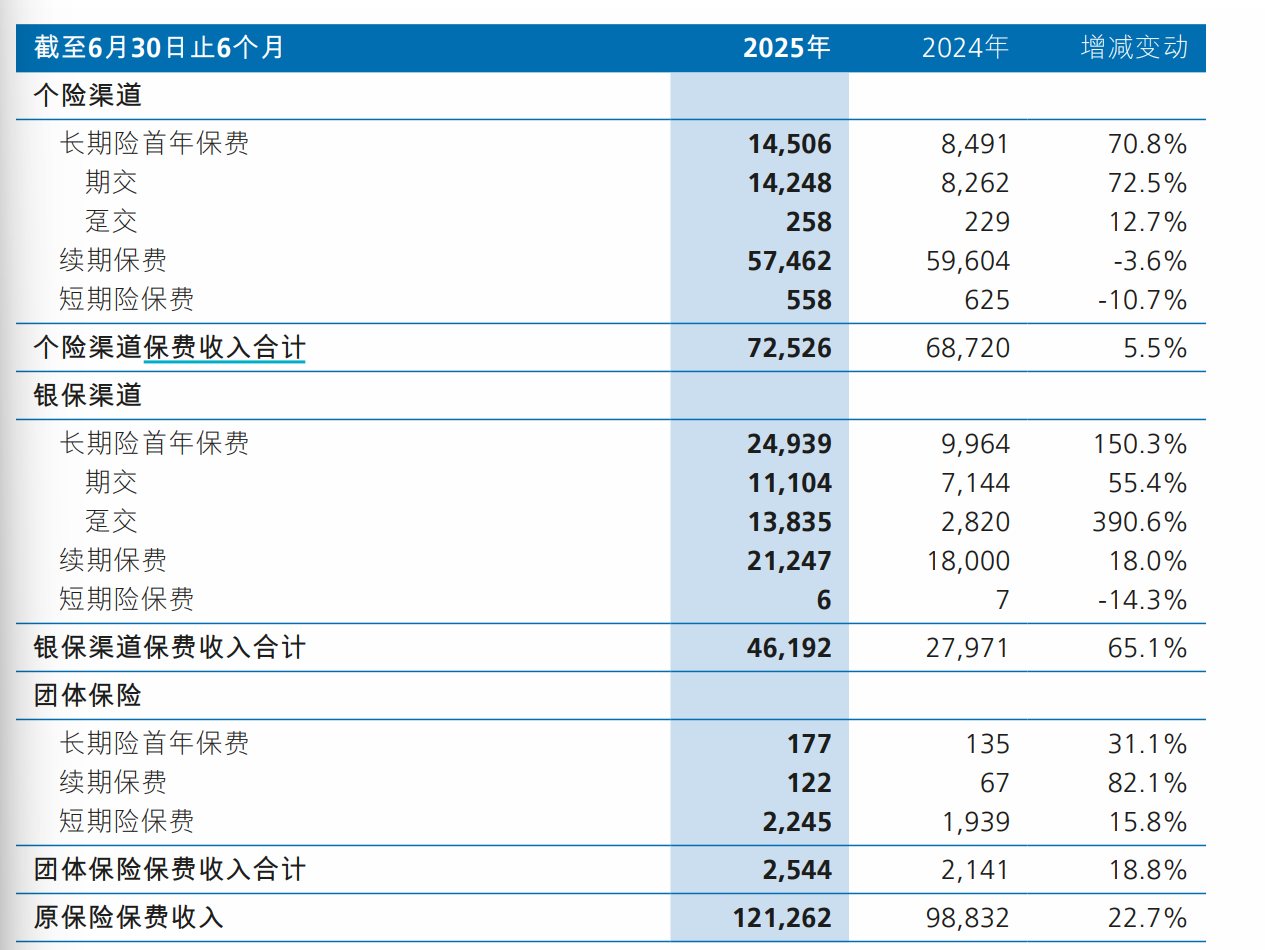
Core Insights - Xinhua Insurance reported strong mid-year results, with a revenue of 70.041 billion yuan, a year-on-year increase of 26%, and a net profit of 14.8 billion yuan, up 33.5% [1][2] - The company's stock price rose by 5.49% to 68.24 yuan per share, leading the insurance sector [1] - The growth in new business value reached 6.182 billion yuan, a significant increase of 58% year-on-year [1] Revenue and Premium Growth - Xinhua Insurance's total insurance premium income reached 121.3 billion yuan, a 22.7% increase year-on-year [1][3] - The individual agent channel contributed 72.526 billion yuan, while the bancassurance channel accounted for 46.192 billion yuan [3][8] - The first-year premium for long-term insurance through individual agents surged by 80% to 14.506 billion yuan [3][8] Strategic Developments - The chairman highlighted that the company's reforms have led to improvements in operational performance, channel capabilities, product strength, and brand image [2] - The company has established a leadership group for the transformation of dividend insurance, aiming to enhance sales and management of these products [4] Investment Performance - Xinhua Insurance's investment scale exceeded 1.7 trillion yuan, with a total annualized investment return rate of 5.9%, up 1.1 percentage points year-on-year [5][6] - The company has actively adjusted its asset allocation, increasing investments in equity assets and diversifying into long-term bonds and REITs [6][7] Market Position - The company outperformed the industry, which saw a total premium growth of 5.4% for life insurance companies [1][3] - Xinhua Insurance's ability to grow its premium income significantly contrasts with other insurers facing stagnation or negative growth in similar segments [3][4]


中国太保(02601) - 2025 Q2 - 业绩电话会
2025-08-29 08:32
Financial Data and Key Metrics Changes - Group operating income amounted to CNY 200.5 billion, up 33% [5] - Group OPAT was CNY 19.9 billion, up 7.1% [5] - Net profit increased by 11% [5] - EV reached CNY 588 billion, up 4.7% [5] - AUM totaled CNY 3.8 trillion, up 6.5% [5] - Comprehensive solvency margin was 264% and core solvency margin was 190% [6] Business Line Data and Key Metrics Changes - Life insurance recorded a return premium of CNY 193.5 billion, up 13.1% [12] - New business value (NBV) grew by 32% [13] - Property and Casualty (P&C) premium income was CNY 112.8 billion, up 0.9% [17] - Auto insurance premiums reached CNY 53.6 billion, up 2.8% [17] - Non-auto premiums were CNY 59.8 billion, down 0.8% [17] Market Data and Key Metrics Changes - The bank channel realized CNY 41.7 billion in premiums, up 82% [16] - The share of mid-tier customers and above increased by 3.8 percentage points year on year [14] - The number of high net wealth customers from the bank channel grew by 75% [14] Company Strategy and Development Direction - The company aims for high-quality development and to uphold value and profitability [4] - Focus on health, elderly care, internationalization, and AI integration as key strategies [24] - Continued investment in technology and green insurance offerings [32] Management's Comments on Operating Environment and Future Outlook - The Chinese economy is stabilizing, presenting opportunities for the insurance industry [26] - New regulations are aimed at enhancing risk prevention and promoting high-quality growth [27] - The company is committed to prudent business operations and innovation to drive growth [35] Other Important Information - The company has implemented a dividend policy linked to OPAT [7] - The investment strategy includes a focus on long-term bonds and alternative assets [22] - The company is enhancing its asset-liability management (ALM) systems [72] Q&A Session Summary Question: Comments on performance for the first half of the year and macroeconomic opportunities - Management noted stable growth in China's economy and improvements in domestic demand [26][28] - The company is adapting to new regulations to enhance its competitive edge [27] Question: Future strategies for life and bank channels - The company is focusing on team building and digital empowerment to enhance agency performance [48] - The bank channel strategy emphasizes value creation and deepening partnerships with key banks [53] Question: Investment outlook and net asset changes - Management highlighted uncertainties in the macroeconomic environment but sees long-term opportunities in the equity market [68][70] - The drop in net assets was attributed to accounting standards and interest rate volatility, with expectations for stabilization [73][75]
中国太保(02601) - 2025 Q2 - 业绩电话会
2025-08-29 08:30
Financial Data and Key Metrics Changes - Group operating income amounted to CNY 200.5 billion, up 33% [7] - Group OPAT was CNY 19.9 billion, up 7.1% [8] - Net profit increased by 11% [7] - EV reached CNY 588 billion, up 4.7% [7] - AUM totaled CNY 3.8 trillion, up 6.5% [7] - Comprehensive solvency margin was 264% and core solvency margin was 190% [8] Business Line Data and Key Metrics Changes - Life insurance recorded a return premium of CNY 193.5 billion, up 13.1% [15] - New business value (NBV) grew by 32% [15] - Property and Casualty (P&C) premium income was CNY 112.8 billion, up 0.9% [19] - Auto insurance premiums were CNY 53.6 billion, up 2.8% [19] - Non-auto premiums were CNY 59.8 billion, down 0.8% [19] Market Data and Key Metrics Changes - The bank channel realized CNY 41.7 billion in premiums, up 82% [18] - The share of mid-tier customers and above increased by 3.8 percentage points year on year [16] - The number of high net wealth customers from the bank channel grew by 75% [16] Company Strategy and Development Direction - The company aims to pursue high-quality development and strengthen its market position [6] - Focus on health, elderly care, internationalization, and AI integration as key strategies [26] - Emphasis on digital finance and technology insurance to enhance service offerings [14][12] Management's Comments on Operating Environment and Future Outlook - The management noted resilience in the Chinese economy despite uncertainties [5] - New regulations are expected to enhance risk prevention and promote high-quality growth in the insurance industry [30] - The company is committed to stable and prudent business operations to ensure shareholder value [10] Other Important Information - The company has launched various initiatives in technology and green insurance, serving 75,000 enterprises [11][12] - The dividend policy links payouts to OPAT while considering investment contributions [9] Q&A Session Summary Question: Comments on performance for the first half of the year and macroeconomic opportunities - Management highlighted stable growth in China's economy and improvements in domestic demand [29][30] Question: Strategy for promoting the share of par business and AI applications - The company is focusing on customer needs and differentiating strategies by channel and region [41][45] Question: Future strategy for life and bank channels - The company is enhancing team management and digital empowerment to improve agent productivity [50][56] Question: Impact of investment market volatility and net asset drop - Management acknowledged uncertainties in the macroeconomic environment and emphasized a long-term stable trend for assets [71][76]
中信证券:坚持稳健的资产负债管理策略思路和风格 积极把握市场节奏和交易机会
Shang Hai Zheng Quan Bao· 2025-08-29 03:28
Core Viewpoint - The company emphasizes a customer-driven asset allocation strategy and a prudent investment style, focusing on financing, fixed income, and stocks that hedge customer needs, resulting in favorable overall asset allocation effects [1] Group 1: Investment Strategy - The company maintains a customer demand-driven asset allocation philosophy [1] - The asset allocation style is characterized as prudent, primarily involving financing and fixed income assets [1] - The overall asset allocation performance is reported to be satisfactory [1] Group 2: Management Approach - The company will continue to adhere to a prudent asset-liability management strategy [1] - There is a commitment to actively respond to national strategies and implement the financial "five major articles" [1] - The company aims to seize market opportunities and enhance business growth and high-quality development [1]

中国人保总裁赵鹏回应关切:加强资负管理 提升投资回报
Zhong Guo Jing Ji Wang· 2025-08-29 01:58
Core Viewpoint - China People's Insurance Group Co., Ltd. (China P&C) has experienced a significant rise in stock prices due to multiple factors, including the high-quality development of China's economy, improved industry environment, and strong fundamentals of the company [2] Group 1: Factors Driving Stock Price Increase - The high-quality development of China's economy presents historic opportunities for the insurance industry, supported by government policies that signal further growth potential [2] - The improving development environment enhances the stability and sustainability of the insurance sector, with regulatory bodies guiding the industry back to its core functions [2] - China P&C's fundamentals are continuously improving, with enhanced value creation capabilities, stable underwriting profits, and strong investment performance [2] Group 2: Measures to Mitigate Performance Volatility - The implementation of new accounting standards has increased quarterly performance volatility, prompting China P&C to adopt various measures to minimize this impact [3][4] - From the underwriting side, the company is focusing on risk pricing and enhancing service quality while optimizing product structures in the life insurance segment [3] - On the investment side, the company is committed to long-term, value-oriented investments, diversifying its equity assets, and optimizing asset allocation strategies [4] - Strengthening asset-liability management is crucial, with a focus on duration matching and detailed account management to ensure stable performance [4] Group 3: Future Dividend Policy Considerations - China P&C is considering the impact of new and old accounting standards on its future dividend policy, aiming for a balance between the two [5][6] - The volatility in net profits due to new standards necessitates careful consideration of dividend distribution to maintain subsidiary capital strength [6] - The company aims to reserve sufficient funds to enhance underwriting capacity and long-term sustainability, ensuring stable dividend growth for shareholders [6]

租金压降9444万元 浦发银行业绩会详解控成本、强对公路线
Bei Jing Shang Bao· 2025-08-28 15:06
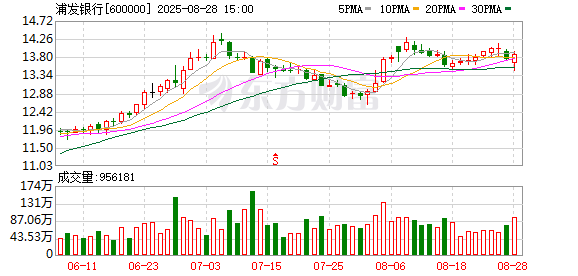
Core Viewpoint - Shanghai Pudong Development Bank (SPDB) reported a strong performance in the first half of 2025, with both revenue and net profit increasing, alongside a significant reduction in non-performing loan ratio to the lowest level since 2015 [2][4][5]. Financial Performance - SPDB achieved operating income of 90.559 billion yuan, an increase of 2.62% year-on-year, and a total profit of 33.138 billion yuan, up 9.84% year-on-year [4]. - The net profit attributable to shareholders reached 29.737 billion yuan, reflecting a growth of 10.19% year-on-year [4]. - Interest income was stable at 58.307 billion yuan, with a slight increase of 0.45% year-on-year, while non-interest income rose to 32.252 billion yuan, a growth of 6.79% [4]. Asset Quality - The non-performing loan ratio decreased to 1.31%, down 0.05 percentage points from the end of the previous year, marking the lowest level since 2015 [5]. - The provision coverage ratio improved to 193.97%, surpassing the 190% threshold for the first time since 2016 [5]. Cost Management - SPDB implemented strict cost management measures, resulting in a reduction of annual rental costs by 9.444 million yuan, achieving a rental reduction rate of 17.8% [8]. - The bank's net interest margin stood at 1.41%, with a narrowing decline of 1 basis point compared to the end of 2024, indicating stabilization [7][8]. Corporate Banking Focus - SPDB's corporate banking segment remains a key growth area, with the number of corporate clients reaching 2.4369 million, an increase of 2.89% year-on-year [9]. - Corporate loan balance grew by 9.13% year-on-year, reaching 37.93284 billion yuan, while corporate deposits increased by 7.99% [9][10]. Digital Transformation Strategy - The bank is focusing on a digital transformation strategy, emphasizing the development of "super platforms, super products, and super systems" to enhance operational efficiency and customer service [11]. - SPDB aims to leverage technology to drive business upgrades and improve service delivery across various financial sectors [11].

上海浦东发展银行股份有限公司2025年半年度报告摘要
Shang Hai Zheng Quan Bao· 2025-08-28 06:22
Core Viewpoint - The company reported a steady growth in both assets and liabilities, with a focus on enhancing operational efficiency and asset quality while maintaining a robust financial position. Financial Performance - The total assets of the company reached 96,457.91 billion RMB, an increase of 1,839.11 billion RMB or 1.94% compared to the previous year [10] - The total liabilities amounted to 88,445.39 billion RMB, up by 1,274.40 billion RMB or 1.46% year-on-year [26] - The company achieved an operating income of 905.59 billion RMB, reflecting a year-on-year increase of 23.11 billion RMB or 2.62% [10][14] - The net profit attributable to shareholders was 297.37 billion RMB, which is an increase of 27.49 billion RMB or 10.19% compared to the previous year [10][14] Asset Quality and Management - The non-performing loan balance was 736.72 billion RMB, with a non-performing loan ratio of 1.31%, showing a decrease from the previous quarter [11] - The provision coverage ratio improved to 193.97%, up by 7.01 percentage points from the end of the previous year [11] - The company focused on optimizing its asset-liability structure, with loans accounting for 58.42% of total assets, an increase of 1.44 percentage points year-on-year [13][25] Capital and Shareholder Information - The company did not distribute profits or implement capital increases from reserves during the reporting period [2] - The total number of ordinary shares increased to 30,264,499,183 due to the conversion of convertible bonds [12] - The company’s major shareholder, Shanghai International Group, increased its stake, reflecting confidence in the company's future [34] Strategic Focus - The company emphasized a strategy centered on digital transformation and high-quality development, aiming to enhance service to the real economy and improve operational efficiency [10][11] - The focus on five key sectors has led to a significant increase in loan issuance, particularly in the manufacturing sector, which saw an 11.11% growth in medium to long-term loans [13]
中国人寿保险股份有限公司2025年半年度报告摘要
Shang Hai Zheng Quan Bao· 2025-08-28 06:07
Core Viewpoint - The company reported strong performance in the first half of 2025, achieving significant growth in total premiums and net profit, while maintaining a focus on high-quality development and market adaptability [6][9][38]. Group 1: Financial Performance - Total premiums reached RMB 525.09 billion, a year-on-year increase of 7.3%, marking the best performance for the same period in history [6][9]. - Net profit attributable to shareholders was RMB 40.93 billion, reflecting a 6.9% increase compared to the previous year [9][38]. - The company proposed a cash dividend of RMB 0.238 per share, totaling approximately RMB 6.73 billion, pending shareholder approval [1][6]. Group 2: Business Development - The company maintained a leading market position with first-year premiums of RMB 81.25 billion, and long-term premium growth demonstrated a competitive advantage [6][9]. - The sales force comprised 641,000 agents, with ongoing reforms to enhance the quality and efficiency of the marketing system [6][9]. - New business value increased by 20.3% year-on-year, reaching RMB 28.55 billion, indicating strong growth in new business [7][9]. Group 3: Asset Management - Total assets and investment assets surpassed RMB 7 trillion, with total assets at RMB 7.29 trillion and investment assets at RMB 7.13 trillion [8][9]. - The company maintained a comprehensive solvency adequacy ratio of 190.94% and a core solvency adequacy ratio of 139.54%, indicating strong financial health [8][38]. - Investment assets grew by 7.8% compared to the end of 2024, with a stable allocation strategy across various asset classes [22][23]. Group 4: Insurance Business Analysis - The individual insurance channel reported total premiums of RMB 400.45 billion, a 2.6% increase, with a focus on sustainable business development [11][12]. - The bancassurance channel saw a significant increase in total premiums, reaching RMB 72.44 billion, up 45.7% year-on-year [12]. - The group insurance channel's total premiums were RMB 14.44 billion, with a focus on optimizing traditional business and enhancing profitability [13]. Group 5: Digital Transformation and Customer Service - The company is advancing its digital transformation, utilizing AI and big data to enhance operational efficiency and customer experience [27][28]. - The digital insurance service platform has seen significant user engagement, with over 1.6 million registered users on the insurance app [28]. - Customer satisfaction has improved, with the company ranking first in the industry for service quality indices [29]. Group 6: Future Outlook - The company aims to strengthen asset-liability management and accelerate the transformation of sales channels in the second half of 2025 [43]. - The focus will be on enhancing the health and elderly care ecosystem, leveraging digital capabilities to drive growth [43][42]. - The industry is expected to shift towards value creation and efficiency improvement, emphasizing customer long-term value and service quality [42].

中国人寿上半年归母净利润超409亿元 同比增长6.9%
Zheng Quan Ri Bao Zhi Sheng· 2025-08-27 11:09
Core Viewpoint - China Life Insurance Company reported strong performance in the first half of 2025, achieving a total premium income of 525.09 billion yuan, a year-on-year increase of 7.3%, and a net profit attributable to shareholders of 40.93 billion yuan, up 6.9% [1][4] Group 1: Business Performance - The company maintained leading business indicators, with total premium income reaching 525.09 billion yuan, including life insurance premiums of 439.13 billion yuan (up 8.5%), health insurance premiums of 78.96 billion yuan (up 2.0%), and accident insurance premiums of 6.996 billion yuan [1] - The sales force comprised 641,000 agents, maintaining a leading position in the industry while improving the quality of the sales team through marketing system reforms [1] Group 2: Operational Efficiency - The company optimized operational quality and efficiency, with new business value increasing by 20.3% year-on-year to 28.55 billion yuan, and the retention rate of 14-month policies reaching 92.10%, up 0.6 percentage points [2] - The company emphasized cost reduction and efficiency enhancement, achieving a significant increase in the proportion of floating income-type business in first-year premiums, which rose by over 45 percentage points compared to the previous year [2] Group 3: Financial Strength - As of June 30, 2025, the company's total assets and investment assets both exceeded 7 trillion yuan, standing at 7.29 trillion yuan and 7.13 trillion yuan respectively, with shareholder equity reaching 523.62 billion yuan, a 2.7% increase [3] - The comprehensive solvency adequacy ratio was 190.94%, and the core solvency adequacy ratio was 139.54%, indicating a strong financial position [3] Group 4: Shareholder Returns - The company proposed a mid-year cash dividend of 2.38 yuan per 10 shares (before tax), amounting to a total cash dividend of 6.73 billion yuan, reflecting its commitment to enhancing investor returns [4]
中国人寿(02628)公布中期业绩 归母净利为409.31亿元 同比增长6.9% 每10股派2.38元
智通财经网· 2025-08-27 10:18
Core Insights - China Life Insurance reported a total revenue of RMB 239.49 billion for the first half of 2025, representing a year-on-year growth of 2.2% [1] - The net profit attributable to shareholders reached RMB 40.93 billion, with a year-on-year increase of 6.9% [1] - The company declared an interim cash dividend of RMB 2.38 per 10 shares (before tax) [1] Group 1: Financial Performance - Total premium income reached RMB 525.09 billion, marking a historical high for the same period, with a year-on-year growth of 7.3% [1] - The first-year regular premium income was RMB 81.25 billion, maintaining the industry-leading position [1] - The proportion of first-year regular premium income from policies with a term of ten years or more was 37.3%, with over 45% from individual insurance channels [1] Group 2: Operational Efficiency - The company emphasized asset-liability management across all operational aspects, focusing on value and efficiency [2] - The new business value for the first half of 2025 grew by 20.3% year-on-year, reaching RMB 28.55 billion, continuing to lead the industry [2] - The 14-month policy retention rate improved to 92.1%, an increase of 0.6 percentage points year-on-year [2] Group 3: Strength and Stability - As of the end of the reporting period, total assets and investment assets both exceeded RMB 7 trillion, at RMB 7.29 trillion and RMB 7.13 trillion respectively [3] - Shareholder equity reached RMB 523.62 billion, reflecting a year-on-year growth of 2.7% [3] - The comprehensive solvency adequacy ratio stood at 190.94%, with the core solvency adequacy ratio at 139.54%, maintaining a high level [3]