
资本补充

Search documents
“补血”需求旺 商业银行二季度发债料提速
Xin Hua Wang· 2025-08-12 06:27
Core Insights - The issuance of bonds by commercial banks has significantly increased in 2023, with a total of 77 bonds issued amounting to 749.05 billion yuan, representing a 61.90% increase compared to the same period last year [1][2]. Group 1: Bond Issuance Overview - As of April 13, 2023, commercial banks have issued 41 commercial bank bonds and 36 subordinated bonds, with issuance amounts of 382.3 billion yuan and 366.75 billion yuan respectively [2]. - The issuance of subordinated bonds includes 28 tier-2 bonds and 8 perpetual bonds, with respective issuance amounts of 248.75 billion yuan and 11.8 billion yuan [2]. - Large banks such as Industrial and Commercial Bank of China, Agricultural Bank of China, and China Bank have larger issuance scales, while smaller banks have issued more than 20 bonds, which is crucial for their capital replenishment [2]. Group 2: Capital Supplement Demand - There is a strong demand for capital replenishment among commercial banks in the second quarter of 2023, driven by expectations of monetary easing and a shift in credit resources towards small and micro enterprises, green projects, and agriculture [3]. - Perpetual bonds are expected to play a significant role in capital replenishment, gradually replacing preferred shares as an important tool for banks to supplement other tier-1 capital [3]. - Several listed banks have announced bond issuance plans, including Nanjing Bank planning to issue up to 20 billion yuan of perpetual capital bonds and Chengdu Bank planning to issue up to 7 billion yuan of qualified tier-2 capital instruments [3].
规模破万亿!银行发行“二永债”须警惕这项风险→
Guo Ji Jin Rong Bao· 2025-08-07 16:18
Core Viewpoint - The issuance of "perpetual bonds" (also known as secondary capital bonds) by banks has accelerated significantly this year, driven by the increasing demand for capital replenishment [1][3][4]. Group 1: Issuance Trends - As of August 7, 2023, banks have issued over 1 trillion yuan in "perpetual bonds," with a notable surge of over 200 billion yuan in July alone [1][2]. - A total of 47 banks have issued 69 "perpetual bonds" this year, amounting to 10,464.60 billion yuan, surpassing the 1 trillion yuan mark [2]. - The issuance pace has notably increased since the second quarter of 2023, with 15 bonds issued in July alone, totaling 229.4 billion yuan, which exceeds the total issuance in the first quarter [2]. Group 2: Demand for Capital - The acceleration in "perpetual bond" issuance is fundamentally linked to banks' growing need for capital replenishment, particularly among smaller banks that find these bonds more convenient [3][4]. - National banks have shown better performance in capital adequacy and risk management, benefiting from special government bond injections, which alleviates their capital replenishment needs [4][5]. - Smaller banks are more enthusiastic about issuing "perpetual bonds" due to their non-reliance on capital market valuations and the relatively controllable financing costs in the current low-interest environment [4][5]. Group 3: Regulatory and Market Context - The Basel III framework mandates that commercial banks maintain a total capital adequacy ratio of at least 8%, with domestic regulations being even stricter [3]. - The ongoing tightening of city investment bonds has increased demand from institutional investors for "perpetual bonds," providing a favorable market environment for smaller banks [5][6]. - The capital adequacy ratio for commercial banks was reported at 15.28% as of the end of the first quarter, with state-owned banks having the highest ratios [5]. Group 4: Future Outlook and Challenges - By 2025, the capital replenishment pressure on banks is expected to ease due to improved asset quality and capital injections from large banks [6]. - However, the ongoing demand for "perpetual bonds" remains strong, as they are viewed as quality investment options amid a prolonged "asset shortage" [6]. - There are concerns regarding the sustainability of capital replenishment for smaller banks, as they may struggle to meet regulatory requirements and maintain adequate capital levels [5][6].
互联网型民营银行同业存单发行忙 资本补充仍迎大考
Bei Jing Shang Bao· 2025-08-07 15:14
Core Viewpoint - Internet-based private banks are actively issuing interbank certificates of deposit (CDs) to manage liabilities and support capital replenishment, reflecting their asset expansion while maintaining balance sheet stability [1][5][8]. Group 1: Issuance and Trends - Internet-based private banks, including WeBank, SuShang Bank, XinNet Bank, and JinCheng Bank, have significantly increased their issuance of interbank CDs in 2023 compared to the previous year, with most banks experiencing growth in issuance scale and a decline in interest rates [1][2]. - As of August 7, 2023, WeBank issued 53 batches of CDs totaling 154.52 billion yuan, a 340% increase from the previous year, while SuShang Bank issued 87 batches totaling 11.02 billion yuan, a slight increase of 15.3 million yuan [2][6]. - The overall trend shows that the issuance of interbank CDs is a crucial tool for banks' active liability management and liquidity control [2][3]. Group 2: Capital Management and Challenges - The issuance of interbank CDs not only aids in liability management but also indirectly supports capital replenishment, highlighting the flexibility and targeted strategies of different banks in their capital management [3][5]. - Despite the growth in asset size, internet-based private banks face challenges in maintaining capital adequacy ratios, with WeBank's capital adequacy ratio reported at 12.7% as of Q1 2025, down from 13.81% in the previous year [8][9]. - The tightening of regulations and the upcoming "assisted lending regulations" pose additional challenges for these banks, potentially impacting their asset structure and growth strategies [9][10]. Group 3: Market Conditions and Future Outlook - The market liquidity is currently abundant, leading to a downward trend in the interest rates of interbank CDs, which is expected to continue [4][7]. - Analysts predict that the issuance of interbank CDs will remain stable in the second half of the year, with fluctuations likely due to seasonal factors [7][8]. - Internet-based private banks are exploring alternative growth avenues, such as enhancing their wealth management services, to adapt to the changing market conditions and regulatory environment [9][10].
互联网型民营银行同业存单发行忙,资本补充仍迎大考
Bei Jing Shang Bao· 2025-08-07 15:08
Core Viewpoint - Internet-based private banks are actively issuing interbank certificates of deposit (CDs) to manage liabilities and support capital replenishment, reflecting their asset expansion while maintaining balance sheet stability [1][11]. Group 1: Issuance and Growth of Interbank CDs - Internet-based private banks, including WeBank, SuShang Bank, XinNet Bank, and JinCheng Bank, have significantly increased the issuance of interbank CDs in 2025 compared to the previous year, with most banks experiencing growth in issuance scale and a decline in interest rates [1][3]. - WeBank issued 53 batches of interbank CDs totaling 154.52 billion yuan in 2025, a 340% increase from the previous year [3]. - SuShang Bank issued 87 batches of interbank CDs totaling 11.02 billion yuan, a slight increase of 15.3 million yuan year-on-year, while XinNet Bank's issuance decreased by 20.8 million yuan [3][4]. Group 2: Interest Rate Trends - The interest rates for interbank CDs have generally declined during the reporting period, influenced by abundant market liquidity and loose monetary policy [5][10]. - For instance, the reference yield for a one-year CD from XinNet Bank was 1.8% as of August 5, down from approximately 2.1% at the end of 2024 [5]. Group 3: Capital Replenishment Strategies - Banks are utilizing various methods for capital replenishment, including issuing perpetual bonds and engaging in asset securitization, while interbank CDs also play a role in funding support [4][11]. - The issuance scale of interbank CDs reflects each bank's funding strategy and operational planning, indicating flexibility in capital replenishment approaches [4]. Group 4: Asset and Liability Management - The demand for asset expansion remains strong, driven by the growth of inclusive finance and small business loans, leading banks to enhance their active liability management [6][9]. - WeBank's total assets reached 651.776 billion yuan by the end of 2024, with a year-on-year growth of 21.7%, while its loan issuance increased by 5.18% [7][8]. Group 5: Challenges in Capital Adequacy - Internet-based private banks face challenges in maintaining capital adequacy ratios amid expanding business scales, with WeBank's capital adequacy ratio reported at 12.7% as of Q1 2025, down from 13.81% a year earlier [11]. - The tightening of regulations and the upcoming "assisted lending regulations" pose additional challenges for these banks, potentially impacting their asset structures [12].


【财经分析】万亿“二永债”补血潮悄然而至 中小银行资本结构优化“集中突围”
Xin Hua Cai Jing· 2025-08-07 10:09
Group 1 - The core viewpoint of the articles highlights a significant surge in the issuance of secondary capital bonds (referred to as "二永债") by banks, with a total issuance exceeding 1 trillion yuan, marking a historical high for the year [1][2][4] - The issuance trend is driven by favorable financing conditions, including low interest rates and a shift in institutional funding demand towards high-rated financial bonds, particularly in the context of reduced supply of traditional credit products [2][3] - Regional banks are facing increasing pressure to bolster their capital adequacy ratios, with some banks' core tier one capital ratios dropping significantly, indicating a pressing need for capital replenishment [3][4] Group 2 - The articles discuss the limitations of relying solely on secondary capital bonds for capital replenishment, as these instruments do not address the core capital shortfall faced by many banks, particularly smaller regional banks [4][5] - There is a call for innovative financial instruments and a diversified approach to capital management, including the establishment of special bonds and preferred shares to support banks with weaker risk resilience [4][5] - The banking sector is undergoing a transformation in its operational logic, with a shift towards differentiated services and a focus on managing capital adequacy more proactively, indicating a broader strategic realignment within the industry [5]
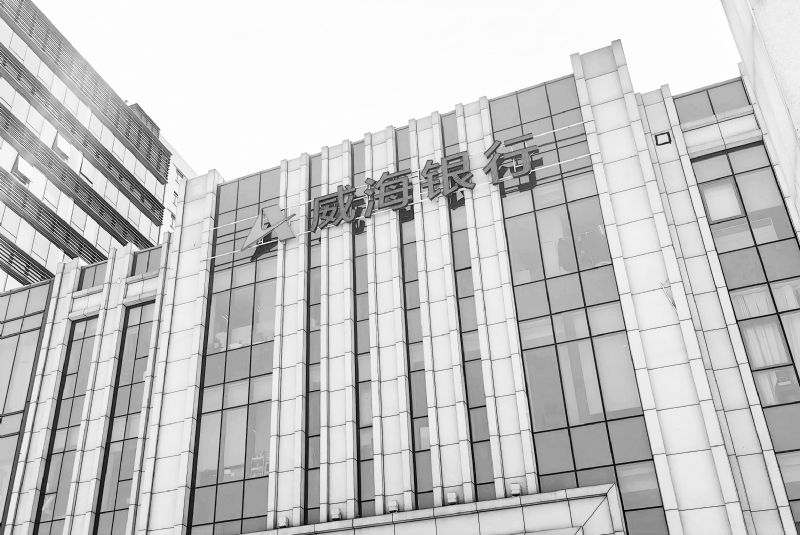
威海银行溢价22%定增拟募30亿 山东国资或斥资14亿认购稳固股权
Chang Jiang Shang Bao· 2025-08-03 23:37
Core Viewpoint - Weihai Bank is initiating a new round of capital replenishment with the support of local state-owned assets, planning to issue up to 758 million domestic shares and 154 million H-shares to raise approximately 3 billion yuan for core tier one capital supplementation [2][3][4]. Group 1: Capital Raising Details - The planned issuance price is 3.29 yuan per share, representing a 22.6% premium over the secondary market price [3][4]. - The controlling shareholder, Shandong Expressway Group, will participate in the subscription while maintaining its current shareholding ratio, potentially investing 1.414 billion yuan, which accounts for 47% of the total fundraising target [3][5]. - The total fundraising amount is approximately 3 billion yuan, with 2.494 billion yuan from domestic shares and 506 million yuan from H-shares [4][5]. Group 2: Financial Performance and Capital Adequacy - As of March 2025, Weihai Bank's total assets exceeded 465 billion yuan, with a capital adequacy ratio of 12.72%, a tier one capital ratio of 9.89%, and a core tier one capital ratio of 8.47%, all showing a decline from the end of 2024 [3][7][8]. - The bank's total assets surpassed 400 billion yuan by the end of 2024, marking a 12.65% increase year-on-year, with loans and deposits also showing significant growth [7][8]. - The non-performing loan ratio was at a record low of 1.41% by the end of 2024, with a provision coverage ratio of 156.07%, indicating improved asset quality [8].

嘉善农商银行2025年半年报:资本净额增长乏力 营收、净利首次“双降”
Xi Niu Cai Jing· 2025-07-22 08:44
Core Viewpoint - The financial performance of Jiaxing Rural Commercial Bank has shown a decline in both revenue and net profit for the first half of 2025, marking the first occurrence of simultaneous decreases in these metrics in the bank's history [2][4][7]. Financial Performance - As of June 30, 2025, the total assets of Jiaxing Rural Commercial Bank reached 70.538 billion yuan, representing a year-on-year growth of 2.36%, the lowest growth rate since 2013 [2]. - The total liabilities amounted to 65.806 billion yuan, with a year-on-year increase of 1.94% [2]. - The bank's revenue for the first half of 2025 was 686 million yuan, reflecting a decline of 9.11% compared to the previous year [2]. - Net profit stood at 211 million yuan, down 13.78% year-on-year [2]. Asset Quality - The report did not disclose specific asset quality data; however, the 2024 annual report indicated that the total loan balance was 48.008 billion yuan, with non-performing loans amounting to 440 million yuan, an increase of 109 million yuan year-on-year [4]. - The non-performing loan ratio was 0.92%, up 0.18 percentage points year-on-year [4]. Management and Governance - The bank was established in October 2013 and operates as a local legal financial institution with a total of 37 outlets, including 1 head office, 18 branches, and 18 sub-branches [4]. - The newly appointed chairman, Ye Dongfei, has been in office for one month and has a background in various banking roles [4]. Capital Changes - On the same day as the financial report, the National Financial Supervision Administration approved an increase in the bank's registered capital by 37 million yuan, raising it from 738 million yuan to 775 million yuan [7].

平安银行(000001) - 投资者关系管理信息
2025-07-14 07:46
Group 1: Financial Performance - In Q1 2025, the bank's revenue was CNY 33.709 billion, a year-on-year decrease of 13.1% [2] - Net profit for Q1 2025 was CNY 14.096 billion, down 5.6% year-on-year [2] - The bank's operating expenses were CNY 9.055 billion, a decrease of 13.2% year-on-year [2] Group 2: Dividend Distribution - For the year 2024, the bank plans to distribute a cash dividend of CNY 6.08 per 10 shares, totaling CNY 11.799 billion, which is 28.32% of the net profit attributable to ordinary shareholders [3] - The interim dividend for 2024 is CNY 2.46 per 10 shares, amounting to CNY 4.774 billion [3] - The final dividend for 2024 is CNY 3.62 per 10 shares, totaling CNY 7.025 billion [3] Group 3: Asset Quality - As of March 2025, the non-performing loan (NPL) ratio was 1.06%, unchanged from the end of the previous year [5] - The provision coverage ratio was 236.53%, with a provision-to-loan ratio of 2.50% [5] - In Q1 2025, the bank wrote off loans amounting to CNY 17.065 billion and recovered CNY 9.425 billion in non-performing assets [5] Group 4: Interest Margin - The net interest margin in Q1 2025 was 1.83%, a decrease of 18 basis points year-on-year [4] - The bank anticipates continued downward pressure on the net interest margin in 2025, but at a slower rate [4] Group 5: Wealth Management - Wealth management fee income in Q1 2025 was CNY 1.208 billion, a year-on-year increase of 12.5% [6] - Personal insurance income grew by 38.7% to CNY 0.344 billion, while personal fund income increased by 5.7% to CNY 0.522 billion [6] Group 6: Capital Adequacy - As of the end of 2024, the bank's capital adequacy ratios were 9.12% for core tier 1, 10.69% for tier 1, and 13.11% for total capital [8] - The bank plans to balance internal and external capital replenishment to maintain adequate capital levels [8] Group 7: Deposit Growth - As of March 2025, personal deposits totaled CNY 1,330.883 billion, a growth of 3.4% from the end of the previous year [9] - The average daily balance of personal deposits in Q1 2025 was CNY 1,316.631 billion, up 6.5% year-on-year [9] Group 8: Loan Growth - As of March 2025, personal loan balances were CNY 1,729.046 billion, a decrease of 2.2% from the end of the previous year [10] - Housing mortgage loans increased by 4.1% to CNY 339.434 billion, while credit card receivables decreased by 7.9% to CNY 400.638 billion [10]

兰州银行成功发行50亿元永续债
Jing Ji Guan Cha Wang· 2025-07-14 05:56
Company Dynamics - Lanzhou Bank successfully issued "Lanzhou Bank Co., Ltd. 2025 Perpetual Capital Bonds" with a total scale of RMB 5 billion and a coupon rate of 2.49% for the first five years, marking a significant decrease of 231 basis points compared to previous similar bond issuances [2][3] - The bank's credit rating is assessed as AAA by China Chengxin International, with a stable outlook, while the perpetual capital bonds are rated AA+ [2] Financial Performance - In 2024, Lanzhou Bank's net operating income was RMB 7.854 billion, reflecting a decline of 2.02% compared to 2023, while net profit increased by 1.54% to RMB 1.942 billion, indicating a trend of "profit increase without revenue increase" [4] - The bank's non-performing loan (NPL) ratio reached 1.83% by the end of 2024, an increase of 0.10 percentage points from the beginning of the year, marking the highest level in three years [3] - As of the first quarter of 2025, the NPL ratio slightly decreased to 1.81%, but it remains high among listed city commercial banks [3] Capital Adequacy - As of the end of the first quarter of 2025, Lanzhou Bank's capital adequacy ratio was 11.79%, and the core Tier 1 capital adequacy ratio was 8.37%, both showing a decline from the end of 2024 [5] - The issuance of the RMB 5 billion perpetual bonds is expected to improve the bank's capital structure and enhance its capital strength [5] Future Outlook - The bank needs to adopt effective strategies to address its challenges, including strengthening risk management, optimizing business structure, and diversifying capital sources to enhance market competitiveness and sustainable development [6]

领380万元大额罚单,杭州银行发生了什么?
Zheng Quan Zhi Xing· 2025-07-11 10:34
Core Viewpoint - Hangzhou Bank has recently received a significant fine due to regulatory violations related to its loan operations, despite its stock price rising alongside the banking sector. The bank's loan growth has consistently outpaced industry averages, leading to ongoing pressure on its capital adequacy [1][3]. Regulatory Penalties - Hangzhou Bank's Shanghai branch was fined 3.8 million yuan for serious violations in pre-loan investigations and supervision of working capital loans, primarily related to loan business irregularities [3][6]. Loan Growth and Quality - As of the end of Q1 this year, Hangzhou Bank's total loans increased by 6.15% compared to the end of the previous year, slightly above the growth rate of commercial loans in the same period. The bank's loan growth has been significantly higher than the industry average from 2021 to 2024 [1][5]. - The non-performing loan (NPL) ratio remained stable at 0.76% as of the end of Q1, but the provision coverage ratio decreased by 11.38 percentage points compared to the end of the previous year [4][5]. Capital Adequacy and Supplementation - The rapid loan growth has created substantial pressure on Hangzhou Bank's capital adequacy. The bank's core Tier 1 capital adequacy ratio has shown slight fluctuations, recorded at 9.01% as of the end of Q1 this year [6][7]. - The bank has successfully converted a significant portion of its 15 billion yuan convertible bonds issued in 2021, enhancing its capital adequacy. However, it continues to seek additional capital supplementation opportunities [6][7]. - A recent shareholders' meeting approved extending the authorization for the board to handle the issuance of A-shares and capital bonds, with plans to raise up to 8 billion yuan for core capital supplementation [7].
