绿色金融

Search documents
厚植金融为民底色 深耕乡村振兴实践
Zhong Guo Zheng Quan Bao· 2025-12-12 20:17
Core Viewpoint - The company emphasizes its commitment to rural revitalization as a key part of its corporate strategy, aligning with national goals for modernization and economic development [1][7]. Group 1: Strategic Initiatives - The company has elevated rural revitalization to a strategic level, aiming to create a sustainable mechanism rather than engaging in one-time donations [1][2]. - In 2024, the company allocated a total of 6.5 million yuan to support five targeted counties, implementing 36 projects across various sectors including education and infrastructure [2]. Group 2: Collaborative Efforts - The company integrates its efforts with a broader industrial ecosystem, leveraging resources from the steel industry to enhance its rural support initiatives [2][5]. - It has developed a "Ning Carbon Benefit" brand to promote sustainable development and ecological product value realization, collaborating with various stakeholders [4][5]. Group 3: Educational Support - The company has launched the "Smart Classroom" initiative to modernize educational infrastructure in supported areas, focusing on long-term development through educational assistance [6]. - Since the transition from poverty alleviation to rural revitalization, the company has signed agreements with five regions, donating a total of 25 million yuan and implementing 78 projects [6]. Group 4: Cultural Integration - The company aims to embed its public welfare initiatives into its corporate culture, fostering a sense of responsibility among employees and enhancing internal cohesion [3][7]. - It actively engages employees in various charitable activities, promoting a culture of shared responsibility and community involvement [3][7].
两部门强化绿色金融供给 划定三类重点支持方向
Shang Hai Zheng Quan Bao· 2025-12-12 19:25
Core Viewpoint - The Ministry of Industry and Information Technology (MIIT) and the People's Bank of China have jointly issued a notice to enhance green financial support for the construction of green factories, aiming to increase the output value of green factories to 40% by 2030 [1][2]. Group 1: Green Financial Support - The notice focuses on three key project categories for green financial support: technological breakthroughs and industrial applications, enterprise green low-carbon transformation, and zero-carbon factory construction [2][3]. - Since the 14th Five-Year Plan, over 10,000 green low-carbon transformation projects have been implemented, with total investments exceeding 300 billion yuan [1]. Group 2: Green Factory Development - MIIT will implement a quality enhancement and expansion plan for green factories, which includes a three-step strategy: building factories, nurturing supply chains, and promoting industrial parks [2]. - A gradient cultivation management method for green factories will be established, optimizing evaluation indicators to enhance the foundational and guiding role of green factories in the green low-carbon transition of the manufacturing industry [2]. Group 3: Green Supply Chain and Industrial Parks - A green supply chain enhancement action will be launched to encourage large enterprises to lead the green transformation through green procurement policies, increasing the proportion of green factory suppliers [3]. - The development of green industrial parks will be promoted, with plans to establish carbon emission dual control management systems and support the construction of green factories within these parks [3].
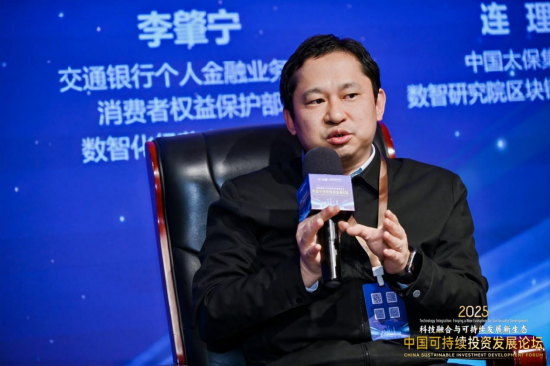
交行李肇宁:智能技术助推绿色金融,赋能实体经济绿色发展
Xin Lang Cai Jing· 2025-12-12 14:07
专题:2025中国可持续投资发展论坛 专题:2025中国可持续投资发展论坛 12月12日金融一线消息,2025中国可持续投资发展论坛今日召开,本次论坛的主题为"科技融合与可持 续发展新生态"。交通银行个人金融业务部总经理李肇宁出席论坛。 李肇宁表示,做好绿色金融已成为金融机构的必答题,商业银行需积极运用金融专业能力赋能实体经济 绿色发展。 12月12日金融一线消息,2025中国可持续投资发展论坛今日召开,本次论坛的主题为"科技融合与可持 续发展新生态"。交通银行个人金融业务部总经理李肇宁出席论坛。 李肇宁表示,做好绿色金融已成为金融机构的必答题,商业银行需积极运用金融专业能力赋能实体经济 绿色发展。 交通银行综合利用大模型、机器学习和神经网络等技术,于去年在企业网银、企业手机银行等线上渠道 推出绿色金融政策服务。通过人工智能技术对政策文件拆解梳理,实现国家级政策数据要素化,形成知 识体系。在线上企业录入自身信息后,算法将企业情况与政策进行匹配,为企业主动推送适应其发展方 向的相关政策,方便企业找政策、学政策、懂政策、用好政策,将国家绿色发展政策普及到数以百万计 的相关企业。下一步,交行将进一步丰富地方级政策数 ...


中国七部门:2027年中国初步构建产品碳足迹因子数据库
Zhong Guo Xin Wen Wang· 2025-12-12 13:47
Core Viewpoint - The Chinese government aims to establish a product carbon footprint factor database by 2027, which will serve as a crucial tool for measuring the carbon emissions associated with products throughout their lifecycle [1][2]. Group 1: Database Construction - The Ministry of Ecology and Environment, along with the National Development and Reform Commission, has issued guidelines to accelerate the construction of the product carbon footprint factor database [1]. - The database will rely on the national greenhouse gas emission factor database and encourage collaborative efforts from various stakeholders to ensure effective participation and coordination [1][2]. - The goal is to have a preliminary version of the database by 2027 and a more comprehensive version by 2030, which will have a wide coverage, high data quality, and strong international influence [1]. Group 2: Implementation and Standards - The guidelines aim to address current challenges in database construction, such as lack of unified standards and difficulties in data interoperability [1]. - There will be a focus on developing specific work requirements to promote high-quality development of the database and enhance China's international discourse power [1][2]. - The Ministry of Ecology and Environment plans to collaborate with various parties to create a cooperative and shared construction framework for the product carbon footprint factor database [2].
两部门发文:用好绿色金融政策支持绿色工厂建设
Zhong Guo Xin Wen Wang· 2025-12-12 13:32
两部门发文:用好绿色金融政策支持绿色工厂建设 编辑:王永乐 广告等商务合作,请点击这里 本文为转载内容,授权事宜请联系原著作权人 中新经纬版权所有,未经书面授权,任何单位及个人不得转载、摘编或以其它方式使用。 关注中新经纬微信公众号(微信搜索"中新经纬"或"jwview"),看更多精彩财经资讯。 今年,工信部组织修订《绿色工厂评价通则》,聚焦绿色工厂的能源低碳化、资源高效化、生产洁净 化、产品绿色化、用地集约化等5个主要方面,通过科学的"尺子"量出真正的"含绿量",再通过金融工 具将"含绿量"转化为"融资易"和"成本低"等实实在在的好处。 中国人民银行信贷市场司副司长余剑表示,央行支持金融机构制定支持绿色工厂工作方案,在内部转移 定价、尽职免责制度、贷款审批通道等方面给予政策倾斜。 王鹏说,工信部将实施绿色工厂提质扩面计划,计划到2030年,国家、省、市各级绿色工厂产值占比提 高到40%。制定绿色工厂梯度培育管理办法,培育一批零碳工厂。(完) 来源:中国新闻网 中新社北京12月12日电 (记者 刘育英)中国工业和信息化部办公厅、中国人民银行办公厅12日对外发布 关于用好绿色金融政策支持绿色工厂建设的通知,通过 ...
新华财经晚报:顶格重罚!证监会对私募机构优策投资开罚单
Xin Hua Cai Jing· 2025-12-12 12:34
Domestic News - The National Financial System Work Conference emphasized the need to prevent and resolve risks associated with local small and medium financial institutions, real estate enterprises, and local government financing platform debts, while maintaining strict control over new risks and managing existing ones [1] - The China Securities Regulatory Commission (CSRC) imposed a record fine of 21 million yuan on Zhejiang Youce Investment Management Co., along with fines totaling 14.25 million yuan on three responsible individuals, and a lifetime ban on the actual controller from the securities market [2] - The CSRC is seeking industry opinions on a draft regulation aimed at standardizing public fund sales behavior, which includes clear requirements for promotional activities and performance disclosures [2] - The People's Bank of China reported that the social financing scale increased by 3.99 trillion yuan year-on-year, totaling 33.39 trillion yuan in the first eleven months of 2025 [3] Financial Market Updates - The People's Bank of China will conduct a 600 billion yuan reverse repurchase operation on December 15, 2025, to maintain liquidity in the banking system [3] - The Shanghai Stock Exchange revised its bond trading guidelines to facilitate market participants, clarifying procedures for emergency transactions and non-trading transfers [2] International News - The Japanese yen fell to a record low against the offshore yuan, raising concerns about imported inflation in Japan as the Bank of Japan's normalization process remains slow [6] - Germany's October export data showed a 0.1% month-on-month increase and a 4.2% year-on-year increase, although analysts noted significant structural changes in exports [6] - Sweden's unemployment rate rose to 8.2% in November 2025, with youth unemployment reaching 23.8%, indicating pressure on the labor market [6]
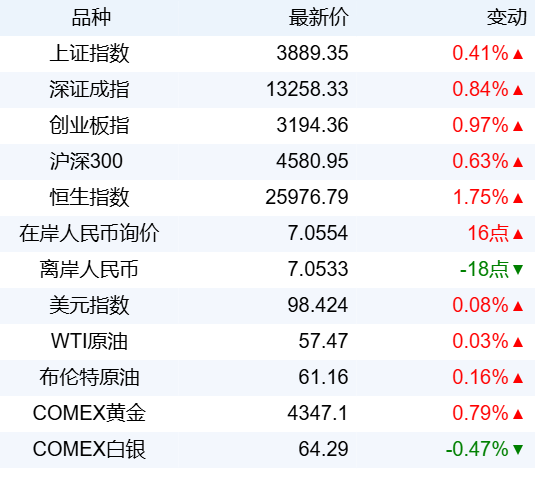
以金融之力,共筑未来之城
Di Yi Cai Jing Zi Xun· 2025-12-12 12:06
Core Viewpoint - The financial sector is becoming a crucial driving force for high-quality urban development, as highlighted during the 2025 Urban Sustainable Development Conference [1]. Group 1: Urban Development Initiatives - The Industrial and Commercial Bank of China (ICBC) Shanghai Branch is actively involved in promoting sustainable urban development through various initiatives [3]. - The bank supports digital city construction, urban renewal, and improvements in people's livelihoods, while also focusing on green finance and low-carbon innovation [3]. Group 2: Future Commitment - ICBC aims to maintain its commitment to serving the public by leveraging smarter technology, innovative products, and high-quality services [3]. - The bank envisions itself as a long-term partner in the evolution of Shanghai, collaborating with the city to create a better future [3].

绿色工厂建设迎政策利好,三类项目将获重点支持
2 1 Shi Ji Jing Ji Bao Dao· 2025-12-12 11:37
Core Viewpoint - The Ministry of Industry and Information Technology and the People's Bank of China have jointly issued a notice to support the construction of green factories through green finance policies, highlighting the significant demand for green financing in the context of over 10,000 green low-carbon transformation projects with total investments exceeding 300 billion yuan since the start of the 14th Five-Year Plan [1][2]. Group 1: Green Factory Support - The notice emphasizes support for investment projects related to green low-carbon technologies as outlined in the "Green Finance Support Project Directory (2025 Edition)" and other relevant policies, focusing on R&D, industrial application, technological upgrades, and zero-carbon factory construction [1][2]. - Specific areas of support include major process innovations in traditional industries, addressing critical technologies, and the development of new green low-carbon technologies and products [2]. - The notice aims to enhance financial support through improved internal management mechanisms, strengthened green credit support, expanded direct financing channels, and elevated financial assurance levels [2][3]. Group 2: Financial Mechanisms - Financial institutions are encouraged to develop tailored loan products for green factories, such as long-term loans and credit loans, while optimizing risk assessment mechanisms to support creditworthy green factories [3][4]. - The notice promotes the issuance of green bonds and transformation bonds for eligible enterprises to raise funds for green factory construction, with an emphasis on supporting local promising green factories [3][5]. - A mechanism for selecting and nurturing green factories will be optimized, with incentives for financial institutions that excel in supporting green factories, including potential rewards through fiscal funding [3][5]. Group 3: Future Plans - The Ministry of Industry and Information Technology plans to accelerate the construction of green factories, aiming for a 40% share of green factory output in the manufacturing sector by 2030, along with the development of a gradient cultivation management approach [5][6]. - There will be a strong focus on cultivating green supply chains, encouraging large enterprises to support their suppliers in green transformations through policies like green procurement [6]. - The development of green industrial parks will be promoted, with initiatives to establish carbon emission management systems and support the construction of zero-carbon industrial parks [6].

东兴晨报-20251212
Dongxing Securities· 2025-12-12 11:28
2025 年 12 月 12 日星期五 经济要闻 1. 中央经济工作会议: 中国人民银行行长潘功胜表示,党的二十届四中全 会为"十五五"时期规划了发展蓝图,这次会议为"十五五"良好开局、做 好明年经济工作制定了科学、清晰的指引。中国人民银行将认真贯彻落实习 近平总书记重要讲话精神,继续实施好适度宽松的货币政策,把握好政策实 施的力度、节奏和时机,为经济稳定增长和金融市场稳定运行创造良好的货 币金融环境。(资料来源:同花顺,新华社) 2. 财政部:部长蓝佛安表示中央经济工作会议对明年的财政政策明确定 调,要求继续实施更加积极的财政政策。这与今年的政策取向一以贯之,是 应对外部冲击和内部风险挑战的重大决策部署。在具体安排上,主要是做到 "两个保持":保持政策力度;保持政策连续性。在具体实施中,主要是做到 "三个坚持":坚持投资于物和投资于人相结合;坚持惠民生与促消费相结合; 坚持财政货币政策相协同(资料来源:同花顺,新华社) 3. 工信部: 工业和信息化部举行"用好绿色金融政策支持绿色工厂建设" 新闻发布会。工业和信息化部节能与综合利用司司长王鹏表示,计划到 2030 年,国家、省、市各级绿色工厂产值占比提高到 ...
以金融之力,共筑未来之城
第一财经· 2025-12-12 11:25
Group 1 - The core viewpoint of the article emphasizes the role of finance as a key driver for high-quality urban development, particularly in the context of sustainable city initiatives [1][3] - The Industrial and Commercial Bank of China (ICBC) Shanghai Branch is actively involved in various aspects of urban development, including digital city construction, urban renewal, and improvements in public welfare [3] - ICBC aims to support green finance and low-carbon innovation, contributing not only through direct funding but also by shaping the future of the city through strategic choices and social activities [3] Group 2 - Looking ahead, ICBC is committed to maintaining its foundational principle of serving the public through smarter technology, innovative products, and high-quality services [3] - The bank positions itself as a long-term partner in the evolution of Shanghai, aspiring to grow alongside the city and collaboratively create a better future [3]