循环经济

Search documents
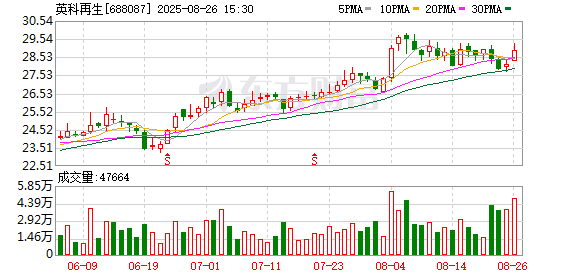
英科再生上半年营收16.66亿元 业绩逐季连创历史同期新高
Zheng Quan Shi Bao Wang· 2025-08-26 14:27
Core Viewpoint - The company reported strong financial performance in the first half of 2025, with revenue and net profit showing significant year-on-year growth, indicating a robust business model and market position [2][3]. Financial Performance - The company achieved operating revenue of 1.666 billion yuan, a year-on-year increase of 16.13% [2]. - Net profit for the period was 146 million yuan, with operating cash flow net amounting to 245 million yuan, reflecting a 17.5% increase year-on-year [2]. Business Segments - The company has established a complete industrial chain covering "recycling, regeneration, and utilization," with four main product categories: finished frames, decorative building materials, recycled plastics, and environmental equipment [2]. - Revenue from finished frames accounted for 41% of total revenue, up 11% year-on-year, while decorative building materials represented 37% of revenue, increasing by 38% [2]. Market Expansion - The company’s products have an export share close to 90%, serving over 130 countries, with more than 70% of sales coming from Europe and the United States [3]. - The revenue from the company's Vietnam base reached 210 million yuan, a year-on-year growth of 48.89%, indicating successful operations and expansion plans for future production capacity [3]. Shareholder Returns - The company initiated a restricted stock incentive plan for 607 participants, issuing 7.37 million shares, approximately 4% of total share capital [3]. - A mid-term dividend of 1 yuan per 10 shares will be distributed, alongside a share buyback plan of 40 million to 80 million yuan [3]. Future Strategy - The company plans to leverage its advantages in products, channels, and overseas layout, focusing on the application of core AI technology in business scenarios [4]. - There is an emphasis on integrating technology with business operations and enhancing organizational performance through high-density talent development [4].


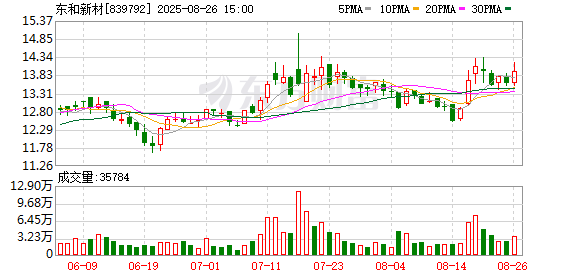
东和新材2025年半年报:扣非净利润增长13.48%,战略布局深化打造新增长极
Zheng Quan Shi Bao Wang· 2025-08-26 13:59
Core Viewpoint - Donghe New Materials (839792) reported a stable performance in its 2025 semi-annual report, with revenue of 321 million yuan and a net profit of approximately 31.99 million yuan, indicating a year-on-year growth of 1.21% in net profit and 13.48% in net profit after deducting non-recurring items, supported by a robust circular economy model and growth in new energy and industry chain extension [2][3]. Financial Performance - The company experienced a decline in revenue during the reporting period, yet profits increased, highlighting the stability of its main business operations [3]. - The comprehensive gross profit margin rose to 27.18%, up 1.66 percentage points from 25.52% in the same period last year, primarily due to an increase in the selling price of light-burned magnesium oxide and a decrease in coal prices, which lowered production costs [3]. - As of the end of the reporting period, total assets reached 1.778 billion yuan (a year-on-year increase of 10.17%), and net assets attributable to the parent company were approximately 999.6 million yuan (a year-on-year increase of 1.54%), driven by investment projects and technological upgrades [3]. Circular Economy Advantages - Donghe New Materials has established a unique advantage through its circular economy model, with its "Low-grade Dolomite Efficient Comprehensive Utilization Demonstration Project" recognized by the Ministry of Industry and Information Technology as one of the first tailings comprehensive utilization projects [4]. - The company holds a total of 49 patents, including 8 invention patents, covering the entire process of magnesium sand production, thereby reinforcing its technological barriers [4]. - The profit contribution rate of light-burned magnesium oxide exceeded that of the previous year, offsetting a decline in electric magnesium sales due to increased electricity costs and reduced purchases from downstream customers; revenue from tailings light-burned powder increased by 138.26% year-on-year, with a gross margin improvement of 11.64 percentage points [4]. Strategic Layout - The company has deepened its strategic layout by establishing several wholly-owned subsidiaries, including Liaoning Dongheng Talc Manufacturing and Liaoning Magnesium Research New Materials R&D, to extend its industrial chain [5]. - On July 31, the company acquired 51% of Anshan Fuyou Mining for 255.3 million yuan, enhancing its control over dolomite supply and mitigating the impact of raw material price fluctuations [6]. - Subsidiaries are performing steadily, with net profits of 17.21 million yuan from Haicheng Rongfu Refractory and 5.88 million yuan from Haicheng Donghe Teddy Furnace Materials, supporting the parent company's profits [6].
凌雄科技上半年业绩攀高向优:营收再创同期历史新高 净利润和经调整利润扭亏为盈
Zhi Tong Cai Jing· 2025-08-26 11:50
Core Viewpoint - Lingxiong Technology (02436), the first stock in China's DaaS (Device as a Service) industry, reported a significant performance improvement in the first half of 2025, with revenue reaching 1.117 billion RMB, a year-on-year increase of approximately 18.5% [1][2] Financial Performance - Revenue for the first half of 2025 was 1.117 billion RMB, with a gross profit of 102 million RMB, reflecting a 9.7% year-on-year increase [1] - Net profit turned positive at approximately 5 million RMB, with adjusted profit reaching about 18.645 million RMB, and adjusted EBITDA increased by approximately 38.5% to 194 million RMB [1] - The equipment recovery business revenue grew by 24.4% to about 848 million RMB, while equipment subscription service revenue increased by 4.5% to approximately 192 million RMB [1][4] Business Growth Drivers - Lingxiong Technology's business model demonstrates strong resilience in complex economic cycles, supported by a robust management team capable of navigating challenges [2] - The company has maintained a focus on enhancing customer service quality, which has led to a steady increase in customer numbers, with a 20% year-on-year growth in equipment recovery business customers [4][9] - The DaaS market is expected to see a penetration rate increase from 5% to 10% over the next five years, driven by rising demand for DaaS services among enterprises [12] Industry Position and Influence - Lingxiong Technology has established itself as a "chain leader" in the DaaS industry, contributing to the development of industry standards and participating in significant national initiatives [7][8] - The company has been recognized for its contributions to the DaaS market, receiving multiple national certifications and accolades, including being named a national-level service standardization pilot enterprise [10] Future Outlook - The DaaS market is projected to grow at a compound annual growth rate of over 30%, with expectations to exceed 100 billion RMB by 2025 [10] - Lingxiong Technology is well-positioned to benefit from ongoing national policies supporting the circular economy and green consumption, which will further enhance its market share and profitability [11][12]
凌雄科技(02436)上半年业绩攀高向优:营收再创同期历史新高 净利润和经调整利润扭亏为盈
智通财经网· 2025-08-26 11:10
Core Viewpoint - Lingxiong Technology (02436), the first DaaS (Device as a Service) company listed in China, reported a significant performance improvement in the first half of 2025, with revenue reaching 1.117 billion RMB, a year-on-year increase of approximately 18.5% [1][2][9] Financial Performance - Revenue for the first half of 2025 was approximately 1.117 billion RMB, with a gross profit of about 102 million RMB, reflecting a year-on-year growth of around 9.7% [1] - Net profit turned positive at approximately 5 million RMB, with adjusted profit reaching about 18.645 million RMB, and adjusted EBITDA increased by approximately 38.5% to 194 million RMB [1] - The company achieved a historical high in revenue for the same period, maintaining its position as the industry leader [1] Business Segments - Revenue from the equipment recycling business grew by 24.4% to approximately 848 million RMB, while equipment subscription service revenue increased by 4.5% to about 192 million RMB [1][3] - IT technology subscription services also showed steady growth, generating approximately 76 million RMB [1] - Total equipment subscriptions rose by 11.7% to about 3.475 million units [1] Strategic Factors - Lingxiong Technology's business model, focusing on full lifecycle management of devices, has proven resilient in complex economic conditions [2][4] - The management team has demonstrated exceptional operational capabilities in navigating challenging market environments [2] - The company has built strong core competencies, including a closed-loop DaaS ecosystem, a robust recycling and refurbishment supply chain, and an industry-leading intelligent risk control system [3][4] Market Trends - The DaaS market in China is expected to grow significantly, with projections indicating a market size exceeding 100 billion RMB by 2025 [9][10] - The demand for DaaS services remains strong, driven by enterprises' need for cost reduction and efficiency improvements [10][11] - The introduction of advanced AI technologies is enhancing operational efficiency and customer service quality within the DaaS sector [10][11] Industry Leadership - Lingxiong Technology has established itself as a "chain leader" in the DaaS industry, contributing to the development of industry standards and participating in national initiatives [6][7] - The company has been recognized for its contributions to the DaaS market, receiving multiple national certifications and accolades [9] Future Outlook - The DaaS market penetration rate is anticipated to rise from approximately 5% to 10% over the next five years, indicating a shift in consumer preferences towards DaaS solutions [11] - Lingxiong Technology is well-positioned to capitalize on this growth, with expectations of substantial increases in market share and revenue potential [11]
打造绿色增长新引擎,中国解锁循环经济密码
Huan Qiu Shi Bao· 2025-08-26 03:10
Core Insights - The article highlights the significant transformation of China's waste electrical and electronic equipment (WEEE) recycling industry over the past 15 years, evolving from a few formal dismantling companies to a robust system with 95 compliant enterprises and over 900 million units dismantled [1][8] - The shift from passive response to proactive management in electronic waste governance is emphasized, showcasing China's model as a potential solution for global electronic waste issues [1][8] Policy Evolution - The foundation of the WEEE recycling industry was established in 2009 with the introduction of regulations that included producer responsibility extension (EPR) [2] - By 2015, the recycling rate for key appliances improved from 32.75% in 2010 to 60.29%, demonstrating the effectiveness of early policies [2] - The introduction of the revised Solid Waste Pollution Prevention Law in 2020 and subsequent financial adjustments in 2021 led to a more competitive market, increasing the share of top companies in processing capacity [2] Industry Development - The theoretical waste volume of electrical appliances in China increased from 166 million units to 289 million units, a 74% rise over 15 years [4] - The recycling model evolved from small workshops to integrated platforms, with significant contributions from companies like Haier and JD.com [4] - Despite advancements, the structural issues in processing remain, with a decline in compliant dismantling volume and utilization rates [4] Technological Innovation - The dual focus on high-value recovery and carbon reduction is crucial for industry advancement, with companies developing efficient recycling technologies [5] - The recycling industry extracted significant amounts of metals from waste appliances, showcasing the potential of a circular economy [5] Challenges and Future Directions - The new funding policies have triggered industry restructuring, with challenges such as historical subsidy payments and budget reductions impacting operational costs [6] - The article suggests that enhancing producer responsibility, consumer incentives, and technological innovation are essential for overcoming current challenges [7] - Future pathways include leveraging policy adjustments and technological advancements to enhance recycling rates and reduce carbon emissions [7][8]
中国企业可持续发展十大趋势发布
Zhong Guo Hua Gong Bao· 2025-08-26 02:14
Core Insights - The report outlines the "Top Ten Trends in Sustainable Development for Chinese Enterprises by 2025" as presented by the President of the China Sustainable Development Business Council, Yu Baocai [1] Group 1: Key Trends - Energy transition and low-carbon practices are accelerating high-quality and green development [1] - The dual crisis of climate change and biodiversity loss poses significant challenges [1] - The circular economy is becoming a crucial driver for economic transformation and the rapid development of the recycling industry [1] Group 2: Technological and Regulatory Developments - Digital technology is empowering sustainable development, with artificial intelligence leading a new wave of technological revolution and industrial transformation [1] - The establishment of resilient supply chains is essential for enhancing green and safe development [1] - ESG (Environmental, Social, and Governance) information disclosure is becoming more standardized, with regulations becoming increasingly pragmatic [1] Group 3: Opportunities and Challenges - Urban renewal and high-quality development present new requirements and opportunities for enterprises [1] - Strengthening food security and accelerating agricultural modernization are critical [1] - The silver economy is creating new growth opportunities, while structural contradictions in the labor market need to be addressed [1] Group 4: Consumer Behavior - Sustainable living is gradually becoming mainstream, and providing products and services that meet sustainable demands is key for enterprises to achieve new growth [1]
宝泰隆: 宝泰隆新材料股份有限公司章程
Zheng Quan Zhi Xing· 2025-08-25 17:27
General Provisions - The company aims to protect the legal rights of the company, shareholders, employees, and creditors, and to regulate its organization and behavior according to relevant laws [1][2] - The company was established as a joint-stock company in March 2008 and is registered in Qitaihe City, Heilongjiang Province [2][3] - The registered capital of the company is RMB 1,915,664,539 [2][3] Business Objectives and Scope - The company's business objectives include energy conservation, environmental protection, and the development of new materials and new energy products [4] - The company is involved in various business activities, including coal mining, chemical production, and real estate development [4] Shares - The company's shares are issued in the form of stocks, with a total share capital of 1,915,664,539 shares, all of which are ordinary shares [5][6] - The issuance of shares follows principles of openness, fairness, and justice, ensuring equal rights for all shareholders [5][6] Shareholders and Shareholder Meetings - Shareholders have rights to dividends, voting, and supervision of the company's operations [9][11] - The company must hold annual and temporary shareholder meetings, with specific procedures for calling and conducting these meetings [19][20] Board of Directors and Management - The company has a board of directors responsible for major decisions, including the election of directors and approval of financial reports [16][17] - The board must ensure compliance with laws and regulations, and shareholders can request legal action against directors for violations [14][15] Financial Accounting and Auditing - The company must establish a financial accounting system and conduct internal audits [7] - The appointment of external auditors must be approved by the shareholders [7] Amendments to the Articles of Association - The articles of association can be amended through a special resolution passed by the shareholders [22][23] Miscellaneous Provisions - The company must comply with the regulations set forth by the Communist Party of China and provide necessary conditions for party activities [3]

宝泰隆: 宝泰隆新材料股份有限公司2025年半年度报告
Zheng Quan Zhi Xing· 2025-08-25 17:14
Core Viewpoint - Baotailong New Materials Co., Ltd. reported a significant decline in revenue and profit for the first half of 2025, primarily due to the shutdown of coking equipment and a shift in product focus from coke to self-produced coal products [2][6][12]. Company Overview and Financial Indicators - The company’s revenue for the first half of 2025 was approximately CNY 356.88 million, a decrease of 55.99% compared to CNY 810.92 million in the same period last year [2][12]. - Total profit for the period was CNY 83.23 million, while the net profit attributable to shareholders was CNY 98.88 million, showing a recovery from a loss of CNY 191.58 million in the previous year [2][12]. - The company’s net assets increased slightly by 0.46% to CNY 5.81 billion, while total assets decreased by 2.01% to CNY 11.68 billion [2][12]. Industry Analysis - The coking industry experienced a continuous decline in coke prices in the first half of 2025 due to stable coal supply and weak demand from the steel industry, leading to an oversupply situation [6][12]. - The coal chemical industry saw methanol prices fluctuate, initially dropping due to increased domestic supply and weak demand, followed by a brief rise due to supply tightening, and then falling again due to global economic instability [6][12]. - The thermal power industry is undergoing a transformation towards a low-carbon energy system, with policies aimed at enhancing flexibility and efficiency in energy production [6][12]. Business Operations - The company is focusing on a circular economy model, integrating coal mining, coking, and chemical production to optimize resource utilization and reduce costs [6][12]. - Baotailong is transitioning from traditional coal chemical products to new materials, particularly graphene, and is investing in clean energy projects such as ammonia and hydrogen production [6][12]. - The company has made significant progress in its coal mining operations, with several mines nearing completion and expected to enhance raw material supply stability [7][10][12]. Competitive Advantages - Baotailong benefits from a comprehensive circular economy model that maximizes resource utilization and minimizes waste [10][12]. - The company has access to rich coal resources in Heilongjiang Province, which supports its product upgrade strategy [10][12]. - Baotailong holds 113 patents and has established research stations, enhancing its technological capabilities in new material development [12].
荣联再生科技招股书解读:净利润骤降58.5%,毛利率下滑2.6个百分点
Xin Lang Cai Jing· 2025-08-25 16:28
Core Viewpoint - Ronglian Recycling Technology International Co., Ltd. is pursuing an IPO in Hong Kong, revealing significant financial challenges, including a 58.5% drop in net profit for the first half of 2025 compared to the same period in 2024, and a 2.6 percentage point decline in gross margin for the same period, indicating various operational risks and challenges ahead [1]. Group 1: Business Model and Operations - The company focuses on the research and production of recycled acrylic materials, providing recycled MMA and PMMA sheets, and has been recognized as a "High-tech Enterprise" since 2020, holding 7 invention patents and 19 utility model patents, showcasing its technological advantages [2]. - The company collects waste PMMA from acrylic manufacturers and plastic recycling companies to convert it into recycled MMA, which is then used to produce PMMA sheets, supporting a sustainable industrial chain and promoting circular economy development [3]. Group 2: Financial Data Analysis - Revenue growth is notable, with total revenue increasing by approximately 53.9% from 133,188 thousand RMB in FY2023 to 205,031 thousand RMB in FY2024, and a 20.2% increase in the first half of 2025 compared to the same period in 2024, driven by rising demand for recycled acrylic products [4]. - Net profit showed volatility, increasing by about 44.0% from 24,173 thousand RMB in FY2023 to 34,812 thousand RMB in FY2024, but then plummeting by approximately 55.3% in the first half of 2025 to 7,071 thousand RMB due to rising expenses and reduced government subsidies [4]. - Gross margin fluctuated, increasing from approximately 23.0% in FY2023 to 23.9% in FY2024, but slightly decreasing to 21.3% in the first half of 2025 due to falling average selling prices and increased costs from new PMMA production lines [5]. - Net profit margin decreased from 18.1% in FY2023 to 17.0% in FY2024, and further dropped to 7.2% in the first half of 2025, reflecting the impact of revenue, costs, and government subsidies [6]. Group 3: Customer and Supplier Concentration - The company has a high customer concentration risk, with sales to its top five customers accounting for approximately 54.8%, 71.4%, and 65.3% of total revenue in FY2023, FY2024, and the first half of 2025, respectively, indicating potential vulnerability if key customers are lost [8]. - Supplier concentration is also significant, with purchases from the top five suppliers representing 45.8% to 69.5% of total procurement from FY2023 to the first half of 2025, which poses risks related to dependency on a limited number of suppliers [14]. Group 4: Industry Position and Competition - Ronglian Recycling Technology ranks first in domestic production capacity for recycled MMA in FY2024, holding a market share of 4.4%, and also ranks first in revenue for recycled MMA and PMMA sheets with a market share of 4.0%, although the industry remains fragmented and competitive [11].
荣联再生科技二次递表港交所GEM 为国内再生亚克力材料龙头
Zhi Tong Cai Jing· 2025-08-25 13:23
Core Viewpoint - Ronglian Regeneration Technology, established in March 2017, is a leading manufacturer of recycled acrylic products in China, focusing on the research and production of recycled MMA and PMMA sheets, promoting the use of renewable resources to advance the circular economy [3]. Industry Overview - The recycled acrylic and reuse industry in China has seen significant growth due to the government's prioritization of environmental protection, with favorable policies driving demand for recycled acrylic products [3]. - The implementation of environmental policies, such as the State Council's 2024 directive on accelerating the construction of a waste recycling system, is expected to sustain the growth in demand for the company's products [3]. Company Performance - The production capacity of recycled MMA is projected to increase from approximately 13,776 tons in the 2023 fiscal year to about 20,448 tons in the 2024 fiscal year, with an additional 9,432 tons expected in the first half of 2025 [4]. - The company has added two new MMA production lines in January 2024 to meet anticipated customer demand, with internal production of recycled MMA for PMMA sheet manufacturing accounting for approximately 70.2%, 59.5%, and 83.0% of total production in the respective fiscal years [4]. - The third PMMA sheet production line is in trial production and is expected to be operational by the fourth quarter of 2025, which will enhance operational efficiency and product delivery capabilities [4]. Financial Performance - The company's revenue for the fiscal years 2023, 2024, and the first half of 2025 is approximately RMB 133.2 million, RMB 205.0 million, and RMB 97.8 million, respectively [6]. - The profit figures for the same periods are RMB 24.2 million, RMB 34.8 million, and RMB 7.1 million, indicating a positive growth trend in profitability [6].