大数据

Search documents
天融信涨2.11%,成交额4107.44万元,主力资金净流入419.08万元
Xin Lang Cai Jing· 2025-12-19 02:05
Core Viewpoint - Tianrongxin's stock has shown a significant increase of 35.61% year-to-date, despite recent declines in the short term [1][2]. Group 1: Stock Performance - As of December 19, Tianrongxin's stock price rose by 2.11% to 8.72 CNY per share, with a total market capitalization of 10.285 billion CNY [1]. - The stock has experienced a slight decline of 0.11% over the last five trading days, 1.25% over the last twenty days, and 11.92% over the last sixty days [1]. - The company has appeared on the trading leaderboard seven times this year, with the most recent appearance on October 29, where it recorded a net purchase of 228 million CNY [1]. Group 2: Financial Performance - For the period from January to September 2025, Tianrongxin reported a revenue of 1.202 billion CNY, reflecting a year-on-year decrease of 24.01%, and a net profit attributable to shareholders of -235 million CNY, down 39.10% year-on-year [2]. - Cumulative cash dividends since the company's A-share listing amount to 456 million CNY, with 44.2017 million CNY distributed over the past three years [3]. Group 3: Shareholder Information - As of September 30, 2025, the number of shareholders increased to 118,700, a rise of 60.25%, while the average number of circulating shares per person decreased by 37.60% to 9,833 shares [2]. - The top ten circulating shareholders include Hong Kong Central Clearing Limited, which holds 19.3638 million shares, an increase of 1.6225 million shares compared to the previous period [3].

研判2025!中国对象存储行业分类、产业链及市场规模分析:行业正跃迁为智能数据基础设施,驱动对象存储向"AI就绪"主动型架构演进[图]
Chan Ye Xin Xi Wang· 2025-12-19 01:54
Core Insights - The Chinese object storage industry is undergoing a strategic transition from a technical tool to a critical data infrastructure, becoming an essential foundation for artificial intelligence, big data, and digital transformation across various sectors [1][6] - The market size of the Chinese object storage industry is projected to reach approximately 4.435 billion yuan in 2024, representing a year-on-year growth of 34.03% [1][7] Industry Overview - Object storage is a storage architecture centered around unstructured data, encapsulating data as independent objects, each containing data, metadata, and a globally unique identifier [2] - Key characteristics include a flat storage structure, access via RESTful APIs, high scalability, reliability, and cost-effectiveness, making it suitable for massive unstructured data storage and management [2] Industry Value Chain - The upstream of the object storage industry includes raw materials like silicon wafers, electronic gases, and photolithography resins, as well as components such as storage media, processors, and data management software [4] - The midstream involves the production and manufacturing of object storage solutions, while the downstream applications span cloud computing, big data, artificial intelligence, and the Internet of Things [4] Market Size - The object storage industry is evolving into an "AI-ready data infrastructure," addressing the balance between high-performance data access needs and cost control for massive storage [1][6] - Leading solutions, such as those from XSKY, utilize intelligent tiering technology for dynamic data management, optimizing storage costs while ensuring efficiency for AI tasks [1][6] Key Companies - The industry exhibits a "head concentration, diversified competition" pattern, with major players like Huawei, Alibaba Cloud, and Tencent Cloud leveraging ecosystem advantages and pricing strategies [7] - Shenzhen Sandstone Data Technology Co., Ltd. focuses on software-defined storage innovations, supporting EB-level capacity and serving over 800 industry clients [8] - Tencent Cloud's object storage (COS) utilizes a self-developed YottaStore engine, achieving high data availability and durability, and has reported a revenue of 557.4 billion yuan for the first three quarters of 2025, with a year-on-year growth of 14.26% [8] Industry Development Trends 1. **Technological Evolution**: Object storage is transitioning from passive data storage to active data utilization, driven by AI model training and inference, focusing on performance optimization and intelligent data management [9] 2. **Market Restructuring**: The industry is moving away from price competition to value competition, with major players building ecological barriers through AI value-added services [9] 3. **Ecosystem Expansion**: Object storage is integrating with big data, AIoT, and data marketization, with a trend towards domestic substitution and support for local hardware platforms [10]



研判2025!中国妇科手术治疗仪行业发展历程、政策环境、产业链、发展现状及未来趋势分析:女性健康意识的提升,妇科手术治疗仪迎来广阔的发展空间[图]
Chan Ye Xin Xi Wang· 2025-12-19 01:43
Core Viewpoint - The gynecological surgical treatment device industry in China is experiencing significant growth, with the market size projected to increase from 50 million yuan in 2017 to 334 million yuan by 2024, reflecting a compound annual growth rate (CAGR) of 31.2% due to rising clinical demand driven by women's health issues and increased awareness [1][8]. Industry Overview - Gynecological surgical treatment devices utilize physical therapy to treat gynecological diseases, with core technologies including infrared thermal radiation, electrical stimulation, and drug ion introduction [3]. - The devices are effective for conditions such as vaginitis, pelvic inflammatory disease, adnexitis, and cervicitis, improving local blood circulation and immune function [3]. Market Dynamics - The main products in the market include microwave therapy devices, radiofrequency therapy devices, infrared therapy devices, low-frequency pulse therapy devices, ozone nebulization therapy devices, and multifunctional integrated therapy devices [4]. - The industry has evolved through three stages: early development (pre-2010), technological upgrades (2010-2020), and intelligent development (2020-present), with increasing integration of AI and big data [5][6]. Policy Support - National policies, such as the "Healthy China 2030" strategy and the "14th Five-Year Plan for Medical Equipment Industry Development," are promoting the enhancement of healthcare services and the modernization of medical equipment, which supports the growth of the gynecological surgical treatment device industry [1][6]. Competitive Landscape - Key players in the industry include companies like Maikangde, Kaili Medical, and Pumen Technology, which focus on cost-effectiveness and localized services [10]. - The market also includes numerous small and medium enterprises, with competition primarily centered around pricing and distribution channels [10]. Future Trends - The industry is moving towards intelligent and precise treatment solutions, with advancements in AI and big data enhancing the operational convenience and treatment accuracy of devices [12][13]. - There is a broad future development space as women's health awareness increases and medical technology advances, with new technologies like remote healthcare emerging [13]. - The application of gynecological surgical treatment devices is expanding into grassroots healthcare settings, supported by government subsidies for medical equipment updates [14].


远光软件(002063) - 002063远光软件投资者关系管理信息20251219
2025-12-19 01:18
Group 1: Business Development and Strategy - The company is focusing on deepening its big data business, emphasizing data governance, scenario services, and intelligent applications to unlock customer data value [2] - The AI strategy includes the development of a comprehensive AI platform, integrating various models and enabling automated service generation, enhancing operational efficiency [3] - The company aims to expand its DAP (Data Analytics Platform) applications in the power sector and extend into non-electric industries like healthcare and construction through a "headquarters benchmark + regional replication" model [5] Group 2: Financial Performance and Challenges - The decline in gross margin for the smart energy business is attributed to changes in the subsidiary's business structure, particularly the rapid growth of lower-margin hardware products [6][7] - Despite the lower gross margin, the hardware products still contribute positively to the overall performance of the company [7] Group 3: Industry Applications and Partnerships - The company has successfully implemented smart financial projects in several hospitals, enhancing its influence in the healthcare sector [8] - Ongoing optimization efforts in various hospitals are aimed at expanding the company's footprint in the medical industry [8] Group 4: Organizational Changes and Future Outlook - The company plans to continue attracting talent to support digital transformation and enhance organizational efficiency in line with strategic goals [9] - The controlling shareholder views the company as a key innovation platform and will disclose any relevant capital operations as required by regulations [8]

新质生产力赋能职业发展新生态
Xin Hua Ri Bao· 2025-12-18 21:47
升级智慧服务,搭建生涯"立交桥" 新质生产力的发展崛起,给传统就业市场同时带来挑战与机遇。高校就业服务工作需实现从"事务管 理"到"战略赋能"的转型,以新技术、新理念为支撑,构建覆盖大学全过程、服务就业全链条的智慧就 业服务系统。针对毕业生就业市场信息过载与匹配精度不足的问题,依托大数据与人工智能技术,打造 集学生能力画像、企业信用评估、岗位智能匹配、生涯发展模拟于一体的智慧就业大数据平台。通过对 海量招聘信息与学生特质进行深度学习与智能分析,生成个性化就业能力诊断报告和精准岗位推荐清 单,推动人岗匹配彻底改变"千人一面"的局限,提升求职效率。针对职业规划教育滞后与新兴行业认知 不足的问题,将职业规划教育前置,强化职业启蒙与规划引导。通过开设"未来产业导论"系列课程、组 织学生参访独角兽企业和研发中心、邀请行业领袖与优秀校友分享前沿动态,为学生绘制清晰的"新职 业导航图",帮助其提前感知产业变革、跨越认知鸿沟,明确学习与发展路径,增强就业质量。同时, 就业服务工作需发挥"政策路由器"作用,主动整合、精准解读国家关于鼓励毕业生投身重点领域、基层 一线的各项优惠政策,提供一站式政策咨询与业务办理服务,有效推动政策 ...
江西智钢云脑数据运营有限公司成立,注册资本500万人民币
Sou Hu Cai Jing· 2025-12-18 17:31
天眼查显示,近日,江西智钢云脑数据运营有限公司成立,法定代表人为杨斌,注册资本500万人民 币,青岛檬豆网络科技有限公司、新余市渝水区数字经济投资发展有限公司持股。 序号股东名称持股比例1青岛檬豆网络科技有限公司50%2新余市渝水区数字经济投资发展有限公司50% 经营范围含大数据服务,工业互联网数据服务,数据处理和存储支持服务,信息技术咨询服务,技术服 务、技术开发、技术咨询、技术交流、技术转让、技术推广,企业管理,供应链管理服务,会议及展览 服务,市场营销策划,贸易经纪,信息系统集成服务,数据处理服务,物联网技术研发,物联网技术服 务,物联网应用服务,物联网设备销售,人工智能应用软件开发,软件开发,网络设备销售,智能农业 管理,移动通信设备销售,数字技术服务,普通货物仓储服务(不含危险化学品等需许可审批的项 目),仓单登记服务,动产质押物管理服务,接受金融机构委托从事信息技术和流程外包服务(不含金 融信息服务),计算机系统服务,计算机软硬件及辅助设备零售,互联网安全服务,信息咨询服务(不 含许可类信息咨询服务),信息系统运行维护服务,工业控制计算机及系统销售(除依法须经批准的项 目外,凭营业执照依法自主开展 ...
小贷整治步入深水区,互联网大厂、央企等纷纷退场
Guo Ji Jin Rong Bao· 2025-12-18 15:02
Group 1 - The small loan industry is undergoing a significant cleanup, with many companies being eliminated due to strong regulatory measures and market exit [1][2][4] - Over 350 small loan institutions have been announced for cancellation or withdrawal this year across various regions, including major players and internet-based companies [4][5] - The exit of prominent companies, such as Chongqing Renbao Small Loan Co. and Alibaba Small Loan Co., reflects a broader trend of consolidation and reduction in the industry [3][4] Group 2 - The industry is shifting towards a "quality survival" phase, focusing on compliance and effective governance, as mandated by regulatory authorities [5][6] - Future successful small loan companies are expected to concentrate on serving micro and small enterprises, as well as low-income urban populations, while enhancing risk management and operational transparency [6][7] - Analysts suggest that small loan institutions must leverage technology, such as big data and AI, to improve asset identification and pricing capabilities, while embedding themselves within industry ecosystems to complement traditional financial services [7]
“职引未来”2025年秋招提供岗位超千万个
Xin Hua She· 2025-12-18 14:10
值得一提的是,此次活动突破传统招聘模式,积极探索"招聘+"融合路径,将求职场景嵌入城市文化和 青年生活,打造有温度的沉浸式对接空间。以大数据与人工智能为核心,推动就业服务向全链条服务、 智能化匹配、精准化对接转变。招聘引入AI简历诊断、AI模拟面试、VR职业测评等工具,为毕业生提 供从岗位筛选到面试准备的全链条智能辅助。此外,围绕能力提升与后续跟踪,着力构建覆盖求职全程 的就业支持体系。(记者张晓洁) 在春季活动基础上,进一步拓展活动覆盖范围,联合部分省份举办西北地区、长江经济带、东北三省一 区、中部地区等区域性招聘专场,推动信息共享、服务联动和业务协同。聚焦服务偏远地区和就业任务 重、压力大的院校毕业生,举办就业帮扶招聘会,推动就业资源精准下沉。 新华社北京12月18日电 记者12月18日从人力资源社会保障部获悉,为期近3个月的"职引未来——2025 年全国城市联合招聘高校毕业生秋季专场活动"已于近日结束。活动期间,线上线下共举办2.1万场招聘 会,53.7万家用人单位提供岗位信息1099.4万个,参与求职毕业生1204.5万人次。 各地把岗位拓展作为稳就业的关键环节,主动对接重大工程、重点项目和重点产业, ...
全球重点区域算力竞争态势分析报告(2025年)
Sou Hu Cai Jing· 2025-12-18 13:07
Core Insights - Computing power has become the core engine driving global economic development, with the competition landscape characterized by multi-dimensional comprehensive games, where the US and China lead the first tier, while the EU, ASEAN, Middle East, and India showcase unique characteristics [1][7] Group 1: Global Computing Power Landscape - The US has built a complete industrial ecosystem in chip design, AI foundational software, and technical talent, focusing on protecting innovation and national security, with tech giants increasing capital expenditure on high-performance computing and AI applications [1][7] - China ranks second globally in computing power, leveraging the "East Data West Computing" project to establish a national integrated computing network, supported by a strong policy framework and abundant green energy resources [1][7] - The EU emphasizes policy integration, focusing on green low-carbon initiatives and data security, aiming to enhance local semiconductor industry capabilities [1][7] Group 2: Emerging Economies and Trends - Emerging economies like ASEAN are leveraging digital economic growth to attract international investments, while the Middle East is creating green computing hubs, and India is experiencing explosive growth in computing demand driven by its population dividend [1][7] - The global computing power industry is witnessing rapid expansion, technological upgrades, diversification of application scenarios, supply chain restructuring, business model innovation, and a focus on sustainable development [1][7] Group 3: Strategic Importance of Computing Power - Computing power has evolved into a strategic resource comparable to oil and rare earths, influencing national competitiveness and global order [1][30] - The global computing power scale reached 1397 EFLOPS in 2023, a 54% year-on-year increase, with projections indicating it could exceed 16 ZFlops by 2030 [1][31] - The demand for computing power is driven by technological innovation, particularly in AI, and the rapid growth of the digital economy, with significant investments from major tech companies [1][35][36]




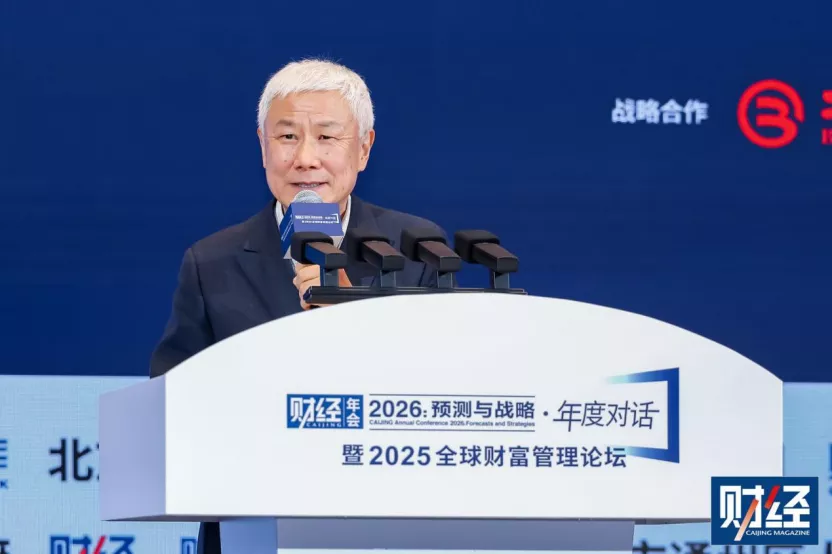
张燕生:历史与当下的反全球化力量,往往正是全球化推手
Cai Jing Wang· 2025-12-18 12:24
Core Viewpoint - The forum emphasizes the importance of domestic demand as a driving force for China's economic growth in the short term, while focusing on industry, technology, and domestic demand for long-term development [1][12]. Group 1: Economic Strategy - Zhang Yansheng, a researcher at the China Macroeconomic Research Institute, highlighted that the core of China's modernization and economic development is to strengthen consumption and investment to effectively counter international economic changes [1][12]. - The short-term annual plan will focus on "domestic demand as the main driver," while the medium to long-term strategy will involve promoting industry, technology, and domestic demand [1][12]. Group 2: Global Economic Environment - The current international policy environment and economic order are undergoing changes, making it crucial to steadily promote economic growth and stabilize exports in the coming years [4][12]. - The "globalization paradox" suggests that the forces against globalization often stem from those who were once its proponents, indicating a complex relationship between global cooperation and protectionism [4][8]. Group 3: Future Challenges - The future of global economic development will face multiple challenges, including the sustainability of globalization and the potential for increased protectionism and technological decoupling among major powers [8][11]. - Key factors influencing the next five years include the direction of global trade and investment, the advancement of technological revolutions, and the evolution of major power relations [6][8]. Group 4: Technological Revolution - The new technological revolution, characterized by artificial intelligence, cloud computing, big data, and blockchain, is expected to have profound impacts on the economy and industries [13]. - The forum discussed the importance of enhancing labor productivity and overall factor productivity through the application of new technologies [13].