
美国联邦政府‘停摆’

Search documents
拨款法案涉险过关,美政府“停摆”僵局化解
Xin Hua She· 2026-02-04 00:37
Group 1 - The U.S. House of Representatives passed a funding bill for multiple federal departments, resolving a partial government shutdown that began on January 31 [1] - The vote in the House was 217 in favor and 214 against, with a significant number of Republican and Democratic members crossing party lines [1] - The funding will support departments such as Defense, Education, Health and Human Services, Labor, Transportation, and Housing and Urban Development until September 30, but does not include funding for the Department of Homeland Security [1] Group 2 - The political divide between Republicans and Democrats has intensified following a shooting incident involving the Department of Homeland Security, impacting negotiations on immigration enforcement [2] - The Senate reached an agreement on the funding bill on January 29, which was passed shortly before funding for several government departments was set to expire [2] - The recent history of the U.S. federal government includes multiple shutdowns, with a record 43-day shutdown occurring just two months prior [2]
美众院民主党称不会支持以快速程序通过拨款法案 美媒称“停摆”或持续更长时间
Yang Shi Wang· 2026-02-01 14:12
Core Viewpoint - The Democratic leader of the U.S. House of Representatives, Jeffries, stated on January 31 that they will not support the Republican fast-track procedure for passing the federal government funding bill unless changes are made to the U.S. federal immigration enforcement agency [1] Group 1 - The fast-track procedure requires more than two-thirds approval, while the regular procedure only requires a simple majority [1] - Jeffries' statement indicates that the partial "shutdown" of the U.S. federal government may last longer than expected [1] - There are significant disagreements between the Republican and Democratic parties regarding federal immigration enforcement [1] Group 2 - The federal government funding bill passed by the Senate on January 30 was not timely reviewed by the House, leading to multiple federal departments entering a "shutdown" starting January 31 [1]
美参议院通过拨款法案 短暂“技术性停摆”仍不可避免
Xin Hua Wang· 2026-01-31 02:44
Group 1 - The U.S. Senate passed a funding bill for several federal departments on January 30, just hours before their funds were set to run out, leading to a temporary funding interruption known as a "technical shutdown" [1] - The Senate approved the funding bill with a vote of 71 in favor and 29 against, sending it to the House of Representatives for consideration, but the House is currently in recess and will not reconvene until February 2, making it unlikely to approve the bill before funds are exhausted [1] - The passed funding bill includes five budget items that will finance most federal departments until September 30, the end of the fiscal year, but does not include funding for the Department of Homeland Security, which will be extended for two weeks to allow for further negotiations [1] Group 2 - Political divisions between the Republican and Democratic parties have intensified following the shooting of two American citizens by federal law enforcement in Minnesota, complicating negotiations over immigration enforcement and government funding [2] - The U.S. federal government has faced multiple shutdown crises in recent years due to increasing political polarization between the two parties, with the longest shutdown in history lasting 43 days and ending on November 12, 2025 [2]
历史最长“停摆”将结束 美国“坏账”继续
Xin Hua She· 2025-11-13 01:49
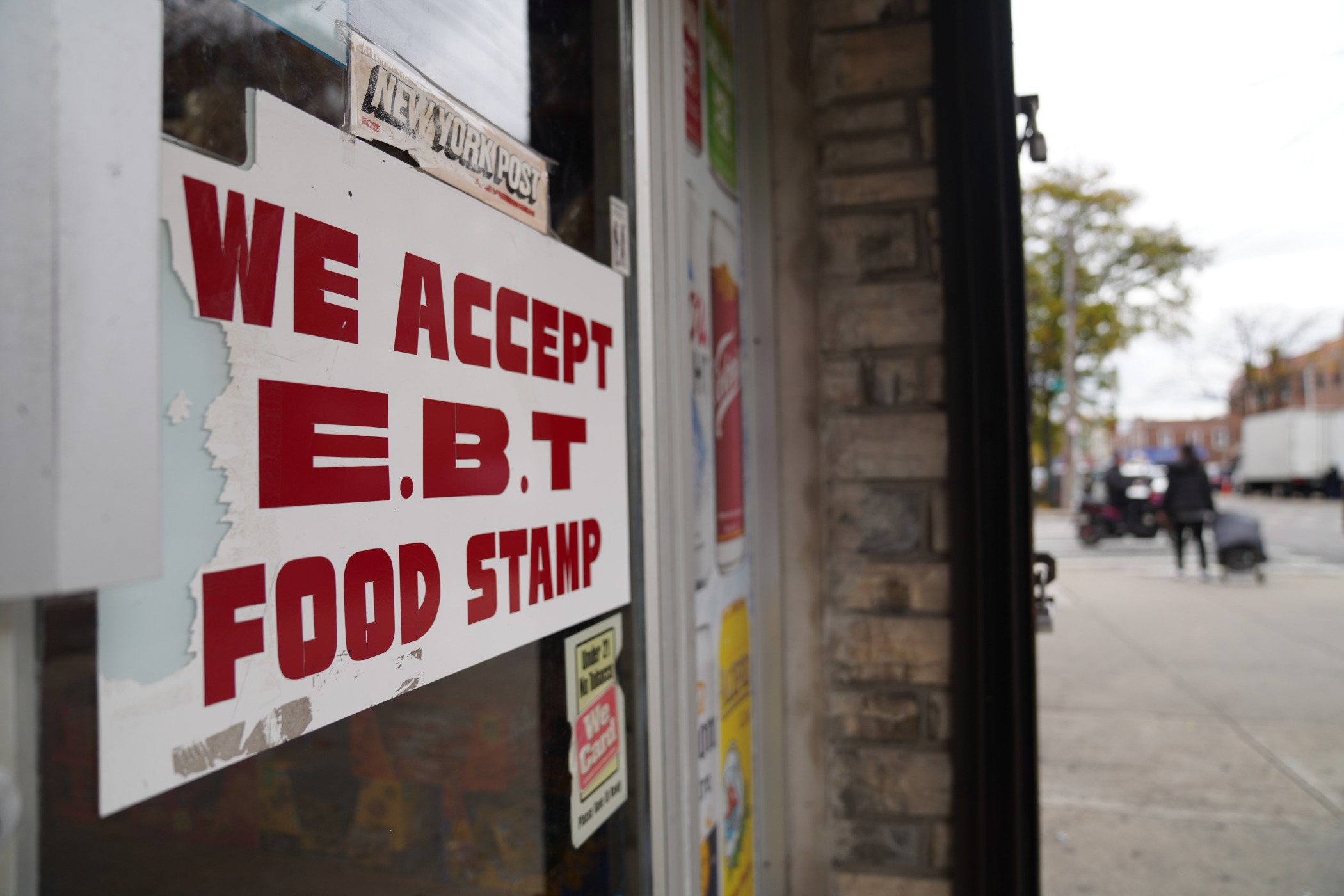
Group 1 - The U.S. Congress passed a temporary federal funding bill, ending a record 43-day government shutdown, which had significant negative impacts on the economy and public welfare [1] - The shutdown affected the Supplemental Nutrition Assistance Program (SNAP), which serves 42 million Americans, leading to potential delays in food assistance payments [2][4] - The shutdown has been characterized by a political stalemate between the Republican and Democratic parties, with accusations of using the public's suffering for political gain [4] Group 2 - The aviation industry faced severe disruptions due to the shutdown, with thousands of flights delayed or canceled, leading to significant operational chaos at airports [5][7] - The American Airlines Association reported that approximately 5.2 million air travelers were affected since the shutdown began, with potential daily economic losses ranging from $285 million to $580 million as flight reductions reached 10% [7][8] - The Congressional Budget Office estimated that the economic loss from the shutdown could reach $11 billion if it continued for six weeks, with a projected decline in the fourth quarter GDP growth rate by 1 to 2 percentage points [8][10] Group 3 - The prolonged shutdown is expected to have long-term effects on the U.S. economy, particularly due to its unprecedented duration and the adverse impacts on public services and travel [12]

美众议员回首都表决法案 被迫“花式赶路”
Xin Jing Bao· 2025-11-12 10:33
Core Points - The U.S. Congress is set to vote on a temporary funding bill on November 12, following a government shutdown that has caused travel difficulties for lawmakers [1] - The funding bill was passed by the Senate on November 10 and requires approval from the House of Representatives and the President to resolve the government shutdown [1] - Some lawmakers faced challenges traveling to Washington, with reports of long travel times, including one representative stating it took over eight hours to arrive [1]
沪银价格仍存上涨空间
Sou Hu Cai Jing· 2025-11-11 00:09
Group 1: U.S. Government and Economic Outlook - The U.S. federal government is working towards ending the "shutdown" with plans to introduce funding bills for various sectors, including agriculture and defense, while a short-term funding bill is also being discussed to extend current funding until the end of January [1] - As of November 5, the U.S. Treasury's general account had $942.7 billion in cash, down from $983.8 billion the previous week, but still above the target of $850 billion, indicating potential liquidity release once the government reopens [1] Group 2: Federal Reserve's Interest Rate Policy - The Federal Reserve is experiencing internal debates regarding the potential for interest rate cuts in December, with some officials advocating for multiple 50 basis point cuts to return to neutral rates, while others caution against rapid cuts due to inflation risks [2] - Employment data shows mixed signals, with October ADP job additions at 42,000, but concerns remain over labor demand as job vacancies decreased and layoffs increased significantly [2] Group 3: Liquidity in the U.S. Banking Sector - As of November 5, U.S. bank reserves increased to $2.85 trillion, indicating a slight easing of liquidity tension in the banking sector, with the Federal Reserve providing liquidity support through various tools [3] - The commercial mortgage-backed securities (CMBS) default rate rose to 11.8%, raising concerns about the office real estate sector and suggesting that liquidity pressures may persist [3] Group 4: Geopolitical Risks and Precious Metals - Geopolitical tensions, particularly related to major power competition, are influencing central banks, including South Korea and China, to consider gold purchases, which may support precious metal prices [4] - The outlook for precious metals suggests potential upward price movement, with specific support and resistance levels identified for gold and silver [5]
棉系周报:短期上行承压较大,关注后市回调机会-20251110
Zhong Hui Qi Huo· 2025-11-10 07:20
Report Summary 1) Report Industry Investment Rating The report does not provide an industry investment rating. 2) Core Viewpoints The current cotton market has a limited change in the pattern of strong supply and weak demand in the short - term. High supply significantly suppresses the market. As cotton procurement nears completion, short - term marginal drivers weaken, reducing volatility. The enthusiasm for capital speculation is low, but the short - selling sentiment of leading institutions has cooled. Downstream textile enterprises' profits and cash flow have not deteriorated after more than two months of tortuous recovery, and there is still sales resilience in the domestic market, which may maintain the rigid demand for raw materials in the future. With weak import expectations, it is expected to shrink the supply - demand gap in the medium - to - long - term. Currently, the market price is near the hedging pressure level, and it is expected to fluctuate in the short - term. It is recommended to pay attention to the callback opportunities during the transmission of supply pressure or sell put options at the bottom, and also pay attention to short - term reverse arbitrage opportunities. The reference range is 13330 - 13830 [3]. 3) Summary by Relevant Catalogs Macroeconomic Factors - **International**: Baysant said that the China - US trade agreement might be signed as early as next week, and the Chinese Foreign Ministry responded that China is willing to implement the important consensus of the two heads of state with the US. As of November 4 (US Eastern Time), the US Senate failed to pass the federal government's temporary appropriation bill again, and the US federal government's "shutdown" entered the 35th day, tying the longest "shutdown" record in US history [3]. - **Domestic**: Not mentioned in the provided content. Supply Factors - **International**: In the US, new cotton is being harvested, with 730,000 tons of new cotton inspected, accounting for about 25% of the total. Precipitation in major cotton - growing areas decreased in early November, which is beneficial for harvesting. In India, the daily listing volume of new cotton is about 14,000 tons, and it is expected that precipitation in cotton - growing areas will decrease in January, which is expected to accelerate procurement under the Minimum Support Price (MSP). In Pakistan, as of the end of October, the listing volume of new cotton was 688,000 tons, a year - on - year increase of 3%. In Brazil, the cotton processing progress in 2025 was 63.67%, slower than last year [3]. - **Domestic**: It is expected that cotton procurement in Xinjiang will end in mid - to - early November. The inspection progress is faster than the same period, and the sales progress is still relatively fast. The quality of new cotton in northern Xinjiang is not as expected, and ginneries have become more cautious in procurement. It is estimated that in the 2025/26 season, the ginned cotton cost of high - cost ginneries is about 14,700 - 15,000 yuan/ton (under official standards), while low - cost ginneries can control it within 14,600 yuan/ton. Low - cost ginneries can make a small profit by selling at the current price [3]. - **Picking and Processing Progress**: The national new cotton picking progress reached 87.1%, the delivery progress was 90.4%, the processing progress was 39.4%, and the national new cotton inspection volume exceeded 2.25 million tons; the sales progress was 14.2%, 5.8% faster than the same period [17]. - **Cost**: The national average purchase price of seed cotton has rebounded steadily. The average price of new - season ginned cotton has increased to 14,500 yuan/ton. It is estimated that in the 2025/26 season, the ginned cotton cost of high - cost ginneries is about 14,700 - 15,000 yuan/ton (under official standards), while low - cost ginneries can control it within 14,600 yuan/ton [17]. - **Inventory**: The national commercial cotton inventory increased by 521,700 tons week - on - week to 2.8478 million tons, lower than the same period by 278,800 tons; the Xinjiang commercial inventory increased to 1.839 million tons, higher than the same period by 269,600 tons; the commercial inventory in major inland provinces increased to 165,200 tons, lower than the same period by 14,300 tons. The inventory of finished products such as pure - cotton yarn, terminal grey fabric, and polyester - cotton yarn decreased [19]. - **Imports**: In September 2025, China imported about 100,000 tons of cotton, a year - on - year decrease of about 18.7%; from January to September 2025, China imported about 680,000 tons of cotton, a year - on - year decrease of about 69.8%. In September 2025, China imported about 127,700 tons of cotton yarn, a month - on - month decrease of 3.21% and a year - on - year increase of 15.02%. From January to September, the total import volume of cotton yarn was about 1.0366 million tons, a year - on - year decrease of 7.44% [22]. - **Warehouse Receipts**: Affected by the improvement of warehouse receipt premiums and the firmness of the market, the number of warehouse receipts has increased [3]. Demand Factors - **International**: In the US, clothing retail and wholesale sales continued to grow in August, and consumer confidence continued to recover in October. In Vietnam, clothing and textile exports decreased month - on - month in October and were lower than the same period. In the EU, the consumer confidence index continued to recover in October, but the growth rate of clothing imports decreased significantly in August, and the import amount declined [3]. - **Domestic**: In November, the overall trading level in the downstream market was still average, with obvious market negotiation characteristics. The current market transactions are mainly concentrated in local low - basis resources and the rigid demand procurement of enterprises, with no obvious new orders. Enterprises mainly focus on pre - sales. This week, the operating rates of spinning and weaving enterprises changed little week - on - week, the repair of spinning profits slowed down, the trading volume in the downstream textile market decreased marginally and was the same as the same period; the prices of auxiliary materials in the Keqiao area continued to fall to a low level, and the improvement of the terminal volume - price trend was not good [3]. - **Operating Rates**: This week, the spinning mill operating rate decreased by 0.2% week - on - week to 65.6%, 6.3% lower than the same period; the weaving mill operating rate increased by 0.1% week - on - week to 37.6%, 10.1% lower than the same period [26]. - **Profits**: The immediate profit of the representative 32 - count yarn has remained stable at around - 900 yuan/ton recently, and the profit of textile enterprises in Xinjiang is about 600 yuan/ton. The cumulative year - on - year value of industry profits in September rebounded to - 18.5% [26]. - **Market Transactions**: This week, the 5 - day moving average of cotton cloth trading volume in the Textile City decreased by 28,000 meters week - on - week to 336,000 meters, the same as the same period. In Keqiao, the fabric price index increased by 0.07 to 110.86, and the auxiliary material price index decreased by 0.35 to 110.63 [28]. - **PMI**: In September, the PMI of the cotton textile industry increased by 1.57% month - on - month to 44.29%, 12.29% lower than the same period, and it has been below the boom - bust line for five consecutive months. In terms of demand, the new order PMI increased by 1.98% month - on - month to 48.72%, 9.44% lower than the same period; the operating rate PMI increased by 4.07% month - on - month to 41.03%, 17.13% lower than the same period. In terms of inventory, the cotton yarn inventory PMI increased by 7.5% month - on - month to 56.41%, 3.79% higher than the same period; the cotton inventory increased by 1.75% month - on - month to 41.3%, 3.79% higher than the same period [31]. - **Retail Sales**: In September, the total retail sales of enterprises in the clothing, footwear, hats, and knitted textiles categories above the designated size reached 123.1 billion yuan, a year - on - year increase of 4.7%, an increase from the 3.1% year - on - year growth rate in August; from January to September, the cumulative total retail sales of these enterprises were 1.0613 trillion yuan, a year - on - year increase of 3.1% [33]. - **Exports**: In October, the export volume of textile and clothing was 22.26 billion US dollars, a year - on - year decrease of 12.6% and a month - on - month decrease of 8.8%; from January to October, the cumulative export volume was 243.94 billion US dollars, a year - on - year decrease of 1.6%. Among them, the export volume of textiles was 11.26 billion US dollars, a year - on - year decrease of 9.0% and a month - on - month decrease of 5.9%; from January to October, the cumulative export volume was 117.74 billion US dollars, a year - on - year increase of 0.9%. The export volume of clothing was 11 billion US dollars, a year - on - year decrease of 16.0% and a month - on - month decrease of 11.6%; from January to October, the cumulative export volume was 126.2 billion US dollars, a year - on - year decrease of 3.8% [36].
特朗普称美政府“停摆”接近结束
Yang Shi Xin Wen· 2025-11-10 01:44
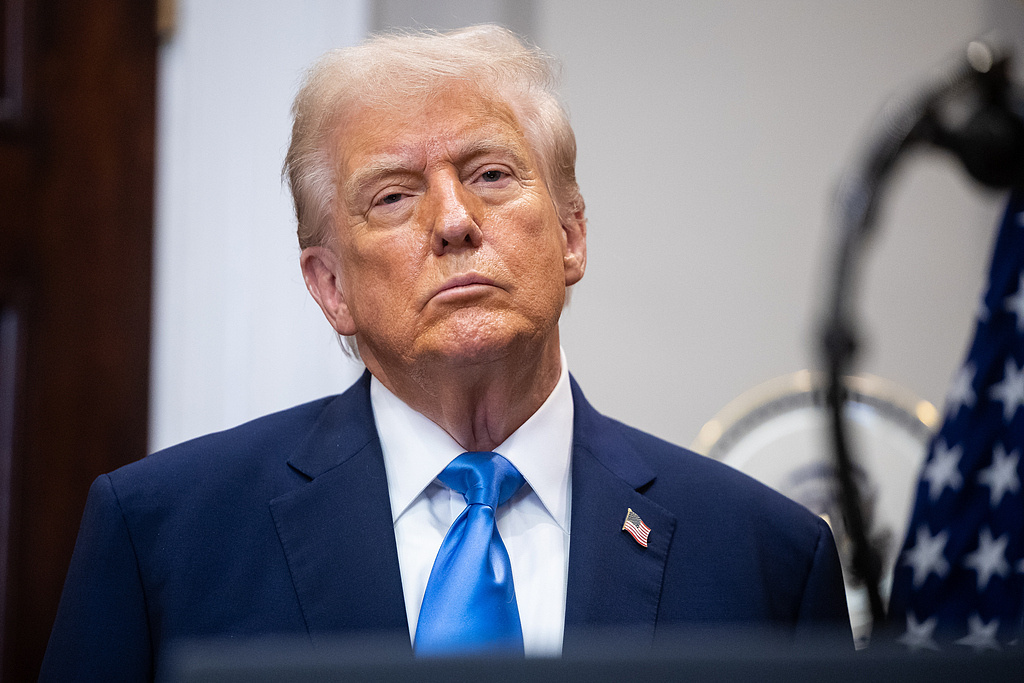
Core Points - The U.S. government has been in a shutdown for 40 days, with President Trump indicating that a resolution may be near [2] - The Senate is expected to vote on a bill passed by the House, which includes a short-term funding measure to finance the government until January 2026, bundled with three annual appropriations bills [2] - The revised funding proposal still requires approval from the House and President Trump, which may take several days [2] - Senate Democrats have been resisting the funding bill to pressure Republicans into agreeing to reforms in the healthcare system, including extending subsidies under the Affordable Care Act [2] - The current agreement under discussion allows for a separate vote on the subsidy issue later [2]
欧洲多国:美国赶紧“还钱”
Di Yi Cai Jing· 2025-11-09 22:41
Core Points - The U.S. federal government shutdown has entered its 39th day, impacting various sectors including food assistance, air transport, and healthcare, while also affecting U.S. military bases in Italy, Portugal, and Germany [1] - Italy's government is urging the U.S. to resolve the salary payment issue for approximately 2,000 Italian employees at U.S. military bases, particularly at Aviano Air Base and Vicenza Army Base [2] - The Italian Ministry of Foreign Affairs has engaged with the U.S. Embassy in Rome, confirming discussions about using military funds to pay the employees [2] - The Italian-American bilateral agreement protects the rights of Italian employees at U.S. bases, mandating salary payments by the end of the month, while U.S. law allows federal employees to go unpaid during a shutdown [2] Group 1 - The shutdown has led to significant financial distress for local employees, with many struggling to meet basic living expenses [3] - Union representatives have called for intervention from the Italian Prime Minister and warned of potential strikes if the situation is not resolved [4] Group 2 - Other countries hosting U.S. military bases are also facing similar salary issues, with local governments having to advance payments to employees [5] - In Portugal, over 360 local employees at the Lajes Air Base have not received their salaries, leading to government intervention to provide loans for salary payments [5] - Germany has advanced salaries for nearly 11,000 local employees at U.S. bases, expecting reimbursement once the shutdown ends [5]
政府“停摆”破纪录第一天 记者前方直击美国现状!
Xin Hua She· 2025-11-06 06:25
Group 1 - The U.S. federal government shutdown has reached its 36th day, marking the longest shutdown in U.S. history, with an increase in the number of federal employees seeking food assistance [1] - The charity organization "World Central Kitchen" has set up multiple relief points in Washington D.C., distributing over 36,000 meals since October 27, indicating a significant rise in demand for food assistance [1][2] - Local restaurants are severely impacted by the shutdown, with sales dropping by 15% to 20% during this period, highlighting the broader economic effects on the food service industry [2] Group 2 - The federal food assistance program, the Supplemental Nutrition Assistance Program (SNAP), has paused benefit distributions since November 1 due to funding depletion, affecting approximately 42 million people, or one-eighth of the U.S. population [3] - Transportation Secretary stated that if the shutdown continues, the Department of Transportation will reduce operations at 40 major airports by 10% to mitigate airspace risks, indicating potential disruptions in the aviation sector [3] Group 3 - The ongoing shutdown has led to political tensions, with accusations from both parties regarding the handling of the situation and its impact on vulnerable populations, reflecting the broader implications for social welfare and governance [4]